
The landscape of workers compensation mental health has evolved dramatically as organizations recognize that psychological injuries can be as debilitating as physical ones. Understanding the intersection between mental health conditions and workers compensation requires navigating complex legal frameworks, medical criteria, and organizational responsibilities. For HR professionals and organizational leaders, developing comprehensive knowledge in this area isn't optional-it's essential for protecting both employees and the business itself.
Understanding Workers Compensation Mental Health Claims
Workers compensation mental health coverage represents a developing frontier in workplace injury management. Unlike physical injuries with visible trauma, psychological conditions require nuanced assessment and documentation to establish compensability.
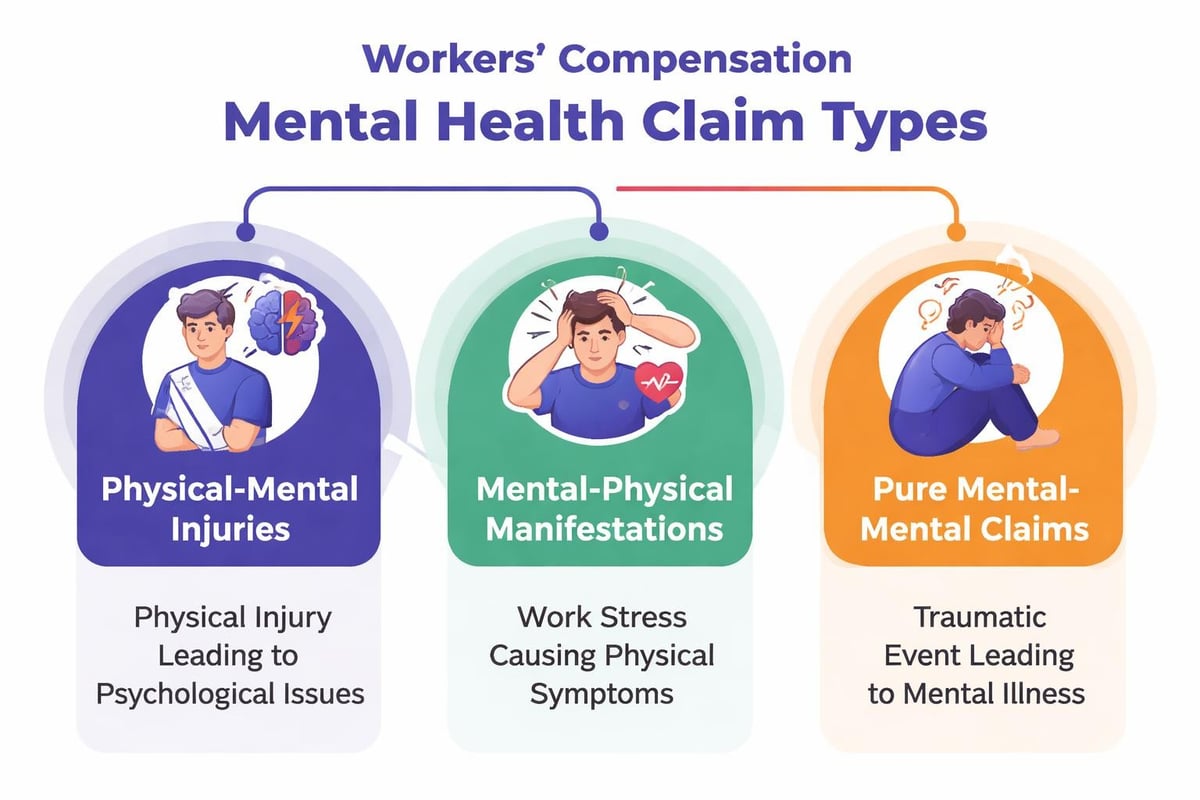
Mental health claims under workers compensation typically fall into three distinct categories. Physical-mental claims involve psychological conditions resulting from physical workplace injuries, such as PTSD following a severe accident. Mental-physical claims cover physical manifestations of workplace stress, including conditions like stress-induced cardiovascular events. Pure mental-mental claims, which remain the most challenging, involve psychological injury stemming from workplace psychological stressors without physical trauma.
Coverage varies significantly by jurisdiction, with some states maintaining stringent criteria while others have expanded eligibility. Most jurisdictions require that workplace conditions represent the predominant cause of the mental health condition, not merely a contributing factor.
Conditions Commonly Covered
The spectrum of mental health conditions potentially eligible for workers compensation has broadened considerably:
- Post-traumatic stress disorder (PTSD) following workplace violence, threats, or traumatic incidents
- Major depressive disorder linked to specific workplace events or sustained workplace stressors
- Anxiety disorders arising from harassment, discrimination, or extreme workplace pressure
- Adjustment disorders following significant workplace changes or organizational trauma
Documentation requirements for these conditions typically exceed those for physical injuries. Medical professionals must establish clear causation linking workplace factors to the diagnosed condition, often requiring detailed occupational histories and psychological assessments.
Legal Framework and Eligibility Criteria
The legal landscape governing workers compensation mental health claims varies substantially across jurisdictions, creating complexity for multi-state employers. Understanding these variations enables organizations to develop appropriate policies and response protocols.
State-by-State Variations
| Jurisdiction Type | Mental Health Coverage | Key Restrictions | Documentation Requirements |
|---|---|---|---|
| Restrictive States | Limited to physical-mental claims | Excludes stress from normal employment | Extensive medical causation |
| Moderate States | Covers specified conditions | Requires extraordinary workplace events | Standard medical documentation |
| Progressive States | Broad mental health coverage | Minimal exclusions | Comparable to physical injury |
| First Responder Provisions | Enhanced PTSD coverage | Occupation-specific presumptions | Reduced causation burden |
Legislative efforts continue expanding PTSD coverage, particularly for first responders and healthcare workers who face regular exposure to traumatic situations. These provisions often include presumptive coverage, shifting the burden from proving causation to disproving work-relatedness.
Standard employment stressors typically don't qualify for coverage. Most jurisdictions exclude claims arising from performance evaluations, disciplinary actions, terminations, or routine workplace pressures unless these involve unlawful discrimination or harassment.
Proving Work-Relatedness
Establishing causation represents the most significant hurdle in workers compensation mental health claims. Claimants must demonstrate that workplace factors constitute the predominant cause of their condition-typically defined as greater than 50% causation.
This requirement demands comprehensive evidence including contemporaneous documentation of workplace events, witness statements corroborating the claimant's experience, expert medical opinions linking workplace exposures to the diagnosed condition, and employment records demonstrating timeline correlation between workplace events and symptom onset.
Organizational Risk Management Strategies
Proactive organizations don't wait for workers compensation mental health claims to emerge. Instead, they implement systematic approaches to identify and address psychological risk factors before they escalate to compensable injuries.
Prevention Through Psychological Safety
Building psychologically safe work environments represents the most effective risk mitigation strategy. Organizations can assess their current state through structured manager evaluations that identify gaps in leadership capabilities around mental health support.
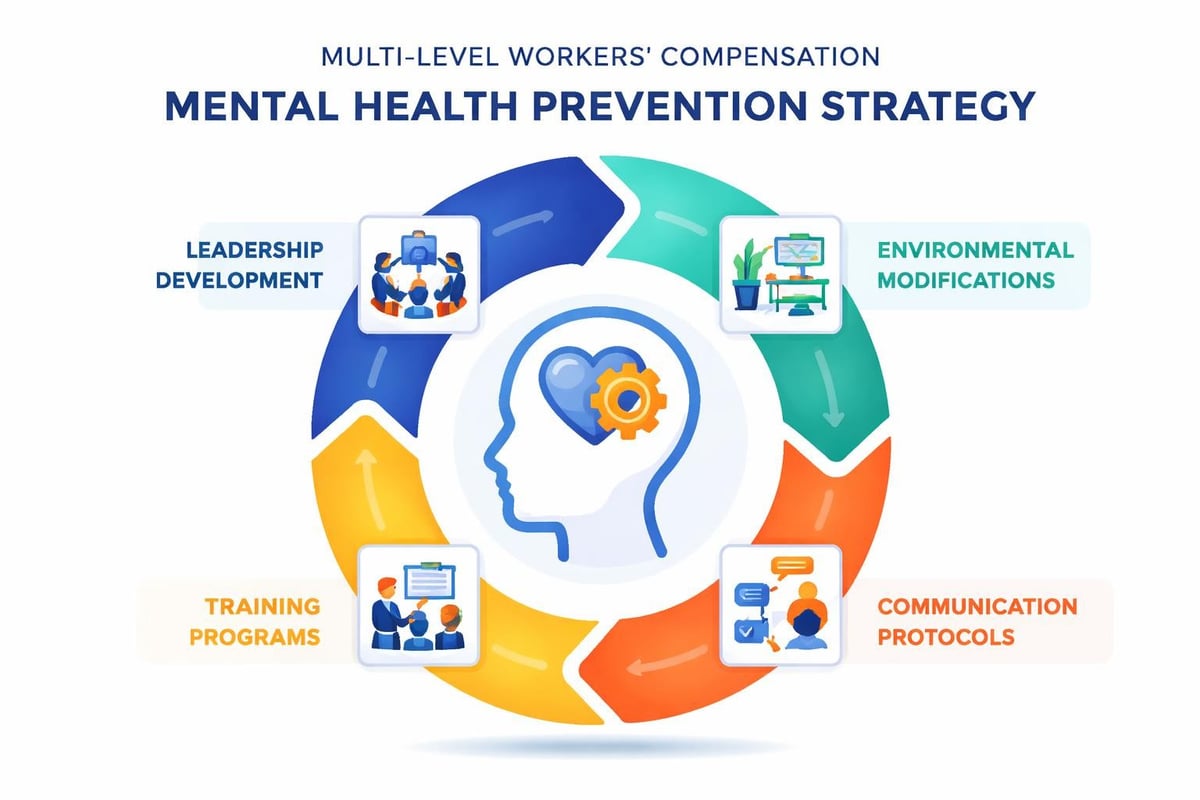
Prevention strategies should address multiple organizational levels:
Leadership Development: Equipping managers with skills to recognize early warning signs of psychological distress and respond appropriately without overstepping professional boundaries.
Communication Protocols: Establishing clear pathways for mental health conversations that normalize help-seeking while maintaining appropriate confidentiality.
Environmental Modifications: Systematically identifying and modifying workplace stressors including unrealistic workload expectations, role ambiguity, interpersonal conflicts, and inadequate resources or support.
Training Investment: Providing evidence-based mental health education that goes beyond awareness to skill development, enabling employees to manage their wellbeing proactively.
Organizations that implement comprehensive wellbeing strategies report measurable reductions in both mental health claims and overall workers compensation costs. The investment in prevention consistently outperforms reactive claim management approaches.
Responding to Mental Health Claims
When workers compensation mental health claims arise despite preventive efforts, organizational response significantly impacts both individual outcomes and broader workplace culture. The manner in which organizations handle initial claims often determines whether similar claims proliferate or remain isolated incidents.
Initial Response Protocol
Immediate response to mental health claims should follow structured protocols. Acknowledge the claim promptly and professionally, avoiding defensive responses that can escalate conflict. Document all interactions thoroughly while respecting privacy requirements. Connect the employee with appropriate medical and psychological resources without attempting to diagnose or question the legitimacy of their experience.
Many organizations make critical errors during this phase. Dismissing claims as exaggerated or malingering creates liability and damages workplace relationships. Attempting to resolve claims through informal settlements without proper medical evaluation often backfires. Retaliating against claimants, even subtly, violates legal protections and exposes organizations to additional claims.
Medical Management and Return to Work
Mental health treatment within workers compensation systems requires specialized provider networks familiar with occupational mental health. Effective medical management involves several components:
- Initial Assessment: Comprehensive psychological evaluation establishing baseline functioning and treatment needs
- Treatment Planning: Evidence-based interventions addressing the diagnosed condition with clear, measurable objectives
- Progress Monitoring: Regular assessment of treatment effectiveness with adjustments as needed
- Functional Capacity Evaluation: Objective assessment of work readiness separate from symptom resolution
- Graduated Return: Structured reintegration supporting sustainable work participation
Return to work after mental health claims presents unique challenges. Unlike physical injuries with clear healing timelines, psychological recovery varies considerably between individuals. Accommodations may include modified duties, reduced hours, flexible scheduling, or environmental changes addressing identified triggers.
| Recovery Phase | Organizational Support | Expected Duration | Key Indicators |
|---|---|---|---|
| Acute Treatment | Full work release | 2-6 weeks | Symptom stabilization |
| Active Recovery | Modified duties | 4-12 weeks | Functional improvement |
| Transitional Return | Graduated schedule | 2-6 weeks | Sustained tolerance |
| Full Duty | Ongoing monitoring | Indefinite | Maintained performance |
Organizations should maintain contact with employees throughout their recovery without pressuring premature return. This balance demonstrates genuine concern while preserving employment relationships.
Emerging Trends in Workplace Mental Health Coverage
The workers compensation mental health landscape continues evolving rapidly. Mental health has become an emerging frontier driven by increased awareness of psychological wellbeing and changing legal interpretations.
Technology-Enabled Early Intervention
Innovation in workplace mental health increasingly emphasizes early detection and intervention before conditions reach compensable severity. Research into real-time stress detection explores how organizations can identify emerging psychological distress and provide personalized support proactively.
These approaches represent significant advancement over traditional reactive models. Rather than waiting for employees to file claims or request assistance, predictive systems identify patterns indicating increased risk:
- Behavioral changes detected through workplace systems
- Self-reported wellbeing metrics showing decline
- Performance indicators suggesting psychological distress
- Utilization patterns of employee assistance programs
Early intervention programs connecting with employees during risk periods can prevent condition escalation. This approach benefits both employees, who receive support before reaching crisis points, and employers, who avoid costly claims and productivity losses.
Pandemic Impact and Remote Work Considerations
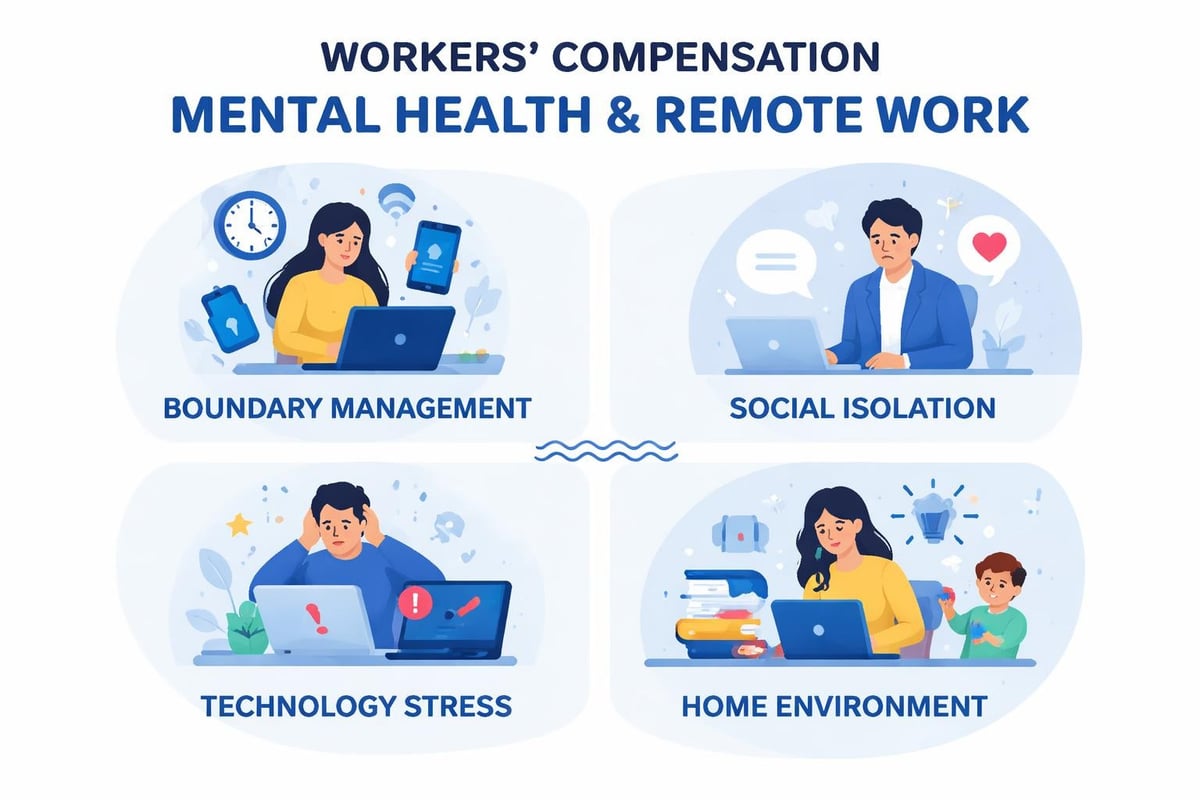
The shift toward remote and hybrid work models has complicated workers compensation mental health determinations. Questions about compensability now extend to home office environments and boundary dissolution between work and personal life.
Jurisdictions are grappling with whether mental health conditions arising from work-from-home arrangements qualify for coverage. Issues include ergonomic stressors in home environments, social isolation from remote work, technology-related stress and constant connectivity, and blurred boundaries preventing psychological recovery.
Organizations must extend psychological safety considerations into virtual environments. This includes establishing clear expectations around availability, providing resources for effective home office setup, maintaining social connection through intentional virtual interaction, and monitoring workload to prevent remote work intensification.
Building Comprehensive Mental Health Support Systems
Beyond workers compensation compliance, leading organizations recognize that comprehensive mental health support systems represent strategic investments in workforce sustainability and performance.
Integrated Wellbeing Frameworks
Effective mental health support integrates multiple organizational functions rather than siloing responsibility within HR or benefits departments. Comprehensive frameworks connect occupational health services with workers compensation administration, employee assistance programs, disability management, organizational development and culture initiatives, and leadership development programs.
This integration ensures consistent messaging and seamless employee experience. When mental health support exists across multiple touchpoints, employees access help through their preferred pathway rather than navigating fragmented systems.
Organizations should provide specialized training in suicide prevention for managers and HR professionals who may encounter employees in crisis. Understanding warning signs enables timely intervention that can literally save lives while reducing organizational liability.
Measuring Program Effectiveness
Robust mental health programs include clear metrics demonstrating value and identifying improvement opportunities:
Leading Indicators
- Participation rates in mental health training programs
- Employee utilization of wellbeing resources
- Manager confidence in addressing mental health concerns
- Employee perceptions of psychological safety
Lagging Indicators
- Mental health-related workers compensation claims frequency and severity
- Short-term disability claims for psychological conditions
- Turnover rates, particularly among high performers
- Absenteeism patterns and productivity metrics
Data analysis should identify patterns suggesting systemic issues requiring organizational intervention rather than focusing solely on individual claims. Clusters of mental health concerns within specific departments, locations, or reporting structures indicate environmental factors needing attention.
Strategic Considerations for HR Leaders
HR professionals bear primary responsibility for navigating workers compensation mental health within their organizations. This role requires balancing legal compliance, employee wellbeing, organizational culture, and fiscal responsibility.
Policy Development and Communication
Clear, accessible policies regarding mental health support and workers compensation rights create foundation for effective programs. Policies should address employee rights and responsibilities, manager obligations and available support, accommodation procedures, privacy protections, and integration with other leave and benefits programs.
Communication about these policies requires ongoing effort beyond initial distribution. Regular reminders through multiple channels, integration into onboarding processes, manager training emphasizing policy application, and transparent updates when policies evolve all contribute to policy effectiveness.
Building Internal Capability
Rather than relying exclusively on external providers, organizations benefit from developing internal mental health capability. This doesn't mean HR professionals become therapists, but rather that they develop competence in psychological first aid, risk assessment, resource navigation, and culturally responsive support.
Workplace mental health training programs provide practical skills applicable across various scenarios. Investment in building this capability pays dividends through earlier intervention, more effective resource utilization, and stronger employee trust.
Collaboration with External Partners
Even with strong internal capability, organizations require external partnerships for comprehensive mental health support. Key partners include workers compensation carriers and third-party administrators, occupational health providers specializing in psychological conditions, employee assistance program vendors, disability management specialists, and legal counsel experienced in employment and workers compensation law.
Selecting and managing these partnerships strategically ensures alignment with organizational values and seamless employee experience. Regular partnership reviews should assess service quality, outcome metrics, employee satisfaction, and cost-effectiveness.
Cultural Transformation Beyond Compliance
The most effective approach to workers compensation mental health transcends compliance-focused risk management. Organizations achieving sustainable results embed mental health support within their fundamental culture and values.
This transformation requires sustained leadership commitment demonstrated through resource allocation, visible personal engagement, and accountability integration. Leaders must model healthy behaviors including boundary-setting, help-seeking when needed, and open discussion of mental health without stigma.
Cultural change also demands addressing systemic factors contributing to psychological distress. Organizations should examine whether performance management systems create unnecessary stress, workload expectations allow for sustainable effort, communication patterns support psychological safety, diversity and inclusion initiatives address belonging, and organizational change is managed considering psychological impact.
The return on investment in comprehensive mental health support extends beyond reduced workers compensation costs. Organizations report improvements in employee engagement and retention, productivity and performance quality, innovation and creativity, customer satisfaction, and employer brand strength.
Workers compensation mental health represents both legal obligation and strategic opportunity for forward-thinking organizations. By understanding coverage requirements, implementing proactive prevention strategies, and building comprehensive support systems, leaders protect their workforce while strengthening organizational performance. Workplace Mental Health Institute partners with organizations to develop evidence-based mental health training and resilience programs that reduce claims, enhance manager capability, and create psychologically safe cultures where employees thrive.

