
Mental health social issues represent one of the most pressing challenges facing contemporary workplaces. These challenges extend far beyond individual wellness concerns, encompassing systemic barriers, cultural stigma, social isolation, and institutional gaps that prevent employees from accessing the support they need. As organizational leaders and HR professionals navigate an increasingly complex landscape, understanding the social dimensions of mental health becomes essential for creating psychologically safe, high-performing work environments. The United Nations recognizes mental health as fundamental to sustainable development, underscoring that these concerns transcend individual organizations and reflect broader societal patterns requiring coordinated, informed responses.
Understanding the Social Dimensions of Workplace Mental Health
Mental health social issues manifest when psychological wellbeing intersects with social structures, cultural norms, and systemic inequities. Unlike purely clinical concerns, these issues arise from the relational and environmental contexts in which employees operate.
Defining Mental Health in Social Context
Mental health exists on a continuum, influenced by biological, psychological, and social determinants. According to SAMHSA, mental health encompasses emotional, psychological, and social wellbeing, affecting how individuals think, feel, and act. Within workplace settings, social factors significantly shape mental health outcomes.
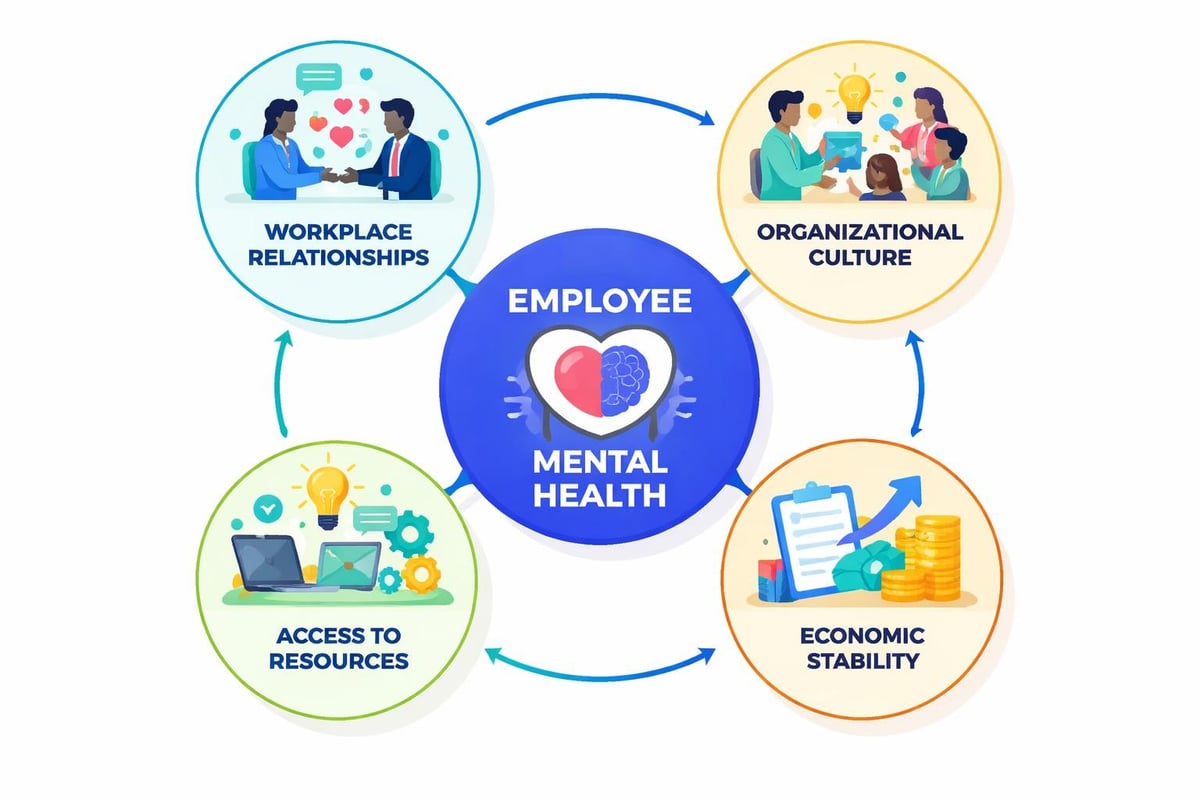
Key social determinants affecting workplace mental health include:
- Quality of interpersonal relationships with colleagues and supervisors
- Organizational culture and psychological safety
- Access to support systems and resources
- Work-life integration opportunities
- Economic security and job stability
- Social inclusion and belonging
Research consistently demonstrates that social isolation, discrimination, and lack of supportive relationships correlate with increased mental health challenges. A CDC report on loneliness reveals that insufficient social and emotional support strongly associates with poor mental health outcomes, highlighting the critical role of social connection in psychological wellbeing.
The Stigma Barrier
Stigma remains the most significant social barrier preventing employees from seeking mental health support. Mental health stigma manifests through negative attitudes, discriminatory behaviors, and institutional practices that marginalize individuals experiencing psychological challenges.
Organizations encounter two primary forms of stigma:
Public stigma occurs when communities, including workplace cultures, hold prejudicial attitudes toward mental health conditions. This creates environments where employees fear disclosure, avoid seeking help, and experience discrimination when their struggles become visible.
Self-stigma develops when individuals internalize negative stereotypes, leading to reduced self-efficacy, shame, and reluctance to pursue treatment or accommodations. Employees may minimize their experiences, delay seeking support, or disengage from workplace wellness initiatives due to internalized beliefs about weakness or inadequacy.
The Impact of Technology and Social Media on Workplace Mental Health
Digital connectivity has fundamentally altered how mental health social issues present in professional environments. While technology enables remote collaboration and flexible work arrangements, it simultaneously introduces new psychological stressors and social complexities.
The Digital Wellbeing Paradox
Modern workplaces face a paradox: technology promises increased connectivity yet often delivers isolation and psychological strain. Employees navigate constant availability expectations, information overload, and blurred boundaries between professional and personal life.
The Surgeon General’s concern about social media extends beyond adolescents, reflecting broader societal patterns affecting adults in workplace contexts. Comparison culture, performative professionalism on platforms like LinkedIn, and always-on communication norms contribute to burnout, anxiety, and diminished psychological safety.
| Digital Factor | Mental Health Impact | Organizational Response |
|---|---|---|
| Constant connectivity | Burnout, stress, work-life conflict | Clear communication boundaries, right to disconnect policies |
| Social comparison | Imposter syndrome, reduced self-worth | Authentic leadership modeling, realistic performance narratives |
| Information overload | Decision fatigue, cognitive strain | Streamlined communication channels, focused meeting cultures |
| Virtual isolation | Loneliness, disconnection | Intentional relationship-building activities, hybrid work design |
Organizations must acknowledge these digital mental health social issues through proactive policy development and cultural norm-setting that prioritizes sustainable engagement over performative availability.
Systemic Inequities and Access Barriers
Mental health social issues disproportionately affect marginalized populations due to systemic barriers embedded within organizational structures and broader societal systems.
Disparities in Access and Support
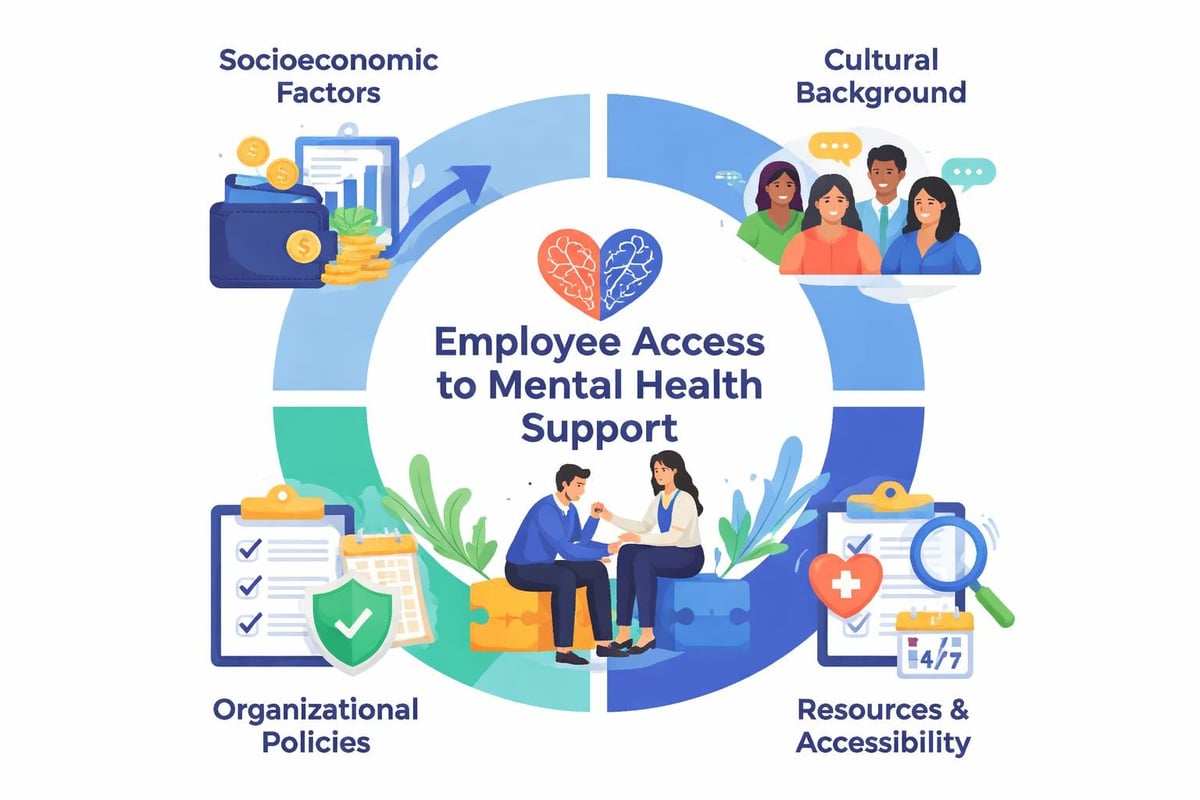
Not all employees experience equal access to mental health resources. Socioeconomic status, race, gender identity, disability status, and geographic location significantly influence whether individuals can obtain timely, appropriate support.
Common access barriers include:
- Financial constraints limiting treatment options despite insurance coverage
- Cultural mistrust of mental health systems due to historical discrimination
- Limited availability of culturally competent providers
- Scheduling inflexibility that disadvantages shift workers or caregivers
- Language barriers preventing effective communication with providers
- Geographic isolation reducing access to specialized services
These disparities create ethical obligations for employers. Recent legal challenges highlight how failure to provide adequate mental health support may constitute discrimination, particularly when systemic gaps prevent individuals from accessing necessary care and accommodations.
Trauma-Informed Organizational Responses
Addressing mental health social issues requires trauma-informed approaches that recognize how adverse experiences shape employee wellbeing and workplace interactions. Trauma-informed care principles apply beyond clinical settings, offering frameworks for creating psychologically safe organizational cultures.
Organizations can implement trauma-informed practices through manager training programs available at WMHI Online, equipping leaders with skills to recognize trauma responses, provide appropriate support, and avoid retraumatization through insensitive policies or communication.
Building Psychologically Safe Workplace Cultures
Creating environments where mental health social issues can be openly addressed requires intentional cultural transformation grounded in psychological safety, authentic leadership, and systemic policy change.
Leadership's Role in Normalizing Mental Health Conversations
Leaders significantly influence whether employees feel safe discussing mental health challenges. When executives and managers model vulnerability, share their own experiences appropriately, and respond empathetically to disclosures, they reshape organizational norms around psychological wellbeing.
Effective leadership practices include:
- Sharing personal mental health journeys without oversharing clinical details
- Responding non-defensively to feedback about workplace stressors
- Allocating resources to mental health initiatives beyond superficial wellness programs
- Holding themselves and others accountable for creating supportive environments
- Actively challenging stigmatizing language and attitudes
Training programs from Workplace Mental Health Institute provide structured frameworks for developing these leadership competencies through evidence-based curriculum designed specifically for workplace contexts.
Structural Supports and Policy Interventions
Cultural change requires structural reinforcement through policies that tangibly support employee mental health. Symbolic gestures fail without corresponding resource allocation and accountability mechanisms.
| Policy Area | Evidence-Based Intervention | Implementation Consideration |
|---|---|---|
| Leave policies | Paid mental health days separate from sick leave | Clear communication about appropriate use, no documentation requirements |
| Workload management | Realistic productivity expectations, adequate staffing | Regular workload audits, manager training on capacity assessment |
| Flexibility | Hybrid work options, flexible scheduling | Equitable access across roles, clear performance standards |
| Employee assistance | Comprehensive EAP with adequate session limits | Promotion beyond onboarding, multiple access modalities |
Australian organizations can access tailored workplace wellbeing assessments through WMHI Australia to identify specific structural gaps and develop contextualized intervention strategies.
Manager Training as a Critical Intervention Point
Frontline managers disproportionately influence employee mental health experiences, yet most lack adequate training to recognize distress, initiate supportive conversations, or connect team members with appropriate resources.
Essential Manager Competencies
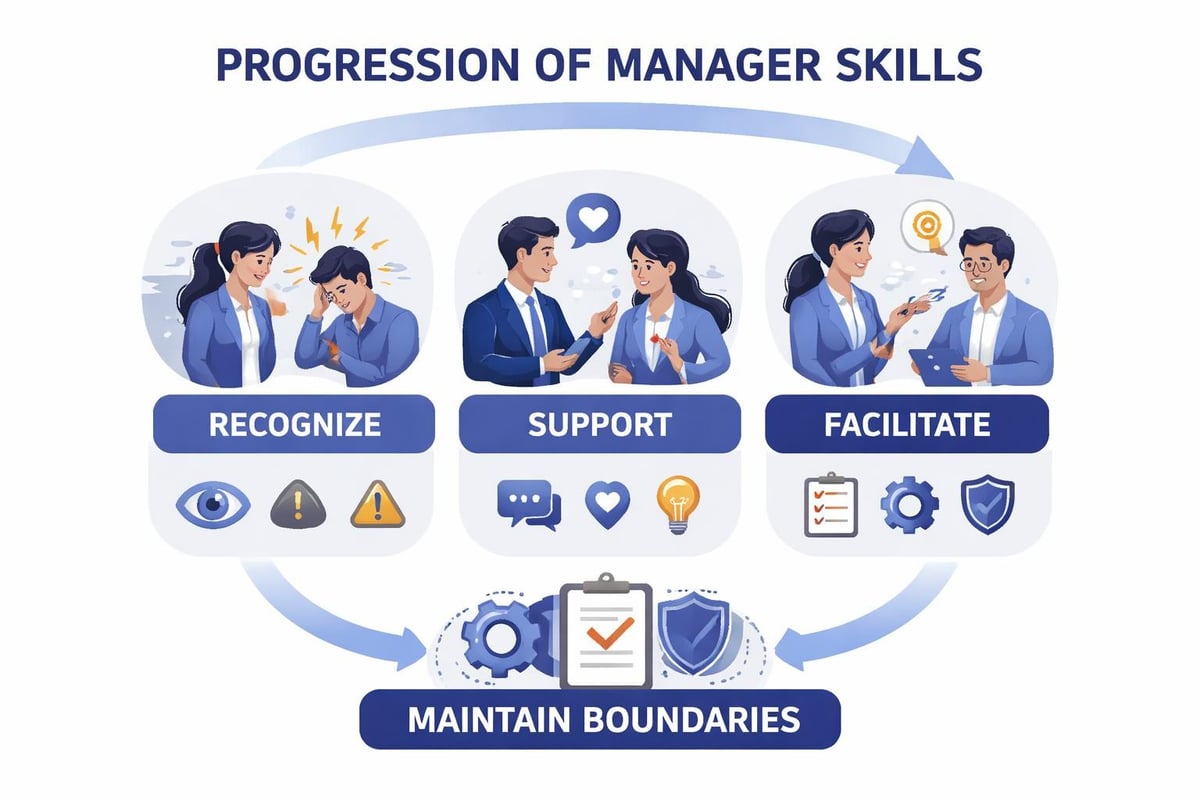
Managers addressing mental health social issues require specific skills beyond general leadership capabilities. These competencies enable early identification of concerns, appropriate response to disclosures, and creation of team environments that support psychological wellbeing.
Core competencies include:
- Recognizing behavioral changes that may indicate psychological distress
- Initiating conversations about wellbeing without diagnosing or providing therapy
- Understanding workplace accommodations and how to facilitate them
- Responding to crisis situations while maintaining appropriate boundaries
- Managing their own wellbeing to prevent compassion fatigue
- Creating team norms that normalize mental health conversations
Comprehensive training programs develop these skills through scenario-based learning, role-playing exercises, and ongoing reinforcement rather than one-time workshops that rarely translate into sustained behavior change.
Measuring Impact and Sustaining Change
Organizations must move beyond participation metrics to assess whether mental health initiatives actually improve employee wellbeing and reduce stigma. Meaningful measurement requires multiple data sources and longitudinal tracking.
Effective measurement approaches include:
- Regular psychological safety assessments using validated instruments
- Utilization rates of mental health benefits and EAP services
- Exit interview analysis for mental health-related departures
- Confidential pulse surveys on stigma perceptions and cultural safety
- Manager confidence assessments regarding mental health conversations
- Absenteeism and presenteeism trends over time
Video resources from Workplace Mental Health Institute’s YouTube channel provide practical guidance on implementing measurement frameworks and interpreting results to drive continuous improvement.
The Business Case for Addressing Mental Health Social Issues
Beyond ethical imperatives, addressing mental health social issues delivers measurable organizational benefits. Leaders seeking executive buy-in require compelling evidence linking psychological wellbeing investments to business outcomes.
Quantifiable Organizational Impacts
Mental health challenges impose substantial costs through absenteeism, presenteeism, turnover, and reduced productivity. Conversely, organizations that effectively address mental health social issues experience improved performance across multiple metrics.
Research demonstrates that comprehensive workplace mental health programs generate positive returns on investment ranging from 1.5:1 to 4:1, depending on program design and organizational context. These returns manifest through:
- Reduced healthcare costs and disability claims
- Lower voluntary turnover and associated replacement expenses
- Decreased absenteeism and short-term disability leave
- Improved employee engagement and discretionary effort
- Enhanced organizational reputation and talent attraction
- Reduced workplace safety incidents and errors
These outcomes require sustained commitment beyond superficial wellness initiatives. Programs must address systemic issues, provide manager training, reduce stigma, and ensure equitable access to resources.
Competitive Advantages of Psychologically Healthy Workplaces
Organizations recognized for supporting employee mental health gain competitive advantages in talent markets, particularly among younger workers who prioritize wellbeing and authentic organizational values.
Job seekers increasingly research employer mental health policies, cultural attitudes, and leadership commitment before accepting offers. Glassdoor reviews, employer branding, and word-of-mouth significantly influence talent decisions, with psychological safety emerging as a key differentiator.
High-performing organizations recognize that mental health social issues cannot be delegated solely to HR departments. Instead, they integrate psychological wellbeing into strategic planning, leadership development, and operational decision-making, creating sustainable competitive advantages through their workforce.
Implementing Comprehensive Mental Health Strategies
Effective responses to mental health social issues require coordinated, multi-level interventions addressing individual, team, organizational, and societal factors simultaneously.
The Three-Tiered Prevention Framework
Public health models offer useful frameworks for structuring workplace mental health initiatives. The three-tiered approach addresses promotion, prevention, and intervention across the employee population.
Primary prevention focuses on creating healthy work environments for all employees through job design, workload management, flexible policies, and cultural initiatives that promote wellbeing proactively.
Secondary prevention targets early identification and intervention for employees experiencing emerging mental health challenges through manager training, peer support programs, and accessible counseling services.
Tertiary prevention provides intensive support for employees managing diagnosed mental health conditions through accommodations, return-to-work programs, and case management services.
Organizations achieve optimal outcomes when investing across all three tiers rather than concentrating resources exclusively on crisis intervention after problems escalate.
Practical Implementation Steps
Leaders beginning this journey require clear, actionable steps that build momentum while avoiding overwhelm. Implementation should follow a phased approach that establishes foundational elements before advancing to more sophisticated interventions.
- Conduct baseline assessments to understand current state challenges, resource gaps, and employee perceptions
- Establish leadership commitment through visible sponsorship, resource allocation, and accountability mechanisms
- Reduce stigma via communication campaigns, leadership modeling, and policy changes that normalize mental health
- Train managers in core competencies for recognizing distress, initiating conversations, and connecting employees with resources
- Enhance access by expanding EAP benefits, providing multiple support modalities, and addressing equity gaps
- Measure continuously using validated instruments and multiple data sources to track progress and refine approaches
Resources available through Workplace Mental Health Institute support each implementation phase with evidence-based tools, training programs, and strategic consultation tailored to organizational contexts and maturity levels.
Mental health social issues demand organizational responses that address cultural stigma, systemic barriers, and social determinants while building psychologically safe environments where employees can thrive. Leaders who recognize these challenges as strategic priorities position their organizations for sustained success in an increasingly complex landscape. The Workplace Mental Health Institute provides comprehensive training, assessment tools, and strategic guidance to help organizations develop evidence-based mental health strategies that improve employee wellbeing, reduce absenteeism, and enhance overall workplace performance through practical, empowering approaches tailored to your specific organizational needs.

