
Workplace wellbeing is now central to business success, shaping how organizations thrive in a changing world. According to recent research, over 60% of employees consider wellbeing strategies at work a top priority when evaluating employers.
Leaders and HR professionals must now treat wellbeing as a core strategy, not a perk, to attract and retain talent, boost productivity, and foster a resilient culture.
This guide reveals 9 essential wellbeing strategies at work that deliver measurable results, from mental health support to data-driven innovation. Explore actionable solutions designed to future-proof your organization and empower your people.
The Evolving Landscape of Workplace Wellbeing
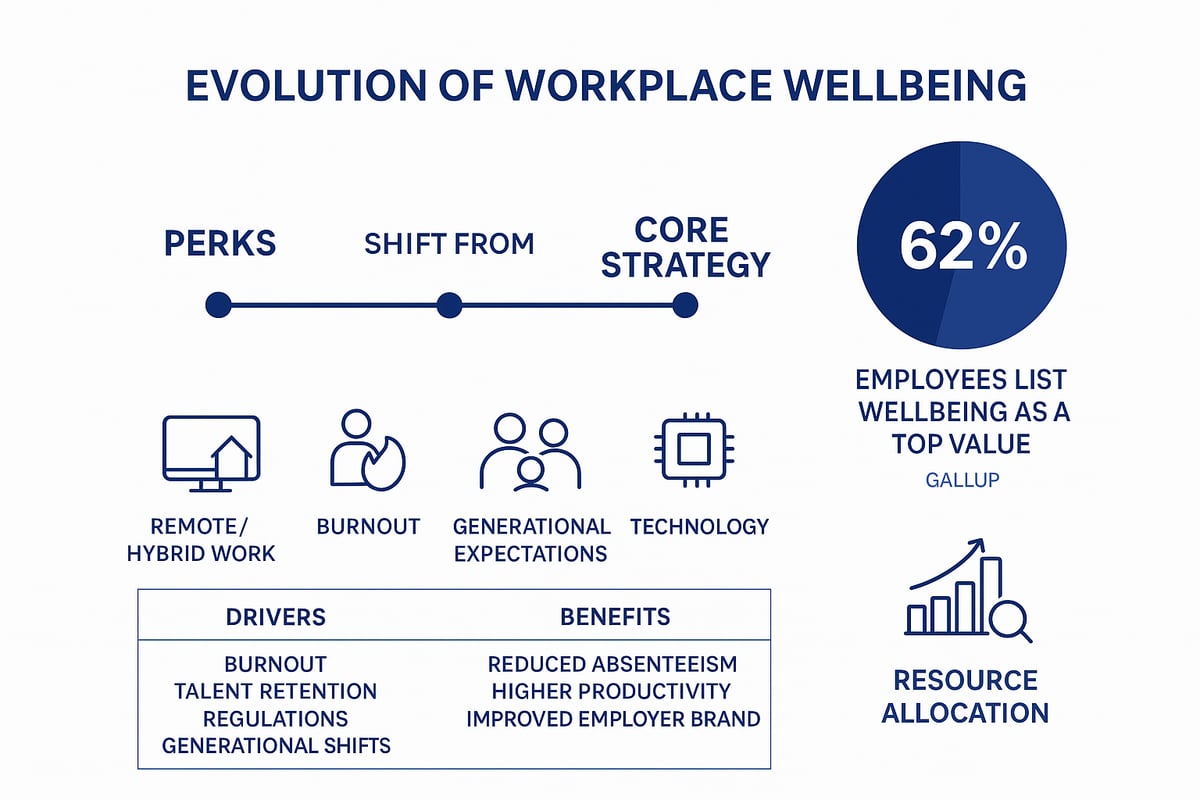
The concept of workplace wellbeing has undergone a profound transformation in recent years. What was once seen as a collection of optional perks is now recognized as a business-critical strategy. Leaders across industries are realizing that effective wellbeing strategies at work are essential to organizational resilience and long-term performance.
Today, the shift toward wellbeing as a core business priority is largely driven by changes in how and where people work. The rapid rise of remote and hybrid models has altered employee experiences, highlighting both opportunities and new challenges. Many organizations have found that the absence of daily in-person interactions can increase feelings of isolation, while blurred work-life boundaries contribute to stress and disengagement. As a result, wellbeing strategies at work must now address not only physical and mental health, but also connection and engagement across distributed teams.
Several key drivers are accelerating this shift. Burnout rates remain high, with employees seeking organizations that actively support their wellbeing. Talent retention has become more complex, as skilled professionals prioritize workplaces that offer genuine support beyond compensation alone. Generational expectations are also evolving, with younger employees demanding holistic wellbeing strategies at work as a baseline, not a bonus. Meanwhile, regulatory changes are increasing accountability for psychosocial safety and employee welfare.
Recent data underscores the urgency for action. According to Gallup, 62% of employees now report that wellbeing is a top workplace value. This marks a significant rise compared to previous years, reflecting how wellbeing strategies at work have become a deciding factor for job seekers and current staff alike. Companies that have successfully transformed their approach, such as global tech firms and forward-thinking financial institutions, report improved morale, reduced turnover, and stronger organizational culture.
The business case for investing in comprehensive wellbeing programs is clearer than ever. Organizations that prioritize wellbeing strategies at work see measurable returns, including reduced absenteeism, higher productivity, and a more attractive employer brand. Technology is playing a pivotal role in this evolution, enabling real-time data collection, personalized support, and scalable interventions. For an in-depth look at how technology is shaping the future of workplace wellbeing, explore these Employee Wellbeing Trends for 2026.
Despite these advances, implementing effective wellbeing strategies at work is not without challenges. Many organizations encounter barriers such as limited resources, leadership alignment, and the complexity of measuring impact. Additionally, ensuring that wellbeing initiatives are inclusive and adaptable to diverse employee needs remains an ongoing concern.
Ultimately, the evolving landscape of workplace wellbeing demands a proactive, evidence-based approach. By embedding wellbeing strategies at work into core business practices, organizations can create environments where employees thrive—and where business success naturally follows.
9 Essential Wellbeing Strategies at Work for 2026 Success
Organizations seeking sustainable success must implement robust wellbeing strategies at work. These strategies are no longer optional, but essential for fostering high-performing, resilient teams. The following nine wellbeing strategies at work offer actionable, evidence-based pathways to improving employee experience, culture, and business outcomes.
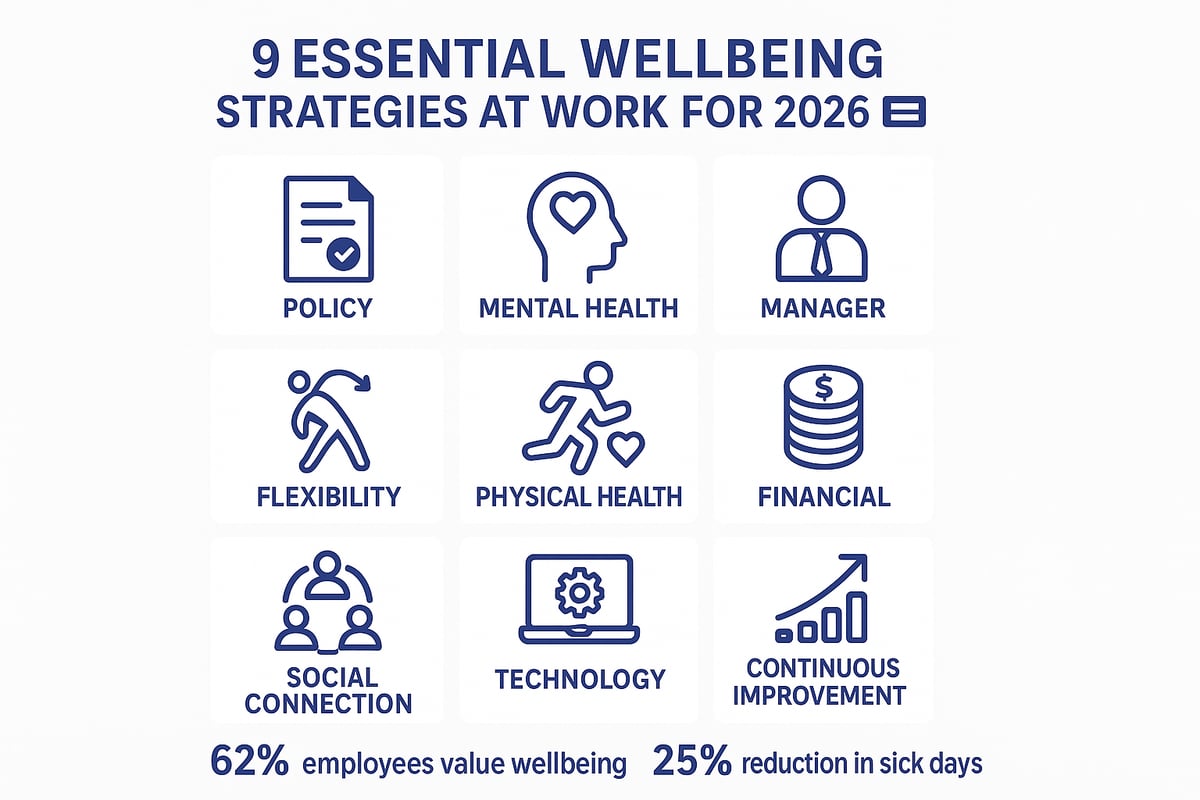
1. Develop a Comprehensive Wellbeing Policy
A comprehensive wellbeing policy is the backbone of effective wellbeing strategies at work. It integrates mental, physical, social, and financial dimensions into organizational DNA. Leaders should begin by auditing existing policies to identify strengths and gaps. This involves reviewing benefits, support systems, and compliance with evolving psychosocial safety regulations.
Employee involvement is critical. Co-create initiatives through focus groups or surveys to ensure relevance and buy-in. Benchmark against industry leaders, and incorporate best practices from organizations that have achieved measurable improvements in engagement and health outcomes.
Regulatory requirements are rising, particularly around psychological safety and risk management. Align your policy to these standards and communicate its value frequently.
For organizations building or revising their approach, Building a workplace wellbeing strategy offers practical guidance on developing, implementing, and measuring impact. Use clear metrics to track progress, such as participation rates, reduced absenteeism, and employee feedback.
Transparent communication is key. Share successes and lessons learned, reinforcing wellbeing as a core value. By embedding these elements, organizations can ensure their wellbeing strategies at work are both compliant and impactful.
2. Prioritize Mental Health and Psychological Safety
Prioritizing mental health is foundational to high-impact wellbeing strategies at work. The business case is clear: employees with strong mental health are more engaged, productive, and loyal. Psychological safety fosters open dialogue and innovation, reducing stigma and supporting early intervention.
Leaders must model vulnerability and encourage open conversations. Provide regular training for managers to recognize signs of distress, offer support, and connect staff with resources. Integrate mental health support into daily workflows, making it visible and accessible.
According to the World Health Organization, 1 in 5 employees experience mental health challenges annually. This underscores the importance of embedding support mechanisms, such as Employee Assistance Programs, mental health days, and peer networks.
Tools like anonymous pulse surveys and mental health check-ins enable ongoing assessment. Foster a culture where seeking help is normalized and confidentiality is respected.
Ongoing education, clear policies, and visible leadership support ensure mental health remains central to wellbeing strategies at work. This proactive approach builds resilience and a psychologically safe environment for all.
3. Empower Managers with Wellbeing Leadership Training
Managers are pivotal in delivering successful wellbeing strategies at work. Their daily interactions directly influence employee experience, engagement, and morale. Targeted training in resilience, empathy, and trauma-informed leadership equips managers to address diverse needs confidently.
Embed wellbeing KPIs in leadership performance reviews to signal its importance and drive accountability. Provide access to ongoing development, such as workshops, coaching, and peer support groups, so managers can continuously refine their skills.
Organizations with manager-led wellbeing improvements report higher retention and lower rates of burnout. Encourage managers to share best practices and challenges, creating a learning community.
Support does not end after training. Offer regular check-ins, resources, and recognition for managers championing wellbeing strategies at work. By investing in their growth, organizations build a culture where wellbeing leadership is the norm.
4. Foster Flexible and Inclusive Work Environments
Flexibility and inclusion are cornerstones of modern wellbeing strategies at work. Employees increasingly expect control over when, where, and how they work. Flexible scheduling, remote and hybrid options, and compressed workweeks can drive both wellbeing and productivity.
Inclusive practices ensure every employee feels valued. Support neurodiversity, cultural differences, and accessibility needs by offering diverse communication tools and adaptable policies. Leverage technology to bridge gaps and foster connection among distributed teams.
Examples abound of organizations boosting engagement through flexible work models. Provide guidelines for managers to implement flexibility fairly and consistently.
Regularly review practices to ensure equity and effectiveness. By embedding flexibility and inclusion into wellbeing strategies at work, organizations demonstrate commitment to meeting the evolving needs of their workforce.
5. Promote Physical Health and Movement
Physical health initiatives are essential components of holistic wellbeing strategies at work. Encourage movement throughout the day with active breaks, standing meetings, and wellness challenges. These practices not only boost energy and focus but also reduce the risk of chronic illness.
Offer onsite or virtual fitness programs, tailored to different interests and abilities. Invest in ergonomic workspace design, providing adjustable desks, supportive seating, and guidance on healthy posture.
Gamify participation with incentives and recognition to drive engagement. According to the CDC, organizations with active programs report a 25% reduction in sick days.
Integrating physical health into wellbeing strategies at work signals a genuine commitment to employee vitality and long-term productivity.
6. Support Financial Wellbeing Initiatives
Financial wellbeing is a critical pillar of effective wellbeing strategies at work. Financial stress can undermine performance, increase absenteeism, and drive turnover.
Provide access to financial education, planning tools, and benefits counseling. Ensure pay transparency and fair compensation practices to foster trust and reduce anxiety.
Offer flexible benefits that accommodate diverse life stages and personal needs, such as student loan assistance, retirement planning, or emergency savings programs.
Case studies show that companies investing in financial wellbeing programs experience lower turnover and higher engagement. By addressing financial health, organizations strengthen the overall impact of their wellbeing strategies at work.
7. Cultivate Social Connection and Belonging
Strong workplace relationships are vital to successful wellbeing strategies at work. Social connection enhances engagement, loyalty, and mental health.
Design spaces and opportunities for authentic interaction, both virtually and in-person. Implement peer support programs, Employee Resource Groups (ERGs), and mentoring to foster inclusion and shared purpose.
Celebrate diversity through events, storytelling, and recognition initiatives. According to Harvard Business Review, teams with strong social ties are 50% more productive.
Monitor and adapt initiatives based on employee feedback. By prioritizing social connection, organizations elevate the effectiveness of their wellbeing strategies at work.
8. Leverage Data and Technology for Wellbeing
Data and technology are transforming wellbeing strategies at work. People analytics enables leaders to identify risk factors, measure outcomes, and tailor interventions in real time.
Deploy employee pulse surveys, wellbeing apps, and digital platforms to collect actionable insights. Ensure privacy and ethical data use, building trust and compliance.
Leverage artificial intelligence to personalize support, such as recommending resources or flagging early signs of burnout. Examples include using digital dashboards to track engagement or customizing communications based on survey feedback.
By embedding technology, organizations make their wellbeing strategies at work more agile, responsive, and effective.
9. Create a Culture of Continuous Improvement
True excellence in wellbeing strategies at work requires a culture of continuous improvement. Embed wellbeing into organizational values, daily practices, and leadership behaviors.
Gather feedback regularly through surveys, focus groups, and open forums. Recognize and reward wellbeing champions who drive positive change.
Benchmark progress against industry standards to maintain momentum and accountability. Align wellbeing goals with broader business objectives and sustainability commitments.
Sustaining wellbeing strategies at work demands transparent communication, leadership commitment, and a willingness to adapt. By embracing continuous improvement, organizations ensure their approach remains relevant and impactful.
Expert-Led Mental Health Training: The Role of Workplace Mental Health Institute
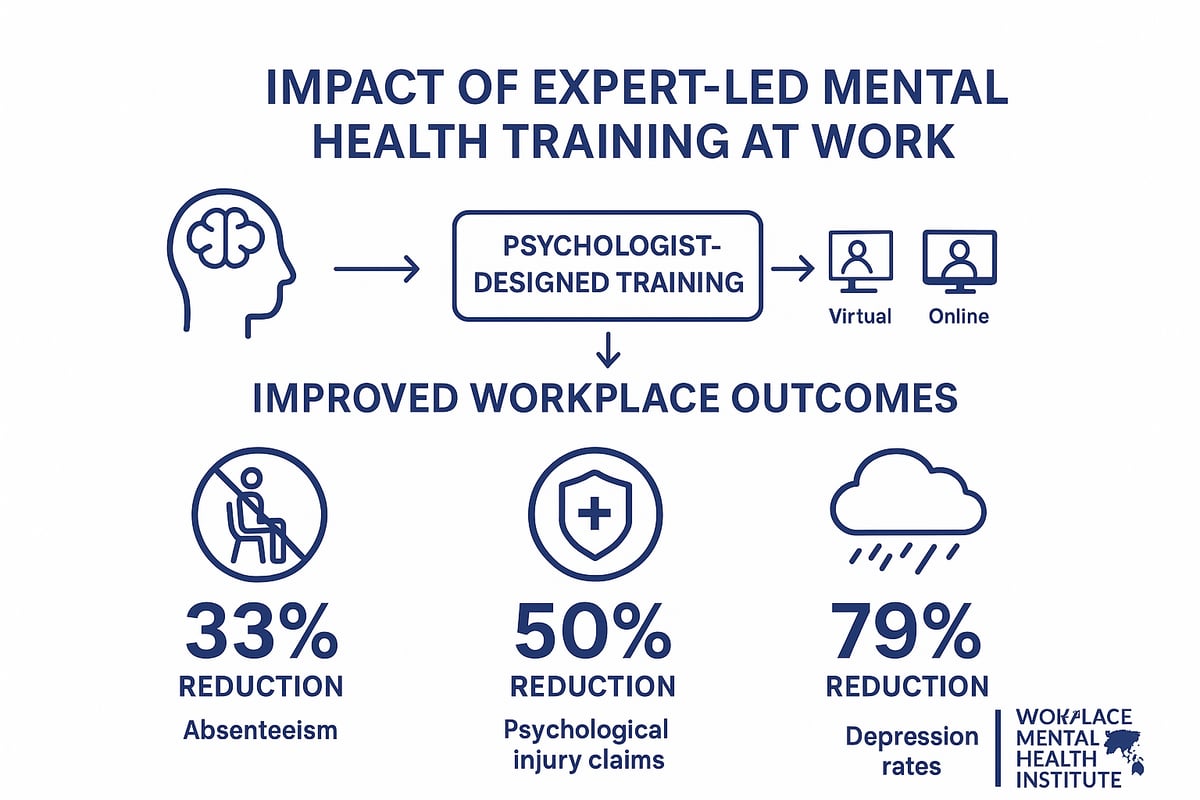
Organizations seeking to implement effective wellbeing strategies at work are increasingly turning to expert-led mental health training. The Workplace Mental Health Institute (WMHI) stands out by delivering psychologist-designed programs that drive measurable improvements in workplace wellbeing. With employee mental health now central to organizational performance, leaders and HR professionals need evidence-based solutions that address today’s complex challenges.
WMHI’s approach integrates the latest psychological research with practical resilience training. Programs are grounded in strengths-based methodologies, enabling leaders to foster psychologically safe environments and empower teams. This emphasis on psychological safety supports the core of wellbeing strategies at work, equipping managers and employees alike to recognize, respond to, and recover from stress and adversity.
The results speak for themselves. Organizations adopting WMHI’s expert-led training have reported a 33% reduction in absenteeism, a 50% decrease in psychological injury claims, and up to a 79% reduction in depression rates. These outcomes demonstrate the powerful return on investment when wellbeing strategies at work are guided by clinical expertise. WMHI’s evidence-based framework not only improves employee health but also strengthens organizational culture and reputation.
Flexibility and customization are core strengths of WMHI’s offerings. Programs are available as in-person workshops, virtual training, and self-paced online courses, ensuring accessibility for diverse industries and global teams. Comprehensive resources include assessments, eLearning modules, and ongoing support, allowing organizations to tailor wellbeing strategies at work to their unique needs. For those seeking holistic approaches, Employee wellbeing programme insights provide further guidance on designing impactful initiatives.
Trusted by leading organizations worldwide, WMHI is recognized as a benchmark for excellence in workplace mental health. Their psychologist-led training, robust resources, and commitment to measurable outcomes make them an essential partner for any organization aiming to embed sustainable wellbeing strategies at work.
Measuring and Sustaining Wellbeing Success
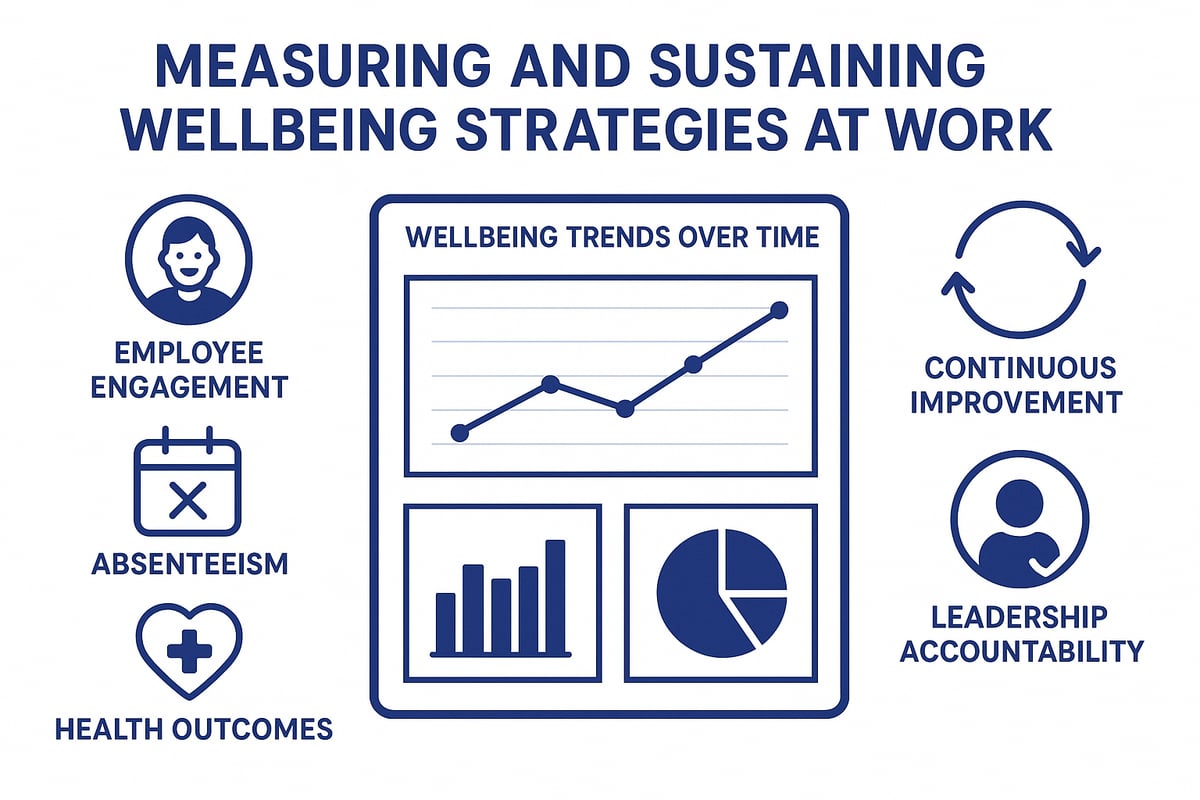
To realize lasting results from wellbeing strategies at work, organizations must move beyond launching programs and instead focus on robust measurement and ongoing improvement. Tracking the right metrics transforms wellbeing from a set of isolated initiatives into a core driver of business performance and employee satisfaction.
Key Wellbeing Metrics to Track
Leaders should regularly assess the impact of wellbeing strategies at work by monitoring several core indicators:
- Employee engagement scores
- Absenteeism rates
- Staff retention levels
- Reported health outcomes
For a more comprehensive view, many organizations now measure psychological safety and mental health climate. Tools like the Psychologically safe manager survey provide valuable insights into how management practices influence overall wellbeing.
Tools and Reporting Approaches
Modern organizations use a range of tools to track progress. The table below summarizes common options:
| Tool/Method | Purpose | Example Use Case |
|---|---|---|
| Pulse surveys | Gauge employee sentiment | Monthly check-ins |
| Dashboards | Visualize trends and KPIs | Leadership reporting |
| Feedback loops | Gather qualitative insights | Focus groups, open forums |
| Health data analysis | Track health outcomes | Absenteeism, claims, self-reports |
Aligning wellbeing strategies at work with business objectives and ESG frameworks ensures these efforts receive executive support and adequate resources. According to the 2025 Mental Health at Work Report, organizations that link wellbeing metrics to business outcomes see higher participation and stronger ROI.
Overcoming Challenges and Sustaining Gains
Common obstacles include low participation rates, lack of leadership buy-in, and resource limitations. To address these, leading organizations:
- Set clear accountability for wellbeing outcomes
- Regularly review and adapt initiatives based on data
- Celebrate and reward champions of wellbeing
Embedding a culture of continuous learning is essential. Organizations that prioritize feedback, iterate on their wellbeing strategies at work, and benchmark progress against peers are best positioned for long-term success.
After exploring these nine essential wellbeing strategies, it’s clear that creating a thriving workplace in 2026 means investing in your people, their mental health, and a culture of continuous improvement. Whether you’re a leader aiming to reduce absenteeism, an HR professional focused on engagement, or simply passionate about fostering a supportive environment, you have the tools to make a real difference. If you’re ready to take the next step and see how expert-led training and tailored programs can transform your organization, Find Out More about practical solutions designed for measurable impact.

