
Mental health is rapidly emerging as a top priority for organizations and individuals alike. The demands of modern work, digital transformation, and societal change have placed wellbeing at the center of daily life. As we approach 2026, understanding effective mental health improvement activities has never been more critical.
New challenges are reshaping the landscape, from hybrid work models to shifting social norms. Yet, these changes also present unique opportunities to rethink how we support mental health, both in the workplace and beyond.
This article uncovers nine essential, evidence-based mental health improvement activities designed to foster resilience, wellbeing, and sustainable performance. Readers will discover practical strategies, current trends, and actionable insights to help create positive change for themselves and their organizations.
The Evolving Landscape of Mental Health in 2026
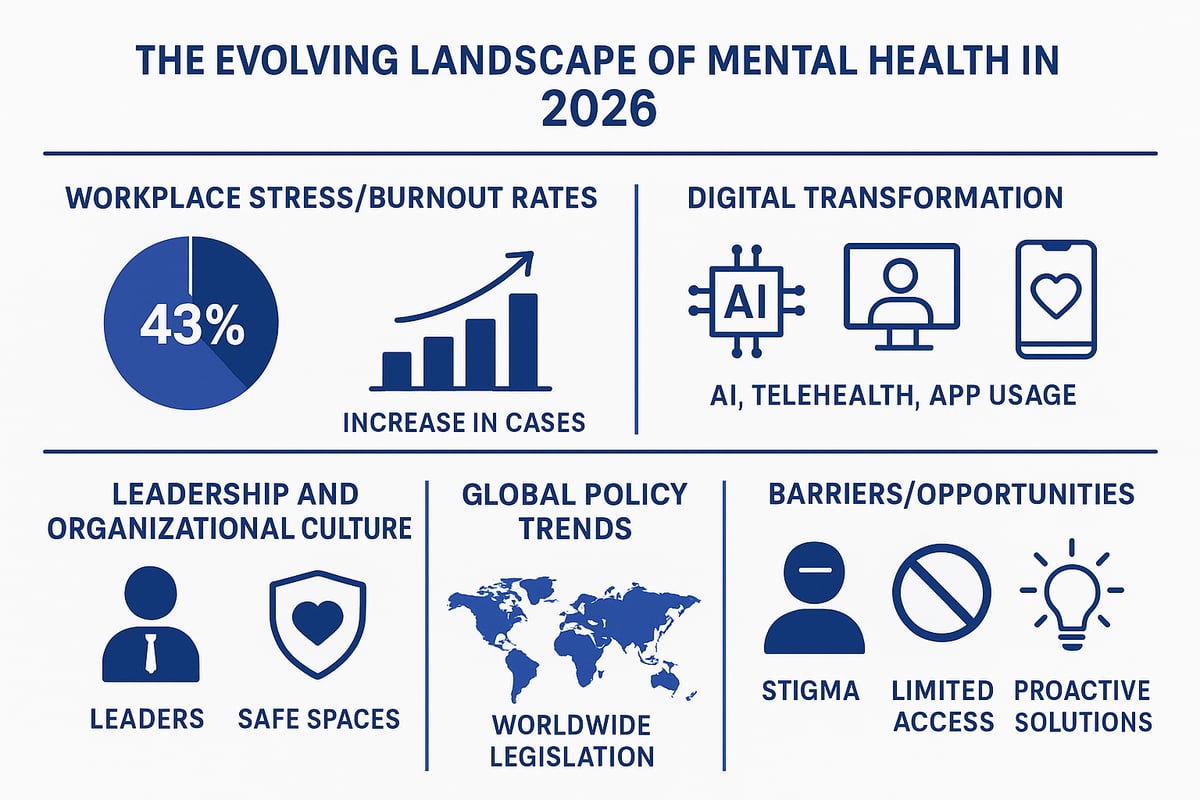
The landscape of mental health in 2026 is rapidly shifting, with organizations and individuals recognizing the urgent need for effective mental health improvement activities. Societal expectations, workplace dynamics, and technology are all reshaping how mental wellbeing is understood and supported. As we explore these changes, it becomes clear that evidence-based action is essential for navigating the future.
Changing Workplace and Societal Demands
Modern workplaces face unprecedented rates of stress and burnout, making mental health improvement activities more important than ever. The ongoing shift to hybrid and remote work has brought both flexibility and new pressures, including digital fatigue and blurred boundaries.
Society is also witnessing greater mental health awareness, with stigma decreasing as conversations become more open. Employees now expect organizations to prioritize wellbeing, prompting leaders to rethink traditional work models. These changes set the stage for a fundamental transformation in how mental health is addressed at work and in daily life.
Advances in Mental Health Research and Technology
Recent advances in mental health research and technology are driving a new wave of mental health improvement activities. Artificial intelligence, digital platforms, and telehealth have become integral to mental health care delivery, enabling data-driven and personalized interventions.
Mental health apps now offer real-time monitoring, self-help modules, and virtual counseling, with usage rates rising steadily year over year. Studies show that these innovations can improve access and outcomes, especially for populations previously underserved by traditional services. The integration of technology is redefining what effective support looks like in 2026.
The Role of Leadership and Organizational Culture
Leadership and organizational culture play a pivotal role in the success of mental health improvement activities. Research shows that supportive leadership styles, such as transformational or servant leadership, are linked to lower stress and higher engagement among employees.
Creating psychologically safe workplaces, where individuals feel comfortable discussing mental health without fear of judgment, is essential. Organizations with comprehensive mental health strategies—such as regular training, open dialogue, and flexible policies—set the benchmark for others. These efforts foster resilience, trust, and sustained performance across teams.
Global Trends and Policy Developments
Global trends and policy developments are shaping the framework for mental health improvement activities. Governments and corporations are introducing initiatives that support mental wellbeing, from mandatory mental health days to enhanced Employee Assistance Programs.
Legal frameworks continue to evolve, with compliance requirements around psychological safety and anti-discrimination gaining traction in many countries. International comparisons reveal diverse approaches, but the common thread is a growing commitment to protecting and promoting mental health as a core societal value.
Barriers and Opportunities for Improvement
Despite progress, significant barriers to effective mental health improvement activities remain. Persistent stigma, unequal access to care, and resource limitations challenge even the most proactive organizations. However, these obstacles also create opportunities for innovation and prevention.
Proactive strategies, such as targeted training, peer support, and digital interventions, are critical for closing gaps and reaching those in need. For actionable guidance on implementing these approaches, the Mental health activities guide offers practical tools and evidence-based solutions. In 2026, the organizations that prioritize prevention and inclusivity will lead the way in advancing workplace mental health.
9 Essential Mental Health Improvement Activities for 2026
In an era where workplace stress and rapid change challenge our wellbeing, focusing on effective mental health improvement activities is paramount. These nine strategies are grounded in research, practicality, and organizational success. Leaders and HR professionals will find actionable guidance for fostering resilience, engagement, and sustained wellbeing.
1. [Mindful Movement and Physical Activity Integration]
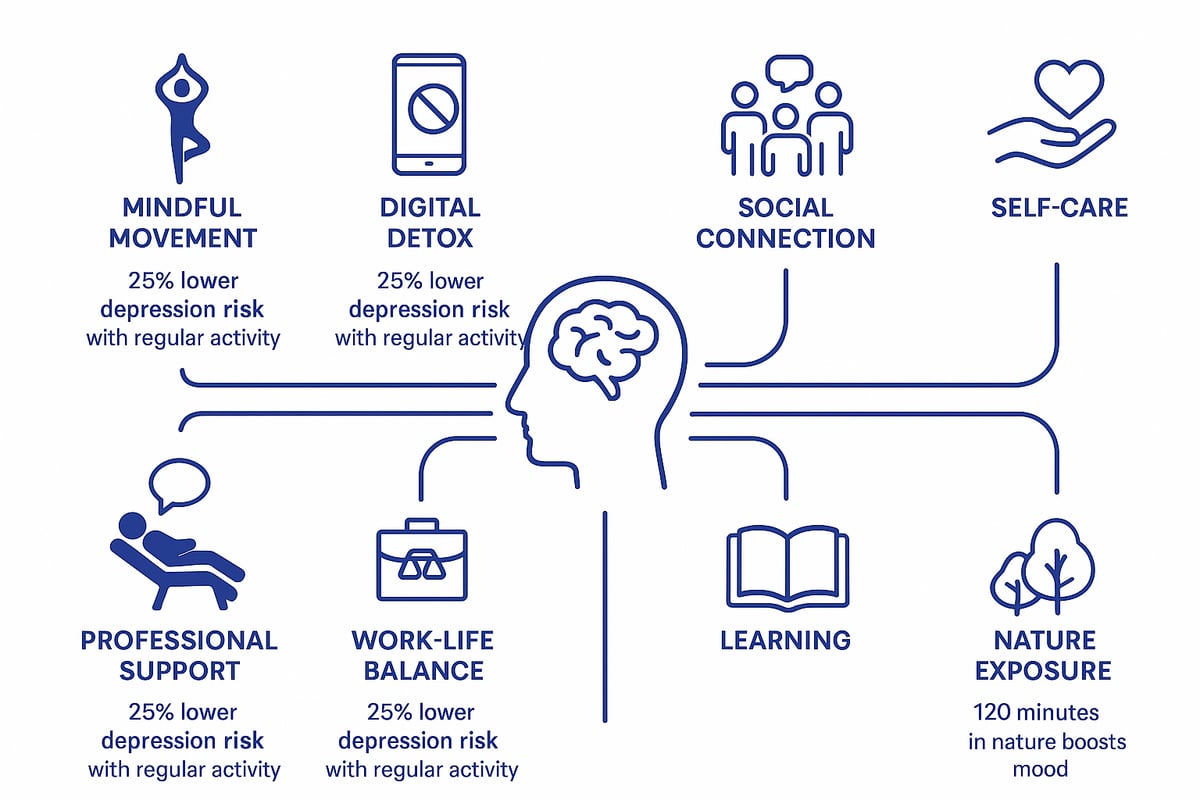
Mindful movement combines physical exercise with present-moment awareness, delivering a double benefit for mental health improvement activities. Practices like yoga, tai chi, and mindful walking help lower anxiety, reduce depression, and ease chronic stress. Research from Harvard (2023) shows that regular activity can cut depression risk by 25 percent.
Organizations such as Google have successfully introduced mindfulness-based fitness programs, blending movement and meditation for optimal employee wellbeing. For hybrid or remote teams, short movement breaks—guided by video or app—can be scheduled throughout the day.
Tips to integrate mindful movement:
- Try five-minute desk yoga sessions.
- Schedule walking meetings, either in-person or virtually.
- Encourage participation in wellness challenges.
A practical approach is to blend physical activity with daily routines, ensuring consistent engagement. To explore more strategies, see Nine ways to improve mental health.
2. [Digital Detox and Healthy Tech Boundaries]
Digital overload is a growing concern for mental health improvement activities. Excessive screen time can disrupt sleep, increase stress, and diminish focus. Setting healthy tech boundaries is essential for both individuals and organizations.
Techniques include:
- Scheduling device-free breaks during work hours.
- Creating tech-free zones in shared spaces.
- Using apps to monitor and limit screen time.
France’s “right to disconnect” policy has inspired global conversations about digital boundaries, resulting in improved sleep and concentration for employees. Organizations can implement policies that respect after-hours boundaries, while individuals benefit from turning off notifications and setting screen curfews.
These digital detox strategies create room for more meaningful interactions and reduce the cognitive load that impacts mental health improvement activities.
3. [Social Connection and Community Building]
Strong social connections are a cornerstone of mental health improvement activities. Supportive relationships foster resilience and protect against burnout and loneliness, especially in hybrid or remote workplaces.
Strategies to foster connection:
- Facilitate peer support groups or buddy systems.
- Use digital tools like Slack’s “Donut” app for random coffee chats.
- Organize regular team-building activities, both online and in person.
Balancing digital and face-to-face interactions is key. Gallup (2024) reports that employees who feel socially connected are 50 percent more engaged at work. For remote teams, virtual coffee breaks or open forums can bridge the gap and create a sense of belonging.
Overcoming isolation is vital for sustainable mental health improvement activities, ensuring everyone feels included and supported.
4. [Personalized Self-Care Routines]
Personalized self-care is at the heart of effective mental health improvement activities. Tailoring routines to individual needs—such as sleep hygiene, nutrition, creative hobbies, or mindfulness—yields the best results.
Self-assessment tools can help employees identify areas for growth. Organizations can encourage self-care by integrating it into wellness programs or offering resources such as relaxation spaces and flexible schedules.
Evidence from JAMA (2022) links consistent self-care to lower burnout rates. Examples include journaling, meditation, or participating in creative workshops. Leaders who model these behaviors help normalize self-care as a professional strength.
Encouraging personalized self-care routines empowers individuals to sustain their mental health improvement activities over time.
5. [Resilience Training and Stress Management]
Building resilience is a proactive approach within mental health improvement activities. Resilience training teaches adaptive skills for managing stress, setbacks, and change.
Effective techniques include:
- Cognitive Behavioral Therapy (CBT) exercises
- Mindfulness meditation
- Gratitude journaling
Australian organizations have seen success by integrating resilience workshops into their employee development programs. According to WMHI (2023), such initiatives led to a 30 percent decrease in absenteeism.
Implementing resilience training at work can involve group sessions, digital modules, or peer support. At home, individuals can practice journaling or mindfulness as part of their daily routine.
Resilience is not just about “bouncing back” but thriving through adversity, making it a critical element of mental health improvement activities.
6. [Access to Professional Mental Health Support]
Timely access to professional support is a cornerstone of mental health improvement activities. Early intervention through Employee Assistance Programs (EAPs), telehealth, and counseling reduces the impact of mental health issues.
Reducing stigma is essential. Campaigns and open communication help normalize seeking help. Australia’s Beyond Blue workplace program is an example of creating accessible support for staff.
Choosing the right professional or service may involve consulting HR, using digital platforms, or researching specialists. The American Psychological Association (2024) found that 60 percent of employees would use mental health resources if available.
Organizational leaders can increase utilization by promoting services confidentially and ensuring easy access, reinforcing the value of mental health improvement activities.
7. [Work-Life Balance and Flexible Work Practices]
Redefining work-life balance is vital for sustainable mental health improvement activities. Flexible hours, remote options, and four-day weeks are reshaping how organizations support employee wellbeing.
Microsoft Japan’s experiment with a four-day workweek led to a 40 percent productivity boost and improved happiness among staff. Policies that prioritize balance include clear time-off guidelines, flexible scheduling, and workload management.
Tips for maintaining work-life balance:
- Set boundaries for work and personal time.
- Use scheduling tools to block focus periods and breaks.
- Communicate needs with supervisors and teams.
Organizations that champion work-life balance see higher retention and engagement, making it a key driver of mental health improvement activities.
8. [Continuous Learning and Mental Fitness]
Continuous learning supports cognitive health and is increasingly recognized as part of mental health improvement activities. Engaging in new skills, mental agility games, or professional development builds confidence and adaptability.
Examples include online courses, workshops, or brain-training apps. Research from Lancet (2023) reveals that learning new skills can lower dementia risk by 30 percent.
Fostering a culture of curiosity encourages innovation and psychological safety. Leaders can provide access to learning platforms and recognize employees for knowledge growth.
Recommended resources:
- Professional development courses
- Team learning challenges
- Knowledge-sharing forums
Prioritizing mental fitness ensures that mental health improvement activities remain dynamic and future-focused.
9. [Nature Exposure and Eco-Therapy]
Nature exposure is a powerful yet underutilized element of mental health improvement activities. Spending time outdoors—through forest bathing, gardening, or outdoor meetings—has measurable benefits for mood and stress reduction.
The UK’s NHS prescribes “green time” as part of mental health care. A landmark study in Nature (2019) found that just 120 minutes per week in nature improves overall wellbeing.
For urban or remote workers, options include:
- Taking breaks in green spaces
- Bringing plants into workspaces
- Organizing outdoor team events
Integrating eco-therapy into daily routines provides a restorative boost, reinforcing the effectiveness of mental health improvement activities for both individuals and organizations.
Implementing Mental Health Activities in the Workplace
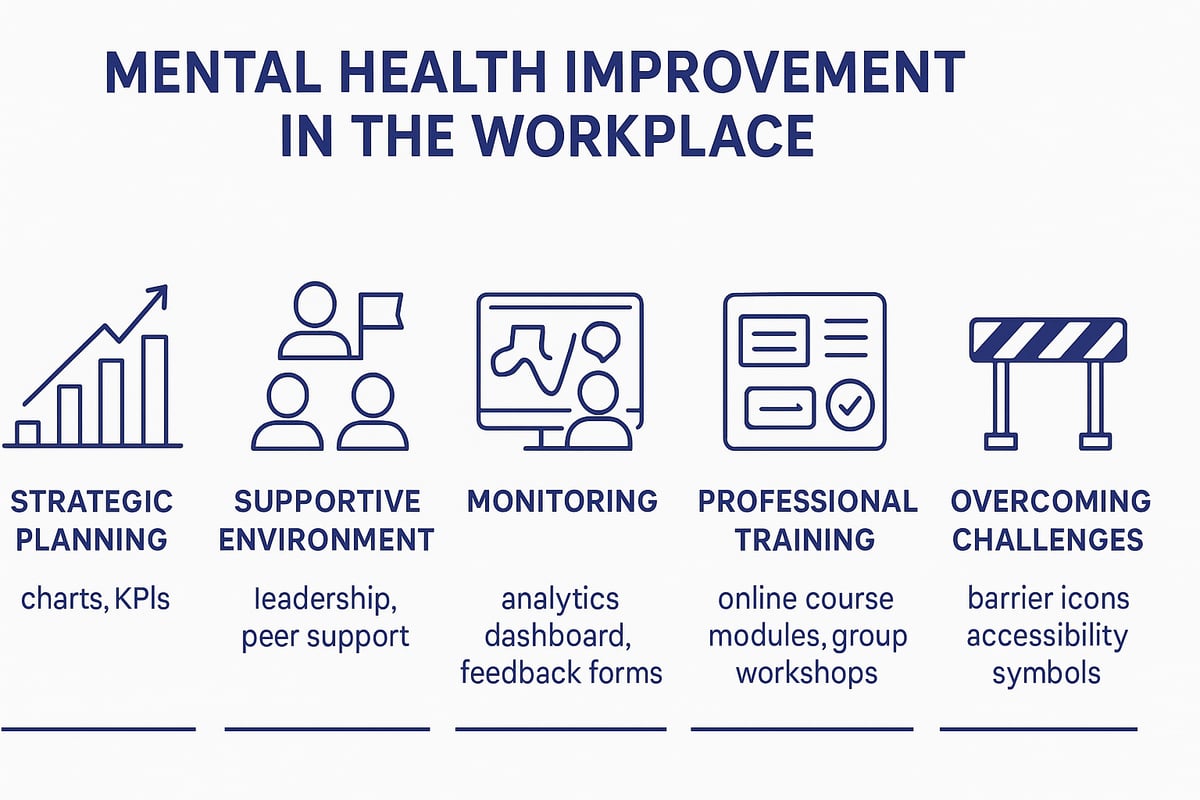
Creating a thriving workplace requires more than policies; it demands actionable mental health improvement activities that resonate with people at every level. Success depends on strategy, support, and ongoing evaluation. Here’s how organizations can embed these activities for lasting impact.
Strategic Planning for Wellbeing Initiatives
Effective mental health improvement activities begin with clear, strategic planning. Start by aligning initiatives with organizational values and priorities, ensuring leadership support from the outset. Assess employee needs using anonymous surveys or focus groups to identify gaps and opportunities for targeted interventions.
Set measurable objectives and KPIs, such as reduced absenteeism or increased engagement, to track progress. Incorporate guidance from sources like CDC’s Workplace Mental Health Strategies to benchmark against industry standards and adopt evidence-based approaches.
A strong plan ensures that mental health improvement activities are not ad hoc, but integrated into the fabric of the organization.
Building a Supportive Environment
Sustaining mental health improvement activities requires a culture where psychological safety is the norm. Leaders play a pivotal role by modeling openness and prioritizing wellbeing in daily interactions. Train managers to recognize early signs of distress, respond empathetically, and connect employees to resources.
Peer support networks can foster community, providing a safe space for sharing experiences. Consider resilience workshops, which have shown to boost engagement and reduce burnout. Explore frameworks like Building resilience at work to help teams thrive under pressure.
A supportive environment ensures that mental health improvement activities are accessible, valued, and normalized across all levels.
Monitoring, Feedback, and Continuous Improvement
Ongoing evaluation is essential for effective mental health improvement activities. Use digital analytics, participation records, and regular pulse surveys to monitor program uptake and outcomes. Gather qualitative feedback through focus groups or anonymous suggestion boxes to identify improvement areas.
Create a feedback loop where employee insights directly inform future initiatives. Consider using a simple table to compare engagement rates before and after interventions:
| Metric | Before Activities | After Activities |
|---|---|---|
| Engagement Score | 62 | 78 |
| Absenteeism (%) | 5.2 | 3.1 |
Continuous monitoring helps organizations adapt quickly, ensuring mental health improvement activities remain effective and relevant.
Leveraging Professional Training and Resources
Access to expert guidance is critical for scaling mental health improvement activities. Offer a blend of in-person, online, and hybrid training options to accommodate diverse learning preferences. Partner with trusted providers for specialized workshops, e-learning modules, and ongoing support.
Encourage staff to explore professional resources, such as the Workplace Mental Health Institute’s online courses, to deepen their understanding and skills. Regularly update offerings to reflect evolving best practices and emerging research.
Prioritizing professional development ensures mental health improvement activities are grounded in expertise and yield measurable results.
Overcoming Common Challenges and Pitfalls
Implementing mental health improvement activities is not without obstacles. Resistance, stigma, and limited resources can hinder progress. Address these by fostering open dialogue, providing clear information about benefits, and ensuring programs are inclusive and accessible to all.
Sustain momentum by celebrating small wins and sharing success stories. Establishing dedicated budgets and leadership champions can help maintain focus beyond the initial rollout.
By proactively tackling challenges, organizations can embed mental health improvement activities into their culture for long-term wellbeing.
The Future of Mental Health Improvement Activities
The future of mental health improvement activities is rapidly evolving, driven by new technology, research, and shifting workplace expectations. As organizations and individuals seek to foster lasting wellbeing, the next wave of innovation will transform both strategy and daily practice.
Anticipated Innovations and Trends
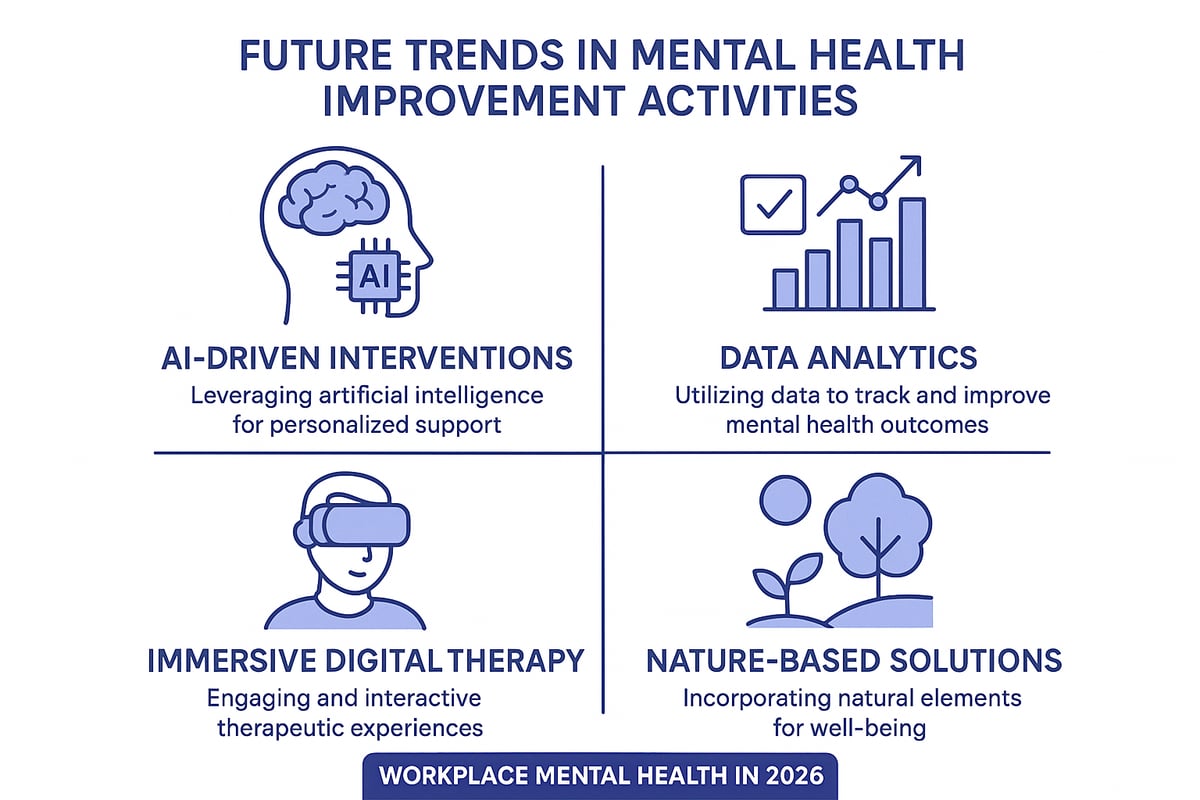
In the coming years, mental health improvement activities will be shaped by several key trends. AI-powered platforms will deliver personalized support, using real-time data to adapt interventions for each individual. Digital therapeutics and immersive experiences such as virtual reality therapy will make evidence-based care more accessible.
Organizations are expected to embed mental health into their core strategy, moving beyond compliance to measurable wellbeing outcomes. According to UNICEF’s 2024 Mental Health Report, global initiatives are also accelerating, with more countries investing in scalable, technology-enabled solutions. These advances will support proactive, preventive approaches and allow for continuous improvement in mental health support.
Preparing for Ongoing Change
As mental health improvement activities become more sophisticated, adaptability will be essential. Leaders and HR professionals must build resilient systems that can respond to evolving needs, from remote work challenges to emerging risks. Prioritizing ongoing training, fostering psychological safety, and encouraging open dialogue will help organizations stay ahead.
A proactive mindset—rather than a reactive one—will be key to sustained success. By investing in leadership development, continuous learning, and innovative wellbeing programs, organizations can create cultures that thrive even amid uncertainty. This commitment ensures mental health improvement activities remain relevant and effective, driving lasting impact for both individuals and businesses.
Taking the first steps toward better mental health—whether for yourself or your organization—can feel overwhelming, but with the right tools and evidence-based strategies, real change is possible. The nine activities we explored are designed to fit the evolving needs of 2026 and offer practical ways to foster resilience, connection, and wellbeing at work and beyond. If you’re ready to go deeper, discover actionable resources, or see how these strategies can be customized for your team, I invite you to Find Out More. Together, we can build healthier, more supportive workplaces for the future.

