
Organizations face mounting pressure to address employee mental health while maintaining productivity and competitive advantage. Wellbeing programs represent a strategic investment in workforce sustainability, directly influencing retention, performance metrics, and organizational culture. However, the gap between superficial wellness offerings and genuinely impactful wellbeing programs continues to widen, leaving many leaders uncertain about which approaches deliver measurable results. This comprehensive framework examines evidence-based strategies for designing, implementing, and sustaining workplace mental health initiatives that address the complex psychological needs of modern workforces.
Defining Effective Wellbeing Programs
Wellbeing programs extend far beyond traditional employee assistance programs or isolated wellness activities. These initiatives represent systematic organizational approaches to supporting mental health, psychological safety, and human flourishing within work environments.
Core components of comprehensive wellbeing programs include:
- Mental health literacy training for all organizational levels
- Proactive resilience-building interventions
- Trauma-informed workplace policies and practices
- Leadership capability development in psychological support
- Evidence-based stress management resources
- Integrated assessment and continuous improvement mechanisms
The distinction between performative wellness and authentic wellbeing programs lies in strategic integration. Effective initiatives align with organizational values, business objectives, and employee needs simultaneously, creating sustainable cultures rather than temporary interventions.
Research from Harvard’s Center for Work, Health, and Well-being demonstrates that integrated approaches addressing both individual and organizational factors produce superior outcomes compared to programs focusing solely on individual behavior change.
The Business Case for Strategic Investment
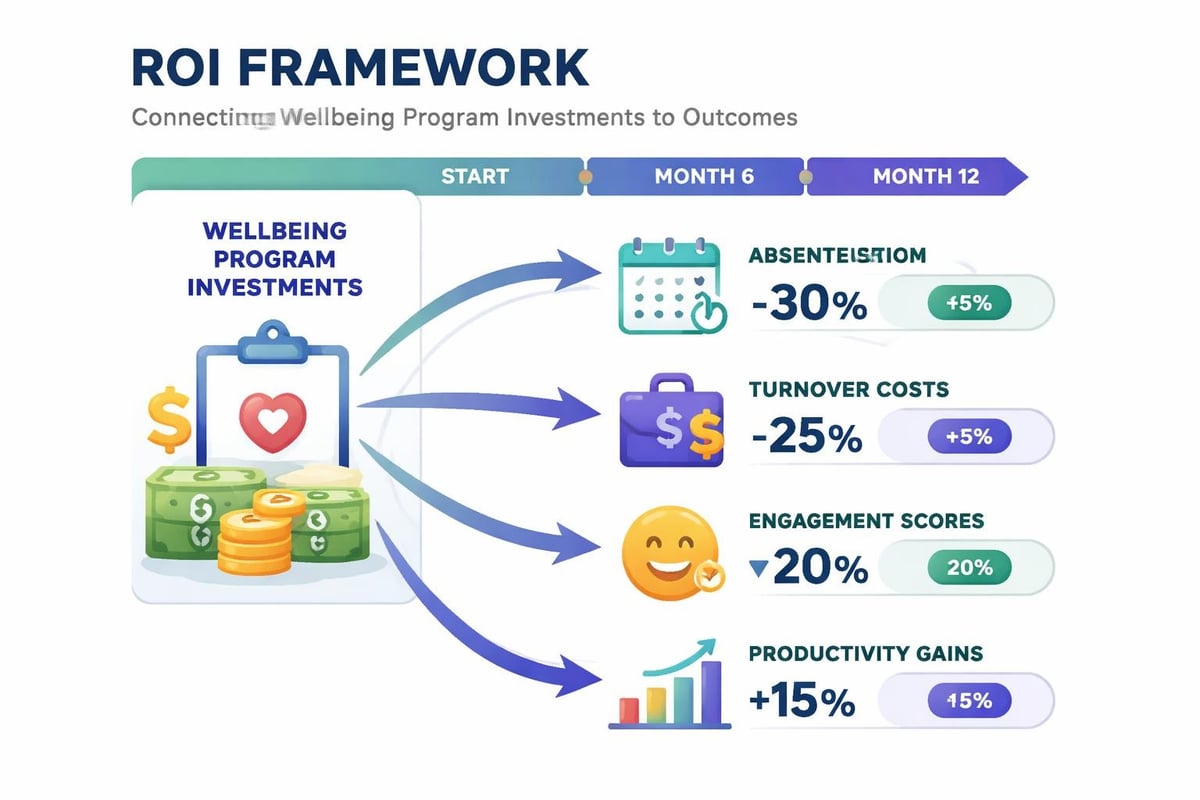
Quantifiable returns from wellbeing programs manifest across multiple organizational metrics. Organizations implementing comprehensive approaches report reductions in absenteeism averaging 25-30%, alongside decreased presenteeism and improved employee engagement scores.
| Organizational Metric | Average Improvement | Measurement Timeframe |
|---|---|---|
| Absenteeism Reduction | 25-30% | 12-18 months |
| Turnover Decrease | 15-20% | 18-24 months |
| Engagement Increase | 18-25% | 12 months |
| Productivity Gains | 12-18% | 12-24 months |
Financial modeling consistently demonstrates positive return on investment, with every dollar allocated to wellbeing programs generating between $2.70 and $4.80 in economic value through reduced healthcare costs, decreased turnover expenses, and enhanced productivity.
Strategic Design Principles
Effective wellbeing programs require intentional design grounded in organizational assessment and psychological science. Leaders must resist the temptation to adopt generic templates without customization to specific workplace contexts, demographics, and challenges.
Conducting Comprehensive Needs Assessment
Strategic program design begins with thorough assessment of current organizational mental health capacity, existing cultural factors, and employee-reported needs. This diagnostic phase identifies gaps between current state and desired outcomes while establishing baseline metrics for evaluation.
Assessment methodologies should incorporate:
- Anonymous employee surveys measuring psychological safety, stress levels, and support satisfaction
- Focus groups across diverse employee segments
- Analysis of existing utilization data for mental health resources
- Leadership capability audits regarding mental health conversations
- Review of policies, procedures, and environmental factors affecting wellbeing
Data collection must extend beyond surface-level satisfaction measures to examine underlying psychological dynamics. Understanding specific stressors, barriers to help-seeking, and preferences for support modalities enables targeted program design rather than broad, ineffective initiatives.
The CDC’s workplace mental health resources provide validated assessment frameworks that organizations can adapt to their specific contexts, ensuring evidence-aligned measurement approaches.
Integrating Individual and Organizational Interventions
Wellbeing programs achieve maximum impact when addressing both individual capability development and systemic organizational factors. This dual-focus approach recognizes that individual resilience training proves insufficient when organizational policies, leadership behaviors, or cultural norms actively undermine mental health.
Individual-level interventions build employee capacity for stress management, emotional regulation, and help-seeking behaviors. These components typically include resilience training, mindfulness-based stress reduction, cognitive-behavioral skill development, and peer support networks.
Organizational interventions modify structural and cultural elements affecting employee wellbeing. Examples include flexible work arrangements, workload management protocols, psychological safety initiatives, and leadership development in trauma-informed approaches.
Programs emphasizing only individual responsibility inadvertently suggest that workplace stress stems primarily from employee deficits rather than organizational design flaws. This imbalance creates frustration and cynicism, undermining program credibility and participation.
Implementation Framework for Leaders
Translating program design into operational reality requires systematic implementation planning, stakeholder engagement, and change management expertise. Leaders must anticipate resistance, resource constraints, and competing organizational priorities while maintaining program integrity.
Building Leadership Buy-In and Capability
Executive sponsorship determines program success or failure. Senior leaders must move beyond rhetorical support to active participation, resource allocation, and behavioral modeling of wellbeing priorities.
Leadership development represents a critical program component rather than supplementary activity. Leaders equipped with mental health literacy create psychologically safe environments where employees feel comfortable accessing support resources and discussing challenges.
Leadership capability requirements include:
- Recognizing early warning signs of mental health concerns
- Conducting supportive conversations without diagnosing or overstepping professional boundaries
- Understanding organizational support pathways and appropriate referral processes
- Modeling healthy work practices and boundaries
- Advocating for systemic changes that support employee wellbeing
Middle management represents a particularly crucial implementation layer. These leaders directly influence day-to-day employee experiences while facing significant role strain themselves. Wellbeing programs must explicitly address manager mental health alongside manager capability development.
Ensuring Accessibility and Reducing Stigma
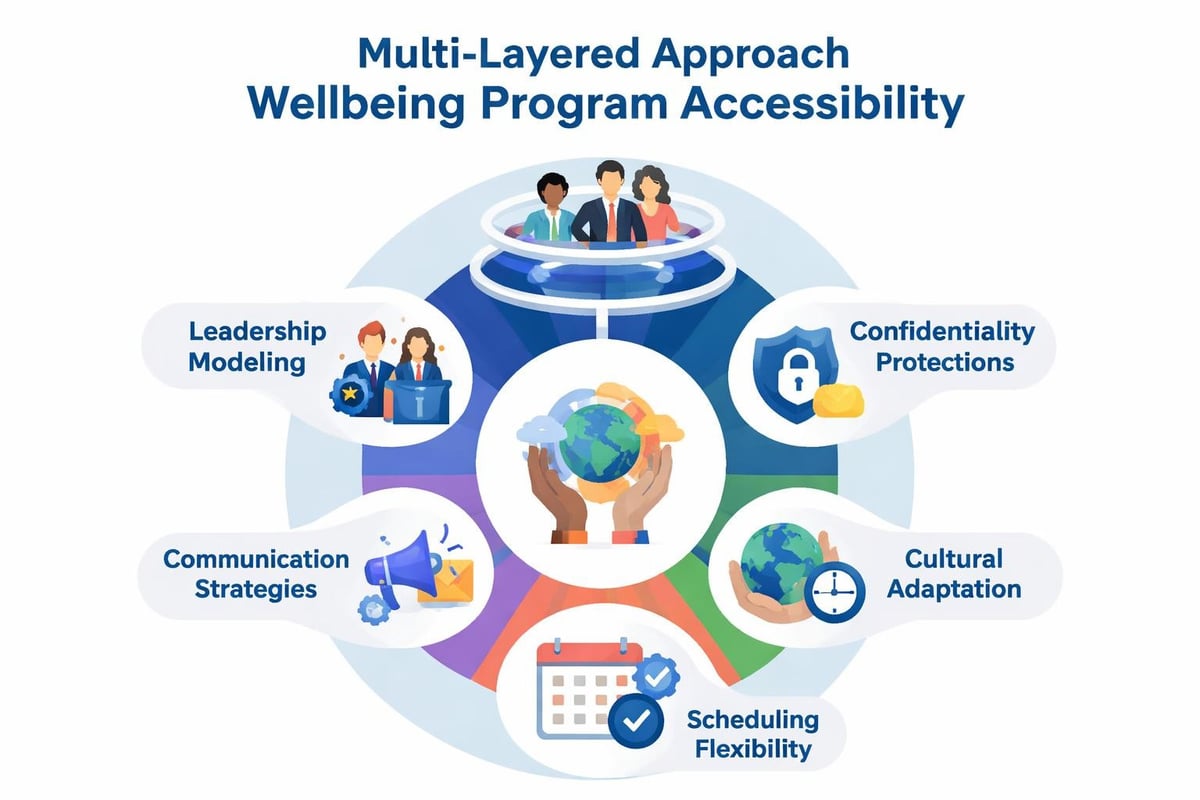
Program design means little if employees avoid participation due to stigma, accessibility barriers, or perceived career risks. Implementation strategies must actively address these obstacles through multiple mechanisms.
Stigma reduction approaches:
- Visible leadership participation and disclosure (when appropriate)
- Normalizing language around mental health in organizational communications
- Celebrating program participation rather than hiding it
- Integrating wellbeing discussions into regular business operations
- Addressing confidentiality concerns transparently and credibly
Accessibility extends beyond physical or technological access to include cultural, linguistic, and temporal considerations. Programs must accommodate diverse work schedules, remote and on-site employees, varying learning preferences, and different cultural frameworks for understanding mental health.
Organizations serving diverse populations should consult with employee resource groups, cultural advisors, and accessibility specialists during design phases to ensure inclusive program architecture from inception rather than retrofitting later.
Evidence-Based Program Components
Selecting specific interventions requires evaluating evidence quality, organizational fit, and implementation feasibility. The Pew Charitable Trusts’ guidance on evidence-based programs offers frameworks for assessing intervention quality and appropriateness.
Resilience Training and Skill Development
Resilience training helps employees develop psychological flexibility, adaptive coping strategies, and recovery capacity following adversity. Effective programs teach concrete skills rather than abstract concepts, enabling immediate practical application.
Building resilience at work involves developing specific competencies including cognitive reframing, emotional regulation, social connection, problem-solving under stress, and maintaining perspective during challenges.
Training methodologies should incorporate active learning techniques such as skills practice, peer discussion, scenario-based application, and personalized action planning. Passive information delivery through presentations or reading materials produces minimal behavioral change compared to experiential learning approaches.
Trauma-Informed Organizational Practices
Trauma-informed approaches recognize that significant percentages of employees have experienced trauma that may affect workplace functioning, stress responses, and interpersonal dynamics. These frameworks shift organizational culture from "What's wrong with you?" to "What happened to you?"
Implementing trauma-informed practices involves modifying policies, communication styles, physical environments, and leadership behaviors to maximize psychological safety and minimize re-traumatization risks. This includes predictable processes, transparent decision-making, opportunities for choice and control, and recognition of power dynamics.
Trauma-informed wellbeing programs acknowledge that traditional workplace practices such as unexpected performance reviews, abrupt schedule changes, or high-surveillance management styles may trigger stress responses disproportionate to apparent circumstances.
Mental Health First Aid and Peer Support
Distributing mental health response capability throughout organizations creates responsive support networks rather than relying solely on centralized professional resources. Mental Health First Aid training equips employees to recognize mental health concerns, provide initial support, and connect colleagues with appropriate professional help.
Peer support programs complement professional services by offering relatable, accessible assistance for common workplace stressors. Trained peer supporters provide empathetic listening, normalize help-seeking, and share coping strategies while maintaining clear boundaries regarding their non-clinical role.
Effective peer support programs include:
- Comprehensive training in active listening, boundaries, and referral processes
- Ongoing supervision and consultation for peer supporters
- Clear protocols distinguishing peer support from professional counseling
- Regular debriefing opportunities for supporters managing vicarious trauma
- Integration with broader wellbeing program architecture
Measurement and Continuous Improvement
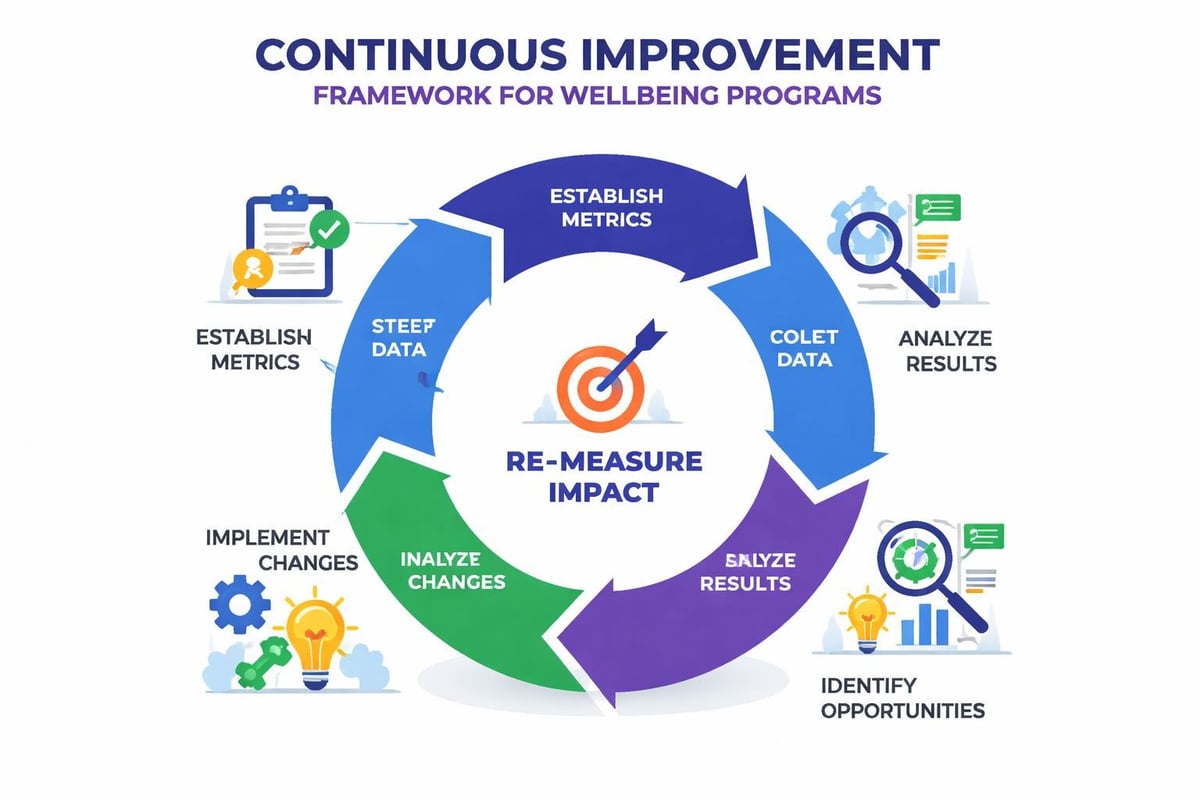
Wellbeing programs require rigorous evaluation frameworks measuring both process metrics (participation, satisfaction) and outcome metrics (health indicators, performance changes). Evaluation data informs program refinement while demonstrating value to organizational stakeholders.
Establishing Meaningful Metrics
Metric selection should align with program objectives while balancing scientific rigor with practical measurement feasibility. Leading organizations track multiple indicator categories including participation rates, behavior change, health outcomes, and business impact measures.
| Metric Category | Example Indicators | Data Sources |
|---|---|---|
| Participation | Enrollment rates, session attendance, resource utilization | Program tracking systems |
| Satisfaction | Program ratings, Net Promoter Score, qualitative feedback | Surveys, interviews |
| Knowledge/Skills | Pre-post assessments, competency demonstrations | Testing, observation |
| Behavior Change | Stress management practices, help-seeking actions | Self-report, manager observation |
| Health Outcomes | Mental health symptoms, wellbeing scores, resilience measures | Validated assessments |
| Business Impact | Absenteeism, turnover, engagement, performance ratings | HR systems, productivity data |
Measurement strategies must protect employee privacy while generating actionable organizational insights. Aggregated, de-identified data enables program evaluation without compromising individual confidentiality or creating surveillance concerns.
Adapting Programs Based on Evidence
Continuous improvement processes use evaluation data to refine program components, address implementation barriers, and optimize resource allocation. Organizations should establish regular review cycles examining both quantitative metrics and qualitative feedback.
Common adaptation needs include adjusting program timing to accommodate workflow patterns, modifying content based on participant feedback, enhancing accessibility for underserved employee segments, and updating materials to reflect emerging mental health challenges.
The Global Wellness Institute’s workplace wellbeing research highlights evolving best practices and emerging trends that organizations should monitor when updating their approaches.
Addressing Common Implementation Challenges
Organizations encounter predictable obstacles when implementing wellbeing programs. Anticipating these challenges enables proactive planning rather than reactive crisis management.
Overcoming Resource Constraints
Budget limitations, staff capacity, and time constraints represent frequently cited implementation barriers. However, resource scarcity often reflects prioritization decisions rather than absolute availability constraints.
Strategic approaches to resource optimization include phased implementation focusing on highest-impact components first, leveraging existing organizational capabilities rather than exclusively purchasing external services, and building internal trainer capacity to reduce ongoing costs.
Many effective program elements require minimal financial investment but significant leadership commitment. Policy changes supporting work-life balance, communication improvements reducing uncertainty, or workload redistribution addressing chronic overwork cost little financially yet substantially impact employee wellbeing.
Sustaining Engagement Over Time
Initial program enthusiasm often diminishes as competing priorities emerge and novelty fades. Sustaining participation requires ongoing communication, program evolution, and integration with core business processes rather than treating wellbeing as separate from organizational operations.
Engagement sustainability strategies:
- Regular program refreshes introducing new content or delivery formats
- Celebrating participant successes and program outcomes
- Incorporating wellbeing metrics into performance dashboards alongside traditional business measures
- Creating peer networks and communities of practice supporting ongoing learning
- Linking program participation to professional development opportunities
Programs positioned as temporary initiatives or supplementary activities fail to achieve cultural integration. Wellbeing must become embedded in how the organization operates rather than something employees do separately from their real work.
Regulatory and Ethical Considerations
Wellbeing programs operate within complex regulatory frameworks including disability law, privacy protections, and employment regulations. Organizations must design programs ensuring legal compliance while maintaining ethical standards exceeding minimum requirements.
Privacy and Confidentiality Protections
Employee participation in wellbeing programs generates sensitive health information requiring robust protection. Organizations must establish clear data governance policies specifying who accesses information, how data is stored and secured, and under what circumstances information might be shared.
Many employees reasonably fear that disclosing mental health concerns could jeopardize career advancement, performance evaluations, or employment security. These concerns intensify when wellbeing programs lack transparent, credible confidentiality protections.
Privacy framework essentials include:
- Explicit confidentiality policies communicated clearly and repeatedly
- Separation between program administration and performance management systems
- Third-party program delivery when organizational trust levels are insufficient
- Employee control over what information is shared and with whom
- Regular privacy audits ensuring policy compliance
Voluntary Participation and Informed Consent
While organizations may encourage wellbeing program participation, truly voluntary engagement remains ethically essential. Coercive participation through implicit career consequences or excessive management pressure undermines program credibility and psychological safety.
Informed consent processes should clearly explain program purposes, activities, confidentiality protections, data usage, and participation expectations. Employees need sufficient information to make autonomous decisions about engagement without feeling pressured or manipulated.
Global Perspectives and Cultural Adaptation
Organizations operating across diverse cultural contexts must adapt wellbeing programs to varying cultural frameworks for understanding mental health, different stigma levels, and distinct preferences for support modalities.
Western psychological models emphasizing individual agency, verbal processing, and professional counseling may not resonate in cultures prioritizing collective harmony, somatic expression, or family-based support systems. Effective programs incorporate cultural consultation during design phases rather than assuming universal applicability.
The Global Wellness Institute provides international perspectives on workplace wellbeing that help organizations understand cultural variations and adaptation requirements.
Language accessibility extends beyond translation to include culturally appropriate terminology, concepts, and examples. Direct translation of mental health terms often fails to capture culturally meaningful constructs, requiring collaboration with cultural experts and community representatives.
Implementing effective wellbeing programs requires strategic vision, sustained commitment, and continuous adaptation based on evidence and employee feedback. Organizations that integrate mental health support throughout their culture, leadership practices, and operational systems achieve meaningful improvements in both employee wellbeing and business performance. Workplace Mental Health Institute specializes in equipping leaders and organizations with the evidence-based training, assessment tools, and strategic guidance necessary to build resilience-focused workplace cultures that support sustainable performance while prioritizing psychological safety and human flourishing.

