
Organizations that integrate mental health awareness activities into their operational rhythm create environments where employees feel psychologically safe, supported, and empowered to seek help when needed. These initiatives extend far beyond token gestures during awareness months. They represent strategic interventions that reduce stigma, normalize conversations about psychological wellbeing, and equip teams with practical tools to recognize and respond to mental health challenges. When designed with intentionality and grounded in evidence, mental health awareness activities become catalysts for cultural transformation rather than performative exercises.
Understanding Mental Health Awareness in Workplace Settings
Mental health awareness activities serve a distinct purpose within organizational contexts. They create structured opportunities for employees to develop mental health literacy, understand available resources, and practice skills that support both personal wellbeing and collective psychological safety.
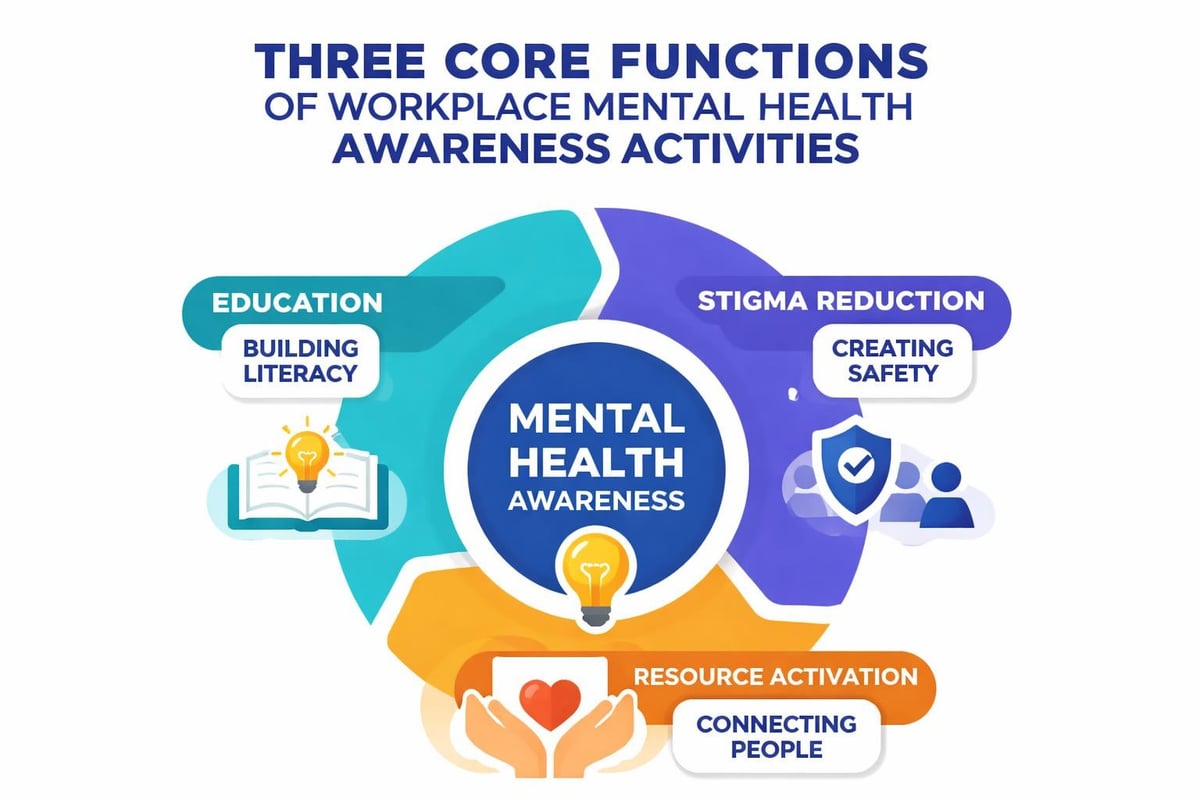
Effective awareness initiatives address three interconnected objectives:
- Education: Building foundational knowledge about common mental health conditions, stress responses, and early warning signs
- Stigma reduction: Creating normative environments where discussing mental health carries no professional penalty
- Resource activation: Ensuring employees know how to access support systems and feel confident using them
The distinction between awareness activities and clinical intervention remains critical. These programs focus on prevention, education, and culture-building rather than treatment or diagnosis.
Evidence Supporting Structured Awareness Programs
Research demonstrates that organizations implementing regular mental health awareness activities experience measurable improvements in help-seeking behavior, reduced presenteeism, and stronger peer support networks. A longitudinal study of workplace mental health initiatives found that consistent awareness programming increased employee comfort discussing mental health concerns by 43% over eighteen months.
The effectiveness depends heavily on program design. Isolated, one-time events generate minimal lasting impact. Sustained initiatives woven into organizational rhythms produce substantial cultural shifts.
| Program Frequency | Stigma Reduction | Resource Utilization | Cultural Integration |
|---|---|---|---|
| Single annual event | Low | Minimal increase | Surface-level |
| Quarterly activities | Moderate | Noticeable increase | Developing |
| Monthly touchpoints | High | Significant increase | Embedded |
| Integrated ongoing | Very high | Normalized usage | Transformational |
Manager-Led Mental Health Awareness Activities
Managers occupy a unique position to influence team psychological safety through intentional awareness activities. Their participation signals organizational commitment and creates permission structures for employees to engage authentically.
Team Mental Health Check-Ins
Structured check-in protocols provide regular opportunities for teams to discuss wellbeing without requiring crisis situations. These brief, recurring conversations normalize mental health discussion and create predictable spaces for early support.
Effective check-in frameworks include:
- Establishing psychological safety parameters at the outset
- Using scaling questions (1-10 ratings) to gauge current wellbeing
- Inviting voluntary sharing without pressure
- Identifying team-level stressors and collective responses
- Reviewing available resources and support pathways
Managers benefit from specialized training in mental health awareness to facilitate these conversations with competence and confidence.
Stress Recognition Workshops
Practical workshops equip teams to identify stress indicators in themselves and colleagues before they escalate to crisis points. These sessions move beyond theoretical discussion to develop observable skills.
Workshop components typically address:
- Physiological stress responses and their workplace manifestations
- Cognitive impacts of sustained stress on decision-making and performance
- Behavioral changes that signal emerging difficulties
- Appropriate peer support responses versus clinical interventions
- Organizational resources and referral pathways
The key differentiator lies in skill practice rather than information delivery. Role-playing scenarios, case study analysis, and guided reflection generate competency that persists beyond the session.
Organization-Wide Mental Health Awareness Campaigns
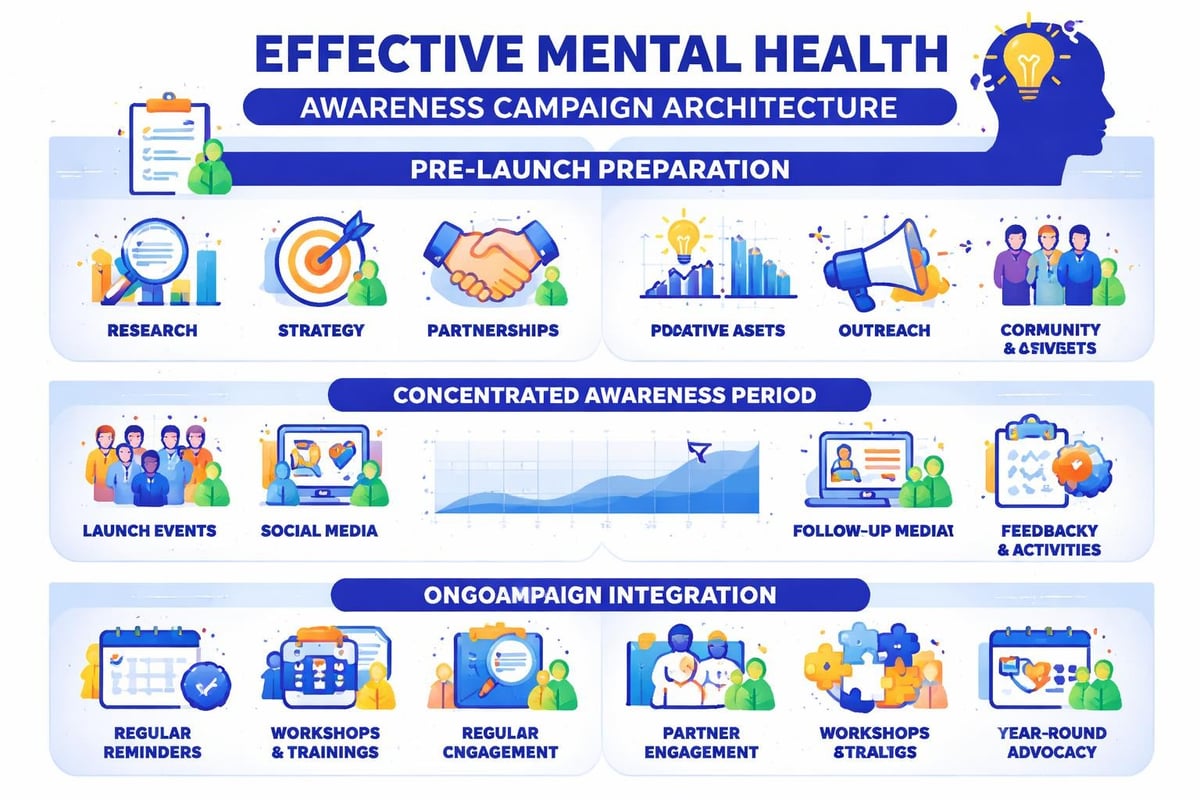
Strategic campaigns create shared organizational experiences that build collective mental health literacy while reducing stigma across all levels.
Mental Health Awareness Observances
Aligning internal activities with established awareness periods provides built-in momentum and external resources. World Mental Health Day, observed annually on October 10, offers a recognized framework for concentrated awareness efforts.
However, effective organizations extend beyond single-day observances to create sustained engagement throughout the year.
Campaign elements that drive meaningful engagement include:
- Executive storytelling that models vulnerability and help-seeking behavior
- Department-specific activities tailored to unique stressors and contexts
- Interactive learning modules accessible across work schedules
- Peer-led discussion groups that distribute ownership
- Visible commitments to policy improvements based on employee feedback
The Bell Let’s Talk campaign demonstrates how consistent, multi-year commitment to awareness activities can shift cultural norms at scale. Organizations adapting similar sustained approaches see compounding returns on their mental health investments.
Peer Support Network Development
Trained peer support networks extend mental health awareness activities into daily operations. These programs identify and prepare employees to serve as first-line resources for colleagues experiencing difficulties.
Peer supporters receive specialized training in:
- Active listening without attempting to diagnose or treat
- Recognizing situations requiring professional intervention
- Connecting colleagues to appropriate organizational resources
- Maintaining confidentiality and appropriate boundaries
- Self-care practices to prevent vicarious trauma
The presence of peer supporters creates multiple access points for employees to initiate conversations about mental health, reducing barriers that prevent help-seeking.
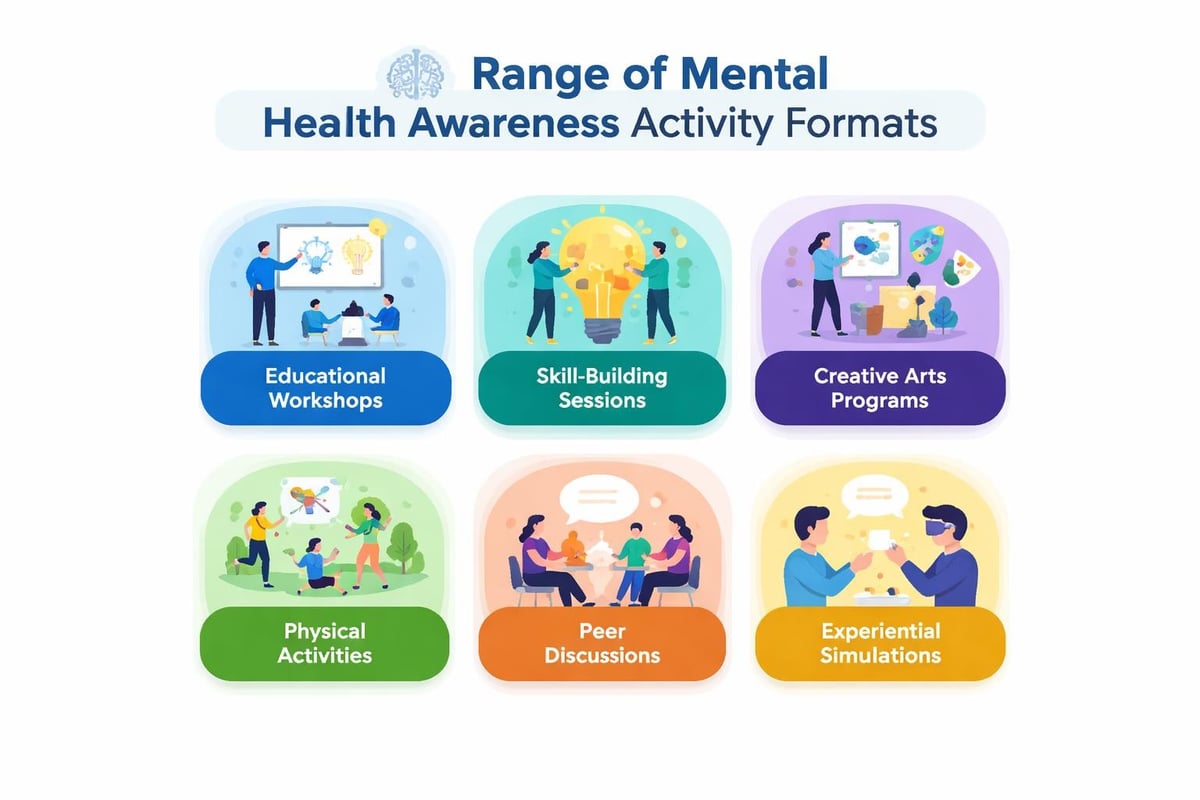
Interactive Mental Health Awareness Activities
Engagement increases substantially when awareness activities incorporate interactive, experiential elements rather than passive information consumption.
Mental Health Simulation Exercises
Guided simulations help participants understand the lived experience of common mental health challenges, building empathy and reducing stigma through perspective-taking.
These structured exercises might include:
- Anxiety simulations: Tasks performed while managing intrusive thoughts or physical symptoms
- Depression experiences: Activities demonstrating cognitive and motivational impacts
- Sensory experiences: Simulating sensory processing differences or trauma responses
- Decision-making scenarios: Exploring how mental health affects workplace choices
Facilitation quality determines simulation effectiveness. Trained facilitators provide psychological safety, process experiences appropriately, and connect insights to workplace applications.
Skill-Building Workshops
Interactive workshops teaching practical psychological skills represent high-value mental health awareness activities. Unlike informational sessions, these programs develop usable competencies.
| Workshop Focus | Primary Skills Developed | Application Context |
|---|---|---|
| Resilience building | Adaptive thinking, stress recovery | High-pressure periods |
| Emotional regulation | Recognition, labeling, modulation | Conflict situations |
| Mindfulness practice | Present-moment awareness, acceptance | Daily stress management |
| Communication skills | Assertiveness, active listening, boundary-setting | Team interactions |
| Sleep optimization | Sleep hygiene, routine development | Performance enhancement |
Organizations implementing monthly skill-building sessions create cumulative capability development across their workforce.
Creative Mental Health Awareness Activities
Non-traditional approaches engage employees who may resist conventional training formats while achieving the same awareness and stigma-reduction objectives.
Arts-Based Initiatives
Creative expression provides alternative pathways for engaging with mental health themes. Arts-based mental health awareness activities accommodate diverse learning styles and create memorable experiences.
Effective arts-based approaches include:
- Collaborative mural projects exploring team wellbeing themes
- Writing workshops focusing on stress narratives and resilience stories
- Photography exhibitions documenting workplace mental health journeys
- Theater performances addressing common psychological challenges
- Music sessions exploring emotional expression and regulation
The Cape Town International Kite Festival demonstrates how creative community events can raise mental health awareness while fostering connection and joy. Organizations can adapt this spirit through workplace-appropriate creative activities.
Physical Activity Integration
Movement-based mental health awareness activities address the bidirectional relationship between physical and psychological wellbeing. These initiatives also reduce participation barriers for employees uncomfortable with discussion-focused formats.
Examples include:
- Mental health awareness walks combining movement with educational stops
- Yoga or stretching sessions emphasizing stress-reduction benefits
- Team sports events tied to mental health fundraising and awareness
- Dance or movement classes exploring embodiment and emotional release
- Outdoor challenge activities building resilience and team connection
The Ride Don’t Hide initiative illustrates how physical activity events can simultaneously raise awareness, reduce stigma, and build community around mental health themes.
Digital Mental Health Awareness Activities
Technology-enabled activities extend reach, accommodate distributed workforces, and provide flexibility for diverse schedules and preferences.
Virtual Learning Communities
Online platforms facilitate ongoing mental health conversations beyond time and location constraints. These communities sustain awareness between structured events.
Effective virtual community features include:
- Moderated discussion forums addressing specific mental health topics
- Expert Q&A sessions with mental health professionals
- Resource libraries with self-paced learning modules
- Anonymous question submission capabilities
- Peer connection opportunities based on shared experiences
Digital communities work best when integrated with in-person activities rather than replacing face-to-face connection entirely.
Microlearning Campaigns
Brief, focused digital content delivers mental health awareness in formats compatible with workflow interruptions. Microlearning respects time constraints while building knowledge incrementally.
Successful microlearning formats include:
- Weekly email insights on specific mental health topics (3-5 minute reads)
- Short video modules addressing common workplace stressors (5-7 minutes)
- Infographics illustrating mental health statistics and resources
- Podcast episodes featuring employee mental health stories
- Mobile app notifications with daily wellbeing tips and reflections
Consistency matters more than content volume. Regular, predictable touchpoints create sustained engagement and gradual literacy development.
Measuring Mental Health Awareness Activity Impact
Strategic measurement ensures mental health awareness activities generate meaningful outcomes rather than consuming resources without return.
Key Performance Indicators
Organizations should track multiple indicators across awareness, behavior, and organizational health dimensions.
Awareness metrics:
- Mental health literacy scores (pre/post assessment)
- Resource familiarity ratings
- Policy and benefit knowledge levels
- Stigma attitude measurements
Behavioral indicators:
- Employee Assistance Program utilization rates
- Manager mental health conversation frequency
- Help-seeking timeline (early versus crisis intervention)
- Peer support network activation
Organizational outcomes:
- Psychological safety survey scores
- Absenteeism and presenteeism trends
- Turnover rates and exit interview themes
- Performance metrics and engagement scores
Baseline measurement before implementing mental health awareness activities enables meaningful comparison and demonstrates program value.
Continuous Improvement Frameworks
Data collection should inform ongoing program refinement. Organizations treating awareness activities as static initiatives miss opportunities for optimization.
Improvement cycle components:
- Participate feedback collection: Surveys, focus groups, and informal input
- Utilization analysis: Identifying which activities drive engagement and which fall flat
- Outcome correlation: Connecting specific activities to measurable wellbeing improvements
- Cultural assessment: Evaluating stigma reduction and psychological safety evolution
- Program adjustment: Modifying content, format, frequency, and delivery based on evidence
Organizations establishing comprehensive mental health policies create frameworks that guide both program implementation and continuous improvement processes.
Tailoring Activities to Organizational Context
Generic mental health awareness activities rarely achieve maximum impact. Customization based on workforce characteristics, industry demands, and organizational culture determines effectiveness.
Industry-Specific Considerations
Different sectors face distinct mental health challenges requiring tailored awareness approaches.
| Industry Sector | Primary Stressors | Appropriate Activity Focus |
|---|---|---|
| Healthcare | Compassion fatigue, trauma exposure | Vicarious trauma processing, boundary skills |
| Technology | Burnout, isolation, rapid change | Resilience building, connection activities |
| Manufacturing | Physical demands, shift work | Sleep optimization, stress recovery |
| Financial services | High pressure, performance anxiety | Emotional regulation, perfectionism management |
| Education | Emotional labor, resource constraints | Compassion practices, collective efficacy |
Workforce demographics also influence activity design. Generational preferences, cultural backgrounds, and role types all affect engagement patterns.
Scaling Across Organization Size
Mental health awareness activities require different implementation approaches depending on organizational scale.
Small organizations (under 50 employees):
- Informal, relationship-driven approaches
- Whole-company activities with high participation
- External expert facilitation for specialized content
- Flexible, responsive programming
Medium organizations (50-500 employees):
- Department-level customization within organizational frameworks
- Trained internal facilitators supplemented by external expertise
- Structured but adaptable activity calendars
- Peer support networks with clear coordination
Large organizations (500+ employees):
- Standardized core programs with local adaptation
- Dedicated mental health awareness roles or teams
- Sophisticated measurement and reporting systems
- Multi-channel delivery accommodating diverse populations
Regardless of size, leadership commitment remains the most critical success factor.
Sustaining Mental Health Awareness Momentum
Initial enthusiasm for mental health awareness activities often wanes without intentional sustainability strategies.
Integration with Existing Programs
Embedding mental health components into established organizational rhythms prevents awareness initiatives from becoming isolated add-ons that fade over time.
Integration opportunities include:
- Safety meetings incorporating psychological safety alongside physical safety
- Performance reviews addressing wellbeing alongside productivity
- Onboarding programs introducing mental health resources and culture
- Leadership development training emphasizing psychological competencies
- Team-building events intentionally addressing connection and support
When mental health awareness becomes inseparable from standard operations, it transcends program status to become cultural reality.
Leadership Modeling and Accountability
Executives and senior managers who openly participate in mental health awareness activities create powerful permission structures throughout the organization.
Effective leadership behaviors include:
- Sharing personal mental health journeys appropriately
- Publicly utilizing mental health resources and benefits
- Allocating budget and time to awareness activities
- Including mental health metrics in organizational reporting
- Holding managers accountable for team psychological safety
Visible leadership engagement transforms mental health awareness activities from HR initiatives into strategic organizational priorities.
Organizations seeking to develop comprehensive, evidence-based approaches to workplace mental health can access specialized resources through Workplace Mental Health Institute, which provides research-informed guidance on implementing effective awareness programs.
Mental health awareness activities represent strategic investments in organizational culture, employee wellbeing, and long-term performance when designed with evidence-based principles and sustained commitment. These initiatives reduce stigma, build psychological literacy, and create environments where seeking support becomes normalized rather than stigmatized. Workplace Mental Health Institute offers comprehensive training programs and strategic consultation to help organizations design, implement, and measure mental health awareness initiatives that generate meaningful, lasting impact across their workforce.

