
Modern organizations face unprecedented challenges that test their capacity to adapt, recover, and thrive. From rapid technological shifts to economic uncertainty and global disruptions, the ability to navigate adversity has become a critical determinant of workplace success. Resilience in the workplace represents more than simply enduring difficult circumstances. It encompasses the dynamic capacity of individuals, teams, and entire organizations to absorb stress, maintain functionality, and emerge stronger from challenging experiences.
Understanding Workplace Resilience as an Organizational Capability
Resilience in the workplace operates at multiple interconnected levels. Individual resilience reflects an employee's ability to regulate emotions, maintain perspective during setbacks, and adapt their approach when circumstances change. Team resilience emerges from collective problem-solving capabilities, mutual support systems, and shared commitment to organizational goals. Organizational resilience encompasses the structural elements, cultural norms, and strategic practices that enable sustained performance under pressure.
Developing strong connections and managing stress requires more than reactive crisis management. Research demonstrates that resilient organizations proactively build capacity before challenges arise, establishing psychological safety, resource buffers, and communication channels that activate when needed.
The Psychological Components of Adaptive Capacity
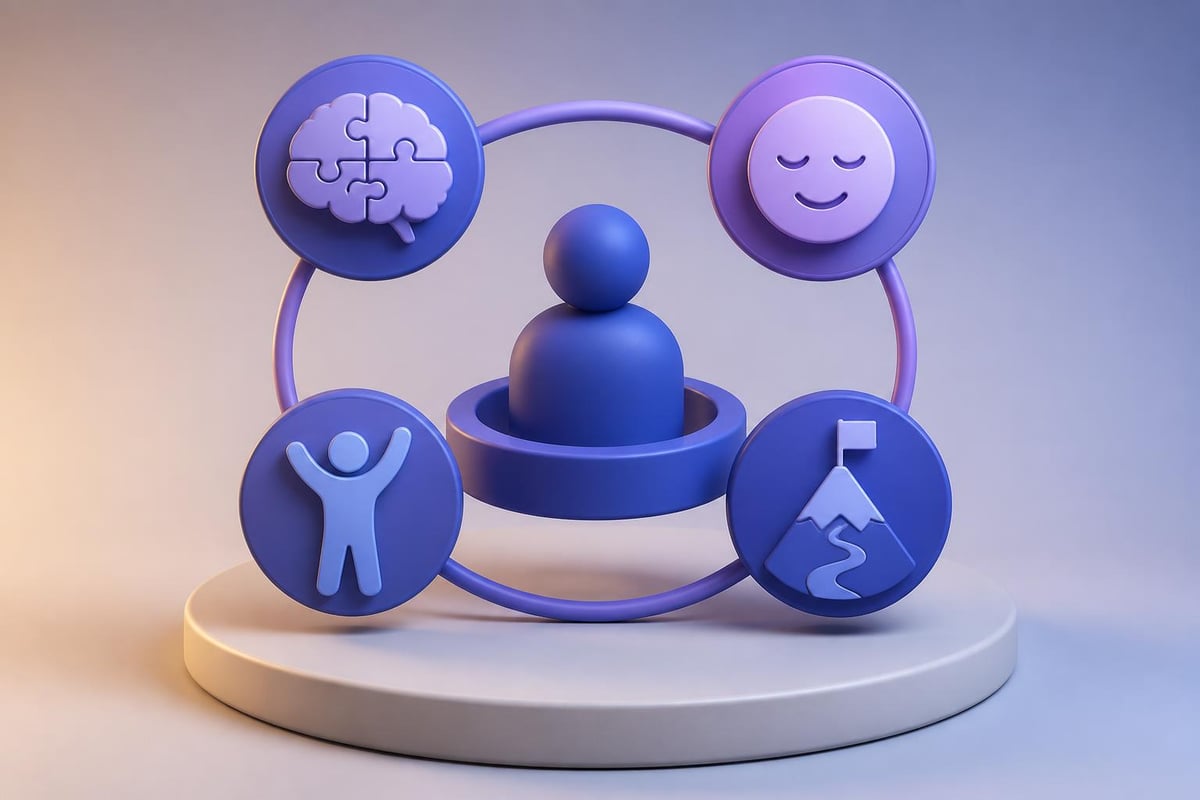
Several core psychological mechanisms underpin workplace resilience:
- Cognitive flexibility: The ability to reframe situations, consider alternative perspectives, and adjust mental models when circumstances change
- Emotional regulation: Capacity to recognize, understand, and modulate emotional responses without suppression or avoidance
- Self-efficacy: Confidence in one's ability to influence outcomes through deliberate action and persistent effort
- Purpose and meaning: Connection between daily work activities and broader values or organizational mission
These components interact dynamically rather than functioning independently. An employee with strong cognitive flexibility may more readily reframe a challenging project as a learning opportunity, which supports emotional regulation and reinforces self-efficacy through successful navigation of difficulty.
Evidence-Based Strategies for Building Individual Resilience
Organizations that invest in developing employee resilience recognize it as a learnable skillset rather than an innate personality trait. Structured training programs provide managers and employees with practical tools for strengthening adaptive capacity.
Developing Emotional Awareness and Regulation Skills
Emotional intelligence forms the foundation of resilience in the workplace. Employees who accurately identify their emotional states can implement appropriate regulation strategies before stress escalates to impairment. Effective training programs teach:
- Recognition of physiological stress signals including tension patterns, breathing changes, and fatigue indicators
- Labeling techniques that create cognitive distance from intense emotional states
- Situational analysis to distinguish controllable factors from external circumstances
- Response selection based on context, available resources, and desired outcomes
Many employees operate with limited emotional vocabulary, defaulting to broad categories like "stressed" or "frustrated" that obscure specific triggers and appropriate responses. Precise emotional labeling activates prefrontal regulatory networks that moderate amygdala-driven reactivity.
Strengthening Cognitive Reappraisal Capabilities
Maintaining positivity and embracing change requires deliberate cognitive practices that counter automatic threat-focused thinking. Cognitive reappraisal involves reinterpreting potentially threatening situations to reduce their emotional impact without denying legitimate concerns.
| Automatic Thought Pattern | Reappraisal Strategy | Outcome |
|---|---|---|
| "This project failure proves I'm incompetent" | "This specific approach didn't work; what can I learn?" | Preserves self-efficacy while extracting lessons |
| "Everything is falling apart" | "Multiple challenges exist; which requires immediate attention?" | Reduces overwhelm through prioritization |
| "I shouldn't need help with this" | "Seeking input demonstrates commitment to quality outcomes" | Normalizes collaboration and support-seeking |
Reappraisal training produces measurable improvements in stress response, job satisfaction, and performance metrics. Unlike positive thinking approaches that dismiss legitimate concerns, reappraisal maintains accurate situation assessment while modifying interpretation and response selection.
Creating Organizational Conditions That Support Resilience
Individual skills operate within organizational contexts that either facilitate or constrain their application. Creating environments that promote recovery, adaptation, and growth requires deliberate attention to structural and cultural factors.
Establishing Psychological Safety as Foundational Infrastructure
Psychological safety describes team climates where individuals feel secure taking interpersonal risks including admitting mistakes, asking questions, and challenging existing practices. Without psychological safety, employees conceal difficulties, avoid seeking help, and disengage from problem-solving, undermining both individual and collective resilience.
Leaders build psychological safety through consistent behaviors:
- Acknowledging uncertainty and modeling appropriate help-seeking
- Responding to mistakes with curiosity about contributing factors rather than blame
- Inviting dissenting perspectives and demonstrating genuine consideration of alternative viewpoints
- Clarifying decision-making processes so employees understand how input influences outcomes
Organizations often conflate psychological safety with absence of accountability or standards. Effective psychological safety operates alongside clear performance expectations, creating conditions where employees address challenges directly rather than concealing them.

Implementing Sustainable Workload and Recovery Practices
Resilience in the workplace depends fundamentally on adequate recovery opportunities. Chronic overload depletes the physiological and psychological resources required for adaptive responses. Prioritizing self-care and managing boundaries prevents the exhaustion that masquerades as resilience while actually reflecting unsustainable resource depletion.
Organizations that genuinely support resilience establish:
- Realistic project timelines that account for complexity, interdependencies, and inevitable setbacks
- Protected recovery periods including genuinely disconnected time off and sustainable daily schedules
- Workload monitoring systems that identify concerning patterns before they produce burnout
- Resource allocation processes that adjust support in response to demand fluctuations
Many workplace cultures reward visible struggle and equate long hours with commitment. These norms actively undermine resilience by depleting recovery capacity and normalizing unsustainable practices.
Developing Leadership Capabilities That Foster Team Resilience
Manager behavior exerts disproportionate influence on team resilience. Leaders shape the psychological climate, model adaptive responses to challenges, and control access to resources and support. The Leaders Masterclass equips managers with specialized skills for building team resilience through evidence-based approaches.
Adaptive Communication During Uncertainty
Effective leaders communicate transparently during ambiguous or changing circumstances without creating unnecessary alarm. This requires balancing several competing objectives:
- Providing available information while acknowledging what remains unknown
- Outlining decision-making timelines so employees understand when clarity will emerge
- Identifying controllable actions employees can take despite uncertainty
- Normalizing emotional responses while maintaining confidence in collective capability
Poor communication during uncertainty typically falls into two patterns. Some leaders withhold information, creating information vacuums that employees fill with worst-case speculation. Others overshare concerns without context or action steps, transferring anxiety without providing agency.
Supporting Individual Differences in Stress Response
Employees demonstrate considerable variation in stress triggers, recovery needs, and effective coping strategies. Principles for cultivating resilience recognize that standardized approaches miss individual differences that determine intervention effectiveness.
Skilled managers:
- Conduct individual check-ins that identify specific stressors and preferred support approaches
- Offer flexible work arrangements that accommodate different recovery and productivity patterns
- Tailor development opportunities to individual growth edges rather than applying uniform programs
- Monitor for early warning signs specific to each team member's stress presentation
This personalized approach requires ongoing observation, psychological awareness, and genuine curiosity about employee experience rather than assumptions based on manager preferences.

Measuring and Monitoring Organizational Resilience
Effective resilience initiatives require assessment frameworks that capture meaningful indicators without creating measurement burden. Organizations track resilience through multiple complementary approaches.
Leading and Lagging Indicators of Adaptive Capacity
Comprehensive measurement systems combine forward-looking capability indicators with outcome metrics that reflect resilience in action:
| Leading Indicators | Lagging Indicators |
|---|---|
| Psychological safety survey scores | Recovery time following disruptions |
| Manager skill assessment results | Absenteeism and presenteeism rates |
| Employee participation in resilience training | Performance maintenance during challenges |
| Help-seeking and early intervention rates | Voluntary turnover patterns |
| Workload and recovery metric trends | Innovation and improvement initiatives |
Leading indicators identify developing capacity before testing circumstances arise. Lagging indicators demonstrate whether that capacity translates to actual performance under pressure. Organizations need both to distinguish genuine resilience from untested assumptions.
Conducting Regular Resilience Assessments
Workplace wellbeing assessments provide structured evaluation of resilience-related factors across the organization. Effective assessments examine:
- Individual-level factors including stress levels, coping strategies, and perceived support
- Team-level dynamics such as psychological safety, collaborative problem-solving, and mutual support
- Organizational systems including workload sustainability, resource adequacy, and recovery opportunities
- Leadership practices that either support or undermine resilience development
Assessment results inform targeted interventions rather than generic wellness initiatives. Organizations might discover that specific departments face unique stressors, particular leadership gaps impair team resilience, or systemic workload issues undermine individual coping efforts.
Integrating Resilience Into Strategic Workforce Development
Strategies for fostering workplace resilience extend beyond crisis response to proactive capacity building embedded in core talent development processes. Organizations that treat resilience as fundamental to performance integrate it throughout the employee lifecycle.
Embedding Resilience in Onboarding and Role Transitions
New employees and those transitioning to expanded roles face predictable stressors that provide natural resilience development opportunities. Structured onboarding processes that explicitly address adaptation challenges accelerate capability development while reducing unnecessary struggle.
Effective approaches include:
- Normalizing the adjustment process with realistic previews of common challenges and typical timelines
- Teaching organization-specific coping resources including support channels, problem-solving processes, and cultural norms
- Establishing early check-in protocols that identify difficulties before they escalate
- Pairing with experienced mentors who model adaptive responses and provide contextual guidance
Organizations often focus onboarding exclusively on technical skill transfer, missing opportunities to build adaptive capacity when employees are most receptive to learning organizational norms and practices.
Continuous Skill Development Through Workplace Challenges
Real workplace challenges provide authentic learning opportunities that exceed abstract training scenarios. Organizations that leverage difficulties for development reframe setbacks as growth opportunities without minimizing their impact.
This approach requires:
- After-action review processes that extract lessons from both successes and difficulties
- Psychological safety sufficient for honest examination of contributing factors
- Time allocation for reflection rather than immediate transition to the next task
- Documentation systems that capture insights for organizational learning
Teams that consistently conduct structured reviews develop pattern recognition capabilities that improve future response selection and reduce repetitive mistakes.
Building Sustainable Resilience Programs
Effective organizational resilience initiatives avoid both superficial wellness offerings and intensive interventions that create dependency. Sustainable programs build self-directed capability while providing appropriate support structures.
Designing Tiered Support Systems
Comprehensive resilience programs offer multiple intervention levels that match support intensity to individual needs:
- Universal prevention: Skills training, information resources, and environmental modifications accessible to all employees
- Targeted early intervention: Additional support for employees facing identified risk factors or early difficulty signs
- Intensive assistance: Specialized intervention for employees experiencing significant impairment or crisis situations
This tiered approach ensures efficient resource allocation while preventing gaps where employees fall between insufficient universal programs and intensive crisis responses reserved for severe situations.
Ensuring Leadership Accountability for Resilience Outcomes
Resilience initiatives fail when positioned as employee responsibility separate from organizational practices. Genuine commitment requires leader accountability for creating conditions that support or undermine adaptive capacity.
Organizations establish accountability through:
- Including resilience metrics in leadership performance evaluations and organizational scorecards
- Allocating resources for training, workload management, and environmental improvements
- Reviewing policies that inadvertently penalize adaptive behaviors like boundary-setting or help-seeking
- Modeling resilient practices at senior levels rather than exempting leadership from expectations
When leaders treat resilience as employee deficiency requiring correction rather than organizational capacity requiring investment, initiatives produce minimal sustainable impact despite resource expenditure.
Building genuine resilience in the workplace requires integrated approaches that develop individual capabilities, strengthen team dynamics, and establish organizational systems that support sustained adaptation. These efforts produce measurable returns through enhanced performance, reduced absence, and improved retention during inevitable challenges. Workplace Mental Health Institute provides comprehensive training programs, strategic consultation, and workplace wellbeing assessments that equip leaders and employees with practical skills for developing resilience. Their evidence-based approaches emphasize empowering, positive frameworks that build lasting adaptive capacity tailored to your organization's specific context and challenges.

