
Psychological injury at work represents one of the most significant challenges facing modern organizations, yet it remains poorly understood compared to physical workplace injuries. These invisible wounds can devastate employee wellbeing, organizational performance, and workplace culture. For HR professionals and business leaders, recognizing that psychological injury at work carries the same legitimacy and requires the same systematic response as physical injuries marks the first step toward building truly resilient workplaces.
Defining Psychological Injury in Workplace Contexts
A psychological injury at work occurs when an employee develops a diagnosable mental health condition directly attributable to workplace factors. This differs fundamentally from general workplace stress or temporary emotional reactions.
Key characteristics include:
- A diagnosable mental health condition (such as major depressive disorder, anxiety disorders, or PTSD)
- Direct causal relationship to workplace events or conditions
- Functional impairment affecting work performance or personal life
- Duration extending beyond normal adjustment periods
The distinction between everyday workplace stress and genuine psychological injury matters significantly for both legal and clinical purposes. While stress represents a normal response to challenging situations, psychological injury involves clinical-level symptoms that require professional intervention.
Common Types and Presentations
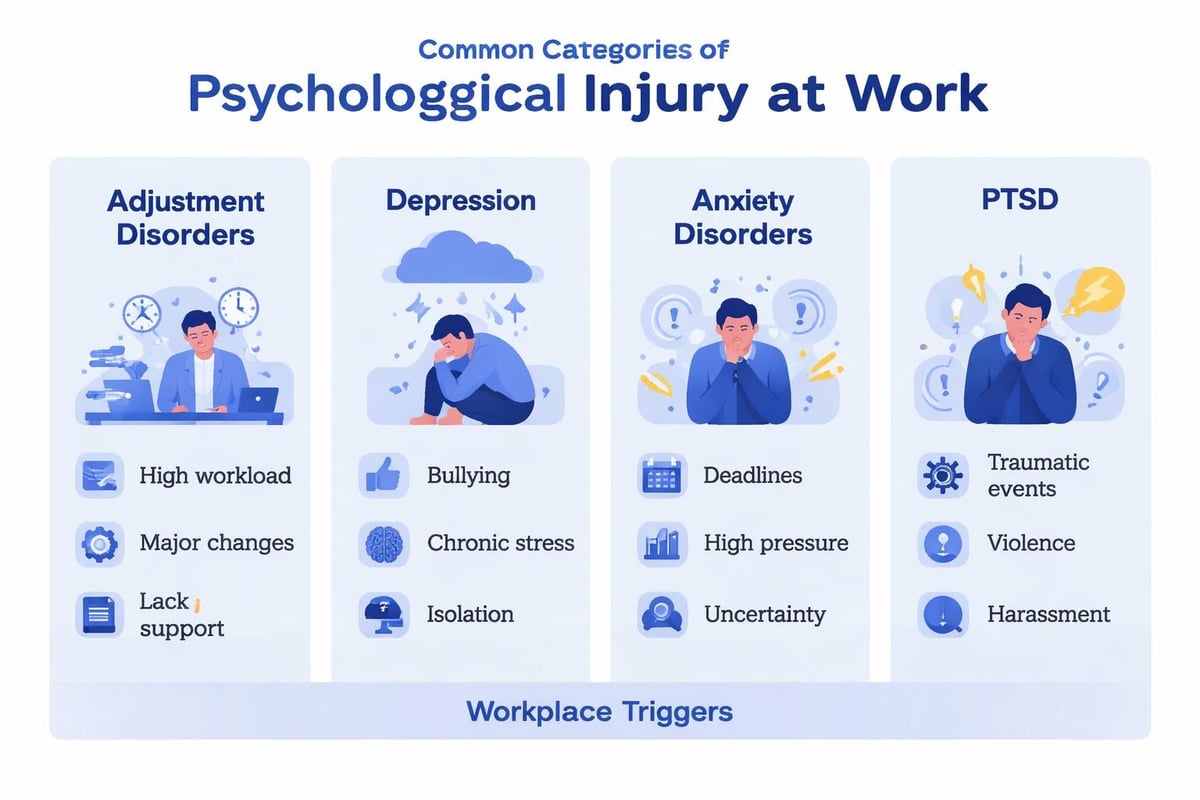
Psychological injuries manifest in various forms depending on workplace circumstances and individual factors.
| Condition Type | Primary Triggers | Common Symptoms |
|---|---|---|
| Adjustment Disorders | Organizational change, role transitions | Anxiety, difficulty concentrating, emotional distress |
| Major Depression | Prolonged stress, workplace conflict, bullying | Persistent low mood, loss of interest, fatigue |
| Anxiety Disorders | High-pressure environments, job insecurity | Excessive worry, physical tension, avoidance behaviors |
| PTSD | Traumatic workplace events, violence exposure | Intrusive memories, hypervigilance, emotional numbing |
Organizations in high-stress sectors or those involving trauma exposure face elevated risk profiles requiring specialized prevention frameworks available through mental health training programs.
Identifying Psychological Injuries Early
Early identification dramatically improves recovery outcomes and reduces long-term organizational costs. However, psychological injuries often remain hidden until symptoms become severe.
Observable Warning Signs
Managers trained in psychological safety can recognize early indicators before conditions deteriorate. Unlike physical injuries with visible symptoms, psychological injuries require attention to behavioral and performance changes.
Performance-related indicators:
- Declining work quality or productivity
- Increased errors or safety incidents
- Difficulty meeting deadlines previously managed easily
- Withdrawal from team collaboration
Behavioral changes:
- Increased absenteeism or presenteeism
- Emotional volatility or uncharacteristic reactions
- Social withdrawal from colleagues
- Changes in appearance or self-care
Research demonstrates that workers experiencing psychological distress face significantly higher injury rates, creating a bidirectional relationship between mental health and workplace safety.
Creating Psychologically Safe Reporting Systems
Many employees hesitate to report psychological injury at work due to stigma, fear of career consequences, or uncertainty about organizational support. Effective reporting systems address these barriers directly.
Successful frameworks include multiple reporting pathways, confidential processes, clear non-retaliation policies, and visible leadership commitment to psychological safety. Australian organizations can access specialized support through Workplace Mental Health Institute Australia for culturally appropriate implementation strategies.
Primary Workplace Causes and Risk Factors
Understanding causation helps organizations implement targeted prevention strategies rather than generic wellness programs that fail to address root causes.
Organizational and Environmental Factors
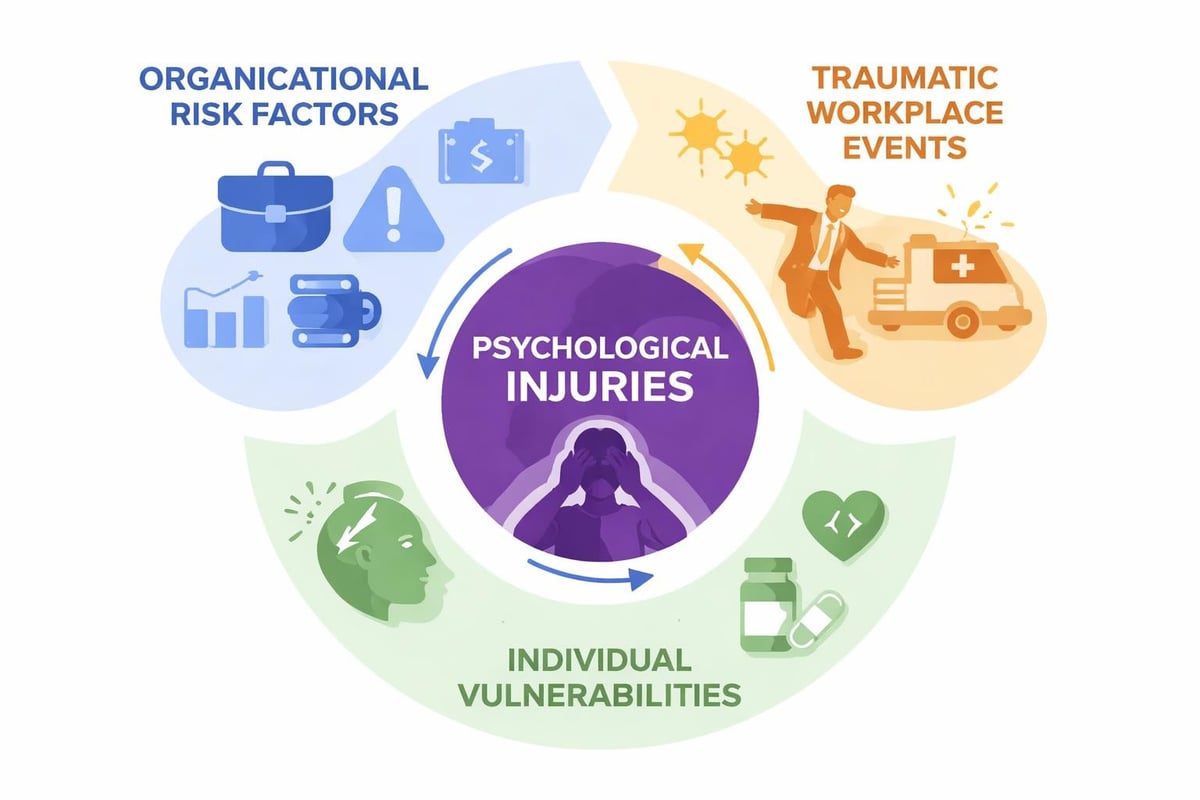
Psychological injuries rarely result from single incidents. Instead, they typically emerge from sustained exposure to harmful workplace conditions or high-impact traumatic events.
High-risk organizational conditions:
- Chronic understaffing leading to unsustainable workloads
- Poor leadership practices including bullying or harassment
- Inadequate role clarity or conflicting expectations
- Limited autonomy or excessive micromanagement
- Workplace violence or trauma exposure
- Organizational restructuring without adequate support
Research on environmental factors contributing to psychological injury claims reveals that workplace conditions often interact with individual vulnerabilities, making person-environment fit crucial for prevention.
High-Impact Traumatic Events
Certain workplace incidents carry inherent psychological injury risk regardless of individual resilience. First responders, healthcare workers, social services professionals, and retail employees face elevated exposure to potentially traumatic events.
Organizations employing workers in trauma-exposed roles require proactive trauma-informed care frameworks. The Workplace Mental Health Institute offers specialized training in trauma-informed leadership and peer support models.
Legal and Workers Compensation Considerations
Psychological injury at work carries significant legal implications that vary across jurisdictions but share common principles regarding employer responsibility and worker rights.
Compensability Criteria
Most workers compensation systems now recognize psychological injuries, though threshold requirements differ substantially from physical injury claims.
Common compensability requirements:
- Diagnosed mental health condition by qualified professional
- Predominant causation by work-related factors
- Injury occurring during course of employment
- Exclusion of reasonable management actions conducted reasonably
The requirement for "predominant causation" creates complexity, as psychological conditions often involve multiple contributing factors. Documentation quality significantly impacts claim success rates.
Employer Obligations and Liability
Organizations hold legal duties to prevent foreseeable psychological injuries through risk assessment, hazard control, and systematic intervention when risks are identified. Failure to address known psychological hazards can result in liability exposure beyond workers compensation systems.
Progressive organizations approach psychological injury prevention not merely as legal compliance but as strategic workforce investment. Evidence demonstrates that preventing psychological injury at work generates substantial returns through reduced turnover, improved productivity, and enhanced employer brand reputation.
Evidence-Based Prevention Strategies
Preventing psychological injury requires multilayered approaches addressing individual, team, and organizational levels simultaneously.
Primary Prevention: Reducing Risk Exposure
Primary prevention targets workplace conditions before injuries occur. This represents the most cost-effective intervention level yet remains underdeveloped in many organizations.
| Prevention Level | Strategic Focus | Implementation Examples |
|---|---|---|
| Primary | Eliminate or reduce hazards | Workload management, anti-bullying policies, role clarity |
| Secondary | Early intervention for at-risk workers | Manager training, psychological safety surveys, peer support |
| Tertiary | Support injured workers' recovery | Return-to-work programs, reasonable accommodations, rehabilitation support |
Organizations can assess baseline psychological safety through comprehensive workplace wellbeing assessments that identify specific risk factors within their unique operational contexts.
Effective primary prevention also requires identifying mental and emotional hazards systematically, just as physical safety programs identify ergonomic or chemical hazards.
Manager Training and Capability Development
Frontline managers represent the most critical factor in both preventing and exacerbating psychological injury risk. Yet most managers receive minimal training in psychological safety leadership.
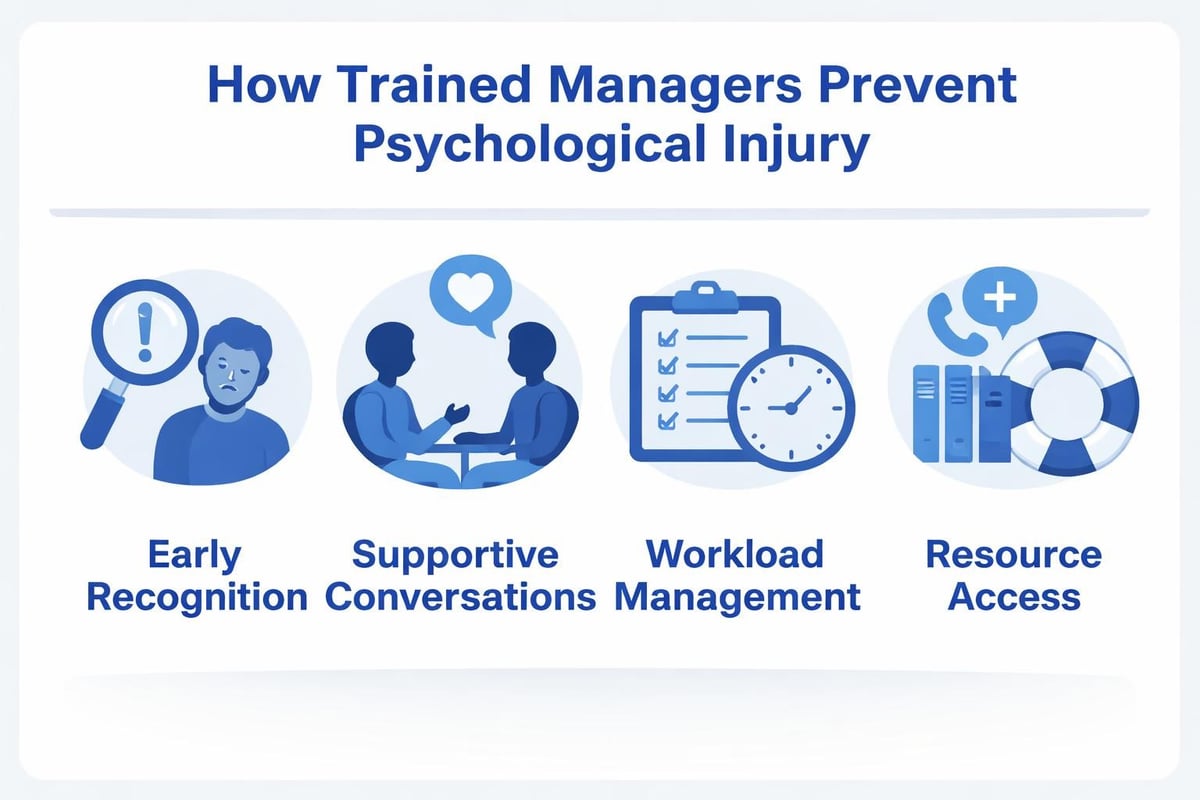
Essential manager competencies include:
- Recognizing early warning signs of psychological distress
- Conducting supportive conversations about mental health
- Implementing reasonable workload management
- Responding appropriately to disclosures
- Accessing organizational support resources
Research consistently demonstrates that manager capability in psychological safety directly correlates with team mental health outcomes. Organizations investing in comprehensive manager development through specialized training programs report measurable reductions in psychological injury rates.
Supporting Recovery and Return to Work
When psychological injury at work occurs despite prevention efforts, organizational response quality dramatically impacts recovery trajectories and outcomes.
Immediate Response Protocols
The initial response to psychological injury disclosure sets the tone for the entire recovery process. Managers should respond with empathy, avoid minimizing the employee's experience, maintain confidentiality appropriately, and connect the employee with professional support resources.
Delayed or dismissive responses compound injury severity and extend recovery timelines. Organizations benefit from establishing clear protocols that managers can follow confidently, reducing their own anxiety about "saying the wrong thing."
Graduated Return-to-Work Planning
Effective return-to-work programs for psychological injuries differ from those designed for physical injuries. Mental health recovery rarely follows linear progressions, requiring flexibility and individualization.
Effective return-to-work elements:
- Gradual hour increases based on functional capacity
- Temporary duty modifications reducing identified stressors
- Regular check-ins without excessive monitoring
- Clear documentation of accommodations and expectations
- Collaboration with treating healthcare providers
Social and psychological impacts of workplace injuries extend beyond the individual, affecting team dynamics and organizational culture. Thoughtful reintegration processes acknowledge these broader impacts.
The goal involves sustainable return to full duties, not merely getting employees back to work quickly. Premature returns frequently result in relapse, extended absence, and permanent work capacity loss.
Building Organizational Resilience Infrastructure
Long-term psychological injury prevention requires embedded organizational capabilities rather than reactive responses to individual cases.
Systematic Risk Assessment and Monitoring
Organizations should conduct regular psychological risk assessments using validated tools that measure specific psychosocial hazards. These differ fundamentally from engagement surveys, focusing on evidence-based risk factors including job demands, control, support, relationships, role clarity, and organizational change management.
Assessment data should drive targeted interventions at team and organizational levels, not simply generate reports. Measuring trends over time reveals whether interventions effectively reduce risk or require adjustment.
Creating Psychologically Safe Cultures
Establishing psychologically safe and healthy work environments requires deliberate culture development, not simply policy implementation. Psychological safety emerges when employees believe they can speak up, make mistakes, and seek help without negative consequences.
Culture-building strategies include:
- Leadership vulnerability and authentic communication
- Normalizing mental health conversations
- Celebrating help-seeking as strength
- Addressing problematic behaviors consistently
- Transparent decision-making processes
Organizations can access evidence-based resources through Workplace Mental Health Institute’s YouTube channel featuring expert guidance on culture transformation.
Integration with Broader Wellbeing Strategies
Psychological injury prevention works most effectively when integrated within comprehensive workplace wellbeing strategies rather than siloed mental health initiatives. This integration ensures consistency between organizational policies, leadership behaviors, and wellbeing messaging.
Strategic consultation services help organizations align psychological safety initiatives with business objectives, performance management systems, and operational realities. This alignment prevents wellbeing programs from being perceived as disconnected from core business priorities.
Specialized Considerations for High-Risk Sectors
Certain industries face elevated psychological injury risk requiring sector-specific approaches beyond general prevention frameworks.
Healthcare and Emergency Services
Healthcare workers, paramedics, and emergency responders encounter regular trauma exposure, moral injury risks, and sustained high-stress conditions. Standard workplace mental health approaches prove insufficient for these environments.
Effective programs incorporate trauma-informed peer support, critical incident stress management, regular psychological screening, and organizational cultures that normalize professional support utilization. These specialized frameworks require facilitators trained in trauma-informed care principles.
Essential Frontline Workers
Retail, hospitality, and customer service employees face unique psychological injury risks including customer aggression, limited autonomy, irregular scheduling, and public health threats. Recent years have intensified these stressors significantly.
Prevention strategies must address both interpersonal violence exposure and chronic organizational stressors. Training employees in de-escalation techniques while simultaneously ensuring adequate staffing and manager support creates multilayered protection.
Organizations can develop customized approaches through specialized consultation addressing their specific industry risk profiles and operational constraints.
Understanding and preventing psychological injury at work requires moving beyond awareness to systematic organizational capability development. When leaders invest in evidence-based training, proactive risk management, and supportive response systems, they create workplaces where psychological safety enables both employee wellbeing and business performance. Workplace Mental Health Institute provides the specialized training, assessment tools, and strategic consultation organizations need to build these capabilities, transforming psychological safety from compliance obligation to competitive advantage.

