
The digital transformation of mental health response has made psychological first aid online training an essential resource for organizations preparing to support employees through crisis situations. As workplace leaders recognize their responsibility to respond effectively when team members experience traumatic events, distress, or acute crisis moments, the accessibility of evidence-based training has become paramount. Psychological first aid online programs provide managers, HR professionals, and designated responders with structured approaches to offer immediate, compassionate support without requiring clinical mental health credentials.
Understanding Psychological First Aid in Workplace Contexts
Psychological first aid represents an evidence-informed modular approach for assisting people in the immediate aftermath of disaster, terrorism, or other traumatic events. Unlike clinical intervention or formal counseling, this framework focuses on reducing initial distress and fostering short-term and long-term adaptive functioning and coping.
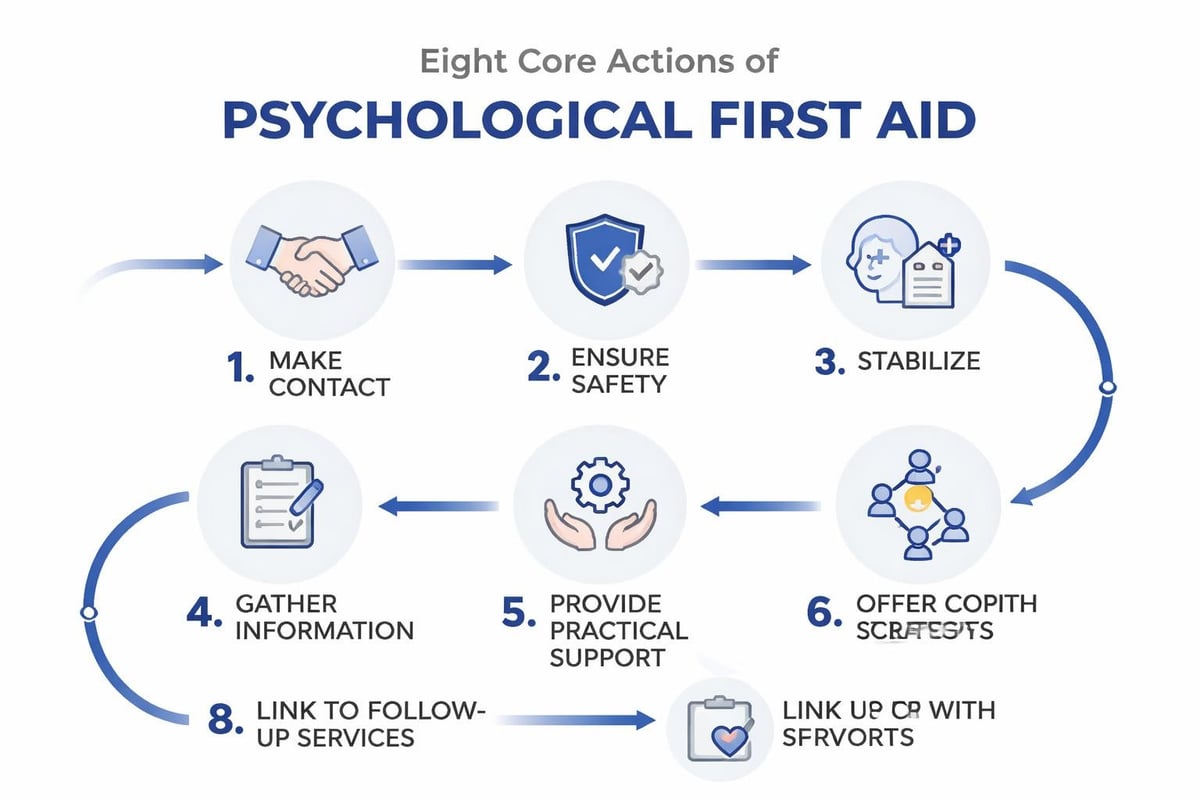
The Psychological First Aid Field Operations Guide developed by the National Child Traumatic Stress Network and the National Center for PTSD establishes eight core actions that define competent response. These actions form the foundation of workplace applications where employees may face sudden loss, organizational change, workplace violence, or community disasters affecting their capacity to function.
Core Actions Framework
Organizations implementing psychological first aid online training prepare responders to execute specific, sequential actions:
- Contact and engagement establishes compassionate, non-intrusive connection with affected individuals
- Safety and comfort addresses immediate physical and emotional security needs
- Stabilization assists those who appear overwhelmed or disoriented
- Information gathering determines current needs and concerns without forcing disclosure
- Practical assistance provides tangible help with immediate priorities
- Connection with social supports facilitates contact with primary support persons
- Information on coping normalizes stress reactions and teaches basic stress management
- Linkage with collaborative services connects individuals with continued care when appropriate
This structured approach differs fundamentally from crisis counseling or psychological debriefing, emphasizing practical support and empowerment rather than processing trauma narratives.
Digital Delivery Models for PFA Training
Psychological first aid online courses have evolved significantly from basic information delivery to interactive learning experiences incorporating multimedia elements, scenario-based practice, and competency verification. Organizations selecting training platforms should evaluate content depth, learning methodology, and alignment with workplace application requirements.
The interactive PFA course offered through SAMHSA exemplifies comprehensive digital training, providing approximately five to six hours of structured learning through video demonstrations, expert mentor guidance, and practical activities. This format allows workplace teams to complete training at their own pace while ensuring consistent skill development across all participants.
Comparison of Online Training Formats
| Training Type | Duration | Key Features | Best Suited For |
|---|---|---|---|
| Self-paced interactive modules | 5-6 hours | Video scenarios, knowledge checks, downloadable resources | Individual learners, distributed teams |
| Live virtual instructor-led | 4-8 hours (multiple sessions) | Real-time practice, group discussion, personalized feedback | Leadership teams, response coordinators |
| Blended hybrid approach | Variable | Online foundation + in-person practice sessions | Organizations building comprehensive response capacity |
| Microlearning series | 10-15 short modules | Focused topics, mobile accessibility, spaced repetition | Ongoing skill maintenance, broad workforce education |
Organizations benefit from platforms offering certification documentation, demonstrating that designated responders have completed evidence-based training. This credential becomes particularly valuable when establishing workplace crisis response protocols or demonstrating organizational preparedness to stakeholders.
Implementing PFA Training for Workplace Response Teams
Strategic implementation of psychological first aid online programs requires careful consideration of who receives training, how skills transfer to workplace scenarios, and what support structures enable effective application during actual incidents.
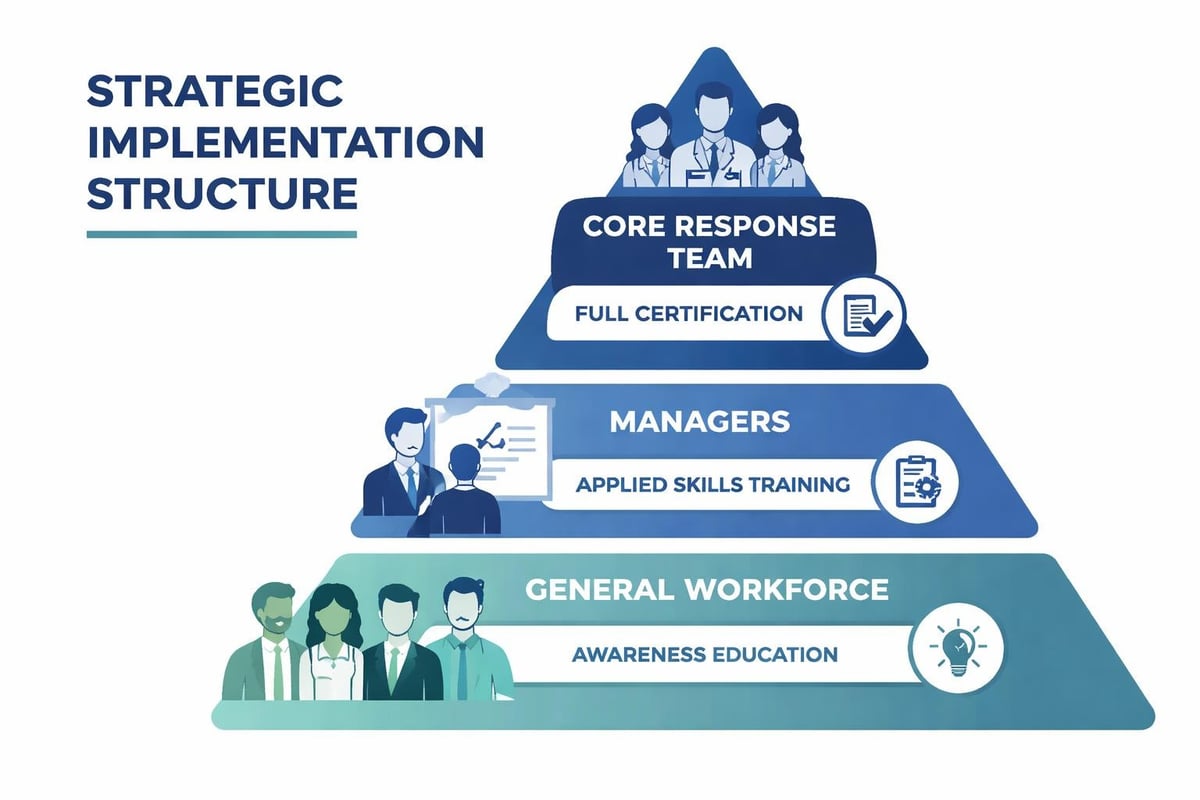
Workplace Mental Health Institute recommends a tiered approach where core response team members receive comprehensive training while broader employee populations gain awareness-level education. This model ensures sufficient skilled responders while building organizational understanding of appropriate crisis support.
Identifying Appropriate Responders
Not every employee requires full psychological first aid online certification, but organizations should intentionally select and prepare specific individuals:
Managers and team leaders represent the front line of workplace response, often being first to observe employee distress or receive disclosure of traumatic events. Their training should emphasize recognizing when to apply PFA techniques versus when to immediately escalate to professional resources.
Human resources professionals coordinate organizational response to critical incidents affecting multiple employees or requiring policy application. Their PFA skills complement investigative and administrative responsibilities, enabling more humane crisis navigation.
Designated peer supporters who have established trust relationships within specific departments or shifts can provide culturally appropriate, accessible support when professional resources may feel distant or intimidating.
Wellbeing or resilience champions who already lead mental health initiatives benefit from adding PFA competencies to their broader mental health literacy, creating seamless pathways between prevention, early intervention, and crisis response.
Organizations with distributed or remote workforces face unique implementation challenges requiring adapted approaches. Virtual psychological first aid training prepares responders to deliver support through digital channels while recognizing the limitations of remote connection during crisis moments.
Evidence Base and Effectiveness Research
The scientific foundation supporting psychological first aid continues strengthening through research examining outcomes across diverse populations and crisis contexts. Organizations selecting training investments should understand both the established evidence and acknowledged research gaps.
The National Center for PTSD identifies PFA as an evidence-informed intervention rather than claiming evidence-based status, acknowledging that while theoretical foundations are sound and initial research shows promise, randomized controlled trials demonstrating superiority over alternative approaches remain limited.
Research Findings and Organizational Implications
Recent studies examining PFA application in workplace and community settings reveal several consistent patterns:
- Individuals receiving psychological first aid report feeling more supported and less isolated than those receiving no structured intervention
- Organizations with trained responders demonstrate faster return to functional operations following critical incidents
- Early PFA provision correlates with reduced long-term distress symptoms among employees experiencing traumatic events
- Training completion improves responder confidence and reduces hesitation to offer support
However, research also identifies important considerations. PFA effectiveness depends heavily on responder competence and authentic compassion rather than mechanical application of steps. Training completion alone does not guarantee quality implementation without organizational culture supporting its values.
Organizations should recognize that psychological first aid online training represents one component of comprehensive crisis preparedness, not a standalone solution. Effectiveness requires integration with clear protocols, professional backup resources, and leadership commitment to trauma-informed workplace practices.
Selecting Quality Online Training Programs
The expansion of psychological first aid online offerings creates both opportunity and complexity for organizations evaluating options. Quality assessment requires examining curriculum alignment with established frameworks, instructional design effectiveness, and practical applicability to workplace contexts.
Programs aligned with the National Child Traumatic Stress Network’s PFA model provide consistency with widely recognized standards, facilitating integration with community emergency response systems and mutual aid agreements. This alignment becomes particularly valuable for organizations coordinating with external crisis resources.
Essential Program Components
Scenario-based learning allows participants to practice decision-making in simulated crisis situations, developing pattern recognition and response flexibility before facing actual incidents. Effective scenarios reflect workplace-relevant situations including sudden employee loss, exposure to workplace violence, and supporting employees affected by community disasters.
Cultural responsiveness content prepares responders to adapt approaches based on individual differences in communication preferences, help-seeking behaviors, and cultural interpretations of distress and support. Workplace applications must account for generational, cultural, and neurodivergent variations in how employees experience and express crisis reactions.
Clear boundaries education helps responders understand their role limitations, preventing both under-response (avoiding necessary action) and over-response (attempting clinical intervention beyond training scope). This boundary clarity protects both the person in distress and the responder from harm.
Practice opportunities with feedback distinguish quality training from information-only presentations. Interactive exercises, role-play scenarios, and knowledge application checks ensure skill development rather than passive content consumption.
Organizations can explore comprehensive workplace mental health training programs through https://thewmhionline.com, which integrates psychological first aid principles within broader manager capability development.
Adapting PFA Principles to Ongoing Workplace Challenges
While psychological first aid was developed primarily for acute disaster response, workplace applications increasingly address ongoing stressors and chronic adversity rather than single traumatic events. This adaptation requires thoughtful application of core principles to situations like prolonged organizational change, sustained performance pressure, or cumulative exposure to secondary trauma.
Application Beyond Crisis Events
Organizations benefit from extending PFA training beyond traditional crisis response to situations including:
- Supporting employees managing chronic health conditions that periodically affect workplace functioning
- Assisting team members navigating complex personal circumstances like divorce, caregiving challenges, or housing instability
- Responding to discriminatory experiences or microaggressions that create ongoing workplace stress
- Helping employees process exposures to distressing content in roles involving customer crisis, media monitoring, or content moderation
- Supporting teams through sustained uncertainty during mergers, restructuring, or industry disruption
This expanded application requires careful attention to avoiding role confusion. Psychological first aid online training prepares workplace responders for brief, focused support and appropriate connection to resources, not ongoing counseling relationships.
| Traditional PFA Application | Adapted Workplace Application | Key Considerations |
|---|---|---|
| Immediate post-disaster support | Support during organizational crisis | Maintain focus on current needs versus past processing |
| Time-limited intervention (hours to days) | Brief, repeated contact over weeks | Establish clear boundaries about ongoing support limits |
| Connection to external resources | Integration with EAP and internal wellbeing programs | Ensure warm handoffs rather than simple referrals |
| Focus on stabilization and safety | Emphasis on maintaining workplace functioning | Balance compassion with performance requirements |
The Wikipedia overview of psychological first aid provides accessible background on the intervention’s evolution and diverse applications across settings.
Integration with Broader Workplace Mental Health Strategy
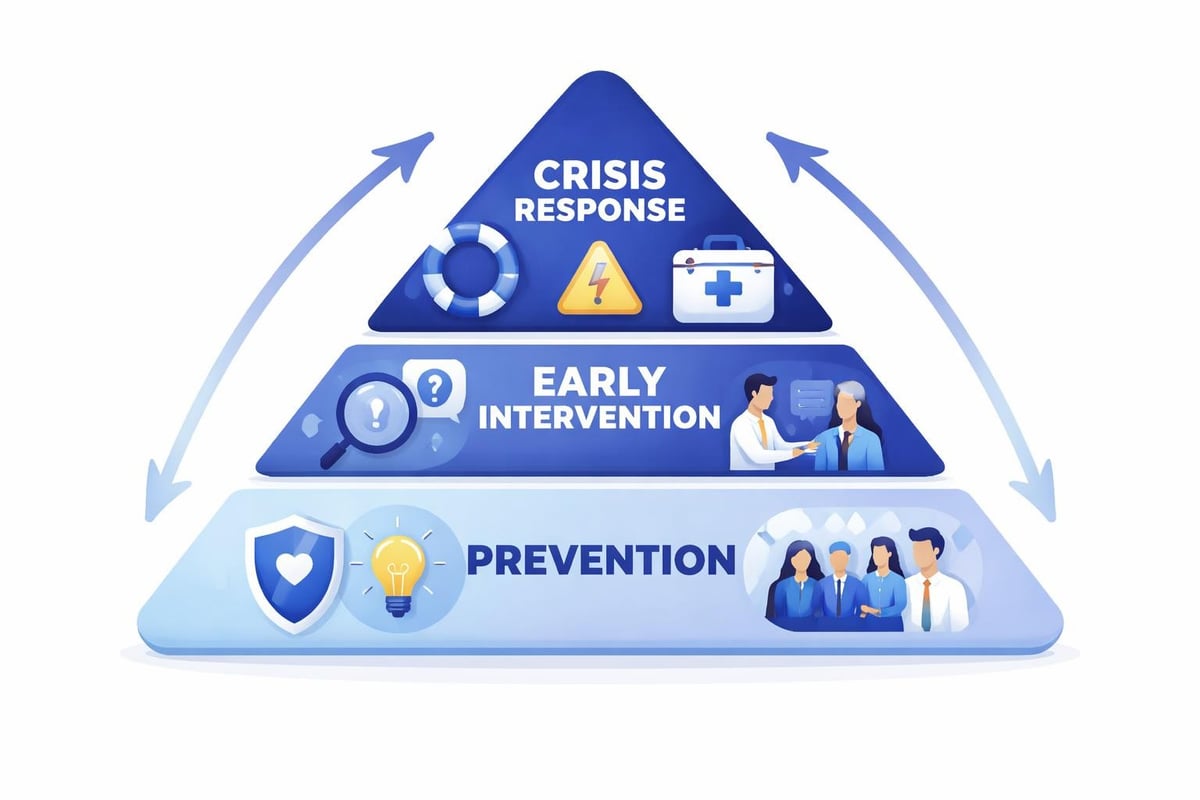
Psychological first aid online training delivers maximum value when integrated within comprehensive workplace mental health approaches rather than implemented as an isolated capability. This strategic integration ensures that crisis response aligns with prevention efforts, early intervention programs, and organizational culture development.
Organizations building integrated approaches typically position PFA training within three complementary strategy layers. Prevention initiatives address workplace factors that reduce crisis likelihood and build general resilience. Early intervention programs identify and support employees showing early distress signals before crisis escalation. Crisis response capabilities, including psychological first aid, provide structured support when prevention and early intervention prove insufficient.
Creating Supportive Implementation Infrastructure
Training completion represents the beginning rather than the end of building effective PFA capacity. Organizations optimize their investment through:
Establishing clear activation protocols that define when and how trained responders engage, preventing both delayed response and inappropriate intervention. These protocols should address manager notification procedures, documentation requirements, and privacy protections.
Providing supervisor support for responders who may experience vicarious trauma or emotional burden from supporting colleagues in crisis. Regular check-ins and access to debriefing resources sustain responder wellbeing and prevent burnout.
Developing resource connection pathways that enable seamless linkage to Employee Assistance Programs, community mental health services, and specialized crisis resources. Pre-established relationships and referral processes eliminate barriers during time-sensitive situations.
Conducting periodic skill refreshers and scenario practice that maintain competency and confidence between actual incidents. Annual or biannual refresher sessions help responders retain core actions and adapt to updated best practices.
Australian organizations can access regionally relevant resources and training through Workplace Mental Health Institute, ensuring cultural appropriateness and local service integration.
Measuring Impact and Continuous Improvement
Organizations investing in psychological first aid online training should establish measurement approaches that demonstrate value and identify improvement opportunities. Unlike some workplace initiatives, PFA effectiveness cannot be assessed through simple utilization metrics or satisfaction scores alone.
Meaningful Evaluation Approaches
Process metrics track implementation quality, including the percentage of designated responders completing initial training and refreshers, average time from incident identification to PFA provision, and documentation completion rates. These indicators reveal whether the program operates as designed.
Outcome indicators examine effects on supported individuals and broader organizational resilience. These might include employee feedback on support quality, retention rates following critical incidents, and comparison of recovery trajectories between employees who received structured support versus those who did not.
Responder competence assessments evaluate whether trained individuals demonstrate appropriate skill application through scenario evaluations, supervisor observations during actual incidents, and self-efficacy measures. Competence tracking identifies additional training needs or individuals requiring supplementary support.
Integration measures assess how well PFA capabilities connect with broader systems, including referral completion rates to professional resources, communication quality between responders and HR teams, and alignment with incident management protocols.
Organizations should resist the temptation to measure PFA success through incident frequency reduction, as this confuses crisis response effectiveness with prevention outcomes. Proper measurement focuses on response quality when incidents do occur.
Future Directions in Digital PFA Training
The landscape of psychological first aid online training continues evolving through technological advancement, expanding research, and growing recognition of workplace mental health as an organizational priority. Organizations developing or updating crisis response capabilities should consider emerging trends that may influence future implementation.
Artificial intelligence and virtual reality applications show promise for enhancing training realism and personalization. Emerging tools like AI-based psychological consultation assistants may eventually supplement human responders, though current applications remain limited and require careful ethical consideration.
Specialized PFA adaptations for specific workplace contexts continue developing, including protocols for supporting remote workers, addressing collective trauma affecting entire teams, and responding to crisis situations unique to particular industries. Organizations in high-stress sectors benefit from training incorporating industry-specific scenarios and challenges.
Growing emphasis on peer support models integrates psychological first aid principles within structured peer supporter programs, creating accessible support networks throughout organizations. This democratization of crisis response capability reduces dependence on small response teams while building organizational resilience culture.
The comprehensive resources available through NCTSN provide ongoing updates as the field advances, ensuring organizations can access current best practices.
Building Organizational Readiness Through Training Investment
The decision to implement psychological first aid online training reflects organizational commitment to employee wellbeing beyond compliance-driven approaches. This investment signals that leadership values compassionate crisis response and recognizes manager responsibility extending beyond operational supervision to human support.
Successful implementation requires honest assessment of current organizational capacity and gaps. Many organizations discover that while general mental health awareness has grown, specific skills for responding in crisis moments remain underdeveloped. Training addresses this gap systematically.
Budget considerations should account for both direct training costs and implementation support requirements. While many quality psychological first aid online courses are available at low or no cost, effective implementation involves staff time for training completion, development of supporting protocols and resources, and ongoing sustainment activities.
Organizations beginning PFA capability development benefit from phased approaches. Initial cohorts of trained responders can pilot implementation, identify practical challenges, and inform refinements before broader rollout. This iterative approach builds institutional knowledge and allows adaptation to organizational culture and specific needs.
Leadership participation in training, even when executives won’t serve as designated responders, demonstrates commitment and builds understanding of what the organization asks from trained staff. This visible support increases program legitimacy and responder confidence.
Building workplace capacity for compassionate, effective crisis response through psychological first aid online training represents a strategic investment in organizational resilience and employee wellbeing. By equipping managers and designated responders with evidence-informed skills, organizations create safety nets that support employees through their most difficult moments while fostering cultures where seeking and offering help becomes normalized rather than stigmatized. Workplace Mental Health Institute provides comprehensive training programs that integrate psychological first aid principles within broader manager capability development and organizational wellbeing strategies, helping organizations build sustainable crisis response capacity aligned with prevention and early intervention efforts.

