
Organizations seeking to build psychologically safe workplaces are increasingly investing in structured mental awareness training as a foundational element of their wellbeing strategies. A mental awareness course equips employees and managers with the knowledge to recognize mental health conditions, understand their impact on workplace performance, and respond with appropriate support. Unlike generalized wellness initiatives, these courses provide evidence-based frameworks for identifying distress, reducing stigma, and facilitating early intervention-capabilities that directly influence organizational outcomes including reduced absenteeism, improved retention, and enhanced team productivity.
Understanding Mental Awareness Training Frameworks
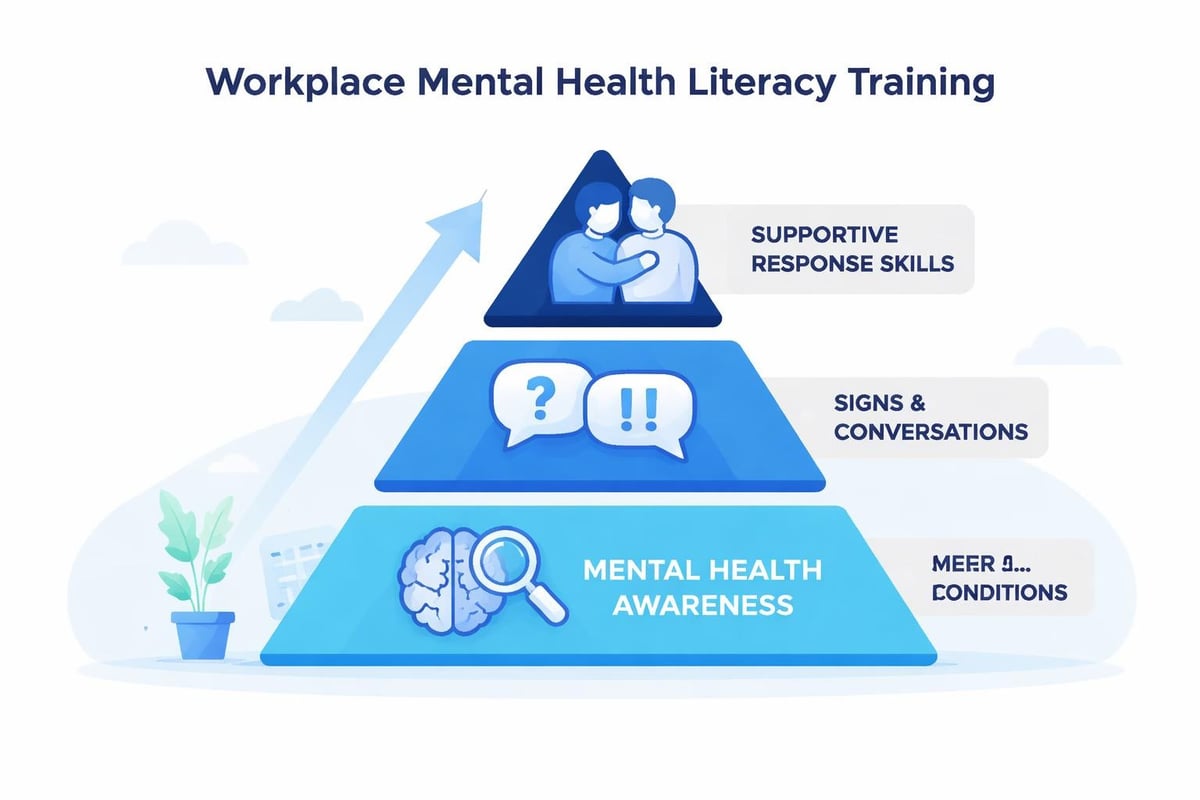
Mental awareness courses follow specific pedagogical structures designed to translate clinical knowledge into workplace-appropriate responses. These programs differentiate between mental health literacy (understanding conditions and their prevalence) and mental health competency (applying that knowledge through supportive actions).
The most effective courses establish clear learning objectives across three domains: cognitive understanding of mental health conditions, attitudinal shifts regarding stigma and disclosure, and behavioral skills for supportive conversations. Participants develop the capacity to distinguish between typical stress responses and indicators of clinical conditions requiring professional intervention.
Core Components of Comprehensive Programs
Structured mental awareness training typically addresses these essential elements:
- Epidemiology and prevalence data specific to workplace populations
- Diagnostic frameworks for common conditions including depression, anxiety disorders, and trauma responses
- Neurobiological foundations explaining how mental health conditions affect cognition and behavior
- Cultural competency recognizing how mental health is experienced across diverse populations
- Legal and ethical boundaries for workplace mental health support
- Self-care strategies to prevent vicarious trauma and compassion fatigue
The Mind mental health awareness course outline demonstrates this comprehensive approach, incorporating theoretical knowledge with practical application exercises.
Organizations implementing these frameworks through Workplace Mental Health Institute report measurable improvements in early help-seeking behaviors and reduced escalation of mental health concerns to crisis points.
Evidence-Based Content Standards for Mental Awareness Courses
Quality mental awareness programs maintain rigorous adherence to current research and clinical guidelines. Course content should reference diagnostic criteria from established frameworks while translating technical language into accessible concepts for non-clinical audiences.
Psychological Accuracy and Clinical Alignment
The distinction between education and clinical practice requires careful navigation. A mental awareness course teaches recognition of potential concerns, not diagnosis. Participants learn to identify observable changes in behavior, mood, or functioning that may warrant professional assessment.
Effective curricula incorporate these evidence-based principles:
- Biopsychosocial models explaining mental health through biological, psychological, and social factors
- Recovery-oriented frameworks emphasizing hope, autonomy, and growth rather than pathology
- Trauma-informed principles recognizing how adverse experiences shape current functioning
- Neurodiversity perspectives acknowledging variations in cognitive and emotional processing
- Intersectionality concepts understanding how multiple identities influence mental health experiences
| Training Approach | Focus Area | Workplace Application |
|---|---|---|
| Symptom Recognition | Observable behavioral changes | Early intervention protocols |
| Risk Assessment | Identifying immediate safety concerns | Emergency response procedures |
| Supportive Communication | Active listening and validation | Manager-employee conversations |
| Resource Navigation | Internal and external support pathways | Referral processes |
Research published by Mental Health America consistently demonstrates that workplace-based mental health education reduces stigma more effectively than public awareness campaigns, primarily because organizational training creates shared language and normalized support-seeking behaviors.
Designing Mental Awareness Courses for Manager Effectiveness
Managers represent the critical interface between organizational mental health policy and employee experience. A mental awareness course tailored for leadership roles addresses the unique responsibilities and challenges these individuals face.
Manager-specific training extends beyond general awareness to include performance management considerations, reasonable accommodation frameworks, and the balance between support and accountability. These programs acknowledge the complexity managers navigate when team members experience mental health difficulties while maintaining operational effectiveness.
Supervisory Skills and Supportive Conversations
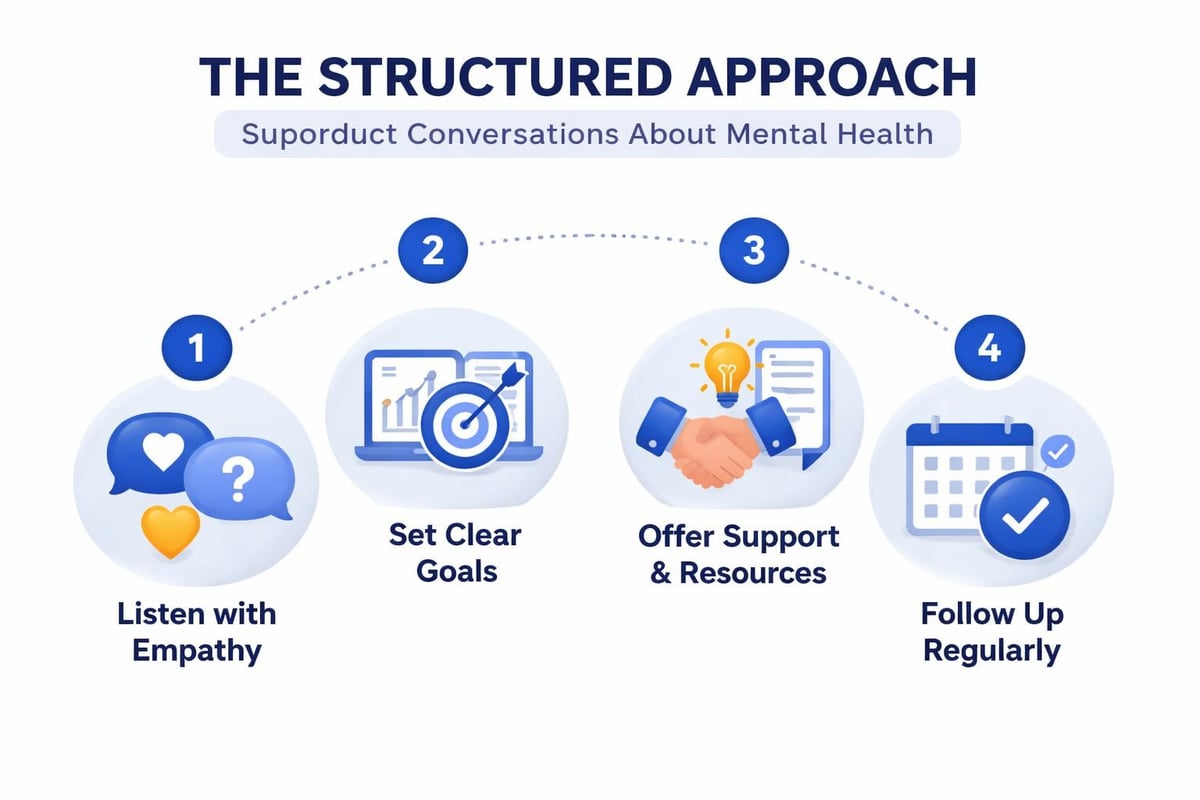
The most challenging aspect of manager mental health competency involves initiating conversations about observed performance or behavioral changes without overstepping professional boundaries. Effective training provides scripted frameworks for these discussions, emphasizing objective observation over speculation about underlying causes.
Key conversational competencies include:
- Opening dialogue using specific, observable examples rather than assumptions
- Employing active listening techniques that validate employee experiences
- Distinguishing between performance feedback and personal health inquiries
- Offering organizational resources without mandating their use
- Documenting conversations appropriately while respecting privacy
Programs available through the WMHI eLearning provide scenario-based learning that allows managers to practice these skills in psychologically safe environments before applying them with their teams.
Legal and Ethical Considerations for Leaders
Managers require explicit guidance on navigating disability accommodation processes, confidentiality requirements, and the limits of their supportive role. A comprehensive mental awareness course for leaders clarifies when to involve human resources, occupational health services, or employee assistance programs.
Training should address common misconceptions, such as the belief that managers cannot discuss performance concerns with employees experiencing mental health difficulties. The appropriate framework maintains performance standards while offering flexibility in how those standards are achieved, consistent with reasonable accommodation principles.
Australian organizations seeking jurisdiction-specific guidance can access resources through WMHI Australia, which addresses Fair Work Act considerations and relevant state-based legislation.
Measuring Impact and Organizational Outcomes
Organizations investing in mental awareness training should establish clear metrics to evaluate program effectiveness beyond participation rates. Meaningful assessment examines behavioral change, cultural shifts, and organizational performance indicators.
Evaluation Frameworks and Key Performance Indicators
A robust evaluation strategy incorporates multiple data sources across different timeframes:
Immediate outcomes (post-training):
- Knowledge acquisition measured through validated assessments
- Attitudinal changes regarding mental health disclosure and support
- Confidence in applying supportive communication skills
Short-term outcomes (3-6 months):
- Utilization rates of employee assistance programs and mental health benefits
- Manager-initiated supportive conversations and early intervention referrals
- Reduction in formal grievances or performance management escalations
Long-term outcomes (12+ months):
- Absenteeism trends and presenteeism indicators
- Turnover rates, particularly among high-performing employees
- Workplace climate survey results regarding psychological safety
| Metric Category | Measurement Approach | Expected Timeline |
|---|---|---|
| Knowledge Retention | Pre/post assessments | Immediate |
| Behavioral Application | Manager self-report and employee surveys | 3-6 months |
| Help-Seeking Behavior | EAP utilization data | 6-12 months |
| Organizational Performance | Absenteeism, turnover, engagement scores | 12+ months |
Research from NAMI indicates that organizations implementing comprehensive mental health training experience a return on investment ranging from 3:1 to 7:1 when accounting for reduced healthcare costs, improved productivity, and decreased turnover.
Implementing Sustainable Mental Health Literacy Programs
A single mental awareness course represents an important starting point, but sustained organizational impact requires systematic integration into broader talent development and wellbeing strategies.
Creating Cascading Learning Pathways
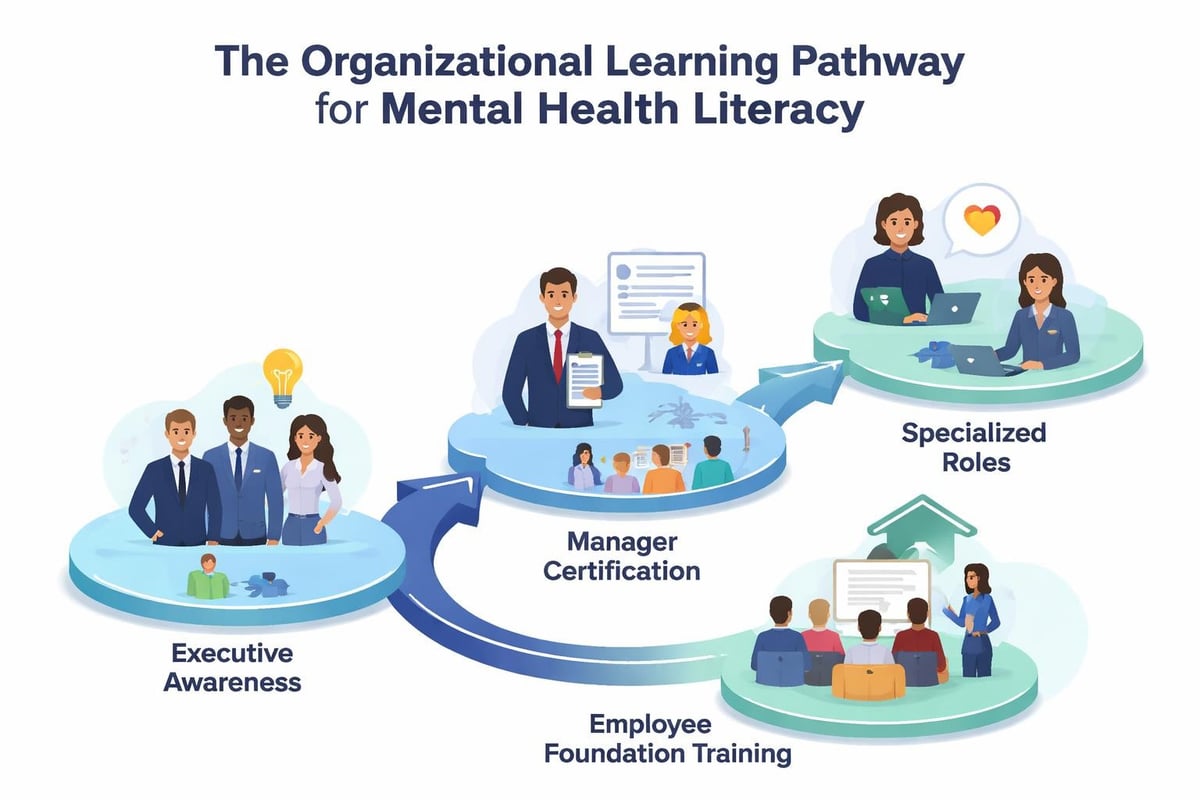
Organizations achieve cultural transformation through tiered education that meets diverse stakeholder needs:
- Executive briefings establishing strategic rationale and resource allocation decisions
- Manager certification programs developing core competencies for all people leaders
- Employee foundation courses building universal mental health literacy
- Specialized advanced training for HR professionals, safety officers, and peer support volunteers
- Refresher sessions maintaining knowledge currency and addressing emerging challenges
This cascading approach ensures consistent language and expectations across organizational levels while allowing role-specific skill development.
Coursera mental health resources provide supplementary self-paced learning options that can complement structured organizational training, allowing individuals to deepen their understanding based on personal interest or professional development goals.
Integration with Existing Wellbeing Infrastructure
Mental awareness training achieves maximum impact when connected to operational systems and support mechanisms. Isolated education without corresponding policy development, resource allocation, or procedural clarity creates frustration and cynicism.
Effective integration requires:
- Clear referral pathways connecting trained individuals to professional support services
- Updated policies reflecting current understanding of mental health and accommodation
- Leadership modeling demonstrating vulnerability and help-seeking behaviors
- Communication strategies normalizing mental health conversations in team settings
- Resource accessibility ensuring employees can easily locate support options
Selecting Quality Mental Awareness Training Providers
The proliferation of mental health training offerings requires careful evaluation to distinguish evidence-based programs from superficial awareness initiatives. Organizations should assess potential providers using specific quality indicators.
Evaluation Criteria for Training Programs
Instructional design standards:
- Clear learning objectives mapped to workplace behavioral outcomes
- Evidence-based content aligned with clinical consensus and current research
- Interactive methodologies promoting skill practice and application
- Assessment mechanisms validating knowledge acquisition and retention
Instructor qualifications:
- Relevant clinical or counseling credentials for content development
- Adult education experience and facilitation skills
- Workplace mental health specialization rather than general clinical practice
- Cultural competency and ability to address diverse organizational contexts
Program flexibility and customization:
- Adaptability to industry-specific scenarios and challenges
- Scalability from small teams to enterprise-wide implementations
- Multiple delivery modalities including in-person, virtual, and hybrid formats
- Post-training support resources and follow-up consultation
Programs accredited through professional bodies or aligned with established frameworks such as Mental Health First Aid provide additional quality assurance, though organizations should evaluate whether certification-focused training aligns with their specific objectives.
The Workplace Mental Health Institute differentiates its approach through psychologically accurate content, practical skill development, and integration support that extends beyond course delivery to implementation consultation.
Addressing Common Implementation Challenges
Organizations frequently encounter predictable obstacles when launching mental awareness initiatives. Anticipating these challenges allows for proactive mitigation strategies.
Overcoming Participation Barriers and Resistance
Mandatory mental health training can generate resistance, particularly in industries with traditionally stoic cultures or among demographic groups socialized to view mental health as private or stigmatized. Effective implementation addresses these concerns through:
- Transparent communication about training objectives and expected outcomes
- Leadership participation demonstrating organizational commitment
- Confidential skill development rather than disclosure-focused activities
- Emphasis on professional capability building rather than personal vulnerability
- Connection to organizational priorities including safety, performance, and retention
Some employees fear that increased mental health awareness may lead to unwanted conversations or pressure to disclose personal information. Quality training explicitly addresses boundaries, consent, and the distinction between general awareness and individual circumstances.
Sustaining Momentum Beyond Initial Implementation
The risk of mental health initiatives becoming performative compliance exercises rather than genuine cultural shifts requires ongoing attention. Sustainability strategies include:
Continuous reinforcement mechanisms:
- Regular toolbox talks or team discussions incorporating mental health topics
- Integration into onboarding processes for new employees and managers
- Annual refresher training with updated content and emerging research
- Recognition programs acknowledging supportive behaviors and early intervention successes
Measurement and accountability systems:
- Regular reporting on mental health metrics to leadership teams
- Manager performance evaluations incorporating supportive leadership indicators
- Employee engagement surveys assessing psychological safety perceptions
- Transparent communication about organizational mental health outcomes and improvement initiatives
Organizations viewing a mental awareness course as a singular event rather than foundational infrastructure typically experience minimal lasting impact. Those embedding mental health literacy into operational rhythms, leadership expectations, and cultural narratives achieve transformative results.
The National Institute of Mental Health provides evidence-based frameworks for sustaining mental health initiatives that organizations can adapt to workplace contexts, ensuring alignment with current scientific understanding and clinical best practices.
Future Directions in Workplace Mental Health Education
Mental awareness training continues evolving in response to emerging research, changing workforce demographics, and technological capabilities. Organizations should anticipate these developments when designing long-term mental health strategies.
Emerging Trends and Innovative Approaches
Current developments shaping the future of mental awareness courses include:
- Neuroscience integration providing deeper understanding of stress, trauma, and resilience mechanisms
- Technology-enhanced learning utilizing virtual reality for scenario practice and artificial intelligence for personalized learning pathways
- Precision mental health recognizing individual differences in stress response, recovery trajectories, and effective interventions
- Collective wellbeing frameworks shifting from individual resilience to systemic factors influencing team and organizational mental health
- Preventive approaches emphasizing proactive skill development rather than reactive crisis management
Research from organizations like Active Minds demonstrates the effectiveness of peer-based learning models, particularly among younger workers who value authentic shared experiences over didactic instruction. Hybrid approaches combining expert-led foundational training with peer support networks show particular promise.
The integration of mental awareness education with broader diversity, equity, and inclusion initiatives recognizes how systemic factors including discrimination, economic insecurity, and social marginalization fundamentally impact mental health. Progressive training programs address these structural determinants alongside individual coping strategies.
Building organizational mental health literacy through structured training represents a foundational investment in workforce wellbeing and performance outcomes. The frameworks, competencies, and implementation strategies outlined here provide evidence-based guidance for organizations seeking meaningful cultural transformation. Workplace Mental Health Institute offers comprehensive mental awareness courses and ongoing consultation to help organizations develop psychologically healthy workplaces where employees can thrive professionally while maintaining their wellbeing.

