
Psychological first aid courses have emerged as essential training for organizations committed to building psychologically safe workplaces and supporting employees through critical incidents, disasters, and traumatic events. Unlike clinical interventions requiring specialized licensure, psychological first aid represents an evidence-informed approach that equips managers, HR professionals, and team members with practical skills to provide immediate support, reduce initial distress, and foster adaptive functioning during crisis situations. As workplace mental health challenges intensify across industries, understanding the scope, structure, and strategic implementation of psychological first aid courses becomes increasingly vital for organizational resilience.
Understanding Psychological First Aid Framework
Psychological first aid (PFA) represents a modular, evidence-informed intervention designed to reduce the initial distress caused by traumatic events and to foster short-term and long-term adaptive functioning. Rather than providing clinical treatment, PFA focuses on practical care and support that respects human dignity, culture, and individual capacity for resilience.
The framework emerged from decades of disaster response research and represents a consensus among leading trauma experts about best practices in early intervention. The National Child Traumatic Stress Network developed comprehensive resources that define PFA's core actions and applications across diverse populations and settings.
Core Components and Principles
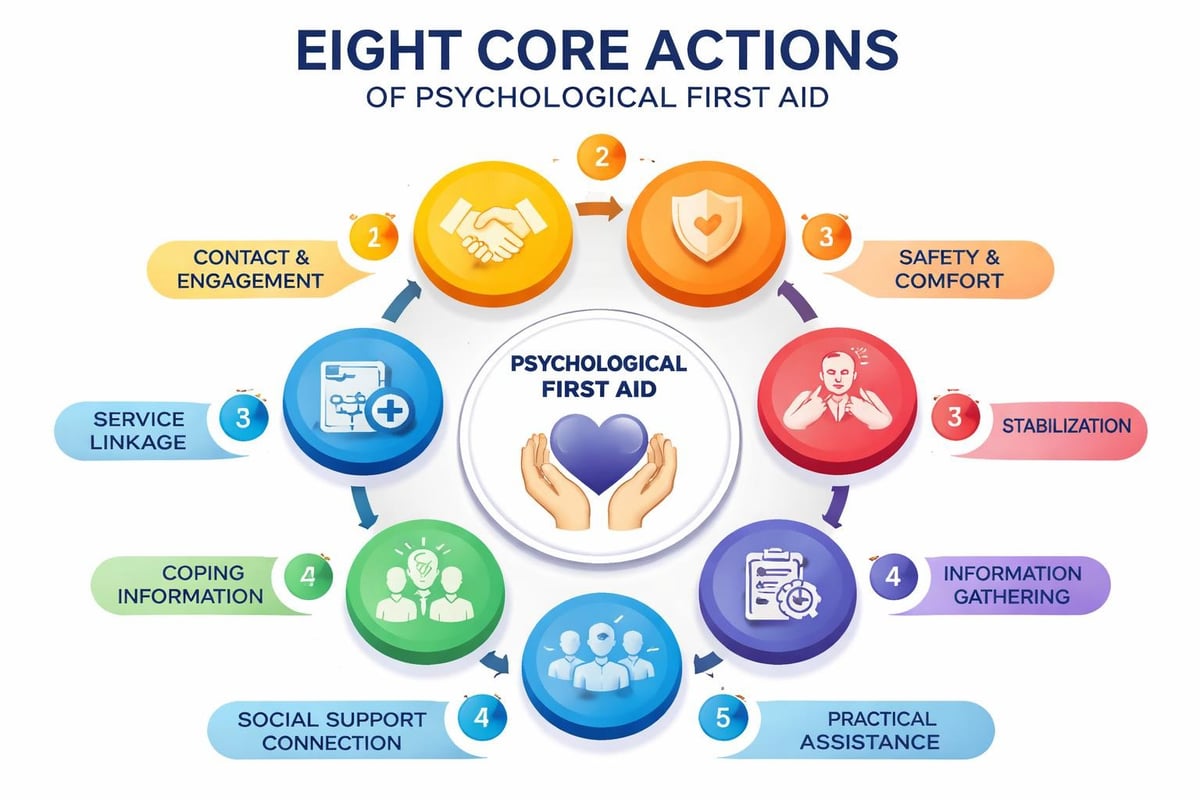
Psychological first aid operates on eight core actions that guide responders through supportive interactions:
- Contact and engagement: Initiating respectful, compassionate connection with affected individuals
- Safety and comfort: Enhancing immediate and ongoing safety and providing physical and emotional comfort
- Stabilization: Calming and orienting emotionally overwhelmed individuals
- Information gathering: Identifying immediate needs and concerns through active listening
- Practical assistance: Offering concrete help to address immediate needs
- Connection with social supports: Facilitating contact with support networks
- Information on coping: Providing education about stress reactions and healthy coping strategies
- Linkage with collaborative services: Connecting individuals with available resources and services
These actions are implemented flexibly based on individual needs, cultural context, and the specific nature of the traumatic event. The approach emphasizes non-intrusive support rather than forcing individuals to discuss their experiences.
Types of Psychological First Aid Courses Available
Organizations seeking to implement psychological first aid training can select from multiple course formats, each designed for specific contexts and learning objectives. Understanding these variations enables strategic selection aligned with organizational needs and workforce composition.
Online Self-Paced Training Programs
Self-paced online courses through platforms like SAMHSA provide flexible learning options for distributed workforces. These programs typically require 5-7 hours of completion time and feature interactive scenarios, video demonstrations, and knowledge assessments.
The advantages of online psychological first aid courses include accessibility across geographic locations, cost-effectiveness for large-scale deployment, and the ability for learners to progress at individualized paces. Participants complete modules addressing different disaster scenarios, population considerations, and cultural responsiveness.
Instructor-Led Workplace Programs
Live training delivered by certified instructors offers enhanced engagement and opportunities for skill practice through role-playing exercises. These sessions typically span one to two days and incorporate workplace-specific scenarios relevant to organizational contexts.
Instructor-led psychological first aid courses enable real-time question clarification, peer learning, and immediate feedback on skill application. Organizations can customize content to address industry-specific challenges, such as workplace violence in healthcare settings or critical incidents in manufacturing environments.
| Course Format | Duration | Delivery Method | Best For |
|---|---|---|---|
| Online Self-Paced | 5-7 hours | Asynchronous digital | Large, distributed teams |
| Instructor-Led Virtual | 1-2 days | Live online sessions | Remote workforce training |
| In-Person Workshops | 1-2 days | Face-to-face instruction | Hands-on skill development |
| Blended Learning | 8-10 hours total | Combined online + live | Comprehensive implementation |
Specialized Population and Context Courses
Advanced psychological first aid courses address specific populations or contexts requiring adapted approaches. Programs focused on diverse populations prepare participants to support children, older adults, individuals with disabilities, and culturally diverse communities.
Workplace-focused courses emphasize organizational applications, including supporting employees after workplace violence, traumatic customer interactions, or community disasters affecting multiple team members. These specialized programs integrate psychological first aid principles with existing employee assistance programs and workplace wellbeing strategies.
Implementation Strategies for Workplace Settings
Strategic implementation of psychological first aid courses requires thoughtful planning that extends beyond simply enrolling employees in training programs. Organizations achieve optimal outcomes by integrating PFA within broader workplace mental health frameworks and ensuring trained personnel can apply skills effectively.
Identifying Training Priorities and Participants
Organizations should prioritize training for roles with highest likelihood of encountering employees in distress or responding to critical incidents. Managers, supervisors, HR professionals, security personnel, and employee assistance coordinators represent logical starting points for psychological first aid course participation.
Consideration should extend to employees in customer-facing roles, particularly in healthcare, education, emergency services, and social services sectors where exposure to secondary trauma occurs regularly. Youth-focused organizations may benefit from specialized approaches that address developmental considerations.
The optimal coverage ratio varies by organizational size and risk profile, but establishing a critical mass of trained individuals across departments ensures availability during crisis situations. Many organizations target 15-20% of their workforce for initial psychological first aid training.
Creating Supportive Organizational Infrastructure
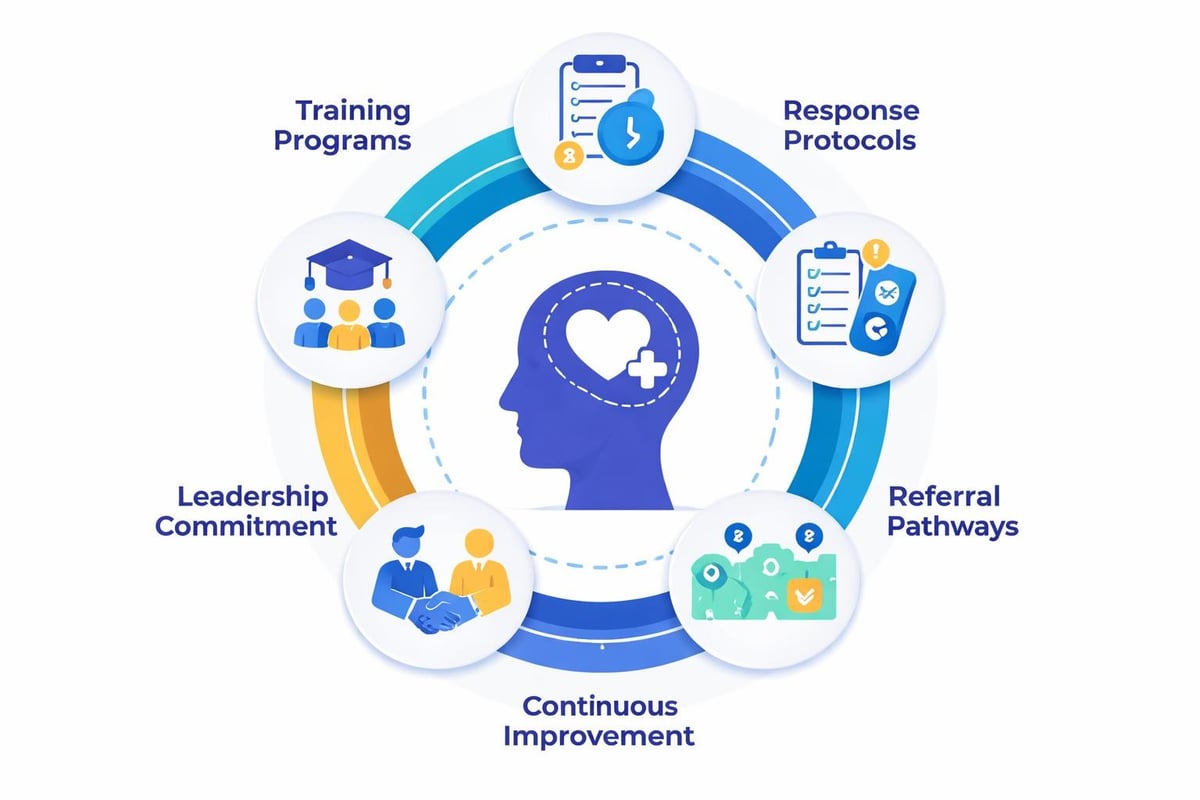
Training alone proves insufficient without corresponding policy development, resource allocation, and leadership commitment. Organizations must establish clear protocols defining when and how trained personnel deploy psychological first aid skills, including:
- Critical incident response procedures outlining notification protocols and immediate response steps
- Scope of practice guidelines clarifying the distinction between PFA support and clinical intervention
- Referral pathways connecting individuals with professional mental health services when needed
- Documentation standards balancing confidentiality with organizational risk management
- Follow-up procedures ensuring continued support beyond immediate crisis response
Leadership messaging significantly influences whether employees feel comfortable accessing psychological first aid support. Executives should communicate organizational commitment to employee wellbeing and normalize help-seeking behaviors.
Evidence Base and Effectiveness Considerations
The scientific foundation supporting psychological first aid courses has evolved considerably since early disaster response efforts. While randomized controlled trials face ethical and practical limitations in disaster contexts, the accumulating evidence base demonstrates PFA's alignment with trauma research and its acceptance across professional disciplines.
Research Supporting PFA Principles
The Psychological First Aid Field Operations Guide synthesizes decades of research on disaster mental health, traumatic stress, and resilience factors. The approach incorporates findings from studies examining stress response physiology, social support mechanisms, and factors predicting adaptive versus maladaptive outcomes following trauma exposure.
Key research principles underpinning psychological first aid include:
- Psychological safety as a foundational requirement for processing traumatic experiences
- Social connectedness as a protective factor against long-term mental health consequences
- Sense of efficacy through practical assistance and problem-solving support
- Hope and realistic optimism about recovery potential
- Respect for cultural values and existing coping mechanisms
These evidence-informed principles distinguish psychological first aid from potentially harmful approaches such as mandatory critical incident debriefing, which research has shown may increase risk for some individuals.
Measuring Training Outcomes
Organizations implementing psychological first aid courses should establish metrics evaluating both training effectiveness and organizational impact. Assessment strategies include:
Knowledge and skill assessments measuring participants' understanding of PFA principles and confidence applying core actions. Pre- and post-training evaluations identify learning gains and knowledge retention over time.
Behavioral observations during role-play exercises reveal competency in executing psychological first aid skills under simulated conditions. Certified trainers assess communication techniques, cultural sensitivity, and appropriate action selection.
Utilization metrics track the frequency and context of PFA deployment following critical incidents. Organizations monitor when trained personnel provide support, referral patterns, and employee feedback about the helpfulness of interventions received.
Course Selection Criteria and Accreditation
Not all psychological first aid courses offer equivalent quality, evidence alignment, or practical applicability. HR professionals and training coordinators benefit from applying rigorous selection criteria when evaluating available programs.
Evaluating Course Credibility
Reputable psychological first aid courses demonstrate clear connections to established trauma research and align with guidelines from authoritative organizations. Programs developed or endorsed by entities such as the National Center for PTSD reflect current best practices and evidence standards.
Credibility indicators include:
- Development or review by recognized trauma experts and researchers
- Alignment with published PFA models and frameworks
- Regular content updates reflecting emerging research
- Transparency about evidence base and theoretical foundations
- Appropriate scope definition distinguishing PFA from clinical treatment
Organizations should investigate instructor qualifications, examining relevant credentials, trauma-informed training experience, and subject matter expertise. Wikipedia provides comprehensive background on PFA development and evolution that can inform evaluation.
Workplace Relevance and Customization Options
Generic disaster-response training may require adaptation for workplace applications. Effective psychological first aid courses for organizational contexts incorporate scenarios relevant to employment settings and address unique considerations for supporting colleagues rather than strangers.
| Selection Criteria | Why It Matters | Questions to Ask |
|---|---|---|
| Workplace scenarios | Increases skill transfer to actual work situations | Are examples relevant to our industry and typical incidents? |
| Cultural considerations | Ensures inclusive, respectful support | Does training address diversity in our workforce? |
| Integration guidance | Facilitates implementation within existing systems | How does PFA connect with our EAP and wellbeing programs? |
| Ongoing resources | Supports skill maintenance and refresher needs | What post-training materials and support are provided? |
| Measurement tools | Enables evaluation and continuous improvement | Does the program include assessment instruments? |
Organizations in Australia may require culturally adapted content addressing regional considerations, indigenous populations, and local regulatory contexts.
Advanced Applications and Specialized Contexts
Beyond foundational training, psychological first aid courses increasingly address specialized workplace applications that extend PFA principles into proactive wellbeing strategies and targeted interventions.
Trauma-Informed Organizational Culture
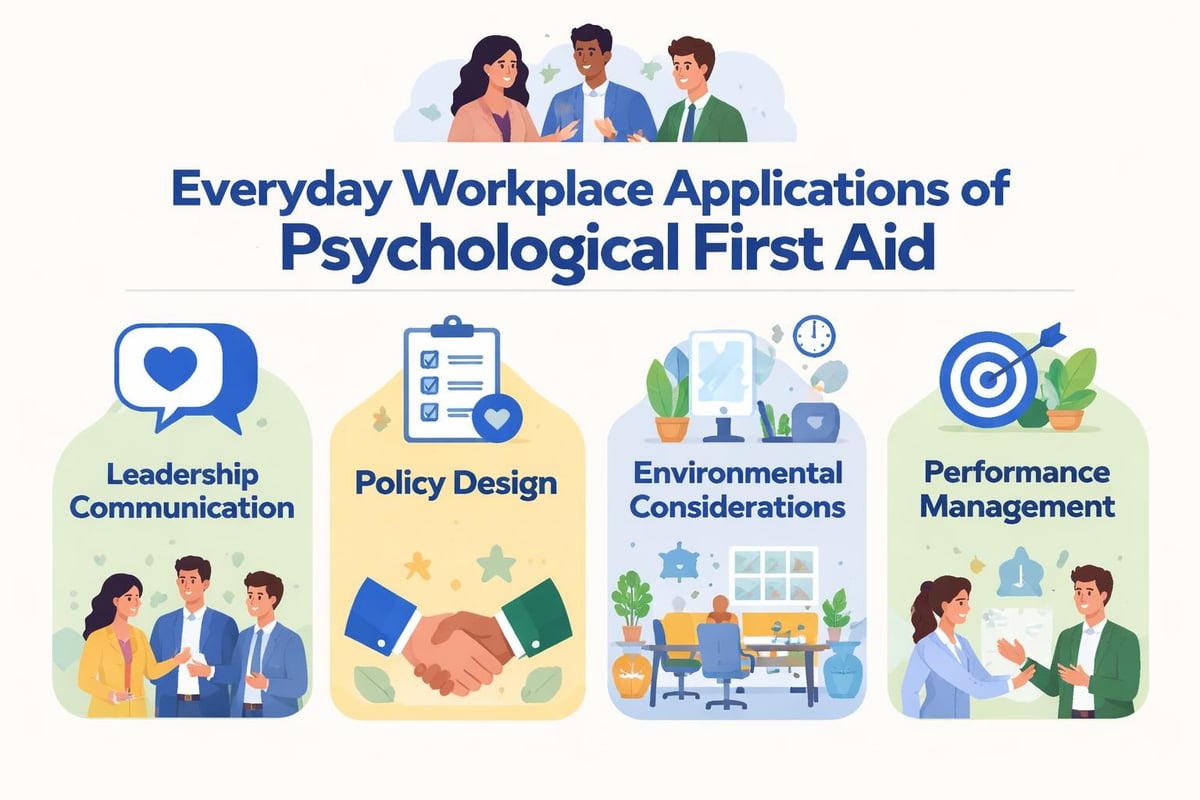
Progressive organizations integrate psychological first aid principles throughout workplace culture rather than limiting application to crisis response. This trauma-informed approach recognizes that many employees carry histories of adverse experiences affecting their workplace functioning and interpersonal relationships.
Psychological first aid courses can support broader trauma-informed initiatives by:
- Training leaders to recognize signs of trauma impact in performance issues
- Establishing communication norms emphasizing safety and trustworthiness
- Designing policies and procedures minimizing re-traumatization
- Creating physical and psychological environments supporting regulation and recovery
This expanded application transforms PFA from an emergency intervention into a foundational competency for compassionate, effective leadership.
Industry-Specific Considerations
Certain industries face heightened exposure to potentially traumatic events requiring specialized psychological first aid course content. Healthcare workers encounter patient deaths, medical emergencies, and violence. Education professionals respond to student crises and community tragedies. Emergency services personnel experience repeated exposure to traumatic situations.
Healthcare-adapted PFA addresses moral injury, compassion fatigue, and the challenge of providing support while maintaining professional boundaries with patients and families. Specialized training for healthcare contexts emphasizes self-care strategies preventing burnout.
Education-focused programs prepare school personnel to support students while recognizing developmental differences in trauma response across age groups. These courses address parent communication, classroom management following incidents, and coordination with school mental health professionals.
Emergency services PFA acknowledges the cumulative impact of repeated exposure and peer support culture within these professions. Training addresses recognizing distress in colleagues, navigating organizational hierarchies, and accessing confidential support resources.
Building Sustainable PFA Capacity
Organizations maximizing return on psychological first aid course investments develop sustainable infrastructure supporting ongoing skill development, quality assurance, and continuous improvement.
Train-the-Trainer Programs
Large organizations benefit from developing internal training capacity through train-the-trainer psychological first aid courses. These advanced programs prepare organizational members to deliver PFA training to colleagues, enabling cost-effective scale and ongoing skill development.
Train-the-trainer participants require:
- Successful completion of foundational psychological first aid training
- Demonstrated competency in applying PFA skills
- Strong facilitation and adult learning capabilities
- Commitment to maintaining current knowledge through continuing education
- Alignment with organizational values and cultural competency standards
Internal trainers can customize content addressing organization-specific scenarios while maintaining fidelity to evidence-based PFA principles. They provide accessible refresher training and support new employee onboarding.
Refresher Training and Skill Maintenance
Psychological first aid skills, like all competencies, deteriorate without practice and reinforcement. Organizations should implement periodic refresher training maintaining knowledge currency and skill confidence.
Effective refresher strategies include:
- Annual review sessions covering core actions and new research findings
- Scenario-based practice using realistic workplace situations
- Peer consultation groups for trained personnel to discuss applications
- Just-in-time resources providing quick reference guides during actual incidents
- Integration with existing training such as active shooter response or emergency preparedness
Online learning platforms such as those available through Workplace Mental Health Institute enable flexible, ongoing skill development complementing initial certification programs.
Ethical Considerations and Professional Boundaries
Implementing psychological first aid courses requires attention to ethical considerations distinguishing supportive presence from professional mental health treatment. Clear boundary definition protects both providers and recipients of PFA support.
Scope of Practice Clarity
Psychological first aid courses should explicitly address what PFA is and what it is not. Trained personnel provide:
- Compassionate presence and practical support
- Information about normal stress reactions
- Assistance accessing available resources
- Connection to professional services when appropriate
They do not provide:
- Diagnosis of mental health conditions
- Psychotherapy or clinical treatment
- Mandatory disclosure or debriefing sessions
- Long-term counseling relationships
Organizations must ensure trained personnel understand these boundaries and feel empowered to refer individuals to qualified professionals when situations exceed PFA scope.
Confidentiality and Documentation
Balancing employee privacy with organizational risk management presents ongoing challenges. Psychological first aid courses should address documentation standards that:
- Protect employee confidentiality within legal and ethical limits
- Document critical incident occurrence and response for organizational learning
- Avoid creating detailed records of personal disclosures
- Clarify mandatory reporting obligations regarding safety risks
Organizations should develop clear policies addressing when and how PFA interactions are documented, who accesses such records, and how information flows to leadership and risk management functions.
Integration with Comprehensive Wellbeing Strategy
Psychological first aid courses achieve maximum organizational value when integrated within broader workplace mental health and wellbeing strategies rather than existing as isolated training programs.
Connecting PFA with Employee Assistance Programs
Employee assistance programs (EAPs) represent natural partners for psychological first aid implementation. The Johns Hopkins University course introduces the RAPID model emphasizing appropriate disposition and referral to professional resources.
Effective integration ensures:
- PFA-trained personnel understand EAP services and referral procedures
- EAP providers recognize employees may arrive already having received initial PFA support
- Communication protocols respect confidentiality while facilitating warm handoffs
- Follow-up systems confirm employees successfully connected with professional assistance
Organizations should map the relationship between psychological first aid, EAP services, occupational health resources, and external mental health providers, creating clear pathways employees can navigate.
Alignment with Prevention and Resilience Building
While psychological first aid focuses on crisis response, comprehensive workplace mental health strategies emphasize prevention and resilience development. Training programs should position PFA within this broader context.
Organizations strengthen overall mental health by:
- Addressing psychosocial hazards that increase workplace stress and trauma exposure
- Building psychological safety enabling employees to seek support before crises escalate
- Developing manager capabilities in everyday conversations about wellbeing, not just crisis response
- Promoting help-seeking behaviors through leadership modeling and stigma reduction
- Measuring leading indicators identifying emerging concerns before critical incidents occur
Psychological first aid courses complement these proactive strategies by ensuring appropriate response capacity when prevention efforts prove insufficient and critical incidents occur despite best efforts.
Psychological first aid courses equip organizations with evidence-based capabilities to support employees during critical incidents while fostering cultures that prioritize mental health and resilience. Strategic implementation requires thoughtful course selection, supportive infrastructure development, and integration with comprehensive workplace wellbeing strategies. Workplace Mental Health Institute provides specialized training programs, strategic consultation, and practical tools helping organizations build psychologically safe workplaces where employees thrive even when facing adversity.

