
The demand for structured mental health training courses has surged as organizations recognize that psychological wellbeing directly impacts productivity, retention, and workplace culture. Today's leaders face complex challenges: supporting employees through crisis, reducing stigma, and creating environments where mental health conversations occur naturally. Evidence-based training provides the foundation for these capabilities, equipping managers and HR professionals with frameworks that move beyond superficial wellness initiatives toward measurable, sustained improvement in workplace mental health outcomes.
Understanding Mental Health Training Course Frameworks
Mental health training courses vary significantly in scope, methodology, and target outcomes. The most effective programs distinguish between awareness-building, skill development, and strategic implementation.
Awareness programs introduce foundational concepts such as common mental health conditions, workplace stressors, and the business case for psychological safety. These courses typically span half-day to full-day sessions and serve as entry points for organizations beginning their mental health journey.
Skill-based training develops specific competencies: recognizing early warning signs, conducting supportive conversations, making appropriate referrals, and managing crisis situations. Programs like Mental Health First Aid exemplify this category, providing structured protocols similar to physical first aid training.
Strategic courses target senior leaders and HR professionals who design workplace wellbeing policies. These programs address systems-level interventions, legal compliance, risk management, and the integration of mental health support into organizational culture.
Core Components of Evidence-Based Training
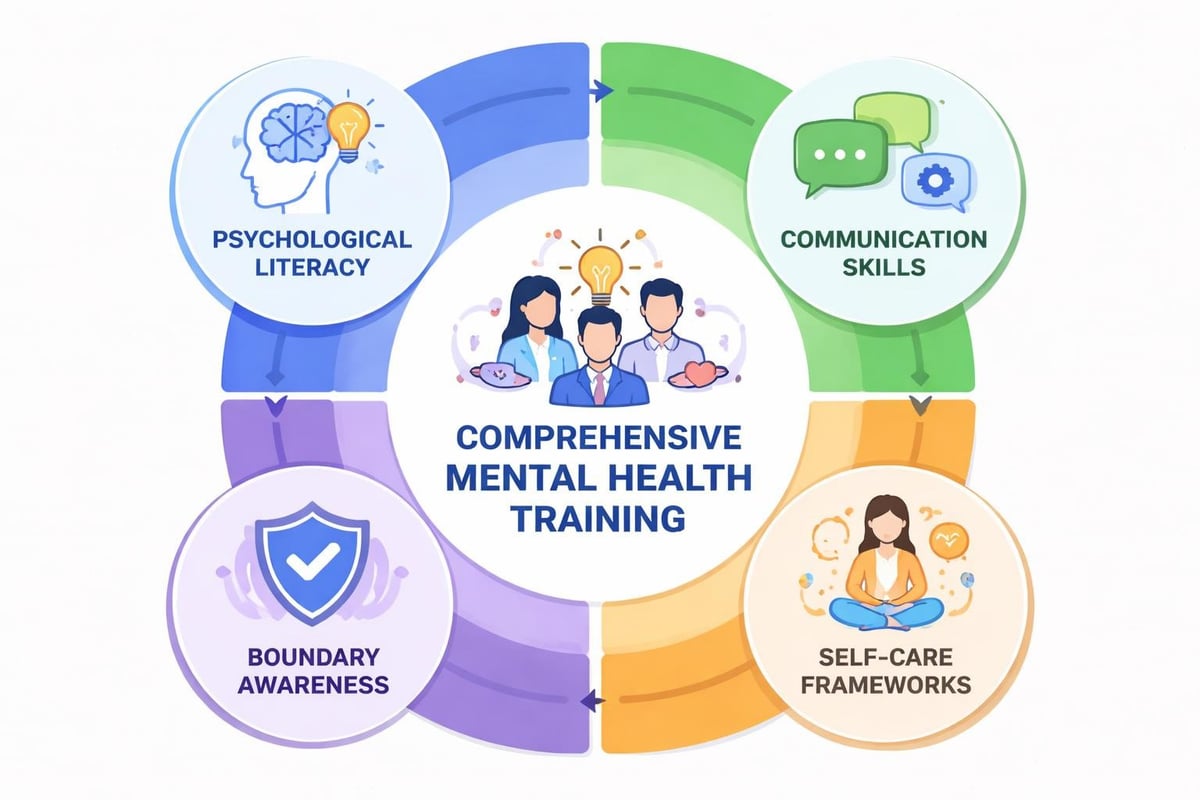
Quality mental health training courses share several distinguishing characteristics that separate transformative programs from superficial offerings.
| Component | Purpose | Implementation Example |
|---|---|---|
| Psychological literacy | Build accurate understanding of mental health conditions | DSM-informed symptom recognition without diagnostic training |
| Communication skills | Enable supportive, non-judgmental conversations | Role-play scenarios with feedback loops |
| Boundary awareness | Clarify manager roles versus clinical responsibilities | Case studies illustrating appropriate referral points |
| Self-care frameworks | Prevent burnout in supporting roles | Practical resilience strategies for helpers |
The distinction between clinical expertise and workplace support represents a critical teaching point. Managers are not therapists, and effective training emphasizes this boundary while building confidence in supportive actions.
Selecting Appropriate Training for Different Workplace Roles
Organizations achieve optimal results when matching mental health training courses to specific role requirements and existing competency levels.
Manager-Focused Programs
Frontline managers require training that translates psychological concepts into daily leadership practices. These courses emphasize:
- Recognizing performance changes that may signal underlying mental health challenges
- Conducting return-to-work conversations after mental health leave
- Balancing compassion with operational requirements
- Documenting situations appropriately while maintaining confidentiality
Training must address the unique position managers occupy-simultaneously supporting team members while managing business outcomes. Programs designed for this audience integrate mental health skills with existing leadership frameworks rather than treating wellbeing as a separate initiative.
HR Professional Development
Human resources professionals need deeper expertise in policy development, legal frameworks, and systemic interventions. Specialized courses cover:
- Designing psychologically safe workplace policies
- Conducting mental health risk assessments
- Evaluating external provider relationships
- Measuring wellbeing program effectiveness
- Managing complex accommodation requests
HR-specific mental health training courses should address compliance requirements while building strategic capabilities. The CDC’s mental health literacy resources provide foundational knowledge that HR professionals can apply to policy development and communication strategies.
Employee-Level Awareness Training
Broad employee training creates shared language and reduces stigma across organizations. These sessions typically focus on:
- Self-awareness and personal wellbeing strategies
- Peer support without overstepping professional boundaries
- Understanding available workplace resources
- Challenging mental health misconceptions
The key distinction at this level is empowerment without overwhelming responsibility. Employees should feel equipped to support colleagues informally while knowing when to involve managers or HR.
Trauma-Informed Approaches in Workplace Training
The integration of trauma-informed principles represents a significant evolution in mental health training courses. Organizations increasingly recognize that many employees carry trauma histories that influence workplace behavior and wellbeing needs.
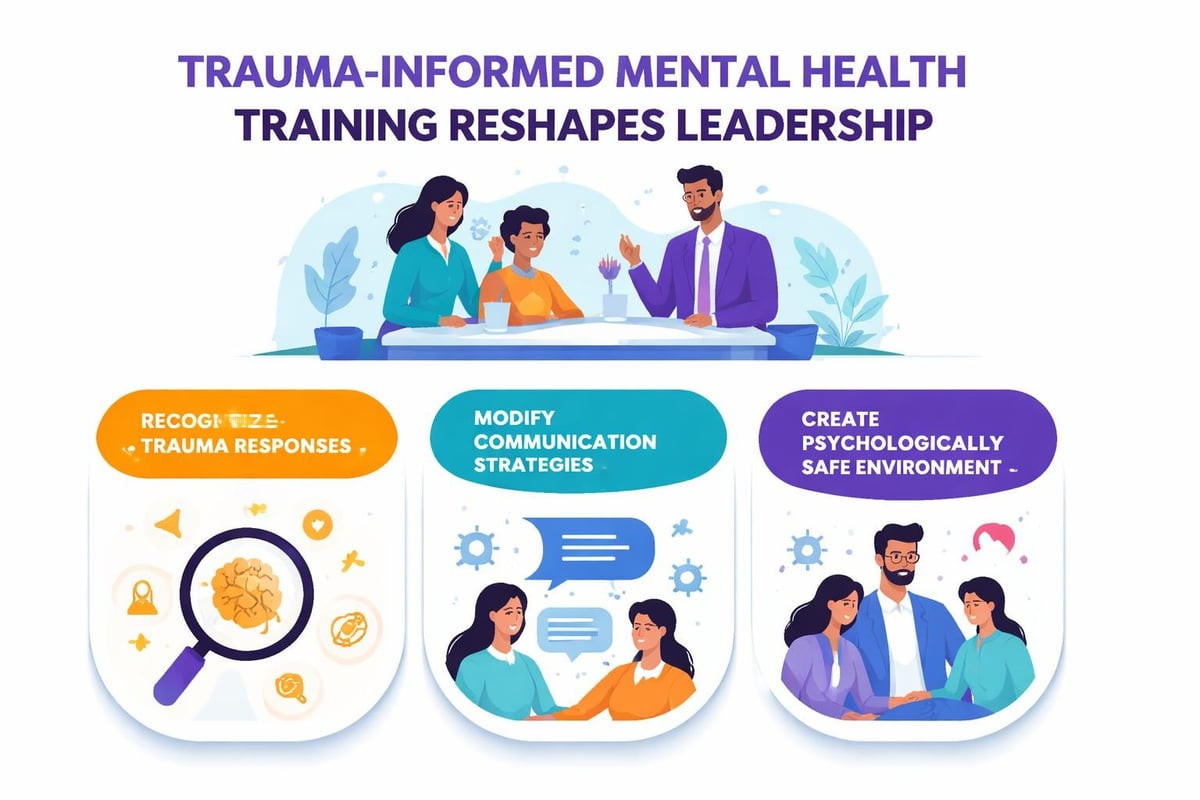
Trauma-informed training teaches participants to:
Recognize trauma responses as adaptive survival mechanisms rather than performance deficits. Behaviors like hypervigilance, emotional withdrawal, or difficulty with authority often reflect past experiences rather than current workplace dynamics.
Modify communication approaches to minimize re-traumatization. This includes providing advance notice of difficult conversations, offering choice in meeting formats, and avoiding assumptions about employee motivations.
Create predictable, transparent environments where employees feel safe. Trauma-informed workplaces emphasize clear expectations, consistent processes, and collaborative decision-making.
Organizations seeking comprehensive trauma-informed training benefit from programs that integrate these principles throughout leadership development rather than treating trauma as a specialized topic.
Implementation Considerations
| Consideration | Why It Matters | Practical Application |
|---|---|---|
| Universal precaution approach | Assumes trauma prevalence without requiring disclosure | Apply trauma-informed practices to all interactions |
| Power dynamics awareness | Recognizes how organizational hierarchies can trigger trauma responses | Build collaborative rather than authoritative leadership styles |
| Cultural competence | Acknowledges diverse trauma experiences and healing approaches | Incorporate culturally responsive support options |
Measuring Training Effectiveness and Workplace Impact
Investment in mental health training courses demands measurable outcomes. Organizations should establish evaluation frameworks before program implementation.
Immediate Training Outcomes
Post-training assessments measure knowledge acquisition and confidence levels. Effective evaluation includes:
- Pre- and post-training knowledge tests using validated instruments
- Confidence scales for specific skills (conducting supportive conversations, recognizing warning signs)
- Participant feedback on training relevance and applicability
- Action plan development demonstrating application intent
These metrics confirm learning occurred but don't guarantee workplace application.
Behavioral Change Indicators
The critical question is whether training translates into different workplace behaviors. Observable changes include:
- Increased help-seeking: More employees accessing Employee Assistance Programs or mental health resources
- Earlier intervention: Reduced crisis situations due to earlier supportive conversations
- Improved communication: Observable changes in how mental health topics are discussed
- Manager confidence: Documented comfort with wellbeing conversations in performance reviews
Behavioral assessment requires systematic data collection over extended periods, typically 6-12 months post-training.
Organizational Outcomes
Ultimate success appears in organizational metrics:
- Reduced absenteeism and presenteeism rates
- Lower turnover, particularly mental health-related departures
- Decreased workplace conflict and grievance filings
- Improved employee engagement scores
- Enhanced psychological safety climate measures
Australian organizations implementing comprehensive mental health training often see measurable improvements across these indicators within 18-24 months, though benefits accumulate progressively.
Integrating Digital and In-Person Learning Formats
Mental health training courses increasingly blend delivery formats to maximize accessibility, engagement, and retention.
Advantages of Online Courses
Digital platforms like PAHO’s virtual mental health courses offer self-paced learning that accommodates diverse schedules and learning preferences. Benefits include:
- Accessibility: Participants learn from any location, reducing travel costs and time
- Consistency: Standardized content ensures all learners receive identical information
- Scalability: Organizations can train large populations simultaneously
- Cost efficiency: Lower per-participant costs for large-scale implementation
However, purely digital training may lack the interpersonal practice crucial for developing communication skills and building organizational buy-in.
In-Person Training Strengths
Face-to-face sessions excel at:
- Building organizational commitment through shared learning experiences
- Facilitating nuanced discussions about workplace-specific challenges
- Providing immediate feedback during role-play and scenario practice
- Creating peer support networks among participants
Blended Approaches
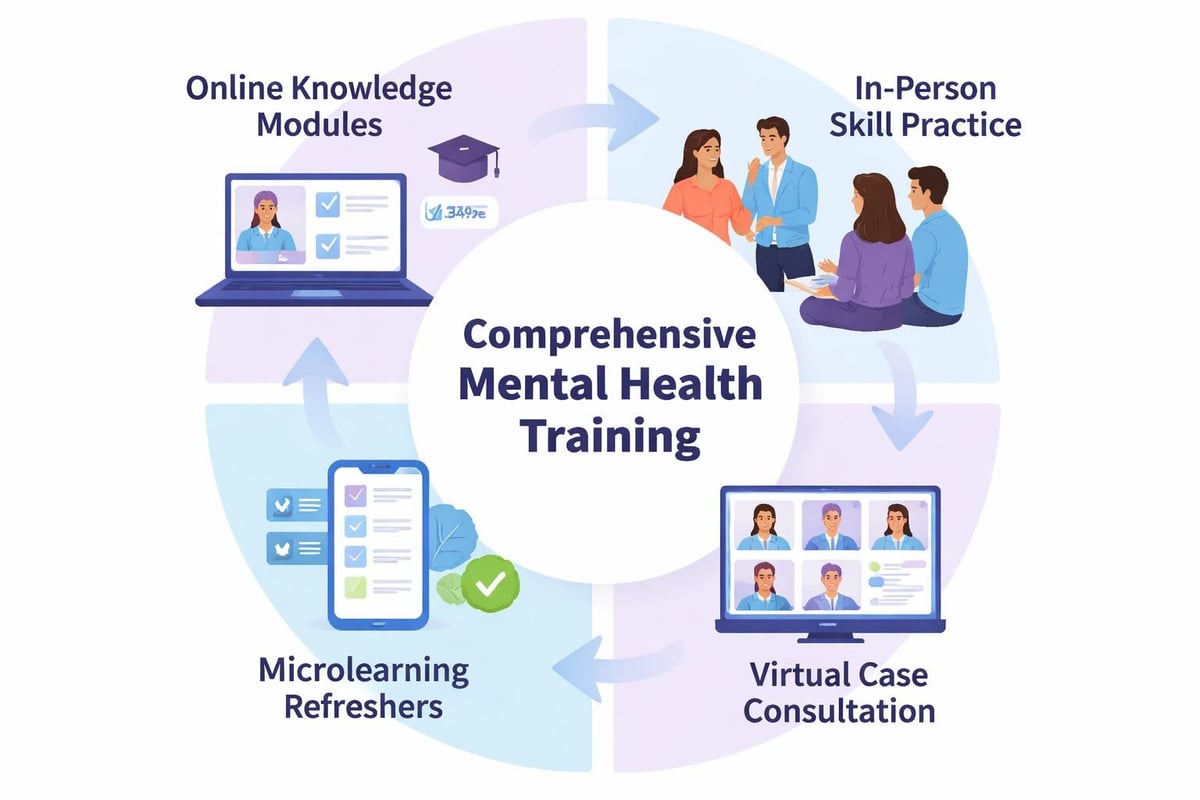
Optimal programs combine formats strategically:
| Component | Delivery Format | Rationale |
|---|---|---|
| Foundational knowledge | Online modules | Efficient information transfer, self-paced learning |
| Skill practice | In-person workshops | Real-time feedback, peer learning |
| Case consultation | Virtual sessions | Ongoing support without travel requirements |
| Refresher content | Microlearning videos | Sustained engagement, just-in-time learning |
Organizations can access quality online mental health training that serves as foundational learning before in-person skill development sessions.
Specialized Training for High-Risk Industries
Certain sectors face elevated mental health risks requiring tailored training approaches. Healthcare, emergency services, education, and customer-facing industries each present unique stressors that generic mental health training courses may inadequately address.
Industry-Specific Stressors
Healthcare workers face moral injury, vicarious trauma from patient suffering, and pandemic-related psychological strain. Training must address compassion fatigue, ethical distress, and sustainable caring practices.
Emergency responders experience repeated trauma exposure, shift work disruption, and organizational cultures that historically stigmatized mental health help-seeking. Effective training challenges these norms while building peer support capabilities.
Education professionals navigate student mental health crises, parent conflicts, and inadequate resources. Their training requires boundary-setting skills and sustainable support strategies that prevent burnout.
Customer service teams manage emotional labor, verbal abuse, and performance metrics that may conflict with wellbeing. Training should validate these challenges while building resilience and recovery practices.
Tailoring Content to Context
Specialized mental health training courses incorporate:
- Industry-relevant case studies reflecting actual workplace scenarios
- Terminology and frameworks familiar to sector participants
- Regulatory and compliance considerations specific to the field
- Peer facilitators with lived industry experience
- Resources addressing industry-specific support gaps
The American Mental Wellness Association’s education and training programs demonstrate how targeted approaches improve relevance and application compared to generic offerings.
Building Sustainable Training Programs
Single training events rarely produce lasting organizational change. Sustainable mental health capability requires ongoing learning architecture.
Multi-Tiered Implementation
Effective organizations deploy training across multiple levels simultaneously:
- Executive briefings build leadership commitment and resource allocation
- Manager certification programs develop core capability in supervisory roles
- Employee awareness sessions create shared understanding and reduce stigma
- Champion networks establish peer supporters across departments
- Refresher training maintains skills and introduces new developments
This layered approach ensures mental health capability permeates organizational culture rather than residing with isolated individuals.
Continuous Learning Systems
Beyond formal courses, organizations should establish:
- Monthly learning sessions addressing emerging topics or challenging cases
- Practice communities where trained managers share experiences and solutions
- Resource libraries providing just-in-time learning when specific situations arise
- Expert consultation access for complex situations beyond training scope
Certification and Credentialing
While mental health training courses for workplace application don't require clinical licensing, some programs offer certifications that:
- Validate competency achievement through assessment
- Create accountability for applying learned skills
- Enable career development pathways in workplace wellbeing roles
- Establish quality standards distinguishing trained individuals
Organizations should evaluate whether certification requirements align with their capability development goals and resource constraints.
Addressing Common Training Implementation Challenges
Even well-designed mental health training courses encounter predictable implementation obstacles that organizations should anticipate and address proactively.
Overcoming Stigma and Resistance
Some employees view mental health training with skepticism or concern. Effective strategies include:
- Framing as leadership development rather than remedial intervention
- Sharing organizational mental health data demonstrating relevance without compromising confidentiality
- Including senior leader participation signaling cultural importance
- Addressing confidentiality concerns explicitly and repeatedly
- Emphasizing empowerment over deficit-based narratives
Time and Resource Constraints
Organizations struggle to release employees for training amid operational demands. Solutions include:
- Modular design allowing completion across multiple sessions
- Integration with existing leadership development programs
- Online components reducing time away from work
- Clear communication of business benefits justifying time investment
Ensuring Application and Transfer
Knowledge doesn't automatically translate into workplace practice. Support mechanisms include:
- Manager debriefs following training to discuss application plans
- Job aids and resources accessible during relevant workplace situations
- Performance expectations incorporating mental health support competencies
- Recognition systems acknowledging effective wellbeing leadership
Platforms like Training Source often provide implementation resources alongside course content, recognizing that training represents only one component of capability development.
Legal and Ethical Considerations in Workplace Mental Health Training
Mental health training courses must address the complex intersection of support, privacy, and legal compliance without creating paralysis or excessive caution.
Privacy and Confidentiality Boundaries
Training should clarify:
- What information managers may document about mental health-related conversations
- When confidentiality must be breached due to safety concerns
- How to discuss accommodations without requiring diagnostic disclosure
- Appropriate information sharing between HR, managers, and external providers
Discrimination and Accommodation Requirements
Participants need functional understanding of:
- Mental health conditions as protected disabilities under relevant legislation
- Interactive accommodation processes that balance employee needs and operational requirements
- Documentation standards demonstrating good-faith efforts
- Prohibited questions and assumptions during hiring and performance management
Duty of Care Versus Clinical Boundaries
Training must navigate the tension between organizational responsibility for employee wellbeing and the limits of workplace support. Effective programs teach:
- Recognizing when situations require professional clinical intervention
- Making appropriate referrals without diagnostic assessment
- Supporting employees receiving external treatment without managing that treatment
- Documenting support efforts while respecting medical privacy
Organizations comparing various mental health training options should evaluate how thoroughly programs address these legal and ethical dimensions, as inadequate coverage creates organizational risk.
Future Developments in Mental Health Training
The field of workplace mental health training continues evolving in response to emerging research, technological capabilities, and changing workforce expectations.
Technology-Enhanced Learning
Innovations include:
- Virtual reality scenarios providing safe practice environments for difficult conversations
- AI-powered coaching offering personalized feedback on communication approaches
- Mobile microlearning delivering just-in-time guidance during actual workplace situations
- Analytics platforms tracking skill application and identifying additional support needs
Personalized Learning Pathways
Rather than uniform training, organizations increasingly offer differentiated development based on:
- Individual role requirements and existing competency levels
- Learning style preferences and accessibility needs
- Specific organizational challenges and strategic priorities
- Career development goals and specialization interests
Integration with Broader Wellbeing Initiatives
Mental health training courses increasingly connect with:
- Physical health and lifestyle programs
- Financial wellbeing education
- Purpose and meaning-making initiatives
- Social connection and community building
This integrated approach recognizes that mental health exists within broader wellbeing contexts rather than as an isolated domain.
Professional development platforms like the American College of Mental Health Education demonstrate how ongoing learning architecture supports continuous capability development beyond single training interventions.
Organizations that invest strategically in mental health training courses create competitive advantages through enhanced employee wellbeing, reduced turnover, and stronger workplace cultures. The most effective approach combines evidence-based content, role-appropriate delivery, and sustained implementation support that transforms training into lasting organizational capability. Workplace Mental Health Institute provides comprehensive training and strategic consultation designed specifically for managers and HR professionals seeking practical, empowering approaches to workplace mental health that drive measurable performance improvements.

