
Mental awareness training represents a fundamental shift in how organizations approach psychological wellbeing, moving beyond reactive crisis management to proactive capability building. This structured educational approach equips managers, employees, and organizational leaders with the knowledge and practical skills necessary to recognize mental health challenges, respond appropriately, and foster psychologically safe work environments. As workplaces navigate increasing complexity around mental health disclosure, accommodation, and support, mental awareness training provides the foundation for evidence-informed responses that balance duty of care with professional boundaries.
Understanding Mental Awareness Training in Workplace Contexts
Mental awareness training encompasses systematic instruction designed to improve recognition of mental health indicators, reduce stigma, and enhance response capabilities within professional settings. Unlike clinical training, workplace-focused programs prioritize practical application, ethical boundaries, and organizational responsibilities rather than diagnostic skills.
The Mental Health Awareness Training programs developed by SAMHSA demonstrate the distinction between awareness and clinical intervention. Effective workplace training acknowledges that managers and colleagues are not therapists, yet play crucial roles in early identification and appropriate referral.
Defining Scope and Objectives
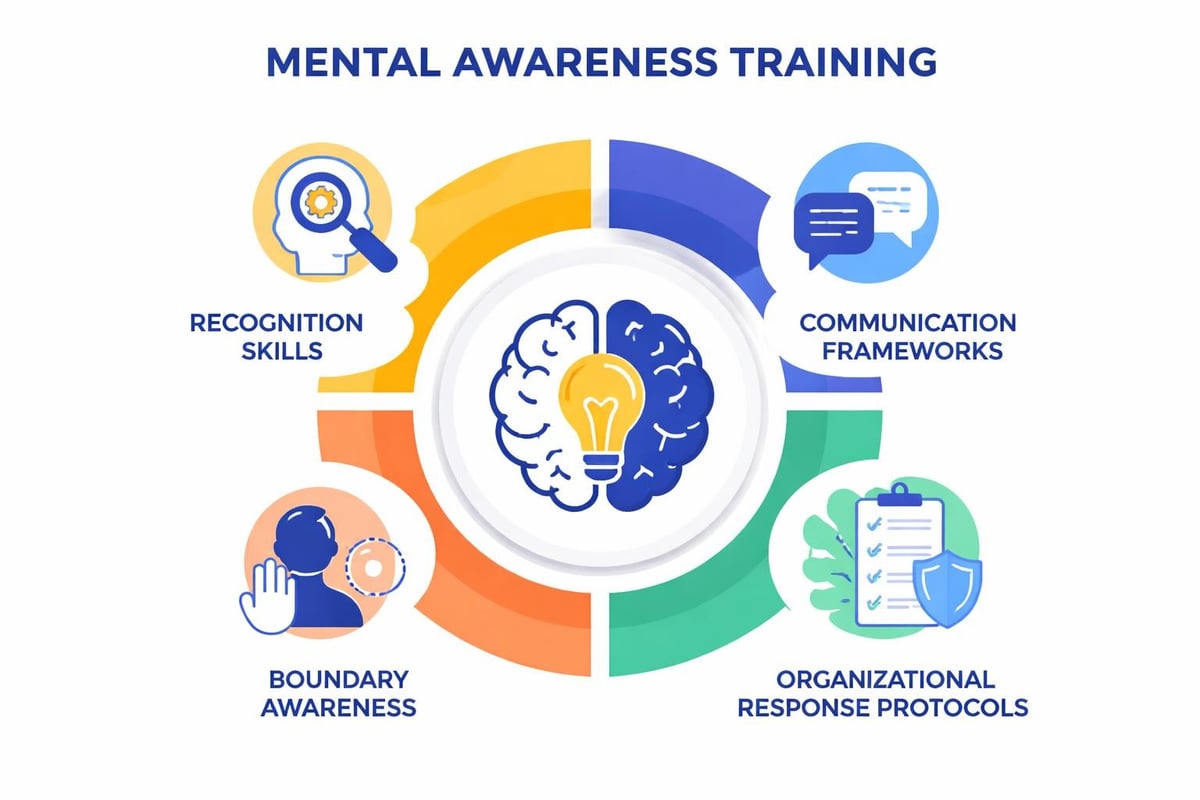
Mental awareness training addresses specific competencies within clearly defined parameters:
- Recognition capability: Identifying changes in behavior, performance, or presentation that may indicate psychological distress
- Communication skills: Conducting supportive conversations without overstepping professional roles
- Resource knowledge: Understanding available support pathways, both internal and external
- Self-awareness: Recognizing personal limitations and the importance of referring to qualified professionals
- Cultural competence: Acknowledging diverse expressions of mental health across different populations
The training does not prepare participants to diagnose conditions, provide therapy, or assume clinical responsibilities. This boundary definition protects both the individual receiving support and the colleague offering initial assistance.
Organizations implementing mental awareness training typically pursue multiple objectives. These include reducing absenteeism through earlier intervention, improving retention by creating supportive environments, enhancing team cohesion through shared understanding, and mitigating organizational risk through appropriate response protocols.
Evidence Base and Effectiveness Measures
Research examining workplace mental health initiatives demonstrates measurable benefits when training integrates practical skill development with organizational system changes. The effectiveness of mental awareness training depends significantly on implementation quality, leadership commitment, and integration with broader wellbeing strategies.
Studies evaluating training outcomes focus on several key metrics:
| Measure Category | Specific Indicators | Typical Assessment Method |
|---|---|---|
| Knowledge Acquisition | Understanding of mental health concepts, recognition of warning signs | Pre/post testing, scenario assessment |
| Attitude Change | Reduced stigma, increased willingness to engage | Survey instruments, behavioral observation |
| Confidence Levels | Self-efficacy in supportive conversations | Self-report measures, peer feedback |
| Behavioral Application | Frequency of appropriate interventions, quality of referrals | Manager reports, utilization data |
| Organizational Impact | Absenteeism rates, engagement scores, EAP utilization | HR analytics, longitudinal tracking |
Research indicates that single-session awareness training produces limited sustained impact without reinforcement mechanisms. Organizations implementing comprehensive mental health training achieve stronger outcomes when combining initial instruction with ongoing skill practice, leadership modeling, and system-level policy alignment.
Critical Success Factors
Mental awareness training delivers optimal results when organizations address several foundational elements. Leadership participation signals organizational commitment and reduces the perception that mental health remains a peripheral concern. When executives and senior managers complete the same training as frontline staff, they demonstrate accountability and create permission for open dialogue.
Training design matters considerably. Programs emphasizing practical scenarios, role-play opportunities, and interactive discussion generate stronger skill retention than lecture-based formats. Participants need opportunities to practice difficult conversations, receive feedback, and refine their approach within psychologically safe learning environments.
Integration with existing systems determines whether training translates into sustainable capability. Organizations must align training content with:
- Performance management processes that accommodate mental health considerations
- Leave policies that support recovery without penalizing disclosure
- Return-to-work protocols that facilitate gradual reintegration
- Communication channels that enable confidential reporting
- Resource allocation that ensures adequate support infrastructure
Without this integration, training creates awareness without providing viable pathways for action, potentially increasing frustration rather than capability.
Designing Effective Training Programs
Mental awareness training programs require thoughtful design that balances educational objectives with practical constraints. The Workplace Mental Health Institute develops programs specifically tailored to organizational contexts, recognizing that generic content often fails to address sector-specific challenges.
Content Architecture
Effective programs structure content across progressive competency levels rather than attempting comprehensive coverage in single sessions. A typical architecture includes:
Foundation Level focuses on basic literacy, terminology clarification, and myth dispelling. Participants learn the difference between mental health and mental illness, understand prevalence data relevant to their workforce, and examine how stigma operates within their specific organizational culture. This level establishes common language and reduces fundamental misconceptions that impede supportive responses.
Intermediate Level develops recognition and communication capabilities. Training addresses specific behavioral indicators across common conditions including anxiety, depression, and stress-related disorders. Participants practice conversation frameworks that balance empathy with appropriate boundaries, learning when to listen, when to refer, and how to avoid inadvertent harm through well-intentioned but misguided advice.
Advanced Level equips leaders with skills for complex situations including acute crisis response, managing team dynamics when a member experiences mental health challenges, and making accommodation decisions that balance individual needs with operational requirements. This level incorporates legal considerations, ethical decision-making frameworks, and strategic planning for psychologically healthy workplace design.
Delivery Modality Selection
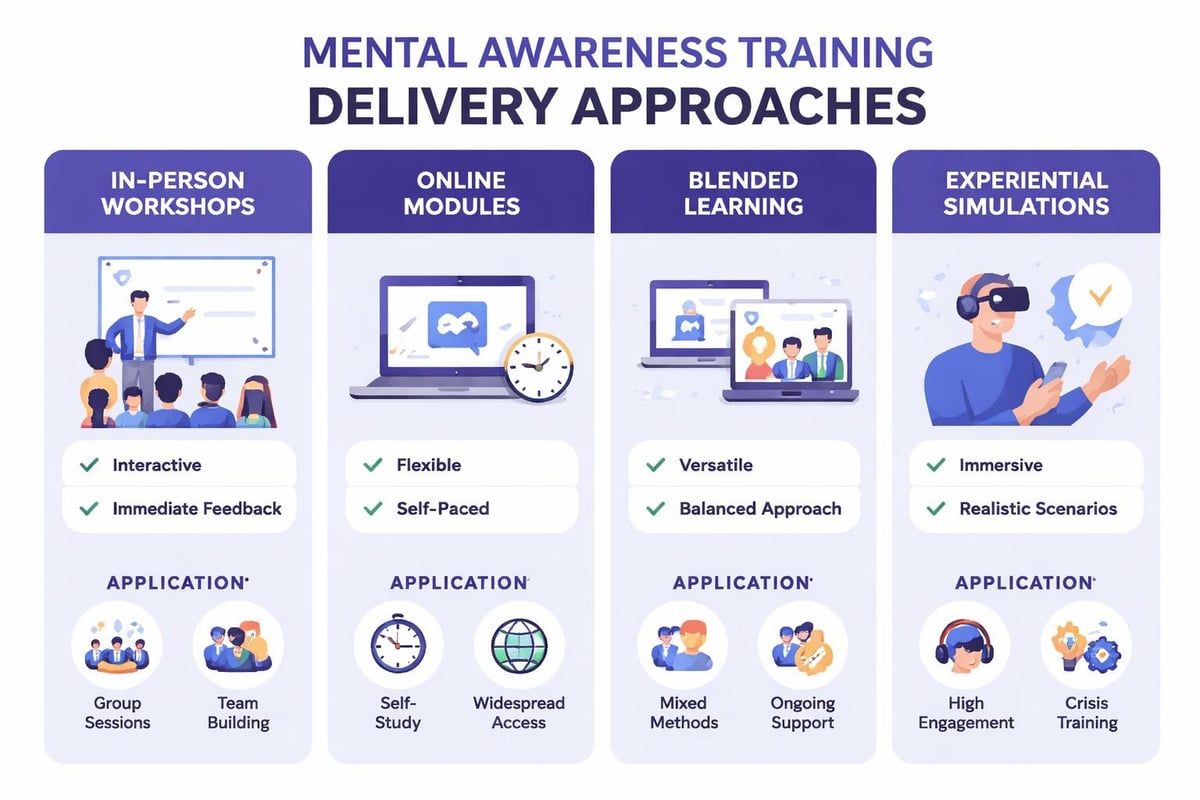
Organizations select from multiple delivery approaches based on workforce characteristics, budget parameters, and learning objectives:
- In-person workshops enable rich discussion, immediate clarification, and relationship building among participants
- Online self-paced modules provide flexibility, consistent messaging, and scalability across dispersed locations
- Blended approaches combine online knowledge acquisition with in-person skill practice
- Train-the-trainer models build internal capacity while requiring significant upfront investment
- Consultation-based customization addresses unique organizational challenges through tailored content development
The optimal approach depends on organizational maturity around mental health topics. Organizations at early stages benefit from external facilitation that provides credibility and psychological safety for sensitive discussions. More mature organizations may leverage internal champions who understand cultural nuances and can contextualize content to specific operational realities.
Resources like trauma-informed training from NAMI demonstrate how specialized programs address particular aspects of mental awareness, complementing rather than replacing foundational training.
Implementation Strategies for Maximum Impact
Successful implementation of mental awareness training extends far beyond scheduling sessions and tracking attendance. Organizations achieving meaningful culture change approach training as one component within comprehensive wellbeing strategies.
Pre-Training Preparation
Effective programs begin with needs assessment that examines current state across multiple dimensions. Organizations audit existing policies, review utilization data for support services, assess current manager confidence through surveys, and identify specific situations that prompt training requests.
This assessment informs content customization and reveals system gaps that training alone cannot address. For example, if managers report discomfort discussing mental health but the organization lacks clear referral pathways, training must coincide with resource development to avoid creating capable observers without viable intervention options.
Communication preceding training influences participation quality. Transparent messaging about training objectives, confidentiality parameters, and intended outcomes reduces anxiety and establishes realistic expectations. Organizations should clarify that training aims to improve support capability, not transform colleagues into therapists or create surveillance systems.
During-Training Facilitation
Quality facilitation balances structure with responsiveness to participant needs. Skilled facilitators create environments where participants feel comfortable sharing concerns, asking questions that reveal gaps in understanding, and practicing skills without fear of judgment.
Interactive elements prove essential for adult learning retention. Effective programs incorporate:
- Case study analysis using scenarios relevant to the specific industry
- Small group discussion addressing common dilemmas and ethical tensions
- Role-play exercises with structured feedback frameworks
- Q&A sessions with mental health professionals who can address clinical questions
- Resource navigation practice to build familiarity with referral processes
Australian organizations seeking localized content and culturally relevant examples can access region-specific programs through WMHI Australia, which addresses jurisdiction-specific regulatory requirements and cultural considerations.
Post-Training Sustainability
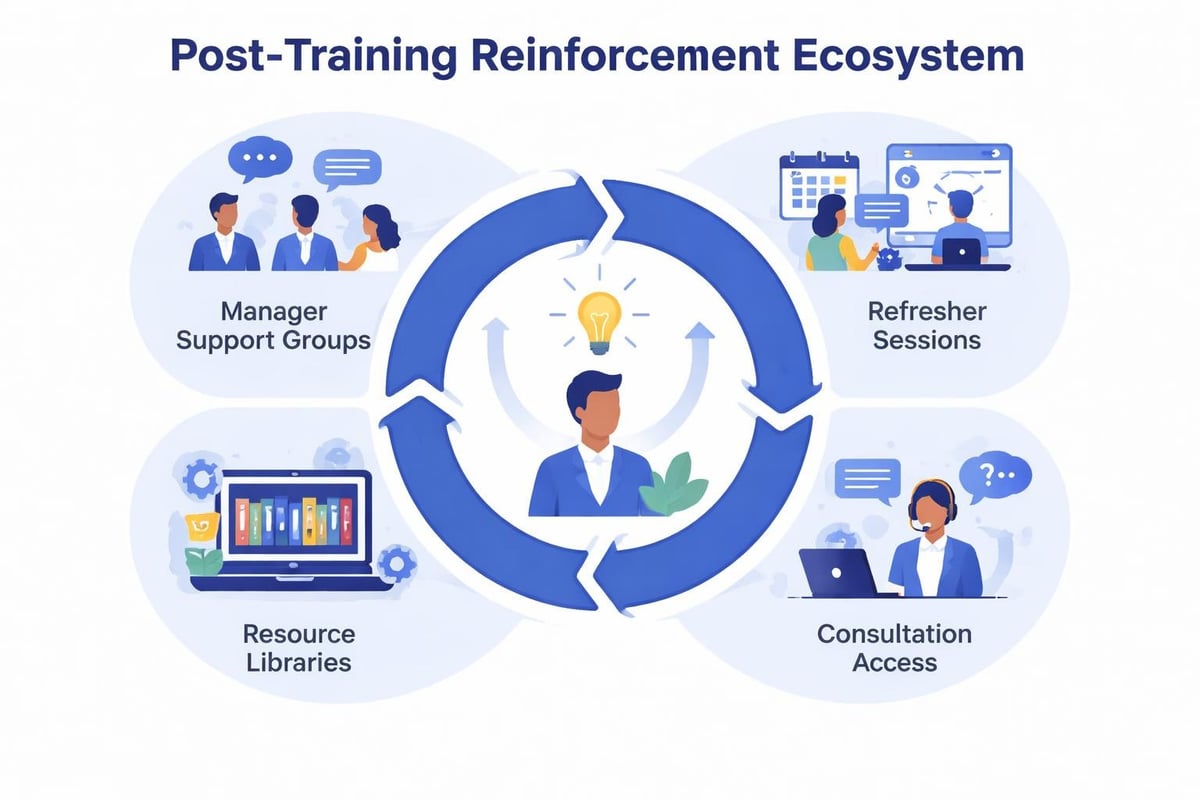
Training impact degrades without reinforcement mechanisms. Organizations sustain capability through multiple strategies:
| Strategy | Implementation Approach | Frequency |
|---|---|---|
| Refresher Sessions | Condensed review of core concepts with updated scenarios | Annually or biannually |
| Manager Peer Networks | Facilitated discussion groups for shared learning | Quarterly |
| Resource Libraries | Curated digital repositories of tools, scripts, external resources | Ongoing access |
| Consultation Access | Expert availability for complex situations | As needed |
| Integration Checkpoints | Policy reviews ensuring alignment with training principles | Annual strategic review |
Many organizations utilize online platforms such as WMHI Online for ongoing skill development, providing managers with on-demand access to updated content and emerging best practices.
The National Training and Technical Assistance Center offers additional resources that organizations can leverage to supplement internal programs, particularly for specialized populations or unique challenges.
Measuring Training Effectiveness and ROI
Organizations investing in mental awareness training require evidence that programs deliver value beyond participant satisfaction scores. Comprehensive evaluation examines multiple outcome domains across varying timeframes.
Immediate Outcomes
Post-training assessments measure knowledge acquisition and immediate confidence shifts. These metrics provide baseline data but offer limited insight into behavioral change or organizational impact. Effective immediate evaluation includes:
- Scenario-based testing requiring application of concepts to workplace situations
- Self-assessment of confidence across specific competencies
- Clarification of remaining questions or concepts requiring additional support
- Feedback on content relevance, facilitator effectiveness, and format appropriateness
Organizations should resist over-reliance on participant satisfaction as the primary success indicator. High satisfaction scores may reflect engaging delivery without corresponding capability development.
Intermediate Behavioral Changes
Measuring actual behavior change requires assessment methods beyond self-report. Organizations track:
Manager conversation frequency: Number of supportive conversations initiated, documented through manager self-tracking or supervision discussions
Referral patterns: EAP utilization rates, quality of referral information provided, appropriateness of referral timing
Policy utilization: Requests for mental health accommodations, mental health leave uptake, flexible work arrangement requests
Team psychological safety: Survey measures of team member comfort discussing challenges, perceived manager supportiveness
These intermediate indicators reveal whether training translates into changed workplace practices. Increased EAP referrals following training typically indicate improved recognition and reduced stigma rather than deteriorating mental health.
Long-Term Organizational Metrics
Sustained impact appears in business outcomes that justify training investment. Organizations examine:
- Absenteeism trends: Comparing mental health-related absence before and after implementation
- Retention rates: Particularly among employees who disclosed mental health challenges
- Engagement scores: Measures of belonging, psychological safety, and organizational commitment
- Performance metrics: Productivity indicators at team and organizational levels
- Workers compensation claims: Mental health-related claims frequency and severity
Isolating training effects from broader environmental factors requires careful analysis. Organizations implementing mental awareness training typically pursue multiple wellbeing initiatives simultaneously, making direct causation difficult to establish. Longitudinal tracking and comparison across business units with varying implementation timing strengthen causal inference.
Sector-Specific Applications and Adaptations
Mental awareness training requires contextualization to address industry-specific stressors, regulatory environments, and operational realities. Generic programs often miss critical nuances that determine practical applicability.
High-Stress Occupational Settings
First responders, healthcare workers, and emergency services personnel face unique mental health challenges requiring specialized training approaches. The NAEMT’s mental health resources for first responders address trauma exposure, critical incident stress, and operational stress injuries specific to emergency response contexts.
Training for these populations emphasizes cumulative stress recognition, peer support protocols, and cultural barriers specific to emergency services. Programs acknowledge occupational attitudes toward vulnerability while building skills that align with professional identities.
Corporate and Professional Services
Office-based environments present different recognition challenges, as distress may manifest through performance changes, interpersonal conflicts, or gradual withdrawal rather than acute crisis. Training for these contexts addresses:
- Distinguishing performance issues from mental health struggles
- Managing disclosure in team environments
- Balancing confidentiality with operational information needs
- Supporting remote and hybrid workers where behavioral changes may be less visible
Programs also address unique pressures within professional services including billing expectations, client demands, and promotion processes that may exacerbate stress.
Educational Institutions
Schools and universities require training that addresses developmental considerations, parental involvement complexities, and educational accommodation processes. Programs distinguish between student-focused and employee-focused training, recognizing different legal frameworks and support responsibilities.
Mental awareness training in educational settings often integrates with broader student wellbeing strategies, creating alignment between staff capability and institutional support infrastructure.
Building Psychologically Informed Organizational Culture
Mental awareness training achieves maximum impact when embedded within broader cultural transformation efforts. Organizations viewing training as a standalone intervention typically experience limited sustained change.
Leadership Accountability
Senior leadership shapes organizational culture through multiple mechanisms beyond training attendance. Leaders demonstrate commitment through:
Visible participation in training without claiming special exemptions or abbreviated versions
Personal disclosure at appropriate levels that humanize mental health challenges without oversharing
Resource allocation that funds adequate support infrastructure, not merely awareness initiatives
Policy reform eliminating structural barriers that penalize disclosure or accommodation requests
Performance expectations that include wellbeing considerations in how results are achieved, not only what results are delivered
Organizations can access Workplace Mental Health Institute resources on YouTube for leadership-focused content that reinforces training principles through ongoing exposure.
System-Level Integration
Training effectiveness multiplies when organizations align all people management systems with mental health awareness principles:
- Recruitment processes that assess cultural fit around psychological safety values
- Onboarding programs that normalize mental health discussions from day one
- Performance management incorporating wellbeing indicators alongside output metrics
- Succession planning building mental health capability in future leaders
- Exit processes capturing data on mental health factors in departure decisions
This integration transforms mental awareness from a program into an organizational operating principle.
Continuous Improvement Frameworks
Organizations sustain relevance through regular program review and adaptation. Annual evaluation examines emerging mental health challenges, assesses training content currency, incorporates participant feedback for refinement, reviews external research for evidence updates, and benchmarks against sector best practices.
Guidance on evaluating mental health information quality helps organizations assess external resources they incorporate into training or provide as post-training references.
Addressing Common Implementation Challenges
Organizations encounter predictable obstacles when implementing mental awareness training. Anticipating these challenges enables proactive mitigation strategies.
Resistance and Skepticism
Some managers and employees view mental health training skeptically, perceiving it as politically correct box-checking, invasion of privacy, or implicit criticism of current practices. Effective responses include:
- Presenting business case data linking mental health to performance outcomes
- Emphasizing training as capability building rather than compliance
- Acknowledging legitimate concerns about privacy and boundaries
- Demonstrating leadership commitment through resource investment
- Starting with voluntary participation among early adopters before broader rollout
Resistance often diminishes following initial training when participants recognize practical value rather than ideological messaging.
Resource Constraints
Organizations facing budget limitations can implement mental awareness training through phased approaches. Initial focus on managers and team leaders builds capability among those with greatest impact on team culture. Train-the-trainer models develop internal capacity while spreading costs across multiple cohorts.
However, organizations must avoid false economy. Inadequate training that creates awareness without capability may increase anxiety and decrease manager confidence. Investing in quality programming for smaller populations typically delivers better outcomes than superficial exposure for entire workforces.
Measuring Intangible Outcomes
Mental health improvements resist simple quantification, frustrating organizations seeking clear ROI calculations. Effective measurement strategies combine quantitative metrics with qualitative indicators, track multiple outcome domains rather than single measures, establish baseline data before implementation, use comparison groups when possible, and acknowledge attribution challenges honestly.
Absence of perfect measurement should not prevent program implementation. Organizations accepting reasonable evidence standards rather than demanding absolute proof make faster progress.
Mental awareness training provides organizations with foundational capability to recognize, respond to, and support psychological wellbeing in professional contexts, creating safer and more productive work environments when implemented thoughtfully. The Workplace Mental Health Institute offers evidence-based training programs, workplace wellbeing assessments, and strategic consultation that helps organizations build sustainable mental health capability aligned with operational realities and regulatory requirements. Organizations ready to move beyond awareness toward genuine cultural transformation can explore tailored programs that address their specific industry challenges and workforce needs.

