
Organizations that prioritize mental wellbeing in the workplace consistently outperform their competitors across multiple business metrics. As workplaces navigate increasing complexity, psychological safety has shifted from a peripheral concern to a strategic imperative. Understanding the interconnected factors that influence employee mental health enables leaders to design environments where people can perform at their best while maintaining sustainable wellbeing. This comprehensive guide examines the evidence-based approaches that transform workplace culture and deliver measurable outcomes.
Understanding the Business Case for Mental Health Investment
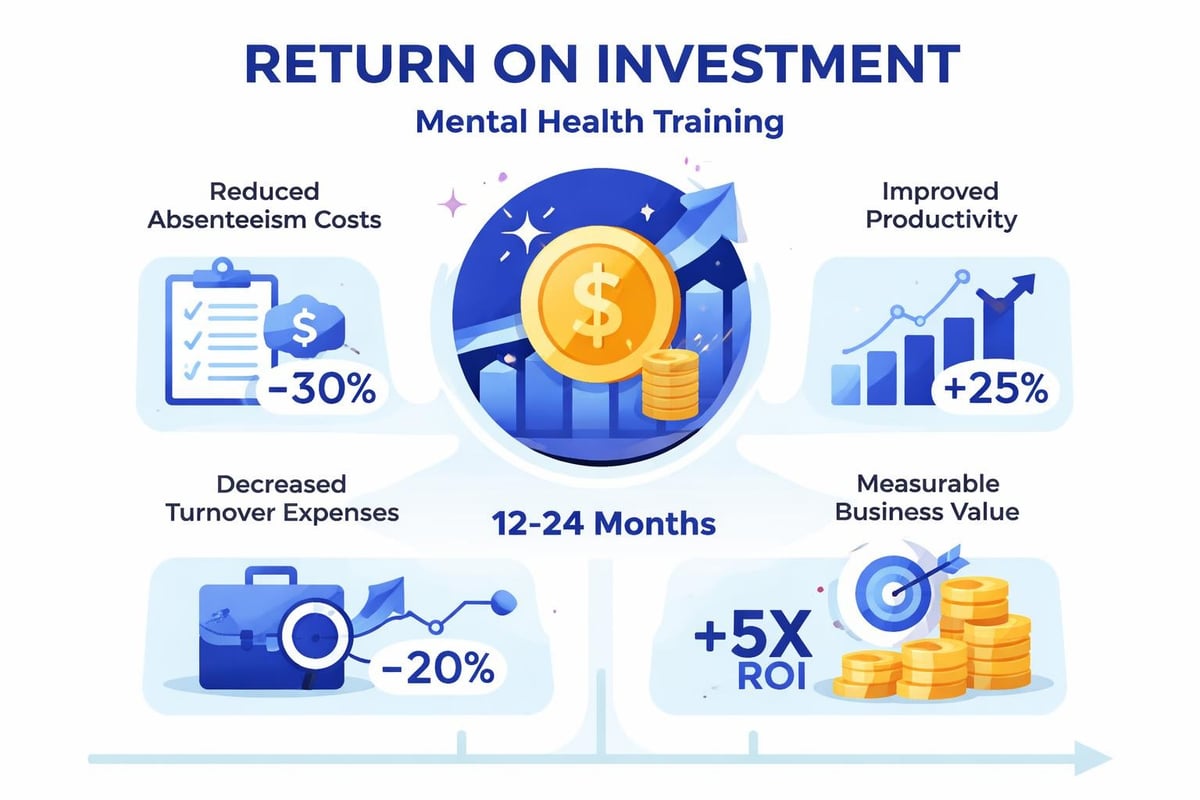
Mental wellbeing in the workplace directly impacts organizational performance, yet many leaders struggle to quantify the return on investment. Research examining workplace mental health dynamics reveals that comprehensive interventions reduce absenteeism by 27% and increase productivity by up to 12% across diverse industries.
The financial implications extend beyond direct costs. Presenteeism, where employees attend work while functioning below capacity due to mental health challenges, costs organizations significantly more than absenteeism. A systematic assessment of these hidden costs reveals patterns that many leadership teams overlook.
Quantifying Mental Health Impact
| Metric | Annual Cost (per 1000 employees) | Improvement Potential |
|---|---|---|
| Absenteeism | $250,000 – $400,000 | 20-30% reduction |
| Presenteeism | $600,000 – $1,200,000 | 15-25% improvement |
| Turnover | $180,000 – $350,000 | 12-18% decrease |
| Healthcare claims | $150,000 – $280,000 | 10-15% reduction |
Organizations that implement structured mental wellbeing in the workplace programs see these improvements compound over time. The American Psychiatric Association Foundation’s workplace mental health resources demonstrate how systematic approaches create sustainable change.
Early intervention proves particularly valuable. Identifying stressors before they escalate into clinical conditions requires proactive monitoring systems combined with accessible support pathways. Programs from Workplace Mental Health Institute equip managers with assessment frameworks that enable timely intervention without requiring clinical expertise.
Creating Psychologically Safe Work Environments
Psychological safety forms the foundation of effective mental wellbeing in the workplace. This concept extends beyond physical safety to encompass emotional security, interpersonal respect, and the freedom to express concerns without fear of negative consequences.
Leaders often confuse psychological safety with comfort or the absence of challenge. True psychological safety enables productive conflict, honest feedback, and constructive disagreement within clearly defined boundaries. Establishing these parameters requires intentional design rather than hoping culture will develop organically.
Key elements of psychologically safe environments:
- Clear expectations regarding performance standards and behavioral norms
- Consistent responses to mistakes that emphasize learning over punishment
- Transparent communication about organizational changes and decision rationale
- Accessible pathways for raising concerns or requesting support
- Leadership modeling of vulnerability and openness about challenges
The NICE guidelines for promoting mental wellbeing at work emphasize systematic approaches to building supportive cultures. These frameworks provide actionable steps that HR professionals can implement without extensive external consulting.
Environmental Factors That Influence Mental Health
Physical workspace design significantly impacts psychological wellbeing. Research on office environments and mental health identifies specific design elements that either support or undermine employee mental health.
Natural light exposure, noise control, access to private spaces, and environmental temperature all affect cognitive function and emotional regulation. Organizations that optimize these factors report measurable improvements in employee satisfaction and performance metrics.
Flexible work arrangements have become essential components of modern mental health strategies. The shift to hybrid models requires intentional design to prevent isolation while preserving autonomy. Structured approaches to flexible work maintain connection without defaulting to rigid presence requirements that undermine trust.
Manager Training as a Catalyst for Cultural Change
Managers serve as the primary intervention point for mental wellbeing in the workplace. Their daily interactions shape employee experiences more than any policy or program. Yet most managers receive minimal preparation for recognizing mental health concerns or having supportive conversations.
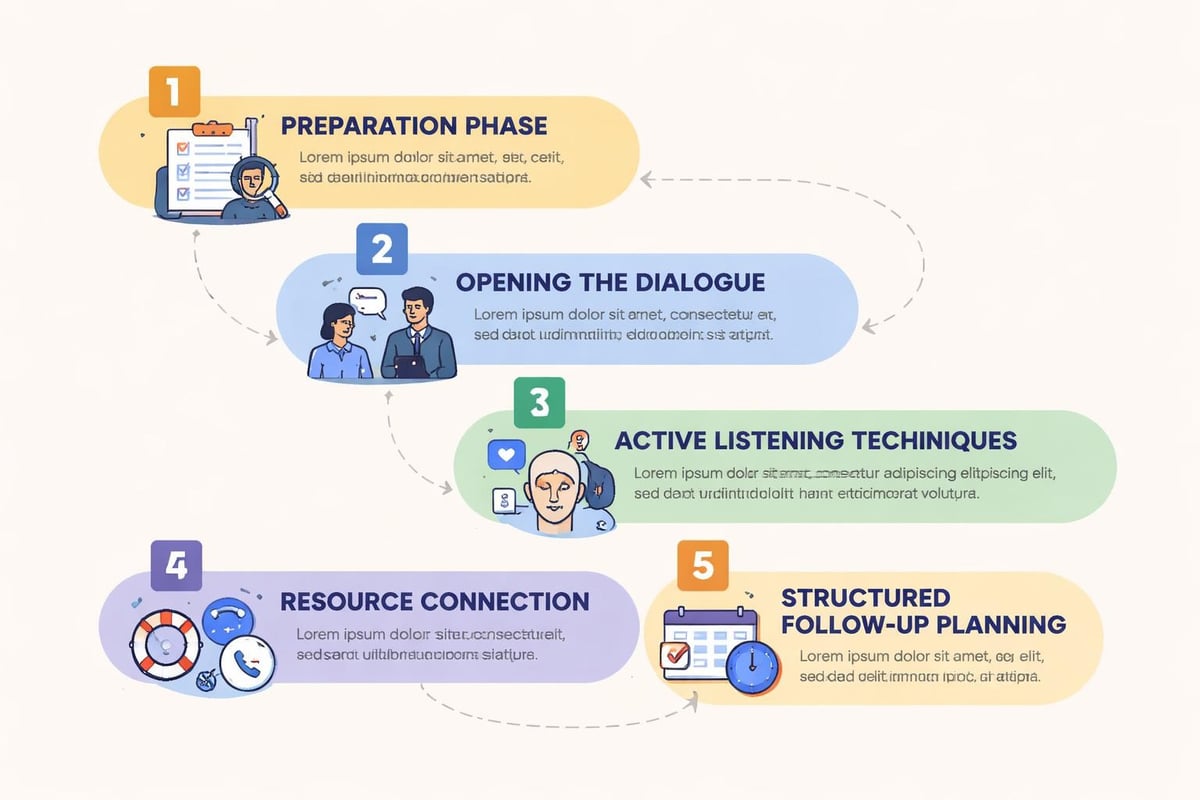
Effective manager training programs focus on observable behaviors rather than attempting to create amateur therapists. The distinction matters: managers need skills to notice changes in performance or engagement, initiate conversations with empathy, and connect employees with appropriate resources.
Core Competencies for Mental Health Leadership
- Pattern recognition: Identifying behavioral changes that may indicate distress
- Conversation frameworks: Conducting supportive check-ins without diagnosing
- Resource navigation: Understanding available support pathways and referral processes
- Boundary maintenance: Knowing when situations require professional intervention
- Follow-up protocols: Creating accountability for ongoing support without micromanagement
- Self-care modeling: Demonstrating sustainable work practices through personal behavior
Training delivered through WMHI online courses provides practical skills that managers can apply immediately. The emphasis on behavioral observation rather than clinical assessment reduces barriers to implementation.
Research examining empowering leadership and mental health outcomes demonstrates that management approach directly influences employee psychological wellbeing. Leaders who combine high expectations with genuine support create conditions where teams thrive under pressure rather than breaking down.
Implementing Trauma-Informed Workplace Practices
Trauma-informed approaches recognize that many employees have experienced adversity that shapes their workplace interactions. These practices create environments that avoid re-traumatization while supporting diverse needs without requiring disclosure of personal history.
Trauma-informed care in professional settings differs significantly from clinical applications. Workplace implementations focus on organizational systems that provide predictability, transparency, and choice rather than therapy or treatment. This distinction enables implementation across entire organizations without specialized clinical staff.
Trauma-informed organizational practices include:
- Predictable processes for decisions that affect employees
- Multiple pathways for accomplishing required tasks
- Clear explanations for policy changes and their rationale
- Respect for personal boundaries and privacy
- Minimization of power differentials in routine interactions
- Recognition that challenging behavior often reflects unmet needs
The CDC’s workplace mental health strategies outline systemic approaches that reduce organizational contributions to employee distress. These frameworks help leaders identify policies that inadvertently create stress or undermine wellbeing.
Assessment Tools for Workplace Mental Health
Systematic assessment provides baseline data and tracks progress over time. Effective measurement balances comprehensiveness with practicality, capturing meaningful information without creating survey fatigue.
| Assessment Type | Frequency | Primary Purpose | Implementation Complexity |
|---|---|---|---|
| Climate surveys | Annual | Cultural temperature and trends | Moderate |
| Pulse checks | Quarterly | Real-time issue identification | Low |
| Exit interviews | Ongoing | Retention insights | Low |
| Stay interviews | Annual | Proactive engagement data | Moderate |
| Wellbeing assessments | Biannual | Individual and aggregate health indicators | High |
Validated measures of worker wellbeing ensure that assessment data supports decision-making rather than simply creating activity. Selecting appropriate instruments requires matching tool sophistication to organizational capacity for data analysis and response.
Australian organizations can access specialized support through WMHI Australia, which provides region-specific frameworks aligned with local workplace requirements and cultural contexts.
Developing Resilience Through Skill-Building Programs
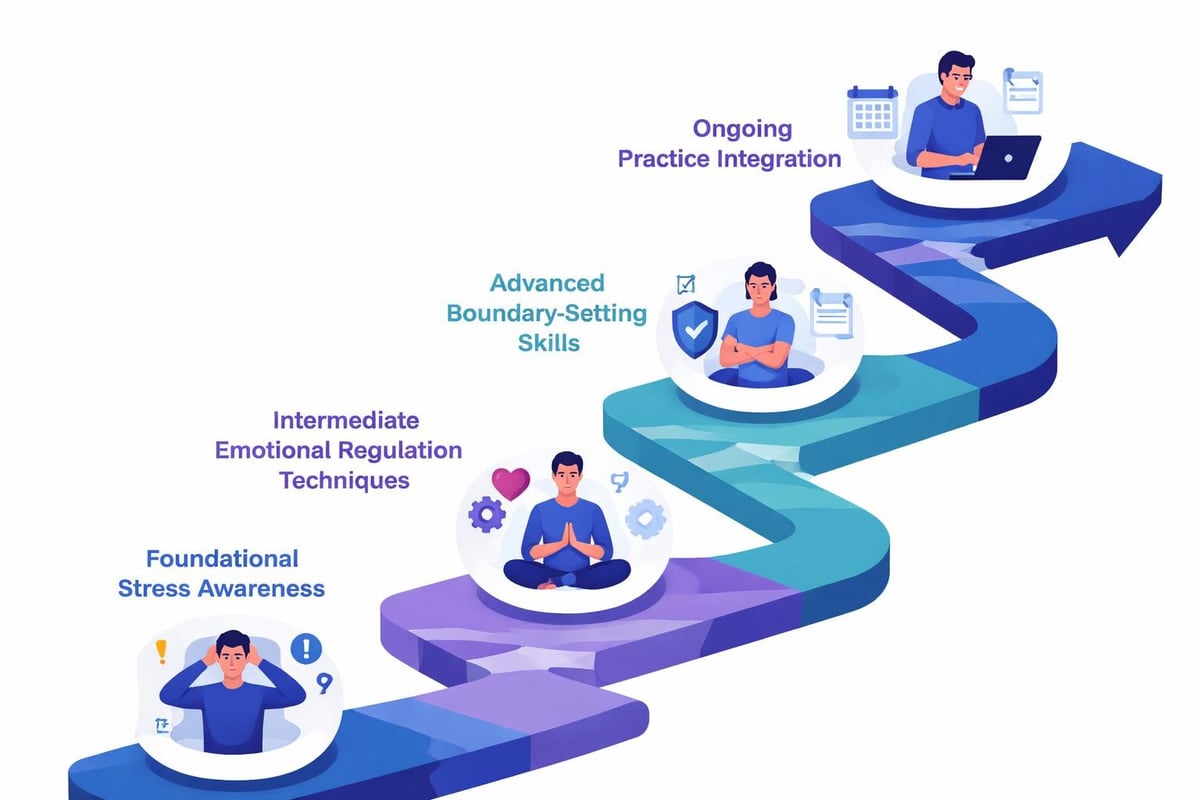
Resilience training equips employees with practical strategies for managing stress, maintaining perspective during challenges, and recovering from setbacks. Effective programs avoid simplistic positive thinking in favor of evidence-based psychological techniques.
Mental wellbeing in the workplace improves when individuals possess specific skills rather than vague encouragement to "be resilient." Structured programs teach concrete techniques: cognitive reframing, emotional regulation strategies, boundary-setting frameworks, and recovery practices.
Essential components of resilience programs:
- Stress physiology education that demystifies the body's response to pressure
- Practical techniques for regulating emotional reactions in real-time
- Decision-making frameworks for navigating ambiguous situations
- Communication skills for setting boundaries and requesting support
- Recovery practices that restore energy and maintain sustainable performance
Programs should accommodate diverse learning preferences and avoid one-size-fits-all approaches. Some employees respond well to group training while others prefer self-paced digital resources or one-on-one coaching.
The study on workplace culture and mental health among academics reveals that sector-specific pressures require tailored interventions. Generic resilience training often fails because it doesn't address the particular challenges employees actually face.
Technology Integration for Mental Health Support
Digital tools expand access to mental health resources while enabling early intervention. However, technology implementation requires careful consideration of privacy, effectiveness, and user adoption.
Innovative approaches to workplace mental health support demonstrate how real-time monitoring can identify distress patterns and prompt timely intervention. These systems work best when integrated with human support rather than replacing personal interaction.
Effective digital mental health strategies combine multiple modalities:
- Self-assessment tools that help employees recognize their current state
- Educational resources accessible on-demand without scheduling constraints
- Chatbot support for immediate responses to common questions
- Appointment scheduling that reduces barriers to accessing professional help
- Anonymous helplines for situations requiring confidential support
Privacy protections remain paramount. Employees must trust that seeking support won't negatively impact career progression or become part of performance records. Technical infrastructure should enforce data separation between health information and HR systems.
Building Strategic Wellbeing Initiatives
Strategic mental wellbeing in the workplace programs align with broader organizational objectives rather than existing as standalone initiatives. This integration ensures sustained investment and leadership attention beyond initial implementation enthusiasm.
Effective strategies begin with clear objectives tied to business outcomes. Vague goals about "improving culture" rarely generate sustained commitment. Specific targets regarding retention, engagement scores, or productivity metrics create accountability and enable progress measurement.
Strategic Planning Framework
- Baseline assessment: Gather quantitative and qualitative data about current state
- Stakeholder engagement: Involve employees in identifying priorities and solutions
- Resource allocation: Determine budget, staff time, and external expertise needs
- Phased implementation: Sequence initiatives to build momentum and demonstrate results
- Measurement systems: Establish metrics and reporting cadence before launch
- Continuous refinement: Create feedback loops that enable program evolution
Leadership commitment makes the difference between initiatives that transform organizations and those that generate cynicism. Visible executive participation in training, policy alignment with stated priorities, and resource allocation that matches rhetoric all signal genuine commitment.
Visual resources from the Workplace Mental Health Institute YouTube channel provide accessible explanations that help leaders understand complex concepts without extensive reading.
Addressing Specific Workplace Mental Health Challenges
Different organizational contexts present unique mental health challenges requiring tailored responses. High-pressure industries face burnout risks while shift work creates sleep disruption and social isolation. Customer-facing roles involve emotional labor that depletes psychological resources.
Remote work introduces challenges around boundary maintenance, social connection, and performance anxiety when visibility decreases. Hybrid models compound these issues with inequitable access to informal networking and unclear expectations about presence.
Industry-specific considerations:
- Healthcare: Trauma exposure, moral injury, staffing shortages creating impossible workloads
- Technology: Always-on culture, rapid change, imposter syndrome
- Retail: Irregular schedules, customer aggression, limited control over work processes
- Education: Emotional demands, work-life boundary challenges, inadequate resources
- Manufacturing: Physical strain, safety concerns, limited flexibility
Effective interventions address root causes rather than simply teaching individuals to cope with dysfunctional systems. Organizational change that reduces excessive demands proves more impactful than resilience training that helps people endure unsustainable conditions.
Creating Supportive Return-to-Work Processes
Employees returning from mental health-related absences require structured support that facilitates successful reintegration without stigma. Poorly managed returns often result in rapid relapse or resignation.
Return-to-work planning should begin before the absence ends. Communication during leave maintains connection while respecting recovery needs. Phased returns with reduced hours or modified duties enable gradual adjustment rather than abrupt transitions.
| Return Phase | Duration | Key Activities | Success Indicators |
|---|---|---|---|
| Pre-return planning | 2-4 weeks before | Manager-employee dialogue, role adjustment planning | Clear agreement on initial duties |
| Initial return | First 2 weeks | Reduced schedule, frequent check-ins | Completion of agreed tasks without overwhelm |
| Gradual increase | Weeks 3-6 | Progressive responsibility addition | Sustained attendance, positive feedback |
| Full integration | Weeks 7-12 | Complete role resumption, ongoing monitoring | Performance meeting standards, employee confidence |
Workplace adjustments during return periods demonstrate commitment to mental wellbeing in the workplace while supporting sustainable performance. These accommodations might include flexible hours, temporary workload reduction, or modified interaction patterns.
Measuring Program Effectiveness and ROI
Comprehensive measurement systems track both leading indicators (engagement, climate scores) and lagging outcomes (absenteeism, turnover, healthcare costs). This dual approach enables course correction while demonstrating long-term value.
Essential metrics for mental health program evaluation:
- Employee engagement scores from validated surveys
- Absenteeism rates disaggregated by reason and department
- Voluntary turnover percentages and exit interview themes
- Healthcare utilization patterns related to mental health
- Manager confidence in handling mental health conversations
- Employee awareness and utilization of available resources
- Productivity metrics appropriate to organizational context
Baseline measurement before program implementation enables valid comparison. Control groups or phased rollouts strengthen causal claims about program impact versus general trends.
Qualitative data provides context that numbers alone cannot capture. Employee testimonials, manager observations, and case studies illustrate how programs create value beyond statistical measures.
Mental wellbeing in the workplace requires systematic approaches that address organizational systems, manager capabilities, and individual skills simultaneously. Evidence-based interventions delivered with genuine leadership commitment create environments where people perform sustainably while maintaining psychological health. Workplace Mental Health Institute offers comprehensive training programs, workplace assessments, and strategic consultation that help organizations build mentally healthy cultures through practical, empowering approaches tailored to your specific context and challenges.

