
Organizations face unprecedented challenges in maintaining workforce wellbeing, making mental resilience training an essential component of contemporary workplace strategy. Defined as the systematic development of psychological capacity to recover from stress, adversity, and setbacks while maintaining performance, mental resilience training equips employees and leaders with evidence-based skills to navigate complexity without compromising mental health. This comprehensive guide explores how organizations can implement effective programs that build genuine psychological strength rather than simply promoting superficial coping mechanisms.
Understanding Mental Resilience as a Trainable Capacity
Mental resilience represents far more than passive endurance or innate toughness. Research demonstrates that resilience functions as a dynamic set of learnable skills encompassing emotional regulation, cognitive flexibility, and adaptive stress response. Unlike fixed personality traits, these capabilities develop through intentional practice and structured intervention.
The neurobiological foundation of resilience centers on neuroplasticity, the brain's capacity to reorganize neural pathways based on experience and training. When individuals engage in mental resilience training, they strengthen prefrontal cortex functioning while moderating amygdala reactivity, creating physiological changes that support better stress management. This scientific understanding validates resilience as a legitimate training target rather than an abstract concept.
Core Components of Effective Training Programs
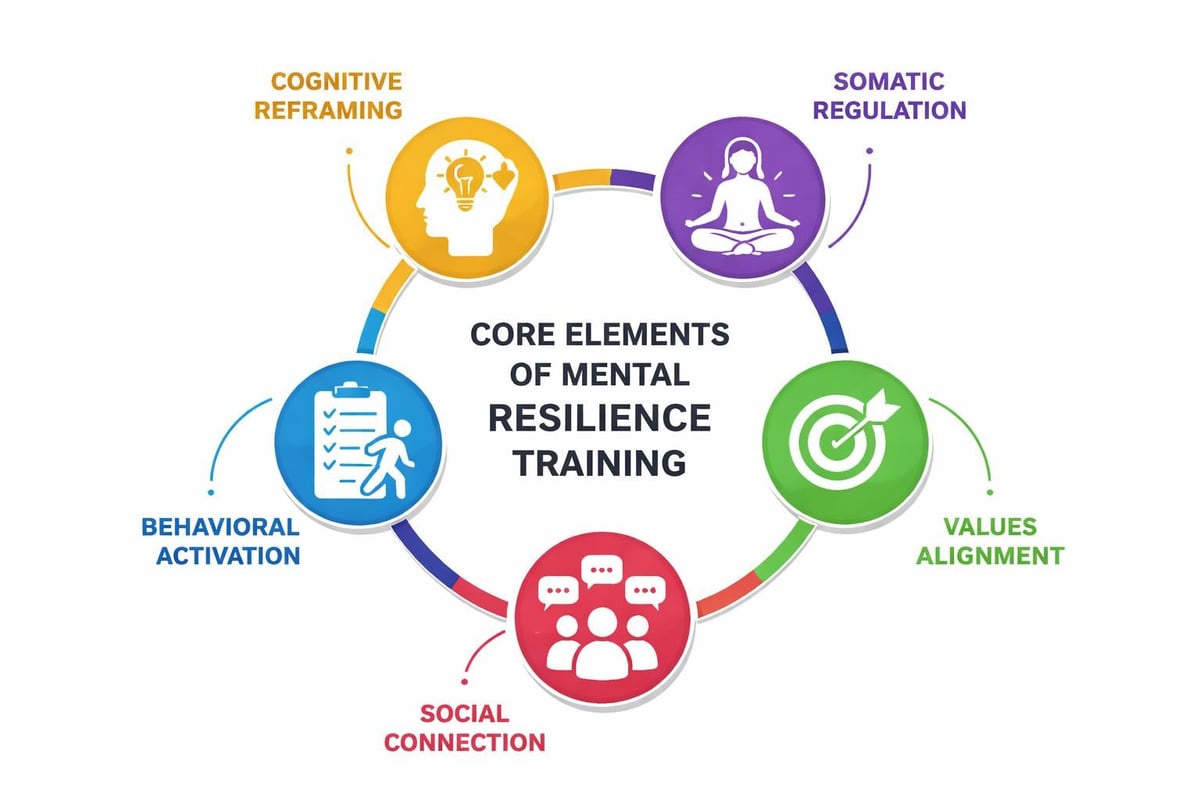
Successful mental resilience training integrates multiple evidence-based elements rather than relying on single interventions. Programs must address both protective factors that buffer against stress and active skills that enhance recovery capacity.
Essential training components include:
- Cognitive reframing techniques that challenge catastrophic thinking patterns
- Somatic awareness practices that improve stress recognition and physiological regulation
- Behavioral activation strategies that maintain engagement during difficulty
- Social connection skills that strengthen support networks
- Values clarification exercises that anchor decision-making during uncertainty
Research on psychological crisis intervention and human resilience demonstrates that comprehensive approaches outperform narrow skill-building initiatives. Organizations achieve better outcomes when training addresses the full spectrum of resilience factors rather than isolated components.
Evidence-Based Approaches to Workplace Resilience Development
Multiple validated frameworks inform contemporary mental resilience training, each offering distinct advantages for workplace application. Understanding these approaches allows organizations to select methodologies aligned with their culture and employee needs.
Cognitive-behavioral resilience training draws from established therapeutic protocols, teaching individuals to identify thought patterns that amplify stress and replace them with balanced alternatives. This approach, informed by work from practitioners like Donald J. Robertson, integrates Stoic philosophy principles with modern psychological science. Employees learn to distinguish between controllable and uncontrollable factors, directing energy toward productive responses rather than rumination.
Mindfulness-based resilience programs emphasize present-moment awareness and non-judgmental acceptance of experience. Building on research by Amit Sood and others, these interventions train attention regulation and emotional balance through structured meditation and contemplative practices. For workplace contexts, brief mindfulness exercises integrated into daily routines often prove more sustainable than lengthy meditation sessions.
Military and Structured Program Models
The Comprehensive Soldier and Family Fitness program pioneered large-scale resilience training implementation, offering valuable lessons for civilian organizations. This initiative emphasized proactive skill-building before crisis exposure, universal training across all organizational levels, and measurement-driven program refinement.
Similarly, the FRIENDS program demonstrated how structured curricula can systematically build social and emotional skills that prevent anxiety and depression. Workplace adaptations of these models focus on building psychological resources during stable periods rather than waiting for crisis intervention.
| Program Type | Primary Focus | Implementation Model | Best Suited For |
|---|---|---|---|
| Cognitive-Behavioral | Thought pattern modification | Skills workshops + practice | Analytical environments |
| Mindfulness-Based | Attention and awareness | Daily micro-practices | High-stress roles |
| Positive Psychology | Strength building | Asset mapping exercises | Growth-focused cultures |
| Psychophysiological | Body-mind connection | Biofeedback training | Performance environments |
Designing Training for Managers and Frontline Leaders
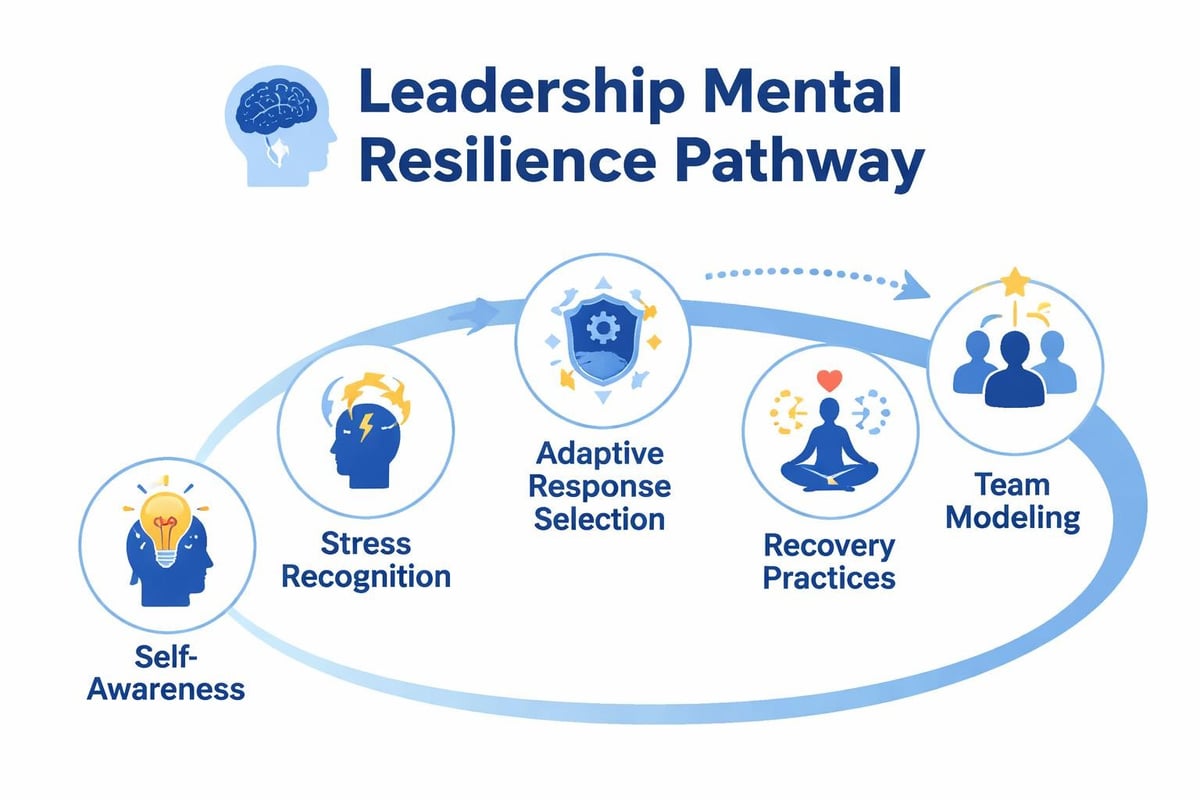
Leaders require specialized mental resilience training that addresses unique pressures including decision-making under uncertainty, responsibility for others' wellbeing, and sustained performance expectations. Generic resilience programs often fail to address these leadership-specific challenges.
Manager-focused training should integrate realistic scenarios that mirror actual workplace stressors. Case-based learning, role-playing difficult conversations, and simulation exercises create opportunities to practice resilience skills under conditions approximating real demands. This applied approach surpasses abstract concept instruction.
Leadership resilience training priorities:
- Emotional regulation during team crises and organizational change
- Maintaining strategic perspective amid operational pressures
- Modeling adaptive responses that influence team culture
- Recognizing personal stress signals before performance degradation
- Sustaining energy through realistic boundary-setting and recovery practices
Research compiled in resources like the science behind mental resilience training confirms that leader resilience directly influences team outcomes. When managers demonstrate effective stress management and psychological flexibility, teams report higher wellbeing and performance metrics.
Implementing Organization-Wide Resilience Initiatives
Successful mental resilience training requires strategic implementation that extends beyond isolated workshops. Organizations must integrate resilience development into broader culture and systems rather than treating it as a standalone intervention.
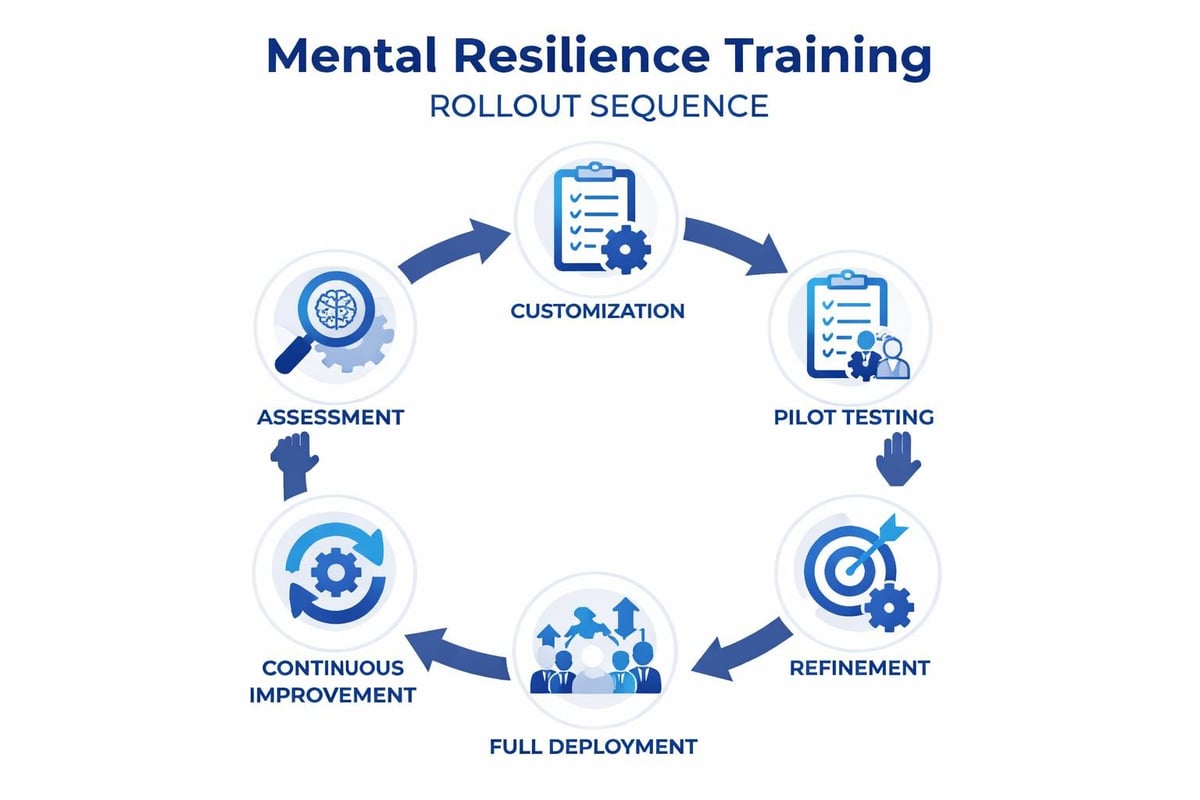
Begin with comprehensive assessment to identify specific resilience gaps and organizational stressors. Environmental factors like workload intensity, role clarity, and psychological safety significantly influence resilience requirements. Training content should address identified needs rather than generic stress management.
Creating Sustainable Training Ecosystems
Effective programs combine initial skill-building with ongoing reinforcement mechanisms. Single-session training produces minimal lasting impact, whereas distributed learning with practice intervals and application support generates meaningful capability development.
Implementation phases should include:
- Foundation phase: Core skill introduction through interactive workshops
- Integration phase: Structured practice opportunities with peer support
- Application phase: Real-world scenario navigation with coaching
- Sustainment phase: Refresher content and advanced skill development
Organizations can access extensive resilience resources and research to inform program design decisions. Evidence-based content ensures training reflects current psychological science rather than popularized but unvalidated approaches.
Tools and resources from organizations like the International Coaching Federation support individual development alongside formal training programs. Self-directed resources extend learning beyond structured sessions.
Measuring Training Effectiveness and Organizational Impact
Mental resilience training justification requires demonstrable outcomes beyond participant satisfaction scores. Organizations must implement measurement frameworks that capture both individual skill development and business-relevant indicators.
Individual-level metrics should assess psychological capacities including stress reactivity, recovery speed, cognitive flexibility, and emotional regulation. Validated instruments measure these constructs more accurately than self-report surveys asking general wellbeing questions. Pre- and post-training assessment reveals individual development trajectories.
| Measurement Domain | Individual Metrics | Team Metrics | Organizational Metrics |
|---|---|---|---|
| Performance | Task completion under stress | Collaborative problem-solving | Productivity indices |
| Wellbeing | Psychological distress scores | Team climate ratings | Absenteeism rates |
| Capability | Resilience skill demonstration | Collective efficacy | Retention statistics |
| Application | Behavior change frequency | Support-seeking patterns | Culture survey results |
Organizational metrics connect resilience training to business outcomes including reduced absence rates, lower turnover among trained employees, and improved performance during change initiatives. These data points communicate value to stakeholders focused on return on investment.
Addressing Common Implementation Challenges
Organizations frequently encounter obstacles when deploying mental resilience training programs. Anticipating these challenges enables proactive mitigation rather than reactive problem-solving.
Stigma concerns often limit participation, particularly when training appears remedial or implies psychological weakness. Framing resilience as performance enhancement rather than deficit correction increases engagement. Emphasizing that resilience training develops capacity for excellence resonates more effectively than messaging focused on preventing problems.
Time constraints represent another significant barrier, with employees and managers claiming insufficient availability for training participation. Embedding brief resilience practices into existing meetings and workflows reduces this obstacle. Five-minute exercises integrated into team gatherings prove more sustainable than lengthy separate sessions.
Strategies for overcoming resistance:
- Leadership participation that models commitment and reduces hierarchy barriers
- Voluntary initial participation followed by organic expansion through peer influence
- Clear communication about training rationale grounded in business objectives
- Flexible delivery formats accommodating diverse schedules and learning preferences
- Transparent sharing of de-identified outcome data demonstrating program value
Cultural considerations matter significantly, particularly in diverse workforces. Mental resilience training must acknowledge varying perspectives on stress, help-seeking, and psychological wellness. Cookie-cutter Western approaches often alienate employees from cultures with different mental health paradigms.
Integrating Resilience Training With Broader Wellbeing Strategy
Mental resilience training achieves maximum impact when embedded within comprehensive workplace wellbeing strategy rather than operating as an isolated initiative. Resilience development interacts with organizational factors including workload management, psychological safety, and support systems.
Organizations should audit environmental stressors before implementing training. When systemic issues like chronic understaffing or toxic management practices generate stress, resilience training alone cannot compensate for structural problems. Effective strategy addresses both individual capacity-building and environmental optimization.
Trauma-informed approaches ensure resilience training remains psychologically safe for all participants, including those with prior adverse experiences. Training design should avoid triggering content, provide choice in participation depth, and connect participants with appropriate support resources when needed.
The Workplace Mental Health Institute approach integrates resilience training within comprehensive frameworks addressing multiple wellbeing dimensions. This systemic perspective recognizes that individual resilience develops most effectively within supportive organizational contexts.
Advanced Resilience Skills for High-Pressure Environments
Certain workplace contexts demand specialized mental resilience training beyond foundational programs. Healthcare settings, emergency services, and other high-stakes environments require additional competencies including compassion fatigue management, moral injury prevention, and sustained performance under extreme conditions.
Advanced training incorporates psychophysiological techniques like heart rate variability training, which teaches individuals to modulate autonomic nervous system responses. Biofeedback tools provide real-time data on physiological stress markers, enabling precise skill application during demanding situations.
Post-traumatic growth frameworks shift focus from mere recovery to identifying potential positive changes following adversity. While respecting the genuine difficulty of challenging experiences, this approach helps individuals extract meaning and develop enhanced capabilities through hardship navigation.
Peer support networks complement formal training by creating ongoing resilience development opportunities. Structured peer consultation groups allow employees to process workplace challenges, share adaptive strategies, and normalize stress responses within psychologically safe contexts.
Technology-Enabled Resilience Development
Digital tools expand mental resilience training accessibility and personalization. Mobile applications deliver micro-learning content, practice reminders, and progress tracking between formal training sessions. These technologies support habit formation critical for skill consolidation.
Virtual reality platforms enable immersive scenario-based training where employees practice resilience skills in simulated high-pressure situations. This experiential learning approach bridges the gap between conceptual understanding and behavioral application.
Technology integration considerations:
- Accessibility across devices and technical skill levels
- Privacy protection for sensitive personal data
- Integration with existing learning management systems
- Evidence base supporting specific digital interventions
- Complementary relationship to human-delivered components
Data analytics from digital platforms inform program refinement by identifying which content elements generate engagement and which skills participants struggle to apply. This feedback loop enables continuous improvement cycles.
Sustaining Resilience Gains Beyond Initial Training
Long-term resilience maintenance requires intentional sustainability strategies. Initial skill acquisition represents only the beginning of genuine capacity development. Without reinforcement, training effects typically decay within months.
Organizations should implement booster sessions at regular intervals, introducing advanced concepts while refreshing foundational skills. These sessions maintain engagement and signal ongoing organizational commitment to resilience development.
Building resilience practice into performance management systems reinforces application. When leaders discuss stress management approaches during regular check-ins and recognize effective resilience demonstrations, employees receive clear signals about organizational values.
Environmental cues trigger trained behaviors, so organizations should create workplace reminders of resilience practices. Visual prompts for breathing exercises, designated quiet spaces for brief recovery moments, and calendar reminders for reflection exercises support habit maintenance.
Resilience champions within teams sustain momentum by modeling skills, facilitating peer discussions, and connecting colleagues with resources. These informal leaders extend training impact beyond formal program boundaries.
Adapting Training for Remote and Hybrid Workforces
Distributed work arrangements require modified mental resilience training approaches addressing isolation, boundary management, and technology-mediated communication stressors. Remote employees face distinct challenges including reduced social support visibility and difficulty disconnecting from work demands.
Virtual training delivery can match in-person effectiveness when designed intentionally. Interactive elements like breakout discussions, collaborative digital exercises, and chat-based participation maintain engagement. However, screen fatigue considerations require shorter session durations and varied activity formats.
Hybrid work models create additional complexity, with employees experiencing different stress profiles based on their work location patterns. Training should address transition management between home and office environments, equitable inclusion across locations, and navigation of varied collaboration tools.
Remote-specific resilience skills:
- Digital boundary-setting to prevent work intrusion into personal time
- Intentional social connection cultivation despite physical distance
- Home environment optimization for psychological wellbeing
- Self-directed energy management without external structure
- Asynchronous communication stress reduction
Organizations that prioritize systematic mental resilience training build workforces capable of sustaining high performance while maintaining psychological wellbeing, even amid ongoing uncertainty and complexity. By implementing evidence-based programs, measuring meaningful outcomes, and integrating resilience development with broader wellbeing strategy, leaders create cultures where both individuals and organizations thrive. Workplace Mental Health Institute partners with organizations to design and deliver comprehensive resilience programs tailored to specific workplace contexts, ensuring training translates into measurable improvements in employee capability and organizational performance.

