
Organizations today face mounting pressure to address psychological wellbeing in the workplace, yet many struggle to move beyond superficial initiatives. A well-designed mental health awareness program serves as the foundation for creating psychologically safe environments where employees can thrive. This comprehensive approach requires strategic planning, evidence-based content, and sustained organizational commitment. Understanding the core components that distinguish effective programs from token gestures enables HR professionals and leadership teams to build meaningful interventions that generate measurable results.
Understanding the Strategic Foundation
A mental health awareness program represents a structured organizational initiative designed to increase knowledge, reduce stigma, and improve help-seeking behaviors among employees. Unlike isolated training sessions or one-time events, effective programs integrate multiple touchpoints across the employee lifecycle.
The distinction between awareness and literacy matters significantly. Awareness involves recognizing that mental health exists as a workplace concern, while literacy encompasses the specific knowledge and skills needed to respond appropriately. High-performing programs target both dimensions through coordinated efforts.
Evidence-Based Program Architecture
Research from the National Institute of Mental Health demonstrates that comprehensive approaches yield superior outcomes compared to single-intervention strategies. Organizations should consider these structural elements:
- Leadership endorsement and visible participation
- Multi-channel communication strategies
- Skill-building opportunities for managers and employees
- Clear pathways to professional support resources
- Regular measurement and program refinement
The Workplace Mental Health Institute emphasizes that program architecture must align with organizational culture and operational realities rather than importing generic frameworks without adaptation.
Designing Content That Transforms Understanding
Content development represents the intellectual core of any mental health awareness program. Organizations frequently underestimate the complexity required to shift deeply held beliefs and normalize conversations previously considered taboo.
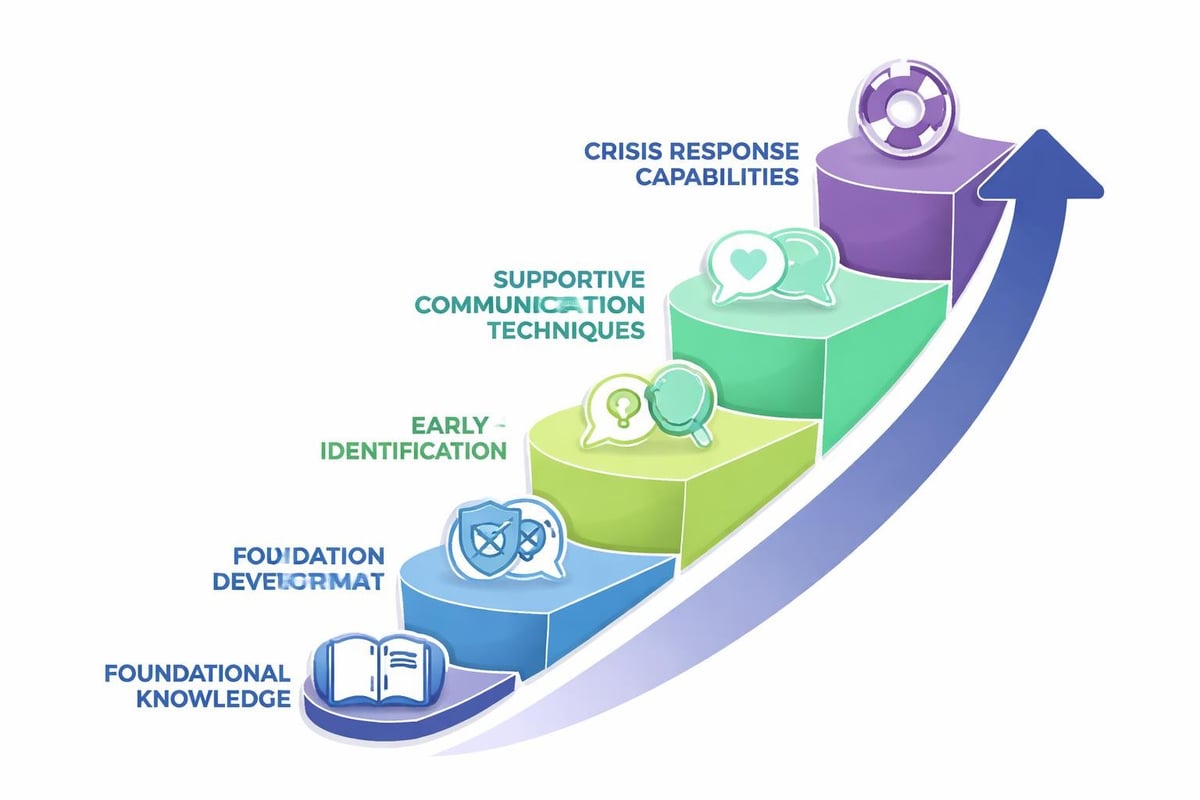
Foundational Knowledge Components
Effective programs begin with establishing a shared vocabulary and conceptual framework. Employees need clarity on fundamental distinctions between stress, mental health challenges, and diagnosable conditions.
| Knowledge Area | Key Concepts | Practical Application |
|---|---|---|
| Mental health continuum | Thriving, functioning, struggling, crisis states | Self-assessment and peer recognition |
| Common conditions | Depression, anxiety, trauma responses | Normalizing experiences without pathologizing |
| Contributing factors | Individual, interpersonal, organizational | Systems-level understanding |
| Recovery orientation | Growth potential, resilience development | Hope-focused messaging |
The World Health Organization’s mental health resources provide globally relevant frameworks that organizations can adapt to local contexts.
Stigma Reduction Strategies
Stigma operates at structural, social, and self-imposed levels. A comprehensive mental health awareness program addresses all three dimensions through targeted interventions. Personal narratives from leaders who have navigated their own mental health challenges prove particularly effective when shared authentically.
Messaging must balance validation of difficulty with emphasis on capability and recovery. Language choices significantly impact whether employees perceive mental health challenges as permanent character flaws or manageable aspects of human experience.
Building Manager Capability as Force Multipliers
Frontline managers exert disproportionate influence on employee psychological safety and help-seeking behaviors. Programs that invest heavily in manager training generate substantially better returns than those focused exclusively on employee-level interventions.
Managers require specific competencies beyond general awareness:
- Early identification of potential concerns through behavioral observation
- Conducting supportive conversations without diagnosing or counseling
- Making appropriate referrals to employee assistance programs or other resources
- Managing workload and expectations during employee recovery periods
- Creating team environments that normalize wellbeing conversations
Online training platforms enable scalable manager development while maintaining consistency in messaging and skill-building approaches.
Trauma-Informed Leadership Principles
Contemporary programs increasingly incorporate trauma-informed perspectives, recognizing that significant percentages of employees have experienced potentially traumatic events. This framework emphasizes psychological safety, transparency, peer support, collaboration, and empowerment.
Managers trained in trauma-informed approaches demonstrate greater sensitivity to triggers, avoid re-traumatization through insensitive comments or practices, and create conditions where employees feel safe discussing challenges.
Implementation Strategies That Drive Engagement
Even expertly designed content fails without thoughtful implementation. A mental health awareness program must penetrate organizational consciousness through repeated, varied touchpoints that reach employees across different communication preferences and learning styles.
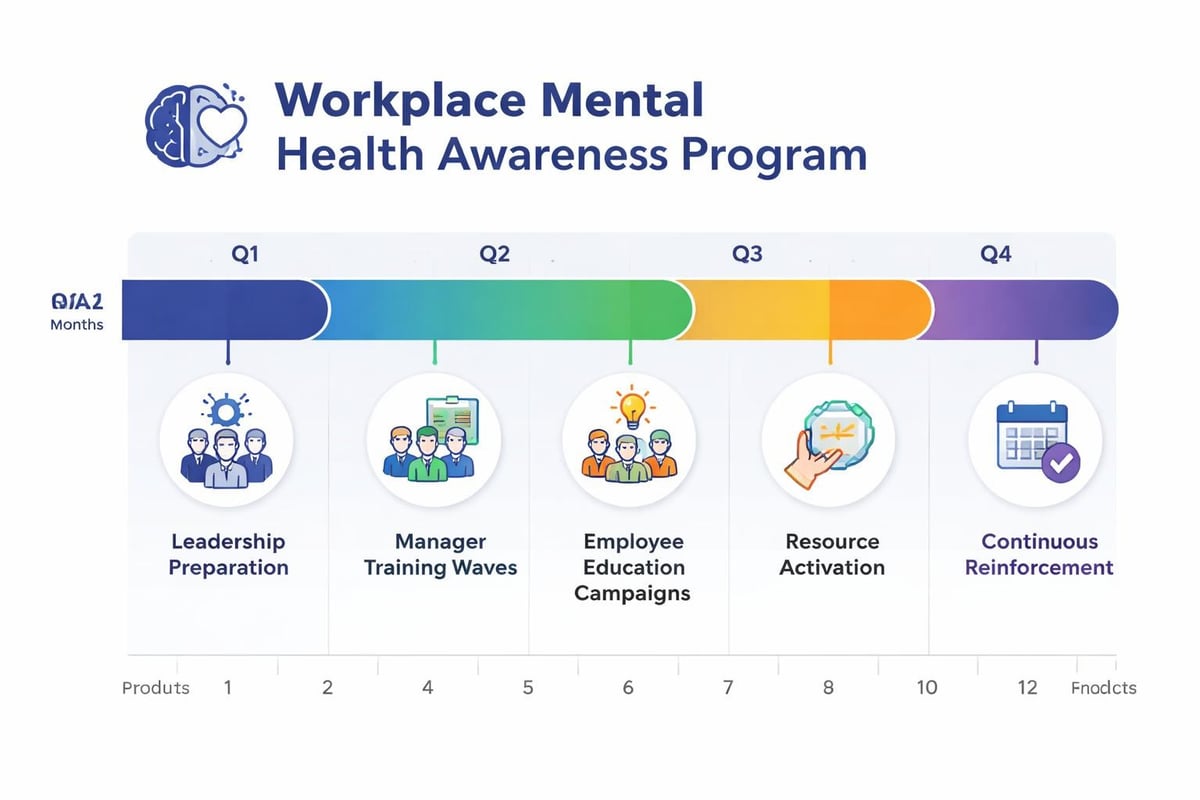
Multi-Channel Communication Approaches
| Channel | Purpose | Frequency | Effectiveness Factors |
|---|---|---|---|
| Leadership messaging | Endorsement, priority signaling | Quarterly | Authenticity, personal connection |
| Team meetings | Dialogue, question opportunity | Monthly | Manager facilitation skills |
| Digital platforms | Information access, resources | Always available | User-friendly design, mobile optimization |
| Events and workshops | Skill practice, community building | Semi-annually | Interactive format, practical application |
| Environmental cues | Normalization, reminder | Permanent | Visibility, message quality |
The National Alliance on Mental Illness offers evidence-based programs like “In Our Own Voice” that organizations can integrate into broader awareness initiatives.
Addressing Diverse Workforce Needs
Generic approaches frequently fail to resonate across demographic groups with different experiences, values, and communication preferences. Effective mental health awareness programs incorporate cultural considerations without resorting to stereotypes.
Organizations serving Australian markets should consider cultural factors specific to that context through resources like WMHI Australia, which provides region-specific guidance on workplace mental health initiatives.
Generational differences, industry-specific stressors, and role-level variations all warrant tailored messaging within an overarching program framework. Field employees require different delivery mechanisms than office-based staff, while executive teams benefit from content emphasizing strategic imperatives alongside personal wellbeing.
Measuring Impact and Demonstrating Value
Psychological outcomes resist simple quantification, yet rigorous measurement remains essential for program refinement and continued organizational investment. A mental health awareness program should establish clear metrics across multiple domains before implementation begins.
Outcome Measurement Framework
Leading indicators provide early signals of program penetration and engagement:
- Training participation rates and completion percentages
- Resource utilization metrics (EAP awareness, access to materials)
- Survey-based stigma attitudes and psychological safety perceptions
- Help-seeking intention scores
Lagging indicators demonstrate longer-term organizational impact:
- Absenteeism and presenteeism trends
- Workers’ compensation claims related to psychological injury
- Employee retention rates, particularly among high performers
- Organizational climate survey results
Data from the Centers for Disease Control and Prevention helps organizations benchmark their results against broader population trends and identify areas requiring additional focus.
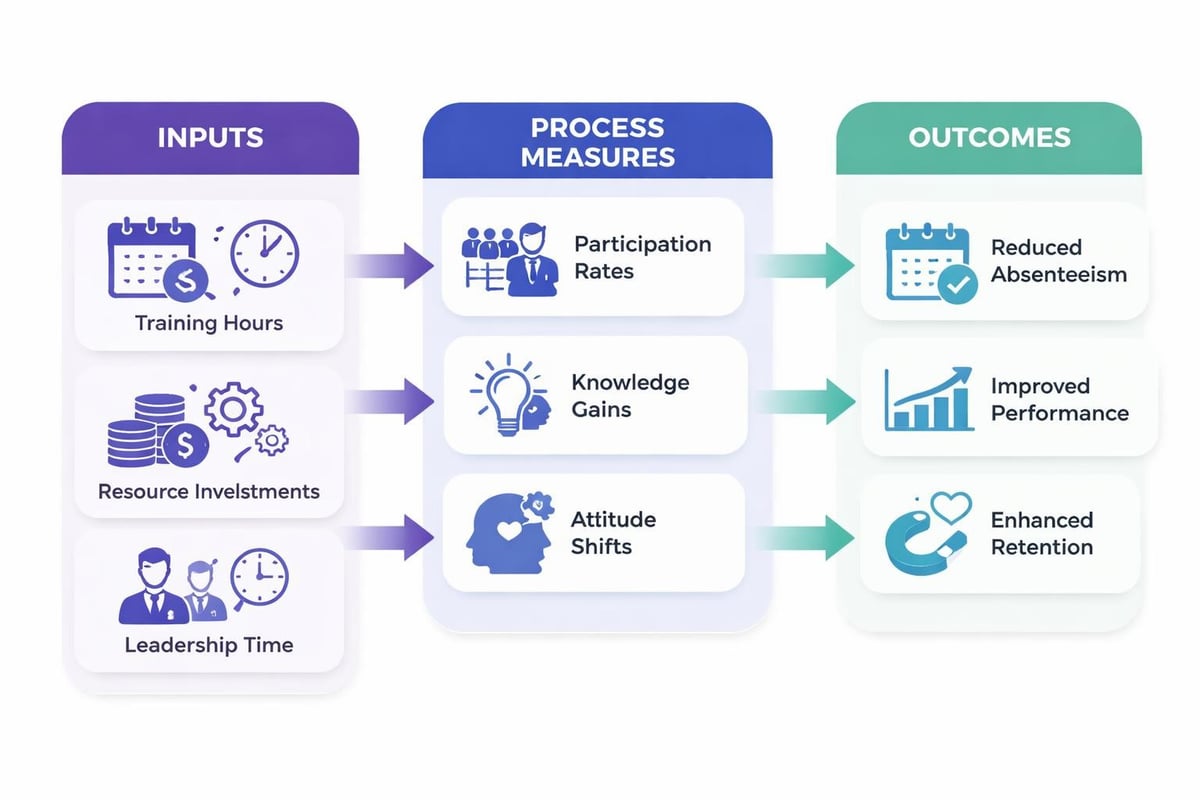
Return on Investment Considerations
Financial stakeholders increasingly demand evidence that wellbeing investments generate tangible returns. Organizations should track productivity metrics, healthcare cost trends, and recruitment efficiency alongside traditional engagement measures.
Research consistently demonstrates that comprehensive programs yield returns between 2:1 and 4:1 when implemented with fidelity over multi-year periods. Short-term implementations rarely capture the full value potential, as cultural transformation requires sustained effort.
Sustaining Momentum Beyond Initial Launch
The most common failure pattern involves strong initial enthusiasm followed by gradual program erosion. A mental health awareness program requires ongoing attention and periodic refreshment to maintain organizational priority and employee engagement.
Integration Into Existing Systems
Standalone initiatives compete for attention with numerous other organizational priorities. Integration strategies embed mental health considerations into existing processes rather than creating parallel systems:
- Incorporate psychological safety into performance management discussions
- Include mental health impact assessments in change management planning
- Build wellbeing check-ins into project retrospectives and team meetings
- Align recognition programs with supportive behaviors and help-seeking
Organizations report greater sustainability when mental health awareness becomes an intrinsic aspect of “how we work” rather than a separate program requiring special attention.
Continuous Improvement Processes
Annual program reviews should examine:
- Utilization patterns across different employee segments
- Feedback from participants about content relevance and quality
- Emerging research on effective intervention approaches
- Organizational changes that may require program adaptation
- Competitive practices and industry benchmarks
The Substance Abuse and Mental Health Services Administration provides regularly updated resources that organizations can incorporate into program refreshes.
Navigating Common Implementation Challenges
Even well-resourced organizations encounter obstacles when deploying mental health awareness programs. Anticipating these challenges enables proactive mitigation strategies.
Resistance From Middle Management
Middle managers often bear the greatest implementation burden while receiving insufficient support or recognition. They fear being held responsible for employee wellbeing without adequate training, time, or resources.
Addressing this resistance requires:
- Explicit role clarification distinguishing manager responsibilities from clinical functions
- Protected time allocation for wellbeing conversations and training participation
- Recognition systems that value people leadership alongside operational results
- Ongoing support through coaching, peer learning communities, and accessible expert consultation
Privacy and Confidentiality Concerns
Employees frequently hesitate to engage with workplace mental health initiatives due to fears about information sharing, career implications, or managerial judgment. Programs must establish and communicate clear confidentiality boundaries.
Separating awareness and education (which can occur in group settings) from individual support pathways (which require strict privacy protections) helps address these concerns. Partnership with external employee assistance providers often provides necessary confidentiality assurances.
Cultural Resistance and Skepticism
Organizational cultures emphasizing stoicism, individual resilience, or “toughness” may actively resist mental health awareness efforts. Leadership teams must acknowledge these cultural dynamics while articulating compelling reasons for evolution.
Framing mental health through performance, innovation, and competitive advantage lenses often penetrates resistant cultures more effectively than purely humanitarian arguments. Data demonstrating the business impact of psychological injury can shift perspectives among skeptical stakeholders.
Advanced Program Features for Mature Organizations
Organizations with established foundational programs can enhance impact through advanced interventions that deepen skills and broaden reach.
Peer Support Networks
Trained peer supporters provide informal assistance, normalize help-seeking, and extend organizational capacity beyond professional resources. These networks prove particularly effective in industries with strong peer identification, such as first responders, healthcare, or military-adjacent sectors.
Peer programs require careful structure, including:
- Rigorous selection processes identifying emotionally intelligent candidates
- Comprehensive training covering boundaries, referral processes, and self-care
- Ongoing supervision and support for peer supporters themselves
- Clear integration with professional support pathways
Mental Health First Aid Certification
Widespread Mental Health First Aid training creates distributed capability across the organization. Certified employees can provide initial support during mental health crises, connecting individuals with appropriate professional resources.
The American Academy of Family Physicians highlights the critical role of early intervention, which trained employees can facilitate even without clinical credentials.
Specialized Population Programs
Certain employee groups face elevated mental health risks requiring tailored interventions:
- New parents navigating work-life integration challenges
- Remote workers experiencing isolation and boundary management difficulties
- Client-facing roles managing emotional labor and vicarious trauma
- Leadership teams carrying organizational stress and decision burden
A comprehensive mental health awareness program acknowledges these varying needs through specialized content, resources, and support mechanisms.
Legal and Regulatory Considerations
Organizations must navigate complex legal frameworks governing workplace mental health, including disability accommodation requirements, privacy regulations, and duty of care obligations. Program design should incorporate legal guidance to ensure compliance while maximizing supportive intent.
Documentation practices require particular attention. Managers need clear protocols about what information to record, where to store sensitive materials, and when to involve human resources or legal counsel.
Proactive approaches that address psychological safety before formal complaints or legal actions emerge generate better outcomes for all parties compared to reactive, compliance-focused strategies.
Building an effective mental health awareness program requires strategic vision, evidence-based content, sustained commitment, and continuous refinement based on measured outcomes. Organizations that invest thoughtfully in comprehensive approaches create competitive advantages through enhanced employee wellbeing, reduced turnover, and stronger organizational culture. Workplace Mental Health Institute partners with organizations to design, implement, and optimize mental health awareness programs tailored to specific industry contexts, cultural dynamics, and strategic objectives, providing the expertise and tools necessary to transform workplace mental health from aspiration to operational reality.

