
Did you know that a single mental health workshop can reduce workplace absenteeism by up to 33 percent? As stress and burnout reach record highs, organizations and communities urgently need new strategies for mental wellbeing.
This guide offers you a practical roadmap to planning and experiencing a transformative mental health workshop. You will discover proven foundations, effective design steps, key elements for real change, practical implementation tips, and ways to measure lasting impact.
By following this guide, you can build resilience, support open dialogue, and promote a healthier environment—at work or in your community. Ready to transform your approach? Dive in and unlock the benefits that a mental health workshop can deliver.
Understanding the Foundations of Mental Health Workshops
Grasping the fundamentals of a mental health workshop is the first step to driving meaningful change. These workshops are structured programs designed to promote psychological wellbeing, resilience, and open dialogue for individuals and groups. As mental health becomes a central focus in both workplaces and communities, understanding how these workshops function—and why they matter—is essential.
The Purpose and Value of Mental Health Workshops
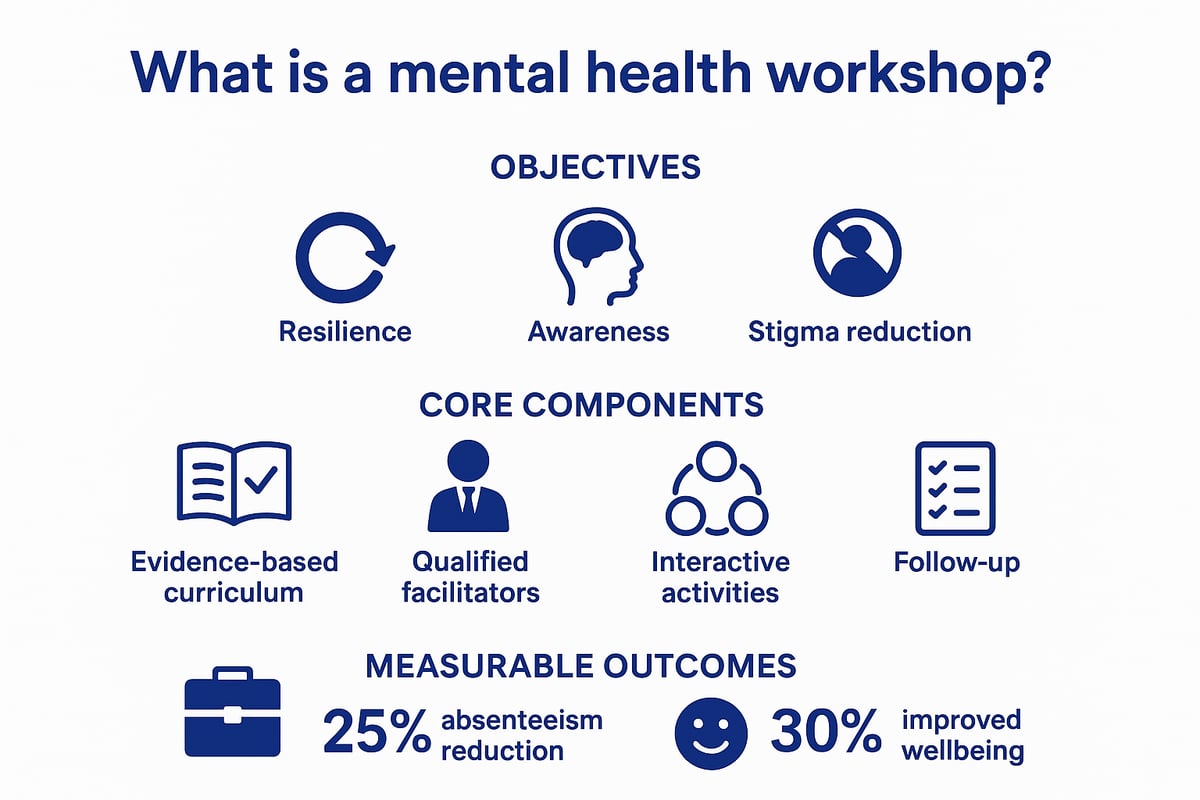
A mental health workshop aims to build awareness, equip participants with coping strategies, and foster supportive environments. Its core objectives include reducing stigma, enhancing resilience, and encouraging proactive conversations about mental wellbeing.
The importance of mental health in today's society cannot be overstated. Studies reveal that implementing a mental health workshop can lead to a 33% reduction in absenteeism and up to a 79% decrease in depression rates among participants. These outcomes benefit not only individuals but also organizations striving for a healthier, more engaged workforce.
Mental health workshops bring people together to learn, share, and support one another. Unlike individual interventions, group-based formats create a sense of community and collective responsibility. For example, schools often use workshops to build peer networks, while companies leverage them to improve employee morale and productivity.
The format—group or individual—can influence outcomes. Group workshops foster collaboration and mutual support, while individual sessions provide tailored focus. Here’s a quick comparison:
| Aspect | Group Workshops | Individual Interventions |
|---|---|---|
| Peer Support | High | Limited |
| Customization | Moderate | High |
| Stigma Reduction | Strong | Moderate |
| Cost-Effectiveness | High | Lower |
Real-world examples include educational institutions hosting resilience-building programs and corporations offering stress management sessions. Each setting leverages the mental health workshop model to break down barriers and encourage open communication.
By addressing stigma directly, workshops empower participants to speak openly about challenges. This shift leads to healthier environments where support is accessible and normalized.
Key Components of Successful Mental Health Workshops
The effectiveness of a mental health workshop depends on several essential elements. First, an evidence-based curriculum ensures that all content is grounded in the latest psychological research. Qualified facilitators bring expertise and empathy, guiding participants through sensitive topics with care.
Interactive activities are vital for engagement and retention. Including mental health activities for groups such as mindfulness exercises, role-playing, and scenario analysis, can transform passive learning into active participation. These experiences deepen understanding and foster lasting behavioral change.
Inclusivity and cultural sensitivity are critical. Workshops should be accessible to all, with options for virtual or hybrid delivery to reach diverse audiences. Psychological safety and confidentiality must be prioritized, creating a space where participants feel comfortable sharing.
Various formats can be adapted to different needs. Mindfulness sessions, resilience training, and peer support circles are just a few examples. Tailoring workshop content to specific audiences—students, tech professionals, or managers—maximizes relevance and impact.
By integrating these components, a mental health workshop becomes more than an educational session; it becomes a catalyst for personal and organizational transformation.
Designing a Transformative Mental Health Workshop
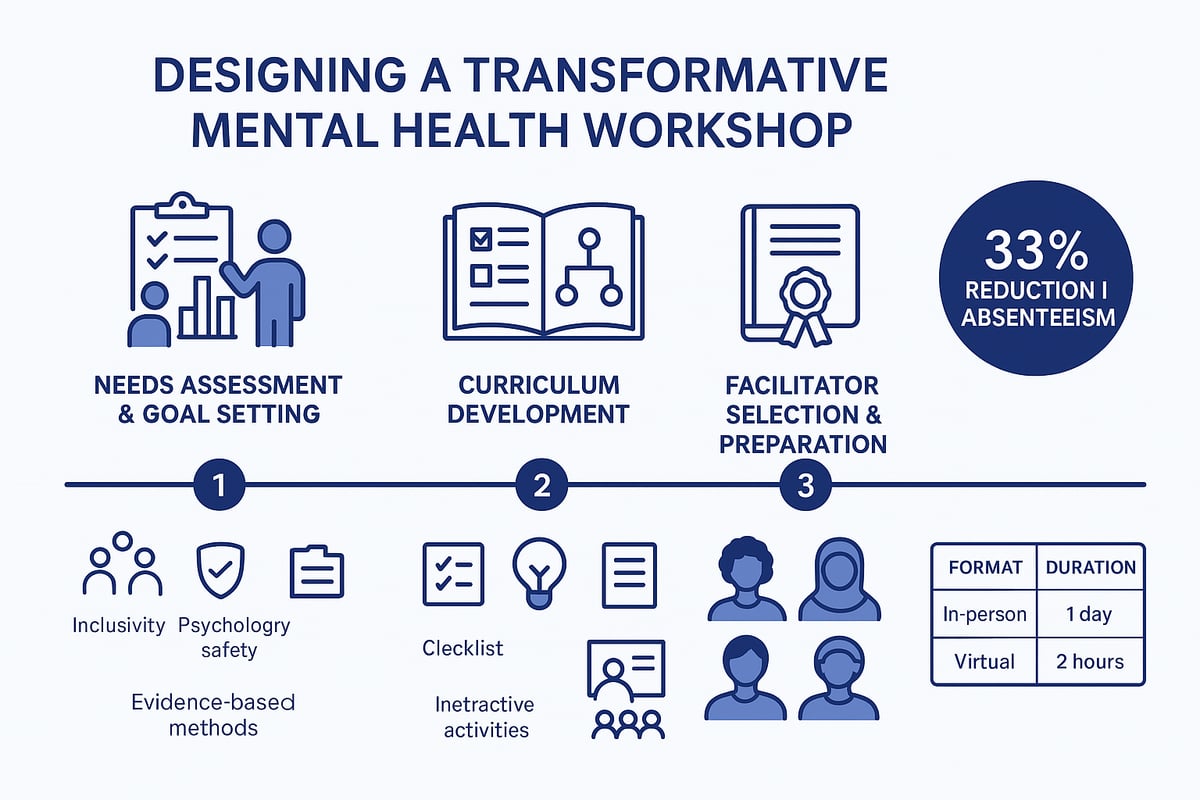
Designing a transformative mental health workshop requires a strategic approach that puts participant needs, evidence-based content, and skilled facilitation at the forefront. By following a systematic process, you can ensure your mental health workshop delivers measurable impact, fosters engagement, and drives positive change for every attendee.
Needs Assessment and Goal Setting
The foundation of a successful mental health workshop lies in understanding the unique needs of your audience. Begin by conducting a thorough needs assessment using surveys, interviews, or wellbeing assessments. This data-driven approach helps you pinpoint the most pressing mental health challenges facing your group, such as stress, burnout, or emotional regulation.
Aligning the workshop objectives with both participant needs and organizational goals is essential. For example, if absenteeism is a key concern, set a goal to reduce stress-related absences by 20% over six months. Clear, measurable outcomes keep your mental health workshop focused and actionable.
Consider these sample goal statements:
| Workshop Goal | Measurable Outcome |
|---|---|
| Improve resilience | 80% of participants report higher coping skills |
| Reduce stigma | 50% rise in open mental health conversations |
| Boost emotional intelligence | 75% demonstrate improved self-awareness |
Prioritizing topics like stress management or burnout prevention ensures your mental health workshop remains relevant. By involving stakeholders early, you build buy-in and ensure the program addresses real-world needs.
Curriculum Development: Evidence-Based Approaches
A transformative mental health workshop must be grounded in research-backed content and proven methodologies. Partner with psychologists or mental health experts to design a curriculum that integrates frameworks such as cognitive-behavioral strategies, mindfulness, and strengths-based recovery.
Interactive learning is crucial for engagement. Incorporate role-plays, group discussions, and scenario analysis to help participants apply new skills in practical settings. For example, mindfulness exercises can help attendees manage anxiety, while resilience-building activities foster problem-solving and adaptability.
When designing your curriculum, consider inclusivity and accessibility. Tailor content for different audiences, such as students, tech professionals, or managers, and offer virtual or hybrid delivery options. Best practices from leading organizations, including corporate wellbeing workshop strategies, highlight the value of trauma-informed care and psychological safety throughout the learning journey.
A well-structured mental health workshop curriculum also includes follow-up resources and actionable takeaways. This ensures that learning extends beyond the session, supporting long-term change.
Selecting and Preparing Facilitators
The effectiveness of any mental health workshop hinges on the skills and empathy of its facilitators. Choose professionals with mental health expertise, experienced trainers, or peer leaders who bring both knowledge and relatability to the table.
Facilitator engagement is vital. Look for individuals who demonstrate cultural competence, active listening, and the ability to foster a safe, inclusive environment. Comprehensive preparation includes facilitator training, access to resources, and scenario planning to manage sensitive topics or unexpected group dynamics.
Success stories from past workshops often highlight facilitators who create psychological safety and inspire participants to share openly. Gathering participant feedback helps refine facilitation techniques and ensures continuous improvement. A strong facilitator team elevates your mental health workshop, turning it into a catalyst for real transformation.
Core Elements of a Transformative Workshop Experience
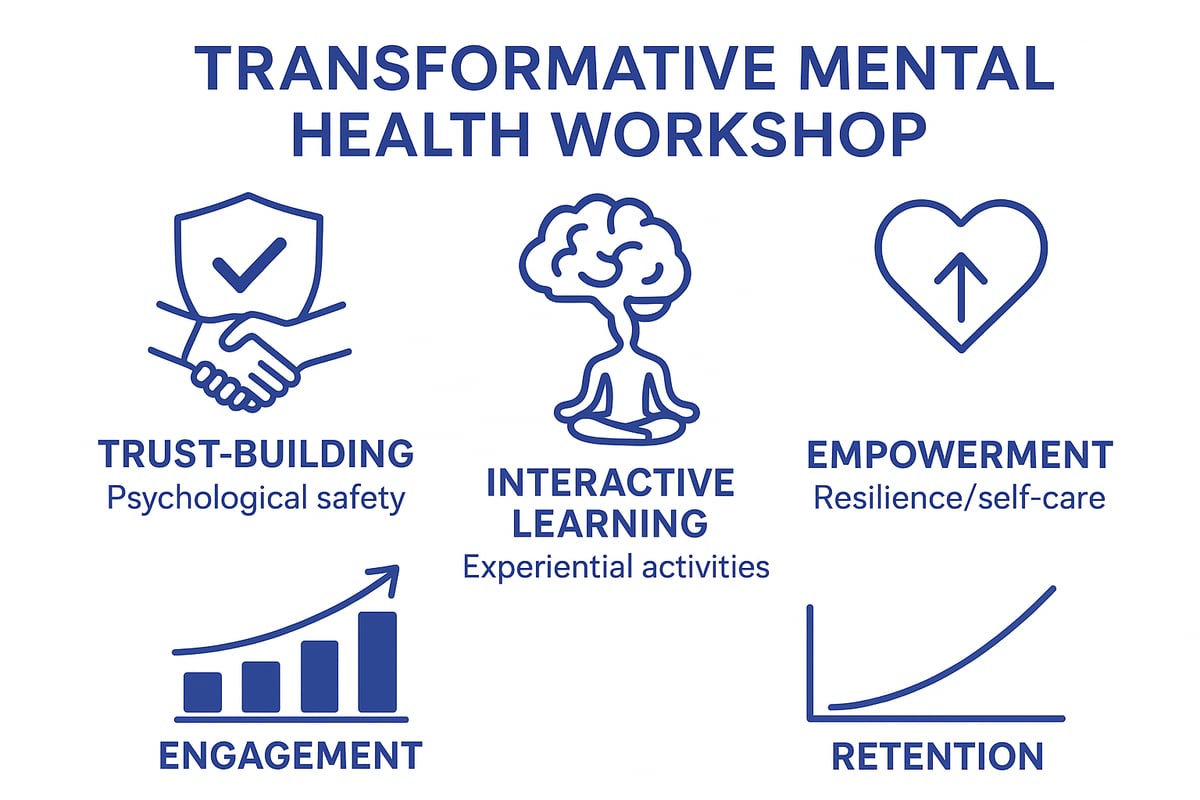
A truly transformative mental health workshop is built on a foundation of safety, engagement, and empowerment. These core elements ensure participants not only gain valuable knowledge but also feel supported to take meaningful action in their daily lives.
Building Psychological Safety and Trust
Psychological safety is the cornerstone of every effective mental health workshop. It refers to an environment where participants feel safe to express themselves, share experiences, and ask questions without fear of judgment or negative consequences.
Creating this trust begins with clear ground rules. Facilitators establish confidentiality agreements and encourage open, respectful communication. These steps cultivate a culture where vulnerability is welcomed and supported.
Common trust-building exercises include:
- Icebreakers that invite gentle sharing and laughter
- Group agreements on confidentiality and respect
- Guided breathing or grounding exercises to ease nerves
Research consistently shows that psychological safety enhances learning outcomes in a mental health workshop. When participants feel safe, they are more likely to engage, reflect, and apply new skills.
For example, a facilitator might open with a simple "two truths and a hope" round, fostering connection while keeping the atmosphere light. This approach helps set a positive tone and ensures everyone feels included from the start.
Trust and safety are not one-time tasks. They require ongoing attention throughout the mental health workshop, allowing participants to relax and focus on growth.
Interactive and Experiential Learning
A transformative mental health workshop thrives on interactive and experiential learning. People learn best by doing, reflecting, and connecting with others. That is why workshops feature hands-on activities, real-life scenarios, and peer sharing.
Experiential activities may include:
- Mindfulness exercises that invite participants to pause and observe their thoughts
- Stress management drills that teach practical coping strategies
- Group discussions and role-plays to build empathy and problem-solving skills
Storytelling is another powerful tool. When facilitators or peers share lived experiences, it breaks down barriers and normalizes conversations about mental health.
Research supports this approach. For instance, adults who participate in in-person mindfulness courses improve mental health, with studies showing reduced anxiety and depression for at least six months. This evidence highlights the value of integrating such methods into a mental health workshop.
Innovative formats like hybrid or gamified sessions further increase engagement. Participants can join virtually, interact via polls or breakout rooms, and take part in resilience-building games. These experiences boost attention and knowledge retention, ensuring lasting impact.
Empowerment, Self-Care, and Resilience Skills
The most effective mental health workshop empowers participants to take charge of their wellbeing. This starts with practical self-care routines and boundary-setting strategies that can be used immediately.
Key empowerment tools include:
- Creating personalized self-care plans with achievable daily actions
- Practicing boundary-setting through assertiveness exercises
- Engaging in resilience training, such as problem-solving and emotional regulation techniques
A mental health workshop also focuses on building resilience. Facilitators introduce positive psychology concepts, helping attendees recognize their strengths and develop a growth mindset. This approach encourages participants to view challenges as opportunities for growth rather than setbacks.
Success stories are a vital component. When previous participants share testimonials about how a mental health workshop helped them manage stress or improve relationships, it inspires others to commit to change.
By the end of a mental health workshop, attendees should feel equipped to implement self-care, set healthy boundaries, and support themselves and others. This sense of empowerment is what transforms a workshop from a one-time event into a catalyst for ongoing wellbeing.
Step-by-Step Guide to Planning and Running a Mental Health Workshop
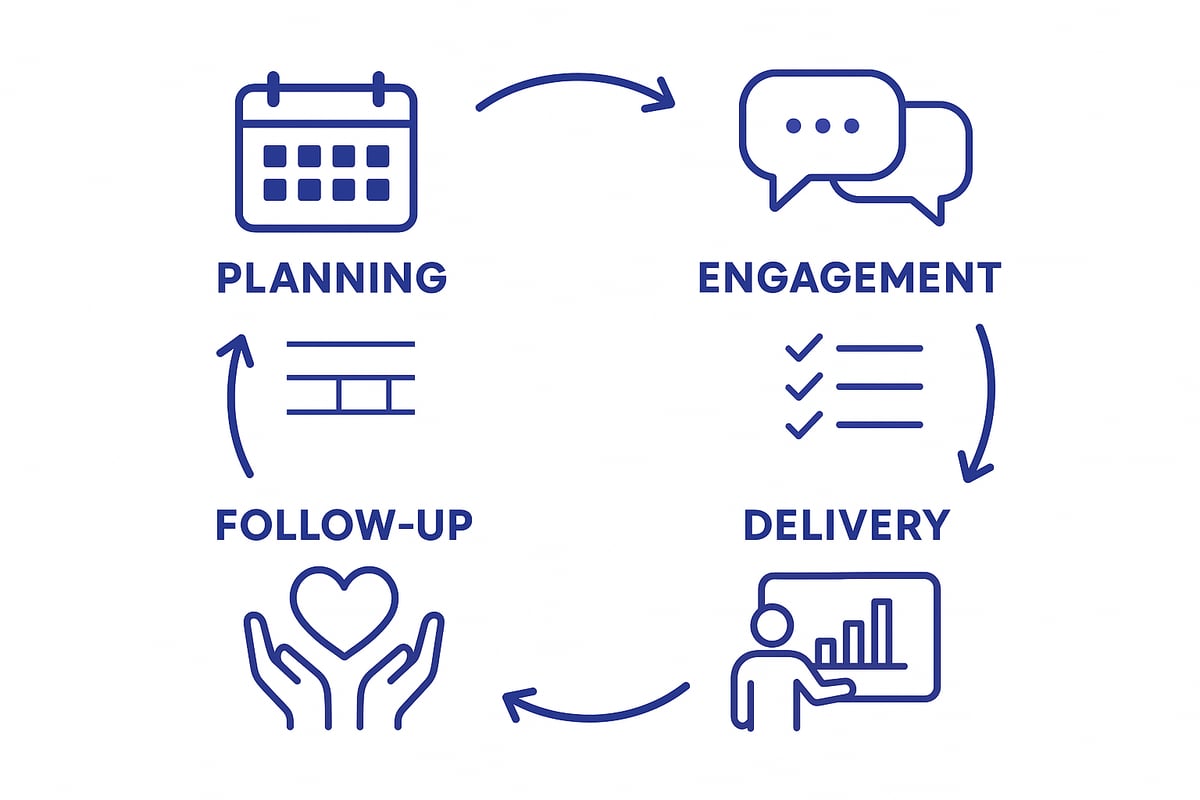
Planning and executing a successful mental health workshop requires careful attention to detail, from initial preparation to post-event support. This guide breaks the process into four actionable steps, empowering you to create an engaging, supportive, and impactful experience for every participant.
Step 1: Pre-Workshop Planning and Logistics
The foundation of an effective mental health workshop lies in thorough planning. Start by clearly defining workshop objectives. Are you aiming to reduce stress, build resilience, or foster open dialogue? Align these goals with organizational needs.
Secure buy-in from leadership and allocate necessary resources. This includes budgeting for facilitators, materials, and technology. Choose a venue that is accessible and inclusive. For virtual or hybrid options, ensure reliable platforms and tech support.
Develop a comprehensive checklist:
- Set objectives and desired outcomes
- Secure leadership support
- Book venue or set up virtual space
- Arrange materials and technology
- Communicate details to participants
A well-structured planning timeline can prevent last-minute issues. For instance, finalize logistics at least two weeks prior, and send reminders a few days before the mental health workshop.
Step 2: Participant Engagement and Communication
Engagement starts long before the mental health workshop begins. Use clear, inviting communication to promote the event. Share the benefits and encourage participation through emails, posters, or intranet posts.
Conduct pre-workshop surveys to understand participant expectations and tailor content. This step ensures the workshop addresses real needs, whether that is stress management or emotional intelligence.
Inclusivity is crucial. Use language that welcomes all backgrounds and abilities. Provide information in accessible formats and offer options for participation in person or online.
Tips for effective communication:
- Highlight personal and professional benefits
- Use empathetic, non-judgmental language
- Address frequently asked questions in advance
Sustained engagement sets the stage for a positive mental health workshop experience.
Step 3: Workshop Delivery and Facilitation
On the day of the mental health workshop, facilitators must create a welcoming and psychologically safe environment. Greet participants warmly and set clear ground rules for confidentiality and respect.
Balance information delivery with interactive activities. Incorporate role-plays, group discussions, and scenario analysis to boost engagement. Many successful workshops include mindfulness exercises or resilience-building games. For practical techniques, facilitators can draw on stress management and resilience training resources to enrich the program.
Managing group dynamics is vital. Be prepared to adapt on the fly, handle sensitive topics with care, and encourage participation from everyone. Real-life examples and success stories can help illustrate key points, making the mental health workshop both relatable and actionable.
Step 4: Post-Workshop Support and Follow-Up
A transformative mental health workshop extends beyond the final session. Provide ongoing resources, such as self-care guides, support group information, or follow-up sessions, to reinforce learning.
Collect feedback through post-workshop surveys and debrief conversations. Use this input to identify strengths and areas for improvement. Many organizations find that regular follow-ups, such as monthly check-ins or refresher modules, help sustain positive changes.
Effective follow-up strategies include:
- Sharing workshop materials and recordings
- Offering access to peer support groups
- Scheduling future sessions for continued learning
By supporting participants after the mental health workshop, you foster lasting impact and encourage ongoing wellbeing.
Measuring Impact and Ensuring Lasting Change
Measuring the true impact of a mental health workshop is essential for demonstrating value, securing ongoing support, and driving meaningful change. Without a clear evaluation plan, even the most well-designed programs risk being overlooked or underutilized. Organizations that prioritize robust measurement not only validate their investment but also foster a culture of continuous improvement in mental health.
Evaluation Techniques and Metrics
A rigorous evaluation framework is vital for any mental health workshop. Begin with clear, measurable objectives that align with organizational goals. Track attendance rates to gauge reach and accessibility. Next, assess engagement using participation data, group activity feedback, and facilitator observations.
Knowledge retention is commonly measured through pre- and post-workshop surveys. These tools help determine how much information participants retain and whether attitudes toward mental health shift. Behavioral changes can be assessed over time using follow-up questionnaires or focus groups. For example, organizations have reported a $110,000 return for every $10,000 invested in mental health initiatives, highlighting the tangible value of effective workshops.
| Metric | Measurement Tool | Example Outcome |
|---|---|---|
| Attendance | Registration logs | 90% participation |
| Engagement | Feedback forms | High satisfaction ratings |
| Knowledge Retention | Pre/post surveys | 40% increase in awareness |
| Behavioral Change | Follow-up interviews | Reduced absenteeism |
| Mental Health Outcomes | Wellbeing assessments | 79% reduction in depression rates |
Impact reports and case studies provide qualitative insights into the success of a mental health workshop. These reports often showcase stories of increased resilience, reduced stigma, and improved team dynamics. Systematic reviews have confirmed the effectiveness of positive mental health programs in producing lasting benefits for adults, reinforcing the importance of ongoing evaluation.
Digital tools now play a growing role in extending measurement. Online surveys, analytics dashboards, and AI-driven assessments can provide real-time feedback, making it easier to adapt future mental health workshop content to evolving needs.
Embedding Mental Health into Organizational Culture
Sustained impact from a mental health workshop requires more than a one-time event. Integrating workshop learnings into daily routines and policies ensures that positive changes endure. Leadership commitment is essential—managers who champion mental health create a ripple effect throughout the organization.
Ongoing training and peer support networks help reinforce key messages from every mental health workshop. Embedding mental health modules into onboarding, performance reviews, and team meetings keeps the conversation alive. Organizations in the tech and education sectors have successfully used these strategies to foster supportive environments where all voices are valued.
Continuous improvement is crucial. Collect feedback after every mental health workshop, review outcomes, and adjust programs as needed. This approach builds a resilient, adaptive culture that prioritizes mental wellbeing at every level.
By establishing clear metrics, leveraging digital innovations, and weaving mental health into the fabric of daily operations, organizations can ensure that the benefits of each mental health workshop are both measurable and lasting.
Future Trends and Innovations in Mental Health Workshops
The landscape of the mental health workshop is evolving rapidly, driven by technology, changing workforce needs, and a renewed focus on inclusivity. Organizations and communities are seeking modern solutions that deliver greater impact and accessibility. Understanding future trends is essential for anyone planning or participating in a mental health workshop, as these innovations shape how we support wellbeing at scale.
Digital Transformation and Hybrid Delivery
Digital transformation is reshaping the mental health workshop experience. Virtual workshops, mobile apps, and eLearning platforms now enable organizations to support employees and community members regardless of location. This approach not only increases accessibility but also allows for flexible scheduling and reduced costs.
Hybrid delivery models, blending in-person and online sessions, offer the best of both worlds. Participants can choose formats that suit their needs, boosting engagement and attendance. Research supports these benefits, with digital interventions enhancing workplace mental health by improving reach and effectiveness.
Key digital tools in mental health workshop programs include:
- Interactive webinars and discussion boards
- On-demand video content
- Virtual reality scenarios for immersive learning
- Mobile tracking for self-care progress
These technologies are making the mental health workshop more accessible and impactful than ever before.
Personalization and Data-Driven Approaches
Personalization is at the forefront of mental health workshop design. Data-driven assessments help facilitators tailor content to individual and group needs. By leveraging AI and analytics, workshops can adapt in real time, offering targeted exercises and resources.
For example, pre-workshop surveys and digital wellbeing assessments allow facilitators to select relevant topics, such as stress management or emotional intelligence. Adaptive content ensures that every participant receives support that matches their unique context.
AI-powered platforms enable:
- Personalized learning paths
- Real-time feedback on engagement and progress
- Custom resource recommendations
Innovative organizations are embracing these tools to create a mental health workshop experience that is both relevant and effective.
Focus on Diversity, Equity, and Inclusion
A successful mental health workshop must address the needs of diverse audiences. This means designing culturally sensitive content, employing facilitators from varied backgrounds, and ensuring accessibility for participants with different abilities.
Workshops now frequently address topics such as neurodiversity, gender inclusion, and remote team challenges. Following guidelines from resources like designing mental health-friendly courses empowers organizations to create inclusive environments.
Key DEI strategies include:
- Multilingual resources and translation services
- Representation of marginalized groups in content and facilitation
- Flexible delivery for different learning styles
Prioritizing inclusion leads to better outcomes and a more welcoming mental health workshop environment.
Community Building and Peer Support
Community-driven approaches are gaining traction in the mental health workshop space. Peer-led workshops and support groups foster a sense of belonging and mutual support, which enhances resilience and engagement.
These initiatives encourage open dialogue and reduce stigma. Many organizations now integrate peer facilitators and alumni networks into their mental health workshop programs, creating ongoing circles of support.
Benefits of peer support models:
- Increased trust and relatability among participants
- Sustainable networks for continued growth
- Empowerment through shared experiences
By building strong communities, the mental health workshop becomes a catalyst for lasting change.
Ongoing Professional Development and Leadership Training
The future of the mental health workshop extends beyond one-time events. Ongoing professional development and leadership training are essential for embedding mental health skills into organizational culture.
Workshops now form part of comprehensive leadership programs, equipping managers with tools to recognize and respond to mental health challenges. Mentorship, regular refreshers, and resource sharing keep knowledge current and actionable.
Elements of ongoing development:
- Scheduled follow-up sessions
- Access to advanced training modules
- Leadership coaching focused on mental health
Investing in continuous learning ensures that the mental health workshop delivers sustained benefits at every level of an organization.
As we’ve explored, creating a truly transformative mental health workshop takes more than good intentions—it requires expert guidance, evidence-based strategies, and a commitment to lasting change. Whether you’re a manager eager to foster resilience or an HR leader keen to embed wellbeing into your culture, the right resources make all the difference. If you’re ready to take the next step and see how these principles can work for your team, I encourage you to Find Out More. Together, we can build a healthier, more supportive workplace for everyone.

