
In a world that never seems to slow down, mental wellbeing has become more vital than ever. Each day brings new challenges that can leave us feeling overwhelmed and disconnected from ourselves.
This article explores 10 uplifting wellbeing activities designed to boost your mind, strengthen your resilience, and support personal growth. You will discover a diverse range of options, from mindfulness techniques and creative outlets to movement practices and digital detoxes, all aimed at nurturing your mental health.
Curious about practical ways to feel better every day? Dive in, explore these strategies backed by science and social trends, and find the wellbeing activities that work best for you.
The Science Behind Wellbeing Activities
Understanding the science behind wellbeing activities helps us recognize their true impact on our daily lives. These practices draw from research across psychology, neuroscience, and social science, showing how intentional actions can transform both our minds and bodies. By exploring the mind-body connection, psychological benefits, societal trends, and the keys to personal transformation, we reveal why wellbeing activities matter for everyone.
The Mind-Body Connection
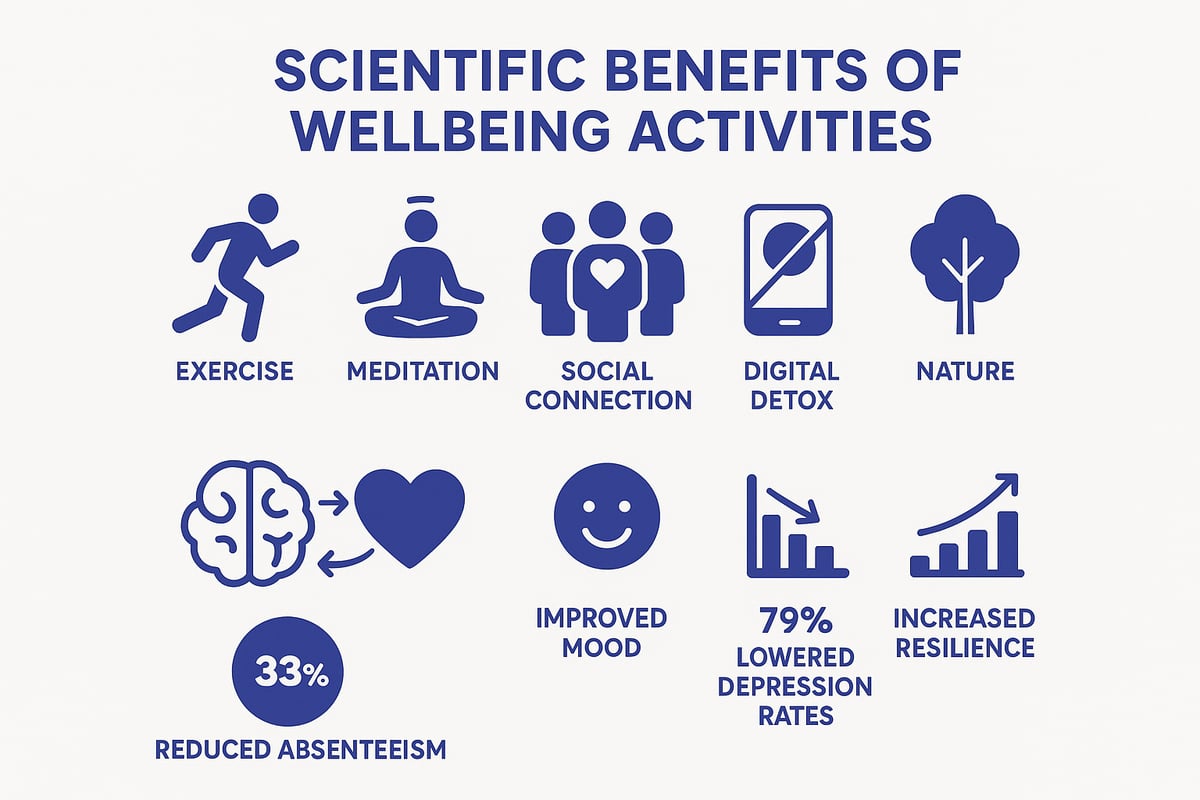
The mind and body are deeply linked, and wellbeing activities harness this relationship for optimal health. Engaging in regular exercise and meditation reduces stress hormones like cortisol, while boosting endorphins and neurotransmitters that elevate mood and focus. For instance, studies report a 33 percent reduction in workplace absenteeism when organizations prioritize wellbeing activities. Cognitive performance also improves, as movement and mindfulness sharpen memory and concentration. To explore how organizations can implement these practices, see the Wellbeing in the workplace guide. These findings highlight why investing in wellbeing activities benefits both individuals and communities.
Psychological Benefits of Wellbeing Practices
Consistent wellbeing activities provide measurable psychological benefits. Research demonstrates a significant decrease in anxiety and depression among those who engage in practices like mindfulness, movement, and creative expression. Emotional regulation and mood stability improve, thanks to changes in brain plasticity and resilience. Organizations implementing wellbeing activities have reported up to a 79 percent reduction in depression rates among participants. These outcomes confirm that wellbeing activities are not only preventative but also restorative, supporting lasting mental strength and emotional balance.
Societal Trends Shaping Wellbeing Approaches
The landscape of wellbeing activities has evolved alongside societal trends. The rise of remote work and increased digital overload has shifted focus toward holistic health in homes, schools, and workplaces. Proactive approaches, such as strengths-based mental health models, are gaining traction. Mindfulness apps and group wellbeing challenges are more popular than ever, making wellbeing activities accessible and engaging. As these trends continue, individuals and organizations are empowered to integrate wellbeing activities in ways that fit modern lifestyles and diverse needs.
Setting the Stage for Personal Transformation
To achieve meaningful change, intentional and regular participation in wellbeing activities is essential. These practices can be tailored to suit any lifestyle, whether through solo routines or group support. Community networks play a vital role in sustaining positive habits, offering encouragement and accountability. Readers are encouraged to experiment with various wellbeing activities, finding those that best support their unique preferences and goals. With curiosity and commitment, anyone can unlock the transformative effects of wellbeing activities on mind and life.
10 Inspiring Wellbeing Activities to Boost Your Mind
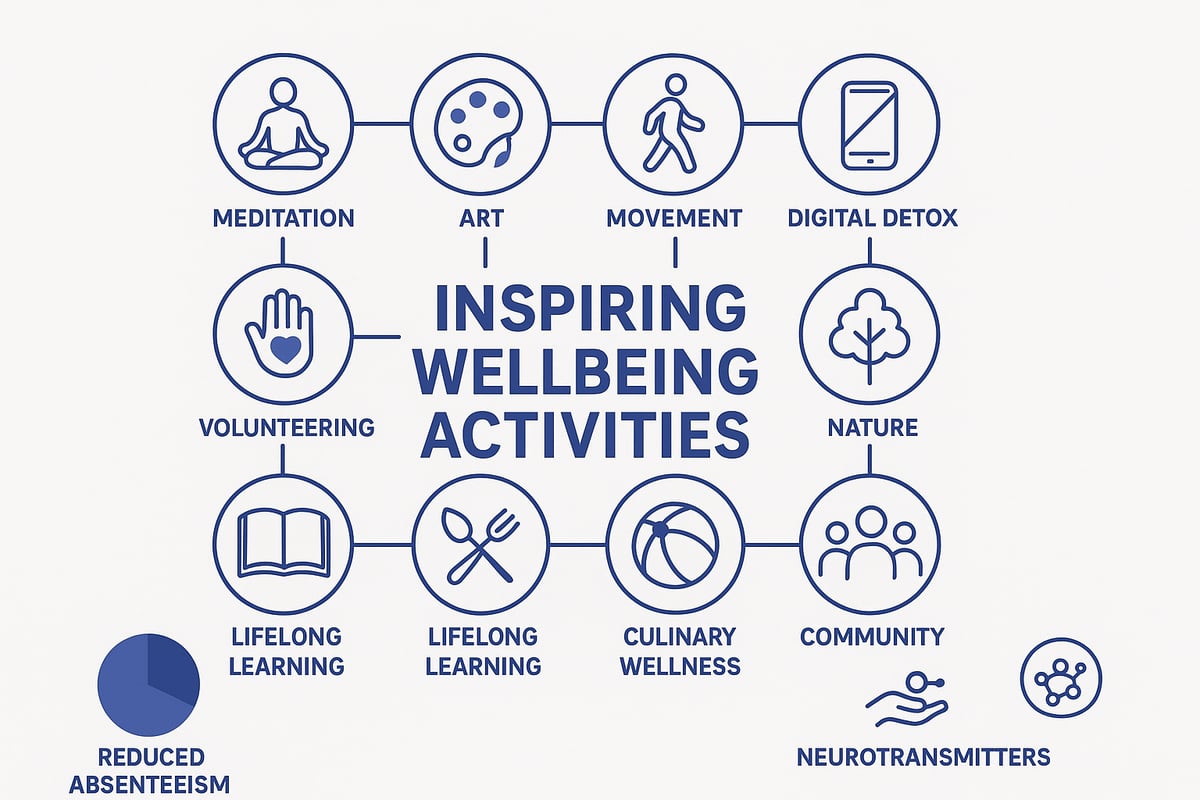
Engaging in a wide range of wellbeing activities can transform your mental landscape, helping you build resilience, clarity, and a sense of purpose. Each activity below is grounded in science and offers practical steps you can take today. Explore these options to discover which wellbeing activities resonate most with your lifestyle.
1. Mindful Meditation and Breathwork
Mindful meditation is one of the most effective wellbeing activities for improving mental clarity and reducing stress. Practicing mindfulness involves focusing attention on the present moment, observing thoughts and sensations without judgment. Scientific studies confirm that regular meditation lowers cortisol, the primary stress hormone, and promotes a calm, focused mind.
Simple breathwork techniques, such as box breathing or the 4 7 8 breath, are accessible ways to start. Try setting aside five minutes each day for mindful breathing, gradually increasing your session length as you become more comfortable. Research highlights that mindfulness practices can significantly reduce stress and improve focus within weeks. In fact, participant satisfaction in mindfulness training programs exceeds 96 percent.
For beginners, guided sessions via apps or online videos can provide structure. Group meditation enhances connection, accountability, and motivation. To learn more about the science behind these practices, explore the Mindfulness Meditation Benefits resource. Incorporating mindful meditation and breathwork into your routine can make wellbeing activities both approachable and highly effective.
2. Creative Expression Through Art and Journaling
Engaging in creative wellbeing activities such as art and journaling unlocks new avenues for emotional expression and stress relief. Drawing, painting, or coloring can reduce anxiety by shifting focus from worries to the creative process. These activities encourage you to explore thoughts and feelings visually, often revealing insights that words alone cannot capture.
Journaling, especially gratitude journaling, is another powerful tool. By writing daily about what you appreciate, you cultivate positive thinking and self-awareness. Research shows that expressive writing improves mood and resilience, making it a key part of many wellbeing activities.
Try prompts like “What made me smile today?” or “What challenge did I overcome?” Sharing your work in virtual art communities can also foster connection and inspiration. Art therapy principles suggest that even simple doodling can be transformative. Incorporating art and journaling into your day makes wellbeing activities enjoyable and deeply personal.
3. Movement and Mindful Exercise
Physical movement is a cornerstone of effective wellbeing activities. Exercise not only benefits your body but also strengthens your mind. Activities like yoga, tai chi, walking in nature, dance, or stretching routines all help reduce stress and sharpen mental clarity.
Mindful exercise brings awareness to each movement and breath. Even a 10 minute desk yoga session or a lunchtime walk can boost energy and mood. Data indicates that regular movement is linked to a 50 percent decrease in psychological injury claims, underscoring the profound impact of such wellbeing activities.
Group fitness challenges can motivate you and provide social reinforcement. To fit exercise into a busy schedule, try short bursts of activity and schedule them as non negotiable appointments. Integrating mindful movement into your routine will help you experience the full mental benefits of wellbeing activities.
4. Digital Detox and Screen-Free Time
With constant digital engagement, wellbeing activities that encourage screen free time are essential for cognitive refreshment. Excessive screen use leads to mental fatigue, disrupted sleep, and increased stress. Scheduling regular digital detox periods can help restore attention and boost overall wellbeing.
Consider implementing “no tech” evenings or weekend digital sabbaths. Studies show that reduced screen time leads to improved sleep quality and lower stress levels. Tools like app blockers or notification managers can support your digital boundaries, making these wellbeing activities more sustainable.
Family or group digital detox challenges add accountability and fun. Neuroscience research reveals that breaks from technology help restore focus and creativity. Prioritizing digital detox as part of your wellbeing activities can revitalize your mind and promote healthier habits.
5. Social Connection and Meaningful Conversations
Strong social bonds are vital for mental health, making social connection a powerful wellbeing activity. Supportive relationships boost oxytocin, reduce loneliness, and increase overall happiness. Activities like gratitude circles, story sharing, or “highs and lows” check ins foster deeper connections.
Hosting regular coffee chats, whether virtual or in person, creates space for meaningful conversations. Structured conversation starters help break the ice and encourage honest sharing. These wellbeing activities are especially important in workplace or community settings where connection can sometimes be overlooked.
If social anxiety is a barrier, start with small, manageable interactions. For more strategies on fostering wellbeing through group activities, explore Mental health wellbeing conversations. Building strong relationships through wellbeing activities can transform your sense of belonging and support.
6. Nature Immersion and Outdoor Activities
Spending time in nature is among the most restorative wellbeing activities available. Nature exposure, such as forest bathing or gardening, has been shown to lower cortisol and improve mood. Outdoor activities like hiking, birdwatching, picnics, or mindful walks offer opportunities to recharge and find perspective.
Consider creating a personal or community garden to deepen your connection with nature. Even micro nature breaks, like tending desk plants or enjoying balcony time, can have positive effects. Group outdoor wellness events further amplify the benefits of wellbeing activities.
Research links green spaces to enhanced urban wellbeing and reduced stress. Integrating nature immersion into your regular routine ensures that wellbeing activities remain both grounding and uplifting.
7. Playful Games and Laughter Therapy
Play and laughter are often overlooked wellbeing activities, yet they offer immense benefits for mental health. Engaging in games such as board games, charades, improv, or laughter yoga stimulates the brain and relieves stress.
Laughter increases endorphins and supports immune function, making it a natural mood booster. Organizing weekly game nights or workplace “fun breaks” builds camaraderie and creativity. Virtual game platforms also make these wellbeing activities accessible for remote teams.
Incorporating play into daily routines enhances teamwork, sparks joy, and provides a healthy outlet for emotional release. These simple yet impactful wellbeing activities can brighten even the busiest of days.
8. Culinary Wellness: Cooking and Mindful Eating
Nutrition plays a crucial role in cognitive performance and emotional stability, making culinary wellness a valuable wellbeing activity. Cooking healthy meals and practicing mindful eating help you savor each bite and foster gratitude for your food.
Balanced diets support mental clarity and resilience. Sharing recipes or meal prep sessions with friends can turn healthy eating into a social wellbeing activity. Try mindful eating exercises like focusing on flavors and textures or reflecting on the journey of your meal from farm to table.
Group potlucks or culinary exchange events build community and expand your palate. These wellbeing activities also help you overcome emotional eating and establish positive food habits for life.
9. Lifelong Learning and Skill Development
Continuous learning is a powerful wellbeing activity that keeps your mind sharp and adaptable. Engaging in online courses, book clubs, language learning, or puzzles stimulates intellectual curiosity and reduces the risk of cognitive decline.
Set monthly learning goals or join a study group to stay motivated. Platforms like Coursera or local workshops offer a wide range of options for all interests and skill levels. These wellbeing activities build confidence, adaptability, and a sense of achievement.
Incorporate microlearning into your daily routine by reading articles, listening to podcasts, or solving brainteasers. Lifelong learning as a wellbeing activity ensures ongoing personal growth and fulfillment.
10. Acts of Kindness and Community Volunteering
Altruism is a cornerstone of meaningful wellbeing activities. Helping others through volunteering, random acts of kindness, or community projects boosts dopamine and increases life satisfaction.
Organize a team volunteer day or participate in a kindness challenge to make a collective impact. These wellbeing activities foster empathy, strengthen social bonds, and create a sense of purpose.
Virtual volunteering opportunities are available for those who prefer remote participation. Finding causes that resonate with your values ensures that your wellbeing activities are not only beneficial for you but also for your community.
How to Make Wellbeing Activities a Sustainable Habit
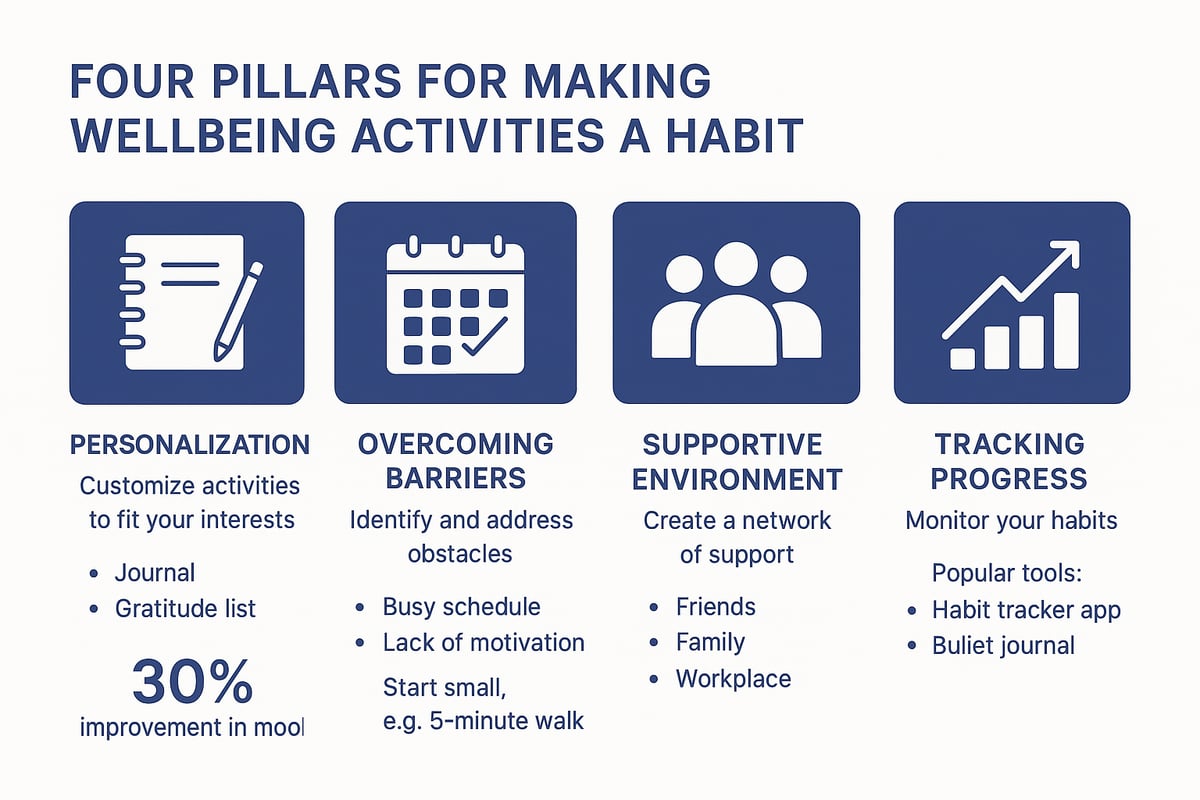
Adopting wellbeing activities into your daily life brings lasting benefits, but true transformation comes from consistency. Making these practices sustainable requires intention, flexibility, and the right support systems. The following strategies help you personalize, maintain, and celebrate your wellbeing journey.
Personalizing Your Wellbeing Routine
Creating a routine around wellbeing activities starts with self-awareness. Assess your needs, energy levels, and preferences. Are you more introverted or extroverted? Do you thrive on solo reflection or group engagement?
Use habit trackers or reflection journals to note which wellbeing activities resonate most. For example, an extrovert might prioritize group yoga, while an introvert could focus on solo meditation. Flexibility is key—adjust your approach as your lifestyle or interests change.
Remember, the best wellbeing activities are those you look forward to. Personalization fosters long-term commitment, making it easier to integrate these habits into your unique daily rhythm.
Overcoming Barriers and Staying Motivated
Common challenges like time constraints, low motivation, or lack of support can disrupt your wellbeing activities. To overcome these, set realistic goals and break them into manageable steps. Accountability partners or online communities can provide encouragement and help you stay on track.
Celebrate small wins, such as completing a week of daily meditation or attending a group walk. Scheduling time for wellbeing activities as you would any important meeting increases your likelihood of follow-through. For more practical ideas, explore these strategies to improve mental health.
Consistency is the foundation for measurable improvements in mood, productivity, and resilience.
Building a Supportive Environment
A supportive environment makes sustaining wellbeing activities much easier. Invite friends, family, or colleagues to join you in challenges or group sessions. This shared commitment builds accountability and positive reinforcement.
Workplace wellbeing committees or peer support groups can foster a culture of health. If starting alone feels daunting, seek out local or virtual communities focused on wellbeing activities. Structured group participation enhances motivation and makes the journey more enjoyable.
Social encouragement amplifies the benefits of wellbeing activities, helping you stay engaged even when motivation dips.
Tracking Progress and Celebrating Growth
Tracking your journey with wellbeing activities creates momentum and satisfaction. Set realistic milestones, such as meditating for 10 minutes daily or joining a weekly book club. Use apps or journals to document changes in mood, energy, or outlook.
Monthly check-ins help you reflect on achievements and identify areas for growth. Self-rewards, like a favorite treat or a relaxing outing, reinforce positive change. Focus on progress rather than perfection—growth is a journey, not a destination.
Celebrate every step forward, knowing that each small success with wellbeing activities supports your ongoing mental and emotional health.
You’ve just explored a range of uplifting wellbeing activities—from mindfulness and creative expression to digital detox and acts of kindness—all backed by science and proven to make a difference in your daily life. If you’re ready to take the next step and bring these strategies into your workplace or personal routine, I invite you to discover how a tailored approach can create lasting, positive change. Let’s build a culture of resilience and wellbeing together—empowering you and your team to thrive in 2026 and beyond.
Find Out More

