
Organizations worldwide are recognizing that employee mental health directly influences productivity, retention, and workplace culture. Mental health wellness programs have evolved from occasional awareness campaigns into structured, evidence-based initiatives that address psychological wellbeing at every organizational level. These programs provide employees with practical tools, supportive environments, and accessible resources while equipping managers with skills to recognize distress and respond appropriately. When implemented effectively, mental health wellness programs reduce absenteeism, improve engagement, and create psychologically safer workplaces where people can perform at their best.
Understanding Mental Health Wellness Programs in Modern Workplaces
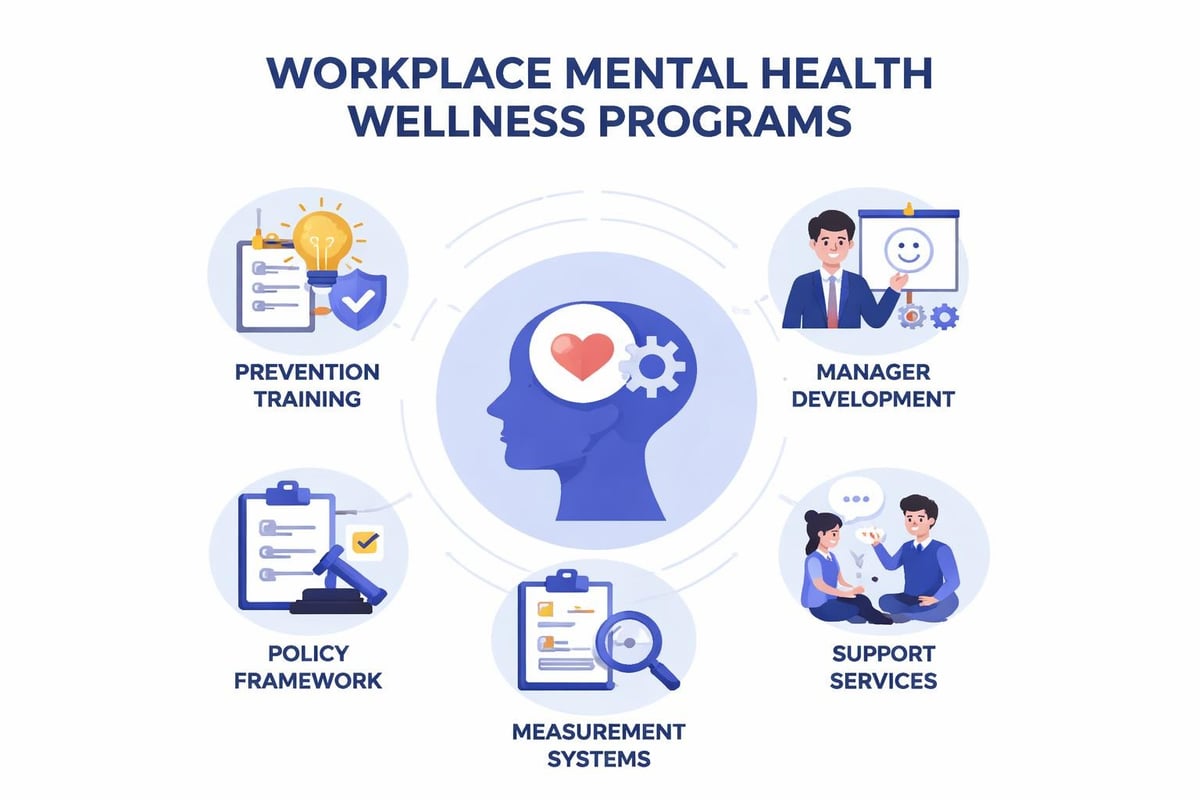
Mental health wellness programs encompass systematic organizational approaches designed to promote psychological wellbeing, prevent mental health challenges, and support employees experiencing difficulties. Unlike reactive interventions that address crises after they occur, comprehensive programs integrate prevention, early intervention, and ongoing support into workplace culture.
Core components typically include:
- Educational training for all staff levels
- Manager capability development in mental health literacy
- Confidential counseling and support services
- Workplace policies that prioritize psychological safety
- Regular assessments of organizational wellbeing
- Peer support networks and resource accessibility
The National Institute of Mental Health offers guidance on maintaining mental health, emphasizing that workplace programs play a crucial role in promoting overall wellbeing. Organizations implementing structured programs report measurable improvements in employee satisfaction, reduced healthcare costs, and enhanced team performance.
Research demonstrates that effective programs address mental health across the continuum, from promotion and prevention through to recovery support. This comprehensive approach acknowledges that mental health exists on a spectrum and that all employees benefit from strategies enhancing resilience and psychological fitness.
Building Evidence-Based Program Foundations
Successful mental health wellness programs require strategic foundations rooted in organizational assessment and evidence-based practices. Before implementing new initiatives, organizations must understand their current state through comprehensive wellbeing assessments that identify risks, protective factors, and gaps in existing support structures.
Assessment and Planning Frameworks
Workplace wellbeing assessments examine multiple dimensions including workload management, leadership practices, communication patterns, and access to resources. These evaluations provide baseline data essential for measuring program effectiveness and demonstrating return on investment. Organizations should examine psychosocial hazards, stress indicators, and existing support utilization rates.
Critical assessment areas include:
- Organizational culture and psychological safety
- Manager capability in mental health conversations
- Current policy effectiveness and gaps
- Employee awareness of available resources
- Barriers preventing help-seeking behaviors
Data-driven planning allows organizations to tailor interventions to specific needs rather than implementing generic programs. For instance, high-stress industries may prioritize trauma-informed approaches, while organizations with distributed workforces might focus on digital mental health resources and virtual support mechanisms.
Evidence-Based Intervention Selection
Selecting appropriate interventions requires understanding what research demonstrates as effective. Mental health wellness programs should incorporate strategies with proven outcomes, including cognitive-behavioral approaches, mindfulness-based practices, and resilience training. Mindfulness at work has emerged as a particularly effective component for stress management and emotional regulation.
| Program Type | Primary Focus | Evidence Base | Implementation Complexity |
|---|---|---|---|
| Resilience Training | Individual coping skills | Strong | Moderate |
| Manager Development | Leadership capability | Very Strong | Moderate to High |
| Peer Support Networks | Social connection | Moderate | Low to Moderate |
| Trauma-Informed Care | Psychological safety | Growing | High |
| Digital Mental Health Tools | Accessibility | Moderate | Low |
Organizations benefit from combining multiple intervention types to address diverse employee needs and preferences. No single approach suits every individual, making program flexibility essential for maximizing reach and impact.
Developing Manager Capability as Program Cornerstone
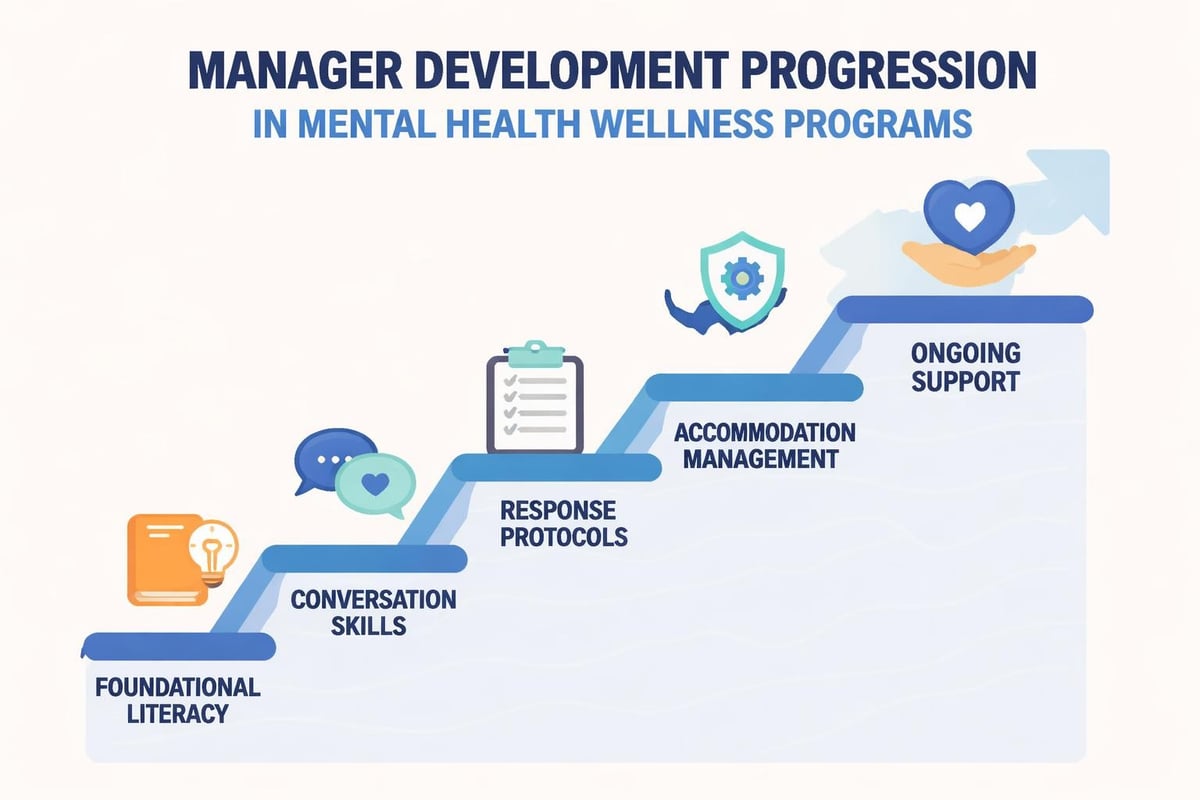
Managers serve as critical delivery points for mental health wellness programs, functioning as first responders when employees experience difficulties. Their capability to recognize distress signals, initiate supportive conversations, and connect people with appropriate resources significantly influences program success. Yet many managers report feeling unprepared for these responsibilities.
Comprehensive manager training equips leaders with mental health literacy, conversation frameworks, and practical skills for supporting team wellbeing. This training moves beyond awareness to develop confidence in addressing mental health proactively and responding to disclosures appropriately. Managers learn to balance compassion with professional boundaries while maintaining team performance.
Essential manager competencies include:
- Recognizing behavioral and performance changes indicating distress
- Initiating non-judgmental, supportive conversations
- Understanding organizational support pathways and referral processes
- Managing accommodation requests and return-to-work transitions
- Modeling healthy work practices and psychological safety
Training should emphasize that managers are not therapists or diagnosticians. Their role involves creating supportive environments, facilitating access to professional help, and making reasonable workplace adjustments. Employee programs complement manager training by building workforce-wide mental health literacy and self-care capabilities.
Organizations investing in sustained manager development report stronger program outcomes compared to those offering one-time awareness sessions. Ongoing learning opportunities, refresher training, and access to consultation support help managers maintain and deepen their skills over time.
Implementing Trauma-Informed Approaches
Trauma-informed care represents an essential evolution in mental health wellness programs, particularly for workplaces where employees may experience traumatic events through their work or bring trauma histories affecting their workplace experience. This approach recognizes trauma's widespread impact and integrates this understanding into organizational policies, procedures, and practices.
Principles of Trauma-Informed Workplaces
Trauma-informed organizations operate from six fundamental principles: safety, trustworthiness, peer support, collaboration, empowerment, and cultural sensitivity. These principles shape how leadership communicates, how policies are enforced, and how support is offered. Rather than asking "What's wrong with you?" trauma-informed approaches ask "What has happened to you?"
Implementation requires examining all organizational touchpoints through a trauma-informed lens. This includes recruitment processes, performance management systems, communication protocols, and physical workspace design. Small adjustments in language, flexibility, and transparency can significantly impact employees' sense of safety and belonging.
Certain industries face elevated trauma exposure, making trauma-informed approaches particularly critical. NAMI provides wellness resources for public safety professionals who encounter traumatic situations regularly, while healthcare professionals face unique challenges requiring specialized support strategies.
Practical Implementation Strategies
Organizations can begin trauma-informed transitions by training leadership in trauma awareness, reviewing policies for potentially re-traumatizing elements, and creating predictability in workplace processes. Employee input throughout implementation ensures approaches meet actual needs rather than assumed requirements.
Physical environment modifications might include quiet spaces for emotional regulation, flexible break policies, and noise management in open offices. Procedural changes could involve advance notice for significant changes, transparent decision-making processes, and multiple channels for raising concerns safely.
Measuring Program Effectiveness and Return on Investment
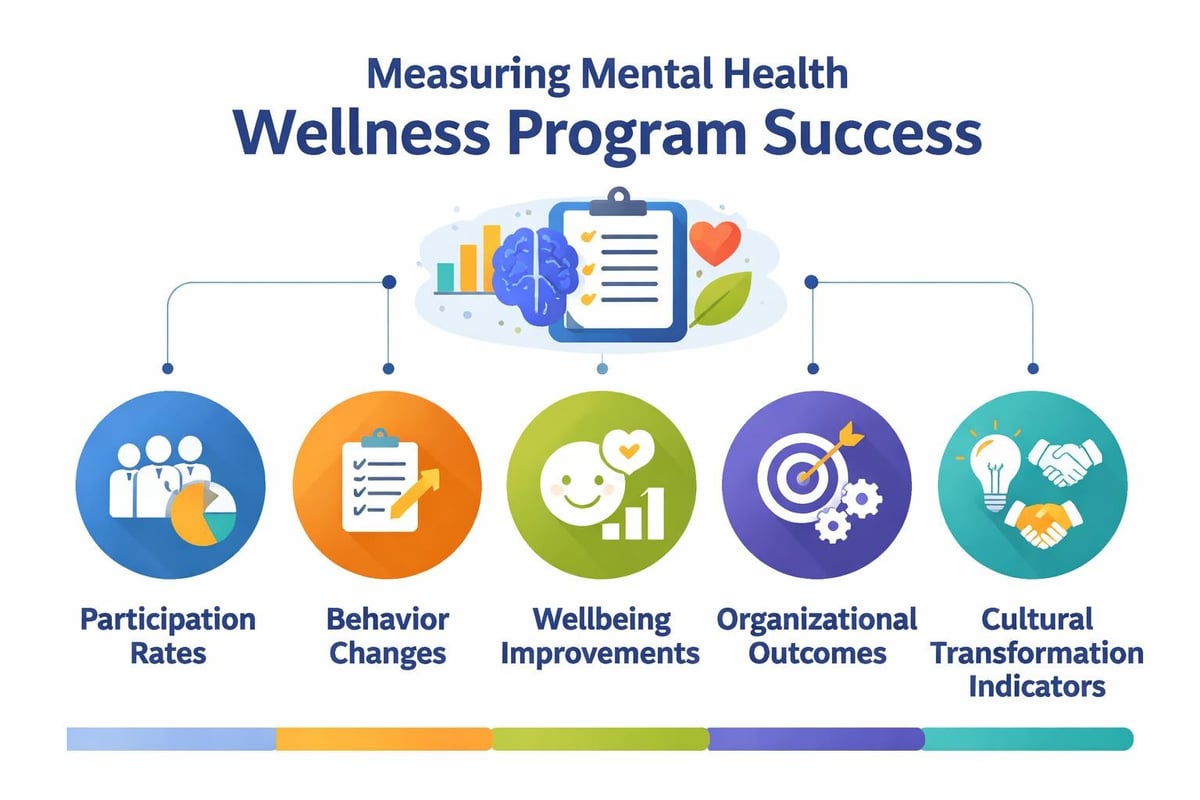
Organizations implementing mental health wellness programs require robust measurement frameworks demonstrating impact and guiding continuous improvement. Effective evaluation examines both process metrics (participation rates, resource utilization) and outcome metrics (absenteeism changes, employee wellbeing scores, performance indicators).
Key Performance Indicators
Comprehensive measurement tracks indicators across multiple domains. Financial metrics might include healthcare cost trends, absenteeism rates, turnover costs, and workers' compensation claims. Wellbeing metrics could encompass employee survey results, psychological safety scores, and self-reported mental health status. Performance indicators might track productivity measures, quality metrics, and engagement scores.
Essential measurement categories:
- Participation and Reach: Training completion rates, resource access, program awareness
- Behavioral Change: Manager conversation frequency, help-seeking behavior, self-care practice adoption
- Wellbeing Outcomes: Stress levels, burnout indicators, resilience scores
- Organizational Impact: Absenteeism, presenteeism, retention, productivity
- Cultural Shifts: Psychological safety, stigma reduction, leadership commitment
Establishing baseline measurements before program implementation enables accurate impact assessment. Regular measurement intervals track progress and identify areas requiring adjustment. Anonymous data collection encourages honest reporting while protecting employee privacy.
| Metric | Measurement Method | Frequency | Target Direction |
|---|---|---|---|
| Absenteeism Rate | HR records | Monthly | Decrease |
| Wellbeing Score | Employee survey | Quarterly | Increase |
| Training Completion | Learning management system | Ongoing | Increase |
| Manager Confidence | Competency assessment | Biannually | Increase |
| Resource Utilization | Support service data | Monthly | Increase then stabilize |
Demonstrating Return on Investment
Calculating ROI for mental health wellness programs involves comparing program costs against measurable benefits. While some benefits (reduced stigma, improved culture) resist precise quantification, many outcomes translate into financial terms. Reduced absenteeism, lower turnover costs, decreased healthcare expenses, and productivity improvements all contribute to calculable returns.
Research consistently demonstrates positive ROI for well-designed programs, with returns ranging from $1.50 to $4.00 for every dollar invested. Organizations should track costs comprehensively, including staff time, external providers, resources, and technology platforms, then compare against documented savings and productivity gains.
Addressing Implementation Challenges and Barriers
Despite growing recognition of mental health wellness programs' value, organizations encounter numerous implementation challenges. Understanding common obstacles and evidence-based solutions helps organizations navigate difficulties and maintain program momentum through inevitable setbacks.
Overcoming Stigma and Cultural Resistance
Stigma remains a primary barrier preventing employees from accessing support and participating in programs. Deep-rooted beliefs about mental health, concerns about career impact, and fear of judgment discourage help-seeking even when resources exist. Leadership commitment signals organizational seriousness, making visible support from senior executives essential for culture change.
Anti-stigma initiatives should avoid reinforcing stereotypes or creating "us versus them" dynamics between those experiencing mental health challenges and those who are not. Understanding that mental health is fundamental to overall wellbeing helps frame programs as relevant to all employees rather than only those in crisis.
Effective stigma reduction strategies include:
- Senior leaders sharing personal mental health experiences
- Normalizing mental health conversations in regular meetings
- Celebrating program participation rather than hiding it
- Using person-first, recovery-oriented language
- Addressing microaggressions and discrimination promptly
Cultural transformation requires sustained effort over years rather than months. Organizations should expect gradual progress and celebrate incremental improvements while maintaining consistent messaging and visible leadership support.
Resource Constraints and Competing Priorities
Budget limitations and competing organizational priorities frequently challenge mental health wellness programs. Organizations facing these constraints should prioritize high-impact, cost-effective interventions before expanding to resource-intensive options. Manager training typically offers exceptional return on investment as it builds internal capability benefiting multiple employees per trained manager.
Leveraging existing resources maximizes limited budgets. Many organizations already provide employee assistance programs, health insurance with mental health coverage, and learning platforms that can host mental health content. Optimizing these existing investments before adding new programs stretches resources further.
Partnerships with external specialists bring expertise without requiring full-time internal staff. Organizations can access quality training, consultation, and program development support through partnerships, allowing internal teams to focus on coordination and integration rather than content creation.
Creating Sustainable Program Structures
Long-term program success requires integration into organizational operations rather than functioning as temporary initiatives. Sustainable mental health wellness programs become embedded in how the organization operates, with clear governance, dedicated resources, and ongoing evolution based on evidence and employee needs.
Governance and Accountability
Establishing clear governance structures ensures program continuity through leadership transitions and organizational changes. Mental health wellness committees or working groups should include representatives from multiple levels and departments, bringing diverse perspectives to program development and oversight.
Designated accountability for program elements prevents initiatives from falling through gaps during busy periods. While responsibility may be distributed across HR, occupational health, learning and development, and operations teams, clear ownership for each component ensures nothing is overlooked.
Integration with existing systems maximizes efficiency and reduces duplication. Mental health considerations should inform recruitment, onboarding, performance management, succession planning, and organizational change processes rather than existing as separate parallel systems.
Continuous Improvement Processes
Regular program evaluation identifies what works well and what requires adjustment. Structured feedback mechanisms capture employee experiences, manager observations, and quantitative data informing evidence-based refinements. Programs should evolve as organizational needs change, workforce demographics shift, and new evidence emerges.
Staying current with mental health research and best practices ensures programs remain evidence-based. Research guides on mental health wellness provide valuable resources for ongoing program development and refinement.
Professional development for program coordinators and mental health champions maintains capability within the organization. Attending conferences, participating in professional networks, and engaging with reference materials for mental health leadership builds expertise that strengthens program quality.
Expanding Access Through Technology and Flexibility
Digital mental health tools and flexible program delivery expand access for distributed workforces, remote employees, and those preferring private support options. Technology complements rather than replaces human connection, offering additional pathways to care while maintaining personal support options.
Digital Mental Health Solutions
Apps, online platforms, and virtual counseling services provide immediate access to support regardless of location or time constraints. These tools offer psychoeducation, self-assessment, guided exercises, and crisis resources available 24/7. Employees can engage with content privately, reducing barriers related to stigma or scheduling conflicts.
Organizations should evaluate digital tools carefully, prioritizing evidence-based platforms with strong privacy protections and accessibility features. Integration with existing wellness programs ensures digital offerings complement rather than fragment support systems. Clear communication helps employees understand available options and navigate digital resources effectively.
Virtual training delivery enables broader participation across geographic locations and work schedules. Recorded sessions, interactive webinars, and micro-learning modules accommodate diverse learning preferences and availability constraints. However, some elements benefit from in-person delivery, particularly skills practice and sensitive conversations requiring psychological safety.
Flexible Program Design
Recognizing that employees have varying needs, preferences, and comfort levels with different support modalities, effective programs offer multiple pathways to similar outcomes. Some employees prefer group workshops while others engage through self-directed learning. Some seek peer support while others prefer professional counseling.
Offering choice empowers employees to select approaches matching their circumstances and preferences. Programs might include lunchtime workshops, after-hours sessions, online modules, one-on-one coaching, group activities, and written resources. This variety maximizes accessibility and participation across diverse workforces.
Accommodating different work arrangements ensures equity in access. Shift workers, remote employees, and those with caregiving responsibilities face unique barriers to participation. Recorded content, flexible scheduling, and location-independent options demonstrate organizational commitment to supporting all employees regardless of their work patterns.
Mental health wellness programs deliver measurable improvements in employee wellbeing, organizational performance, and workplace culture when designed strategically and implemented with genuine commitment. Building manager capability, establishing trauma-informed practices, and measuring outcomes positions organizations to create psychologically healthier workplaces where people can thrive. Workplace Mental Health Institute provides comprehensive training programs and strategic consultation helping organizations develop evidence-based mental health wellness programs tailored to their unique needs, workforce characteristics, and industry context.

