
Mental health issues in australia represent one of the most significant challenges facing modern workplaces, affecting approximately one in five Australians annually and costing the economy an estimated $70 billion each year. For organizational leaders and human resources professionals, understanding the landscape of mental health challenges is no longer optional but essential for maintaining productive, resilient teams. The workplace serves as both a potential contributor to psychological distress and a critical environment for early intervention and support. This comprehensive examination explores the current state of mental health across Australia, with particular focus on workplace implications, evidence-based interventions, and strategic approaches that organizations can implement to protect and enhance employee wellbeing.
The Current State of Mental Health Issues in Australia
The prevalence of mental health conditions across Australia has reached levels that demand immediate organizational attention. According to data from the Australian Bureau of Statistics, psychological distress affects a substantial portion of the working-age population, with rates varying across demographic groups and occupational sectors.
Prevalence and Demographic Patterns
Mental health conditions affect different population segments at varying rates:
- Anxiety disorders impact approximately 3.2 million Australians annually
- Depressive conditions affect roughly 2.1 million people each year
- Substance use disorders compound mental health challenges for over 650,000 individuals
- Post-traumatic stress disorder (PTSD) affects an estimated 450,000 Australians
The comprehensive overview provided by Healthdirect outlines how these conditions manifest across different life stages and circumstances, with workplace stress serving as a significant contributing factor for working-age adults.
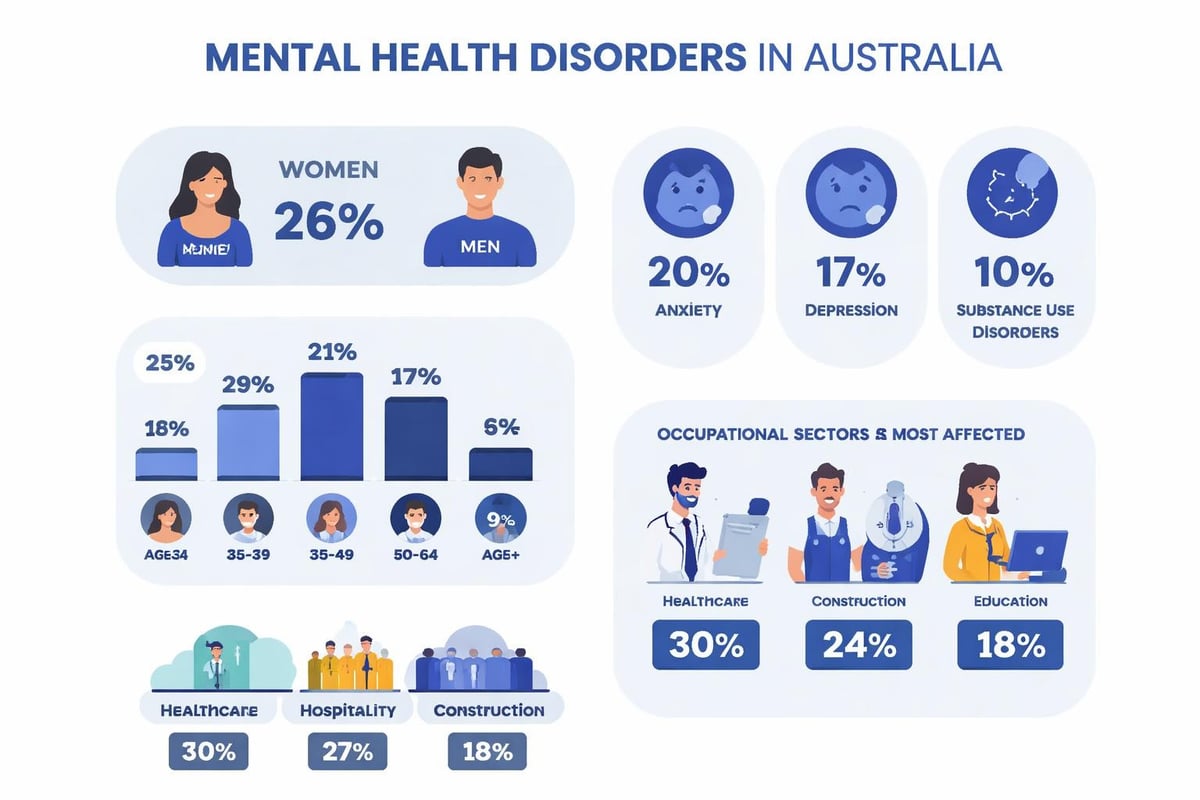
Women experience higher rates of anxiety and depression, while men demonstrate elevated risk for substance use disorders and lower rates of help-seeking behavior. This gender disparity has profound implications for workplace mental health strategies, requiring tailored approaches that address different barriers to support.
| Condition Type | Annual Prevalence | Primary Age Group | Workplace Impact |
|---|---|---|---|
| Anxiety Disorders | 14.4% of population | 25-44 years | Reduced productivity, increased absenteeism |
| Depression | 9.3% of population | 18-44 years | Performance decline, interpersonal challenges |
| Substance Use | 2.9% of population | 18-34 years | Safety concerns, reliability issues |
| PTSD | 2.0% of population | 35-54 years | Concentration difficulties, emotional regulation |
Economic and Workplace Burden
Mental health issues in australia generate substantial economic costs through multiple pathways that directly affect organizational performance. Beyond direct healthcare expenditure, indirect costs through productivity loss, absenteeism, and presenteeism create significant financial burdens for businesses across all sectors.
Direct Organizational Costs
The financial impact on individual organizations manifests through several mechanisms. Absenteeism related to mental health conditions accounts for an average of 3.2 additional sick days per affected employee annually, compared to the general workforce baseline. Presenteeism proves even more costly, with employees experiencing psychological distress demonstrating productivity reductions of 20-35% during symptomatic periods.
Key cost drivers for Australian workplaces include:
- Increased workers' compensation claims for psychological injury
- Higher staff turnover requiring recruitment and training investment
- Reduced team performance and collaboration effectiveness
- Elevated disability insurance premiums
- Crisis management and critical incident response expenses
Understanding these financial realities helps business leaders justify investment in preventive mental health programs. Organizations that implement comprehensive wellbeing strategies through providers like the Workplace Mental Health Institute typically see return on investment within 18-24 months through reduced absenteeism and improved retention rates.
Industry-Specific Vulnerabilities
Certain sectors demonstrate elevated risk for mental health issues in australia, requiring specialized approaches to workforce protection. Emergency services, healthcare, education, and customer-facing roles show consistently higher rates of psychological distress compared to national averages.
Research from Statista on mental health trends reveals that frontline workers exposed to traumatic events or chronic emotional demands face compounded risks. These occupational hazards necessitate proactive trauma-informed approaches and robust support systems.
Workplace Contributing Factors
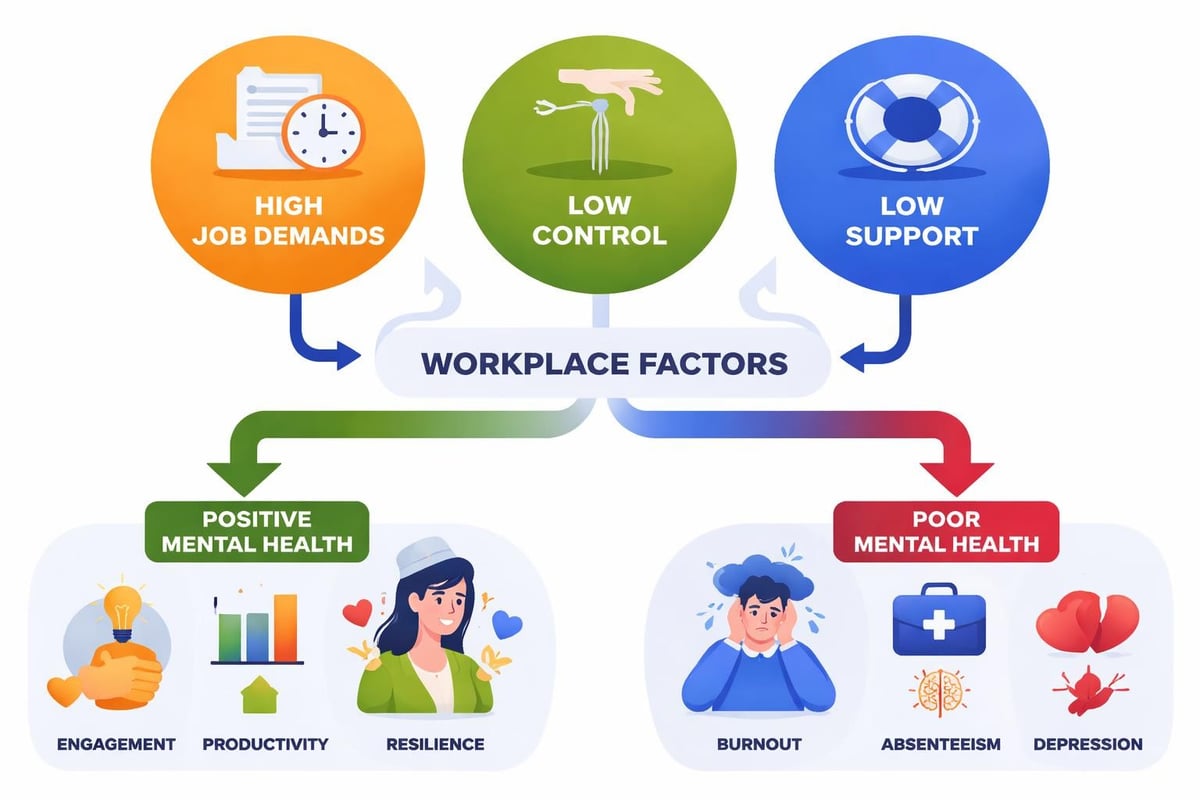
Mental health issues in australia frequently develop or intensify due to workplace conditions, making organizational culture and management practices critical intervention points. The psychosocial hazards present in modern work environments create risks that responsible employers must actively manage.
Organizational Risk Factors
Primary workplace contributors to psychological distress:
- High job demands with low control create sustained stress responses that erode psychological resilience over time
- Role ambiguity and conflicting expectations generate persistent anxiety and decision fatigue
- Poor management practices including inadequate feedback, unrealistic expectations, and inconsistent communication
- Workplace bullying and harassment produce direct psychological trauma with long-term consequences
- Job insecurity and organizational change trigger stress responses and undermine psychological safety
- Work-life imbalance prevents adequate recovery and depletes mental resources
The interaction between these factors determines overall psychological risk within specific work environments. Organizations serving Australian businesses, such as WMHI Australia, provide assessment tools that identify these hazards and guide strategic interventions.
The Manager's Critical Role
Middle managers and team leaders serve as the primary interface between organizational policy and employee experience. Their capacity to recognize early warning signs, facilitate supportive conversations, and connect team members with appropriate resources directly influences mental health outcomes.
Unfortunately, many managers lack confidence and training in mental health literacy. Only 37% of Australian managers report feeling adequately prepared to support team members experiencing psychological distress, according to workplace research. This skills gap represents a significant organizational vulnerability that specialized training programs address through practical skill development.
Leadership development programs that incorporate mental health competencies enable managers to create psychologically safe team environments. When leaders model help-seeking behavior and normalize mental health conversations, they reduce stigma and encourage early intervention.
Evidence-Based Prevention Strategies
Addressing mental health issues in australia requires comprehensive organizational approaches that move beyond reactive crisis management toward proactive risk reduction and wellbeing enhancement. The most effective strategies operate at multiple levels simultaneously.
Primary Prevention: Reducing Risk Exposure
Primary prevention focuses on eliminating or minimizing psychosocial hazards before they generate harm. This approach represents the most cost-effective intervention level, preventing psychological injury rather than treating established conditions.
Effective primary prevention strategies include:
- Redesigning work processes to balance demands with resources and control
- Implementing flexible work arrangements that support work-life integration
- Establishing clear role definitions and transparent communication channels
- Developing values-based cultures that prioritize psychological safety
- Creating workload monitoring systems that prevent chronic overload
Organizations can access comprehensive workplace wellbeing assessments through platforms like WMHI Online, which systematically identify risk factors and track improvement over time.
Secondary Prevention: Early Identification and Intervention
Secondary prevention targets early signs of psychological distress before conditions become severe or chronic. This requires building manager capability, establishing clear referral pathways, and normalizing help-seeking behavior.
| Prevention Level | Focus Area | Key Actions | Expected Outcomes |
|---|---|---|---|
| Primary | Risk elimination | Job design, culture building | Reduced incidence of new cases |
| Secondary | Early detection | Manager training, screening | Faster intervention, less severity |
| Tertiary | Recovery support | Accommodation, rehabilitation | Successful return to work |
Manager training represents a cornerstone of effective secondary prevention. When supervisors develop mental health literacy through structured programs, they demonstrate improved confidence in early conversations and appropriate referrals. For organizations seeking leadership coaching that integrates mental health competencies, resources like Noomii’s corporate coaching services provide practical approaches tied to measurable business outcomes.
Tertiary Prevention: Supporting Recovery and Return to Work
Tertiary prevention assists employees recovering from mental health conditions, facilitating successful return to work and preventing recurrence. This requires individualized planning, reasonable accommodations, and ongoing manager support.
Graduated return-to-work plans allow employees to rebuild capacity progressively, reducing the risk of relapse. These plans typically involve modified duties, adjusted hours, and regular check-ins to monitor progress and adjust support as needed.
Building Organizational Mental Health Literacy
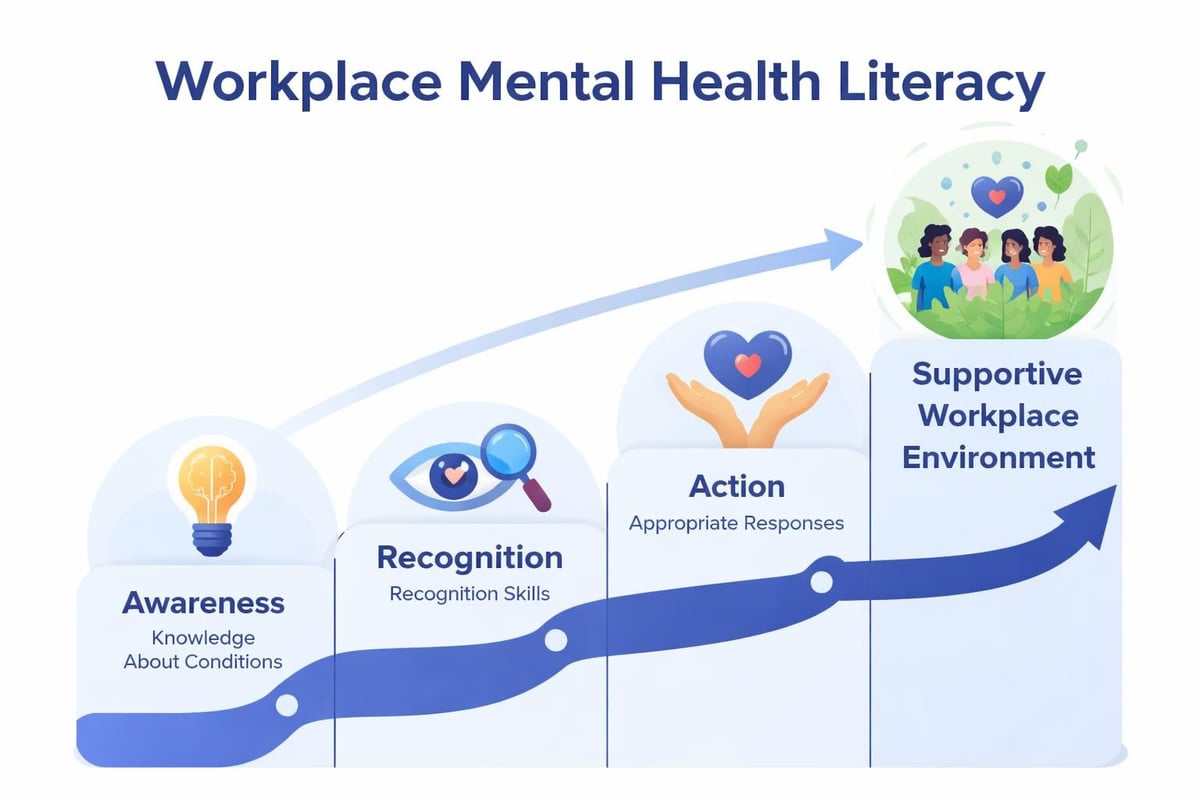
Mental health issues in australia persist partly due to insufficient understanding across the general population and specifically within workplace settings. Mental health literacy encompasses knowledge about mental health conditions, their causes, risk factors, available treatments, and effective support strategies.
Core Components of Workplace Mental Health Education
Comprehensive training programs equip managers and employees with practical capabilities rather than theoretical knowledge alone. The most effective approaches integrate psychological accuracy with real-world application scenarios.
Essential learning outcomes for workplace mental health programs:
- Recognition of common mental health conditions and their workplace manifestations
- Understanding of appropriate boundaries between support and treatment
- Development of conversation skills for discussing mental health concerns
- Knowledge of internal and external support resources and referral pathways
- Practical stress management and resilience-building techniques
- Awareness of legal obligations and workplace policy frameworks
Educational initiatives should extend beyond single training sessions toward sustained development. Organizations benefit from establishing ongoing learning opportunities through webinars, resource libraries, and refresher courses that reinforce core concepts.
Reducing Stigma Through Leadership Commitment
Stigma remains a significant barrier preventing Australians from seeking timely mental health support. Workplace cultures that treat mental health as distinct from physical health, or that implicitly punish vulnerability, perpetuate help-seeking delays that worsen outcomes.
Leadership authenticity proves particularly powerful in stigma reduction. When senior leaders share their own experiences with mental health challenges or openly prioritize wellbeing, they signal organizational values more effectively than any policy document.
Regular communication from leadership about mental health initiatives demonstrates ongoing commitment rather than superficial compliance. Organizations that integrate mental health into business strategy discussions, board reporting, and performance metrics signal genuine prioritization.
Strategic Implementation Framework
Addressing mental health issues in australia through workplace interventions requires systematic planning and sustained implementation rather than isolated initiatives. Successful organizations adopt comprehensive frameworks that integrate multiple interventions across organizational levels.
Assessment and Baseline Establishment
Effective strategy begins with accurate understanding of current state. Workplace wellbeing assessments identify specific risk factors, measure existing psychological distress levels, and establish baseline metrics for tracking improvement.
Key assessment dimensions include:
- Psychosocial hazard identification through workplace inspection and employee consultation
- Prevalence measurement using validated psychological distress screening tools
- Cultural assessment examining attitudes, stigma levels, and help-seeking patterns
- Resource audit reviewing existing support systems and identifying gaps
- Outcome tracking establishing metrics for absenteeism, turnover, engagement, and performance
Organizations partnering with specialized providers access structured assessment methodologies that comply with Australian workplace health and safety obligations while generating actionable insights.
Multi-Level Intervention Planning
Comprehensive approaches address mental health through interconnected interventions targeting organizational systems, manager capabilities, and individual employee resources simultaneously.
The framework recommended by parliamentary guidance on mental health services emphasizes integration across service levels, a principle equally applicable to workplace programs.
Intervention hierarchy for organizational mental health:
- Organizational level: Policy development, resource allocation, systemic risk reduction
- Manager level: Training delivery, capability building, support system establishment
- Individual level: Education provision, skill development, access to professional support
- Team level: Culture building, peer support networks, collective resilience strategies
Measurement and Continuous Improvement
Mental health initiatives require ongoing evaluation to ensure effectiveness and justify continued investment. Organizations should establish clear metrics aligned with business outcomes alongside wellbeing indicators.
| Metric Category | Specific Measures | Collection Frequency | Target Audience |
|---|---|---|---|
| Participation | Training completion, program uptake | Quarterly | Leadership team |
| Knowledge | Pre/post assessments, literacy scores | Per training cycle | Learning & development |
| Behavior | Manager conversation frequency, referral rates | Monthly | People & culture |
| Outcomes | Psychological distress, absenteeism, turnover | Bi-annually | Executive leadership |
| Business Impact | Productivity, engagement, safety incidents | Quarterly | Board of directors |
Data-driven approaches enable refinement of interventions based on evidence rather than assumption. Organizations demonstrating measurable improvements build internal support for sustained investment in mental health infrastructure.
Specialized Considerations for Australian Workplaces
Mental health issues in australia present unique characteristics shaped by geographic, cultural, and regulatory factors that distinguish the Australian context from international patterns. Organizations operating across this diverse continent must adapt strategies to regional realities.
Geographic and Access Challenges
Australia's vast geography creates profound mental health service access disparities between metropolitan, regional, and remote locations. Employees in rural areas face limited specialist availability, requiring organizations to develop telehealth capabilities and alternative support models.
Digital mental health platforms provide partial solutions, offering evidence-based psychological interventions through online delivery. However, technology access and digital literacy vary across workforces, necessitating blended approaches that combine digital tools with traditional support pathways.
Organizations with geographically dispersed workforces benefit from partnerships that provide consistent support regardless of location. National providers deliver standardized training and resources while accommodating local adaptations.
Cultural Diversity and Inclusive Approaches
Australia's multicultural workforce requires mental health approaches that respect diverse cultural perspectives on psychological distress, help-seeking, and wellbeing. Cultural competence extends beyond translation to fundamental reconceptualization of mental health within different cultural frameworks.
Indigenous Australian employees face distinct mental health challenges shaped by intergenerational trauma, ongoing discrimination, and cultural disconnection. Culturally safe workplace practices acknowledge these realities and provide specialized support pathways developed in consultation with Indigenous communities.
Inclusive mental health strategies incorporate:
- Multilingual resources and interpreter access for non-English speaking employees
- Cultural consultation in program design and delivery approaches
- Recognition of diverse help-seeking preferences and support systems
- Accommodation of cultural practices that support psychological wellbeing
- Training for managers in cultural humility and inclusive leadership
Regulatory Compliance and Legal Obligations
Australian employers face clear legal obligations regarding psychological health and safety under workplace health and safety legislation. These requirements mandate identification of psychosocial hazards, implementation of control measures, and consultation with workers about mental health risks.
Recent regulatory developments have strengthened enforcement and increased penalties for psychological injury, making compliance both an ethical imperative and business necessity. Organizations must maintain documentation demonstrating systematic risk management and intervention implementation.
Workers' compensation frameworks across Australian states and territories increasingly recognize psychological injury claims, creating additional incentives for proactive prevention. Successful claims demonstrate substantial costs through direct compensation and premium increases, reinforcing the business case for preventive investment.
Emerging Trends and Future Directions
The landscape of mental health issues in australia continues evolving, shaped by societal changes, research advances, and shifting workplace expectations. Forward-thinking organizations anticipate these developments rather than reacting after impacts materialize.
Technology-Enabled Support Systems
Digital mental health tools offer unprecedented scalability and accessibility, complementing traditional support models. Workplace applications include wellbeing apps, online cognitive behavioral therapy programs, mental health screening platforms, and virtual counseling services.
Artificial intelligence applications in mental health screening and early intervention show promise but require careful implementation to address privacy concerns and ensure human oversight. Organizations adopting these technologies must balance innovation with ethical considerations and employee consent.
Relationship-Centered Workplace Cultures
Emerging research emphasizes relational dimensions of workplace mental health, recognizing that quality of workplace relationships substantially influences psychological wellbeing. Organizations are investing in communication skills, conflict resolution capabilities, and emotional intelligence development.
For employees experiencing relationship challenges that affect work performance, specialized support such as relationship therapy approaches address root causes that generic workplace programs may not reach. Comprehensive employee assistance programs increasingly incorporate relationship counseling recognizing the interconnection between personal and professional wellbeing.
Integration of Mental and Physical Health
The artificial separation between mental and physical health is progressively dissolving, with integrated wellbeing approaches recognizing their interdependence. Workplace programs increasingly address sleep, nutrition, physical activity, and social connection alongside psychological interventions.
This holistic perspective aligns with emerging organizational focus on total worker health, addressing all factors influencing employee wellbeing rather than isolated risks. Comprehensive programs demonstrate superior outcomes compared to siloed mental health initiatives.
Practical Resources and Support Pathways
Addressing mental health issues in australia requires connecting employees with appropriate professional support when workplace interventions prove insufficient. Organizations must establish clear pathways that facilitate timely access while respecting privacy and autonomy.
Employee Assistance Programs
Quality employee assistance programs (EAPs) provide confidential counseling services, delivered by qualified mental health professionals, typically funded entirely by employers. Effective EAPs offer multiple contact channels including phone, video, and face-to-face sessions to accommodate different preferences and circumstances.
Critical EAP selection criteria include:
- Qualification levels of counseling providers and specialization breadth
- Accessibility across geographic locations and session availability
- Cultural competence and language capabilities
- Privacy protections and data security standards
- Integration with broader workplace mental health strategies
- Reporting capabilities that respect confidentiality while demonstrating utilization
Organizations should actively promote EAP services through multiple communication channels and manager endorsement rather than assuming employees will independently discover these resources.
Building Manager Capability
Manager training remains the highest-impact intervention most organizations can implement. When supervisors develop mental health literacy and conversation skills, they become early detection mechanisms and connection points to professional support.
Comprehensive manager programs address knowledge, attitudes, and skills through interactive learning experiences. Video-based resources, such as those available through the Workplace Mental Health Institute YouTube channel, supplement formal training with ongoing learning opportunities.
Managers require ongoing support following initial training, including refresher sessions, coaching, and access to expert consultation when facing complex situations. Organizations that invest in sustained capability development see substantial returns through improved early intervention and reduced crisis escalation.
Peer Support Networks
Structured peer support programs leverage lived experience to reduce isolation and normalize mental health challenges. Trained peer supporters provide emotional support, share coping strategies, and connect colleagues with professional resources when appropriate.
Peer programs complement rather than replace professional services, offering accessible support that reduces barriers associated with formal help-seeking. Organizations implementing peer networks must provide adequate training, clear role boundaries, and ongoing supervision to protect both peer supporters and those they assist.
Mental health issues in australia demand comprehensive organizational responses that integrate risk reduction, early intervention, and recovery support within psychologically safe workplace cultures. Business leaders and HR professionals who prioritize mental health literacy, invest in manager capability, and implement evidence-based strategies position their organizations for improved performance while genuinely supporting employee wellbeing. The Workplace Mental Health Institute provides specialized training, assessment tools, and strategic consultation that enable Australian organizations to build mentally healthy workplaces where both people and performance thrive.

