
Managing wellbeing has evolved from a peripheral concern to a central leadership responsibility in modern organizations. As workplaces navigate increasing complexity, economic volatility, and shifting employee expectations, the ability to systematically support mental health and wellbeing determines organizational sustainability and competitive advantage. This comprehensive approach requires more than wellness programs or one-off initiatives-it demands integrated strategies that address individual needs, team dynamics, and organizational systems simultaneously.
The Foundation of Effective Wellbeing Management
Managing wellbeing requires understanding the multidimensional nature of human functioning. Wellbeing encompasses physical health, psychological resilience, social connection, purpose, and environmental factors that collectively influence how people experience work and life. Research from Better Health Channel identifies relationships, career satisfaction, and physical health as fundamental elements that interact to shape overall life satisfaction.
Organizations that excel in this domain recognize that wellbeing is not static. It fluctuates based on workplace conditions, personal circumstances, and external pressures. Effective management systems account for this variability by building flexibility into support structures rather than implementing rigid programs that fail to adapt to changing needs.
Organizational Accountability in Wellbeing Outcomes
Leadership teams must accept their role in shaping the conditions that either support or undermine employee wellbeing. This accountability extends beyond providing resources to examining how organizational practices, policies, and cultural norms impact mental health daily.
Key leadership responsibilities include:
- Monitoring workload distribution and resource allocation
- Ensuring role clarity and reasonable performance expectations
- Creating psychologically safe environments for disclosure and support
- Modeling healthy boundaries and sustainable work practices
- Allocating budget and time for wellbeing initiatives
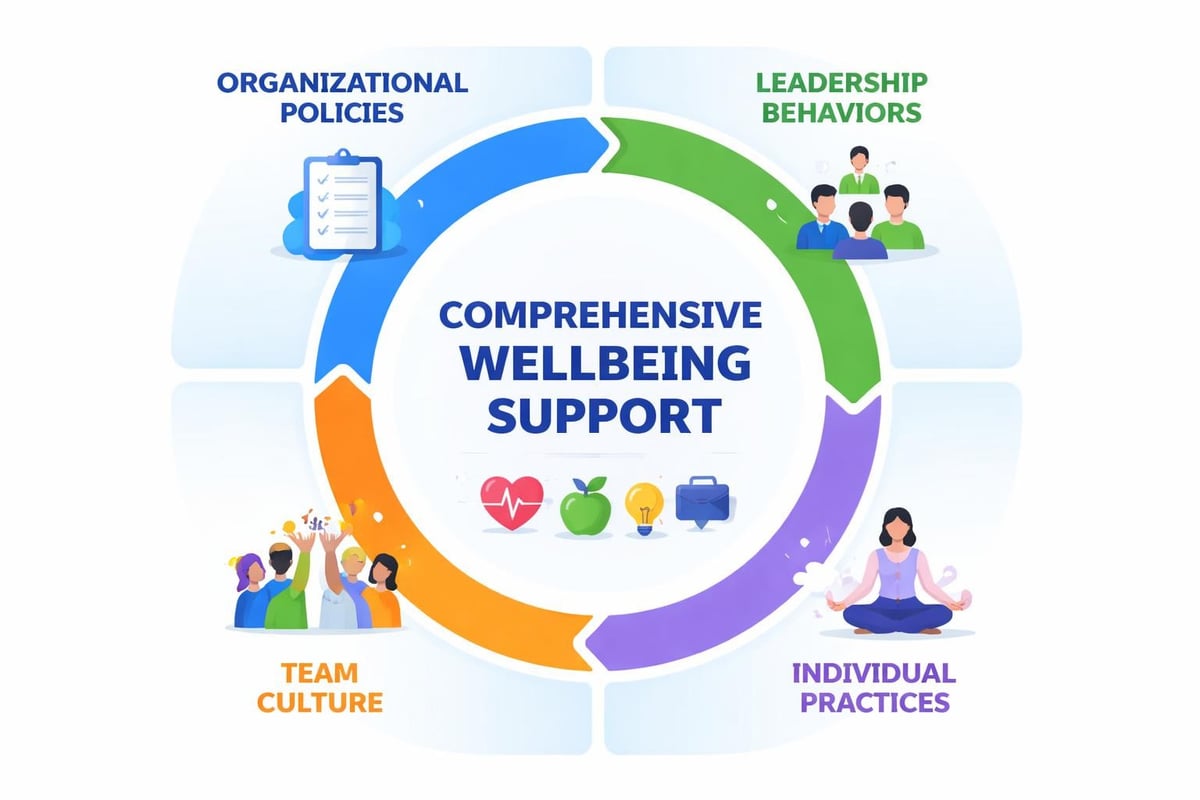
The NICE guidelines on workplace mental wellbeing emphasize that creating supportive environments requires systematic intervention at multiple levels, from individual skill development to organizational policy reform.
Strategic Frameworks for Managing Wellbeing
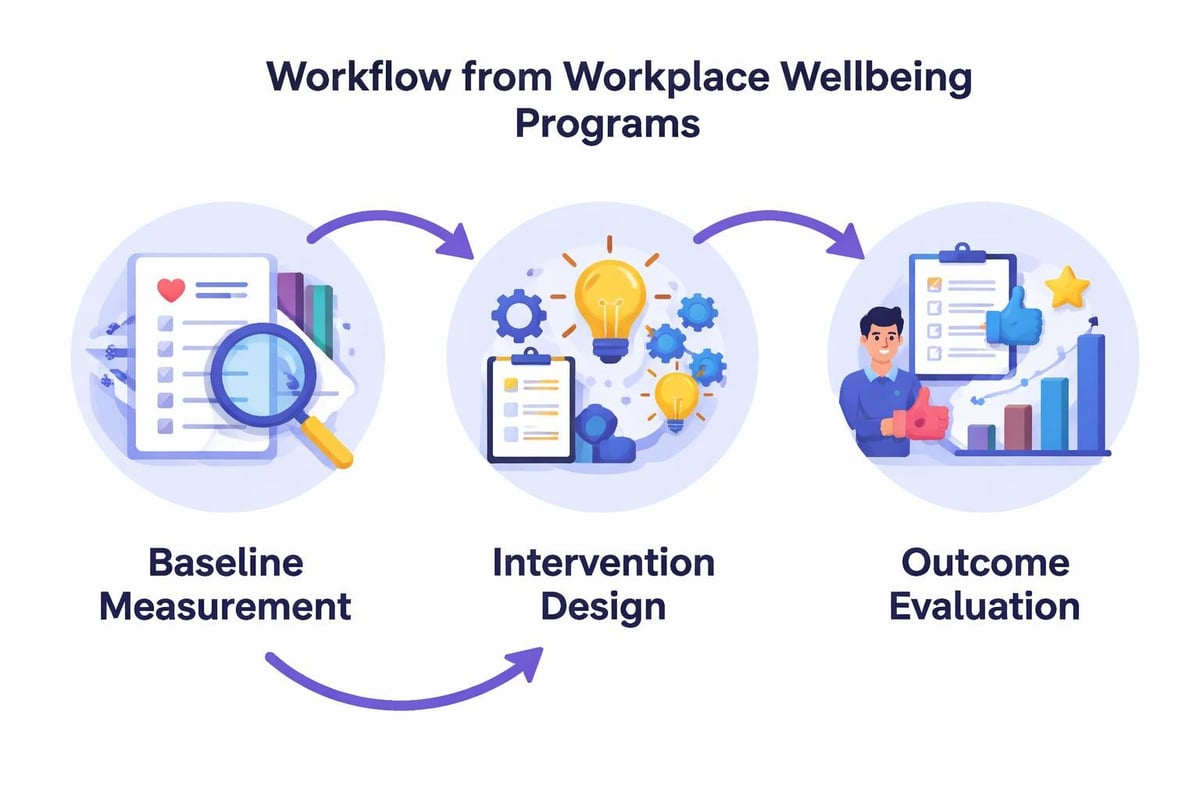
Effective wellbeing management relies on evidence-based frameworks that guide decision-making and resource allocation. Rather than adopting fragmented interventions, organizations benefit from cohesive models that integrate assessment, intervention, and evaluation.
The ABC Approach to Sustainable Wellbeing
The ABC framework-Autonomy, Belonging, and Competence-provides a practical lens for understanding core psychological needs that influence wellbeing. This approach aligns with self-determination theory and offers actionable guidance for workplace application.
| Core Need | Workplace Application | Management Strategy |
|---|---|---|
| Autonomy | Decision-making authority over work methods | Provide choice in task approach, schedule flexibility, input on priorities |
| Belonging | Social connection and team integration | Foster inclusive team practices, create opportunities for collaboration, address isolation |
| Competence | Skill development and growth opportunities | Offer learning resources, provide constructive feedback, align roles with strengths |
Organizations implementing this framework report improved engagement, reduced burnout, and enhanced psychological safety. The key is systematic application across all levels rather than selective implementation that creates inconsistent experiences.
Trauma-Informed Approaches to Wellbeing Support
Trauma-informed care principles transform how organizations approach managing wellbeing by recognizing that many employees carry experiences that influence their workplace functioning. This approach shifts from asking "What's wrong with you?" to "What happened to you?" and emphasizes safety, trustworthiness, collaboration, and empowerment.
Implementing trauma-informed practices involves:
- Creating predictable, consistent organizational systems
- Offering choices rather than mandates whenever possible
- Training managers to recognize trauma responses without diagnosing
- Building peer support networks that normalize help-seeking
- Reviewing policies for potential retraumatizing elements
Leaders trained through programs like the Leaders Masterclass develop the skills to apply these principles effectively, creating environments where employees feel safe disclosing challenges and accessing support.
Practical Implementation Strategies
Translating wellbeing principles into daily practice requires deliberate planning, clear communication, and ongoing refinement. Organizations often struggle not from lack of intention but from insufficient implementation structures.
Assessment and Baseline Establishment
Before implementing interventions, organizations need accurate data about current wellbeing status and primary risk factors. Workplace wellbeing assessments provide this foundation by measuring psychological safety, stress levels, support adequacy, and cultural factors affecting mental health.
Effective assessment approaches include:
- Anonymous surveys with validated psychological measures
- Focus groups exploring specific wellbeing dimensions
- Analysis of absenteeism, turnover, and performance data
- Manager interviews about team wellbeing observations
- Review of existing policies and support infrastructure
This diagnostic phase identifies priorities and prevents wasted resources on initiatives that address peripheral rather than core issues.
Manager Capability Development
Frontline managers serve as the primary interface between organizational wellbeing strategy and employee experience. Gallup research on wellbeing practices for leaders demonstrates that manager behaviors significantly influence team mental health outcomes, often more than formal programs.
Comprehensive manager training addresses:
- Early identification of wellbeing concerns without overstepping professional boundaries
- Conducting supportive conversations about mental health and performance
- Making appropriate referrals to professional resources
- Adjusting work arrangements to accommodate wellbeing needs
- Creating team cultures that normalize wellbeing discussions
Managers require ongoing support, not just initial training. Regular coaching, peer learning forums, and access to specialist consultation help maintain and refine these critical skills over time.
Building Sustainable Wellbeing Systems
Short-term interventions produce temporary improvements that fade without systemic reinforcement. Sustainable wellbeing management integrates support into core business operations rather than treating it as a supplementary program.
| System Element | Integration Strategy | Success Indicator |
|---|---|---|
| Performance Management | Include wellbeing metrics alongside productivity measures | Managers discuss workload sustainability in reviews |
| Resource Allocation | Budget wellbeing support as operational necessity | Consistent funding across economic cycles |
| Communication Channels | Normalize wellbeing topics in regular communications | Employees comfortable raising concerns |
| Policy Framework | Embed wellbeing considerations in policy development | New policies assessed for mental health impact |
This integration ensures that managing wellbeing becomes "how we work" rather than "what we do in addition to work."
Individual-Level Wellbeing Strategies
While organizational systems create enabling conditions, individuals need practical tools for managing their own wellbeing. Effective programs balance organizational responsibility with individual agency, avoiding both victim-blaming and learned helplessness.
Resilience Skill Development
Resilience training equips employees with evidence-based techniques for managing stress, regulating emotions, and maintaining psychological flexibility during challenges. Unlike generic stress management programs, effective resilience training addresses workplace-specific stressors and provides practice opportunities within relevant contexts.
Core resilience competencies include:
- Cognitive reframing techniques for managing unhelpful thought patterns
- Values clarification to guide decision-making during uncertainty
- Mindfulness practices adapted for workplace application
- Social connection skills that deepen support networks
- Recovery strategies that prevent chronic stress accumulation
Training delivery methods matter significantly. Interactive workshops with practice exercises produce better outcomes than passive information transfer through presentations or reading materials alone.
Personalized Wellbeing Planning
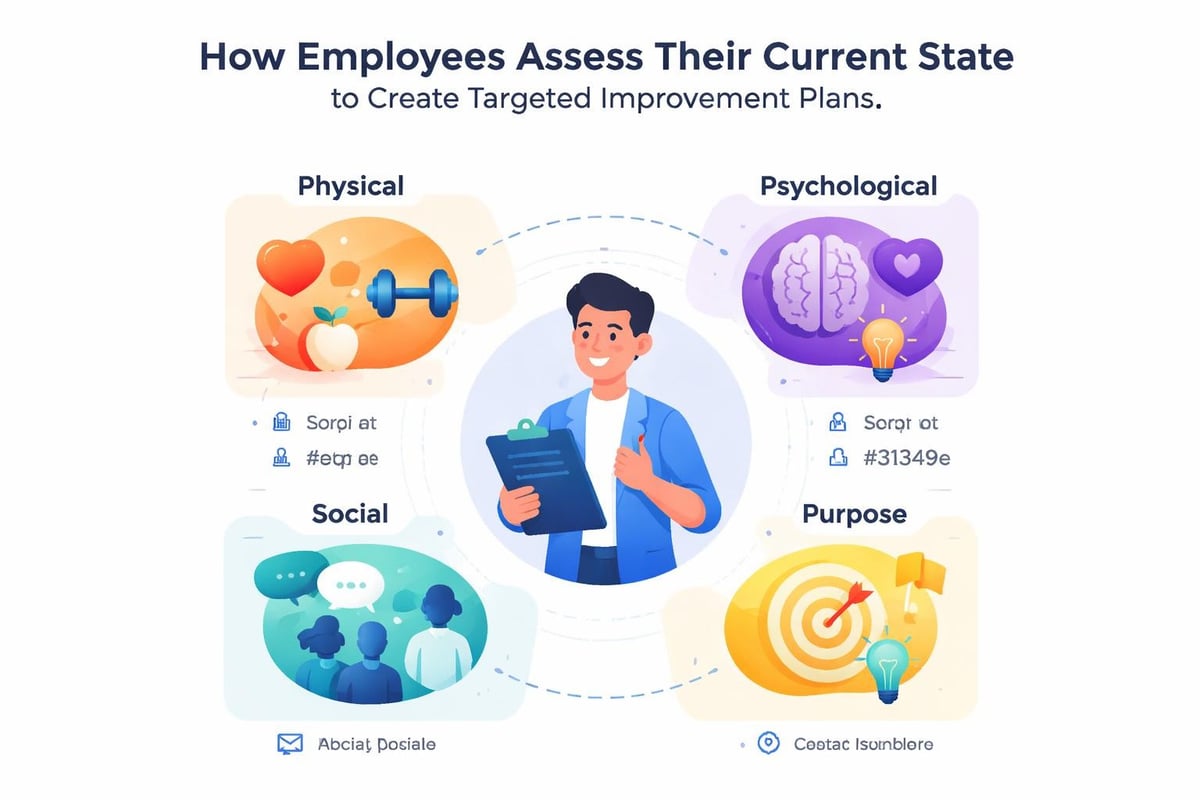
Generic wellbeing advice often fails because individual needs, preferences, and circumstances vary substantially. Personalized planning processes help employees identify their specific wellbeing priorities and develop actionable strategies aligned with their situations.
This process typically involves:
- Self-assessment of current wellbeing across multiple dimensions
- Identification of primary stressors and protective factors
- Goal setting focused on realistic, sustainable changes
- Resource mapping of available support options
- Regular review and adjustment based on outcomes
Organizations can support this individual work by providing time, tools, and guidance without mandating specific approaches or monitoring compliance in ways that create surveillance concerns.
Measuring and Optimizing Wellbeing Outcomes
Evidence-based wellbeing management requires systematic evaluation of intervention effectiveness. Without measurement, organizations cannot distinguish between initiatives that genuinely improve outcomes and those that merely create activity without impact.
Comprehensive Evaluation Frameworks
Effective measurement balances subjective wellbeing indicators with objective organizational metrics, creating a holistic picture of program impact.
Subjective measures:
- Employee-reported stress levels and mental health status
- Perceived organizational support and psychological safety
- Work-life integration satisfaction
- Engagement and motivation indicators
Objective measures:
- Absenteeism rates and patterns
- Turnover data, particularly regrettable loss
- Productivity metrics relevant to specific roles
- Utilization rates of support services
- Workers' compensation claims related to psychological injury
Analyzing both categories reveals whether improvements in employee experience translate to organizational performance gains, demonstrating return on investment to stakeholders.
Continuous Improvement Processes
Managing wellbeing is not a project with an endpoint but an ongoing organizational capability that requires continuous refinement. Organizations should establish regular review cycles that examine:
- Emerging wellbeing risks not addressed by current strategies
- Effectiveness gaps in existing interventions
- Changing employee needs and preferences
- New evidence about effective approaches
- Resource allocation optimization opportunities
This iterative approach prevents stagnation and ensures wellbeing strategies remain relevant as organizational contexts evolve. Regular stakeholder feedback-from employees, managers, and senior leaders-provides essential input for these refinement processes.
Integration Across Organizational Functions
Managing wellbeing cannot succeed when isolated within a single department. The most effective organizations integrate wellbeing considerations across human resources, operations, safety, performance management, and strategic planning functions.
Cross-Functional Collaboration Models
Breaking down silos requires deliberate collaboration structures that bring together diverse perspectives and expertise.
Effective collaboration mechanisms include:
- Wellbeing steering committees with representation across departments
- Joint training sessions that build shared understanding
- Integrated data systems that connect wellbeing metrics with operational indicators
- Shared goals that align different functions around wellbeing outcomes
- Regular communication protocols that maintain alignment
This integration ensures consistent messaging, eliminates contradictory practices, and creates coherent employee experiences rather than fragmented, confusing initiatives.
Aligning Wellbeing with Business Strategy
When wellbeing management operates separately from core business strategy, it remains vulnerable to budget cuts and deprioritization during challenges. Strategic alignment demonstrates how wellbeing directly enables business objectives rather than competing with them for resources.
This alignment becomes visible when organizations:
- Include wellbeing metrics in strategic dashboards alongside financial indicators
- Frame wellbeing initiatives in terms of business outcomes like retention and productivity
- Involve wellbeing expertise in strategic planning processes
- Communicate wellbeing priorities from senior leadership consistently
- Allocate resources proportionate to wellbeing's strategic importance
Organizations pursuing accreditation through specialized training programs gain frameworks and expertise that facilitate this strategic integration, positioning managing wellbeing as a core competency rather than peripheral activity.
Managing wellbeing effectively requires commitment to evidence-based approaches, systematic implementation, and continuous improvement across organizational levels. Organizations that develop this capability experience measurable benefits in employee mental health, performance outcomes, and competitive positioning. Workplace Mental Health Institute provides specialized training, assessment tools, and strategic consultation that help organizations build comprehensive wellbeing management systems tailored to their specific contexts and challenges.

