
Organizations worldwide are recognizing that employee psychological health directly influences productivity, retention, and workplace culture. Mental health wellbeing training provides managers and teams with evidence-based strategies to recognize distress, respond effectively, and create supportive environments. As workplace expectations evolve and mental health awareness increases, structured training programs have become essential infrastructure rather than optional benefits. Investing in comprehensive education around psychological wellbeing demonstrates organizational commitment while building capacity across all levels of leadership.
Understanding Mental Health Wellbeing Training
Mental health wellbeing training encompasses structured educational programs designed to build knowledge, skills, and confidence in supporting psychological health at work. These programs range from foundational awareness sessions to advanced certifications that prepare participants to identify mental health concerns, facilitate supportive conversations, and implement evidence-based interventions.
Effective training goes beyond surface-level awareness to develop practical competencies. Participants learn to distinguish between everyday stress and clinical concerns, understand the impact of workplace factors on mental health, and apply trauma-informed principles in daily interactions. The focus remains on empowerment rather than diagnosis, equipping non-clinical staff with appropriate response capabilities.
Core Components of Effective Programs
Well-designed mental health wellbeing training integrates several essential elements that distinguish meaningful education from superficial compliance exercises:
- Evidence-based content grounded in psychology, neuroscience, and organizational behavior research
- Practical skill development through scenario-based learning and interactive exercises
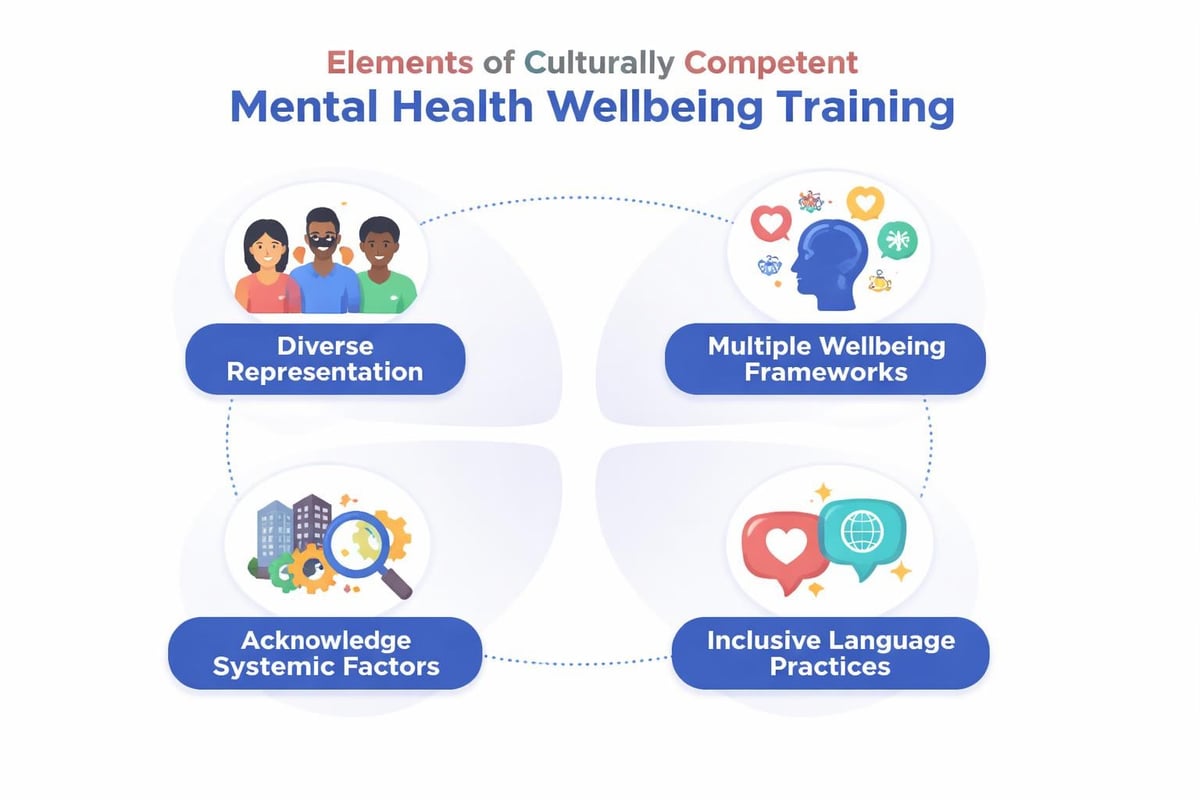
- Cultural competency that acknowledges diverse experiences and systemic factors
- Legal and ethical frameworks specific to workplace responsibilities
- Measurable outcomes tied to behavioral change and organizational metrics
Comprehensive mental health training approaches can be adapted to different organizational contexts, workforce needs, and populations. Effective programs combine relevant competencies, evidence-informed teaching methods, interactive learning, and opportunities to apply skills in practice, helping organizations translate mental health knowledge into meaningful workplace action.
Building Manager Capability Through Training
Managers serve as the critical link between organizational policy and employee experience. Mental health wellbeing training for supervisory staff focuses on developing conversational skills, recognizing early warning signs, and creating psychologically safe team environments.
Supervisory Skills Development
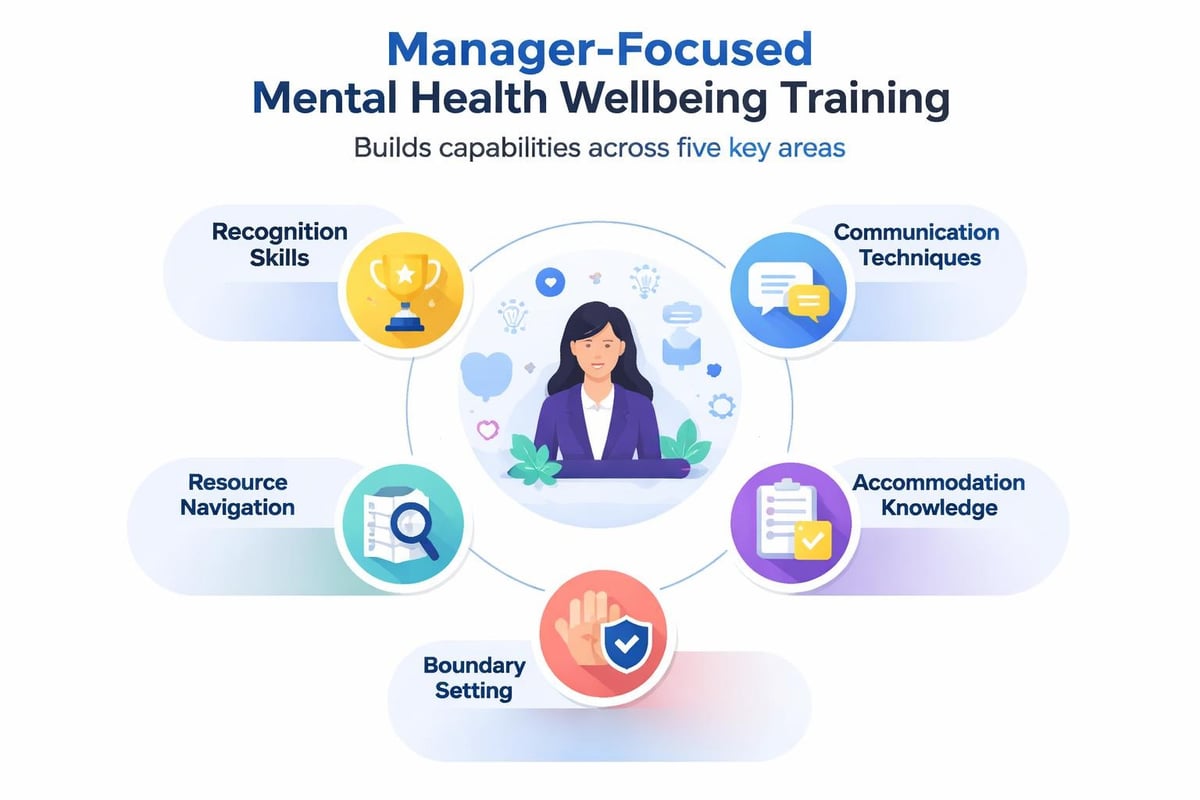
Training programs for managers emphasize three distinct competency areas: recognition, response, and resource coordination. Recognition training teaches observation skills that help managers notice changes in performance, behavior, or engagement that may signal distress. Response training develops conversational frameworks that balance empathy with appropriate professional boundaries.
Resource coordination ensures managers understand available support systems and referral pathways. This includes knowledge of employee assistance programs, health benefits, accommodation processes, and community resources. Managers learn to facilitate access without assuming clinical or therapeutic roles.
| Competency Area | Training Focus | Practical Application |
|---|---|---|
| Recognition | Behavioral observation, pattern identification | Noticing performance changes, attendance patterns |
| Response | Conversation frameworks, empathetic listening | Conducting check-in conversations, offering support |
| Resource Coordination | Navigation of support systems, referral processes | Connecting employees to EAP, benefits, accommodations |
| Boundary Setting | Role clarity, professional limits | Maintaining manager role while providing support |
Employee-Level Training Approaches
While manager training addresses supervisory responsibilities, employee-focused mental health wellbeing training builds personal resilience and peer support capabilities. These programs help individuals recognize their own mental health needs, develop coping strategies, and understand how to support colleagues appropriately.
Self-awareness represents a foundational element of employee training. Participants learn to identify their stress responses, recognize triggers, and implement evidence-based self-care strategies. This personal insight creates the foundation for sustainable wellbeing practices.
Peer Support and Mental Health First Aid
Structured peer support training, including approaches like mental health first aid, equips employees to provide initial assistance to colleagues experiencing mental health challenges. These programs teach the ALGEE action plan: Assess risk, Listen non-judgmentally, Give reassurance and information, Encourage appropriate professional help, and Encourage self-help strategies.
Peer support training differs fundamentally from clinical preparation. The emphasis remains on early intervention, reducing stigma, and facilitating professional help-seeking rather than providing treatment. Organizations implementing peer support programs report improved help-seeking behavior and reduced isolation among employees experiencing difficulties.
Specialized Training for Complex Workplace Scenarios
Certain workplace contexts require specialized mental health wellbeing training that addresses unique challenges. Organizations dealing with trauma exposure, high-stress environments, or vulnerable populations benefit from targeted educational programs.
Trauma-Informed Care Training
Trauma-informed approaches recognize the widespread impact of trauma and integrate this understanding into organizational practices. Training in trauma-informed care teaches participants to recognize trauma responses, avoid re-traumatization, and create safety through predictability and transparency.
This specialized training proves particularly valuable in healthcare, emergency services, education, and social service settings where trauma exposure occurs frequently. However, organizations across sectors increasingly adopt trauma-informed principles as foundational to psychologically safe workplaces.
The World Health Organization’s QualityRights e-training provides internationally recognized frameworks for rights-based, recovery-oriented mental health support that aligns with trauma-informed principles.
Crisis Response and Critical Incident Training
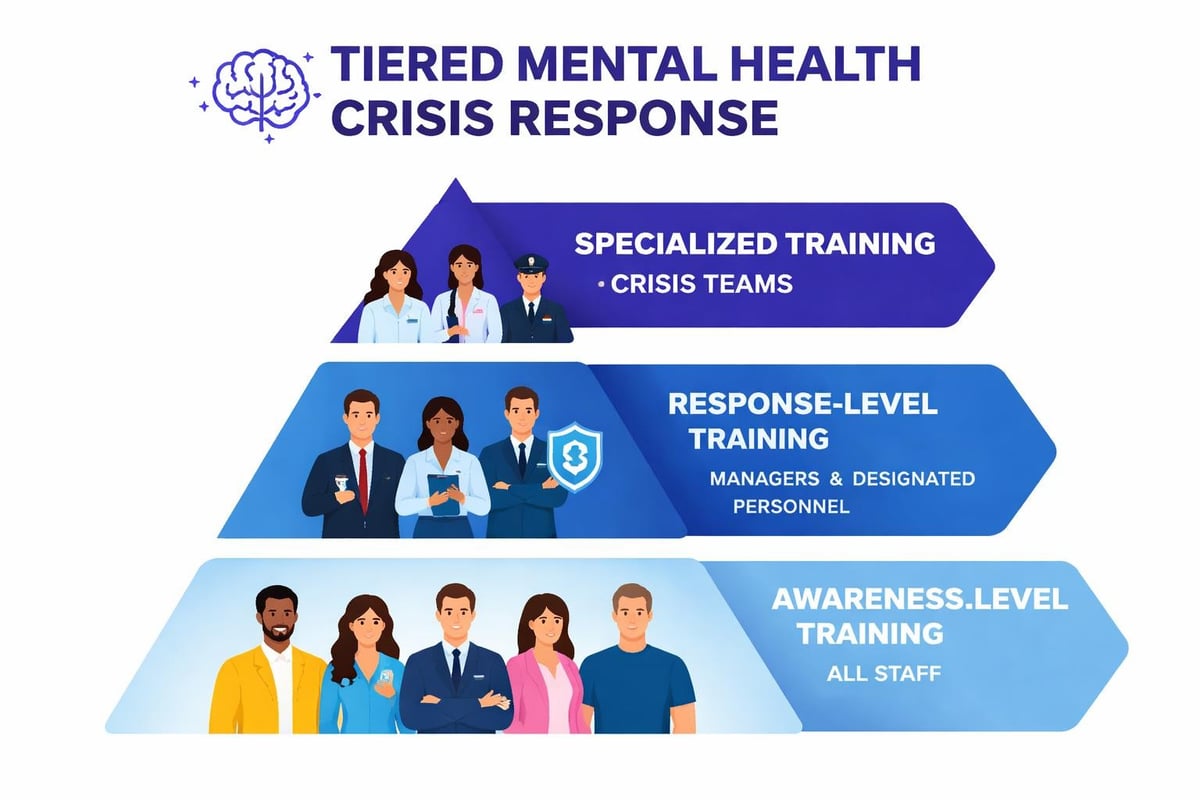
Mental health wellbeing training for crisis situations prepares designated personnel to respond effectively when employees experience acute distress, suicidal ideation, or psychological emergencies. This advanced training covers risk assessment, safety planning, emergency response protocols, and post-crisis support.
Organizations develop tiered response systems where trained personnel at various levels can activate appropriate interventions. Front-line staff learn initial response protocols, while specialized teams receive intensive preparation for complex situations.
Measuring Training Effectiveness and Impact
Evaluating mental health wellbeing training requires assessment frameworks that capture both immediate learning outcomes and longer-term behavioral and organizational changes. Effective measurement strategies employ multiple data sources and timeframes.
Multi-Level Evaluation Frameworks
Comprehensive evaluation examines training impact across four levels:
- Reaction: Participant satisfaction and perceived relevance
- Learning: Knowledge acquisition and skill development
- Behavior: Application of learning in workplace contexts
- Results: Organizational outcomes including absenteeism, retention, and productivity
The most valuable insights emerge from behavioral and results-level data, though these require longer assessment periods and more sophisticated measurement approaches. Organizations committed to evidence-based practice establish baseline metrics before implementing training and track changes systematically.
| Measurement Level | Assessment Methods | Timeline |
|---|---|---|
| Reaction | Post-session surveys, feedback forms | Immediate |
| Learning | Knowledge tests, skill demonstrations | End of training |
| Behavior | Manager observations, self-reports, 360 feedback | 3-6 months post-training |
| Results | Absence rates, turnover data, engagement surveys, performance metrics | 6-12 months post-training |
Sustained impact requires reinforcement beyond initial training delivery. Organizations achieving meaningful change implement ongoing education, provide refresher sessions, and integrate mental health competencies into performance expectations and leadership development pathways.
Implementing Organization-Wide Training Programs
Successful implementation of mental health wellbeing training requires strategic planning that addresses organizational readiness, resource allocation, and cultural integration. The most effective programs align training initiatives with broader workplace wellbeing strategies.
Readiness Assessment and Strategic Planning
Before launching comprehensive training, organizations benefit from assessing current mental health literacy, identifying gaps in knowledge and capability, and understanding existing barriers to help-seeking. Workplace wellbeing assessments provide baseline data that informs training design and helps establish realistic objectives.
Strategic planning involves determining training priorities, sequencing educational initiatives, and allocating sufficient resources for quality delivery. Organizations typically begin with leadership training to build champion networks before expanding to broader employee populations.
Effective mental health training can be tailored to different organizational contexts while maintaining evidence-based foundations. Programs should consider the needs of the workforce, workplace environment, organizational culture, and specific challenges employees and managers may face, ensuring that training remains relevant, practical, and applicable.
Overcoming Implementation Barriers
Common obstacles to successful training implementation include competing organizational priorities, budget constraints, scheduling challenges, and resistance rooted in stigma. Addressing these barriers requires clear communication about training value, flexible delivery formats, and visible leadership commitment.
Organizations overcome scheduling barriers through varied delivery methods: in-person workshops, online modules, hybrid formats, and microlearning approaches that distribute content across multiple brief sessions. The choice of format should align with organizational culture, workforce distribution, and learning objectives.
Cultural Competency and Inclusive Training Design
Mental health experiences and help-seeking behaviors vary significantly across cultural contexts. Effective mental health wellbeing training acknowledges this diversity and incorporates culturally responsive content and delivery approaches.
Addressing Diverse Perspectives and Experiences
Inclusive training design considers how cultural background, identity, and systemic factors influence mental health experiences. Programs incorporate diverse case studies, acknowledge different cultural frameworks for understanding distress, and address barriers specific to marginalized populations.
Training facilitators require preparation to navigate conversations about stigma, discrimination, and structural inequities that impact mental health. The most effective programs create space for participants to explore how their own cultural perspectives shape their understanding while building skills applicable across diverse contexts.
Integration with Broader Workplace Wellbeing Initiatives
Mental health wellbeing training achieves maximum impact when integrated with comprehensive workplace wellbeing strategies rather than implemented as isolated initiatives. Training provides knowledge and skills, while organizational policies, practices, and culture determine whether these capabilities can be applied effectively.
Connecting Training to Organizational Systems
Effective integration connects mental health training with existing human resources, occupational health and safety, leadership development, and employee wellbeing processes. Rather than treating training as a one-time initiative, organizations can reinforce mental health competencies through relevant policies, manager expectations, support pathways, and ongoing professional development.
Policy alignment is equally important. Flexible work arrangements, reasonable accommodations, clear referral pathways, and supportive return-to-work processes provide the infrastructure that enables managers and employees to apply what they learn in training. A coordinated approach helps ensure that mental health support is reflected not only in training but also in everyday workplace practices, leadership behaviours, and organizational systems.
Technology-Enhanced Training Delivery
Digital platforms expand access to mental health wellbeing training while enabling personalized learning pathways and ongoing skill reinforcement. Organizations increasingly adopt blended approaches that combine online modules with facilitated discussion and practical application exercises.
Online Learning Platforms and Microlearning
E-learning platforms allow organizations to deliver consistent foundational content across distributed workforces while tracking completion and assessing comprehension. Microlearning breaks complex topics into brief, focused modules that employees can complete during workflow breaks, reducing scheduling barriers.
Interactive elements including scenario simulations, decision-making exercises, and virtual role-plays enhance engagement and skill development. Advanced platforms incorporate adaptive learning that adjusts content difficulty based on participant performance, optimizing learning efficiency.
Organizations should balance technology benefits with the value of human connection in mental health education. The most effective programs use digital delivery for knowledge transfer while preserving facilitated sessions for skill practice, difficult conversations, and community building.
Sustaining Training Impact Over Time
Initial training creates awareness and builds foundational competencies, but sustained impact requires ongoing reinforcement, skill practice, and organizational support. Organizations achieving lasting change view mental health wellbeing training as continuous development rather than one-time events.
Refresher Training and Advanced Skill Development
Regular refresher sessions combat knowledge decay and provide opportunities to address emerging challenges. Advanced training pathways allow motivated employees to develop specialized expertise in areas like peer support coordination, trauma response, or mental health program development.
Organizations establish communities of practice where trained personnel share experiences, troubleshoot challenges, and support each other’s ongoing development. These networks reinforce learning, build organizational capacity, and demonstrate sustained commitment to mental health competency.
Performance support tools including job aids, conversation guides, and resource directories help trained personnel apply learned skills during actual workplace situations. These practical supports bridge the gap between training content and real-world application, increasing the likelihood that knowledge translates into behavioral change.
Comprehensive mental health wellbeing training equips organizations with the foundational capabilities needed to support employee psychological health while building cultures of awareness, empathy, and proactive response. When organizations invest strategically in evidence-based education, align training with broader wellbeing initiatives, and commit to sustained skill development, they create workplaces where mental health support becomes embedded in daily practice rather than crisis-driven reaction. Workplace Mental Health Institute offers specialized training programs and strategic consultation services designed to build these capabilities across all organizational levels, from foundational awareness to advanced trauma-informed care, helping organizations transform mental health knowledge into measurable workplace performance improvements.

