
Organizations that invest in mental health and wellbeing training create healthier, more productive workplaces while reducing costs associated with absenteeism, presenteeism, and employee turnover. As workplace mental health challenges continue to rise globally, training programs equip managers and employees with practical skills to recognize early warning signs, provide effective support, and build cultures of psychological safety. This comprehensive guide explores the essential components, implementation strategies, and measurable benefits of workplace mental health training programs.
Understanding Mental Health and Wellbeing Training Frameworks
Mental health and wellbeing training encompasses structured learning experiences designed to improve knowledge, skills, and confidence in addressing psychological health at work. These programs range from foundational awareness sessions to advanced certifications in specialized areas such as trauma-informed care and crisis intervention.
Core training components typically include:
- Recognition of common mental health conditions and their workplace manifestations
- Evidence-based communication techniques for supportive conversations
- Risk assessment protocols and escalation pathways
- Self-care strategies and resilience-building practices
- Legal and ethical considerations in mental health support
According to research on mental health literacy, effective training programs significantly improve participants’ ability to recognize mental health disorders, reduce stigma, and connect colleagues with appropriate resources. Organizations implementing comprehensive training see measurable improvements in help-seeking behaviors and reduced discrimination against employees experiencing mental health challenges.
Differentiating Training Levels and Audiences
Not all workplace training needs are identical. Strategic organizations develop tiered training programs that address different roles and responsibilities.
| Training Level | Target Audience | Duration | Focus Areas |
|---|---|---|---|
| Foundation | All employees | 2-4 hours | Awareness, stigma reduction, self-care |
| Intermediate | Team leaders, supervisors | 1-2 days | Supportive conversations, performance management |
| Advanced | HR professionals, wellbeing champions | 3-5 days | Crisis intervention, accommodation strategies |
| Specialized | Senior leadership | Half-day to full-day | Strategic planning, culture transformation |
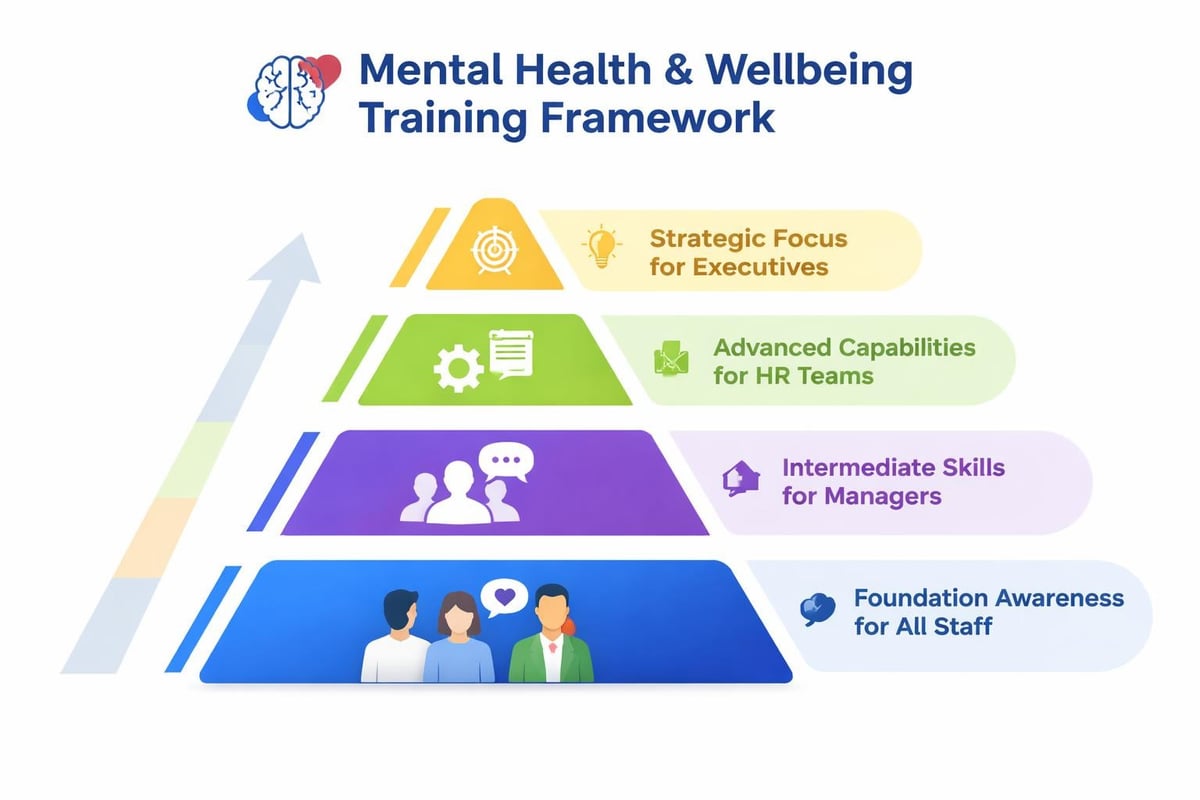
Managers require different competencies than frontline employees. While general awareness helps all team members understand mental health basics, supervisors need practical skills to navigate difficult conversations, adjust workloads appropriately, and implement reasonable accommodations without violating privacy or creating liability.
Essential Components of Effective Training Programs
High-quality mental health and wellbeing training balances theoretical knowledge with practical application. Programs that achieve lasting behavior change incorporate interactive learning methods, realistic scenarios, and ongoing reinforcement rather than one-time presentations.
Evidence-Based Curriculum Design
The most effective training programs draw from established frameworks like mental health first aid, which teaches a systematic approach to providing initial support until professional help is obtained. This standardized methodology ensures consistent, high-quality responses across organizations.
Key curriculum elements include:
- Recognition skills: Identifying changes in behavior, performance, or presentation that may indicate psychological distress
- Communication frameworks: Using non-judgmental language, active listening, and appropriate questioning techniques
- Resource navigation: Understanding internal and external support options, including Employee Assistance Programs
- Boundary management: Distinguishing between supportive management and therapeutic intervention
- Documentation practices: Recording concerns appropriately while respecting privacy requirements
Organizations should evaluate training content against current research and clinical guidelines. The American Mental Wellness Association’s education and training programs provide evidence-based models that organizations can adapt to their specific contexts.
Trauma-Informed Approaches
Progressive mental health and wellbeing training incorporates trauma-informed principles that recognize the widespread impact of trauma and create environments that avoid re-traumatization. This approach shifts organizational culture from “What’s wrong with you?” to “What happened to you?”
The six fundamental principles of trauma-informed practice include:
- Safety (physical and psychological)
- Trustworthiness and transparency
- Peer support and mutual self-help
- Collaboration and mutuality
- Empowerment, voice, and choice
- Cultural, historical, and gender considerations
Training managers in these principles reduces harmful responses to employees experiencing trauma-related difficulties and creates more supportive environments for recovery and performance. Organizations implementing trauma-informed training often report improved employee retention and reduced workplace conflicts.
Implementing Training Across Your Organization
Successful implementation requires more than scheduling sessions. Organizations must approach mental health and wellbeing training as a strategic initiative with executive sponsorship, adequate resources, and integration into broader wellbeing strategies.
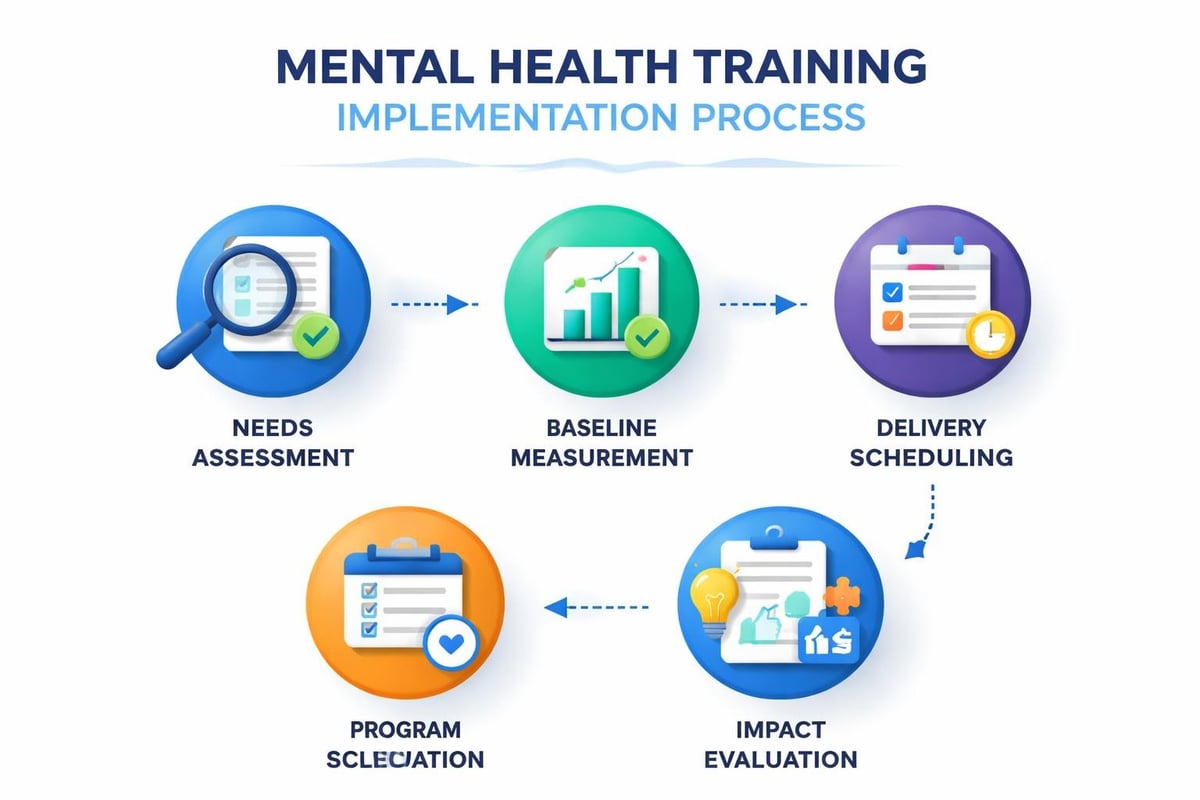
Strategic Planning and Needs Assessment
Before selecting training programs, conduct thorough needs assessments to identify specific gaps and priorities. Workplace wellbeing assessments provide baseline data on current mental health climate, existing support structures, and employee perceptions of psychological safety.
Assessment methods include:
- Anonymous employee surveys measuring mental health literacy and help-seeking attitudes
- Focus groups with diverse employee populations
- Review of absenteeism data, turnover patterns, and workers’ compensation claims
- Audit of current policies, procedures, and support resources
- Consultation with employee assistance providers and occupational health teams
This diagnostic work ensures training investments address actual organizational needs rather than generic content that fails to resonate with your workplace culture or challenges.
Delivery Methods and Accessibility Considerations
Modern training delivery blends multiple formats to accommodate diverse learning preferences, schedules, and accessibility requirements. Organizations can access quality programs through platforms like the Workplace Mental Health Institute, which offer flexible learning options for distributed teams.
| Delivery Method | Advantages | Considerations |
|---|---|---|
| In-person workshops | High engagement, immediate feedback, relationship building | Schedule coordination, venue costs, travel time |
| Live virtual sessions | Geographic flexibility, cost-effective, recordable | Technology requirements, potential for distraction |
| Self-paced online modules | Maximum flexibility, consistent content, trackable completion | Requires self-discipline, limited interaction |
| Blended programs | Combines benefits of multiple formats | More complex to coordinate and track |
Ensure all training materials meet accessibility standards, including captioning for videos, screen-reader compatibility for digital content, and materials available in multiple languages when serving diverse workforces. The National Council for Mental Wellbeing’s transformative trainings demonstrate inclusive design principles that organizations can emulate.
Measuring Training Impact and ROI
Organizations increasingly demand evidence that mental health and wellbeing training delivers tangible returns on investment. Robust evaluation frameworks track both leading indicators (knowledge gain, attitude shifts) and lagging indicators (absenteeism reduction, performance improvements).
Evaluation Metrics and Data Collection
Comprehensive evaluation occurs at multiple levels, adapting the Kirkpatrick model to mental health training contexts:
- Reaction: Participant satisfaction, perceived relevance, delivery quality
- Learning: Knowledge acquisition, skill demonstration, confidence levels
- Behavior: Application of learned skills, changed workplace practices
- Results: Organizational outcomes including reduced absenteeism, improved retention, enhanced productivity
Key performance indicators include:
- Pre- and post-training assessments of mental health literacy
- Manager confidence scores in handling mental health conversations
- Utilization rates of Employee Assistance Programs and internal resources
- Time-to-return-to-work metrics for employees on mental health leave
- Employee engagement and psychological safety survey scores
- Healthcare claims data related to mental health conditions
- Presenteeism measurements and productivity metrics
Organizations should establish baseline measurements before training implementation and conduct follow-up assessments at regular intervals (typically 3 months, 6 months, and 12 months post-training) to track sustained behavior change.
Financial Return Calculations
While mental health benefits extend beyond financial metrics, quantifying return on investment strengthens the business case for ongoing training investments. Conservative ROI calculations focus on measurable cost reductions and productivity gains.
Typical cost savings include:
- Reduced absenteeism (average cost per day of absence × reduction in days lost)
- Decreased turnover (recruitment and onboarding costs × reduction in departures)
- Lower disability and workers’ compensation claims
- Reduced presenteeism (productivity recovery × affected employee population)
- Healthcare cost containment through early intervention
Studies consistently demonstrate that comprehensive mental health and wellbeing training generates returns of $3 to $6 for every dollar invested when measuring these factors over a three-year period.
Building Sustainable Training Programs
One-time training events rarely create lasting organizational change. Sustainable programs embed ongoing learning, refresher sessions, and continuous improvement into workplace culture.
Reinforcement Strategies and Ongoing Support
Effective reinforcement approaches include:
- Quarterly refresher sessions addressing common challenges and emerging issues
- Manager coaching circles providing peer support and skill practice
- Resource libraries with quick-reference guides, conversation templates, and escalation protocols
- Integration of mental health competencies into performance management systems
- Recognition programs celebrating managers who effectively support employee wellbeing
Organizations should designate mental health champions or wellbeing committees to maintain momentum between formal training sessions. These advocates provide informal support, share resources, and model help-seeking behaviors that normalize mental health conversations.
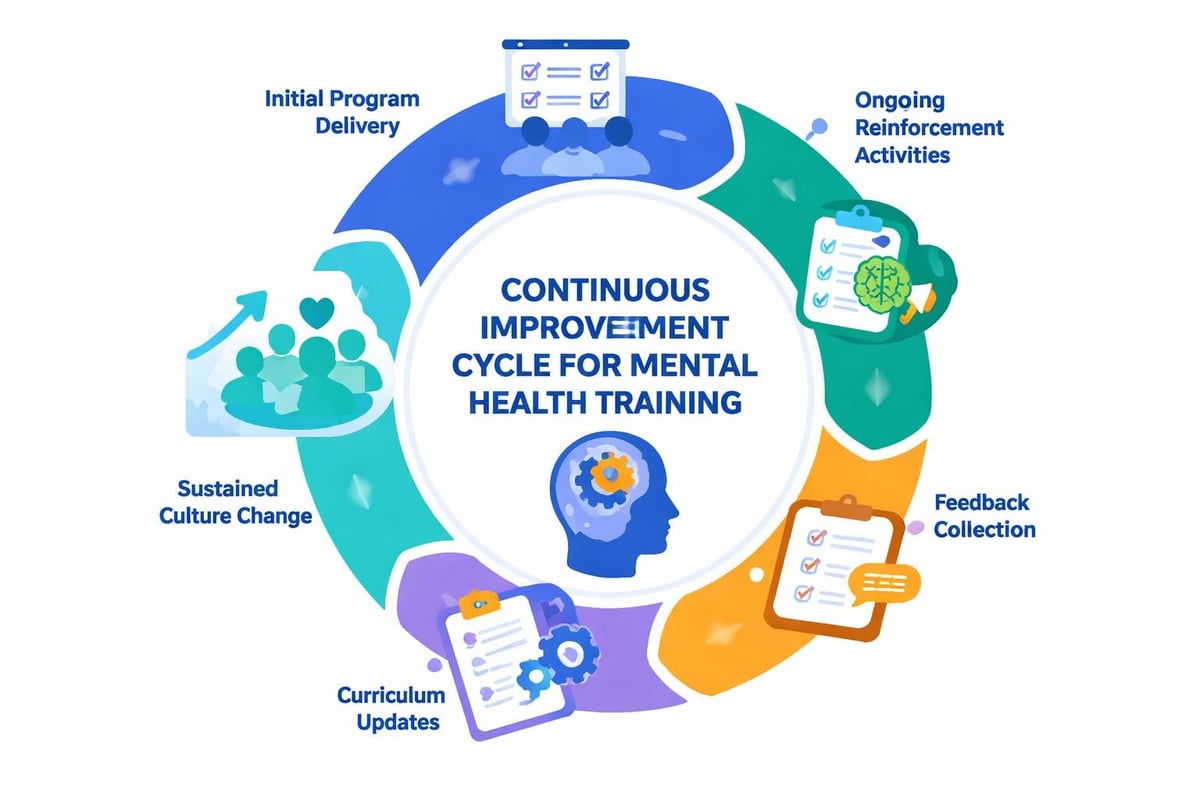
The WHO’s QualityRights e-training program demonstrates how global organizations can maintain quality and consistency while adapting content to local contexts and evolving best practices.
Adapting to Evolving Workplace Challenges
Mental health and wellbeing training must evolve alongside changing workplace dynamics. Current training programs increasingly address:
- Hybrid and remote work considerations: Supporting employees you rarely see in person, recognizing distress through digital communication, maintaining connection across distributed teams
- Digital wellbeing: Managing always-on culture, addressing technology-related stress, supporting healthy boundaries
- Generational diversity: Tailoring approaches for different age groups with varying attitudes toward mental health disclosure
- Social and environmental stressors: Acknowledging impacts of climate anxiety, social justice concerns, economic uncertainty, and global events on employee mental health
Organizations partnering with specialists like Workplace Mental Health Institute gain access to continuously updated content reflecting current research, emerging challenges, and evolving best practices in workplace mental health support.
Specialized Training Applications
Beyond foundational programs, organizations may require specialized mental health and wellbeing training for unique contexts, high-risk roles, or specific organizational challenges.
Crisis Response and Critical Incident Training
Certain industries and roles face elevated exposure to traumatic events, workplace violence, or crisis situations requiring specialized response capabilities.
Specialized crisis training covers:
- Immediate response protocols for workplace mental health emergencies
- Psychological first aid techniques for supporting colleagues after critical incidents
- Coordination with emergency services and mental health professionals
- Post-incident debriefing facilitation
- Organizational recovery and return-to-normal operations
These programs prepare designated response teams to act effectively during high-stress situations while maintaining their own psychological wellbeing. Organizations in healthcare, emergency services, education, and customer-facing industries particularly benefit from this advanced preparation.
Industry-Specific Considerations
Effective mental health and wellbeing training acknowledges sector-specific challenges and regulatory requirements:
| Industry | Specific Training Needs |
|---|---|
| Healthcare | Compassion fatigue, moral injury, death and dying, vicarious trauma |
| Education | Student mental health concerns, parent interactions, school safety incidents |
| First Responders | PTSD awareness, cumulative trauma, shift work impacts |
| Retail/Hospitality | Customer aggression, irregular schedules, job insecurity |
| Technology | Burnout prevention, imposter syndrome, work-life integration |
Customized programs addressing these sector-specific realities demonstrate greater relevance and generate stronger participant engagement than generic content. Community-level approaches to mental health recognize these contextual factors in program design.
Integration with Broader Wellbeing Strategies
Mental health and wellbeing training achieves maximum impact when integrated into comprehensive workplace wellbeing strategies rather than implemented as isolated initiatives.
Policy and Procedure Alignment
Training effectiveness increases dramatically when organizational policies, procedures, and practices reinforce learned concepts. Review and update:
- Leave policies: Ensure mental health conditions receive equitable treatment with physical health issues
- Accommodation procedures: Streamline processes for requesting and implementing workplace adjustments
- Performance management: Incorporate supportive conversation frameworks and early intervention approaches
- Recruitment and onboarding: Communicate organizational commitment to mental health from the first interaction
- Health benefits: Provide adequate mental health coverage, low barriers to access, and diverse treatment options
Inconsistencies between training content and actual workplace practices create cynicism and undermine behavior change. Employees quickly recognize when organizations talk about mental health support but maintain policies that penalize help-seeking or accommodate only physical health needs.
Leadership Accountability and Modeling
Executive leadership plays a critical role in normalizing mental health conversations and demonstrating that support-seeking reflects strength rather than weakness. Leaders who complete mental health and wellbeing training alongside their teams send powerful messages about organizational priorities.
Leadership responsibilities include:
- Sharing appropriate personal experiences with stress, mental health challenges, or support-seeking
- Publicly recognizing managers who effectively support employee wellbeing
- Allocating resources (time, budget, personnel) to mental health initiatives
- Holding leaders accountable for creating psychologically safe team environments
- Regularly reviewing mental health metrics alongside traditional business indicators
Organizations with strong leadership commitment achieve participation rates 40-60% higher than those where training is delegated to HR without executive involvement.
Investing in comprehensive mental health and wellbeing training creates measurable benefits for employees and organizations while building cultures of psychological safety, trust, and resilience. The most successful programs combine evidence-based content, practical skill development, ongoing reinforcement, and integration with broader wellbeing strategies. Workplace Mental Health Institute specializes in delivering customized training programs, trauma-informed care certification, and strategic consultation that help organizations improve employee mental health, reduce absenteeism, and enhance overall workplace performance through positive, empowering approaches tailored to your specific industry and organizational context.

