
Mental health awareness australia has evolved from a peripheral workplace concern into a strategic imperative for organizations nationwide. As Australian businesses navigate complex psychological safety requirements and increasing employee wellbeing expectations, understanding the landscape of mental health awareness becomes essential for sustainable organizational performance. This comprehensive guide explores evidence-based approaches, regulatory frameworks, and practical strategies that position mental health awareness as a core business function rather than an optional initiative.
The Current State of Mental Health Awareness Australia
Australian workplaces face unprecedented mental health challenges, with recent data indicating that approximately one in five Australians experience mental health conditions annually. The financial impact extends beyond individual suffering, with mental health statistics revealing substantial workplace costs through absenteeism, presenteeism, and turnover.
Mental health awareness in Australia encompasses more than recognition of symptoms. It requires organizational commitment to prevention, early intervention, and sustained support systems. The movement has gained momentum through coordinated efforts between government bodies, industry associations, and mental health organizations.
National Framework and Legislative Context
Australia’s approach to workplace mental health operates within a comprehensive regulatory framework. The Fair Work Act, Work Health and Safety legislation, and emerging psychosocial hazard regulations establish employer obligations that extend beyond physical safety to psychological wellbeing.
Organizations must now demonstrate proactive management of psychosocial risks, including workload demands, role clarity, interpersonal relationships, and organizational change. This legislative shift positions mental health awareness as a compliance requirement alongside a moral imperative.
Key regulatory considerations include:
- Identification and assessment of psychosocial hazards
- Implementation of risk control measures
- Regular monitoring and review processes
- Consultation with workers on mental health initiatives
- Documentation of mental health awareness strategies
Building Organizational Mental Health Literacy
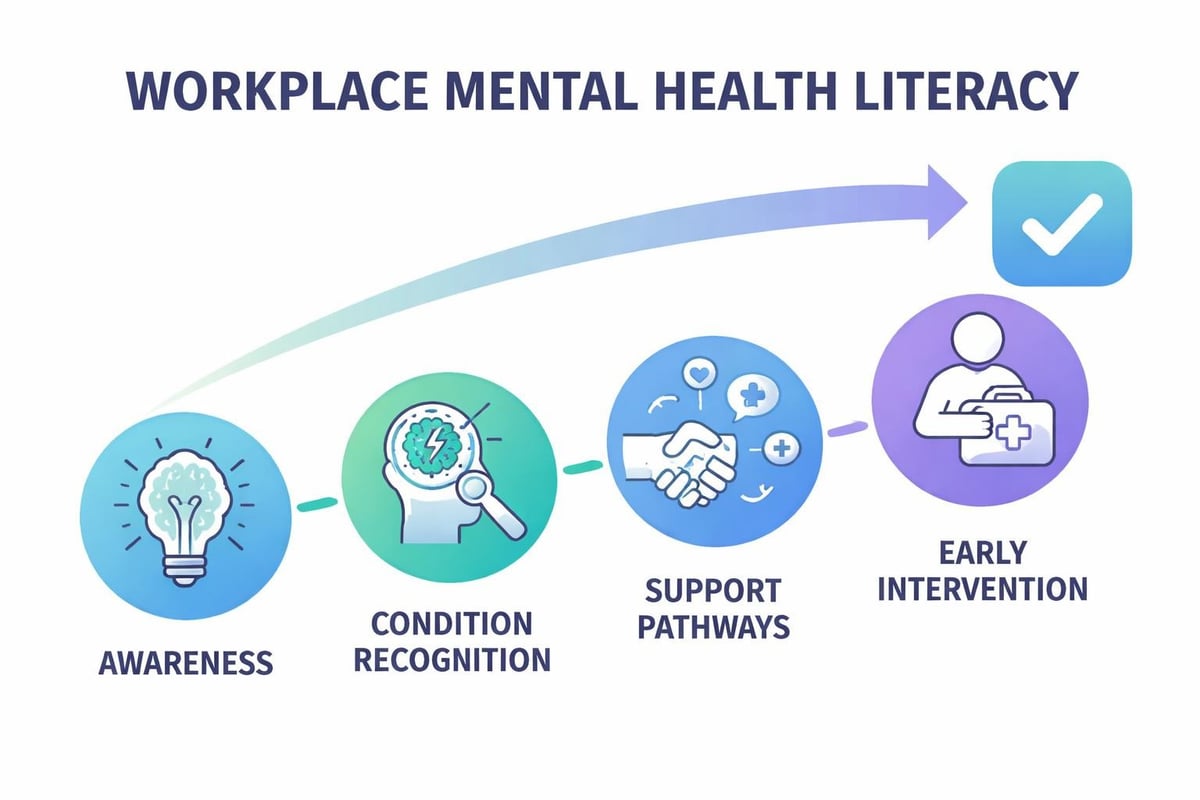
Mental health literacy represents the foundation of effective awareness programs. Leaders and employees require accurate knowledge about mental health conditions, recognition of warning signs, and confidence in supporting colleagues experiencing psychological distress.
Training Programs for Different Organizational Levels
Effective mental health awareness initiatives in Australia should be tailored to the different roles and responsibilities within an organization. Employees benefit from building mental health awareness, recognizing signs of concern, and understanding how to access or provide appropriate support. Managers require additional practical skills to recognize changes in behaviour or performance, have supportive conversations, manage psychosocial risks, and connect employees with appropriate resources. Senior leaders need a broader strategic understanding of how mental health, psychological safety, and wellbeing can be integrated into organizational culture, policies, and workplace practices.
| Role Level | Core Competencies | Training Focus |
|---|---|---|
| Senior Leadership | Strategic planning, resource allocation, culture setting | Business case, organizational design, systemic integration |
| Middle Management | Conversation skills, reasonable adjustments, performance management | Recognition, response, accommodation, boundary setting |
| All Employees | Self-care, help-seeking, peer support | Awareness, stigma reduction, resource navigation |
Manager training should emphasize practical conversation frameworks rather than diagnostic expertise. The goal involves creating psychologically safe environments where employees feel comfortable disclosing struggles and accessing support without fear of career consequences.
Evidence-Based Awareness Approaches
Successful mental health awareness australia programs incorporate multiple evidence-based elements rather than relying on single interventions. Research consistently demonstrates that comprehensive, sustained approaches outperform one-off awareness events.
The most effective programs integrate:
- Psychoeducation sessions that normalize mental health experiences and correct misconceptions
- Skill-building workshops focused on stress management, resilience, and psychological flexibility
- Environmental modifications that reduce workplace stressors and enhance protective factors
- Leadership modeling where senior staff openly prioritize wellbeing and appropriate disclosure
- Accessible support pathways with clear guidance on employee assistance programs and external resources
Organizations should avoid awareness approaches that pathologize normal stress responses or create impression that mental health solely represents individual responsibility. Structural and systemic factors significantly influence workplace mental health outcomes.
Integrating Mental Health Awareness Into Workplace Culture
Cultural integration distinguishes performative mental health awareness from substantive organizational commitment. Authentic integration requires alignment between stated values and daily practices, visible leadership engagement, and sustained resource allocation.
Measuring Cultural Readiness and Progress
Assessment provides baseline understanding and tracks improvement over time. Mental health culture measurement extends beyond employee satisfaction surveys to examine specific indicators of psychological safety, stigma levels, and help-seeking behaviors.
Recommended measurement approaches include:
- Regular pulse surveys on psychological safety perceptions
- Analysis of employee assistance program utilization patterns
- Focus groups exploring barriers to disclosure and support-seeking
- Review of accommodation request patterns and outcomes
- Exit interview analysis for mental health-related departures
Data collection must balance insight gathering with privacy protection. Aggregate, de-identified information allows pattern recognition without compromising individual confidentiality.
Communication Strategies That Reduce Stigma
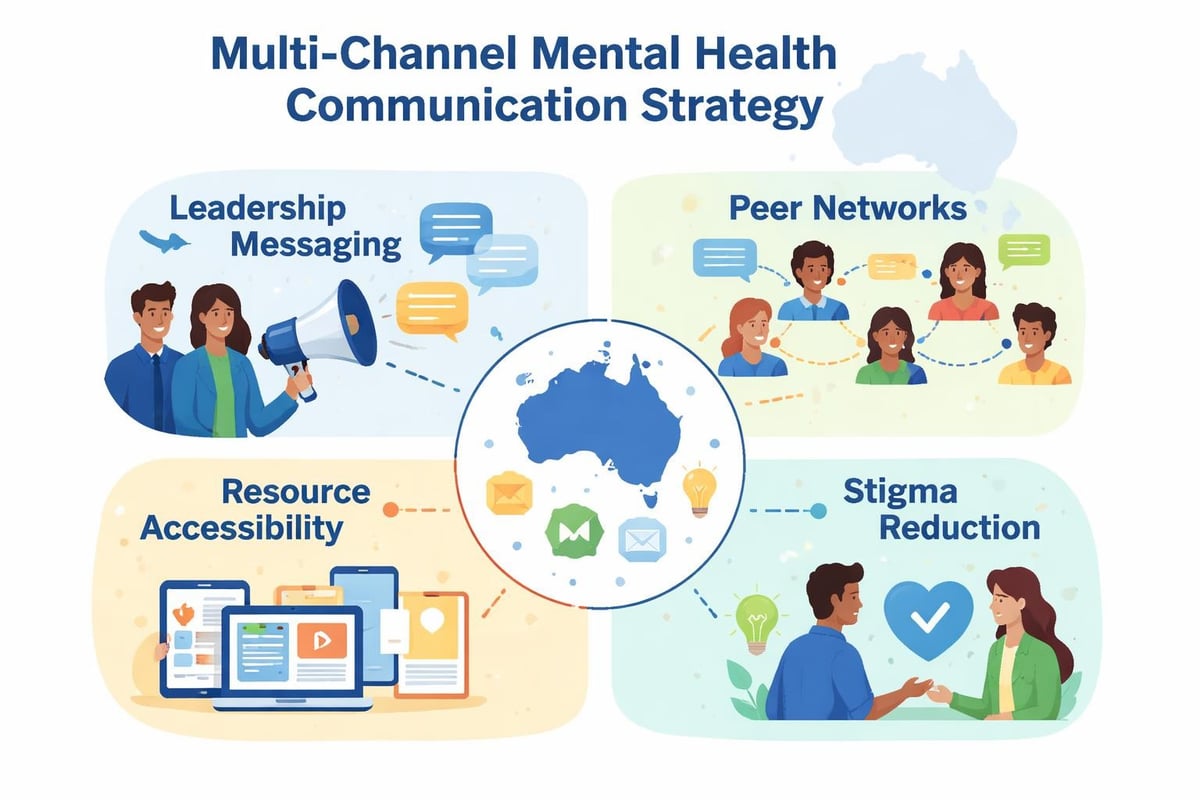
Language choices significantly influence mental health stigma within workplaces. Mental health awareness australia initiatives should adopt person-first language, avoid sensationalized terminology, and frame mental health conditions as manageable rather than career-limiting.
Effective communication strategies incorporate diverse voices and lived experiences. Sharing recovery narratives and successful accommodation stories demonstrates that mental health challenges need not define professional capabilities or limit career progression.
Strategic Implementation for Australian Organizations
Implementation success requires systematic planning rather than reactive responses to crises. Organizations benefit from structured implementation frameworks that sequence activities, allocate responsibilities, and establish accountability mechanisms.
Phased Rollout Framework
Strategic mental health awareness australia programs typically follow phased implementation allowing for learning, adjustment, and capacity building. Attempting comprehensive change simultaneously often overwhelms organizational resources and dilutes impact.
Phase 1: Foundation Building (Months 1-3)
- Secure executive sponsorship and resource commitment
- Conduct baseline organizational assessment
- Establish governance structures and working groups
- Develop communication and engagement strategy
Phase 2: Awareness and Education (Months 4-9)
- Launch organization-wide awareness campaigns
- Implement role-specific training programs
- Introduce mental health champions or peer support networks
- Enhance employee assistance program accessibility
Phase 3: Integration and Sustainability (Months 10-18)
- Embed mental health considerations into policies and procedures
- Integrate wellbeing metrics into performance dashboards
- Establish continuous improvement processes
- Build internal capability for ongoing program delivery
Connecting With National Mental Health Initiatives
Australian organizations can strengthen their internal mental health efforts by connecting with national awareness campaigns, events, and broader community initiatives. World Mental Health Day provides an annual opportunity to focus attention on mental health, while ongoing partnerships and engagement with mental health organizations can help sustain awareness beyond individual campaigns or events.
Australia’s broader mental health sector has contributed to decades of advocacy, policy development, and reform, providing a foundation for contemporary approaches to workplace mental health. Organizations can benefit from aligning internal initiatives with relevant national priorities and public messaging, helping create greater consistency between workplace and community efforts.
Participation in industry-specific mental health initiatives can also support benchmarking, shared learning, and the exchange of practical approaches. Many sectors have developed resources and programs that address their particular occupational risks, workforce characteristics, and workplace cultures, allowing organizations to adapt broader mental health principles to their specific context.
Supporting Specific Population Groups
Mental health awareness must acknowledge diverse experiences across different demographic groups. Age, cultural background, gender identity, disability status, and other factors influence both mental health risk and help-seeking patterns.
Culturally Responsive Awareness Programs
Australia’s multicultural workforce requires culturally informed mental health approaches. Cultural factors shape mental health conceptualization, symptom expression, preferred support sources, and treatment engagement.
Organizations should:
- Provide multilingual mental health resources and support options
- Engage cultural consultants in program design and delivery
- Train managers in culturally responsive conversation approaches
- Partner with culturally specific mental health services
- Acknowledge different help-seeking preferences and healing practices
Generational Considerations in Mental Health Awareness
Different generational cohorts demonstrate varying comfort levels with mental health disclosure and support-seeking. Younger workers often show greater openness to mental health discussions, while experienced workers may face internalized stigma from earlier career experiences.
| Generation | Typical Attitudes | Engagement Strategies |
|---|---|---|
| Baby Boomers | Privacy-oriented, self-reliant | Confidential pathways, leadership endorsement |
| Generation X | Pragmatic, skeptical of corporate initiatives | Evidence-based approaches, practical tools |
| Millennials | Open to discussion, value authenticity | Peer support, flexible work arrangements |
| Generation Z | Mental health fluent, expect organizational action | Digital resources, immediate access options |
Effective programs offer multiple engagement pathways accommodating different preferences rather than assuming universal approaches suit all employees.
Technology and Digital Mental Health Awareness
Digital platforms extend mental health awareness australia reach while addressing traditional barriers including geographic isolation, scheduling conflicts, and privacy concerns. Technology-enabled solutions complement rather than replace human support and face-to-face interventions.
Digital Tool Selection Criteria
The proliferation of mental health apps and platforms requires careful evaluation. Organizations should assess digital tools against established criteria including evidence base, data security, accessibility features, and integration capabilities.
Priority evaluation areas include:
- Clinical foundation – Tools developed with mental health professional input using evidence-based approaches
- Privacy protection – Robust data security meeting Australian privacy standards and health information requirements
- User experience – Intuitive navigation, accessibility compliance, and mobile optimization
- Outcome measurement – Built-in tracking allowing individuals and organizations to monitor effectiveness
- Cultural appropriateness – Content and imagery reflecting Australian context and diverse populations
Organizations should pilot digital tools with representative employee groups before full deployment, gathering feedback on usability, relevance, and perceived value.
Balancing Digital and Human Approaches
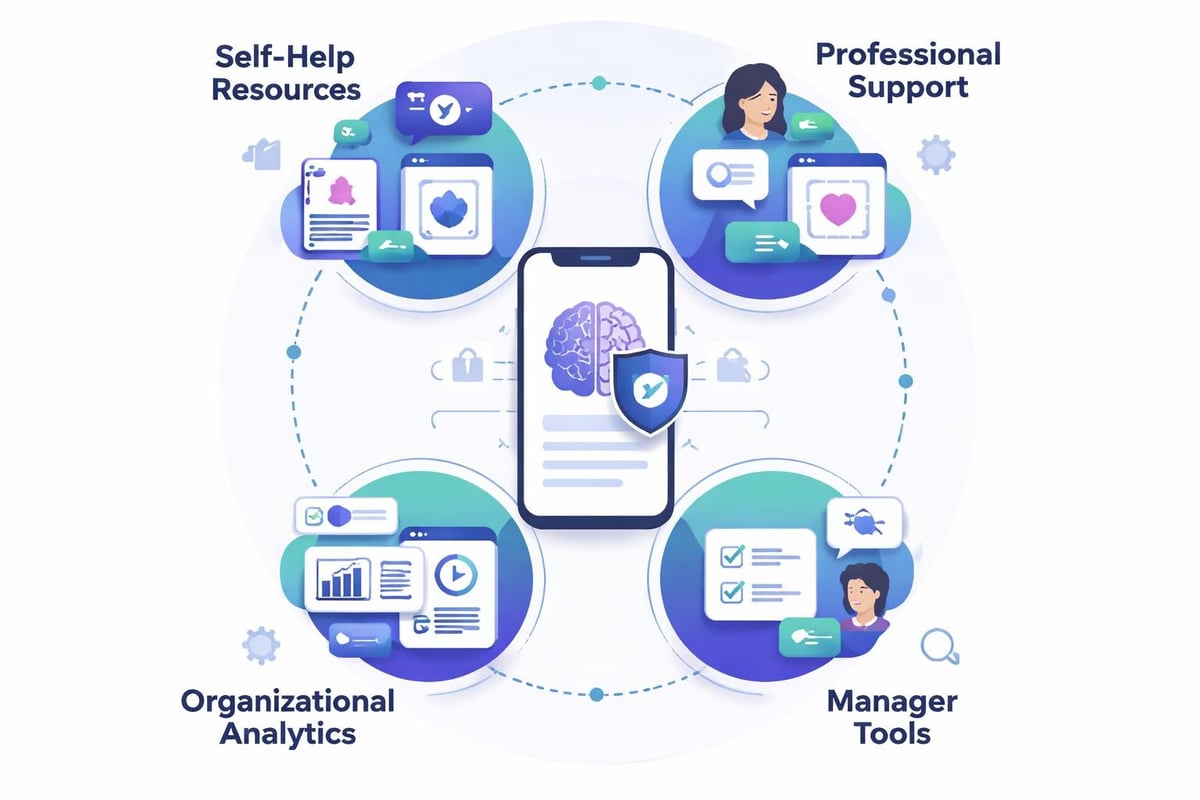
Technology optimizes mental health awareness delivery but cannot replace human connection and professional clinical support. The most effective strategies blend digital convenience with interpersonal engagement opportunities.
Digital tools excel at:
- On-demand access to psychoeducation and self-help resources
- Anonymous screening and assessment
- Guided self-management programs
- Appointment scheduling and service navigation
- Progress tracking and outcome monitoring
Human support remains essential for:
- Complex mental health conditions requiring clinical intervention
- Crisis response and immediate safety concerns
- Nuanced workplace accommodation discussions
- Building trust and psychological safety
- Cultural adaptation and personalized approaches
Manager Capability Development
Managers represent the critical link between organizational mental health awareness australia policies and employee experience. Manager capability directly influences whether employees feel safe disclosing struggles, accessing accommodations, and maintaining employment during mental health challenges.
Core Manager Competencies
Effective mental health awareness for managers transcends basic recognition training. Managers require sophisticated skills balancing employee support with performance management, confidentiality with team transparency, and compassion with professional boundaries.
Essential manager capabilities include:
- Recognizing changes in employee behavior, performance, or presentation that may indicate distress
- Initiating supportive conversations without overstepping into therapeutic roles
- Navigating performance concerns when mental health factors may be involved
- Implementing workplace accommodations and monitoring effectiveness
- Maintaining appropriate confidentiality while managing team dynamics
- Accessing specialized support when situations exceed management expertise
Training should emphasize practical application through scenario-based learning, role-play exercises, and ongoing coaching rather than solely information delivery. Managers benefit from regular skill refreshers and peer learning opportunities to share challenges and strategies.
Supporting Manager Wellbeing
Managers themselves experience elevated mental health risks due to role demands, competing priorities, and exposure to team member distress. Organizations must recognize this dual dynamic where managers simultaneously support others while requiring support themselves.
Dedicated manager wellbeing initiatives should include peer support networks, specialized employee assistance services, leadership coaching, and explicit permission to prioritize self-care. Organizational cultures that expect managers to demonstrate invulnerability create barriers to effective mental health awareness implementation.
Return to Work and Ongoing Support
Mental health awareness in Australia extends beyond prevention and early intervention to include recovery support and sustainable return-to-work practices. Employees returning after mental health challenges may benefit from graduated and flexible approaches that support their recovery while balancing individual needs with workplace responsibilities and performance expectations.
Evidence-Based Return to Work Planning
Successful mental health-related return to work involves collaborative planning between employee, manager, health professionals, and human resources. Rigid, one-size-fits-all approaches often precipitate relapse or premature resignation.
Effective return to work elements include:
- Medical clearance with specific functional capacity information rather than simple “fit” or “unfit” declarations
- Graduated hours or duties allowing progressive increase as recovery consolidates
- Environmental modifications addressing workplace factors that contributed to initial difficulties
- Regular check-ins with manager and health professionals monitoring progress and adjustment needs
- Flexibility for ongoing treatment accommodating therapy appointments and medical follow-up
- Relapse prevention planning identifying early warning signs and agreed response strategies
Documentation should focus on functional requirements and accommodations rather than diagnostic details. Managers need sufficient information to provide appropriate support without accessing unnecessary medical information.
Long-Term Monitoring and Adjustment
Mental health conditions often involve episodic patterns requiring ongoing monitoring and periodic accommodation adjustment. Organizations should establish systems for regular wellbeing check-ins, accommodation reviews, and proactive support rather than waiting for crisis recurrence.
| Monitoring Timeframe | Focus Areas | Recommended Actions |
|---|---|---|
| First 30 Days | Adjustment, workload management | Weekly manager check-ins, accessible support |
| 1-3 Months | Capacity building, accommodation effectiveness | Fortnightly reviews, gradual responsibility increase |
| 3-6 Months | Sustainability, integration | Monthly touchpoints, formal accommodation review |
| 6-12 Months | Independence, prevention | Quarterly wellness discussions, relapse prevention planning |
Long-term support demonstrates genuine organizational commitment to mental health awareness australia beyond initial intervention, building employee trust and loyalty.
Measuring Return on Investment
Mental health awareness programs require resource investment including training costs, program administration, and accommodation expenses. Organizations appropriately seek evidence that investments generate meaningful returns through improved employee wellbeing and organizational performance.
Quantifiable Metrics and Indicators
Comprehensive evaluation examines multiple outcome domains rather than single metrics. Mental health awareness australia impact manifests across employee health, organizational performance, and cultural indicators.
Primary measurement domains include:
- Absenteeism rates – Short-term absence frequency and mental health-related leave duration
- Turnover patterns – Voluntary resignation rates and exit interview mental health themes
- Productivity indicators – Performance metrics, presenteeism measures, and output quality
- Engagement scores – Employee survey results on psychological safety, support, and belonging
- Incident rates – Workers compensation claims, critical incidents, and workplace conflicts
- Program utilization – Training participation, employee assistance program access, and resource engagement
Baseline measurement before program implementation enables meaningful comparison and demonstrates change over time. Organizations should plan for 12-24 month evaluation timeframes recognizing that cultural change requires sustained effort.
Communicating Value to Leadership
Translating mental health awareness australia outcomes into business language helps secure ongoing executive support and resource allocation. Financial metrics resonate with leadership while humanizing data through employee stories demonstrates real-world impact.
Effective business cases connect mental health awareness to strategic priorities including talent attraction and retention, innovation capacity, customer service quality, and risk management. Positioning mental health as strategic enabler rather than cost center shifts organizational conversations.
Building Sustainable Momentum
Initial enthusiasm for mental health awareness australia often wanes without deliberate sustainability strategies. Organizations must transition from project-based approaches to embedded business-as-usual practices that persist through leadership changes and competing priorities.
Creating Accountability Structures
Formal accountability mechanisms prevent mental health awareness from becoming aspirational rather than operational. Clear ownership, defined responsibilities, and regular reporting maintain focus and momentum.
Recommended accountability structures include:
- Executive sponsor with direct oversight and resource authority
- Cross-functional steering committee meeting quarterly
- Dedicated program coordinator with protected time allocation
- Integration into manager performance expectations and evaluation
- Board-level reporting on mental health metrics and initiatives
- Budget allocation treated as strategic investment rather than discretionary expense
Accountability extends to celebrating successes and recognizing contributors. Public acknowledgment of managers demonstrating excellent mental health support, teams implementing innovative wellbeing practices, and individuals sharing recovery stories reinforces desired behaviors.
Continuous Improvement Processes
Mental health awareness in Australia evolves as research advances, workforce demographics shift, and organizational contexts change. Regular program review and enhancement ensures ongoing relevance and effectiveness.
Annual review processes should examine:
- Utilization patterns identifying underused resources requiring promotion or redesign
- Feedback themes from employees, managers, and mental health professionals
- Emerging evidence on effective interventions and implementation strategies
- Regulatory changes affecting organizational obligations
- Demographic trends influencing mental health needs and preferences
- Benchmark comparisons with industry peers and leading practice examples
Continuous improvement positions mental health awareness as dynamic organizational capability rather than static program, encouraging innovation and adaptation.
Building comprehensive mental health awareness across Australian workplaces requires strategic planning, sustained commitment, and evidence-informed approaches that address both individual needs and systemic factors. Organizations that invest in manager capability, cultural integration, and accessible support systems create environments where employees thrive psychologically while driving superior business outcomes. Workplace Mental Health Institute delivers specialized training programs, workplace wellbeing assessments, and strategic consultation that transform mental health awareness from concept into practical organizational capability, equipping leaders and teams with skills to build psychologically safe, high-performing workplaces.

