
The rapid evolution of workplace mental health awareness has created unprecedented demand for accessible, evidence-based professional development. Organizations now recognize that supporting employee psychological wellbeing requires more than good intentions; it demands structured competency development at every level. Mental health training online has emerged as a practical solution that combines flexibility with rigor, allowing managers, HR professionals, and frontline leaders to build essential skills without disrupting operational continuity. This shift toward digital learning platforms reflects both technological advancement and the growing sophistication of workplace mental health approaches that prioritize prevention, early intervention, and systemic cultural change.
Understanding Digital Mental Health Education Models
Mental health training online encompasses diverse educational approaches designed to build psychological literacy and intervention competencies. These programs range from foundational awareness courses to advanced certifications in specialized areas like trauma-informed care, crisis response, and resilience facilitation.
Core program categories include:
- Foundational mental health literacy for all employees
- Manager-specific courses on supportive conversations and accommodation
- HR professional training in policy development and systemic intervention
- Specialized certifications in trauma-informed practices or suicide prevention
- Executive education focused on strategic wellbeing integration
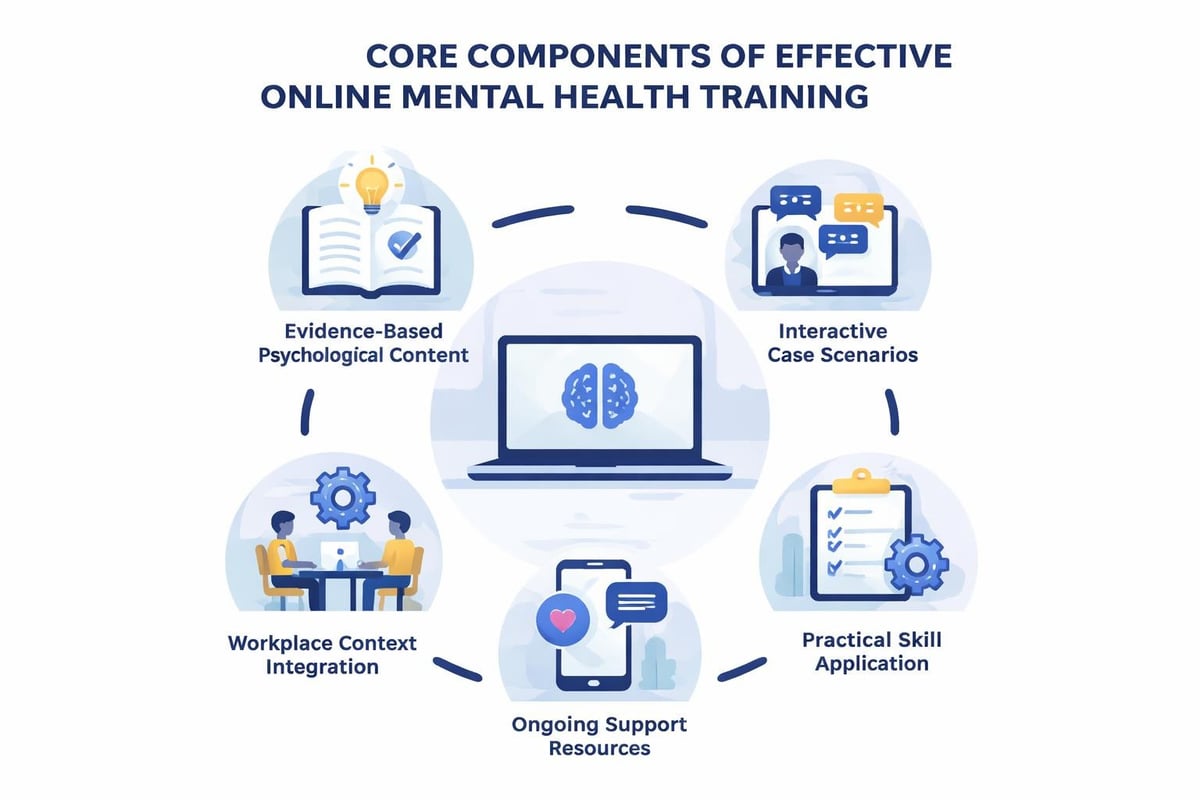
The effectiveness of digital delivery depends heavily on pedagogical design. High-quality mental health training online incorporates case-based learning, interactive scenarios, and opportunities for skill practice rather than passive information consumption. Research-backed programs align with established psychological frameworks while translating theory into actionable workplace behaviors.
Accreditation and Quality Standards
Not all online mental health education meets professional standards. Credible programs demonstrate alignment with recognized competency frameworks and psychological best practices. Organizations should evaluate training providers based on evidence foundations, facilitator credentials, and outcome measurement approaches.
The distinction between awareness-level education and professional development matters significantly. While general mental health literacy serves valuable purposes, roles involving direct support responsibility require deeper competency building. The American Mental Health Counselors Association establishes standards for professional mental health education that inform quality benchmarks even in workplace-focused programs.
Australian organizations seeking locally relevant content benefit from providers understanding regulatory contexts, cultural considerations, and regional resource ecosystems. WMHI Australia delivers training aligned with Australian workplace health and safety frameworks while incorporating international evidence.
Building Manager Competency Through Digital Platforms
Managers represent the critical interface between organizational mental health strategy and employee experience. Mental health training online designed for leadership roles focuses on developing practical conversational skills, risk assessment capabilities, and appropriate referral knowledge.
Effective manager training addresses specific scenarios leaders encounter: performance concerns potentially linked to psychological distress, disclosure conversations, return-to-work coordination, and team-level wellbeing promotion. These situations require nuanced judgment that balances support with operational accountability.
| Training Component | Traditional Approach | Digital Enhancement |
|---|---|---|
| Scenario practice | Role-play workshops | Interactive branching simulations |
| Expert guidance | Single-day presentation | On-demand video modules with specialists |
| Skill reinforcement | Post-training hope | Spaced learning sequences and micro-content |
| Peer learning | Cohort limitations | Asynchronous discussion forums across locations |
Digital platforms enable iterative skill development that traditional workshops cannot match. Managers access relevant modules when facing actual situations, creating just-in-time learning opportunities. Spaced repetition approaches embed knowledge more effectively than concentrated training events.
Psychological Safety in Learning Environments
The online format offers unique advantages for sensitive content. Participants exploring their own mental health understanding or confronting biases may feel greater psychological safety in private digital settings compared to group workshops. This privacy supports genuine reflection and attitude shift.
However, digital delivery also presents challenges for building trust and facilitating vulnerable discussion. High-quality mental health training online incorporates community-building elements, confidential discussion opportunities, and clear ethical boundaries around content sharing.
MindSpot Clinic demonstrates how online platforms effectively deliver evidence-based psychological interventions, principles that inform training design in workplace contexts.
Evidence-Based Content and Adult Learning Principles
Professional mental health training online must balance psychological accuracy with accessibility for non-clinical audiences. Content development requires translating research findings into practical frameworks without oversimplifying complex phenomena or promoting harmful myths.
Essential content domains include:
- Mental health continuum and common workplace presentations
- Psychological safety principles and stigma reduction
- Supportive conversation frameworks and active listening
- Boundaries between support and treatment
- Trauma-informed approaches to policies and interactions
- Crisis recognition and response protocols
- Self-care and vicarious trauma prevention for supporters
Adult learning principles emphasize relevance, autonomy, and application. Effective programs connect content directly to participants’ responsibilities, allow self-paced progression through material, and provide immediate opportunities to apply concepts in workplace contexts.
The integration of AI-enhanced learning tools is expanding capabilities within mental health education. Research on AI-based psychological services suggests technology can scale access to quality mental health content, though human expertise remains central for nuanced workplace application.
Trauma-Informed Training as Organizational Foundation
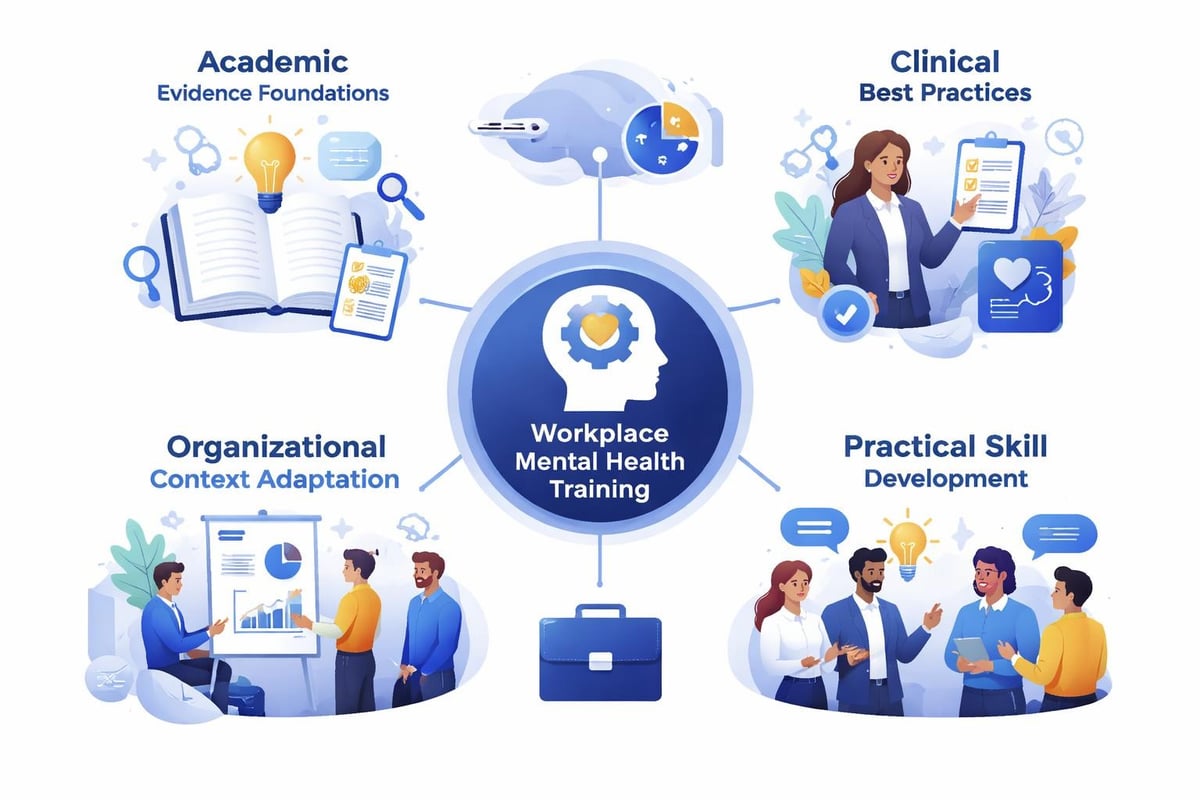
Trauma-informed approaches have become foundational to comprehensive workplace mental health strategies. Mental health training online increasingly incorporates trauma awareness, recognizing that many employees carry experiences affecting their workplace functioning and needs.
Trauma-informed training teaches participants to recognize potential trauma responses, avoid re-traumatization through organizational practices, and create environments supporting recovery and resilience. This perspective shifts organizational culture from “What’s wrong with you?” to “What happened to you?”
Implementing Trauma-Sensitive Practices
Organizations implementing trauma-informed approaches require training at multiple levels. Leadership education focuses on policy implications and resource allocation. Manager training emphasizes interaction patterns and accommodation approaches. Frontline employee training builds general awareness and self-advocacy skills.
Digital delivery allows organizations to scale trauma-informed education across geographically dispersed teams while maintaining content consistency. Workplace Mental Health Institute offers specialized trauma-informed care training that translates clinical frameworks into practical organizational applications.
The ethical considerations surrounding trauma content in workplace settings demand careful attention. Training must educate without demanding disclosure, build awareness without creating hypervigilance, and empower without overwhelming. Quality programs establish clear boundaries around content depth appropriate for workplace versus clinical contexts.
Measuring Training Impact and Behavioral Transfer
The ultimate value of mental health training online lies not in completion rates but in sustained behavior change and organizational outcomes. Measurement approaches should assess multiple levels: participant knowledge acquisition, attitude shifts, skill application, and systemic workplace indicators.
Evaluation framework components:
- Pre/post knowledge assessments measuring content retention
- Behavioral observation or simulation performance
- Participant confidence in applying skills
- Manager reported use of supportive practices
- Employee perception of psychological safety and support availability
- Organizational metrics including absence patterns and support service utilization
- Cultural indicators like stigma reduction and help-seeking normalization
Rigorous evaluation distinguishes between training completion and genuine competency development. Organizations investing in mental health training online should demand transparent outcome reporting from providers and conduct internal assessment of program impact.
The challenge of behavioral transfer from training to workplace practice represents a persistent concern. Digital programs addressing this challenge incorporate implementation planning, environmental prompts, manager accountability structures, and refresher content to sustain skill application over time.
Technology Integration and Accessibility Considerations
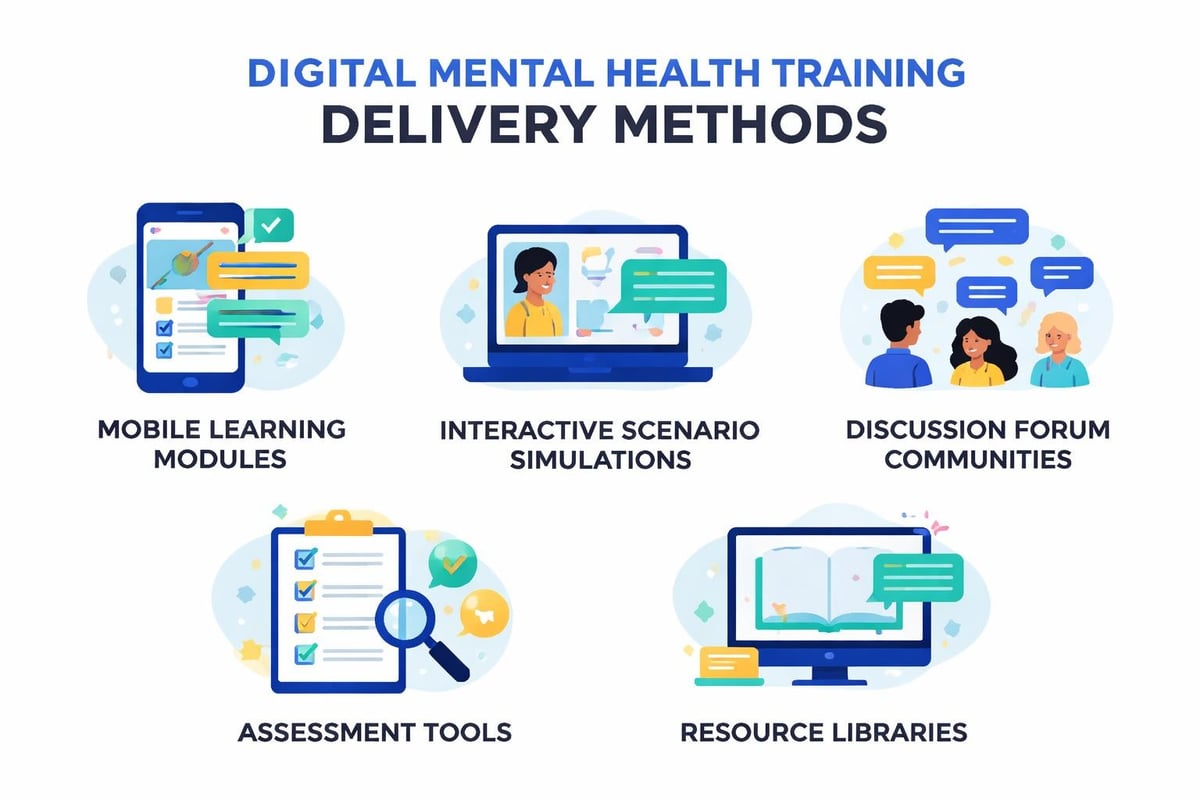
Modern mental health training online leverages diverse technological capabilities beyond basic video delivery. Interactive elements, adaptive learning paths, mobile accessibility, and integration with learning management systems enhance effectiveness and reach.
| Technology Feature | Training Application | Accessibility Benefit |
|---|---|---|
| Mobile-responsive design | Learning during commute or downtime | Increases completion for shift workers |
| Closed captioning | Video content accessibility | Supports hearing impairment and non-native speakers |
| Transcript availability | Reading preference accommodation | Serves different learning styles and pace needs |
| Offline download options | Access without reliable connectivity | Enables rural and remote participation |
| Multiple language options | Culturally diverse workforce inclusion | Reduces language barriers to learning |
Organizations must evaluate whether training platforms meet accessibility standards and serve their specific workforce demographics. Consider literacy levels, technology comfort, language diversity, and disability accommodation needs when selecting mental health training online programs.
Emerging technologies including virtual reality simulations and AI-enhanced practice partners are expanding training possibilities. Research frameworks for assessing AI conversational agents in mental health inform quality standards as these tools enter workplace training contexts.
Specialized Training for HR and Wellbeing Professionals
HR professionals and designated wellbeing leads require deeper mental health training online than general employee programs. These roles involve policy development, accommodation coordination, vendor management, and strategic wellbeing planning that demands sophisticated understanding.
Advanced training for HR audiences addresses legal and ethical frameworks, disability accommodation processes, return-to-work coordination, critical incident response, and wellbeing program evaluation. Content must integrate employment law, psychological principles, and organizational development perspectives.
The complexity of HR mental health responsibilities increases as organizations move beyond basic compliance toward proactive wellbeing cultures. Professionals in these roles benefit from ongoing professional development rather than one-time training events. Subscription-based access to evolving content libraries supports continuous learning aligned with emerging research and practice innovations.
Strategic Consultation and Implementation Support
Mental health training online proves most effective when embedded within broader organizational strategies. HR professionals trained in both psychological content and change management can bridge the gap between individual skill development and systemic cultural transformation.
Organizations serious about mental health often combine training with strategic consultation that assesses current state, identifies priority areas, and develops phased implementation plans. Workplace Mental Health Institute provides this integrated approach, connecting training programs with workplace wellbeing assessments and ongoing strategic support.
Building Psychological Safety Through Organizational Learning
When entire organizations engage with mental health training online, the cumulative effect extends beyond individual competency to cultural shift. Shared language, normalized conversations, and collective skill development create environments where psychological safety flourishes.
Organizational learning approaches involve coordinated training across levels with content tailored to each role’s responsibilities while maintaining common foundational understanding. Executives learn to model vulnerability and allocate resources. Managers develop supportive leadership practices. Employees gain self-advocacy skills and peer support capabilities.
Phased implementation typically follows this sequence:
- Executive education establishing strategic commitment and resource allocation
- HR and wellbeing professional deep-dive training on systems and policies
- Manager skill development for direct support and team culture
- Employee awareness and self-care education
- Ongoing refresher content and advanced topic modules
- Measurement and continuous improvement cycles
The timing and sequencing of training rollout influences adoption and cultural integration. Organizations achieving meaningful impact avoid one-time events in favor of sustained learning journeys that reinforce concepts through multiple touchpoints.
Gender-Specific and Demographic Considerations
Mental health experiences and help-seeking patterns vary across demographic groups, requiring training content that acknowledges diversity without stereotyping. Gender-responsive approaches recognize that men, for example, may face distinct barriers to accessing support and benefit from tailored outreach.
HeadsUpGuys demonstrates how targeted mental health resources address specific population needs, principles that inform inclusive workplace training design. Programs serving diverse workforces incorporate multiple perspectives and avoid assuming universal experiences.
Cultural competency within mental health training online extends beyond cultural awareness to practical skills for navigating diverse belief systems, communication styles, and support preferences. Trainers and content developers from varied backgrounds contribute essential perspectives that strengthen program relevance.
Age diversity also influences training needs and preferences. Multi-generational workforces benefit from content acknowledging different career stages, life circumstances, and mental health literacy starting points while avoiding generational stereotypes.
Certification Pathways and Professional Development
Organizations developing internal mental health champion networks or peer support programs require structured certification pathways that validate competency and establish quality standards. Mental health training online increasingly offers formal credentials ranging from participation certificates to professional certifications.
Certification programs typically involve assessment components verifying knowledge acquisition and skill demonstration. More rigorous credentials may require supervised practice hours, ongoing professional development, or recertification cycles ensuring current knowledge.
The distinction between workplace mental health training and clinical mental health education remains important. Workplace programs prepare non-clinical staff for supportive roles within appropriate boundaries, not therapeutic practice. Quality training explicitly addresses scope limitations and referral responsibilities.
The Association for Child and Adolescent Mental Health offers professional development resources demonstrating how specialized mental health education serves different practitioner communities, a model applicable to workplace-focused training pathways.
Mental health training online represents a practical, scalable approach to building organizational capacity for supporting employee psychological wellbeing while developing essential leadership competencies. Success requires selecting evidence-based programs, implementing strategically across organizational levels, and measuring impact beyond completion metrics. Organizations committed to genuine cultural transformation can leverage comprehensive training as a foundation for broader wellbeing strategies that reduce stigma, normalize help-seeking, and create psychologically safe work environments. Workplace Mental Health Institute partners with organizations to deliver tailored mental health training and strategic wellbeing consultation that translates evidence into sustainable workplace practice.

