
Educators operate at the intersection of academic instruction and student development, uniquely positioned to identify early warning signs of mental health concerns and provide essential support. Mental health training for educators has evolved from optional professional development to a critical competency, particularly as schools face increasing rates of anxiety, depression, and behavioral challenges among students. Effective training programs equip teachers, administrators, and support staff with evidence-based skills to recognize distress, respond appropriately, facilitate referrals, and maintain their own psychological wellbeing within demanding educational environments.
Why Mental Health Training Matters in Educational Settings
The classroom environment serves as a primary detection point for mental health concerns affecting young people. Teachers spend more waking hours with students than many parents do, providing unparalleled opportunities for observation and early intervention. Without adequate training, however, educators often struggle to differentiate between typical developmental challenges and symptoms requiring professional attention.
Research demonstrates that untrained educators frequently misinterpret mental health symptoms, delay necessary referrals, or respond in ways that inadvertently escalate situations. Mental health training for educators addresses these gaps by building foundational literacy around common conditions, evidence-based intervention strategies, and appropriate boundaries for school-based support.
Impact on Student Outcomes
Schools implementing comprehensive mental health training programs report measurable improvements across multiple domains:
- Earlier identification of students experiencing psychological distress
- Reduced stigma surrounding mental health discussions
- Increased referral accuracy to appropriate support services
- Improved academic performance among students receiving timely intervention
- Decreased disciplinary incidents related to unaddressed mental health needs
Organizations such as the Mental Health Literacy for Educators program provide structured curricula that translate clinical knowledge into practical classroom applications, ensuring teachers develop actionable skills rather than theoretical understanding alone.
Addressing Educator Wellbeing
Training programs exclusively focused on student mental health overlook a critical reality: educators themselves experience elevated rates of burnout, compassion fatigue, and psychological distress. Comprehensive mental health training for educators must incorporate self-care strategies, boundary setting, and resilience-building techniques that protect the mental health of those providing support.
The Workplace Mental Health Institute emphasizes this dual focus in training design, recognizing that sustainable support systems require psychologically healthy educators. Programs that neglect staff wellbeing create unsustainable models where helpers become casualties of systems they’re meant to strengthen.
Essential Components of Effective Training Programs
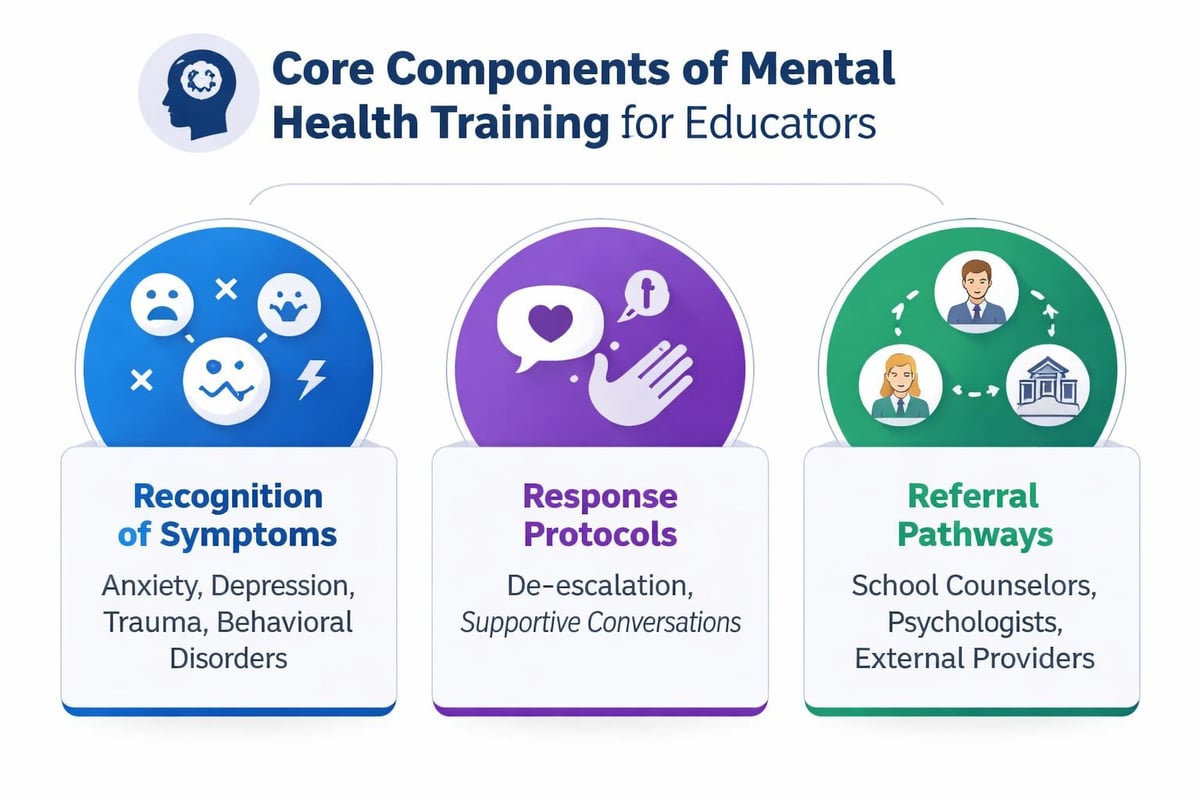
High-quality mental health training for educators encompasses specific competency domains, each requiring dedicated instruction and practice opportunities. Generic awareness sessions fail to produce behavioral change; effective programs instead build progressive skill development across interconnected areas.
Mental Health Literacy Foundation
Training begins with accurate knowledge of prevalent conditions affecting students and colleagues. This foundation includes:
| Condition Category | Key Learning Objectives | Application Skills |
|---|---|---|
| Anxiety Disorders | Recognition of excessive worry, avoidance patterns, physical symptoms | Accommodation strategies, classroom modifications |
| Depressive Disorders | Identification of persistent sadness, withdrawal, performance decline | Supportive communication, appropriate check-ins |
| Trauma Responses | Understanding of behavioral dysregulation, hypervigilance, dissociation | Trauma-informed classroom management |
| Neurodevelopmental Conditions | Differentiation of ADHD, autism spectrum presentations | Evidence-based instructional adaptations |
The California Department of Education’s mental health resources provide frameworks for building this literacy systematically, moving educators beyond superficial awareness toward genuine competency.
Practical Response Skills
Knowledge without application skills produces limited impact. Effective mental health training for educators dedicates substantial time to practicing specific response techniques:
- Initiating supportive conversations with students showing concerning changes
- De-escalating acute distress using evidence-based calming strategies
- Assessing immediate safety concerns including self-harm and suicidal ideation
- Documenting observations appropriately while maintaining confidentiality
- Facilitating warm handoffs to mental health professionals
Role-playing exercises, case study analysis, and supervised practice sessions transform theoretical knowledge into embodied competencies that educators can deploy under real classroom pressures.
Referral Pathways and Systems Navigation
Even well-trained educators require clear systems for connecting students with specialized support. Training programs must map specific referral pathways within each school context, identifying who provides what level of intervention and how transitions occur between tiers of support.
Understanding these systems prevents both delayed intervention and inappropriate attempts to provide clinical treatment beyond an educator’s scope. The implementation resources from Mental Health Instruction offer templates for developing clear protocols that match each school’s unique resource configuration.
Designing Trauma-Informed Educational Environments
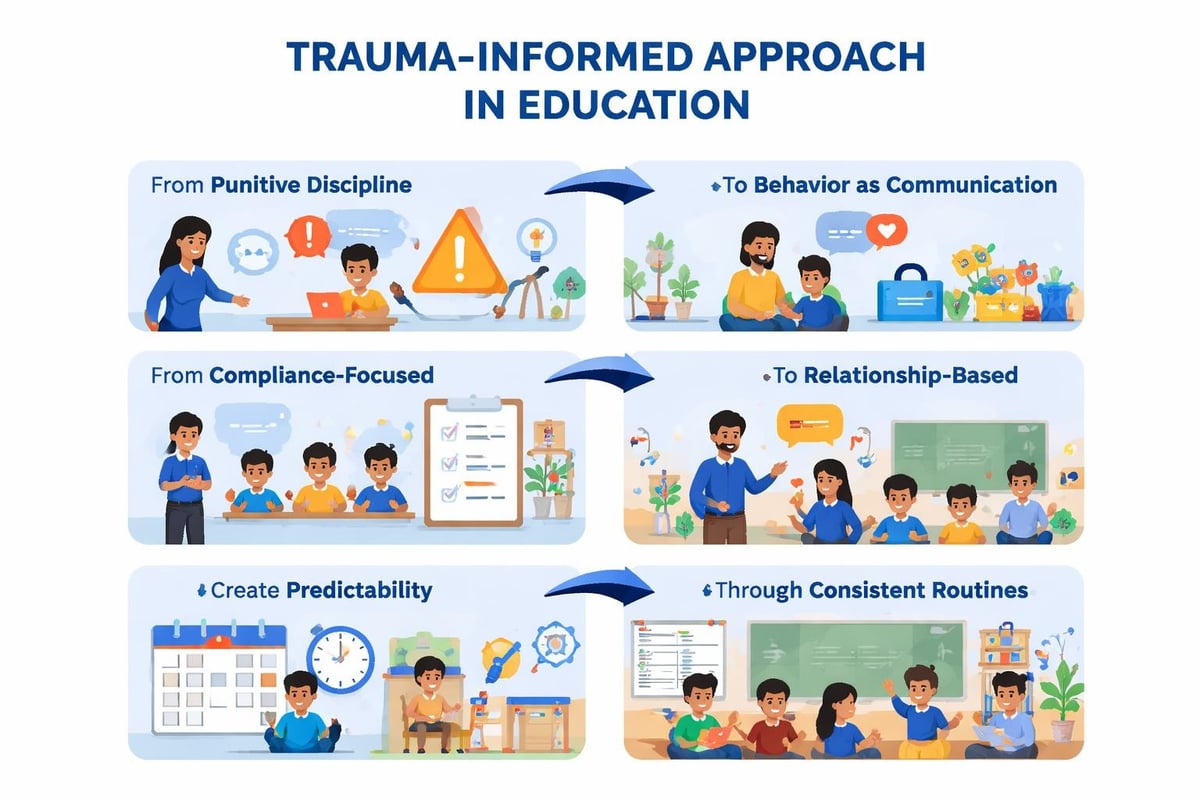
Mental health training for educators increasingly emphasizes trauma-informed approaches that recognize the prevalence of adverse childhood experiences and their impact on learning, behavior, and relationships. This framework shifts perspective from “What’s wrong with this student?” to “What has happened to this student?”
Core Principles of Trauma-Informed Practice
Trauma-informed educational environments operate according to six fundamental principles that should permeate all training content:
- Safety: Creating physical and emotional security throughout school environments
- Trustworthiness: Maintaining transparency and consistency in policies and interactions
- Peer Support: Leveraging collaborative relationships among students and staff
- Collaboration: Sharing power and decision-making appropriately
- Empowerment: Recognizing strengths and building on existing capacities
- Cultural Responsiveness: Acknowledging identity, background, and lived experience
Training programs offered through Workplace Mental Health Institute integrate these principles across all modules, ensuring trauma-informed practice becomes foundational rather than supplementary.
Recognizing Trauma Responses in Educational Settings
Students affected by trauma display diverse behavioral patterns that untrained educators often misinterpret as defiance, laziness, or disrespect. Effective training builds recognition of common trauma responses:
Fight responses may manifest as aggression, oppositional behavior, or emotional outbursts. Flight responses appear as avoidance, school refusal, or dissociation during challenging tasks. Freeze responses present as shutdown, inability to respond to questions, or appearing “spaced out” during instruction.
Understanding these patterns as adaptive survival mechanisms rather than intentional misbehavior fundamentally changes educator responses, replacing punishment with support and consequences with skill-building.
Building Organizational Capacity Beyond Individual Training
While individual educator competency matters, sustainable mental health support requires whole-school approaches that embed training within broader organizational culture and systems. Isolated training events produce minimal lasting impact without supportive infrastructure.
Multi-Tiered Training Frameworks
Comprehensive mental health training for educators should follow tiered implementation models:
| Tier Level | Target Audience | Training Intensity | Skills Focus |
|---|---|---|---|
| Universal | All staff members | 6-12 hours annually | Mental health literacy, self-care, basic recognition |
| Targeted | Teachers, counselors | 20-40 hours total | Assessment, intervention, crisis response |
| Intensive | Mental health leads | 60+ hours plus supervision | Program coordination, consultation, complex case management |
This differentiated approach ensures appropriate skill depth for various roles while building shared language and understanding across the entire school community. Resources from the Pennsylvania Department of Education demonstrate how state-level initiatives can support tiered training implementation.
Integration with Existing School Systems
Mental health training achieves maximum impact when integrated with established processes rather than creating parallel systems. Effective programs connect mental health competencies to:
- Professional learning communities where educators discuss student progress
- Response to Intervention frameworks addressing academic and behavioral needs
- Student support team meetings coordinating multi-disciplinary interventions
- Parent-teacher communication protocols involving families appropriately
- Staff supervision structures providing ongoing skill development and support
This integration prevents mental health initiatives from becoming add-ons that compete for limited time and attention, instead weaving them into the fabric of daily educational practice.
Measuring Training Effectiveness and Organizational Impact
Rigorous evaluation distinguishes high-performing mental health training for educators from programs that consume resources without producing meaningful outcomes. Organizations should establish measurement frameworks before training begins, clarifying specific outcomes the investment should generate.
Individual Competency Assessment
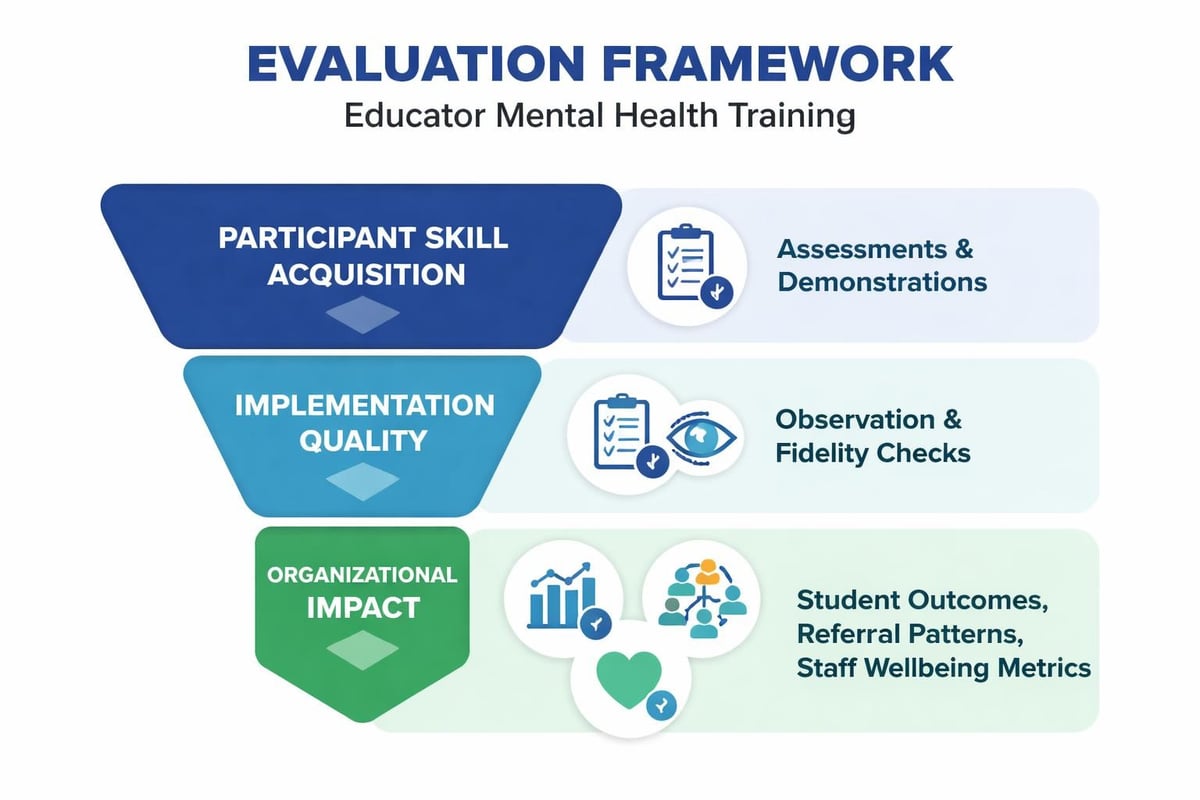
Training effectiveness begins with measuring whether participants actually acquire intended skills. Assessment methods include:
- Pre-post knowledge tests measuring mental health literacy gains
- Skill demonstration exercises evaluating application competencies
- Confidence surveys tracking perceived preparedness across domains
- Behavioral observation documenting skill use in authentic contexts
These individual metrics verify that training design produces learning, identifying content areas requiring refinement or additional practice opportunities.
Organizational Outcome Metrics
Beyond individual skill acquisition, effective programs generate measurable organizational improvements:
Student-level indicators track changes in academic performance, attendance patterns, disciplinary referrals, and completion of mental health screenings. Referral metrics monitor identification rates, referral timeliness, and appropriateness of concerns reported to mental health professionals.
Staff wellbeing measures assess educator stress levels, job satisfaction, burnout symptoms, and retention rates. System efficiency data examine wait times for mental health services, follow-through on recommendations, and family engagement in support planning.
Australian educational organizations can access specialized measurement tools through WMHI Australia that align with national frameworks and standards.
Sustaining Skills Through Ongoing Development
Initial training events provide essential foundations, but skill degradation occurs without regular reinforcement and advancement opportunities. Sustainable mental health training for educators requires longitudinal development pathways rather than one-time workshops.
Structured Refresher Cycles
Skills maintenance demands systematic refresher training addressing:
- Knowledge updates incorporating new research and evidence-based practices
- Skill practice sessions preventing competency erosion over time
- Case consultation opportunities applying skills to complex real-world situations
- Self-assessment exercises identifying individual development needs
Organizations should schedule refresher training at minimum annually, with brief reinforcement activities occurring quarterly to maintain skill accessibility during critical moments.
Communities of Practice
Peer learning communities create ongoing skill development through collaborative problem-solving. Educators benefit from regular opportunities to:
- Discuss challenging cases with colleagues facing similar situations
- Share successful strategies and learn from each other’s innovations
- Normalize the emotional impact of supporting students with mental health needs
- Collectively address systemic barriers preventing effective support
These communities reduce isolation while accelerating skill development through distributed expertise. The American Mental Wellness Association’s training programs incorporate community-building elements that extend learning beyond formal instruction periods.
Advanced Specialization Pathways
Educators demonstrating strong foundational competencies benefit from advanced training opportunities in specialized areas such as suicide prevention, eating disorder recognition, psychosis early intervention, or substance use concerns. These specialization pathways create in-house expertise while providing professional development that enhances career satisfaction.
Online learning platforms like WMHI Online offer flexible access to advanced coursework that accommodates educators’ scheduling constraints while maintaining rigorous learning standards.
Implementation Considerations for Educational Organizations
Successful rollout of mental health training for educators requires careful attention to organizational readiness, resource allocation, and change management. Programs implemented without adequate preparation frequently encounter resistance, poor engagement, or premature abandonment.
Leadership Commitment and Modeling
Administrative support determines whether mental health initiatives thrive or languish. Effective implementation requires leadership that:
Participates directly in training rather than delegating attendance solely to frontline staff. Allocates protected time for both initial training and ongoing practice development. Removes barriers to skill application by adjusting policies and procedures that conflict with trauma-informed approaches. Celebrates progress through recognition of educators successfully supporting student mental health.
Without visible, sustained leadership commitment, mental health training becomes another compliance exercise rather than genuine organizational transformation.
Resource Alignment
Quality training requires financial investment, time allocation, and infrastructure development. Organizations should budget for:
| Resource Category | Typical Requirements | Cost Considerations |
|---|---|---|
| Training Delivery | Expert facilitators, materials, venues | $150-$400 per participant for comprehensive programs |
| Time Release | Substitute coverage, extended contracts | Varies by district size and contract terms |
| Technology Infrastructure | Learning management systems, video resources | $5,000-$25,000 annually depending on scale |
| Ongoing Support | Coaching, consultation, communities of practice | $10,000-$50,000 annually for medium-sized districts |
These investments generate substantial returns through reduced staff turnover, decreased crisis interventions, and improved student outcomes, but organizations must commit adequate resources for quality implementation.
Cultural Readiness Assessment
Schools vary in their preparedness for mental health training adoption. Readiness assessment examines:
- Existing mental health infrastructure and coordination systems
- Staff attitudes toward mental health integration in educational settings
- Historical trauma from previous failed initiatives
- Competing priorities demanding attention and resources
- Communication patterns that facilitate or impede implementation
Addressing readiness gaps before launching training prevents predictable implementation failures while building foundation for sustainable change.
Selecting Quality Training Providers and Programs
The proliferation of mental health training options creates selection challenges for educational organizations. Not all programs demonstrate equivalent rigor, relevance, or effectiveness. Decision-makers should evaluate potential providers against specific quality criteria.
Evidence Base and Theoretical Foundation
High-quality mental health training for educators grounds content in established psychological science rather than popular trends or unvalidated approaches. Evaluate whether programs:
- Reference peer-reviewed research supporting specific techniques
- Align with clinical practice guidelines from recognized professional organizations
- Demonstrate outcome effectiveness through independent evaluation
- Update content regularly incorporating emerging evidence
Programs lacking clear theoretical foundations or relying primarily on anecdotal success stories warrant skepticism regardless of marketing claims.
Educator-Specific Customization
Generic mental health training designed for general audiences rarely addresses the unique context of educational settings. Effective programs customize content for:
Age-appropriate intervention strategies matching developmental stages served. Academic integration approaches connecting mental health support with learning objectives. Classroom management applications that work within typical student-teacher ratios. Educational policy compliance including special education law and student privacy requirements.
The School Mental Health Teachers Training Guide exemplifies educator-specific design that acknowledges the distinct context of school-based mental health support.
Implementation Support Services
Training delivery represents only one component of successful implementation. Quality providers offer:
- Pre-training consultation assessing organizational readiness and customizing content
- Train-the-trainer options building internal capacity for ongoing delivery
- Post-training coaching supporting skill application in authentic contexts
- Program evaluation assistance measuring outcomes and demonstrating impact
- Resource libraries providing job aids, templates, and reference materials
These support services dramatically increase the likelihood that training investments produce lasting organizational change rather than temporary enthusiasm that fades without reinforcement.
Mental health training for educators represents essential infrastructure for modern educational organizations committed to whole-child development and psychologically healthy learning environments. Strategic investment in comprehensive, evidence-based programs builds organizational capacity that improves outcomes for students and staff simultaneously. Workplace Mental Health Institute specializes in delivering customized mental health training that equips educational leaders and staff with practical, evidence-based skills for recognizing, responding to, and preventing mental health challenges while maintaining their own wellbeing within demanding professional environments.

