
Teachers encounter student mental health challenges daily, yet many lack formal training to recognize warning signs or provide appropriate support. Mental health training for teachers has evolved from optional professional development to an essential competency, particularly as student anxiety, depression, and behavioral concerns reach unprecedented levels. Comprehensive training equips educators with practical skills to identify at-risk students, implement evidence-based interventions, and create psychologically safe learning environments while maintaining appropriate professional boundaries.
The Current State of Educator Mental Health Competency
Educational institutions worldwide face a critical gap between student mental health needs and teacher preparedness. Research indicates that while 95% of teachers report encountering students with mental health challenges, fewer than 40% receive formal training during their initial certification programs.
This discrepancy creates significant challenges within classroom settings. Teachers often serve as first responders to mental health crises without the knowledge base to assess risk levels, provide appropriate support, or make informed referral decisions. The consequences extend beyond individual students to affect classroom dynamics, academic outcomes, and teacher wellbeing.
Recognition Gaps in Educational Settings
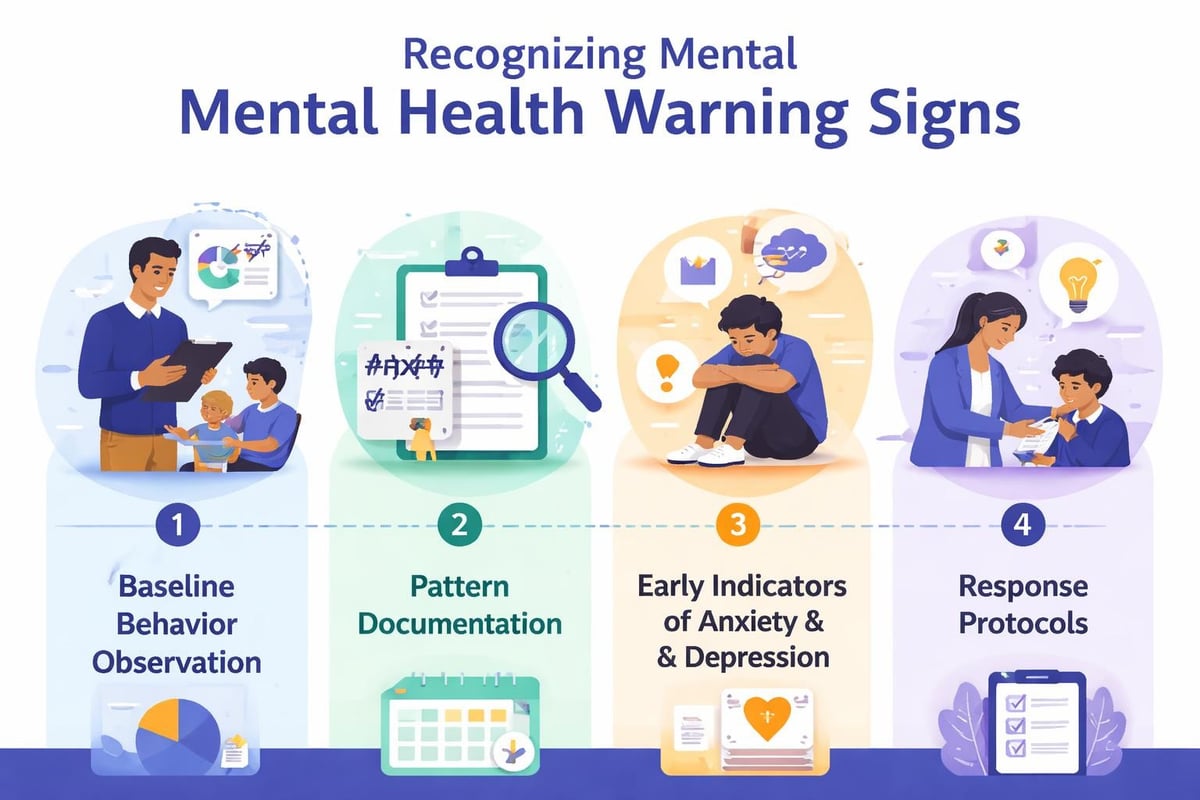
Most educators can identify extreme behavioral changes, but subtle presentations of anxiety disorders, emerging eating disorders, or early-stage depression frequently go unrecognized. Mental health training for teachers addresses these recognition gaps through structured frameworks that build observational competencies.
Key recognition challenges include:
- Distinguishing between typical developmental stress and clinical-level anxiety
- Identifying trauma responses that manifest as defiance or withdrawal
- Recognizing the intersection of learning disabilities and mental health conditions
- Understanding cultural variations in mental health expression and help-seeking
Core Components of Effective Training Programs
High-quality mental health training for teachers incorporates multiple competency domains rather than focusing solely on symptom recognition. Effective training programs integrate theoretical knowledge with practical application, creating transferable skills that educators can immediately implement.
Evidence-Based Curriculum Elements
Structured training curricula should prioritize psychological accuracy over simplified approaches. This means teaching educators the distinctions between different mental health conditions, appropriate terminology, and the limitations of their role.
| Curriculum Component | Learning Objectives | Practical Application |
|---|---|---|
| Psychoeducation Foundations | Understanding common mental health conditions | Accurate communication with parents and specialists |
| Risk Assessment Protocols | Identifying suicide risk and self-harm indicators | Appropriate escalation to mental health professionals |
| De-escalation Techniques | Managing classroom crises effectively | Maintaining safety while preserving dignity |
| Trauma-Informed Practices | Recognizing trauma responses in behavior | Adapting teaching strategies to support healing |
| Professional Boundaries | Understanding scope of teacher role | Knowing when and how to refer to specialists |
Skill Development Beyond Awareness
Awareness training alone produces limited behavioral change. Effective programs incorporate skill-building exercises that develop specific competencies through role-play scenarios, case study analysis, and supervised practice opportunities.
Teachers benefit most from training that addresses real classroom scenarios they encounter regularly. This includes managing a student’s panic attack during examinations, responding to disclosures of self-harm, or supporting students returning to school after psychiatric hospitalization.
The Youth Mental Health First Aid framework demonstrates how structured protocols help educators respond systematically rather than relying on intuition alone. Such frameworks provide decision trees that guide teachers through assessment and response sequences.
Implementation Strategies for School Districts
Successful implementation requires more than scheduling training sessions. Districts must approach mental health training for teachers as part of comprehensive wellbeing infrastructure rather than isolated professional development.
Creating Sustainable Training Ecosystems
One-time workshops produce temporary knowledge gains that fade without reinforcement. Sustainable approaches integrate initial training with ongoing coaching, peer consultation structures, and regular skill refreshment sessions.
Implementation best practices include:
- Conducting baseline assessments of current teacher competency and confidence levels
- Establishing clear referral pathways before training begins
- Providing graduated training levels matched to teacher roles and experience
- Creating peer support networks for ongoing consultation
- Measuring behavioral outcomes beyond satisfaction surveys
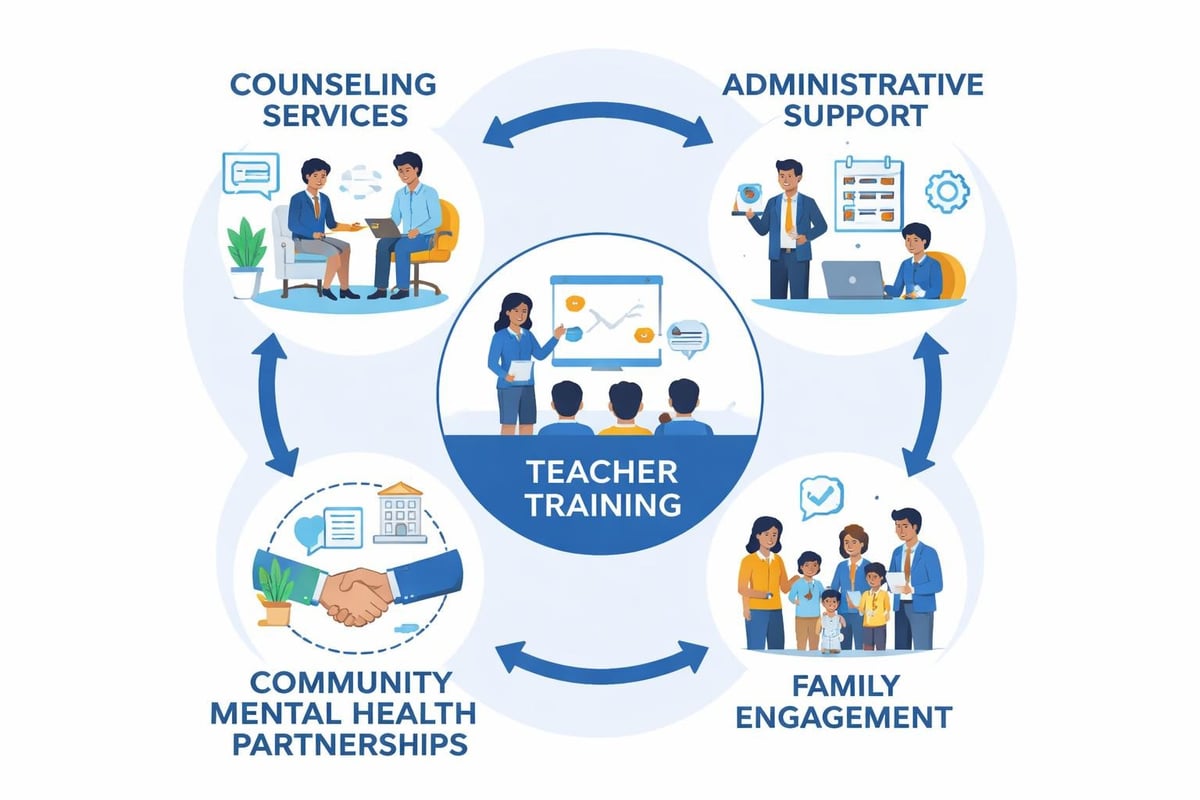
The training should connect directly to existing school mental health resources. Teachers need clarity about when to contact school counselors, how to initiate parent conversations, and which community resources are available for different student needs.
Addressing Systemic Barriers to Implementation
Time constraints, budget limitations, and competing priorities consistently emerge as implementation obstacles. Districts that successfully integrate mental health training for teachers address these barriers through creative scheduling and resource allocation.
| Barrier Type | Common Manifestations | Strategic Solutions |
|---|---|---|
| Time Constraints | Difficulty releasing teachers during instructional hours | Embedded professional development within existing meetings |
| Budget Limitations | Insufficient funds for external trainers | Train-the-trainer models with internal capacity building |
| Competing Priorities | Mental health deprioritized for academic initiatives | Demonstrating connections between wellbeing and achievement |
| Staff Turnover | Loss of trained personnel | Required training for all new hires during onboarding |
Measuring Training Effectiveness and Outcomes
Rigorous evaluation distinguishes between programs that create measurable change and those that merely increase awareness. Mental health training for teachers should be assessed through multiple outcome metrics that extend beyond participant satisfaction.
Competency-Based Assessment Frameworks
Pre-post knowledge assessments provide baseline measurement, but behavioral competency measures offer stronger validity. Effective evaluation examines whether teachers can apply learned skills in realistic scenarios, not simply recall information.
Assessment methods should include:
- Knowledge assessments covering mental health literacy and recognition skills
- Scenario-based competency evaluations measuring decision-making quality
- Behavioral observations of classroom management and student interaction patterns
- Teacher confidence surveys regarding specific mental health situations
- Referral pattern analysis tracking appropriate use of support services
Professional development programs that incorporate coaching elements produce stronger skill retention than lecture-based formats alone. Workplace Mental Health Institute’s approach emphasizes practical application through scenario analysis and role-based training exercises.
Long-Term Impact Indicators
The ultimate measure of training effectiveness lies in improved student outcomes and enhanced school climate. While individual training sessions cannot solely drive these metrics, well-implemented programs contribute to measurable improvements.
Long-term indicators include:
- Reduced crisis incidents requiring emergency intervention
- Increased early identification and referral rates to appropriate services
- Improved student attendance and academic performance metrics
- Decreased teacher burnout and turnover rates
- Enhanced parent-school collaboration on student wellbeing
Research from the California Department of Education demonstrates that schools investing in comprehensive mental health training experience measurable improvements in school climate and student wellbeing indicators within two academic years.
Specialized Training for Diverse Student Populations
Generic mental health training for teachers provides foundational knowledge, but specialized modules address the unique needs of specific student populations. Cultural competency, developmental appropriateness, and context-specific adaptations enhance training relevance.
Cultural and Linguistic Considerations
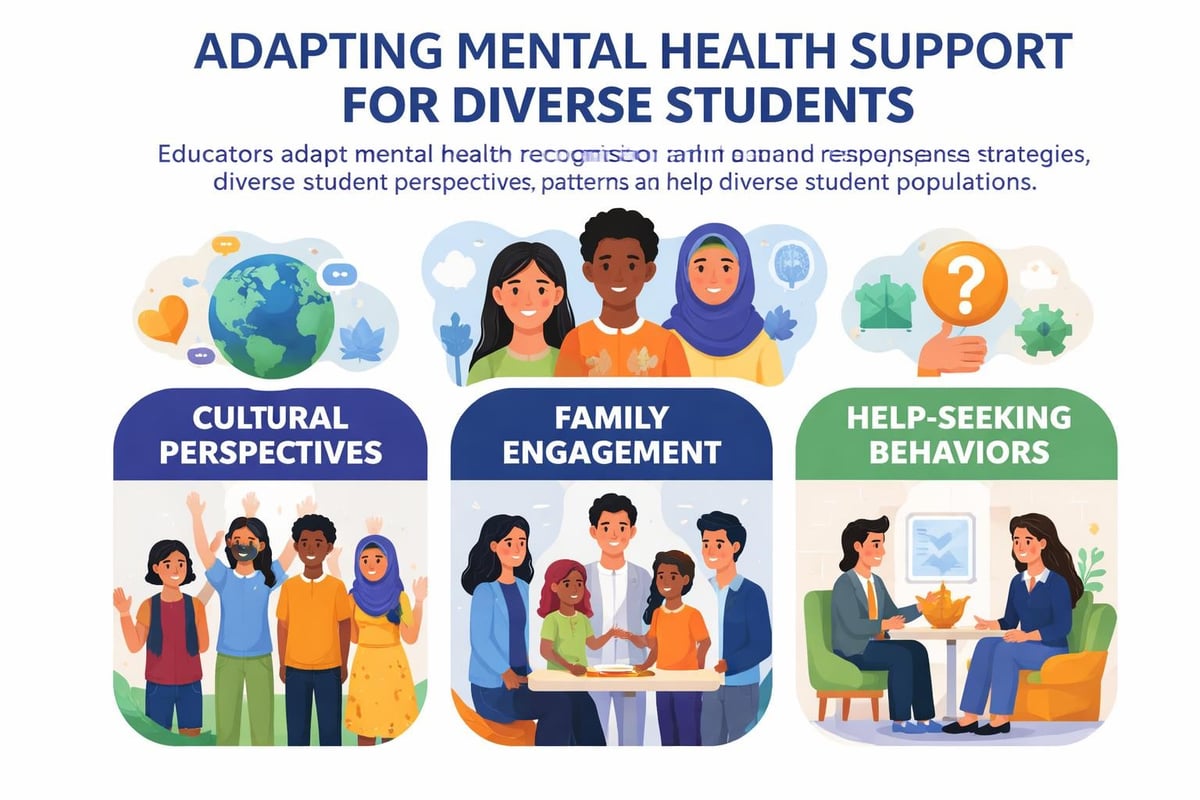
Mental health expression, help-seeking behaviors, and family engagement patterns vary significantly across cultural contexts. Training must equip teachers to recognize these variations without relying on stereotypes or making assumptions based solely on student background.
Culturally responsive training addresses how different communities understand mental health, the role of family systems in student wellbeing, and how stigma manifests across cultural groups. Teachers learn to adapt communication strategies and collaborate effectively with families from diverse backgrounds.
Age-Specific Competencies
Elementary educators require different competencies than high school teachers. Younger students express distress through behavioral changes and somatic complaints rather than verbal articulation, while adolescents present unique challenges related to identity development, peer relationships, and autonomy.
| Student Age Group | Primary Mental Health Concerns | Teacher Training Focus |
|---|---|---|
| Early Elementary (K-2) | Separation anxiety, adjustment disorders, trauma responses | Behavioral observation, parent communication, routine establishment |
| Upper Elementary (3-5) | Academic anxiety, social challenges, attention difficulties | Skill-building support, peer mediation, strength-based approaches |
| Middle School (6-8) | Identity formation, peer pressure, mood fluctuations | Boundary setting, privacy considerations, crisis recognition |
| High School (9-12) | Academic stress, substance concerns, future anxiety | Resource connection, autonomy support, college transition preparation |
Integrating Trauma-Informed Practices
Trauma-informed approaches represent essential components of comprehensive mental health training for teachers. Understanding how adverse childhood experiences affect learning, behavior, and relationships fundamentally changes classroom management and instructional strategies.
Foundational Trauma Knowledge
Teachers benefit from understanding neurobiological impacts of trauma, recognizing trauma responses in student behavior, and adapting classroom environments to promote safety. This knowledge transforms how educators interpret challenging behaviors and design interventions.
Rather than viewing defiance as intentional misbehavior, trauma-informed teachers recognize potential defensive responses to perceived threats. This perspective shift creates opportunities for connection and support rather than punishment cycles that reinforce student distress.
The psychological first aid training framework provides educators with structured approaches to support students experiencing acute stress or trauma exposure. These skills complement broader mental health competencies by addressing immediate crisis situations.
Practical Classroom Applications
Trauma-informed teaching extends beyond crisis response to daily instructional practices. Teachers learn to establish predictable routines, provide choices that build autonomy, and create physically and emotionally safe learning spaces.
Trauma-informed classroom strategies include:
- Establishing consistent daily schedules with clear transitions
- Providing advance notice of changes or upcoming stressful events
- Creating quiet spaces where students can self-regulate when overwhelmed
- Using strength-based language that emphasizes growth rather than deficits
- Building positive relationships through consistent, non-punitive interactions
Teacher Wellbeing Within Training Frameworks
Effective mental health training for teachers must address educator wellbeing alongside student support competencies. Teachers experiencing burnout, compassion fatigue, or secondary traumatic stress cannot effectively support student mental health needs.
Recognizing Vicarious Trauma and Compassion Fatigue
Educators regularly encounter student disclosures of abuse, witness crisis situations, and carry concern for vulnerable students outside school hours. Without appropriate training and support, this exposure creates cumulative stress that damages teacher wellbeing.
Training programs should normalize these experiences while teaching practical strategies for professional self-care, boundary maintenance, and stress management. Teachers need permission to acknowledge their own emotional responses while learning techniques to process these reactions constructively.
Research from the American Mental Wellness Association indicates that programs incorporating educator wellbeing components demonstrate significantly higher implementation fidelity than those focusing exclusively on student needs.
Building Sustainable Practice Patterns
Self-care discussions often emphasize individual responsibility without addressing systemic factors that contribute to teacher stress. Comprehensive training acknowledges organizational influences on wellbeing while providing practical strategies teachers can implement regardless of systemic constraints.
Sustainable practices include establishing collegial consultation relationships, utilizing supervision structures when available, maintaining clear work-life boundaries, and accessing external support resources when needed. Organizations supporting Australian educators recognize that teacher wellbeing directly impacts student outcomes and program sustainability.
Professional Development Integration and Certification
Mental health training for teachers achieves maximum impact when integrated into broader professional development pathways rather than treated as standalone content. Certification programs provide structure, accountability, and recognition for acquired competencies.
Progressive Credentialing Systems
Tiered certification approaches allow teachers to build competencies gradually, starting with foundational awareness and advancing toward specialized skills. This progression respects varying teacher roles, interests, and capacity for additional training.
Typical certification levels include:
- Foundation Level: Basic mental health literacy, recognition skills, and referral protocols (8-12 hours)
- Practitioner Level: Advanced assessment, intervention strategies, and trauma-informed practices (20-30 hours)
- Leadership Level: Training delivery, program coordination, and system-level implementation (40+ hours)
Progressive systems create career pathways while building school-wide capacity. Not every teacher requires advanced certification, but schools benefit from having designated mental health champions with enhanced competencies.
Continuing Education and Skill Refreshment
Mental health knowledge evolves continuously as research advances understanding of effective interventions and emerging challenges. Ongoing professional development ensures teachers maintain current knowledge and reinforce skills developed during initial training.
Online training platforms provide accessible continuing education options that accommodate teacher schedules and diverse learning preferences. These resources support skill maintenance between formal training sessions while introducing updated content and emerging best practices.
Administrative Support and Policy Alignment
Training effectiveness depends significantly on administrative commitment and policy structures that enable teachers to apply learned skills. Leadership support transforms training from theoretical knowledge into practical classroom application.
Creating Enabling Organizational Structures
Administrators must establish clear protocols that authorize teacher action, provide backup support during crises, and protect educators from liability concerns when implementing mental health interventions within appropriate scope.
Essential administrative supports include dedicated mental health personnel who receive teacher referrals, established crisis response teams, documented procedures for parent notification, and clear guidelines defining teacher roles versus specialist responsibilities.
Policy alignment ensures training content matches actual school procedures rather than creating confusion between learned protocols and institutional requirements. This alignment requires administrative involvement in training design and ongoing policy review as programs evolve.
Resource Allocation and Sustainability Planning
Sustainable programs require dedicated budget allocation, protected time for training and consultation, and long-term commitment beyond initial implementation. One-time funding produces temporary programs that disappear when grant cycles end or priorities shift.
Strategic resource allocation treats mental health training for teachers as essential infrastructure rather than discretionary enhancement. This perspective shift influences hiring decisions, budget planning, and how districts evaluate program effectiveness against competing investments.
As detailed by Teacher Mental Health, successful programs establish clear governance structures, secure multi-year funding commitments, and build community partnerships that extend school-based resources through external collaborations.
Mental health training for teachers creates foundational capacity to recognize student distress, provide appropriate support, and connect young people with specialized services when needed. These competencies directly impact student outcomes while supporting educator effectiveness and wellbeing. Organizations seeking comprehensive, evidence-based training solutions can partner with Workplace Mental Health Institute to develop customized programs that build sustainable mental health capacity within educational settings through practical, skills-focused approaches designed for real-world application.

