
Organizations that invest in mental health training for employees experience measurable improvements in psychological safety, retention, and productivity. As workplace mental health challenges continue to affect one in five employees annually, structured training programs have evolved from optional initiatives to essential organizational infrastructure. This comprehensive guide provides HR professionals and organizational leaders with evidence-based frameworks for designing, implementing, and evaluating effective mental health training programs that build capability across all levels of the workforce.
Understanding the Business Case for Workplace Mental Health Training
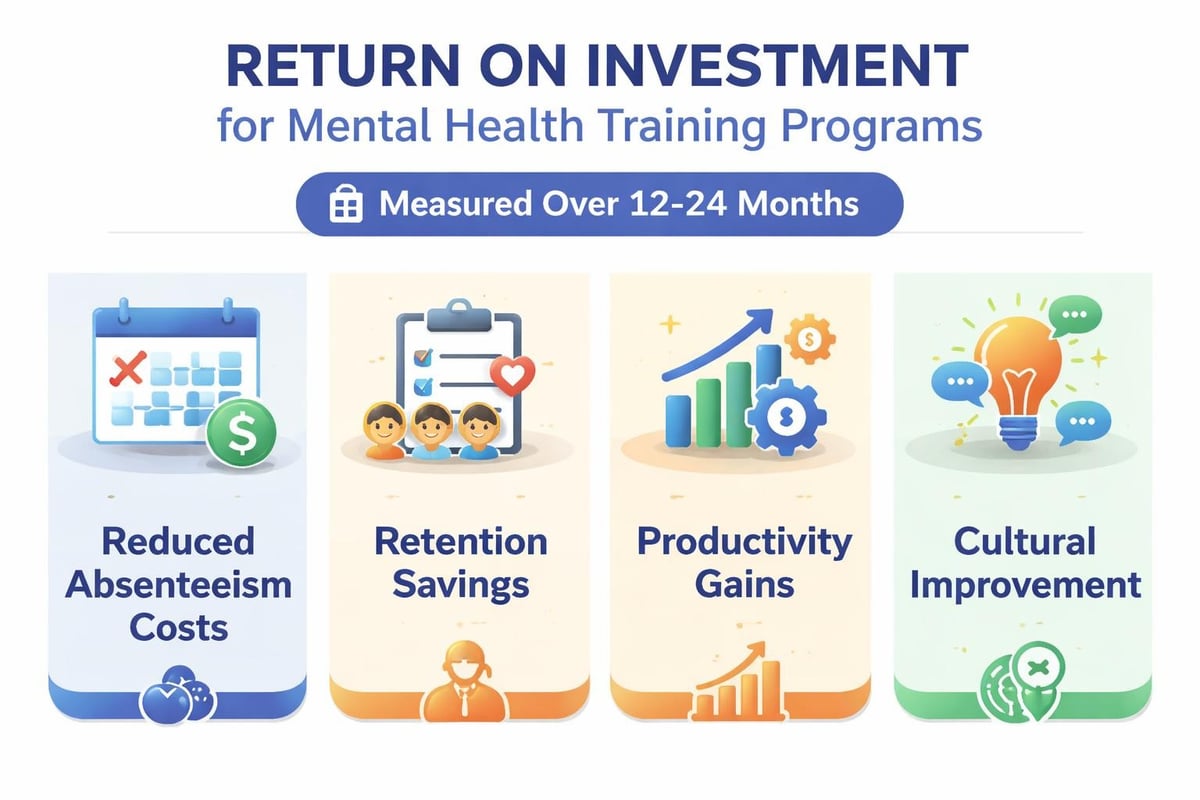
Mental health conditions cost American employers approximately $225 billion annually through lost productivity, absenteeism, and turnover. These figures represent only the quantifiable aspects of untreated workplace mental health challenges.
The measurable impacts of comprehensive training programs include:
- Reduction in absenteeism rates by 15-30% within the first year
- Decreased turnover costs averaging $4,000 per retained employee
- Improved early intervention rates before conditions escalate
- Enhanced team cohesion and psychological safety metrics
- Stronger management confidence in addressing wellbeing conversations
Organizations implementing evidence-based mental health training report significant improvements in workplace culture indicators. The return on investment becomes particularly evident when training extends beyond awareness sessions to develop practical skills in recognition, response, and resilience.
Research demonstrates that manager-level training produces the strongest organizational outcomes. According to recent typological research on employer mental health training, organizations that prioritize line manager capability development achieve superior results compared to employee-only training models.
Core Components of Effective Mental Health Training Programs
Mental health training for employees must address multiple competency levels simultaneously. Surface-level awareness sessions fail to produce behavioral change or skill development necessary for meaningful workplace impact.
Knowledge Foundation and Literacy Building
Effective programs establish psychological literacy through structured content delivery. Participants learn to distinguish between stress responses, adjustment difficulties, and clinical mental health conditions without requiring diagnostic expertise.
| Training Component | Employee Focus | Manager Focus | Organizational Focus |
|---|---|---|---|
| Mental health literacy | Personal recognition | Team observation | Culture assessment |
| Stigma reduction | Self-disclosure safety | Conversation confidence | Policy alignment |
| Early intervention | Help-seeking skills | Supportive responses | Referral pathways |
| Boundary awareness | Work-life integration | Appropriate support limits | Professional resources |
Programs offered by Workplace Mental Health Institute emphasize this tiered approach, ensuring each organizational level receives targeted capability development. The comprehensive training framework addresses recognition, response, and system-level resilience simultaneously.
Practical Skill Development and Application
Conceptual knowledge alone proves insufficient for workplace application. Mental health training for employees must include scenario-based learning that develops conversational confidence and response capabilities.
Essential practical skills include:
- Recognition capabilities: Identifying changes in behavior, performance, or presentation that may indicate mental health concerns
- Conversation frameworks: Structured approaches for initiating wellbeing discussions without overstepping professional boundaries
- Active listening techniques: Reflective listening, validation, and appropriate questioning strategies
- Referral knowledge: Understanding available resources, appropriate timing, and handover processes
- Documentation practices: Recording concerns appropriately while maintaining privacy and dignity
Australian organizations seeking comprehensive skill development programs can access specialized resources through WMHI Australia, which provides culturally adapted training modules aligned with national workplace safety frameworks.
Psychological Safety and Stigma Reduction
Training effectiveness correlates directly with organizational psychological safety levels. Programs that fail to address stigma simultaneously with skill development encounter implementation barriers that limit practical application.
Psychological safety training provides foundational frameworks for creating environments where mental health conversations occur naturally. This cultural foundation enables the practical skills taught in mental health training for employees to translate into consistent workplace behaviors.
Organizations must demonstrate leadership commitment through visible participation, policy alignment, and resource allocation. Training sessions delivered without corresponding organizational support systems produce cynicism rather than capability development.
Designing Training Programs for Different Workforce Segments
Standardized mental health training approaches fail to address the distinct needs, risk profiles, and capability requirements across organizational segments. Effective program design matches content depth and focus areas to specific workforce populations.
Manager and Supervisor Training Priorities
Managers function as the critical interface between organizational resources and employee wellbeing needs. Their training requirements extend significantly beyond general employee programs.
Manager-specific competencies include:
- Performance management conversations that address wellbeing factors
- Appropriate accommodation discussions and implementation
- Risk assessment for workplace safety obligations
- Team-level resilience building and workload management
- Confidentiality navigation and information-sharing protocols
The Mental Health First Aid workplace module provides structured frameworks for manager response capabilities. However, comprehensive programs integrate these skills with broader leadership development rather than treating mental health as an isolated competency area.
Research indicates that managers require ongoing support beyond initial training. Programs incorporating peer consultation groups, refresher modules, and access to expert guidance demonstrate superior long-term outcomes compared to single-session training events.
Employee Self-Management and Peer Support
General employee training emphasizes personal resilience, help-seeking capability, and peer awareness. These programs create distributed wellbeing capacity throughout the organization rather than centralizing responsibility exclusively with managers or HR.
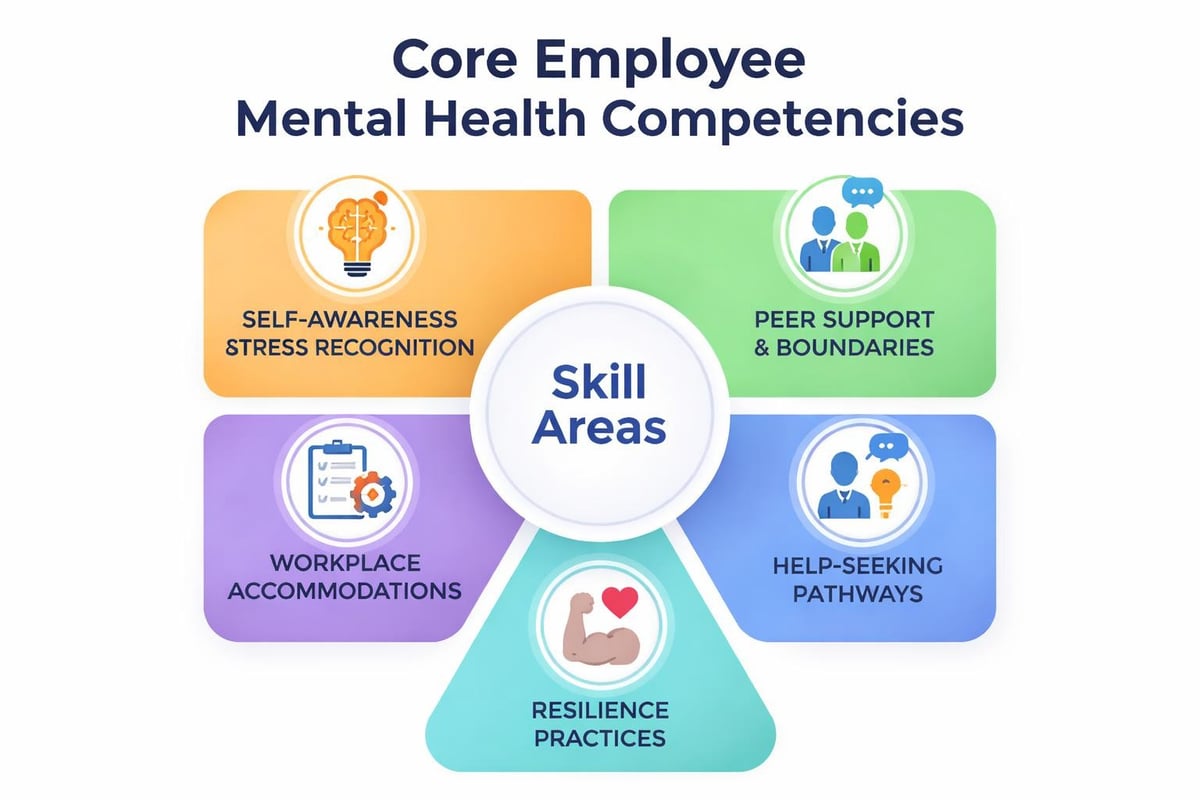
Effective employee programs address the common barrier of not knowing when personal challenges warrant professional support. Training helps individuals recognize the distinction between normal stress responses and patterns requiring intervention while reducing shame associated with help-seeking.
| Program Element | Duration | Delivery Method | Key Outcomes |
|---|---|---|---|
| Awareness foundation | 90 minutes | Interactive workshop | Literacy, stigma reduction |
| Skill development | 3 hours | Practice-based learning | Conversation confidence, recognition |
| Resource navigation | 60 minutes | Guided exploration | Pathway knowledge, access confidence |
| Ongoing reinforcement | 15 min/month | Micro-learning modules | Sustained awareness, skill retention |
Specialized Training for High-Risk Populations
Certain workforce segments experience elevated mental health risks requiring tailored training approaches. These include first responders, healthcare workers, customer-facing roles with high emotional labor, and positions involving trauma exposure.
Trauma-informed care training provides essential frameworks for these populations. Workplace Mental Health Institute offers specialized resilience programs designed specifically for high-stress occupational contexts, incorporating both prevention and response capabilities.
For roles requiring frequent exposure to distressing content or situations, training must include specific techniques for psychological detachment, vicarious trauma recognition, and peer debriefing protocols. Generic mental health training for employees proves insufficient for these specialized contexts.
Implementation Strategies That Drive Participation and Engagement
Program design quality becomes irrelevant without effective implementation that achieves meaningful participation rates and sustained behavioral change. Many organizations invest in excellent training content that fails to produce outcomes due to implementation deficiencies.
Addressing Participation Barriers
Voluntary training programs typically achieve 20-40% participation rates, leaving the majority of the workforce without capability development. Mandatory approaches increase attendance but may create resentment or superficial engagement without genuine learning.
Effective participation strategies include:
- Leadership modeling: Visible executive participation that signals organizational priority
- Scheduling integration: Training during paid work hours without competing deadlines
- Multiple delivery formats: Accommodating diverse learning preferences and accessibility needs
- Progressive requirements: Building from foundational to advanced competencies over time
- Recognition systems: Acknowledging completion without stigmatizing mental health focus
Organizations partnering with online psychotherapy services can enhance training programs by providing immediate access to professional support, demonstrating that training connects directly to available resources rather than existing as isolated education.
Creating Sustainable Reinforcement Mechanisms
Single training events produce temporary awareness spikes that decay rapidly without systematic reinforcement. Sustainable programs embed mental health capability development into ongoing organizational rhythms.
The APA Foundation’s updated training approaches demonstrate how modular design enables progressive skill building. Rather than attempting comprehensive coverage in extended single sessions, distributed learning over time produces superior retention and application.
Reinforcement mechanisms include:
- Monthly micro-learning modules addressing specific scenarios
- Quarterly skill refreshers integrated into team meetings
- Annual program updates incorporating emerging research and organizational learning
- Manager consultation groups for ongoing case discussion
- Digital resource libraries providing just-in-time guidance
Videos from Workplace Mental Health Institute provide supplementary content that reinforces training concepts through varied formats, supporting different learning preferences and enabling self-directed review.
Measuring Training Effectiveness Beyond Attendance
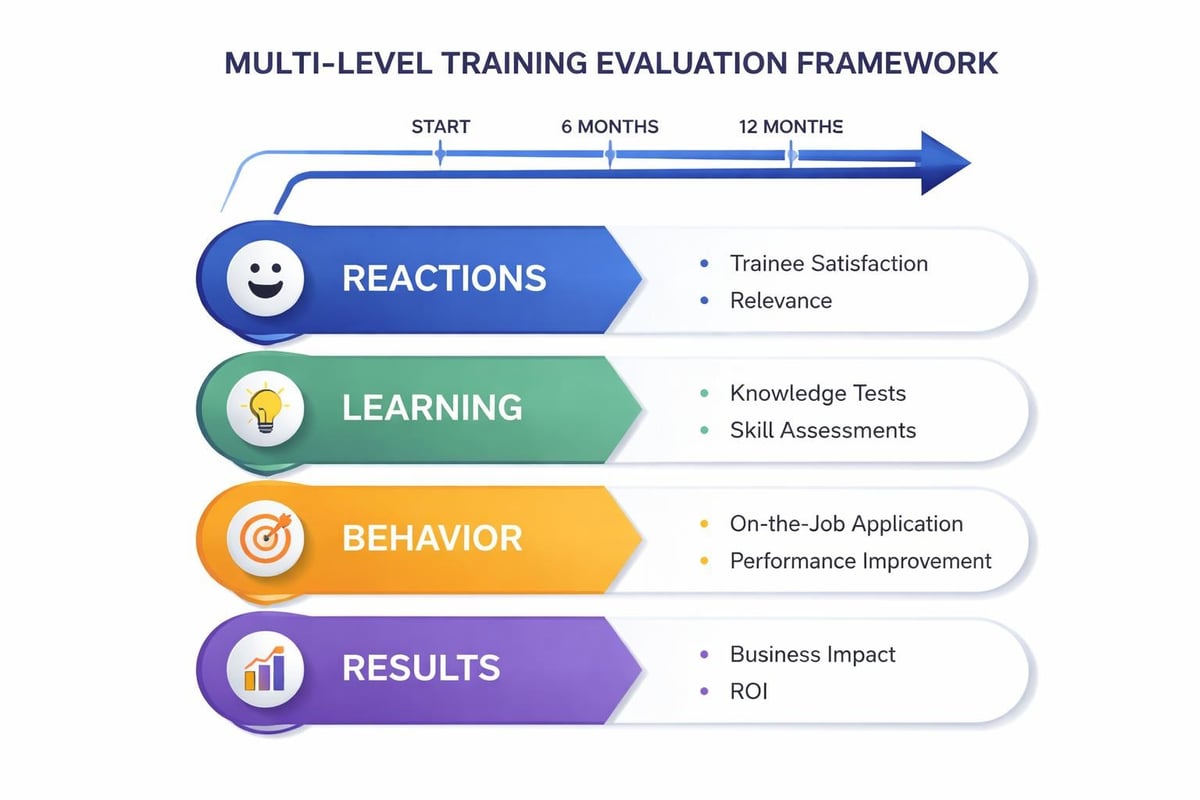
Completion rates represent the weakest training effectiveness metric. Meaningful evaluation assesses knowledge retention, skill application, confidence changes, and organizational outcome indicators.
| Evaluation Level | Measurement Approach | Timeline | Key Indicators |
|---|---|---|---|
| Reaction | Post-session surveys | Immediate | Satisfaction, perceived relevance |
| Learning | Knowledge assessments | Pre/post training | Concept comprehension, stigma reduction |
| Behavior | Manager/peer observations | 3-6 months | Conversation frequency, appropriate responses |
| Results | Organizational metrics | 6-12 months | Absenteeism, retention, EAP utilization, safety incidents |
Organizations implementing comprehensive mental health training for employees track multiple indicators across this evaluation framework. Data collection should remain confidential and aggregated to avoid surveillance concerns that undermine psychological safety.
Advanced Considerations for Program Optimization
Mature mental health training programs evolve beyond foundational implementation to address nuanced challenges that emerge through organizational experience and changing workforce needs.
Cultural Adaptation and Inclusive Design
Mental health concepts, help-seeking norms, and appropriate workplace boundaries vary significantly across cultural contexts. Training programs developed without cultural consultation risk reinforcing dominant cultural assumptions while alienating workforce segments.
Effective programs incorporate multiple perspectives on wellbeing, acknowledge diverse help-seeking traditions, and avoid pathologizing cultural differences in emotional expression or stress response. Content review by diverse employee resource groups prior to implementation identifies potential blind spots.
Organizational mental health training approaches increasingly emphasize inclusive design that acknowledges intersectional experiences and varied relationships with formal mental health systems. This cultural humility strengthens program credibility across diverse workforce populations.
Integration With Broader Wellbeing Strategies
Mental health training for employees produces optimal outcomes when integrated within comprehensive workplace wellbeing strategies rather than existing as isolated initiatives. Fragmented approaches create employee confusion and suggest organizational ambivalence about wellbeing priorities.
Integration points include:
- Physical health and safety training programs
- Leadership development curriculum
- Performance management systems
- Workplace design and environmental modifications
- Benefits communication and resource awareness
- Organizational change management processes
Strategic consultation services help organizations identify these integration opportunities and develop cohesive approaches. Workplace Mental Health Institute provides wellbeing strategy assessment that maps current initiatives and identifies gaps or redundancies requiring alignment.
Technology-Enhanced Learning and Support
Digital platforms enable training delivery models impossible through traditional approaches. Adaptive learning systems personalize content based on knowledge assessment, role requirements, and learning pace preferences.
Mental health training resources demonstrate how online platforms provide flexible access while maintaining engagement through interactive elements. However, technology should enhance rather than replace human connection within training design.
Blended approaches combining digital knowledge transfer with facilitated skill practice sessions optimize learning efficiency while preserving the relational elements essential for mental health capability development. Virtual reality applications now enable realistic conversation practice in psychologically safe simulation environments.
Addressing Implementation Challenges and Resistance
Organizations encounter predictable implementation barriers that derail even well-designed programs. Proactive planning for these challenges significantly improves success probability.
Common resistance patterns include manager concerns about time requirements, employee skepticism about organizational genuineness, privacy anxieties, and fear of inappropriate responsibility placement. Each resistance pattern requires distinct mitigation strategies rather than generic reassurance.
Transparent communication about training scope limitations proves particularly important. Programs must clarify that mental health training for employees develops supportive capability rather than creating diagnostic or therapeutic responsibilities. This boundary clarity reduces anxiety while establishing appropriate expectations.
Evidence-Based Training Resources and Support Systems
Organizations developing internal training programs benefit from understanding available external resources that provide evidence-based content, certification pathways, and ongoing support networks.
Professional Training Standards and Certification
While mental health training for employees does not require clinical licensing, professional standards ensure content accuracy and ethical delivery. Certification programs provide quality benchmarks and demonstrate organizational commitment to evidence-based approaches.
OSHA workplace stress training resources establish safety-oriented frameworks particularly relevant for high-risk industries. These resources connect mental health training with existing occupational health and safety obligations, strengthening compliance integration.
Professional mental health organizations offer specialized workplace training certifications that verify trainer competency. These credentials particularly matter for internal program facilitators responsible for ongoing delivery and adaptation.
Building Internal Training Capacity
Organizations achieve greatest sustainability by developing internal facilitation capability rather than maintaining perpetual dependence on external providers. This transition requires structured train-the-trainer programs that transfer both content expertise and delivery skills.
Internal trainers require deeper knowledge than general participants, including understanding of psychological principles, group facilitation skills, and ability to manage difficult scenarios or questions. Investment in this capability development produces long-term cost efficiency and cultural integration.
However, internal capacity should complement rather than completely replace external expertise. Periodic external review ensures programs remain current with emerging research and avoid organizational blind spots that develop through insularity.
Connecting Training to Accessible Professional Support
Training effectiveness depends substantially on available support resources. Programs that educate employees about mental health challenges without providing accessible pathways to professional help create awareness without actionable solutions.
Organizations must ensure mental health training for employees connects clearly to employee assistance programs, health benefits, community resources, and appropriate workplace accommodations. This resource ecosystem transforms training from theoretical knowledge to practical capability.
Partnerships with therapy providers that offer accessible services strengthen this connection. Employees who know exactly how to access support when needed demonstrate higher training engagement and greater willingness to apply learned skills.
Mental health training for employees represents a critical organizational capability that protects workforce wellbeing while enhancing performance outcomes. Effective programs extend beyond awareness building to develop practical recognition and response skills across all organizational levels, integrate with broader wellbeing strategies, and connect to accessible professional support resources. Workplace Mental Health Institute specializes in comprehensive training programs, resilience development, and strategic consultation designed specifically for organizational contexts. Explore how Workplace Mental Health Institute can help your organization build sustainable mental health capability through evidence-based, practical training solutions tailored to your workforce needs.

