
Organizations face increasing pressure to support employee psychological wellbeing while navigating complex workplace dynamics. A mental health awareness course equips managers, HR professionals, and team members with evidence-based skills to recognize distress, respond appropriately, and foster psychologically safe environments. These structured training programs translate clinical knowledge into practical workplace applications, reducing stigma and building organizational capacity to support mental health proactively.
Understanding Mental Health Awareness Training
Mental health awareness training represents a foundational investment in workplace psychological literacy. These programs differ significantly from clinical interventions or therapeutic services. Instead, they focus on education, recognition, and appropriate response pathways.
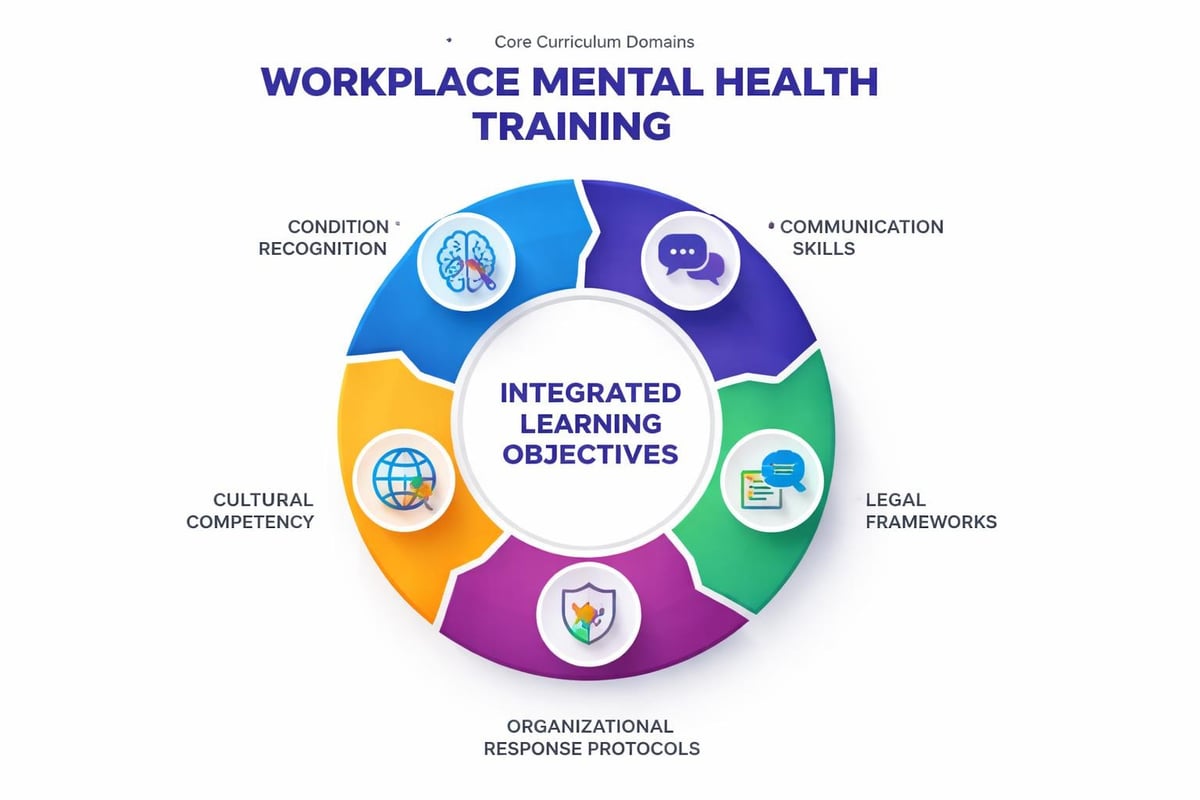
A comprehensive mental health awareness course typically covers multiple interconnected domains. Participants learn to identify common mental health conditions, understand their workplace manifestations, and distinguish between everyday stress and clinical concerns requiring professional support.
Core Components of Effective Programs
Well-designed training programs balance theoretical understanding with applied skills development. The curriculum should address both knowledge acquisition and behavioral competencies.
Essential curriculum elements include:
- Recognition of mental health condition signs and symptoms
- Understanding psychological safety and workplace culture factors
- Communication techniques for supportive conversations
- Appropriate boundaries between peer support and professional intervention
- Legal considerations including confidentiality and duty of care
- Organizational resources and referral pathways
The Mental Health First Aid framework provides a widely recognized structure for initial support conversations, though workplace-specific training should extend beyond crisis response to address prevention and early intervention.
Training depth varies significantly across programs. Surface-level awareness sessions may provide basic terminology and destigmatization messaging in two hours, while comprehensive courses extend across multiple days with skill practice, case studies, and competency assessments.
| Training Level | Duration | Focus Areas | Appropriate For |
|---|---|---|---|
| Basic Awareness | 2-4 hours | Terminology, stigma reduction, resource awareness | All employees |
| Intermediate | 1-2 days | Conversation skills, recognition, response frameworks | Managers, team leads |
| Advanced | 3-5 days | Assessment, intervention planning, complex scenarios | HR professionals, wellbeing leaders |
| Specialist | Ongoing | Trauma-informed practice, strategic implementation | Mental health coordinators |
Building Organizational Mental Health Literacy
Mental health literacy extends beyond individual knowledge to organizational capacity. When multiple employees complete a mental health awareness course, organizations develop shared language and collective competency for addressing psychological wellbeing.
This distributed knowledge creates cultural shifts. Employees feel more comfortable seeking support when they trust that managers understand mental health challenges professionally rather than as personal weakness or performance deficiency.
Targeting Training to Specific Roles
Role-appropriate training maximizes relevance and application. Frontline managers require different competencies than executive leaders or HR specialists.
Manager-focused training emphasizes:
- Recognizing performance changes that may signal distress
- Conducting check-in conversations without diagnostic overreach
- Balancing support with accountability expectations
- Making appropriate accommodations within role parameters
- Documenting concerns while maintaining confidentiality
- Collaborating with HR on next steps
HR professionals benefit from deeper exploration of legal frameworks, accommodation processes, and strategic program development. Their training should connect individual support skills with systemic policy creation.
Executive leadership training focuses on strategic imperatives, business case understanding, and culture-setting responsibilities. Leaders learn how psychological safety drives performance metrics including engagement, retention, and productivity.
Programs offered through our LMS provides role-specific pathways that align training content with actual workplace responsibilities and decision-making authority.
Evidence-Based Content Standards
Quality mental health awareness courses ground their content in current psychological research and clinical best practices. Training that relies on outdated models or oversimplified explanations undermines credibility and may perpetuate misconceptions.
Psychological accuracy matters significantly. Well-designed programs acknowledge the complexity of mental health conditions while providing accessible frameworks for non-clinical audiences.
Avoiding Common Training Pitfalls
Many workplace mental health programs inadvertently reinforce problematic assumptions or create unrealistic expectations about what awareness training can accomplish.
Programs should avoid:
- Presenting mental health conditions as simple stress management issues
- Training participants to diagnose or treat clinical conditions
- Suggesting that positive thinking resolves mental illness
- Overlooking systemic workplace factors that impact wellbeing
- Creating savior expectations where colleagues fix others’ problems
- Minimizing the importance of professional clinical support
The National Alliance on Mental Illness provides extensive educational resources that balance accessibility with clinical accuracy, offering a helpful benchmark for content quality.
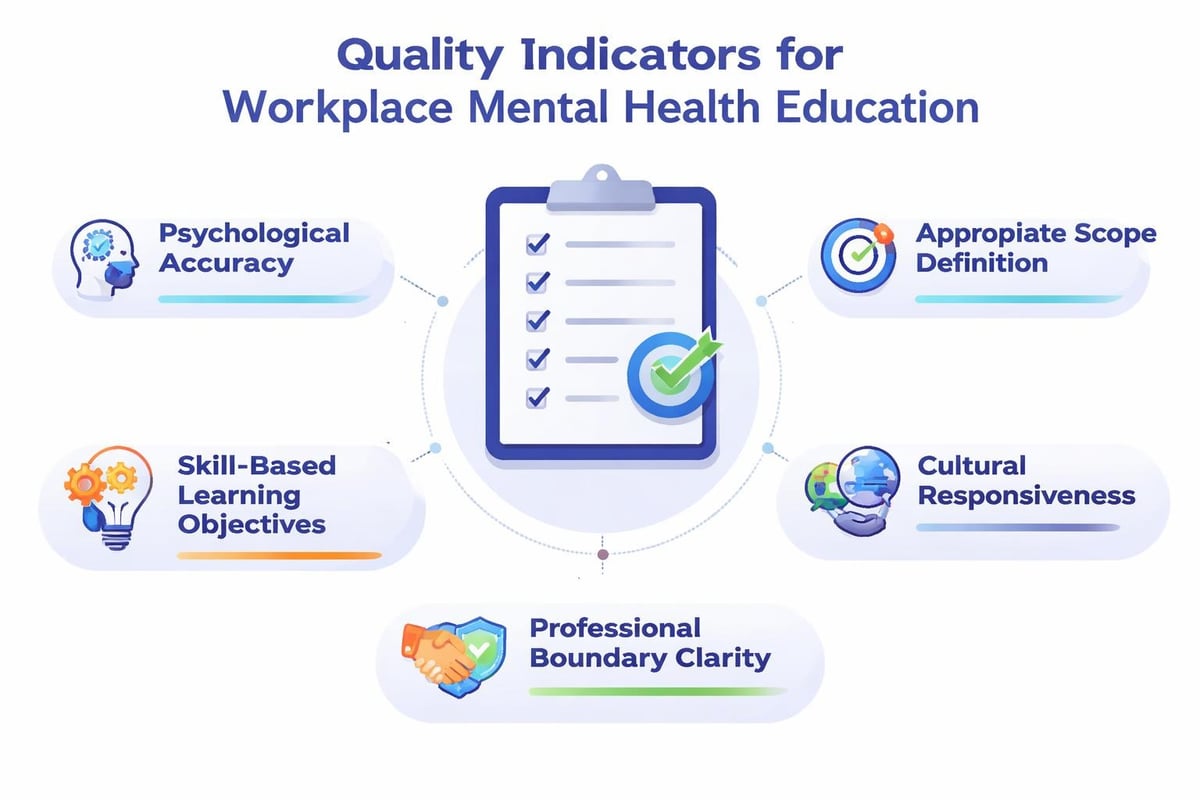
Effective courses acknowledge what participants can and cannot do. They position workplace support as complementary to professional treatment rather than replacing clinical intervention.
Practical Skills Development
Knowledge acquisition alone proves insufficient for behavior change. A mental health awareness course must develop applied competencies through practice, feedback, and skill refinement.
Conversation skills represent the most critical practical component. Participants need structured frameworks for initiating supportive discussions, asking appropriate questions, and responding to disclosures without offering advice beyond their competency.
Structured Conversation Frameworks
Evidence-based models provide step-by-step guidance for supportive workplace conversations. These frameworks reduce anxiety about saying the wrong thing while ensuring conversations remain appropriately bounded.
- Prepare the context: Choose private settings, allow adequate time, and clarify the conversation’s supportive intent
- Express specific observations: Reference concrete behavioral changes rather than assumptions about internal states
- Listen without judgment: Create space for the person to share at their comfort level without pressure to disclose
- Validate and normalize: Acknowledge challenges without minimizing their significance or suggesting quick fixes
- Explore support options: Discuss available resources including professional services, workplace accommodations, and peer support
- Follow up appropriately: Check in regularly while respecting boundaries and privacy
These conversations differ fundamentally from clinical assessments or counseling sessions. The goal centers on connection, resource provision, and appropriate referral rather than problem-solving or treatment.
Workplace Mental Health Institute programs incorporate extensive skill practice with realistic scenarios, allowing participants to develop confidence through experiential learning rather than theoretical discussion alone.
Cultural Competency in Mental Health Training
Mental health experiences and help-seeking behaviors vary significantly across cultural contexts. A mental health awareness course must address cultural factors that shape how employees understand, express, and respond to psychological distress.
Cultural competency extends beyond surface-level diversity acknowledgment. It requires examining how mental health stigma manifests differently across communities, understanding varying communication norms, and recognizing that Western clinical frameworks may not resonate universally.
Adapting Approaches Across Contexts
Training content should equip participants to recognize that mental health expression varies by cultural background, age, gender, and other identity factors.
| Cultural Consideration | Training Application | Example Adaptation |
|---|---|---|
| Stigma variations | Acknowledge differing comfort with mental health terminology | Offer multiple ways to describe distress beyond clinical language |
| Communication styles | Teach recognition of indirect distress signals | Practice reading contextual cues beyond explicit disclosure |
| Family involvement | Respect varying boundaries around private vs. collective concerns | Provide flexible accommodation approaches |
| Help-seeking preferences | Present diverse support options beyond formal counseling | Include peer support, religious/spiritual resources, community connections |
Programs serving Australian organizations must consider specific cultural contexts including Indigenous perspectives on mental health, multicultural workforce dynamics, and regional access variations to professional services.
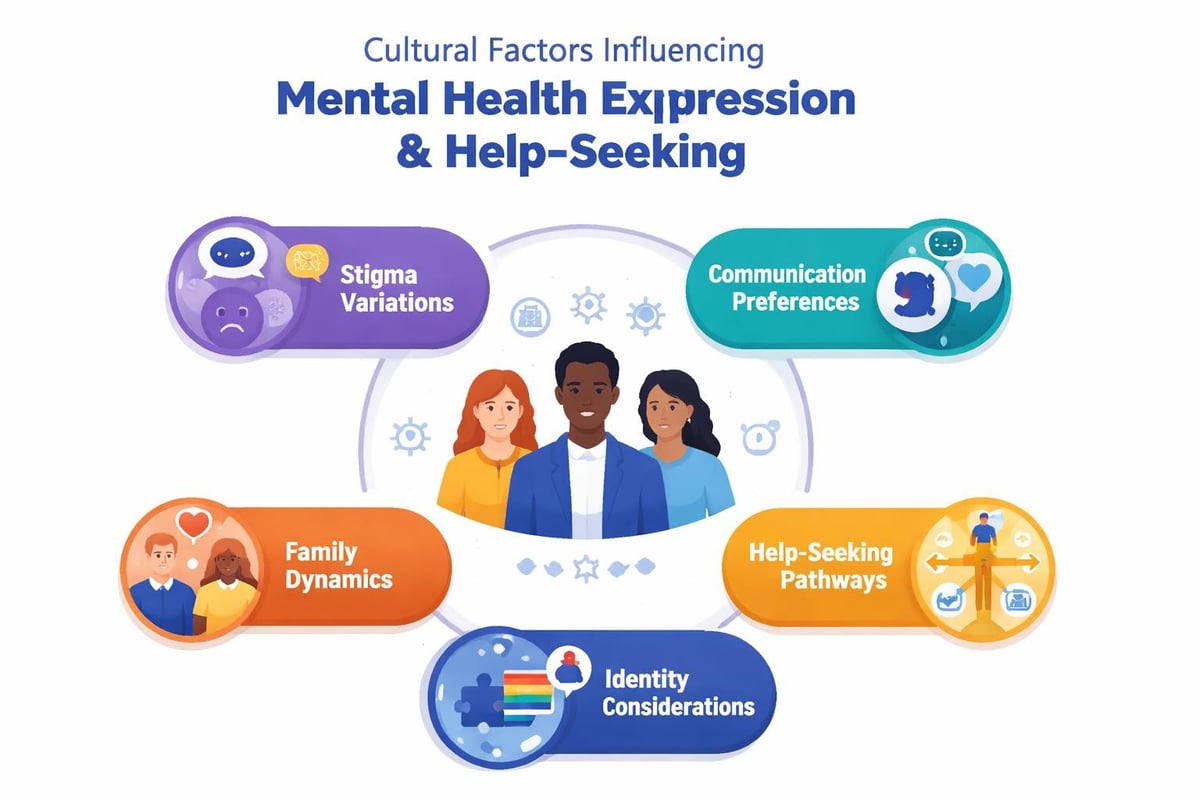
Culturally responsive training acknowledges these variations without stereotyping. It positions mental health support as adaptable to individual preferences rather than assuming one-size-fits-all approaches.
Measuring Training Effectiveness
Organizations investing in mental health awareness courses require evidence of impact beyond participant satisfaction scores. Effective measurement captures both immediate learning outcomes and longer-term behavioral and organizational changes.
Evaluation frameworks should assess multiple levels: knowledge acquisition, attitude shifts, skill development, behavioral application, and organizational outcomes.
Multi-Level Evaluation Strategies
Immediate assessment measures:
- Pre- and post-training knowledge tests on key concepts
- Confidence ratings for specific skills like supportive conversations
- Attitude surveys measuring stigma reduction and help-seeking likelihood
- Skill demonstrations through role-play scenarios
Longer-term impact indicators:
- Manager reports of supportive conversation frequency
- Employee assistance program utilization rates
- Early intervention referrals before crisis escalation
- Psychological safety climate survey results
- Retention rates for employees with disclosed mental health conditions
- Absenteeism and presenteeism trend analysis
According to research on mental health program evaluation, organizations see measurable returns when training connects to broader wellbeing strategies including policy development, environmental changes, and leadership commitment.
Training effectiveness depends partly on organizational readiness. When courses occur in isolation without supporting systems, skill application faces significant barriers. Successful implementation requires alignment between individual competency development and organizational infrastructure.
Integrating Training Into Broader Strategies
A mental health awareness course functions most effectively as one component within comprehensive workplace wellbeing strategies. Isolated training events create knowledge-behavior gaps when organizational systems don’t support skill application.
Strategic integration connects training outcomes to policy frameworks, resource allocation, leadership practices, and performance management systems.
Supporting Structures for Training Application
Organizations maximize training impact by establishing clear pathways for trained employees to apply new skills within existing workflows and responsibilities.
Critical supporting elements include:
- Documented procedures for accommodation requests and approval processes
- Clear escalation pathways when employees disclose crisis-level concerns
- Protected time for managers to conduct wellbeing check-ins
- Psychological safety norms that permit vulnerability without career penalty
- Accessible employee assistance programs with diverse service options
- Regular communication reinforcing mental health support as organizational priority
Mind’s course outline demonstrates how comprehensive programs connect awareness training to practical workplace application through structured post-training implementation planning.
The Workplace Mental Health Institute offers strategic consultation services that help organizations align training investments with systemic wellbeing improvements, ensuring skills learned translate to sustained practice changes.
Selecting Quality Training Providers
The mental health training market includes significant variation in program quality, evidence alignment, and practical relevance. Organizations must evaluate providers carefully to ensure training investments deliver meaningful competency development.
Credible providers demonstrate subject matter expertise, psychological accuracy, workplace contextual understanding, and commitment to ongoing program refinement based on emerging research.
Provider Evaluation Criteria
Key selection considerations:
- Trainer qualifications including clinical background and workplace expertise
- Curriculum alignment with current psychological research and best practices
- Evidence of program evaluation and continuous improvement
- Customization capacity for organizational context and culture
- Post-training support including resources and implementation guidance
- Transparent learning objectives with measurable outcomes
Organizations should request detailed curriculum outlines, trainer credentials, sample materials, and outcome data from previous implementations. Quality providers welcome scrutiny and provide comprehensive pre-program information.
Beware of programs making unrealistic promises about mental health problem elimination or suggesting brief training eliminates need for professional clinical services. Ethical providers acknowledge training limitations while demonstrating clear value within appropriate scope.
Mental Health Awareness Month observances often prompt organizations to seek training, but selection decisions should prioritize quality and strategic fit over convenience or cost alone.
Legal and Ethical Considerations
Mental health awareness training intersects with multiple legal obligations including privacy, discrimination, workplace safety, and duty of care responsibilities. Course content must address these frameworks while avoiding unauthorized practice of psychology or counseling.
Participants need clear guidance on confidentiality boundaries, mandatory reporting requirements, documentation protocols, and the limits of workplace support versus professional treatment.
Navigating Complex Compliance Issues
Training must clarify:
- When confidentiality can and cannot be maintained
- Mandatory reporting obligations for imminent safety concerns
- Disability accommodation legal frameworks and processes
- Anti-discrimination protections for mental health conditions
- Documentation practices that protect both employee and organization
- Appropriate versus inappropriate inquiries about mental health status
Organizations operate within complex regulatory environments where well-intended support efforts may inadvertently create legal exposure. Quality training helps participants navigate these tensions through clear frameworks and decision-making guidance.
The balance between supporting employee wellbeing and respecting privacy requires nuanced understanding. Training should equip participants to offer support without coercion, provide resources without pressure, and accommodate needs without intrusive inquiry.
Sustaining Impact Beyond Initial Training
Single training events create temporary knowledge boosts that decay without reinforcement. Sustained mental health literacy requires ongoing development, skill refreshment, and continuous learning integration into workplace culture.
Organizations achieve lasting impact through reinforcement strategies, advanced learning pathways, community building among trained employees, and leadership modeling of trained behaviors.
Long-Term Development Strategies
Sustainment approaches include:
- Quarterly skill refresher sessions addressing common challenges
- Case consultation forums where trained managers discuss complex scenarios
- Advanced training modules building on foundational competencies
- Integration of mental health topics into routine leadership meetings
- Resource libraries with tools, templates, and reference materials
- Alumni networks connecting training graduates for peer support
Resources from organizations like NCOA help employees continue learning beyond formal training through credible self-directed education sources.
Video resources from Workplace Mental Health Institute’s YouTube channel provide accessible reinforcement content that keeps concepts current between formal training sessions.
Organizations should view mental health awareness course completion as beginning rather than end of competency development. The most effective programs create learning ecosystems where knowledge deepens over time through application, reflection, and continuous skill refinement.
Implementing effective mental health awareness training requires strategic planning, quality provider selection, and integration with broader organizational wellbeing initiatives. When designed with psychological accuracy and workplace relevance, these programs build essential capabilities for recognizing distress, conducting supportive conversations, and connecting employees with appropriate resources. Workplace Mental Health Institute delivers evidence-based training programs tailored to organizational contexts, combining expert instruction with practical tools that translate learning into sustained workplace practice and measurable wellbeing improvements.

