
Organizations that invest in mental health classes report measurably better outcomes across employee engagement, retention, and productivity metrics. These structured educational programs provide participants with evidence-based knowledge, practical skills, and frameworks for understanding psychological wellbeing in professional contexts. As workplace mental health becomes increasingly central to organizational performance, leaders and HR professionals are seeking credible, effective training solutions that deliver tangible results rather than superficial awareness sessions.
Understanding Mental Health Classes in Professional Settings
Mental health classes encompass structured educational programs designed to build specific competencies related to psychological wellbeing, resilience, and supportive workplace practices. Unlike brief workshops or one-time presentations, these courses provide systematic instruction across multiple sessions, incorporating adult learning principles and practical skill development.
Core Components of Effective Training Programs
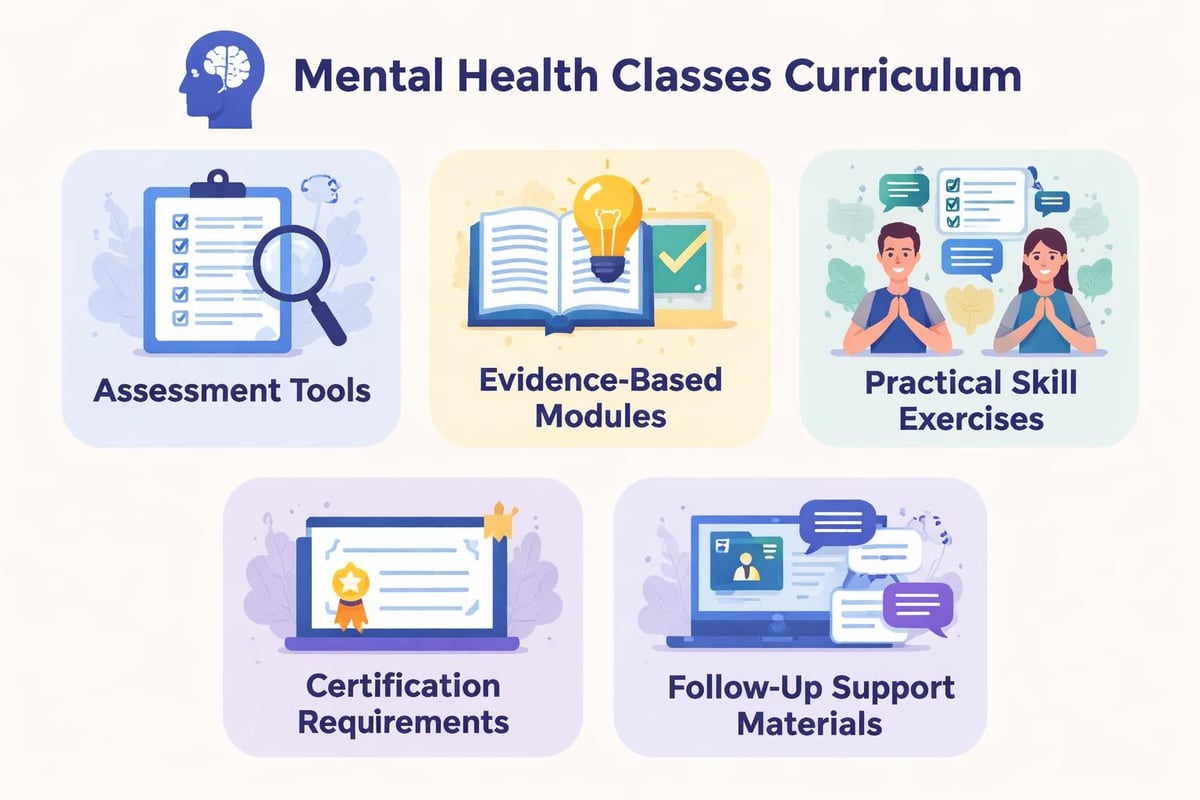
Professional mental health classes typically include several foundational elements that distinguish them from general awareness initiatives. Assessment and baseline measurement establish starting points for participants, while evidence-based content ensures information aligns with current psychological research and clinical best practices.
Structured curricula should incorporate:
- Clear learning objectives tied to measurable competencies
- Interactive exercises that build practical skills
- Case studies reflecting realistic workplace scenarios
- Assessment tools to evaluate knowledge retention
- Follow-up resources supporting ongoing application
Credentialing and certification add accountability to these programs, providing participants with recognized credentials that validate their knowledge. Organizations should verify that training providers maintain appropriate professional standards and regularly update content to reflect evolving research.
| Program Type | Duration | Target Audience | Primary Outcomes |
|---|---|---|---|
| Mental Health First Aid | 8 hours | General employees | Crisis response, resource navigation |
| Manager Resilience Training | 12-16 hours | Supervisors, team leads | Early intervention, supportive conversations |
| Trauma-Informed Practice | 6-12 hours | Client-facing staff | Recognition, appropriate responses |
| Strategic Wellbeing Planning | 4-8 hours | HR, senior leadership | Policy development, systems thinking |
Evidence-Based Selection Criteria for Organizations
Selecting appropriate mental health classes requires careful evaluation of program quality, provider credentials, and alignment with organizational needs. Evidence-based mental health education programs demonstrate measurable impact through validated assessment tools and peer-reviewed methodologies.
Evaluating Provider Credentials and Expertise
Professional training providers should demonstrate subject matter expertise through relevant qualifications, practical experience, and ongoing professional development. Clinical backgrounds in psychology, counseling, or social work provide foundational knowledge, while organizational psychology expertise ensures content translates effectively to workplace contexts.
Key verification steps include:
- Review instructor qualifications and professional registrations
- Examine curriculum against credible mental health information sources
- Request evidence of program outcomes and participant feedback
- Verify alignment with industry standards and regulatory requirements
- Assess customization capabilities for organizational context
Organizations should prioritize providers who maintain transparent relationships with reputable mental health organizations and regularly update content based on emerging research. The Workplace Mental Health Institute exemplifies this approach through continuous program refinement based on participant outcomes and current psychological science.
Matching Training to Organizational Maturity
Different organizations require different mental health classes based on their current capacity, existing initiatives, and strategic objectives. Foundational programs suit organizations beginning their wellbeing journey, while advanced training serves workplaces with established mental health frameworks seeking specialized capabilities.
Organizations at various stages benefit from tailored approaches:
- Emerging: Awareness building, basic literacy, stigma reduction
- Developing: Manager skills, early intervention, policy frameworks
- Established: Specialized topics, trauma response, cultural integration
- Leading: Strategic consultation, advanced resilience, measurement systems
This progression ensures training investments build logically on existing knowledge and organizational readiness rather than overwhelming participants or duplicating previous learning.
Manager-Specific Mental Health Classes
Supervisors and team leaders occupy a critical position in workplace mental health ecosystems, making manager-focused mental health classes particularly valuable. These individuals observe day-to-day performance patterns, conduct regular check-ins, and influence team culture through their responses to stress and challenge.
Building Conversational Competence
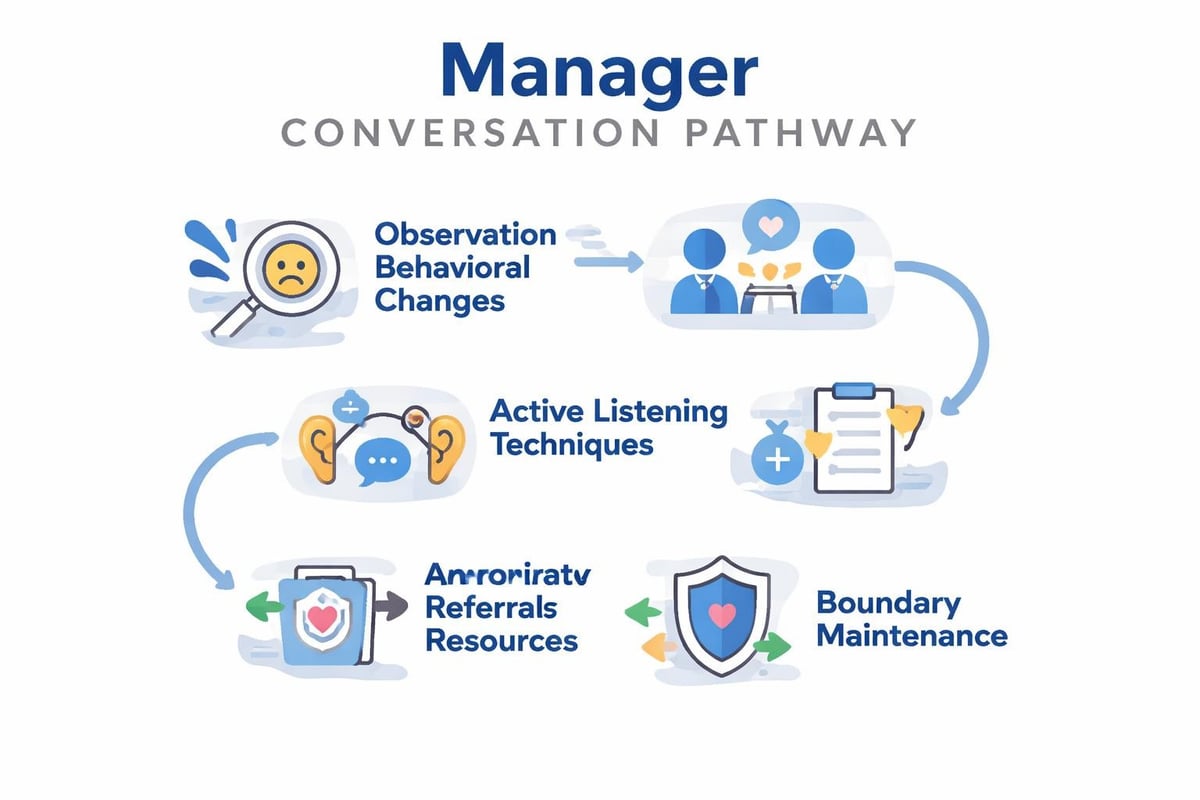
Effective manager training emphasizes conversational frameworks that support early intervention without requiring clinical expertise. Participants learn to recognize behavioral changes, initiate supportive discussions, and navigate appropriate boundaries between managerial and clinical roles.
Practical skills development includes:
- Recognizing early warning signs in performance and behavior patterns
- Initiating non-diagnostic conversations about wellbeing
- Active listening techniques that validate employee experiences
- Appropriate responses to disclosures about mental health challenges
- Navigation of reasonable accommodations and support systems
- Boundary setting between support and clinical intervention
Role-playing exercises within mental health classes allow managers to practice these conversations in low-stakes environments, building confidence before applying skills in actual situations. This experiential learning proves more effective than purely theoretical instruction.
Organizations can access specialized manager training through programs like those offered at https://thewmhionline.com, which provide structured pathways for developing supervisory mental health competencies.
Creating Psychologically Safe Team Environments
Beyond individual conversations, mental health classes for managers should address team-level dynamics that influence psychological safety and wellbeing. This includes examining how work design, communication patterns, and performance expectations impact employee mental health.
| Team Factor | Manager Influence | Training Focus |
|---|---|---|
| Workload distribution | Assign tasks equitably | Capacity assessment, delegation skills |
| Communication norms | Model transparency | Vulnerability, check-in structures |
| Error responses | Frame as learning opportunities | Growth mindset, de-escalation |
| Recognition practices | Acknowledge contributions regularly | Specific feedback, peer recognition |
These systemic approaches complement individual support skills, addressing environmental factors that significantly influence employee wellbeing independent of personal resilience.
Employee-Level Training Programs
While manager training often receives priority attention, mental health classes designed for all employees contribute substantially to organizational wellbeing outcomes. These programs build personal resilience, improve help-seeking behavior, and create shared language around psychological health.
Personal Resilience and Stress Management
Employee-focused courses typically emphasize individual strategies for maintaining wellbeing amid workplace demands. Content covers stress physiology, coping mechanisms, boundary setting, and self-care practices grounded in psychological research rather than generic wellness advice.
Effective programs distinguish between:
- Acute stress responses: Techniques for managing immediate challenges
- Chronic stress patterns: Systemic changes to reduce ongoing strain
- Preventive practices: Habits that build baseline resilience
- Crisis resources: When and how to access professional support
This nuanced approach acknowledges that workplace mental health requires both reactive coping skills and proactive wellbeing practices. Mental health education and training programs should equip participants with diverse strategies applicable across varying situations.
Peer Support and Collective Wellbeing
Beyond individual skill development, employee mental health classes can cultivate peer support networks that extend beyond formal training sessions. Participants learn to recognize when colleagues may benefit from support and how to offer appropriate assistance within professional boundaries.
Training in peer support typically covers:
- Recognizing signs a colleague may be struggling
- Approaching conversations with empathy and respect
- Listening without attempting to diagnose or solve
- Connecting peers with appropriate professional resources
- Maintaining confidentiality and appropriate boundaries
- Supporting colleagues through return-to-work transitions
These capabilities create multiple support pathways within organizations, reducing reliance solely on formal reporting structures or clinical interventions.
Specialized Topics in Workplace Mental Health Education
As organizational understanding deepens, demand increases for mental health classes addressing specific challenges or populations. These specialized programs allow organizations to target particular needs while building on foundational mental health literacy.
Trauma-Informed Organizational Practice
Trauma-informed training recognizes that significant proportions of employees have experienced potentially traumatic events that may influence workplace functioning. These mental health classes teach participants to recognize trauma responses and adapt practices to avoid inadvertent re-traumatization.
Key principles include:
- Safety: Creating physically and emotionally secure environments
- Trustworthiness: Maintaining transparent and consistent practices
- Peer support: Leveraging collective healing and mutual assistance
- Collaboration: Sharing power and decision-making appropriately
- Empowerment: Building on strengths rather than focusing on deficits
- Cultural sensitivity: Recognizing diverse trauma experiences and responses
Organizations serving vulnerable populations or operating in high-stress industries particularly benefit from trauma-informed approaches integrated across policies, procedures, and interpersonal practices.
Mental Health Considerations Across Career Stages
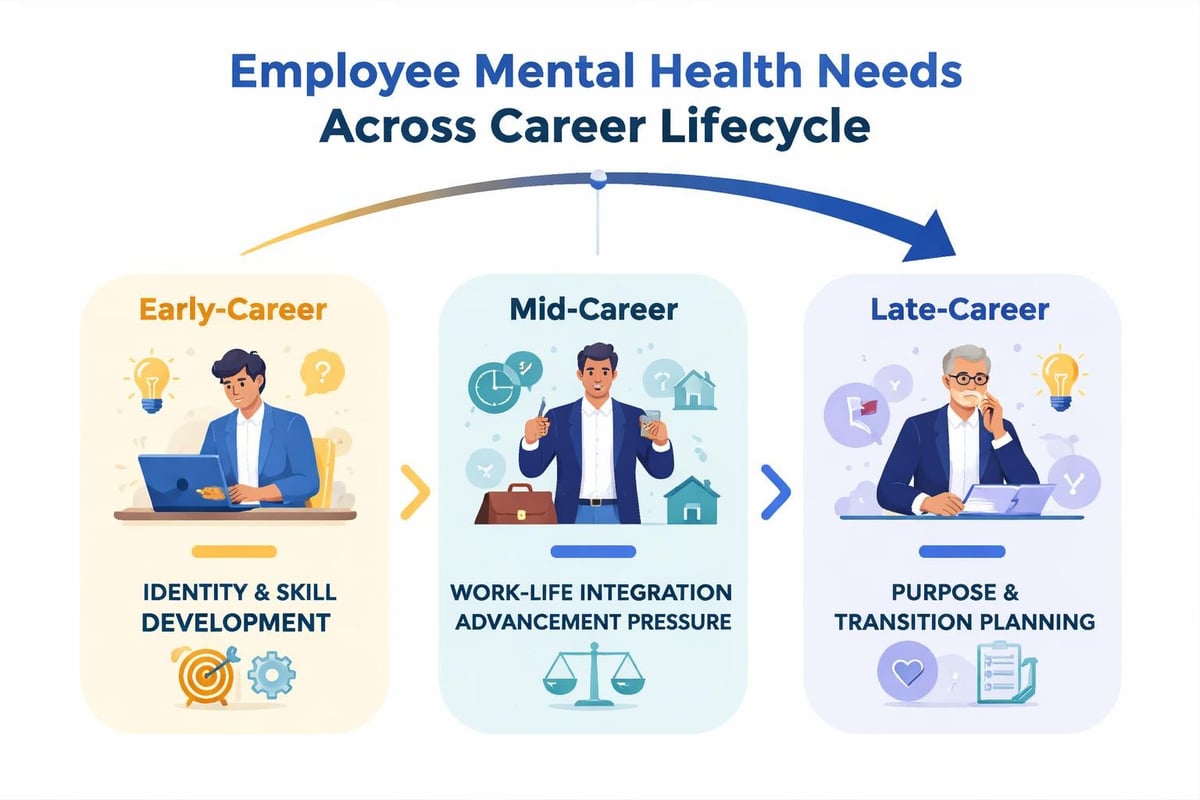
Different career phases present distinct mental health challenges requiring tailored approaches. Early-career employees may struggle with identity development and impostor syndrome, while mid-career professionals often navigate competing demands between advancement and caregiving responsibilities. Late-career workers face transitions around purpose, identity, and eventual retirement.
Mental health classes addressing these developmental considerations provide age-appropriate strategies while avoiding stereotyping. This lifecycle approach acknowledges that effective wellbeing support evolves alongside career progression.
Implementation Strategies for Maximum Impact
Even well-designed mental health classes deliver limited value without thoughtful implementation that promotes participation, supports application, and reinforces learning over time. Organizations should approach mental health education as ongoing capacity building rather than one-time compliance exercises.
Creating Participation Pathways
Mandatory versus voluntary training presents strategic considerations. Required attendance ensures baseline knowledge across the workforce but may create resentment if poorly executed. Voluntary programs generate higher engagement but risk missing those who would benefit most.
Hybrid approaches often prove most effective:
- Require foundational mental health literacy for all staff
- Offer voluntary advanced training for interested participants
- Mandate role-specific courses (manager training, crisis response)
- Provide incentives for voluntary participation beyond requirements
- Create clear pathways showing progression from basic to advanced content
Transparent communication about training purposes, time commitments, and expected outcomes increases participation quality regardless of whether attendance is required.
Integration with Organizational Systems
Mental health classes achieve greatest impact when connected to broader workplace wellbeing strategies rather than existing as isolated initiatives. Policy alignment ensures training content reflects actual organizational practices and available support systems.
| System Integration Point | Connection to Training | Implementation Example |
|---|---|---|
| Performance management | Apply wellbeing conversations | Integrate check-in frameworks into 1-on-1 templates |
| Leave policies | Reference available supports | Include mental health days in benefits orientation |
| Return-to-work processes | Practice graduated transitions | Train managers on accommodation conversations |
| Employee assistance programs | Promote resource awareness | Share contact information during relevant modules |
This systemic integration transforms training from theoretical knowledge into practical organizational capability that shapes daily operations.
For Australian organizations specifically, localized resources and region-specific considerations are available through https://www.wmhi.com.au, ensuring training aligns with relevant regulatory frameworks and cultural contexts.
Measuring Training Effectiveness and Outcomes
Organizations investing in mental health classes require evidence that programs deliver promised benefits. Robust evaluation frameworks measure both immediate learning and longer-term behavioral and organizational outcomes.
Multi-Level Assessment Approaches
Comprehensive evaluation examines impact across four levels: reaction, learning, behavior, and results. Reaction measures capture participant satisfaction and perceived relevance. Learning assessments verify knowledge acquisition through pre- and post-training tests. Behavioral evaluations track skill application through manager observation or self-report. Results metrics connect training to organizational outcomes like absenteeism rates or engagement scores.
Effective measurement strategies include:
- Pre-training baseline assessment of knowledge and confidence
- Immediate post-training evaluation of satisfaction and learning
- 30-day follow-up assessing application and barriers
- 90-day behavioral observation by managers or peers
- Annual review of organizational metrics tied to training objectives
This longitudinal approach provides nuanced understanding of training impact beyond immediate participant reactions.
Return on Investment Calculations
Mental health classes represent significant organizational investments requiring financial justification. ROI calculations should account for both direct costs (training fees, participant time) and measurable benefits (reduced absenteeism, lower turnover, improved productivity).
Conservative ROI estimates for workplace mental health training typically range from 2:1 to 4:1, meaning every dollar invested returns two to four dollars in measurable benefits. Organizations should track relevant metrics before and after training implementation to document specific returns rather than relying on industry averages.
Continuing Education and Skill Maintenance
Mental health knowledge evolves as psychological research advances and workplace contexts shift. One-time training becomes outdated, requiring ongoing education that keeps participant skills current and relevant.
Refresher Training and Advanced Modules
Organizations should plan refresher sessions at regular intervals, typically annually for foundational content and every two to three years for specialized topics. These sessions reinforce core concepts, address questions arising from practical application, and introduce updates reflecting new research or organizational changes.
Advanced modules allow interested participants to deepen expertise beyond foundational mental health classes. Topics might include complex case consultation, cultural considerations in mental health support, or integration of wellbeing into strategic planning processes.
Building Internal Capability
Rather than relying exclusively on external providers, mature organizations develop internal training capacity through train-the-trainer programs. This approach creates sustainable capability while ensuring content reflects specific organizational culture and challenges.
Internal trainer development typically involves:
- Intensive facilitation training covering adult learning principles
- Deep content mastery through extended study and practice
- Supervised co-facilitation with experienced trainers
- Ongoing coaching and quality assurance processes
- Regular content updates and professional development
Organizations can access comprehensive train-the-trainer programs and ongoing consultation through resources like those available at Workplace Mental Health Institute, building long-term internal expertise.
Video resources demonstrating effective training techniques and providing supplementary content are available through platforms like https://www.youtube.com/@WorkplaceMentalHealthInstitute, supporting both participants and internal facilitators.
Addressing Common Implementation Challenges
Organizations frequently encounter predictable obstacles when implementing mental health classes. Anticipating these challenges and preparing mitigation strategies increases program success likelihood.
Managing Stigma and Resistance
Despite increasing awareness, mental health stigma persists in many workplace cultures. Some employees view training participation as admission of weakness or struggle, while others dismiss mental health as less important than operational priorities. Leadership modeling proves essential, with senior executives visibly participating and discussing their own wellbeing practices.
Communication strategies should emphasize:
- Mental health as universal rather than relevant only to those with diagnosed conditions
- Training as professional skill development equivalent to technical or leadership training
- Organizational benefits including performance, innovation, and retention
- Confidentiality protections and psychological safety
Gradual culture change through consistent messaging typically proves more effective than attempting immediate transformation through single initiatives.
Balancing Depth and Accessibility
Mental health content spans from basic awareness to clinical complexity. Training that oversimplifies risks seeming condescending, while excessive complexity overwhelms non-specialist participants. Layered learning pathways address this challenge by providing foundational content accessible to all employees while offering deeper exploration for interested participants.
Effective courses acknowledge complexity while focusing on practical application within professional roles rather than attempting to create pseudo-clinicians. Clear delineation between supportive conversations and clinical intervention helps participants understand their appropriate scope.
Mental health classes provide organizations with structured pathways for building essential wellbeing capabilities across their workforce, from foundational literacy to advanced specialized skills. When thoughtfully selected, effectively implemented, and integrated with broader organizational systems, these programs deliver measurable improvements in employee engagement, retention, and performance. Workplace Mental Health Institute offers comprehensive training solutions, strategic consultation, and ongoing support to help organizations develop sustainable mental health capacity aligned with their unique contexts and objectives.

