
Imagine leading a team through constant disruption, shifting markets, and relentless uncertainty. In 2026, resilience for leaders is not just a competitive advantage, it is essential for navigating today’s volatile workplace. Research shows organizations led by resilient leaders consistently outperform their peers, maintaining high engagement and wellbeing even under pressure.
This guide offers evidence-based strategies to build and sustain resilience for leaders and their teams. Discover what resilience truly means, why it is the defining leadership skill, and how to master the mindsets, behaviors, and organizational practices that drive long-term success. Start your journey to transformative leadership today.
Understanding Resilience in Leadership
Defining Resilience for Modern Leaders
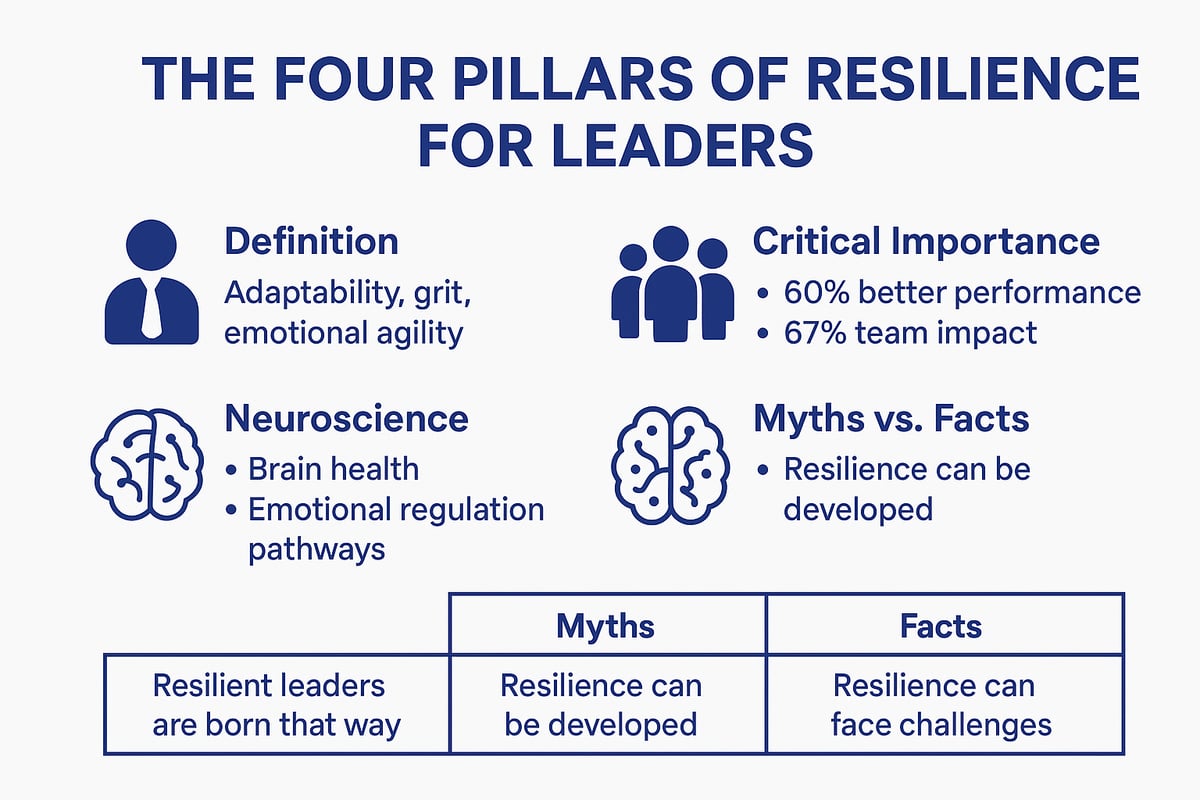
Resilience for leaders is the capacity to adapt, recover, and grow through adversity, uncertainty, and rapid workplace change. Unlike a fixed personality trait, resilience is a set of learned skills that leaders can actively develop. In today's environment, this means navigating disruptions such as the pandemic or digital transformation with flexibility and composure.
Resilience for leaders involves adaptability, grit, and emotional agility. It is not just about enduring stress but about thriving in the face of it. Recent workplace challenges have shown that leaders who cultivate these skills help their teams remain engaged and productive. For practical strategies and insights on strengthening resilience for leaders, see Building Workplace Resilience.
Why Resilience is Critical for Leadership Success in 2026
Organizations with high resilience for leaders consistently outperform competitors, especially during periods of disruption. Research shows that resilient leadership directly improves team morale, productivity, and retention. Teams led by resilient leaders are more agile and responsive to change, which is essential as hybrid and remote work reshape expectations.
A compelling example comes from government agencies that maintained essential services and high engagement throughout crisis periods while others struggled. The evolving demands on leadership now require resilience for leaders to handle ambiguity, drive innovation, and sustain performance. Investing in these skills is no longer optional but necessary for long-term organizational health.
The Neuroscience and Psychology of Resilient Leadership
The science behind resilience for leaders highlights the brain’s ability to adapt through neuroplasticity. Stress activates the amygdala, but resilient leaders use emotional regulation and cognitive flexibility to respond constructively. Self-awareness enables leaders to recognize stress signals and shift their mindset toward solutions.
Psychological research confirms that emotional agility and positive coping mechanisms are core to resilience for leaders. Leaders can train their brains for greater adaptability by practicing mindfulness, reflection, and stress management techniques. These practices support personal growth and enable sustained, effective leadership even in challenging environments.
Common Myths and Misconceptions
A frequent misconception is that resilience for leaders means suppressing emotion or displaying constant toughness. In reality, resilient leaders acknowledge struggles and seek support when needed. Misunderstanding resilience can lead to burnout if leaders ignore their own limits or discourage openness in their teams.
True resilience for leaders involves vulnerability, self-care, and learning from setbacks. Leaders who model these behaviors foster psychological safety and trust within their organizations. Real-world examples demonstrate that seeking help and encouraging dialogue are signs of strength, not weakness. Addressing these myths is essential for developing authentic, sustainable leadership resilience.
Core Skills and Mindsets for Resilient Leaders
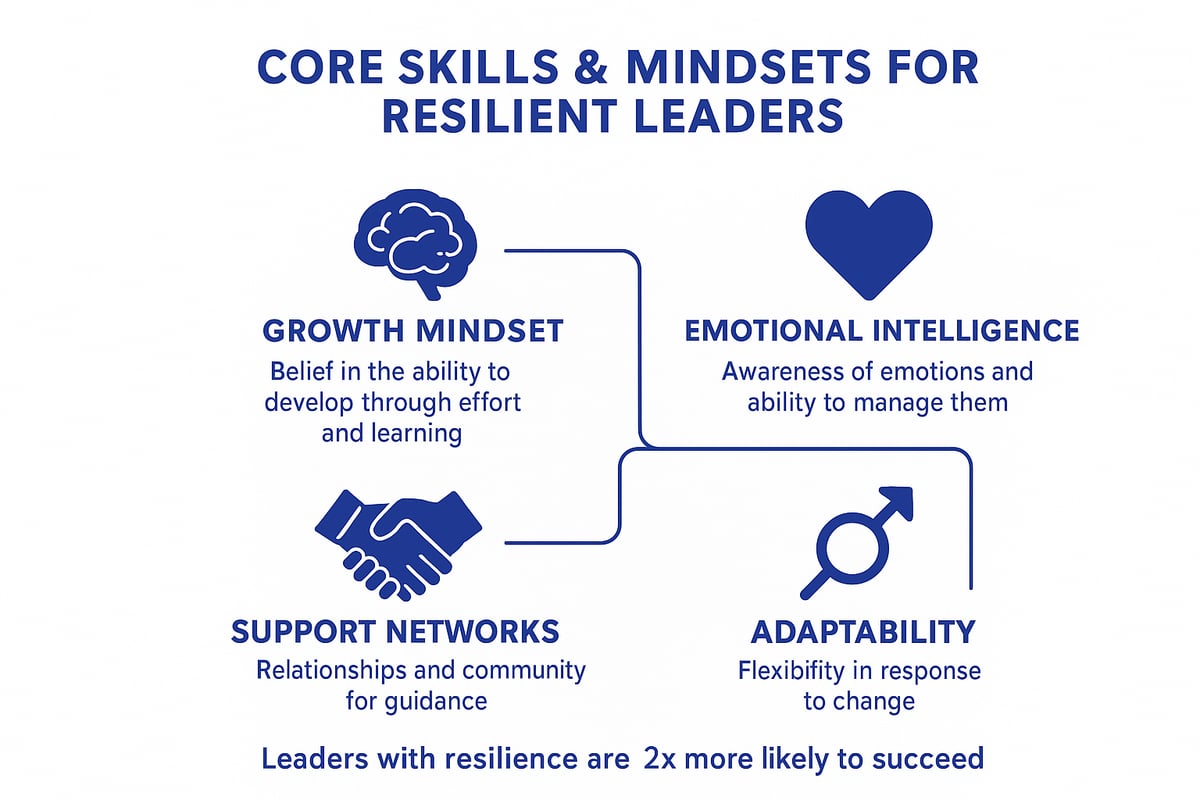
Modern workplaces demand more than technical expertise. The core skills and mindsets behind resilience for leaders empower individuals to meet challenges, adapt to constant change, and foster thriving teams. Developing these attributes is essential for sustained leadership effectiveness and wellbeing.
Cultivating a Growth Mindset
A growth mindset is the belief that abilities can be developed through dedication and learning. For resilience for leaders, this mindset transforms setbacks into valuable lessons, fueling continuous improvement. Leaders with a growth mindset view challenges as stepping stones rather than obstacles.
For example, when a project fails, a resilient leader analyzes what went wrong and applies those insights to future decisions. This approach encourages teams to experiment and innovate without fear of blame.
Practical ways to foster a growth mindset:
- Encourage reflection after setbacks.
- Use language that values effort and progress.
- Share stories of overcoming failure.
Leaders who model a growth mindset inspire adaptability and openness to change.
Emotional Intelligence and Self-Regulation
Emotional intelligence is foundational for resilience for leaders. It enables leaders to recognize, understand, and manage their own emotions, as well as respond effectively to others. High emotional intelligence helps leaders stay calm under pressure and model constructive responses to stress.
Key techniques include mindfulness, self-reflection, and naming emotions without judgment. Leaders who practice self-regulation can manage anxiety or frustration, maintaining a balanced team climate.
For deeper insight into how emotional intelligence and resilience work together to enhance workplace wellbeing, explore Resilience and Wellbeing in the Workplace.
These skills not only protect against burnout but also foster trust and psychological safety within teams.
Building Support Networks and Relationships
Strong support networks are a critical pillar of resilience for leaders. Peer, mentor, and team relationships provide emotional backup, practical advice, and perspective during tough times. Leaders who invest in these connections recover faster from setbacks and sustain high performance.
Strategies to build robust networks include:
- Regular check-ins with peers and mentors.
- Participating in professional communities.
- Encouraging team collaboration and open communication.
Organizations with strong social capital see higher engagement and lower turnover. Support systems buffer stress, enabling leaders and teams to thrive in high-pressure environments.
Embracing Change and Uncertainty
Adaptability is at the heart of resilience for leaders. In dynamic workplaces, leaders must guide teams through ambiguity and shifting priorities. Those who embrace change see opportunities rather than threats, fostering a culture of experimentation.
Techniques to build adaptability:
- Reframe change as a chance for growth.
- Celebrate small wins during transitions.
- Promote psychological safety so team members feel safe to try new approaches.
Leaders who pivot strategies in response to disruption build confidence within their teams and maintain momentum, even in uncertain times.
Step-by-Step Guide: How Leaders Can Build Resilience
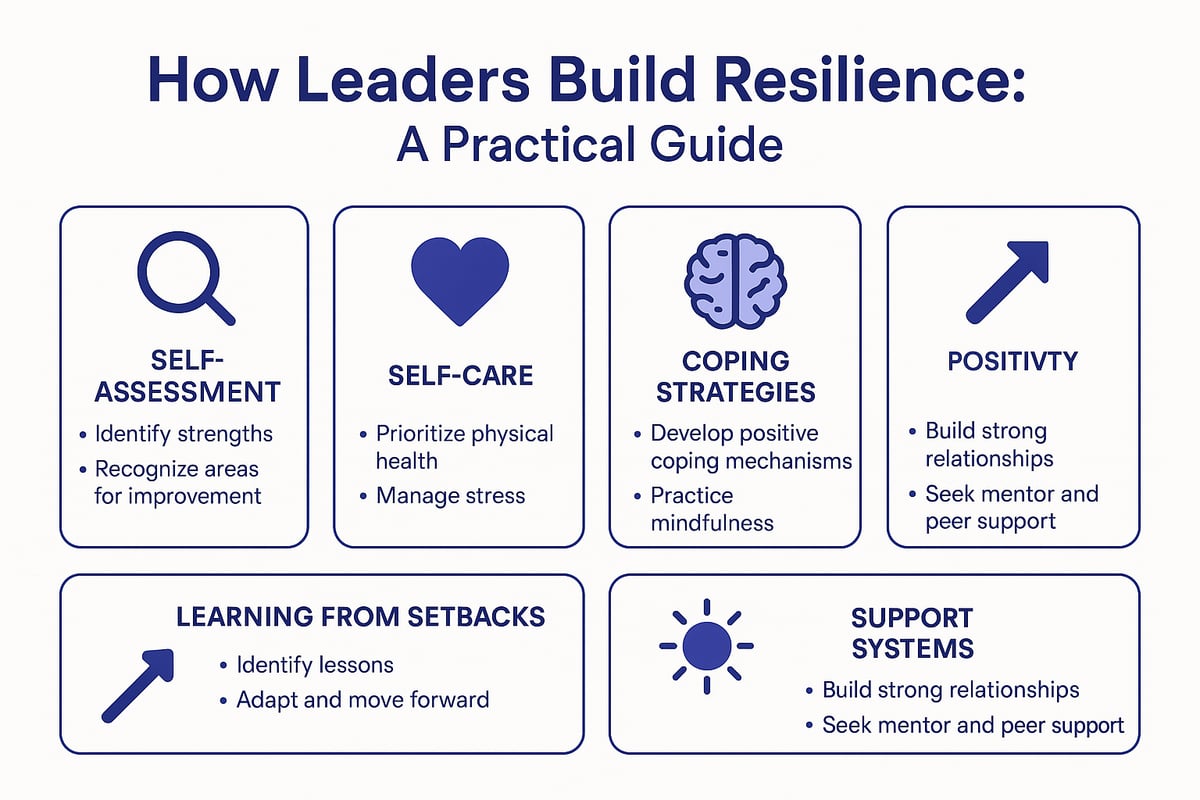
Building resilience for leaders requires intentional effort and structured practice. This step-by-step guide breaks down the process into actionable phases, empowering you to develop and sustain resilience in any leadership context. Each step is grounded in research and practical experience, ensuring you can apply these principles immediately.
Step 1: Self-Assessment and Awareness
The first step in building resilience for leaders is self-assessment. Leaders need to understand their baseline resilience, stress triggers, and unique strengths. Use evidence-based tools like the Connor-Davidson Resilience Scale or brief self-reflection surveys to identify current levels.
Seek feedback from peers and team members to gain a complete picture. Regular check-ins help you notice patterns and areas for growth. By setting a baseline, leaders can track progress and tailor their development journey.
- Use self-assessment questionnaires.
- Identify recurring stressors.
- Ask for honest feedback from your team.
Starting with self-awareness ensures that resilience for leaders is built on a foundation of insight.
Step 2: Practicing Self-Care and Wellbeing
Physical and mental wellbeing are foundational to resilience for leaders. Research shows that leaders who prioritize sleep, nutrition, and movement experience better stress management and decision-making.
Establish a consistent routine that includes exercise, healthy meals, and scheduled breaks. Mindfulness practices, such as short breathing exercises or guided meditation, can reduce stress and improve focus.
Set clear boundaries to protect your time and energy. Model self-care for your team to encourage a culture of wellbeing. Leaders who consistently invest in their wellbeing are better equipped to sustain resilience for leaders through ongoing challenges.
Step 3: Developing Coping Strategies and Emotional Skills
Effective coping skills are essential for resilience for leaders, especially during high-pressure situations. Mindfulness, cognitive reframing, and controlled breathing help leaders manage negative emotions and stay present.
Learn to recognize early signs of stress and use strategies such as:
- Practicing gratitude daily.
- Reframing setbacks as learning moments.
- Using deep breathing or grounding techniques.
For evidence-based methods, explore Stress Management and Resiliency Training, which offers practical approaches tailored for leaders. Adopting these tools supports emotional agility and rapid recovery from setbacks, strengthening resilience for leaders at every level.
Step 4: Learning from Setbacks and Failure
Resilience for leaders grows when setbacks are reframed as valuable lessons. Foster an environment where mistakes are openly discussed and analyzed, not hidden or punished.
After a setback, use structured reflection:
- What happened?
- What contributed to the outcome?
- What can be changed for next time?
Encourage team members to share learning moments. Organizations that prioritize learning from failure reduce fear and build trust. Leaders who role model this approach help create resilient, adaptable teams. Remember, resilience for leaders is not about avoiding failure, but about bouncing forward with greater wisdom.
Step 5: Fostering a Positive and Solution-Oriented Outlook
Optimism is a powerful driver of resilience for leaders. Maintaining hope and a solution-focused mindset, even in uncertainty, inspires teams and sustains engagement.
Celebrate small wins and acknowledge progress regularly. Use positive psychology techniques, such as expressing gratitude or focusing on team strengths, to energize yourself and others.
By emphasizing solutions instead of problems, leaders reinforce a culture of possibility. This approach not only boosts morale but also enhances resilience for leaders and teams facing ongoing change.
Step 6: Building and Leveraging Support Systems
No leader builds resilience alone. Strong support networks are critical for resilience for leaders, providing practical help and emotional encouragement.
Cultivate relationships with mentors, peers, and trusted advisors. Encourage open communication and knowledge-sharing within your organization. Formal support programs, such as peer groups or coaching, offer structured opportunities for connection.
Be proactive in recognizing and addressing signs of isolation. Leaders who invest in their networks are more likely to thrive, especially in demanding or remote environments. Resilience for leaders is always amplified by collective strength.
Organizational Strategies to Support Resilient Leadership
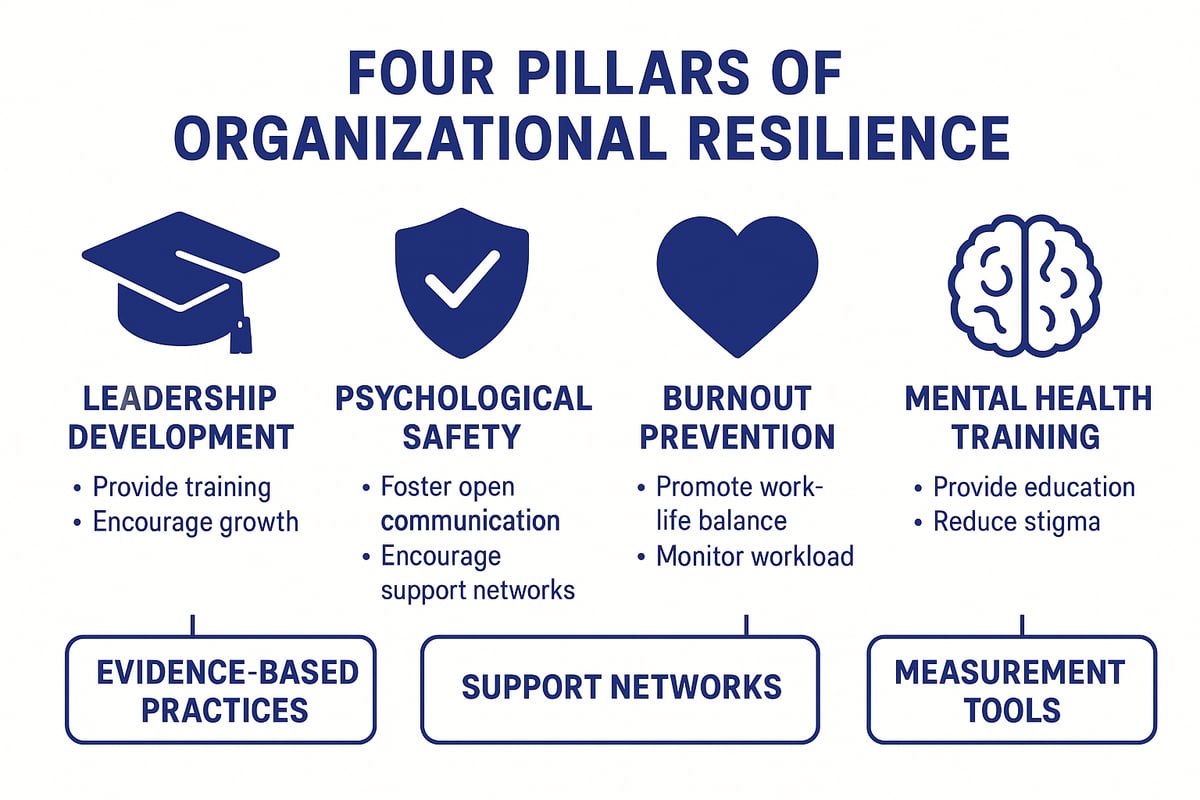
Building organizational strategies that sustain resilience for leaders is essential for long-term performance and wellbeing. Effective organizations embed resilience into every layer, from leadership programs to everyday culture. The following strategies help create environments where leaders and teams can thrive, even during disruption.
Embedding Resilience into Leadership Development Programs
Integrating resilience for leaders into leadership development is no longer optional. Today’s best programs go beyond technical skills, focusing on adaptability, emotional agility, and self-management. According to the 2025 Global Leadership Development Study, organizations prioritizing resilience and social intelligence outperform peers in navigating change.
To embed resilience, organizations should:
- Incorporate scenario-based learning and stress simulations.
- Offer ongoing coaching and peer learning, not just one-off workshops.
- Measure the impact of resilience modules on retention and engagement.
A structured, evidence-based approach ensures resilience for leaders is a lived, measurable outcome, not just a training buzzword.
Creating a Culture of Psychological Safety
A culture of psychological safety is foundational for resilience for leaders. When leaders and teams feel safe to share ideas and admit mistakes, innovation and recovery flourish. Psychological safety means:
- Leaders openly model vulnerability and ask for feedback.
- Teams are encouraged to take calculated risks without fear of blame.
- Policies support open dialogue about setbacks and learning.
Organizations with high psychological safety report higher engagement and stronger adaptability. Leaders can start by setting the tone in meetings, inviting input, and normalizing conversations about challenges.
Addressing Burnout and Promoting Sustainable Performance
Burnout is a critical barrier to resilience for leaders. Early recognition and targeted prevention are essential for sustainable performance. Organizations should:
- Train leaders to spot early burnout signs in themselves and their teams.
- Promote work-life balance through flexible policies and regular check-ins.
- Encourage use of wellbeing resources and recovery time.
For in-depth guidance, the Burnout Prevention in the Workplace resource offers actionable strategies to help leaders address burnout before it undermines resilience. Prioritizing leader wellbeing delivers measurable returns in productivity and retention.
Leveraging Mental Health Training for Leaders
Dedicated mental health training equips leaders with coping skills that are central to resilience for leaders. Evidence-based programs provide:
- Practical tools for emotional regulation and stress management.
- Frameworks for supporting team mental health.
- Opportunities for leaders to practice self-care and seek support.
Integrating mental health training into leadership pathways builds a resilient leadership pipeline. Organizations benefit from lower absenteeism, improved morale, and a culture where resilience is continually developed and sustained.
Measuring and Sustaining Leadership Resilience
Understanding how to measure and sustain resilience for leaders is essential for long-term organizational success. Tracking development ensures that leaders not only grow but also maintain the capacity to thrive amid ongoing change. Effective measurement and intentional improvement strategies position organizations to build a robust culture of resilience for leaders at every level.
Key Metrics and Indicators of Resilient Leadership
To measure resilience for leaders, organizations must define clear, actionable metrics. Common indicators include employee engagement, turnover rates, adaptability scores, and leader self-assessment data. Surveys and 360-degree feedback tools help capture these insights.
For example, organizations may track resilience as a KPI, comparing team performance before and after resilience training. Regular data review allows leaders to adjust strategies based on measurable outcomes. Using these metrics, companies can ensure that resilience for leaders is not just aspirational but integrated into everyday leadership practice.
Continuous Improvement: Feedback and Reflection Loops
Sustaining resilience for leaders requires ongoing reflection and feedback. Establishing regular check-ins, peer debriefs, and after-action reviews ensures that learning is continuous. Leadership teams often use structured self-reflection tools to evaluate their responses to challenges and identify areas for growth.
Peer feedback provides diverse perspectives, helping leaders adapt and refine their resilience strategies. Embedding feedback loops into performance management keeps resilience for leaders at the forefront of development conversations and accelerates long-term progress.
Leveraging Technology and Digital Tools
Digital solutions play a vital role in building and maintaining resilience for leaders, especially in remote or hybrid environments. Apps and online platforms offer resilience training modules, track progress with dashboards, and facilitate leader support communities.
Some organizations use digital assessments to pinpoint strengths and growth areas, while platforms can provide ongoing microlearning. For evidence-based approaches, resources like Resilience Training That Can Change the Brain demonstrate how technology-enabled programs drive neuroplastic changes and measurable improvement in resilience for leaders.
Accessing Expert Resources and Ongoing Learning
Sustaining resilience for leaders means staying connected to current research and professional networks. Leaders should curate a library of evidence-based books, webinars, and courses, regularly engaging with expert communities.
Recommended resources include comprehensive online courses and thought leadership articles such as Resilience: The Most Coveted Leadership Skill For 2025. Encouraging ongoing learning and networking supports leaders in adapting to new challenges, ensuring that resilience for leaders remains a dynamic, evolving capability.
As we've explored together, resilience is the essential foundation for effective leadership in 2026—helping you navigate change, support your team, and drive sustainable results. If you’re ready to put these evidence-based strategies into action, deepen your practical skills, or discover resources tailored for real workplace challenges, I encourage you to take the next step. You don’t have to lead alone—there’s a world of expert support and proven programs waiting for you.
Find Out More
Let’s build a resilient future for you and your team, starting today.

