
The mental health global issue represents one of the most significant challenges facing organizations and societies worldwide. With over a billion people living with mental health conditions, the workplace has become a critical frontline in addressing this crisis. Understanding the scope, impact, and evidence-based responses to this challenge is essential for organizational leaders committed to creating sustainable, high-performing work environments.
Understanding the Scale of the Mental Health Global Issue
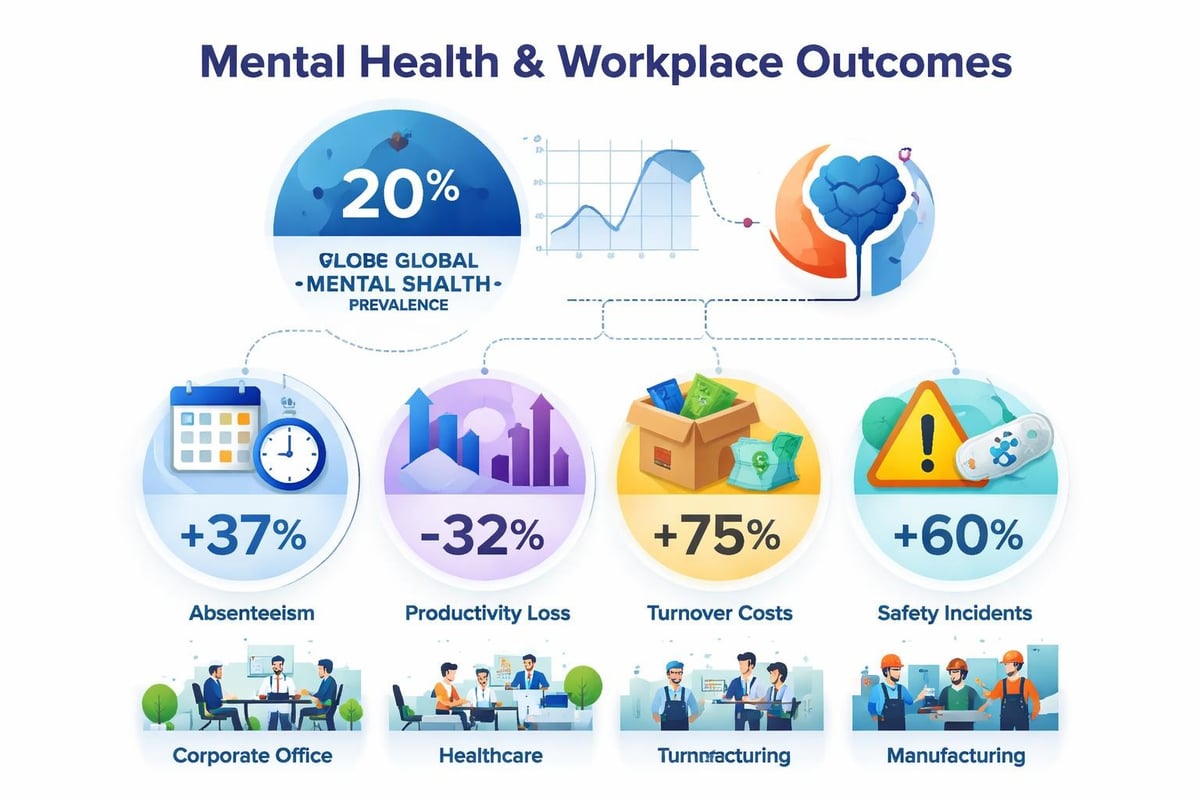
The magnitude of the mental health global issue extends far beyond individual suffering. According to the World Health Organization’s comprehensive overview, mental health conditions affect productivity, economic stability, and organizational performance across every industry and geographic region.
Depression and anxiety disorders alone cost the global economy approximately $1 trillion annually in lost productivity. These figures represent more than statistical abstractions; they reflect real organizational challenges including increased absenteeism, presenteeism, staff turnover, and reduced team effectiveness.
Workplace-Specific Manifestations
Organizations experience the mental health global issue through multiple interconnected pathways:
- Performance degradation across individual and team levels
- Increased sick leave and disability claims
- Elevated recruitment and training costs due to turnover
- Reduced innovation and problem-solving capacity
- Compromised safety outcomes in high-risk environments
- Deteriorating workplace culture and morale
The relationship between mental health and workplace outcomes operates bidirectionally. Poor mental health reduces work performance, while inadequate workplace conditions exacerbate mental health challenges. This creates cycles that demand systematic, evidence-informed intervention.
Economic and Productivity Dimensions
Research from the Institute for Health Metrics and Evaluation demonstrates that mental disorders rank among the leading causes of disability worldwide. For organizational leaders, this translates into concrete operational challenges requiring strategic responses.
| Impact Category | Estimated Cost | Organizational Consequence |
|---|---|---|
| Absenteeism | 7-10 days annually per affected employee | Direct productivity loss, workflow disruption |
| Presenteeism | 2-3x greater than absenteeism costs | Reduced quality, errors, safety risks |
| Turnover | 150-200% of annual salary per position | Knowledge loss, recruitment expenses |
| Healthcare | Rising insurance premiums | Increased operational costs |
The mental health global issue affects organizations differently based on sector, workforce demographics, and existing support infrastructure. However, no industry remains immune to these challenges.
Hidden Costs and Organizational Blind Spots
Many organizations underestimate the full economic impact of the mental health global issue because they focus exclusively on direct healthcare costs. The largest expenses typically appear in reduced productivity, quality degradation, and human capital disruption rather than medical claims.
Managers often lack the skills to recognize early warning signs or respond effectively when team members struggle. This gap in capability represents both a vulnerability and an opportunity for organizations committed to addressing mental health systematically. Training programs focused on building manager competence in mental health awareness and response provide measurable returns through earlier intervention and improved outcomes.
Systemic Barriers to Effective Response
Despite growing awareness, mental health remains one of the most neglected global health issues in terms of resource allocation and policy attention. This neglect manifests in workplace contexts through several persistent barriers.
Stigma and disclosure concerns remain the primary obstacle preventing employees from seeking support. Organizational cultures that inadvertently penalize vulnerability or equate mental health challenges with weakness create environments where problems intensify before intervention occurs.
Knowledge gaps among leadership contribute significantly to inadequate responses. Many executives and managers recognize the mental health global issue conceptually but lack frameworks for translating awareness into effective policy and practice.
Resource allocation misalignment occurs when organizations invest heavily in reactive measures such as Employee Assistance Programs while neglecting preventive strategies that address root causes including work design, psychological safety, and management capability.
The Service Gap Challenge
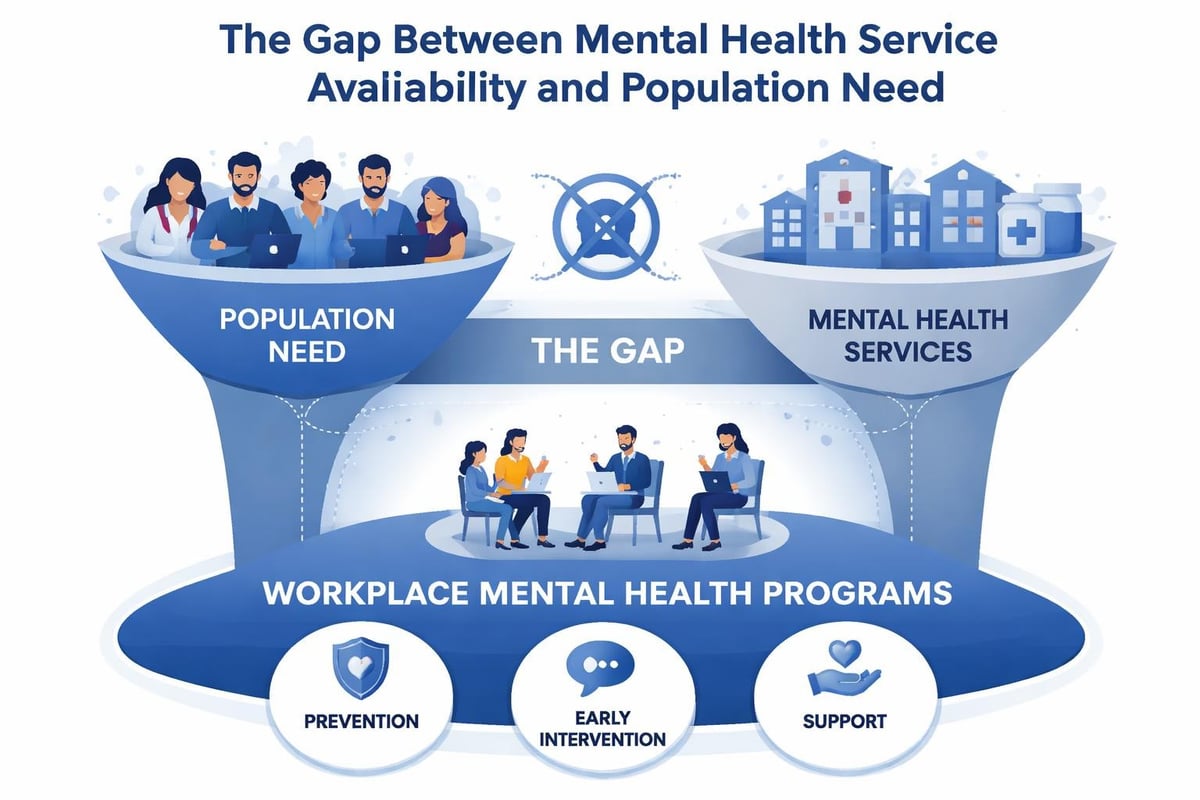
The WHO highlights urgent gaps in mental health services globally, noting that even in high-income countries, fewer than half of people with mental health conditions receive adequate care. This service scarcity places additional responsibility on organizations to create supportive environments that reduce mental health risks and facilitate early intervention.
For Australian organizations seeking comprehensive support frameworks, specialized resources available through WMHI Australia address regional considerations including workplace legislation, cultural factors, and local service networks.
Evidence-Based Organizational Strategies
Addressing the mental health global issue effectively requires multi-level intervention spanning individual, team, and organizational domains. Research consistently demonstrates that comprehensive approaches yield superior outcomes compared to isolated initiatives.
Primary Prevention Through Work Design
The most effective organizations address mental health proactively by designing work that promotes wellbeing rather than merely treating problems after they emerge:
- Job control and autonomy: Providing employees with appropriate decision-making authority and flexibility
- Workload management: Ensuring demands remain sustainable and aligned with available resources
- Role clarity: Establishing clear expectations, responsibilities, and success criteria
- Social support structures: Facilitating quality relationships and team cohesion
- Recognition systems: Acknowledging contributions and linking effort to meaningful outcomes
These design principles address fundamental psychological needs including competence, autonomy, and relatedness. Organizations that embed these elements into operational structures report significantly lower rates of mental health problems compared to those relying exclusively on reactive support services.
Manager Capability Development
Frontline managers represent the most critical leverage point for organizational mental health outcomes. They influence daily work experiences, recognize early warning signs, facilitate access to support, and shape team psychological safety.
Effective manager development programs focus on building practical capabilities:
- Recognizing signs of mental health challenges without requiring clinical expertise
- Conducting supportive conversations that respect boundaries while expressing concern
- Making appropriate referrals to internal and external resources
- Adjusting work arrangements to support recovery and sustained wellbeing
- Creating team environments where vulnerability is safe and support is normalized
Training delivered through specialized workplace mental health programs equips managers with frameworks that translate directly into improved team outcomes and reduced crisis incidents.
Measurement and Continuous Improvement
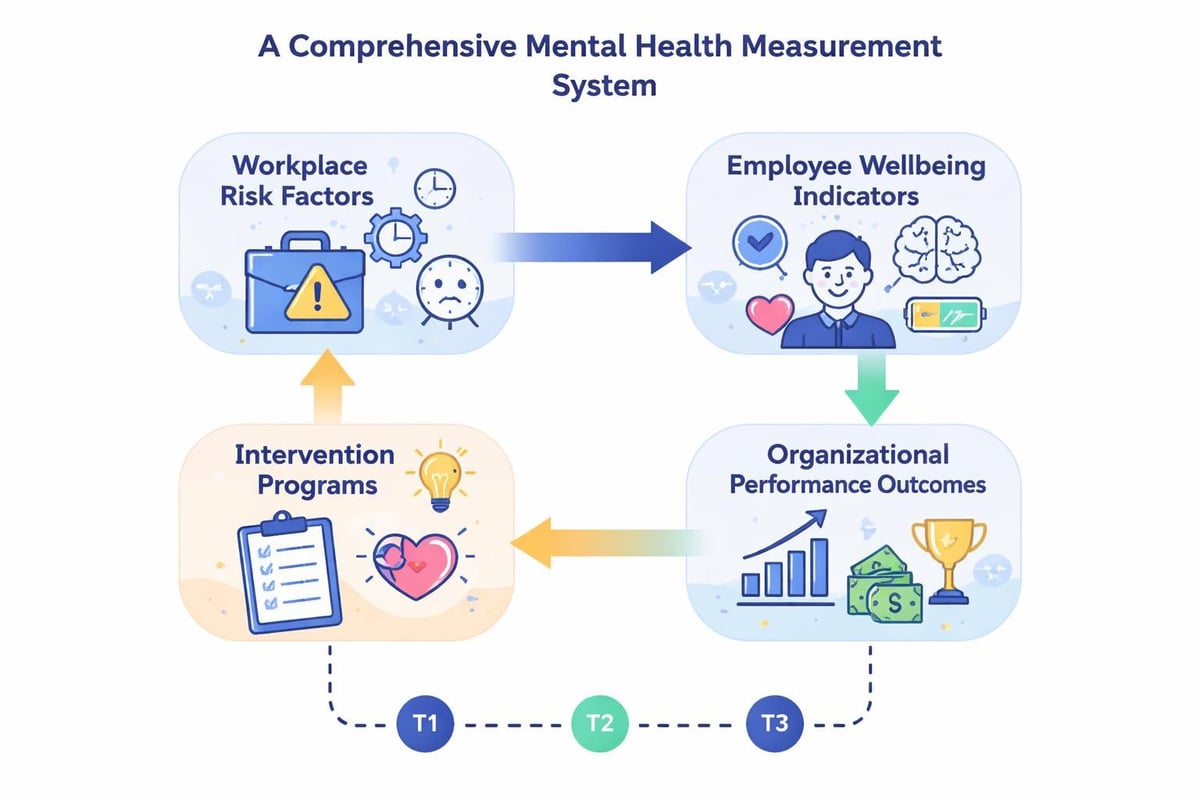
Organizations serious about addressing the mental health global issue implement robust measurement systems that track both leading and lagging indicators. Without systematic data collection, interventions remain disconnected from outcomes and improvement becomes accidental rather than intentional.
| Metric Type | Examples | Strategic Value |
|---|---|---|
| Prevalence indicators | Survey data on psychological distress, burnout symptoms | Population-level health status |
| Utilization metrics | EAP engagement, mental health leave | Service accessibility and appropriateness |
| Workplace factors | Psychological safety scores, job satisfaction | Environmental risk and protective factors |
| Performance outcomes | Productivity measures, quality indicators | Business case validation |
| Cultural indicators | Stigma levels, disclosure comfort | Readiness for intervention |
Effective measurement approaches balance quantitative rigor with qualitative insight. Employee focus groups, manager interviews, and exit data provide contextual understanding that numerical metrics alone cannot capture.
Establishing Baseline and Tracking Progress
Organizations beginning comprehensive mental health initiatives benefit from conducting thorough workplace wellbeing assessments that establish baseline conditions across multiple domains. These assessments identify specific risk factors, protective factors, and priority areas for intervention within the unique organizational context.
Regular reassessment enables tracking of progress, identification of emerging challenges, and refinement of strategies based on evidence of what works within the specific workplace. This data-driven approach transforms mental health from a compliance exercise into a strategic performance lever.
Cultural Transformation and Leadership Commitment
Sustainable progress on the mental health global issue requires cultural evolution rather than programmatic addition. Organizations achieve meaningful change when mental health considerations become integrated into decision-making processes, performance management, strategic planning, and leadership behavior.
Executive visibility plays a crucial role in normalizing mental health as a legitimate business concern. When senior leaders discuss their own experiences, acknowledge challenges openly, and allocate significant resources to mental health initiatives, they signal organizational values that cascade throughout all levels.
Policy alignment ensures that formal organizational structures support mental health rather than inadvertently undermining it. This includes reviewing performance management systems, promotion criteria, workload allocation processes, and communication norms for potential mental health impacts.
Peer support networks complement professional services by creating accessible, low-threshold resources within the workplace. Properly trained peer supporters provide emotional support, practical guidance, and facilitated connections to formal resources without requiring clinical expertise.
The Role of Psychological Safety
Google's extensive research into team effectiveness identified psychological safety as the single most important factor distinguishing high-performing teams. This finding has profound implications for addressing the mental health global issue in organizational contexts.
Psychological safety enables employees to:
- Raise concerns about unsustainable workloads before crisis occurs
- Request accommodations or support without fear of career consequences
- Contribute authentically without masking difficulties or pretending invulnerability
- Challenge practices that compromise wellbeing
- Offer and receive feedback that supports growth and development
Leaders create psychological safety through consistent behavior demonstrating that vulnerability is welcomed rather than punished, that mistakes are learning opportunities rather than character flaws, and that diverse perspectives strengthen rather than threaten team performance.
Integration with Broader Health and Wellbeing Strategies
The mental health global issue intersects significantly with physical health, chronic disease management, and overall wellbeing. The CDC highlights these connections, noting that mental health conditions often co-occur with physical health challenges and that integrated approaches yield superior outcomes.
Organizations developing comprehensive wellbeing strategies recognize that mental health cannot be addressed in isolation from:
- Physical health promotion: Exercise, nutrition, and sleep programs that support mental wellbeing
- Financial wellness: Stress reduction through financial literacy and security
- Social connection: Community building and relationship quality
- Purpose and meaning: Alignment between individual values and organizational mission
- Environmental factors: Physical workspace design, noise levels, and environmental stressors
This integrated perspective positions mental health within a broader human performance framework rather than treating it as a separate, stigmatized category.
Trauma-Informed Approaches
Many employees bring histories of trauma that influence their workplace experiences and needs. Trauma-informed care training helps organizations create environments that avoid re-traumatization while supporting healing and resilience. This approach recognizes the widespread impact of trauma and responds by embedding principles of safety, trustworthiness, peer support, collaboration, empowerment, and cultural sensitivity into organizational practices.
Global Perspectives and Local Implementation
While the mental health global issue affects every region, specific manifestations, available resources, and cultural contexts vary significantly. The United Nations emphasizes mental health as a global priority while acknowledging that effective responses require local adaptation.
Organizations operating across multiple countries navigate varying:
- Regulatory requirements for workplace mental health
- Healthcare system structures and service availability
- Cultural attitudes toward mental health and help-seeking
- Stigma levels and disclosure norms
- Language and communication preferences
- Family and community support systems
Effective global mental health strategies establish consistent principles and frameworks while enabling localization in implementation. This balance ensures equitable access to support while respecting cultural differences and leveraging local strengths.
Building Organizational Resilience
Beyond individual employee mental health, organizations benefit from developing collective resilience-the capacity to anticipate, prepare for, respond to, and recover from adverse events and chronic stressors. This organizational capability becomes increasingly critical in environments characterized by rapid change, uncertainty, and disruption.
Resilient organizations demonstrate:
- Adaptive capacity that enables pivoting in response to changing conditions
- Distributed decision-making authority that prevents bottlenecks during crises
- Redundancy in critical functions and knowledge
- Learning cultures that extract insights from both successes and failures
- Strong social capital and trust networks
- Clear values and purpose that guide action during ambiguity
These characteristics support both organizational performance and employee mental health by creating environments where people can navigate challenges without becoming overwhelmed.
Emerging Considerations and Future Directions
The mental health global issue continues evolving as work itself transforms. Remote and hybrid arrangements, artificial intelligence integration, gig economy expansion, and changing generational expectations all influence workplace mental health dynamics.
Digital mental health tools offer promising accessibility improvements but raise questions about effectiveness, privacy, and the risk of replacing human connection with technological substitutes. Organizations adopting these tools benefit from critical evaluation of concerns about mental health chatbots and ensuring technology complements rather than replaces genuine human support.
Climate anxiety and eco-distress represent emerging mental health challenges as environmental concerns intensify. Forward-thinking organizations address these issues through sustainability initiatives, open dialogue about environmental concerns, and support for employees experiencing climate-related psychological distress.
Workplace flexibility emerged as a critical mental health factor during pandemic disruptions. Organizations now navigate complex tradeoffs between flexibility benefits including autonomy and work-life integration against potential downsides including isolation, boundary erosion, and inequitable access to opportunities.
For organizations seeking to stay current with evolving best practices, video resources from the Workplace Mental Health Institute YouTube channel provide accessible expert guidance on emerging topics and practical implementation strategies.
Addressing the mental health global issue requires sustained commitment, evidence-informed strategies, and systematic capability development across all organizational levels. Organizations that invest in comprehensive approaches combining prevention, early intervention, and supportive cultures achieve measurable improvements in both employee wellbeing and business performance. The Workplace Mental Health Institute provides specialized training, assessment tools, and strategic consultation to help organizations transform mental health from a compliance obligation into a strategic advantage that enhances human potential and organizational effectiveness.

