
The demand for qualified mental health professionals in workplace settings has reached unprecedented levels as organizations recognize the direct connection between employee wellbeing and performance outcomes. Mental health certification training provides professionals with validated competencies to address psychological safety, early intervention, and trauma-informed approaches in organizational contexts. For HR leaders, managers, and wellbeing specialists, obtaining recognized credentials demonstrates both expertise and commitment to evidence-based practice.
Understanding Mental Health Certification Training Frameworks
Mental health certification training encompasses structured educational programs that prepare professionals to identify, respond to, and support individuals experiencing mental health challenges. These programs differ significantly from informal professional development by adhering to standardized competency frameworks, assessment protocols, and continuing education requirements.
The landscape includes several distinct certification pathways. Mental health counselors typically pursue clinical credentials requiring extensive supervised practice hours, while workplace-focused certifications emphasize practical application within organizational settings. Understanding these distinctions helps organizations select appropriate training investments.
Core Components of Certification Programs
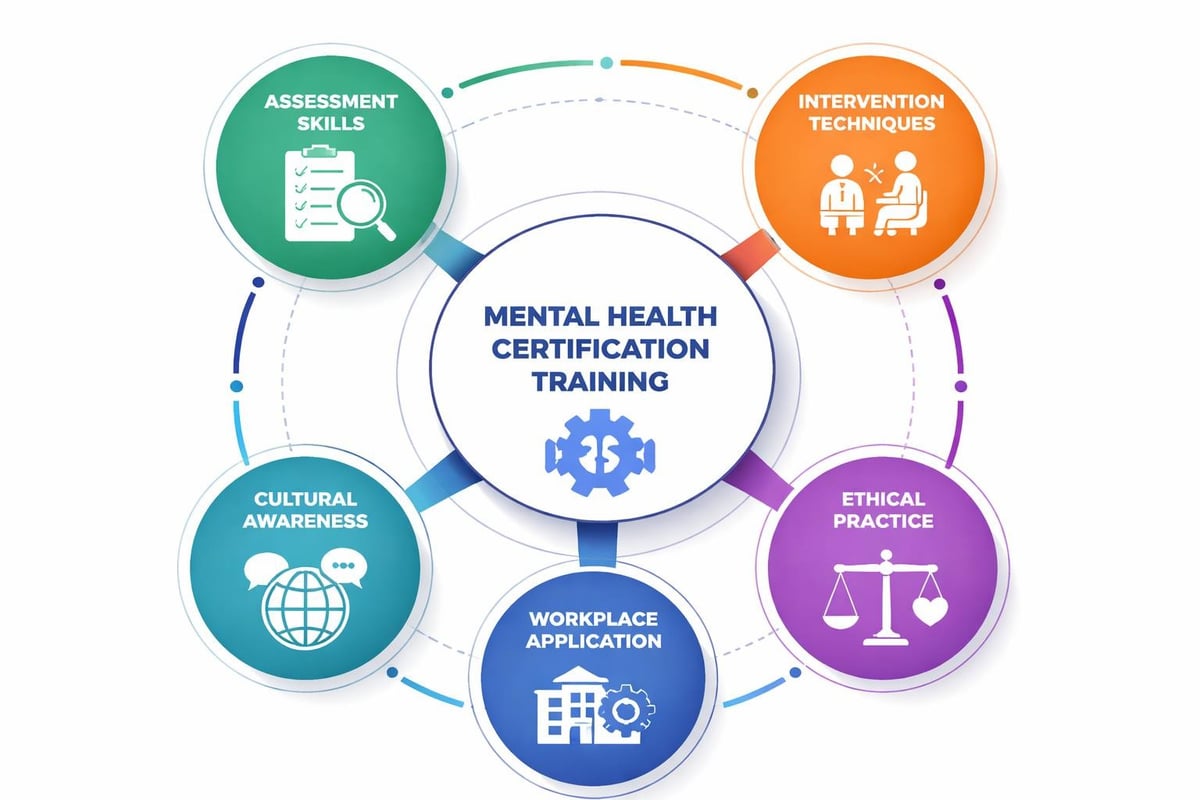
Effective mental health certification training integrates theoretical foundations with applied skills development. Programs typically cover psychopathology fundamentals, assessment techniques, intervention strategies, ethical considerations, and cultural competency.
Essential curriculum elements include:
- Evidence-based assessment methodologies for mental health concerns
- Crisis intervention protocols and de-escalation techniques
- Trauma-informed care principles and implementation
- Boundary management and scope of practice guidelines
- Legal and ethical frameworks governing mental health support
- Communication strategies for sensitive conversations
The Workplace Mental Health Institute structures its certification programs around these competencies while emphasizing workplace-specific applications that managers and HR professionals can implement immediately.
Workplace-Specific Certification Pathways
Organizations seeking to build internal mental health capacity require different credentialing approaches than traditional clinical settings. Workplace mental health certification training focuses on prevention, early intervention, and creating psychologically safe environments rather than diagnosis and treatment.
Mental Health First Aid represents one widely recognized framework that trains individuals to provide initial support until professional help is available. This foundational approach equips employees across organizational levels with basic response capabilities.
More advanced workplace certifications prepare managers and HR professionals to implement comprehensive wellbeing strategies. These programs address organizational assessment, policy development, accommodation processes, and return-to-work protocols following mental health leave.
Specialized Training Areas
The complexity of modern workplace mental health demands specialization beyond general awareness training.
| Specialization | Focus Area | Target Audience | Typical Duration |
|---|---|---|---|
| Trauma-Informed Leadership | Organizational trauma response | Senior leaders, managers | 20-40 hours |
| Psychological Safety | Team culture development | Team leaders, supervisors | 15-25 hours |
| Resilience Facilitation | Skill-building program delivery | HR, wellbeing coordinators | 30-50 hours |
| Crisis Response | Acute incident management | Crisis team members | 25-35 hours |
Organizations in Australia can access regionally tailored programs through WMHI Australia that address jurisdiction-specific legislation and workplace health and safety obligations.
Certification Standards and Accreditation Considerations
The mental health training industry lacks universal standardization, creating challenges for organizations evaluating program quality. Reputable certification bodies demonstrate alignment with established professional associations, evidence-based content, and transparent assessment criteria.
Key indicators of program credibility include curriculum review by qualified mental health professionals, ongoing program evaluation with outcome data, clear articulation of learning objectives and competencies, and recognition by relevant industry or professional bodies.
Organizations should verify:
- Instructor qualifications and clinical or workplace experience
- Assessment rigor beyond simple knowledge tests
- Continuing education requirements for credential maintenance
- Ethical standards governing certified practitioners
- Liability considerations and scope of practice limitations
The Alaska Commission for Behavioral Health Certification provides an example of regulatory oversight ensuring training programs meet defined standards for behavioral health professionals.
Training Delivery Models and Learning Approaches
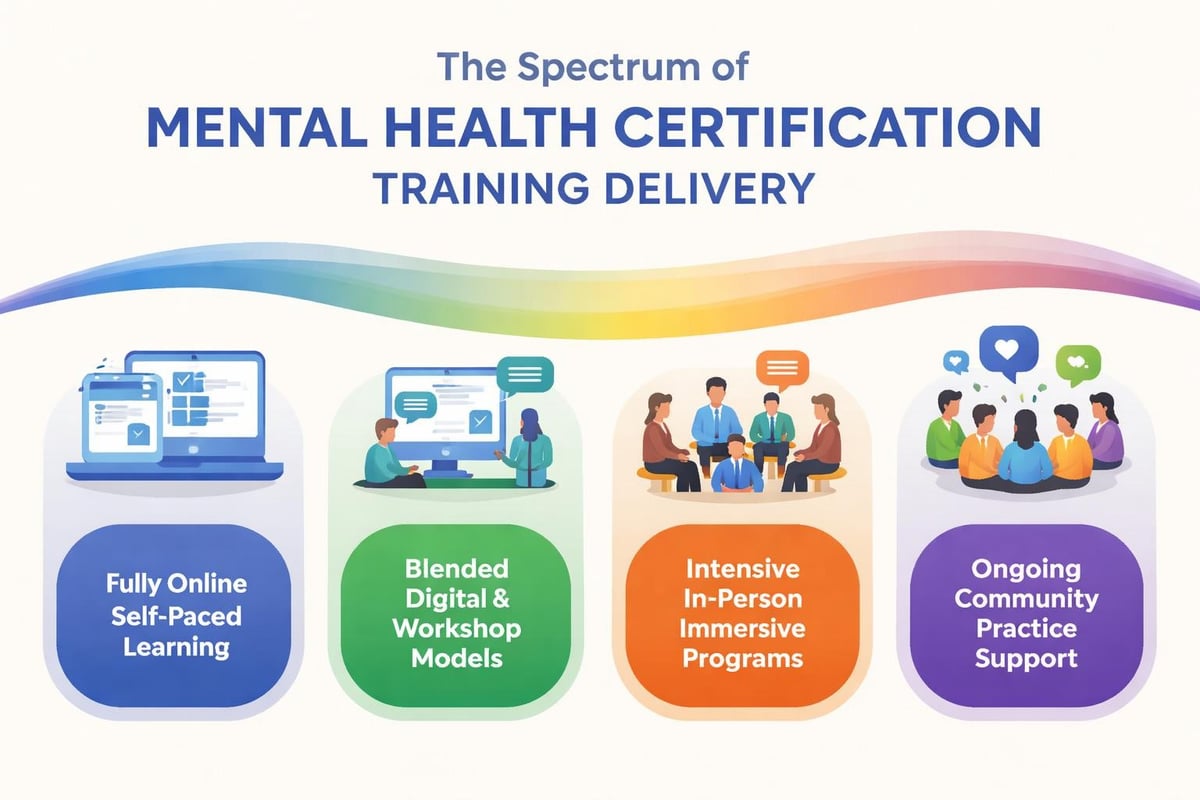
Mental health certification training has evolved significantly beyond traditional lecture-based formats. Contemporary programs employ blended learning approaches combining self-paced digital content, interactive workshops, case-based learning, and supervised practice components.
Effective programs recognize that mental health competency development requires experiential learning opportunities. Role-playing exercises, simulation scenarios, and facilitated reflection deepen skill acquisition beyond passive information consumption.
Digital and In-Person Integration
The shift toward online learning platforms creates accessibility while raising questions about skill transfer to real-world applications.
Research on digital mental health applications emphasizes the importance of training professionals to integrate technology-supported approaches effectively. Organizations can access comprehensive online certification through WMHI Online, which combines interactive modules with practical application assignments.
Advantages of blended delivery models:
- Geographic accessibility removes location barriers
- Self-paced components accommodate diverse learning speeds
- Digital platforms enable consistent content delivery
- In-person or virtual sessions build community and enable practice
- Ongoing access to resources supports long-term retention
Pure digital programs work effectively for knowledge acquisition but should incorporate synchronous elements for skill demonstration and feedback.
Competency Assessment and Credential Validation
Legitimate certification programs employ rigorous assessment methods extending beyond multiple-choice examinations. Comprehensive evaluation includes knowledge verification through written assessments, skill demonstration via role-play or simulation, case study analysis requiring applied judgment, and portfolio development documenting learning application.
The American Board of Radiology’s examination standards in healthcare certification illustrate the importance of multi-modal assessment approaches that verify both theoretical understanding and practical competence.
Maintaining Certification Currency
Mental health science and workplace practice evolve continuously, requiring certified professionals to engage in ongoing learning. Reputable programs mandate continuing education for credential renewal.
| Renewal Requirement | Typical Standard | Purpose |
|---|---|---|
| Continuing Education Hours | 15-30 hours annually | Knowledge currency |
| Professional Practice Documentation | Evidence of application | Skill maintenance |
| Ethical Compliance | Adherence verification | Professional standards |
| Program Updates | Completion of new modules | Evidence-base alignment |
Organizations benefit from establishing internal tracking systems ensuring team members maintain current credentials and stay informed of emerging best practices.
Selecting Appropriate Certification for Organizational Needs
Strategic alignment between certification selection and organizational objectives maximizes training investment returns. Organizations should conduct needs assessments identifying specific gaps in current mental health support capabilities before committing to certification programs.
Different organizational roles require distinct competency levels. Frontline managers benefit from practical response training emphasizing conversation skills and referral pathways. HR professionals require deeper knowledge of accommodation processes, privacy considerations, and systemic intervention design. Wellbeing specialists need facilitation credentials to deliver resilience-building programs effectively.
Investment Considerations
Mental health certification training represents significant resource allocation in terms of direct program costs, employee time commitment, and implementation support requirements.
Cost-benefit analysis should examine:
- Reduction in absenteeism and presenteeism following intervention capability development
- Decreased workers’ compensation claims related to psychological injury
- Improved retention rates due to enhanced support culture
- Enhanced organizational reputation as an employer of choice
- Risk mitigation related to duty of care obligations
Organizations committed to comprehensive approaches can partner with specialists like Workplace Mental Health Institute for strategic consultation ensuring certification investments align with broader wellbeing strategy.
Implementation and Organizational Integration
Certification alone does not guarantee workplace mental health improvement. Organizations must create systems enabling certified professionals to apply their competencies effectively.
This requires clear role definitions specifying how certified individuals contribute to mental health support infrastructure, established protocols for referral, escalation, and professional boundaries, dedicated time allocation for mental health support activities, and leadership endorsement legitimizing mental health conversations.
Building a Certified Team
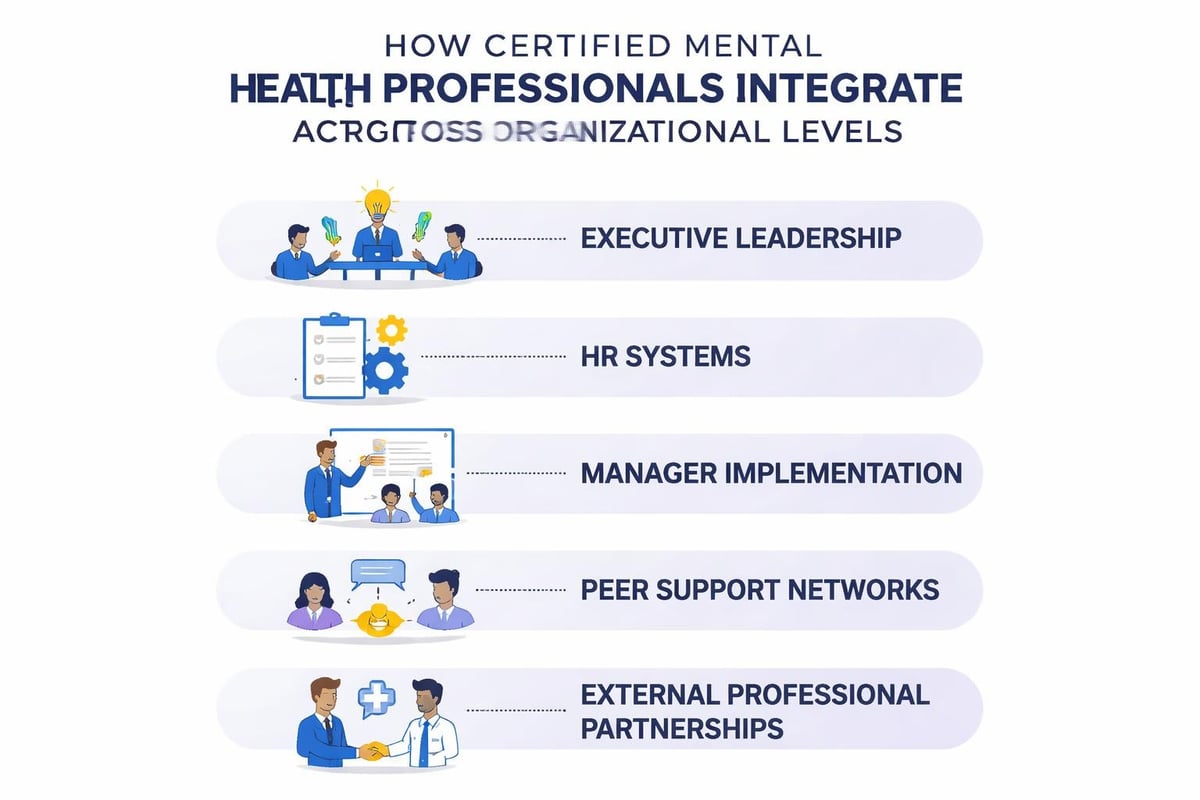
Rather than relying on single individuals, effective organizations develop distributed mental health capability across multiple roles and levels.
Recommended team composition:
- Executive sponsor providing strategic direction and resource allocation
- HR professionals managing systemic processes and policy implementation
- Certified managers equipped for frontline response and team support
- Peer supporters offering relatability and informal assistance
- External professional partners for clinical consultation and complex cases
The Psychiatric Rehabilitation Association promotes evidence-based recovery practices through its certification programs, emphasizing the importance of coordinated multidisciplinary approaches.
Regulatory and Ethical Frameworks
Mental health certification training must address the complex ethical landscape professionals navigate when supporting colleagues experiencing psychological distress. Programs should thoroughly cover confidentiality principles and limitations, mandatory reporting obligations, consent and autonomy in workplace contexts, and boundary management between support and clinical treatment.
The provision of mental health counseling services under various regulatory frameworks demonstrates the importance of understanding jurisdiction-specific requirements governing mental health practice.
Workplace mental health professionals operate in a unique space between informal support and clinical intervention. Certification programs must clearly define scope of practice boundaries, helping participants understand when to refer individuals to specialized professional services.
Liability and Risk Management
Organizations implementing mental health certification training should address potential liability concerns through comprehensive risk management approaches.
Essential risk mitigation strategies include:
- Written policies defining roles, responsibilities, and limitations
- Professional liability insurance for designated mental health support personnel
- Regular supervision or consultation for certified practitioners
- Documentation protocols balancing confidentiality with organizational needs
- Clear escalation pathways for crisis situations
Training programs should prepare participants to navigate these complexities rather than avoiding mental health conversations due to liability concerns.
Specialized Populations and Contextual Adaptations
Workplace demographics vary significantly, requiring mental health certification training that addresses diverse population needs. Generic programs may inadequately prepare professionals to support veterans, culturally diverse workforces, shift workers, or remote employees facing distinct challenges.
The International Institute for Trauma and Addiction Professionals offers specialized training recognizing that trauma and addiction require specific competencies beyond general mental health knowledge.
Organizations should evaluate whether certification programs address their workforce’s particular characteristics, including industry-specific stressors, cultural competency for diverse teams, generational differences in mental health attitudes, and accessibility considerations for employees with disabilities.
Industry-Specific Applications
Mental health challenges manifest differently across sectors. Healthcare workers face moral injury and compassion fatigue. Emergency services personnel experience operational stress and trauma exposure. Corporate environments generate burnout through sustained performance pressure.
Effective certification programs incorporate industry-relevant case studies, terminology, and intervention approaches that resonate with participants’ lived workplace experiences.
Evidence Base and Outcome Measurement
Organizations increasingly demand evidence demonstrating training effectiveness beyond participant satisfaction ratings. Robust mental health certification training programs articulate clear learning outcomes, employ validated assessment instruments, track competency development longitudinally, and measure workplace application indicators.
The American Psychiatric Association emphasizes the importance of evidence-based practice in mental health interventions, a standard that should extend to professional training programs.
Meaningful outcome metrics include:
- Demonstrated competency gains via pre-post assessment
- Self-efficacy increases in mental health support situations
- Frequency of mental health conversations initiated
- Appropriate referral rates to professional services
- Employee feedback on support quality received
Organizations can access guidance on comprehensive evaluation approaches through resources available at Workplace Mental Health Institute, including workplace wellbeing assessment frameworks.
Future Directions in Mental Health Certification
The mental health certification landscape continues evolving in response to emerging research, technological innovation, and changing workplace dynamics. Micro-credentialing approaches offer modular skill development allowing professionals to build competency progressively rather than through single comprehensive programs.
Virtual reality and simulation technologies create increasingly sophisticated practice environments where learners develop skills in psychologically safe contexts before applying them with actual colleagues. Artificial intelligence applications may soon provide personalized learning pathways adapting to individual competency development needs.
The integration of mental health literacy into core leadership development rather than standalone specialized training represents another significant trend. This approach embeds psychological safety and wellbeing competencies as fundamental leadership capabilities rather than optional specializations.
Emerging focus areas include:
- Climate anxiety and eco-distress in workplace contexts
- Technology-related mental health impacts including digital overwhelm
- Psychological safety in hybrid and remote work environments
- Neurodiversity inclusion and support strategies
- Intergenerational trauma awareness in diverse workforces
Forward-thinking organizations anticipate these developments when selecting certification partners, ensuring programs demonstrate commitment to ongoing content evolution aligned with emerging evidence and workplace realities.
Investing in quality mental health certification training equips organizations with the competencies necessary to create psychologically safe, supportive workplace cultures where employees can thrive. The strategic selection of evidence-based programs, integration into organizational systems, and ongoing competency development distinguishes performative wellbeing initiatives from meaningful capability building. Workplace Mental Health Institute provides comprehensive certification programs, strategic consultation, and implementation support tailored to organizational contexts, helping leaders translate mental health training into measurable wellbeing outcomes and enhanced workplace performance.

