
Workplace mental health has become a critical priority for organizations navigating the complexities of modern employment environments. As leaders and HR professionals seek to build psychologically safe workplaces, access to quality mental health awareness resources becomes essential. These resources encompass training programs, assessment tools, policy frameworks, and evidence-based interventions designed to support both individual wellbeing and organizational performance. Understanding which mental health awareness resources deliver measurable outcomes requires discernment, particularly in an environment saturated with generic wellness programs that lack psychological rigor.
Understanding Mental Health Awareness Resources in Professional Settings
Mental health awareness resources extend far beyond informational pamphlets and annual awareness campaigns. In workplace contexts, these resources represent structured systems of knowledge, skills, and interventions that enable organizations to recognize, respond to, and prevent mental health challenges.
Effective mental health awareness resources typically include:
- Evidence-based training curricula for managers and employees
- Psychologically validated assessment instruments
- Clear protocols for responding to mental health concerns
- Connections to qualified mental health professionals
- Policy templates and strategic planning frameworks
- Recovery-oriented support materials
The National Institute of Mental Health (NIMH) provides foundational research that underpins many workplace initiatives. However, translating clinical research into practical workplace applications requires specialized expertise. Organizations need resources specifically designed for non-clinical settings where managers must balance duty of care with operational requirements.
Distinguishing Quality Resources from Generic Content
Not all mental health awareness resources deliver equivalent value. The proliferation of wellness content has created challenges for discerning professionals who need reliable, actionable information rather than superficial awareness-raising.
Quality indicators for workplace mental health resources include:
- Grounded in psychological science – Resources should reference current research and align with established clinical understanding
- Contextually appropriate – Workplace-specific materials address unique organizational dynamics
- Skills-focused – Emphasis on practical competencies rather than abstract awareness
- Trauma-informed – Recognition of how adverse experiences impact workplace functioning
- Measurable outcomes – Clear metrics for assessing implementation effectiveness
Organizations often struggle to evaluate resource quality without specialized knowledge. The Centers for Disease Control and Prevention (CDC) offers population-level guidance, yet workplace implementation requires additional customization. Resources from Workplace Mental Health Institute specifically address this gap by providing training designed for organizational contexts.
Strategic Resource Categories for Workplace Mental Health
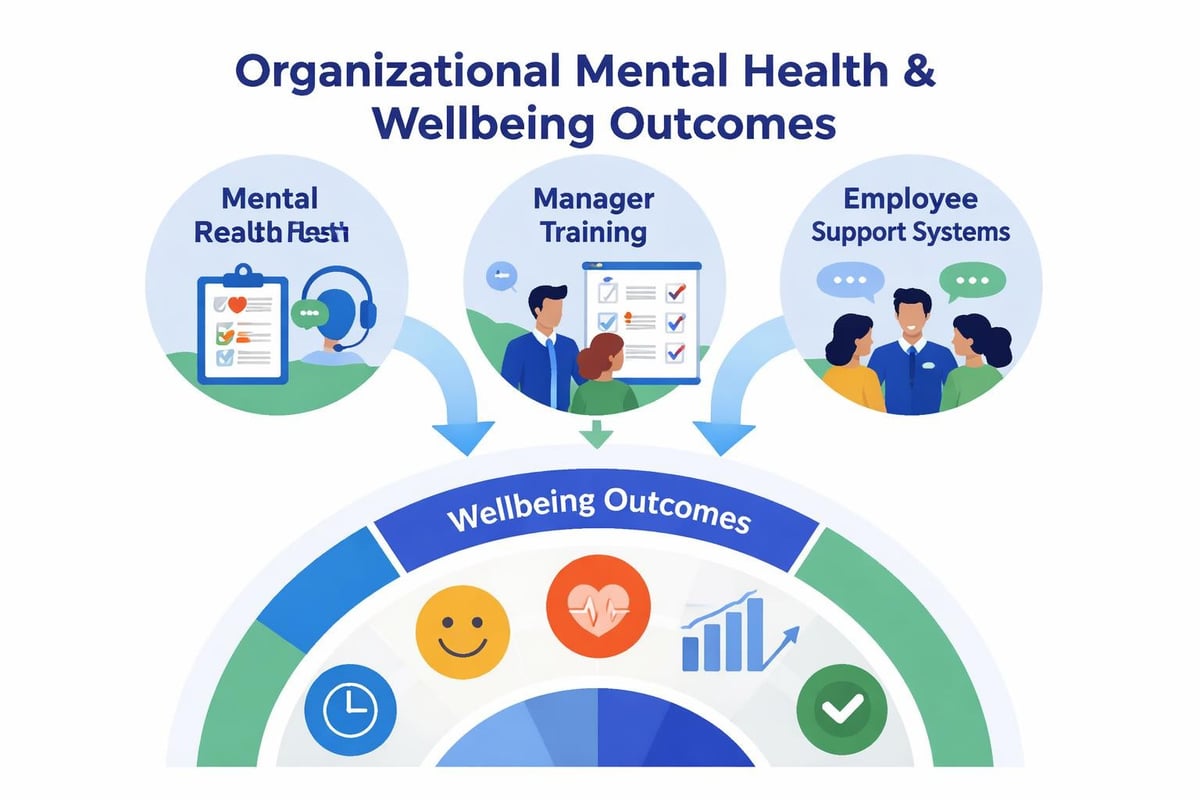
Mental health awareness resources serve different organizational functions. Understanding these categories helps leaders build comprehensive support systems rather than relying on isolated interventions.
Manager Training and Development Resources
Managers represent the critical interface between organizational policy and employee experience. Manager-focused mental health awareness resources equip supervisors with skills to recognize distress, conduct supportive conversations, and facilitate appropriate referrals.
| Resource Type | Primary Function | Implementation Level |
|---|---|---|
| Mental health literacy training | Knowledge foundation | Individual managers |
| Conversational skills development | Practical application | Team leaders |
| Risk assessment protocols | Safety planning | All supervisory roles |
| Accommodation planning tools | Workplace adjustments | HR and managers jointly |
Specialized platforms like WMHI Online deliver structured learning pathways that develop these competencies systematically. Training effectiveness depends on moving beyond awareness toward behavioral capability, particularly in high-stress conversations.
Employee-Facing Support Resources
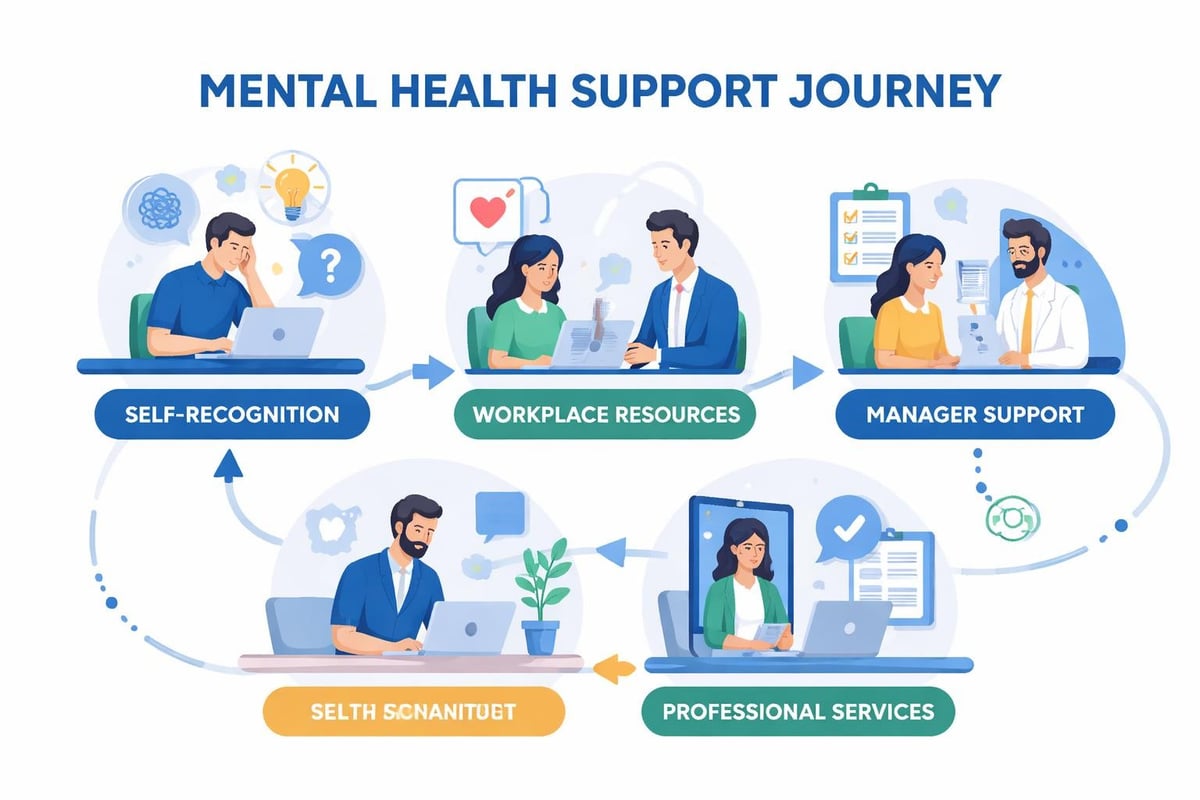
While manager training forms the organizational backbone, employee-facing mental health awareness resources provide direct support. These materials help individuals understand their own mental health, recognize when to seek help, and access appropriate services.
Effective employee resources address:
- Self-assessment tools with clear guidance on interpreting results
- Psychoeducation about common mental health conditions
- Practical coping strategies for workplace stress
- Navigation guides for accessing professional support
- Peer support frameworks and connection opportunities
The National Alliance on Mental Illness (NAMI) Resource Center offers extensive materials for individuals, though workplace implementation requires curation and contextualization. Organizations must balance comprehensive information with accessibility, ensuring resources reach employees across different literacy levels and cultural backgrounds.
Assessment and Measurement Tools
Data-driven approaches to workplace mental health require validated assessment instruments. These mental health awareness resources help organizations understand baseline conditions, identify risk factors, and measure intervention effectiveness.
Organizational Assessment Resources
Workplace-level assessments evaluate systemic factors that influence mental health outcomes. These tools examine psychosocial hazards, organizational culture, leadership practices, and structural support systems.
Key assessment domains include:
- Job design and demands – Workload, autonomy, role clarity
- Social environment – Relationships, support, psychological safety
- Organizational justice – Fairness, equity, recognition
- Change management – Communication, consultation, transition support
- Leadership quality – Manager capabilities, supervisory practices
Comprehensive workplace wellbeing assessments from organizations like WMHI Australia provide benchmarking data and actionable recommendations. These assessments identify specific intervention points rather than generating generic reports.
Individual Wellbeing Measurement
While organizational assessments examine systemic factors, individual-level tools help employees monitor their own mental health status. These resources support early intervention by facilitating self-recognition of emerging difficulties.
| Assessment Type | Purpose | Frequency |
|---|---|---|
| Wellbeing screeners | Baseline establishment | Quarterly or biannually |
| Stress inventories | Risk identification | As needed or monthly |
| Burnout measures | Occupational syndrome detection | During high-demand periods |
| Recovery assessments | Progress monitoring | Weekly during support |
These tools must be implemented carefully to avoid surveillance concerns. Transparency about data use, voluntary participation, and separation from performance management systems all protect psychological safety while enabling beneficial self-monitoring.
Policy and Protocol Resources
Effective mental health awareness resources include frameworks that guide organizational responses. Policies provide consistency, reduce ambiguity, and ensure equitable treatment across the employee population.
Essential Policy Documents
Core mental health policy resources encompass:
- Mental health and wellbeing policy statements
- Return-to-work protocols following mental health leave
- Reasonable accommodation procedures
- Critical incident response plans
- Confidentiality and information-sharing guidelines
These documents translate organizational values into operational procedures. Quality policy resources balance legal compliance with psychological best practice, ensuring organizations meet both regulatory requirements and genuine support needs.
Professional consultation services help organizations develop customized policies rather than adopting generic templates. Context matters significantly, as organizational size, industry sector, workforce demographics, and risk profiles all influence appropriate policy design.
Implementation Protocols
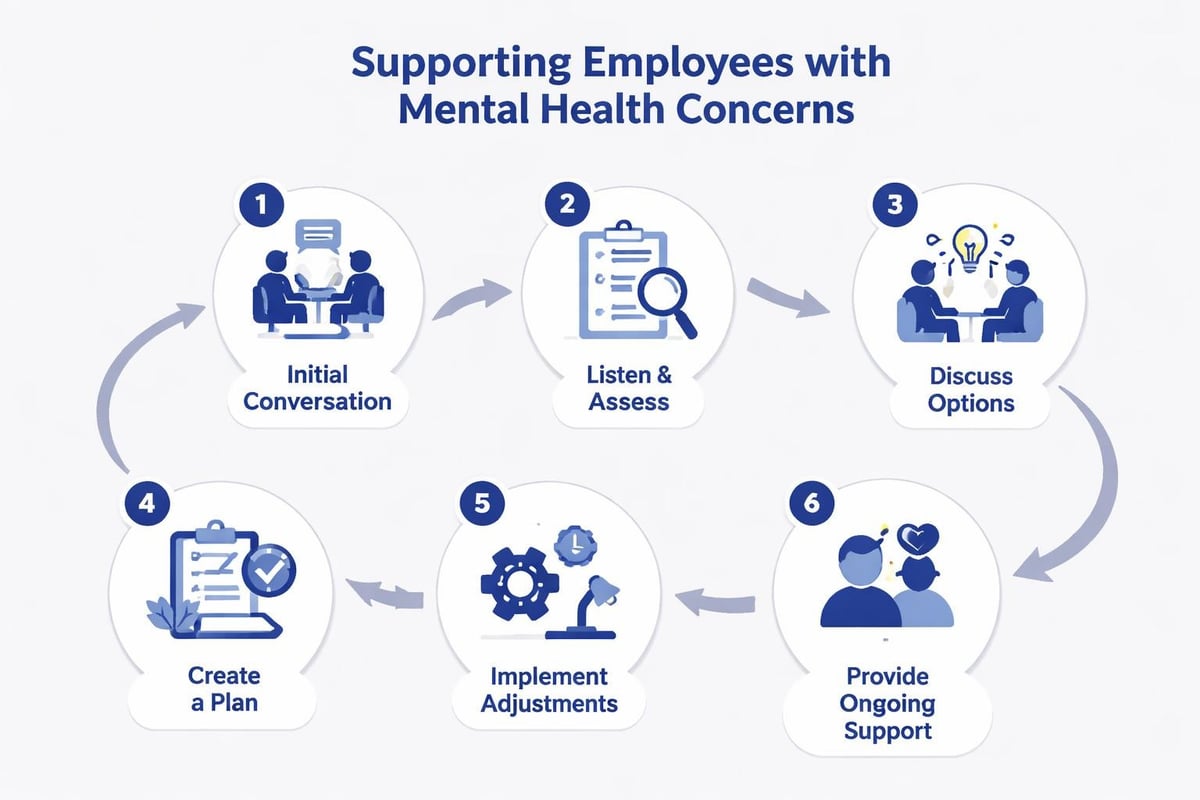
Policies remain theoretical without clear implementation protocols. These mental health awareness resources guide managers and HR professionals through specific scenarios with step-by-step procedures.
Critical protocol areas include:
- Responding to disclosed mental health conditions – Communication scripts, documentation requirements, next steps
- Managing performance concerns potentially related to mental health – Assessment processes, support options, fairness safeguards
- Supporting employees during crisis – Immediate safety actions, professional contact procedures, follow-up requirements
- Facilitating workplace adjustments – Assessment frameworks, implementation planning, review schedules
- Coordinating with external providers – Information sharing boundaries, collaborative care approaches, continuity planning
Training videos from Workplace Mental Health Institute’s YouTube channel demonstrate these protocols in realistic workplace scenarios. Observational learning helps managers develop confidence before encountering actual situations.
Specialized Resources for Particular Populations
Workplace populations are diverse, requiring tailored mental health awareness resources that address specific needs and barriers.
Supporting Male Employees
Research consistently shows men access mental health support at lower rates than women, despite experiencing significant mental health challenges. Resources targeting male employees require particular attention to help-seeking barriers.
HeadsUpGuys provides male-focused resources that acknowledge masculine socialization patterns while encouraging support-seeking. Workplace applications include:
- Communication approaches that resonate with men’s preferences
- Emphasis on strength-based language and practical problem-solving
- Peer support models that reduce stigma through normalization
- Integration with physical health initiatives where men already engage
Organizations benefit from explicitly addressing gender dynamics in their mental health strategies. Ignoring these patterns leaves significant portions of the workforce underserved.
Trauma-Informed Resource Development
Trauma exposure affects substantial percentages of the workforce, whether through childhood adversity, workplace incidents, community violence, or other sources. Trauma-informed mental health awareness resources recognize these impacts and avoid re-traumatization.
Trauma-informed principles include:
- Safety prioritization in all interactions and environments
- Transparency about processes, expectations, and decision-making
- Peer support and collaborative approaches
- Empowerment rather than paternalistic intervention
- Recognition of cultural, historical, and gender considerations
Trauma-informed care training from specialized providers helps organizations redesign standard practices to align with these principles. This approach benefits all employees while specifically supporting those with trauma histories.
Digital and Technology-Enabled Resources
Technology has expanded access to mental health awareness resources while introducing new considerations around quality, privacy, and effectiveness.
Evaluating Digital Mental Health Tools
The digital mental health marketplace contains thousands of applications, platforms, and online programs. Organizational leaders require frameworks for evaluating these tools.
Critical evaluation criteria include:
| Criterion | Assessment Questions |
|---|---|
| Evidence base | Has this tool been validated through research? What outcomes were demonstrated? |
| Data security | How is user information protected? Where is data stored? Who has access? |
| Clinical oversight | Are qualified mental health professionals involved in content development? |
| User experience | Is the interface accessible to employees with varying digital literacy? |
| Integration capacity | Can this tool connect with existing organizational systems and referral pathways? |
Organizations should be particularly cautious about tools making therapeutic claims without supporting evidence. Guidance from sources like Ventura County’s framework for identifying trustworthy mental health resources helps distinguish legitimate tools from unsubstantiated applications.
Online Learning Platforms
Digital delivery of mental health training offers scalability and accessibility advantages. Online learning platforms enable organizations to provide consistent training across dispersed workforces while accommodating different learning paces.
Effective online mental health awareness resources feature:
- Interactive elements that promote engagement beyond passive consumption
- Scenario-based learning that develops practical judgment
- Assessments that verify competency development
- Microlearning options for just-in-time skill development
- Mobile accessibility for flexible completion
Blended approaches combining online learning with facilitated discussions often produce superior outcomes compared to purely digital or purely in-person formats. The flexibility of platforms like WMHI Online allows organizations to customize delivery based on workforce needs.
Building Organizational Resource Ecosystems
Individual resources, regardless of quality, produce limited impact without strategic integration. Effective organizations develop comprehensive ecosystems where different mental health awareness resources reinforce and complement each other.
System Design Principles
Integrated mental health resource systems include:
- Clear pathways connecting different resource types and escalation levels
- Consistent messaging across all materials and communications
- Multiple access points accommodating different preferences and barriers
- Regular updates maintaining currency with evolving best practices
- Feedback mechanisms enabling continuous improvement based on user experience
System thinking prevents fragmentation where employees encounter disconnected initiatives without clear navigation. Coordination between HR, safety, wellbeing committees, and external providers ensures seamless access to appropriate support.
Resource Communication and Promotion
Even excellent mental health awareness resources fail if employees remain unaware of their existence. Strategic communication plans ensure resources reach intended audiences through appropriate channels.
Effective promotion strategies include:
- Multi-channel communication using email, intranet, posters, team meetings, and leadership messaging
- Repeated exposure recognizing that single announcements produce minimal awareness
- Contextual promotion linking resources to relevant situations and challenges
- Leader endorsement demonstrating organizational commitment
- Peer testimonials normalizing resource utilization
Communication should emphasize accessibility, confidentiality, and practical benefits rather than focusing primarily on crisis scenarios. Positioning mental health resources as performance enablers rather than deficit responses encourages broader engagement.
Continuous Improvement and Resource Evolution
Workplace mental health knowledge advances continuously. Organizations committed to genuine support must regularly review and update their mental health awareness resources to reflect current understanding.
Establishing Review Cycles
Systematic review processes prevent resource obsolescence. Organizations should schedule regular evaluations examining both content accuracy and implementation effectiveness.
Review components include:
- Annual content audits comparing resources against current research
- User feedback collection through surveys and focus groups
- Utilization data analysis identifying underused or ineffective resources
- Benchmarking against sector-specific best practices
- Expert consultation with mental health professionals
These reviews often reveal gaps requiring new resource development or significant revisions to existing materials. Budget allocation for ongoing resource development signals organizational commitment beyond initial implementation.
Measuring Resource Impact
Understanding whether mental health awareness resources produce intended outcomes requires deliberate measurement. Organizations should establish clear metrics linked to specific resources.
| Resource Type | Outcome Metrics | Measurement Method |
|---|---|---|
| Manager training | Conversation confidence, appropriate referrals, early intervention rates | Pre/post surveys, case tracking |
| Employee resources | Help-seeking behavior, self-reported coping skills, stigma reduction | Anonymous surveys, utilization data |
| Policies and protocols | Consistency in responses, accommodation timeliness, grievance rates | Case file review, HR metrics |
| Assessment tools | Risk identification accuracy, intervention targeting | Predictive validity studies |
Demonstrating return on investment helps sustain organizational commitment to mental health initiatives. Quantifiable improvements in absenteeism, performance, retention, and employee satisfaction justify continued resource allocation.
Quality mental health awareness resources form the foundation of psychologically healthy workplaces, enabling leaders to move beyond superficial wellness initiatives toward meaningful support systems. Organizations seeking to implement comprehensive, evidence-based approaches benefit from specialized expertise in workplace mental health. Workplace Mental Health Institute provides the training, assessment tools, and strategic consultation that transform awareness into organizational capability, helping leaders build resilient workforces through practical, psychologically sound interventions.

