
Organizations face unprecedented pressure to support employee mental health while maintaining productivity and performance. A workplace wellbeing program represents a systematic approach to creating healthier work environments, reducing psychological distress, and building organizational resilience. These structured initiatives go beyond surface-level wellness activities to address the fundamental drivers of workplace mental health, including psychological safety, workload management, and access to support resources. When designed with evidence-based principles and implemented with genuine commitment, these programs deliver measurable improvements in employee mental health, absenteeism rates, and organizational performance.
Understanding the Foundation of Effective Wellbeing Programs
A workplace wellbeing program operates as an integrated system rather than a collection of isolated activities. The foundation begins with understanding workplace mental health as a continuum where employees may experience varying levels of psychological wellbeing at different times. This perspective shifts away from reactive crisis intervention toward proactive support that strengthens resilience before distress occurs.
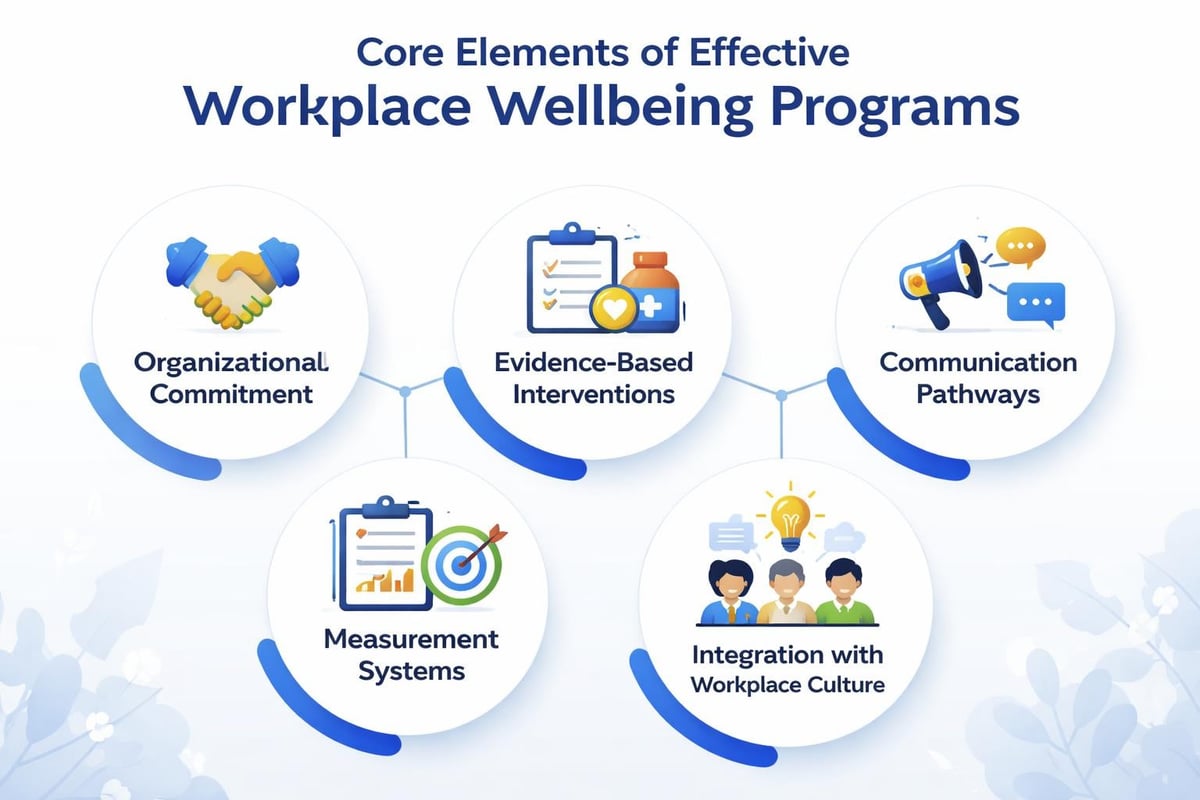
Key foundational elements include:
- Organizational commitment demonstrated through visible leadership engagement
- Evidence-based interventions aligned with identified needs and risks
- Clear communication pathways that reduce stigma and increase help-seeking
- Systematic measurement processes that track both implementation and outcomes
- Integration with existing HR systems, policies, and workplace culture initiatives
The most effective programs recognize that mental health sits within a broader ecosystem of organizational factors. Leadership behaviors, work design, team dynamics, and physical environments all contribute to psychological wellbeing outcomes. Gallup’s research on wellbeing practices emphasizes that leaders must evaluate program effectiveness rather than simply offering activities.
Conducting Meaningful Wellbeing Assessments
Before implementing interventions, organizations need accurate data about their current state. Workplace wellbeing assessments serve as diagnostic tools that identify specific risk factors, protective factors, and areas requiring attention. These assessments examine multiple dimensions including psychological safety, job demands, workplace relationships, and access to recovery opportunities.
Quality assessments combine quantitative metrics with qualitative insights. Employee surveys provide breadth of information across the organization, while focus groups and interviews offer depth and context. Absenteeism data, workers’ compensation claims, and turnover rates provide objective indicators of organizational health.
The assessment phase should examine systemic factors rather than placing responsibility solely on individual employees. Questions about workload distribution, role clarity, manager support, and organizational fairness reveal structural issues that individual resilience training cannot resolve. This approach aligns with trauma-informed principles that recognize how workplace systems can either support or undermine mental health.
Designing Programs That Address Real Workplace Needs
Moving from assessment to design requires translating data into actionable strategies. A workplace wellbeing program should target identified risks while building on existing strengths within the organization. This strategic approach ensures resources address actual needs rather than implementing generic solutions that may not fit organizational context.
Primary Intervention Strategies
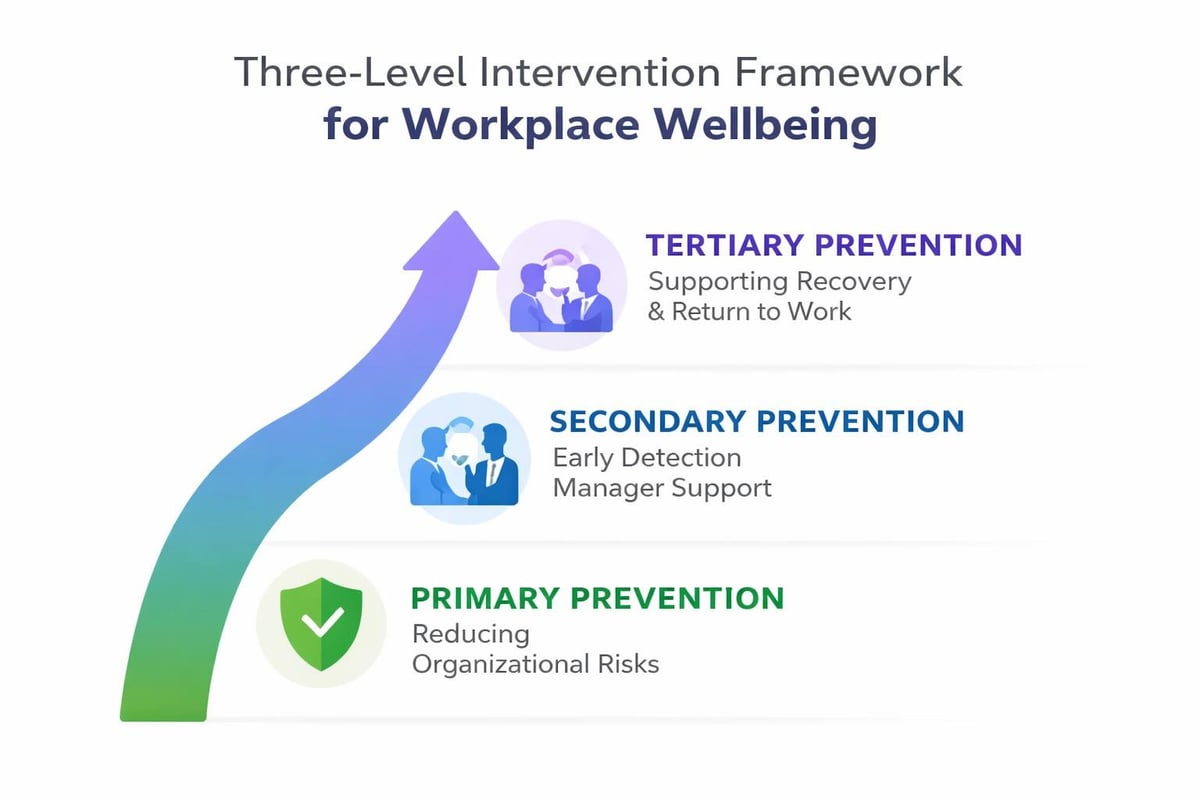
| Intervention Level | Focus Area | Example Initiatives |
|---|---|---|
| Primary Prevention | Reduce risk factors | Work redesign, flexible schedules, psychological safety training |
| Secondary Prevention | Early identification | Manager mental health training, wellbeing check-ins, stress management |
| Tertiary Prevention | Treatment and recovery | EAP access, return-to-work support, trauma-informed care |
Primary prevention initiatives modify work conditions to reduce psychological risk before harm occurs. This includes designing jobs with appropriate demands and control, establishing clear boundaries around after-hours communication, and ensuring workload distribution remains sustainable. The CDC’s Total Worker Health® approach demonstrates how organizational policies on flexible work and supportive supervision directly improve worker health outcomes.
Secondary prevention focuses on early detection and intervention. Training managers to recognize early signs of distress and respond with appropriate support represents a critical component. Building skills in mental health wellbeing conversations enables managers to provide timely, empowering support that prevents escalation of mental health concerns.
Tertiary interventions support recovery and sustainable return to work following mental health episodes. These initiatives require coordination between managers, HR professionals, healthcare providers, and the employees themselves. Trauma-informed care principles ensure these processes avoid re-traumatization while supporting genuine recovery.
Building Manager Capability as Program Infrastructure
Managers occupy a unique position where they directly influence employee wellbeing through daily interactions, work allocation, and team culture. A workplace wellbeing program succeeds or fails based on manager capability and willingness to engage with mental health proactively.
Training managers requires moving beyond awareness-raising to skill development. Managers need practical frameworks for recognizing distress indicators, initiating supportive conversations, making reasonable adjustments, and accessing appropriate resources. The characteristics of psychologically safe managers provide a blueprint for the competencies that support employee mental health.
Essential Manager Competencies
- Recognition skills: Identifying changes in performance, behavior, or presentation that may indicate distress
- Communication approaches: Conducting non-judgmental conversations that balance support with performance expectations
- Adjustment strategies: Implementing temporary or permanent workplace modifications that support mental health
- Resource navigation: Understanding available supports and facilitating appropriate referrals
- Boundary management: Maintaining professional relationships while providing empathetic support
Managers also require support for their own wellbeing. The emotional labor of supporting team members, particularly during organizational change or crisis periods, creates additional stress. Programs that focus exclusively on manager responsibility without providing corresponding support create unsustainable expectations.
Organizations should establish clear guidelines about manager roles in mental health support. Managers act as facilitators of access to professional support rather than serving as counselors or diagnosticians. This clarity protects both managers and employees while ensuring appropriate expertise addresses mental health concerns.
Implementing Programs With Systematic Rigor
Design quality means little without effective implementation. A workplace wellbeing program requires careful rollout planning, clear communication strategies, and ongoing adjustment based on feedback and outcomes.
Implementation begins with stakeholder engagement. Employees need to understand program rationale, available resources, and how to access support. Transparency about confidentiality protections and the limits of workplace-based support builds trust. Communication should emphasize that seeking support demonstrates strength and self-awareness rather than weakness.
Critical implementation components:
- Phased rollout that allows for testing and refinement before full-scale deployment
- Multiple access points that accommodate different preferences and comfort levels
- Regular communication through diverse channels including team meetings, intranet, and direct manager conversations
- Visible leadership participation that demonstrates genuine organizational commitment
- Feedback mechanisms that capture employee experience and identify barriers to engagement
Harvard’s Center for Work, Health, & Well-being case studies illustrate how organizations successfully implement comprehensive approaches by integrating wellbeing into organizational strategy rather than treating it as a separate HR initiative.
Technology can enhance program reach and accessibility. Digital platforms provide on-demand resources, self-assessment tools, and connection to professional support. However, technology should complement rather than replace human interaction and organizational culture change. Research on passive sensing technologies highlights both opportunities and concerns around using digital tools to monitor employee wellbeing, emphasizing the importance of ethical implementation.
Measuring Meaningful Outcomes
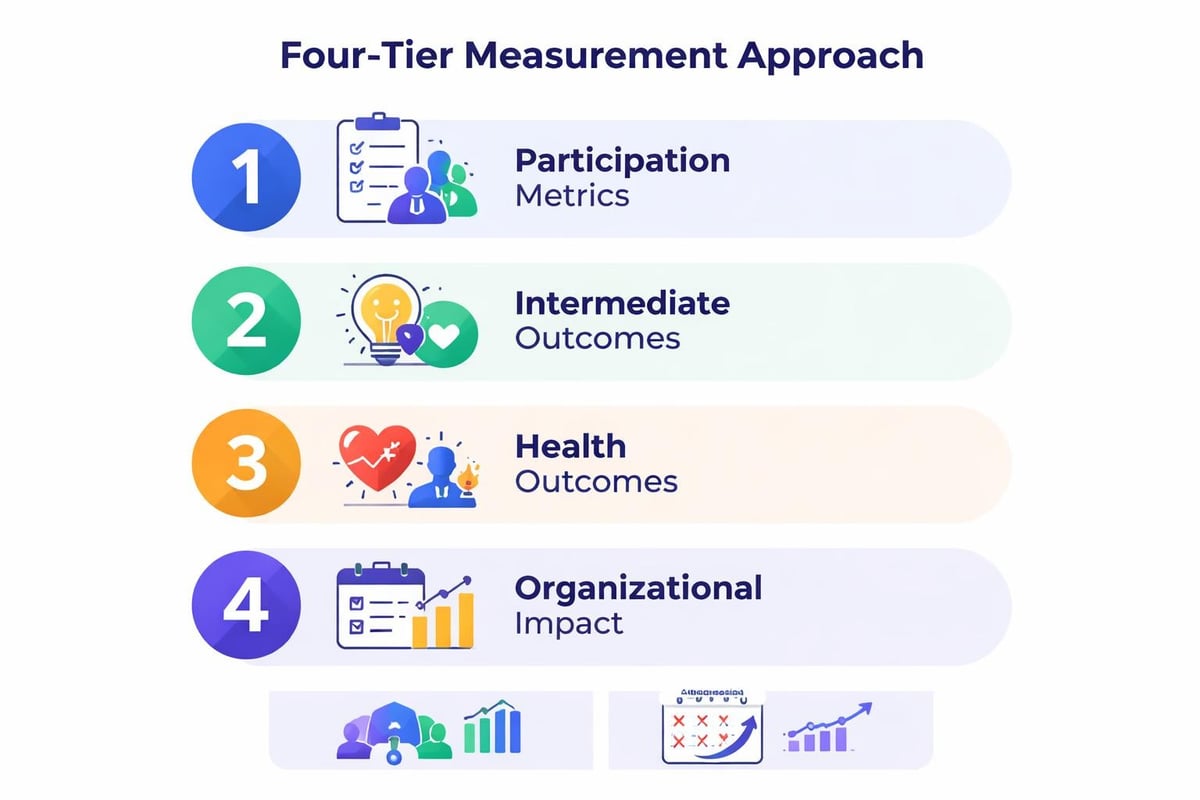
| Metric Category | Specific Indicators | Measurement Frequency |
|---|---|---|
| Participation | Program uptake rates, resource utilization, training completion | Monthly |
| Intermediate Outcomes | Psychological safety scores, manager confidence, help-seeking behavior | Quarterly |
| Health Outcomes | Wellbeing scores, distress prevalence, burnout rates | Biannually |
| Organizational Impact | Absenteeism, turnover, performance metrics, workers’ compensation claims | Quarterly |
Effective measurement tracks both leading indicators (like participation rates and manager skill development) and lagging indicators (like absenteeism and turnover). This combination provides early feedback on program engagement while capturing ultimate impact on organizational outcomes.
Addressing Systemic Barriers and Cultural Resistance
Even well-designed programs encounter implementation challenges. Stigma around mental health persists in many workplaces despite increased awareness. Employees may fear career consequences if they disclose mental health concerns or access support services. Time pressures and workload demands create practical barriers to participation in training or wellbeing activities.
Cultural change requires consistent messaging and action over extended periods. Leaders must demonstrate their own engagement with wellbeing practices and speak openly about the importance of mental health. When senior leaders share their own experiences or prioritize wellbeing in visible ways, this permission structure enables broader organizational engagement.
Some employees and managers may view a workplace wellbeing program as unnecessary or as evidence that the organization creates excessive stress. Addressing this perception requires acknowledging that wellbeing programs complement rather than substitute for good work design and fair employment practices. Organizations should simultaneously invest in wellbeing support and address underlying sources of workplace stress.
Tailoring Programs to Organizational Context
Generic wellbeing programs rarely achieve meaningful impact because they fail to address specific organizational realities. Industry sector, workforce demographics, organizational size, geographic distribution, and existing workplace culture all influence what interventions will succeed.
High-stress industries like healthcare, emergency services, and education face unique mental health risks requiring specialized approaches. Trauma-informed care training becomes particularly relevant for workers regularly exposed to traumatic content or situations. Organizations with dispersed or remote workforces need digital-first strategies that create connection and support across distances.
Small and medium enterprises often lack dedicated HR resources to implement comprehensive programs. In these contexts, a workplace wellbeing program might focus on training managers as primary wellbeing champions, leveraging external expertise through consultants or online platforms, and integrating wellbeing into existing team practices rather than creating separate initiatives.
Budget constraints require prioritization based on assessed risks and available resources. Starting with high-impact, low-cost interventions like manager training and policy adjustments builds momentum and demonstrates value before expanding to resource-intensive initiatives. Research on work-family policies and employee wellbeing shows that accessible policies reduce absenteeism through improved emotional and physical health, demonstrating that policy change can deliver significant returns without substantial financial investment.
Sustaining Programs Beyond Initial Implementation
Initial enthusiasm often fades as competing priorities emerge. Sustaining a workplace wellbeing program requires embedding it within organizational systems and regular business processes rather than maintaining it as a special project.
Integration strategies include incorporating wellbeing metrics into organizational scorecards, making mental health a standing agenda item in leadership meetings, and building wellbeing considerations into project planning and change management processes. When wellbeing becomes part of how the organization operates rather than an additional responsibility, sustainability improves substantially.
Regular program review and evolution prevent stagnation. Employee needs change, new evidence emerges, and organizational contexts shift. Annual program reviews should assess what’s working, what requires adjustment, and what new initiatives deserve consideration. This continuous improvement approach keeps programs relevant and responsive.
Sustainability factors:
- Executive sponsorship that persists through leadership transitions
- Budget allocation as a recurring operational expense rather than discretionary spending
- Integration into performance management and organizational values
- Peer champion networks that distribute responsibility beyond HR
- Documentation of outcomes that demonstrates ongoing value
Leadership transitions pose particular risks to program sustainability. When wellbeing champions leave the organization or move to different roles, their successors may not share the same commitment. Documenting program rationale, outcomes, and operational processes creates institutional memory that supports continuity despite personnel changes.
Leveraging Evidence and Innovation
The workplace mental health field continues to evolve with new research, technologies, and practice innovations. Effective programs remain current with emerging evidence while maintaining a critical perspective on untested interventions promoted through marketing rather than research.
Emerging best practices in employee mental health demonstrate how organizations successfully navigate this landscape by combining established interventions with carefully evaluated innovations. Organizations should seek evidence-based approaches while recognizing that not all effective practices have been subjected to rigorous research trials.
Innovation in workplace wellbeing increasingly incorporates technology. Apps providing mindfulness training, platforms connecting employees with mental health professionals, and wearables tracking physiological stress indicators all offer potential value. However, novel approaches to early intervention including stress detection algorithms must be implemented with attention to privacy, autonomy, and the risk of surveillance.
Organizations can access training through specialized platforms like Workplace Mental Health Institute Online, which provide evidence-based content specifically designed for workplace contexts. Australian organizations can find region-specific resources and support through specialized mental health training services that address local regulatory requirements and cultural contexts.
Effective workplace wellbeing programs integrate assessment, strategic design, manager capability building, and systematic implementation to create lasting improvements in employee mental health and organizational performance. Success requires moving beyond superficial wellness activities to address the fundamental drivers of psychological wellbeing through evidence-based interventions and genuine organizational commitment. Workplace Mental Health Institute delivers comprehensive mental health training and resilience programs that equip managers and organizations with practical skills to build psychologically healthy workplaces, reduce absenteeism, and support sustainable performance through trauma-informed, empowering approaches to mental health.

