
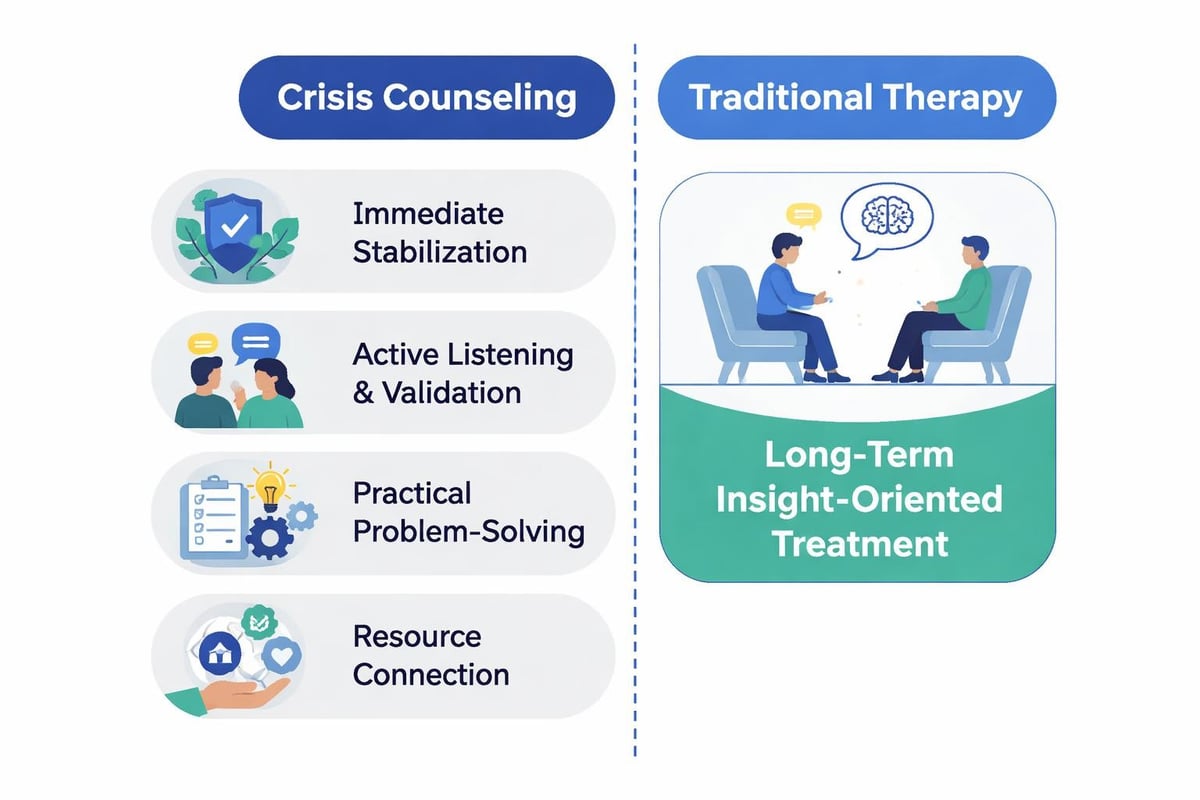
The capacity to respond effectively during psychological emergencies has become a core competency for organizations committed to employee wellbeing. Crisis counseling training equips professionals with specialized skills to support individuals and teams experiencing acute distress, whether from organizational change, critical incidents, or external disasters. Unlike traditional therapeutic approaches, crisis intervention focuses on immediate stabilization, practical problem-solving, and restoring functioning rather than long-term treatment. For HR leaders and workplace mental health professionals, understanding the components and applications of crisis counseling training strengthens organizational resilience and protects workforce mental health during challenging periods.
Understanding Crisis Counseling in Organizational Contexts
Crisis counseling represents a distinct intervention methodology designed for time-limited support during periods of acute stress or trauma. The approach emphasizes psychological first aid, normalization of reactions, and connection to ongoing resources rather than clinical diagnosis or extended therapy.
Core distinguishing features include:
- Short-term intervention focused on stabilization (typically days to weeks)
- Strength-based approach emphasizing resilience and coping capacity
- Practical problem-solving rather than exploration of underlying issues
- Accessibility to all affected individuals regardless of prior mental health status
- Community-level support alongside individual interventions
The Crisis Counseling Assistance and Training Program established by SAMHSA provides foundational principles that translate effectively to workplace settings. Organizations face various crisis situations including sudden leadership changes, workplace accidents, community tragedies affecting employees, economic disruptions, and natural disasters impacting operations.
Workplace Applications and Scenarios
Crisis situations in organizational environments differ from community disasters but require equally skilled responses. Workplace mental health professionals encounter critical incidents ranging from employee deaths and workplace violence to mass layoffs and organizational restructuring that trigger collective distress.
| Crisis Type | Typical Duration | Primary Intervention Focus |
|---|---|---|
| Sudden loss of colleague | 2-6 weeks | Grief support, team cohesion |
| Workplace accident | 1-4 weeks | Trauma response, safety reassurance |
| Organizational restructure | 4-12 weeks | Uncertainty management, transition support |
| External community disaster | Variable | Practical assistance, flexibility accommodations |
Effective crisis counseling training prepares professionals to assess situations rapidly, distinguish between normal stress reactions and clinical concerns requiring referral, and implement evidence-informed interventions that support recovery while maintaining workplace functioning.
Essential Components of Crisis Counseling Training Programs
Comprehensive training programs integrate theoretical knowledge, practical skills development, and supervised application opportunities. The foundational curriculum addresses psychological theory, communication techniques, cultural competence, and self-care strategies necessary for effective crisis response.
Theoretical Foundations and Models
Training should address multiple conceptual frameworks:
- Crisis theory and stages of psychological response
- Trauma-informed principles and practices
- Resilience factors and protective mechanisms
- Grief and loss reactions in organizational contexts
- Stress physiology and nervous system regulation
Understanding how individuals process acute stress enables counselors to normalize reactions, provide psychoeducation, and guide appropriate coping strategies. The crisis counseling skills training resources from SAMHSA demonstrate evidence-based approaches including active listening techniques and de-escalation strategies applicable across various crisis scenarios.
Professional training programs incorporate neuroscience research explaining how stress affects cognitive functioning, decision-making capacity, and emotional regulation. This knowledge helps counselors adjust expectations, communicate clearly, and provide structured support that accounts for diminished processing capacity during acute distress.
Practical Skill Development
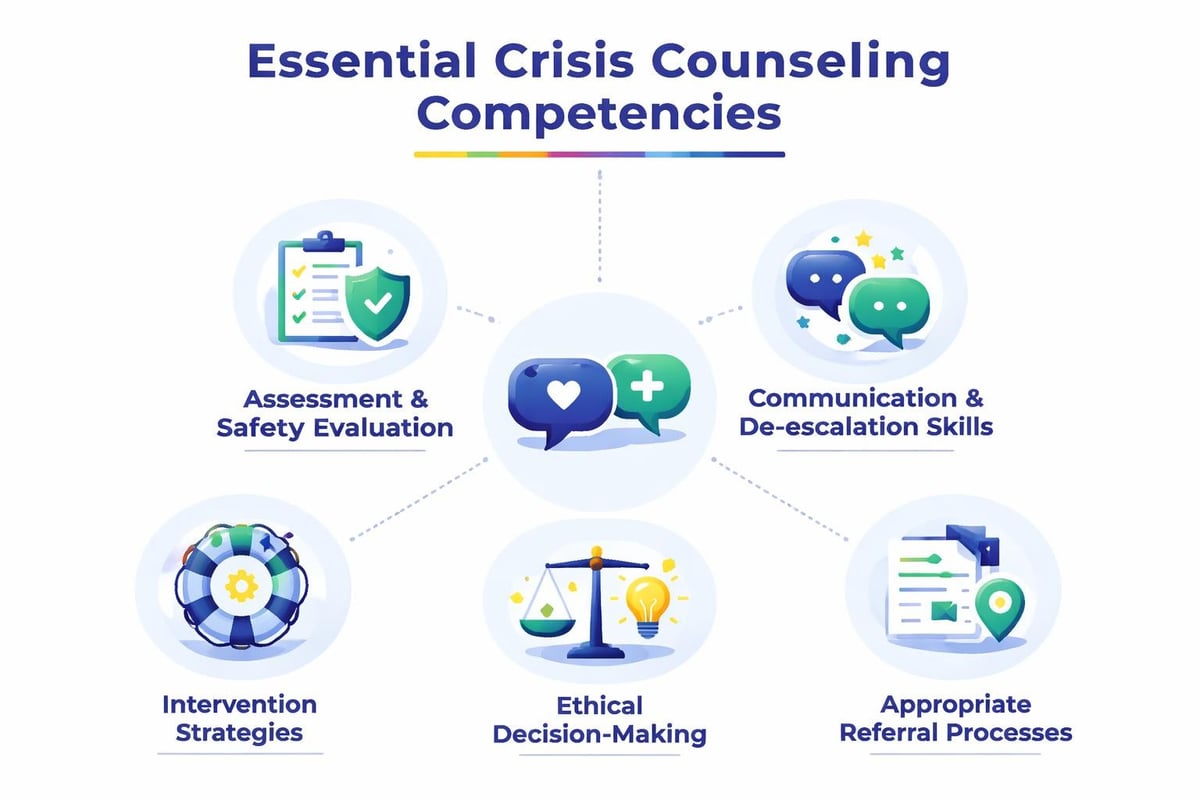
Crisis counseling training emphasizes hands-on competency building through simulation, role-play, and guided practice. Participants develop proficiency in assessment, intervention, and referral processes essential for effective crisis response.
Core skill areas include:
- Rapid psychological assessment and risk evaluation
- Active listening and empathic communication under pressure
- De-escalation techniques for heightened emotional states
- Safety planning and immediate stabilization strategies
- Resource identification and appropriate referral pathways
- Documentation and ethical decision-making in crisis contexts
The certification in crisis intervention offered by recognized professional bodies validates competency across these domains. Organizations seeking to develop internal crisis response capacity benefit from ensuring team members achieve recognized certification standards.
Training Delivery Methods and Formats
Crisis counseling training utilizes diverse instructional approaches to accommodate learning preferences, organizational constraints, and competency requirements. The optimal training architecture combines multiple formats to ensure comprehensive skill development.
Intensive Workshop Programs
Concentrated training experiences ranging from two days to two weeks provide immersive learning environments where participants develop foundational competencies. These programs typically include didactic instruction, skills practice, case study analysis, and competency assessment.
Advantages of intensive formats:
- Focused attention without workplace distractions
- Cohort learning and peer support development
- Immediate skill practice and feedback
- Comprehensive coverage of content domains
- Clear completion milestone and credential
Organizations implementing crisis response teams often utilize intensive training to establish baseline competency across designated responders. The approach ensures consistent knowledge and skill levels while building team cohesion essential for coordinated crisis response.
Modular Online Learning Pathways
Digital training platforms offer flexibility for professionals balancing learning with operational responsibilities. Self-paced modules allow participants to progress according to individual schedules while interactive elements maintain engagement and reinforce learning.
The virtual training resources developed for crisis counseling programs demonstrate effective online training architecture. These materials include multimedia content, interactive exercises, knowledge checks, and reflection activities supporting competency development without requiring travel or extended time away from work.
Organizations can supplement online learning with periodic in-person skills practice sessions, creating blended models that balance accessibility with hands-on development. This approach particularly benefits geographically distributed teams requiring consistent training standards.
Supervised Practice and Mentorship
Competency in crisis counseling develops through application under guidance from experienced practitioners. Supervision models provide opportunities to process challenging situations, refine intervention strategies, and build confidence in crisis response capabilities.
| Supervision Format | Frequency | Primary Benefits |
|---|---|---|
| Individual consultation | Weekly or bi-weekly | Personalized feedback, complex case discussion |
| Group supervision | Monthly | Peer learning, diverse perspectives |
| Crisis debriefing | After significant incidents | Emotional processing, quality improvement |
| Shadowing experienced responders | During training period | Observational learning, real-time modeling |
Professional development pathways should incorporate supervised practice requirements ensuring learners apply concepts in authentic situations with appropriate support. This experiential component bridges theoretical knowledge and practical competency.
Specialized Considerations for Workplace Implementation
Applying crisis counseling training within organizational contexts requires adaptation to workplace culture, legal considerations, and operational realities. HR professionals and workplace mental health specialists navigate unique challenges implementing crisis response capabilities.
Scope of Practice and Boundaries
Crisis counselors operating in workplace settings must maintain clear boundaries distinguishing supportive intervention from clinical treatment. Organizations benefit from establishing explicit protocols defining when crisis counseling is appropriate versus when professional mental health referral is necessary.
Boundary considerations include:
- Crisis counseling addresses immediate reactions, not pre-existing conditions
- Interventions focus on work-related functioning and practical problem-solving
- Duration remains time-limited (typically under six sessions)
- Clinical assessment and diagnosis fall outside crisis counseling scope
- Confidentiality follows organizational policies while ensuring safety
Training programs should address these distinctions explicitly, ensuring practitioners understand legal and ethical parameters. The training materials for CCP staff provide frameworks adaptable to workplace settings while maintaining professional standards.
Integration with Existing Support Systems
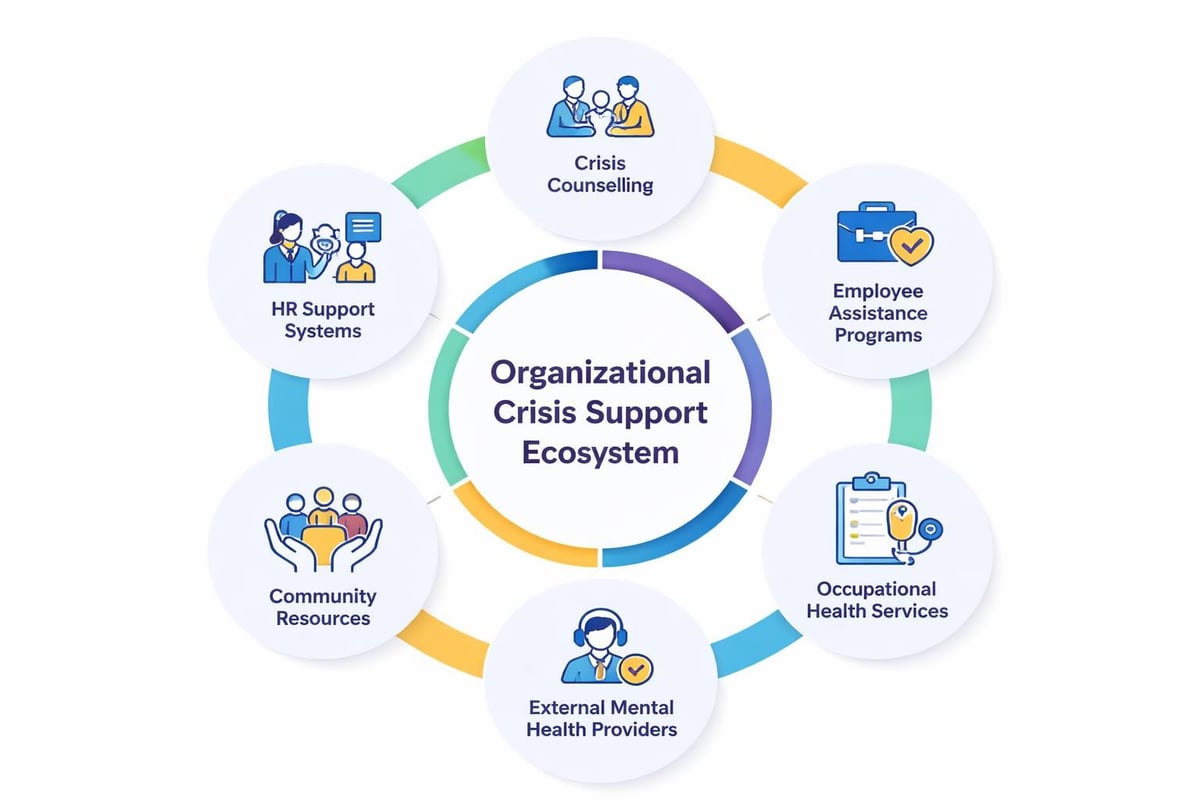
Effective crisis response functions as one component within comprehensive workplace mental health infrastructure. Crisis counseling training should address coordination with employee assistance programs, occupational health services, external mental health providers, and community resources.
Organizations implementing crisis response capabilities benefit from mapping existing support pathways and identifying integration points. This systems perspective ensures crisis counselors connect employees to appropriate ongoing support rather than operating in isolation.
Key integration strategies:
- Establish clear referral protocols to EAP and external providers
- Coordinate with HR regarding workplace accommodations and support
- Connect with occupational health for physical injury or medical concerns
- Link to community resources for practical assistance needs
- Communicate with leadership regarding organizational-level interventions
The Workplace Mental Health Institute emphasizes this integrated approach through comprehensive workplace wellbeing strategies that position crisis response within broader prevention and support frameworks.
Developing Organizational Crisis Response Capacity
Building sustainable crisis response capabilities requires strategic planning beyond individual training. Organizations must develop infrastructure, protocols, and cultural readiness supporting effective crisis intervention when needed.
Team Selection and Development
Identifying appropriate team members for crisis counseling roles involves assessing interpersonal skills, emotional regulation capacity, professional judgment, and commitment to ongoing development. Not all mental health professionals naturally excel in crisis contexts requiring rapid decision-making under ambiguity.
Selection criteria should evaluate:
- Demonstrated composure during high-pressure situations
- Strong communication skills across diverse populations
- Cultural competence and awareness of diversity factors
- Professional maturity and ethical judgment
- Capacity to maintain boundaries and manage vicarious trauma
- Willingness to participate in ongoing training and supervision
Organizations developing crisis response teams benefit from maintaining roster diversity reflecting workforce demographics. This ensures cultural responsiveness and increases likelihood that affected employees connect with team members.
Protocol Development and Documentation
Systematic crisis response requires clear protocols guiding activation, intervention processes, documentation standards, and quality assurance mechanisms. Written procedures ensure consistency, support legal compliance, and facilitate continuous improvement.
Essential protocol components:
| Protocol Element | Key Specifications |
|---|---|
| Activation triggers | Specific criteria requiring crisis response deployment |
| Initial response procedures | Assessment steps, safety prioritization, resource mobilization |
| Intervention guidelines | Evidence-based techniques, session structure, documentation requirements |
| Referral pathways | Decision criteria, provider network, follow-up processes |
| Team coordination | Communication procedures, role assignments, escalation protocols |
| Post-crisis review | Debriefing processes, outcome evaluation, quality improvement |
Organizations can reference crisis counseling program frameworks when developing workplace-specific protocols. Adapting established models reduces development time while ensuring evidence-informed practices.
Training for Specific Crisis Scenarios
Workplace crisis counseling training should address scenarios most relevant to organizational contexts. Targeted preparation for common critical incidents enhances response effectiveness and counselor confidence.
Sudden Loss and Workplace Grief
Employee deaths, whether from illness, accidents, or suicide, create ripples of grief throughout organizations. Crisis counselors support both immediate reactions and ongoing adjustment while helping teams maintain functioning.
Training for grief-related crises emphasizes collective trauma responses, memorial planning support, managing anniversary reactions, and distinguishing typical grief from complicated bereavement requiring clinical referral. Counselors learn to facilitate team processing while respecting diverse grief expressions and cultural practices.
Organizational Change and Uncertainty
Mergers, acquisitions, restructuring, and downsizing generate significant distress even when handled sensitively. Crisis counseling during organizational transitions addresses fear, anger, grief over lost stability, and practical concerns about employment security.
Effective intervention balances validation of emotional reactions with focus on controllable factors and adaptive coping. Counselors help employees identify resources, make informed decisions, and maintain perspective during ambiguous periods.
External Disasters Affecting Employees
Natural disasters, community violence, and public health emergencies impact employees even when not directly workplace-related. Crisis counseling training prepares professionals to provide appropriate support while respecting organizational boundaries.
Key considerations for external crises:
- Offer practical assistance information (emergency resources, time off policies)
- Provide psychoeducation normalizing stress reactions
- Accommodate flexibility in work expectations during acute phases
- Connect employees to community resources and professional support
- Maintain confidentiality while coordinating necessary workplace accommodations
The school counseling crisis resources offer frameworks adaptable to workplace settings, particularly regarding community-wide events affecting multiple employees simultaneously.
Maintaining Competency and Preventing Burnout
Crisis counseling training represents initial competency development rather than endpoint achievement. Ongoing professional development and self-care practices sustain effectiveness while protecting counselor wellbeing.
Continuing Education Requirements
Professional standards typically require continuing education to maintain crisis intervention credentials. Beyond compliance, ongoing learning ensures practitioners remain current with emerging research, evolving best practices, and new intervention techniques.
Valuable continuing education topics include:
- Advances in trauma neuroscience and application to practice
- Cultural humility and responsive intervention with diverse populations
- Technology-facilitated crisis support and telehealth considerations
- Specific population needs (veterans, first responders, healthcare workers)
- Emerging crisis types (cybersecurity incidents, social media-related distress)
Organizations supporting internal crisis response teams should allocate professional development time and resources ensuring team members maintain current knowledge and skills. This investment protects both counselor competency and organizational risk management.
Vicarious Trauma Prevention
Regular exposure to others' distress creates risk for vicarious trauma, compassion fatigue, and burnout among crisis counselors. Training programs must address self-awareness, boundary maintenance, and sustainable practice strategies from the outset.
Self-care framework components:
- Regular supervision and peer consultation
- Personal therapy or counseling as needed
- Clear work-life boundaries and time off policies
- Physical health practices (sleep, exercise, nutrition)
- Meaning-making and connection to purpose
- Diversified role responsibilities beyond crisis work
The Workplace Mental Health Institute's trauma-informed training approach emphasizes practitioner wellbeing alongside intervention skills, recognizing that sustainable support requires protecting helper capacity.
Organizations should monitor crisis counselor workload, ensure adequate team size preventing over-reliance on individual members, and normalize help-seeking among responders. Creating a culture where crisis counselors receive support models healthy practices throughout the organization.
Measuring Training Effectiveness and Outcomes
Evaluating crisis counseling training programs ensures resource investment produces desired competencies and organizational outcomes. Multi-level assessment captures learning, behavior change, and ultimate impact on workplace mental health.
Competency-Based Assessment
Effective training evaluation measures specific skills rather than satisfaction alone. Competency assessments utilize scenario-based testing, observed practice evaluation, and portfolio review demonstrating applied capabilities.
| Assessment Method | What It Measures | When Administered |
|---|---|---|
| Knowledge tests | Theoretical understanding | Post-training, periodic refresh |
| Skills demonstration | Practical technique application | During training, supervision |
| Simulated scenarios | Integrated response capability | Training completion, annual review |
| Supervisor evaluation | Real-world performance quality | Ongoing during supervised practice |
| Self-assessment | Confidence and readiness | Pre/post training, ongoing |
Organizations implementing certification pathways should establish clear competency standards and assessment processes ensuring consistent quality across crisis response team members.
Organizational Impact Metrics
Beyond individual competency, organizations should track whether crisis counseling training produces intended workplace outcomes. Relevant metrics include utilization rates, employee feedback, return-to-function timelines, and reduced escalation to intensive mental health services.
Useful organizational metrics:
- Crisis response activation frequency and appropriateness
- Employee satisfaction with crisis support received
- Time to stabilization following critical incidents
- Referral patterns to EAP and external providers
- Absenteeism rates following organizational crises
- Workers' compensation claims related to psychological injury
Australian organizations can access specialized workplace mental health resources through WMHI Australia supporting evaluation framework development and outcome tracking aligned with regional compliance requirements.
Selecting Quality Training Providers
Organizations investing in crisis counseling training should evaluate provider credentials, curriculum quality, practical components, and post-training support. The training marketplace includes varying quality levels requiring careful assessment.
Provider Evaluation Criteria
Key factors when selecting training programs:
- Credentials and expertise of instructional staff
- Evidence base supporting curriculum content
- Ratio of didactic instruction to skills practice
- Supervision and mentorship components
- Recognition or accreditation by professional bodies
- Post-training support and consultation availability
- Customization options for organizational contexts
Organizations should request detailed curriculum outlines, sample materials, and references from previous clients. Observing training sessions or reviewing recorded content helps assess instructional quality and cultural fit.
Internal Versus External Training Options
Organizations must decide whether to develop internal training capacity, utilize external providers, or implement hybrid approaches. Each option presents distinct advantages and considerations.
Internal development offers customization to organizational culture and ongoing accessibility but requires significant resource investment and expertise acquisition. External providers deliver established curriculum and specialized expertise but may require adaptation to workplace contexts.
Many organizations optimize outcomes through partnerships with specialized providers like the Workplace Mental Health Institute who understand workplace applications while bringing depth of mental health expertise. This approach balances quality, relevance, and resource efficiency.
Developing crisis counseling training capacity strengthens organizational resilience while demonstrating commitment to employee wellbeing during challenging periods. The investment in skilled crisis response protects workforce mental health, reduces recovery time following critical incidents, and positions organizations as employers of choice prioritizing comprehensive mental health support. Workplace Mental Health Institute partners with organizations to design and deliver evidence-based crisis counseling training customized to workplace contexts, building sustainable response capabilities that integrate with broader mental health strategies. Their practical, skills-focused approach ensures teams develop confidence and competence to support employees effectively when crises occur.

