
Mental health awareness in workplace settings has evolved from a peripheral concern to a foundational element of organizational success. Leaders and HR professionals now recognize that employee psychological wellbeing directly impacts productivity, retention, innovation, and overall business performance. The World Health Organization estimates that depression and anxiety alone cost the global economy approximately $1 trillion annually in lost productivity, underscoring the business imperative behind mental health awareness in workplace initiatives. Organizations that integrate comprehensive mental health strategies create environments where employees can perform at their best while maintaining their psychological wellbeing.
Understanding Mental Health Awareness in Workplace Contexts
Mental health awareness in workplace environments extends beyond simply acknowledging that psychological challenges exist. It involves creating systematic approaches to recognize, respond to, and prevent mental health difficulties before they escalate.
Defining Workplace Mental Health Awareness
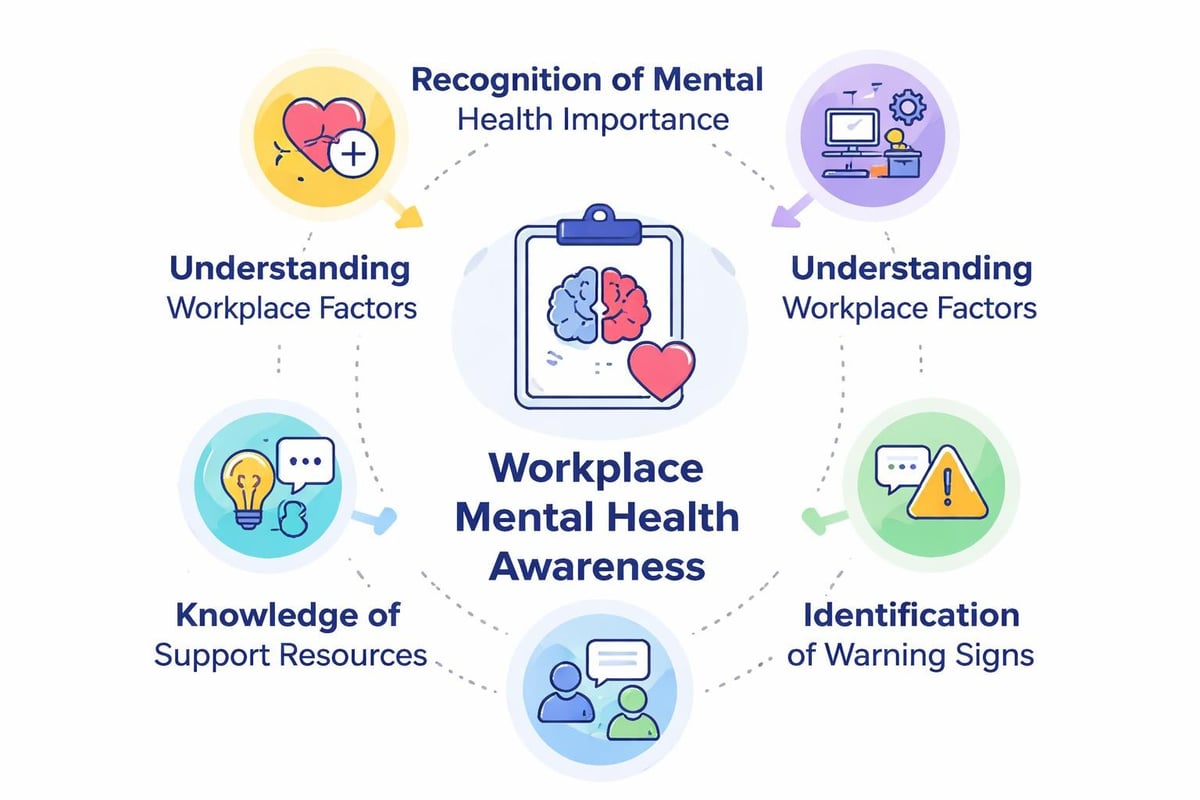
Workplace mental health awareness represents the collective understanding within an organization regarding psychological wellbeing, mental health conditions, risk factors, and available support mechanisms. This awareness manifests across multiple organizational levels:
- Recognition of mental health as equally important to physical health
- Understanding how workplace factors influence psychological wellbeing
- Knowledge of available resources and support pathways
- Capability to identify early warning signs in oneself and colleagues
- Confidence to initiate supportive conversations without stigma
Organizations with high mental health awareness demonstrate these qualities institutionally rather than leaving awareness to individual initiative. The culture reflects shared responsibility for psychological safety.
The Business Case for Awareness
Investment in mental health awareness in workplace programs yields measurable returns across multiple domains. Research consistently demonstrates correlation between psychological wellbeing initiatives and organizational performance metrics.
| Organizational Outcome | Impact of Mental Health Awareness |
|---|---|
| Absenteeism | 27% reduction in unplanned absences |
| Presenteeism | 32% improvement in productive work hours |
| Turnover | 23% decrease in voluntary departures |
| Engagement | 41% increase in employee engagement scores |
| Safety incidents | 18% reduction in workplace accidents |
These improvements stem from addressing psychological factors that underpin performance. When employees feel psychologically safe and supported, they engage more fully with their work, collaborate more effectively, and contribute to positive workplace culture.
Identifying Mental Health Challenges in Organizational Settings
Effective mental health awareness in workplace environments requires practical frameworks for recognizing psychological distress across different contexts and populations.
Common Workplace Mental Health Concerns
Stress-related conditions represent the most prevalent mental health challenges in workplace settings, though they frequently coexist with other difficulties:
- Chronic workplace stress manifesting as exhaustion, cynicism, and reduced professional efficacy
- Anxiety disorders affecting concentration, decision-making, and interpersonal interactions
- Depressive conditions impacting motivation, energy levels, and cognitive function
- Burnout characterized by emotional depletion and detachment from work
- Trauma responses following critical incidents or sustained adverse experiences
According to Forbes research, stress and anxiety have become increasingly prevalent among employees, with significant portions of the workforce reporting psychological distress that impacts their work performance.
Recognizing Early Warning Signs
Managers and colleagues trained in mental health awareness can identify subtle changes indicating psychological distress:
Behavioral indicators include decreased productivity, withdrawal from team activities, increased irritability, changes in communication patterns, or unusual absenteeism patterns. Physical signs may involve fatigue, changes in appearance, or frequent illness. Cognitive markers encompass difficulty concentrating, indecisiveness, or unusual errors.
Early recognition enables timely support before challenges intensify. Organizations benefit from training managers to recognize these patterns while maintaining appropriate professional boundaries.
Building Psychologically Safe Workplace Cultures
Mental health awareness in workplace culture requires intentional design rather than passive hope that awareness will emerge organically.
Establishing Psychological Safety Foundations
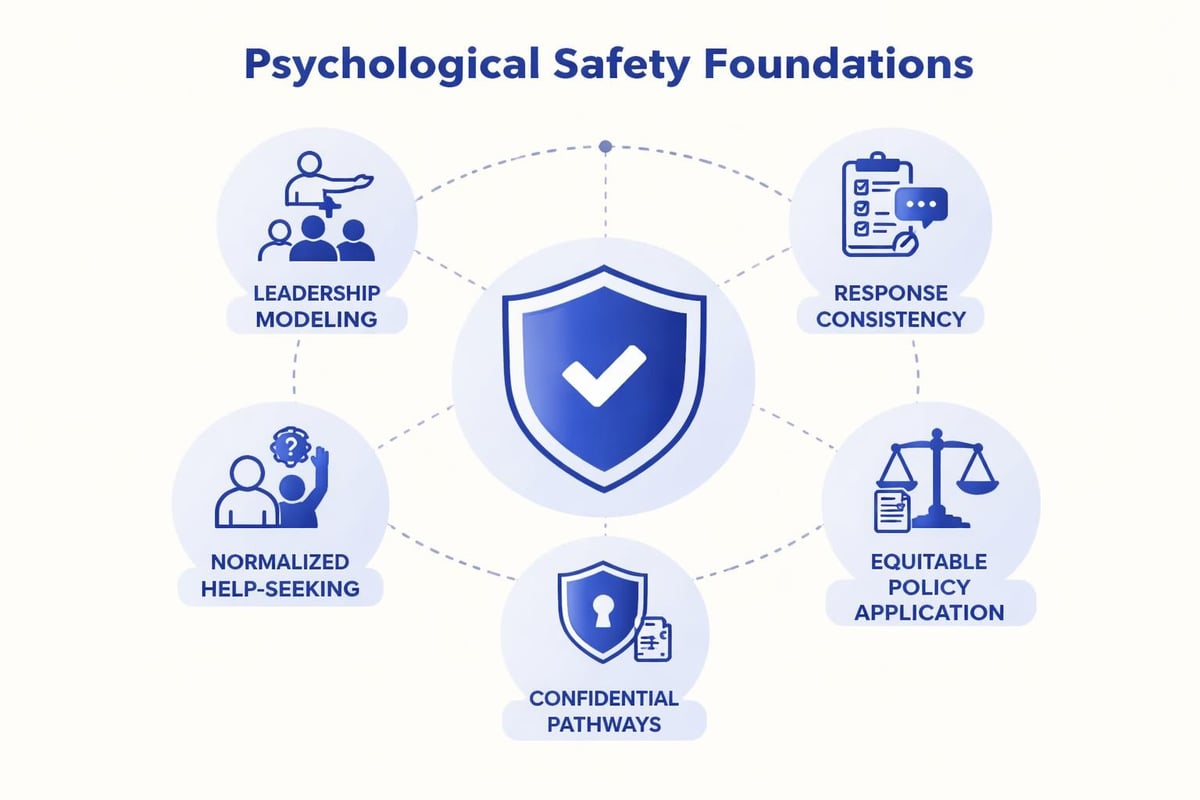
Psychological safety represents the shared belief that team members can express themselves, take interpersonal risks, and acknowledge mistakes without fear of negative consequences. Leaders cultivate this through:
- Modeling vulnerability by acknowledging their own challenges appropriately
- Responding constructively when employees raise concerns
- Normalizing help-seeking behavior through visible support utilization
- Implementing clear, confidential reporting mechanisms
- Ensuring consistent application of wellbeing policies across all levels
The Occupational Safety and Health Administration emphasizes that supporting workers' mental wellbeing is essential for overall workplace safety and health, recognizing the interconnection between psychological and physical safety.
Implementing Practical Awareness Initiatives
Effective programs balance education with practical skill development:
| Initiative Type | Implementation Approach | Expected Outcome |
|---|---|---|
| Manager training | Quarterly skill-building sessions on recognition and response | Confident, capable frontline support |
| Employee education | Annual awareness sessions with ongoing micro-learning | Reduced stigma and increased help-seeking |
| Peer support networks | Trained champions providing informal support | Accessible, relatable support pathways |
| Wellbeing assessments | Regular organizational climate surveys | Data-driven program refinement |
| Resource accessibility | Clear communication of available supports | Increased utilization of existing services |
Organizations implementing comprehensive mental health awareness in workplace programs typically observe measurable improvements within 6-12 months, though cultural transformation requires sustained commitment.
Developing Manager Capability and Confidence
Frontline managers serve as the primary interface between organizational mental health resources and employee experiences, making their capability central to effective awareness programs.
Essential Manager Competencies
Mental health literacy forms the foundation, enabling managers to understand common conditions, recognize warning signs, and respond appropriately. Beyond baseline knowledge, managers require:
- Conversation skills for initiating supportive discussions without overstepping professional boundaries
- Resource knowledge including internal supports, external services, and emergency pathways
- Boundary awareness understanding their role versus clinical intervention
- Documentation practices balancing support with appropriate record-keeping
- Self-care strategies to maintain their own wellbeing while supporting others
Organizations can develop these competencies through structured training programs that combine theoretical knowledge with practical application through role-playing, case studies, and ongoing coaching.
Overcoming Manager Resistance and Uncertainty
Common barriers preventing managers from engaging with mental health awareness in workplace responsibilities include fear of saying the wrong thing, uncertainty about professional boundaries, concern about legal implications, and lack of confidence in available supports.
Addressing these barriers requires organizations to provide clear guidance documents, access to expert consultation, legal clarity regarding manager responsibilities, and ongoing support networks where managers can discuss challenges confidentially.
Australian organizations seeking comprehensive manager development can access specialized resources through regional training providers that address local regulatory contexts and cultural considerations.
Measuring Impact and Refining Approaches
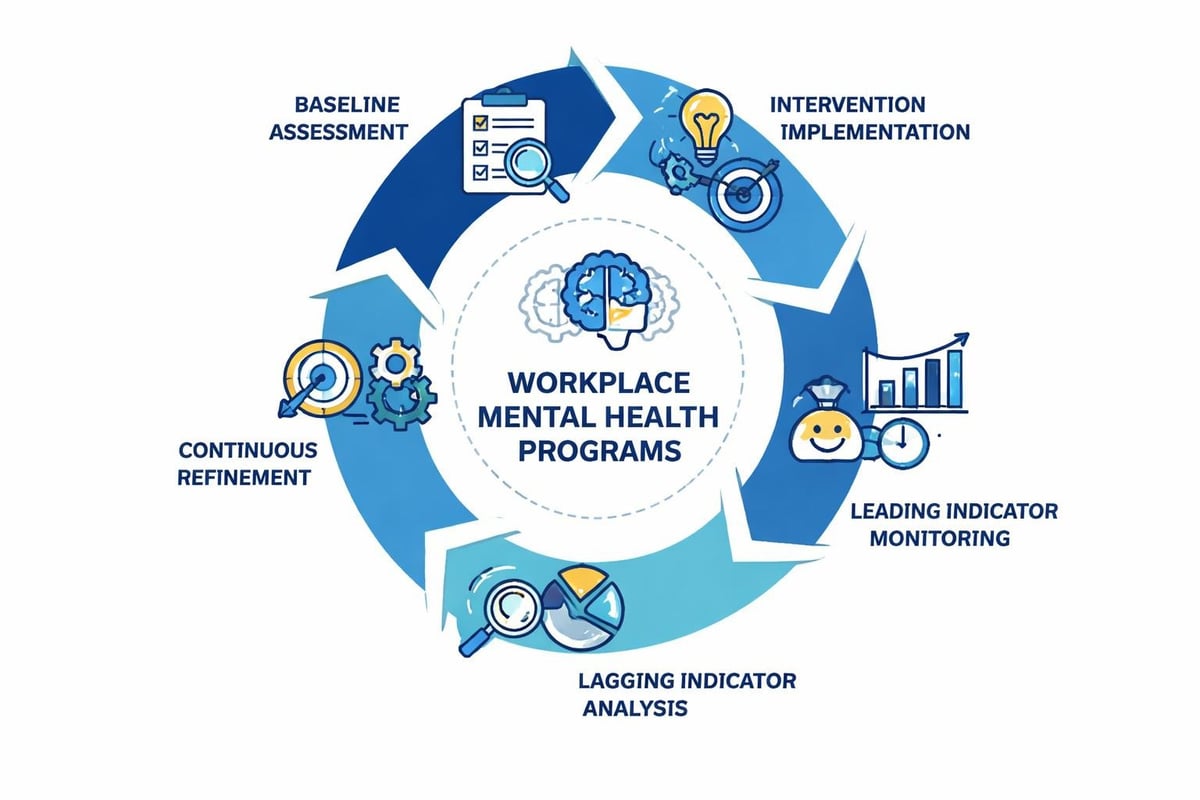
Evidence-based mental health awareness in workplace programs require systematic measurement to demonstrate value and guide continuous improvement.
Key Performance Indicators
Leading indicators predict future outcomes and include metrics such as:
- Training completion rates across different employee populations
- Help-seeking behavior trends and resource utilization patterns
- Psychological safety scores from regular pulse surveys
- Manager confidence ratings in handling mental health conversations
- Employee awareness levels regarding available supports
Lagging indicators measure outcomes including absenteeism rates, turnover statistics, workers' compensation claims related to psychological injury, productivity metrics, and engagement survey results.
Data Collection Methodologies
Organizations should implement multiple measurement approaches to capture comprehensive insights:
- Anonymous surveys assessing employee perceptions, awareness levels, and cultural indicators
- Utilization tracking monitoring use of Employee Assistance Programs, mental health days, and support services
- Focus groups gathering qualitative insights into program effectiveness and barriers
- Incident analysis reviewing psychological injury reports and near-miss events
- Benchmark comparisons evaluating performance against industry standards and previous periods
Strategic Integration Across Organizational Systems
Sustainable mental health awareness in workplace environments requires integration into existing organizational systems rather than operating as standalone initiatives.
Embedding Awareness in Core Processes
Recruitment and onboarding present opportunities to establish mental health awareness from the beginning. Organizations can communicate their commitment to psychological wellbeing during recruitment, include mental health resources in onboarding materials, and introduce new employees to support pathways early.
Performance management systems should acknowledge the relationship between wellbeing and performance. Regular check-ins create space for discussing workload, stressors, and support needs. Development conversations can address stress management skills and resilience building.
Organizational development initiatives benefit from incorporating mental health perspectives. Change management processes should assess psychological impacts. Restructuring activities require attention to uncertainty and job security concerns.
Creating Supportive Physical and Digital Environments
The National Alliance on Mental Illness provides resources for reducing stigma and promoting mental health awareness in workplace settings, emphasizing the importance of comprehensive environmental approaches.
Environmental design influences psychological wellbeing:
- Physical workspace configuration supporting both collaboration and privacy
- Access to natural light, outdoor spaces, and restorative environments
- Digital communication norms preventing constant connectivity expectations
- Meeting design allowing adequate breaks and preventing calendar saturation
- Flexible work arrangements accommodating different productivity patterns and personal circumstances
Addressing Specific Populations and Contexts
Mental health awareness in workplace programs must account for diverse employee experiences and specific organizational contexts.
Supporting Diverse Workforces
Demographic considerations influence mental health experiences and help-seeking patterns:
| Population | Specific Considerations | Tailored Approaches |
|---|---|---|
| Remote workers | Isolation, boundary blurring | Virtual community building, clear disconnection expectations |
| Shift workers | Sleep disruption, irregular schedules | Fatigue management, schedule predictability |
| Frontline service | Emotional labor, customer aggression | Trauma-informed approaches, decompression support |
| Leadership teams | Visibility pressures, isolation | Peer support networks, executive coaching |
| Early career employees | Financial stress, career uncertainty | Mentorship programs, financial wellbeing resources |
Industry-Specific Applications
Different industries face unique mental health challenges requiring tailored awareness approaches. Healthcare settings contend with vicarious trauma and moral distress. Emergency services manage cumulative traumatic exposure. Corporate environments address chronic stress and burnout. Education sectors balance emotional labor with resource constraints.
Organizations can access specialized training resources addressing sector-specific mental health challenges through evidence-based video content and implementation guidance.
Navigating Legal and Ethical Considerations
Mental health awareness in workplace initiatives intersect with complex legal and ethical frameworks requiring careful navigation.
Compliance and Duty of Care
Organizations maintain legal obligations regarding employee psychological health, including providing psychologically safe work environments, reasonable accommodations for mental health conditions, and appropriate response to known psychological hazards.
Documentation practices must balance support with privacy, recording sufficient information to demonstrate duty of care while maintaining confidentiality. Managers require clear guidance distinguishing between supportive conversations (typically undocumented beyond noting support offered) and performance management discussions (requiring formal documentation).
Privacy and Disclosure Management
Employees control disclosure of mental health information. Organizations cannot compel disclosure but can address observable performance or behavior issues regardless of underlying causes.
Best practices include:
- Training managers to respond supportively to voluntary disclosures
- Establishing clear protocols for information sharing on need-to-know basis
- Implementing secure systems for storing sensitive health information
- Providing employees control over who accesses their information
- Creating safe pathways for requesting accommodations without requiring diagnosis disclosure
Sustaining Momentum and Preventing Program Decay
Initial enthusiasm for mental health awareness in workplace programs often wanes without intentional sustainability strategies.
Building Ongoing Engagement
Communication strategies maintain awareness through regular touchpoints including quarterly mental health themes, monthly resource highlights, leadership messages reinforcing commitment, success stories demonstrating positive outcomes, and transparent reporting of program metrics.
Refresh cycles prevent staleness by updating training content annually, introducing new resources and tools regularly, rotating peer support champions, and evolving programs based on feedback and measurement data.
Leadership Accountability
Executive commitment determines program longevity. Sustainable initiatives require mental health metrics in leadership dashboards, executive participation in training and awareness activities, resource allocation reflecting stated priorities, and visible leadership modeling of healthy behaviors.
Senior leaders should regularly communicate about mental health awareness in workplace contexts, share organizational progress, and demonstrate personal commitment to psychological safety principles.
Organizations that prioritize mental health awareness in workplace environments create competitive advantages through enhanced employee wellbeing, reduced costs, and improved performance outcomes. Building comprehensive awareness requires strategic integration across systems, sustained leadership commitment, and evidence-based approaches tailored to specific organizational contexts. Workplace Mental Health Institute specializes in developing manager capability and organizational resilience through practical, evidence-informed training programs designed to translate awareness into meaningful action and measurable improvements in workplace psychological health.

