
Mental wellness activities form the practical foundation of effective workplace mental health programs, yet many organizations struggle to identify which interventions genuinely support employee psychological wellbeing versus superficial initiatives. For HR professionals and organizational leaders, understanding how to implement evidence-informed mental wellness activities creates measurable improvements in staff resilience, engagement, and performance. The distinction between reactive mental health support and proactive wellness programming requires strategic thinking about activities that address both individual needs and systemic workplace factors.
Understanding Mental Wellness Activities in Organizational Contexts
Mental wellness activities encompass structured practices and interventions designed to strengthen psychological resilience, emotional regulation, and cognitive flexibility within workplace settings. Unlike clinical mental health treatment, these activities focus on prevention, skill-building, and capacity enhancement for all employees regardless of current mental health status.
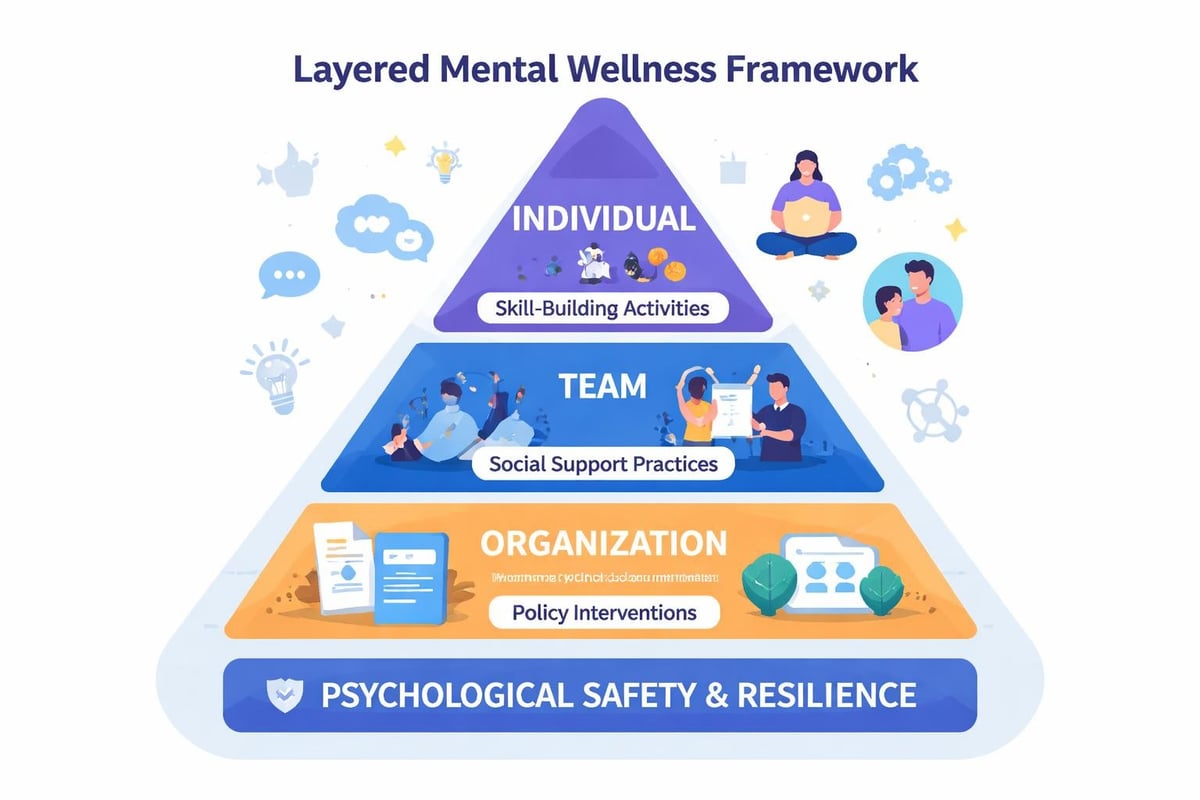
The workplace represents a unique environment for implementing mental wellness activities because organizational culture, leadership behavior, and structural policies directly influence individual psychological health. Research demonstrates that mental wellness encompasses both individual practices and environmental conditions, making workplace interventions particularly impactful when they address both dimensions simultaneously.
Defining Effective Workplace Wellness Interventions
Effective mental wellness activities share several characteristics that distinguish them from token gestures or compliance-driven programs. These interventions demonstrate measurable outcomes, align with employee needs identified through proper assessment, and integrate with existing organizational systems rather than operating as isolated initiatives.
Core characteristics of evidence-informed activities include:
- Accessibility across diverse employee populations and work arrangements
- Sustainability without requiring continuous external facilitation
- Scalability that accommodates organizational growth or contraction
- Cultural appropriateness reflecting workforce demographics and values
- Integration with existing health, safety, and performance systems
Organizations benefit from understanding that mental wellness activities function best as interconnected elements within comprehensive wellbeing strategies. The Workplace Mental Health Institute emphasizes this systems-thinking approach when designing training programs for managers responsible for implementing wellness initiatives.
Evidence-Based Mental Wellness Activities for Workplace Implementation
Implementing mental wellness activities requires understanding which interventions demonstrate reliable effectiveness across diverse workplace contexts. The following categories represent practices with substantial research support and practical applicability for organizational settings.
Mindfulness and Present-Moment Awareness Practices
Mindfulness-based interventions consistently demonstrate positive outcomes for workplace stress reduction, attention regulation, and emotional resilience. These practices train employees to observe thoughts and emotions without immediate reactivity, creating space for more deliberate responses to workplace challenges.
Structured mindfulness programs typically include breath awareness, body scanning, and attentional focus exercises that employees can practice independently or in group settings. Organizations successfully implementing these activities often provide brief guided sessions during work hours, making participation convenient and normalized rather than requiring additional personal time.
| Activity Type | Duration | Implementation Format | Primary Benefits |
|---|---|---|---|
| Breath awareness | 3-5 minutes | Individual or group | Stress reduction, emotional regulation |
| Body scan meditation | 10-15 minutes | Guided audio or live | Physical tension release, interoceptive awareness |
| Mindful walking | 5-10 minutes | Individual during breaks | Movement integration, attention training |
| Present-moment anchoring | 2-3 minutes | Individual throughout day | Interrupting rumination, grounding |
The effectiveness of mindfulness activities depends significantly on consistent practice rather than occasional participation. Organizations achieve better outcomes when managers model these practices and when workplace culture supports taking brief wellness breaks without stigma.
Physical Movement and Embodied Wellness Practices
Physical activity represents one of the most robust interventions for supporting mental wellness, with extensive research documenting benefits for mood regulation, stress management, and cognitive function. Research confirms that exercise improves mental health through multiple biological and psychological mechanisms.
Workplace-based movement activities need not require specialized facilities or extensive time commitments. Brief movement breaks, walking meetings, stretching routines, and active commuting options all contribute to employee mental wellness when integrated into workplace norms and expectations.
Practical movement interventions for workplace settings:
- Structured stretch breaks every 60-90 minutes during sedentary work
- Walking meetings for one-on-one discussions or small group collaborations
- Standing or treadmill desk options for employees preferring active workstations
- Lunchtime movement groups for yoga, walking, or other moderate activities
- Encouragement of active commuting through bike storage and shower facilities
Organizations implementing physical wellness activities should address accessibility barriers, ensuring that employees with diverse abilities, health conditions, and physical limitations can participate meaningfully. Inclusive design expands participation and prevents activities from inadvertently creating wellness hierarchies.
Social Connection and Relational Wellness Activities
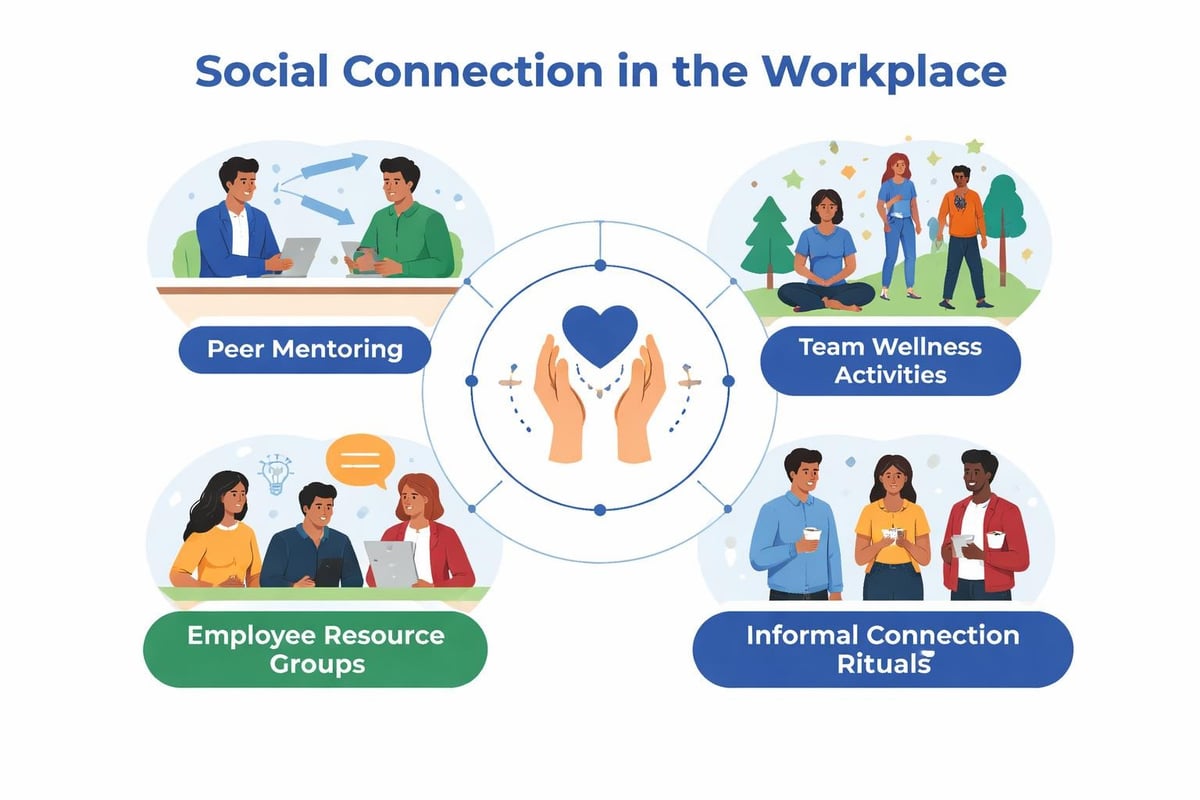
Human connection serves as a fundamental protective factor for mental health, yet modern workplace structures often unintentionally isolate employees through remote work, siloed departments, and task-focused cultures. Mental health activities that encourage social interaction strengthen workplace relationships while supporting individual psychological wellbeing.
Structured social wellness activities create opportunities for authentic connection beyond transactional work relationships. These interventions range from informal connection rituals to facilitated peer support programs, depending on organizational culture and employee preferences.
Effective social connection activities balance structure with spontaneity, providing frameworks that encourage interaction without forcing artificial intimacy. Team-based wellness challenges, mentoring programs, employee resource groups, and cross-functional collaboration projects all create natural opportunities for relationship-building while serving organizational purposes.
Skill-Building Mental Wellness Activities
Beyond practices that provide immediate stress relief, certain mental wellness activities develop lasting psychological capabilities that enhance employee resilience over time. These skill-building interventions require more structured learning but create sustainable improvements in how employees process challenges and regulate emotions.
Cognitive Reframing and Perspective-Taking Exercises
Cognitive flexibility represents the capacity to examine situations from multiple perspectives and generate alternative interpretations of events. This skill directly counteracts common thinking patterns that amplify workplace stress, such as catastrophizing, personalizing, or overgeneralizing from single incidents.
Workplace training in cognitive reframing teaches employees to identify automatic thoughts, evaluate evidence supporting or contradicting those thoughts, and develop balanced alternative perspectives. Organizations can integrate these skills into existing professional development programs or leadership training curricula.
Training managers to recognize and gently challenge unhelpful thinking patterns in team members requires sophistication and psychological safety. The online training programs at Workplace Mental Health Institute provide managers with frameworks for supporting cognitive flexibility without overstepping appropriate boundaries.
Emotional Regulation and Distress Tolerance Training
Emotional regulation encompasses the ability to recognize, understand, and modulate emotional experiences in ways that support wellbeing and effective functioning. Workplace mental wellness activities that develop emotional regulation skills help employees navigate interpersonal conflicts, performance pressures, and organizational changes more effectively.
Core emotional regulation skills applicable in workplace contexts include:
- Identifying and labeling emotional states with nuance and accuracy
- Understanding triggers and patterns in emotional responses
- Applying strategies to modulate emotional intensity when appropriate
- Expressing emotions constructively in professional relationships
- Distinguishing between productive and unproductive emotional reactions
Distress tolerance specifically addresses situations where employees cannot immediately change stressful circumstances and must cope effectively despite discomfort. Activities that promote emotional wellness often incorporate distress tolerance components alongside broader emotional regulation training.
Organizations implementing emotional skills training should ensure psychological safety, recognizing that employees may feel vulnerable when discussing emotional experiences. Confidential, opt-in formats typically generate better engagement than mandatory programs that pressure employees to share personal information.
Implementing Mental Wellness Activities Strategically
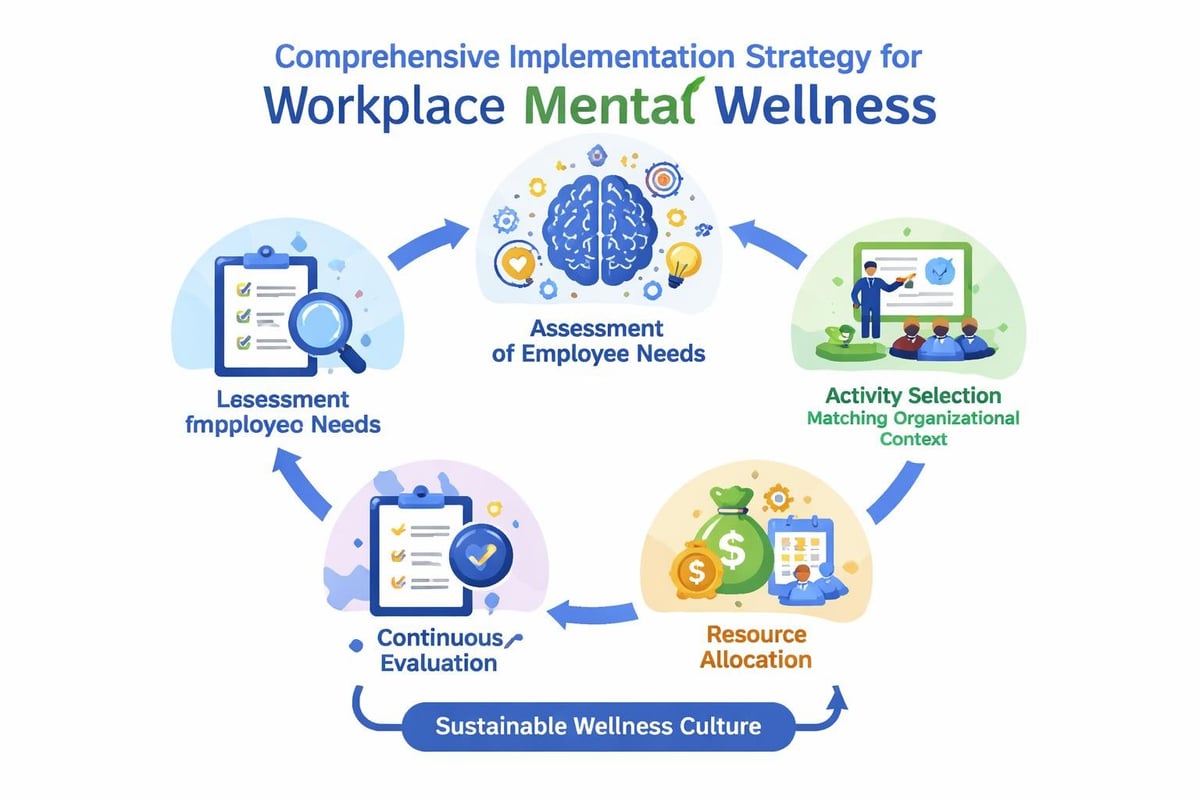
The gap between knowing which mental wellness activities demonstrate effectiveness and successfully implementing them in workplace contexts requires strategic planning, leadership commitment, and ongoing evaluation. Many organizations launch wellness initiatives with enthusiasm but fail to create conditions for sustained participation and meaningful impact.
Assessment-Driven Activity Selection
Effective wellness programs begin with understanding employee needs, preferences, and barriers through proper assessment rather than assuming generic activities will suit all populations. Workplace wellbeing assessments identify specific stressors, existing resources, and gaps in current support systems that inform activity selection.
Anonymous surveys, focus groups, and consultation with employee representatives provide valuable data about which mental wellness activities would receive genuine uptake versus token participation. This assessment phase also reveals structural workplace factors that may undermine wellness activities, such as excessive workload, inadequate staffing, or problematic management practices.
Organizations seeking comprehensive assessment approaches can access downloadable mental health resources that guide evaluation processes and program planning.
Creating Supportive Implementation Conditions
Mental wellness activities fail when implemented in workplace cultures that simultaneously undermine wellbeing through unrealistic expectations, inadequate resources, or leadership behaviors that contradict wellness messaging. Successful implementation requires addressing these environmental factors alongside individual-level interventions.
| Implementation Factor | Supporting Conditions | Undermining Conditions |
|---|---|---|
| Time allocation | Protected wellness time during work hours | Activities scheduled during personal time only |
| Leadership modeling | Managers visibly participating in activities | Senior leaders dismissing wellness as unnecessary |
| Resource investment | Budget for facilitators, materials, facilities | Expectation that activities require no investment |
| Cultural messaging | Wellness framed as performance enhancement | Wellness positioned as remediation for struggling employees |
| Evaluation approach | Measuring participation, satisfaction, outcomes | No assessment or only superficial metrics |
The distinction between genuine commitment and performative wellness becomes evident in resource allocation decisions and policy alignment. Organizations serious about mental wellness activities integrate them into performance management, meeting structures, and operational planning rather than treating them as optional add-ons.
Tailoring Activities for Diverse Workplace Populations
Generic mental wellness activities often fail to engage diverse employee populations with varying roles, work arrangements, cultural backgrounds, and personal circumstances. Effective programs incorporate flexibility and customization while maintaining evidence-based core components.
Adapting Activities for Different Work Contexts
Frontline employees, remote workers, shift workers, and office-based staff face distinct challenges requiring thoughtful adaptation of mental wellness activities. What works for sedentary office workers may prove impractical for employees in physically demanding roles or those without consistent access to workplace facilities.
Remote and hybrid workers particularly benefit from activities designed for individual practice and virtual participation, whereas employees working in close physical proximity may prefer group-based activities that leverage existing team structures. Shift workers need activities accessible across different times rather than scheduled during standard business hours.
Organizations with diverse workforce compositions achieve better outcomes by offering multiple activity options rather than single prescribed approaches. This variety accommodates personal preferences, accessibility needs, and work context differences while maintaining program coherence.
Cultural Responsiveness in Wellness Programming
Mental wellness activities carry cultural assumptions about appropriate emotional expression, individual versus collective wellbeing, mind-body relationships, and help-seeking behavior. Programs developed in Western contexts may require adaptation for workforces with different cultural frameworks.
Cultural adaptation considerations include:
- Language accessibility through translation and multilingual facilitation
- Recognition of diverse wellness traditions and healing practices
- Sensitivity to stigma variations across cultural groups
- Accommodation of religious or spiritual perspectives on mental health
- Awareness of cultural differences in privacy preferences and disclosure comfort
Consultation with employees from diverse backgrounds during program design prevents cultural insensitivity and identifies opportunities to incorporate wellness practices from multiple traditions. This inclusive approach strengthens both program effectiveness and organizational culture.
Measuring Mental Wellness Activity Effectiveness
Evaluation distinguishes between wellness activities that generate genuine benefits and those that create only superficial engagement or temporary effects. Organizations investing resources in mental wellness activities deserve accountability through meaningful measurement that informs program refinement.
Appropriate Metrics for Wellness Initiatives
Mental wellness activity evaluation should encompass participation rates, subjective experience, skill acquisition, behavioral change, and organizational outcomes when feasible. Single metrics provide incomplete pictures, while comprehensive evaluation frameworks capture multiple dimensions of impact.
Participation tracking reveals accessibility and appeal but says nothing about quality or effectiveness. Employee feedback about perceived value and satisfaction provides subjective assessment but may miss objective improvements. Skill assessments before and after structured training programs measure learning but not application in workplace contexts.
Multi-level evaluation framework:
- Individual level: Self-reported wellbeing, stress levels, skill confidence, activity utilization
- Team level: Psychological safety, peer support, collaborative problem-solving
- Organizational level: Absenteeism patterns, retention rates, engagement scores, performance indicators
- Program level: Participation rates, satisfaction scores, completion rates, resource utilization
Linking wellness activity participation to organizational outcomes requires sophisticated analysis accounting for confounding variables, but even correlational data provides valuable insights. Organizations should resist pressure to demonstrate immediate return on investment for activities designed to build long-term resilience and prevent future problems.
Iterative Program Refinement
Evaluation data should inform continuous program improvement rather than simply justifying existing activities. Regular review cycles that incorporate employee feedback, participation patterns, and outcome trends allow organizations to discontinue ineffective activities while expanding successful ones.
Workplace mental wellness represents an evolving field with emerging practices and research findings that warrant periodic program updates. Organizations partnering with specialized providers like Workplace Mental Health Institute gain access to current evidence and best practice guidance that informs program evolution.
Integration with Comprehensive Workplace Mental Health Strategies
Mental wellness activities achieve maximum effectiveness when embedded within broader workplace mental health strategies that address prevention, early intervention, and support across the full spectrum of employee needs. Isolated wellness activities cannot compensate for toxic workplace cultures, inadequate resources, or absence of appropriate clinical support pathways.
Connecting Wellness Activities to Support Systems
Employees participating in mental wellness activities sometimes recognize needs exceeding wellness-level interventions, requiring connection to employee assistance programs, healthcare resources, or workplace accommodations. Clear pathways between wellness programming and more intensive support prevent activities from creating expectations they cannot fulfill.
Training facilitators and managers to recognize when employees need support beyond wellness activities ensures appropriate referrals while maintaining boundaries around their roles. This skill development represents a critical component of manager mental health literacy training.
Alignment with Organizational Policies and Practices
Workplace policies regarding workload, flexibility, leave entitlements, and performance expectations profoundly influence employee mental wellness regardless of available activities. Organizations that offer stress management workshops while simultaneously maintaining unrealistic productivity expectations send contradictory messages that undermine wellness programming.
Policy alignment requires honest assessment of whether organizational practices support or contradict wellness objectives. Resources on workplace mental health emphasize the importance of systemic approaches that address both individual and environmental factors.
Strategic integration of mental wellness activities with human resources policies, occupational health and safety systems, and performance management processes creates organizational coherence that amplifies individual interventions. This integration represents a marker of organizational maturity in workplace mental health.
Mental wellness activities provide practical tools for strengthening employee psychological resilience when implemented strategically within supportive organizational contexts. Organizations seeking to develop comprehensive, evidence-informed approaches benefit from specialized expertise that connects wellness programming with broader workplace mental health strategies. Workplace Mental Health Institute delivers training and consultation services that equip leaders and managers with the knowledge and skills to create sustainable workplace wellbeing programs that generate meaningful improvements in employee mental health and organizational performance.

