
Understanding psychosocial health is fundamental for organizations committed to building resilient, high-performing workplaces. This multidimensional concept encompasses the intricate relationship between psychological wellbeing, social connections, and environmental influences that shape how employees function, engage, and thrive. For leaders and HR professionals, developing expertise in psychosocial health creates pathways to reduce absenteeism, enhance productivity, and cultivate organizational cultures where mental health is prioritized rather than stigmatized.
Understanding Psychosocial Health in Workplace Contexts
Psychosocial health represents the integration of psychological, emotional, social, and spiritual dimensions of wellbeing. Unlike narrow definitions of mental health that focus solely on disorder absence, psychosocial health acknowledges how relationships, work environments, cultural contexts, and individual coping resources interact to influence overall functioning.
The World Health Organization’s framework for psychosocial skills emphasizes this holistic perspective, recognizing that effective communication, emotional regulation, and social support networks form essential components of comprehensive wellbeing.
Core Components of Psychosocial Wellbeing
Psychological dimension: Encompasses cognitive functioning, emotional regulation, self-efficacy, and adaptive coping mechanisms that enable individuals to process challenges constructively.
Social dimension: Includes relationship quality, communication patterns, social support availability, sense of belonging, and interpersonal effectiveness within teams and broader networks.
Environmental dimension: Addresses workplace culture, organizational policies, job design, workload management, and physical workspace conditions that either support or undermine wellbeing.
Spiritual dimension: Involves meaning-making, values alignment, purpose, and the connection between individual work and broader organizational mission.
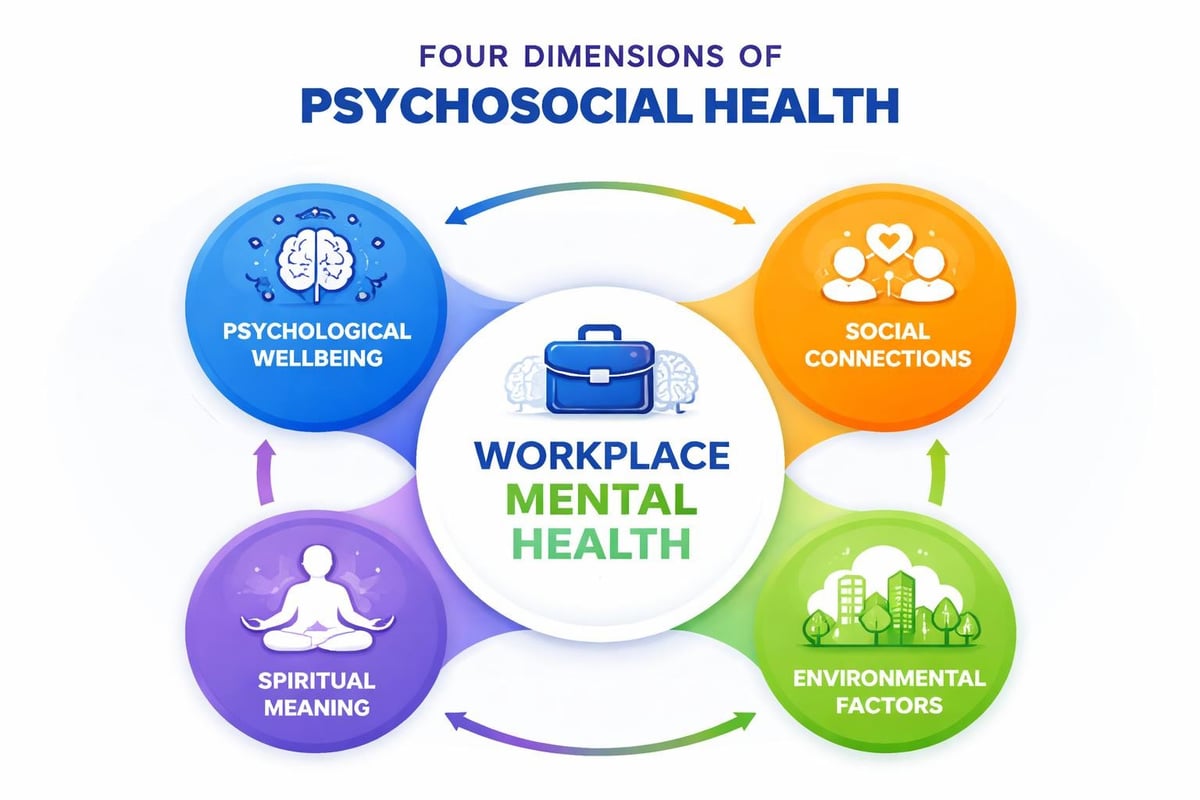
Organizations that address psychosocial health comprehensively recognize these dimensions operate interdependently. A manager experiencing chronic work overload (environmental stressor) may develop anxiety symptoms (psychological impact), withdraw from colleagues (social consequence), and question their career purpose (spiritual dimension).
Evidence-Based Psychosocial Resources and Interventions
Research published through the National Academies Press on psychosocial interventions establishes clear standards for evidence-based approaches to mental health support. For workplace applications, this translates to implementing interventions grounded in validated frameworks rather than superficial wellness initiatives.
Primary Psychosocial Resources
| Resource Type | Workplace Application | Measurable Impact |
|---|---|---|
| Optimism | Resilience training, growth mindset development | Reduced stress reactivity, improved problem-solving |
| Social Support | Peer support programs, mentorship structures | Lower burnout rates, enhanced engagement |
| Self-Efficacy | Skills development, autonomy in role design | Increased productivity, reduced turnover |
| Meaning/Purpose | Values-based leadership, mission alignment | Higher job satisfaction, stronger retention |
Studies examining how psychosocial resources influence health outcomes demonstrate that individuals with strong support networks, optimistic outlook, and sense of control experience better health trajectories regardless of socioeconomic status. Translating this evidence to workplace settings requires intentional design of systems that build rather than deplete these resources.
Trauma-Informed Approaches to Psychosocial Health
Trauma-informed care training represents a critical evolution in workplace mental health practice. This framework acknowledges that many employees carry experiences of trauma that influence their workplace interactions, stress responses, and capacity for trust.
Key trauma-informed principles for leaders:
- Safety: Creating predictable, transparent environments where employees feel physically and psychologically secure
- Trustworthiness: Following through on commitments, maintaining consistent communication patterns, honoring confidentiality
- Peer support: Facilitating connections between employees with shared experiences or challenges
- Collaboration: Involving employees in decision-making processes affecting their work
- Empowerment: Building on existing strengths rather than focusing exclusively on deficits
Organizations can explore comprehensive trauma-informed care training that equips managers with practical skills for supporting employees while maintaining appropriate professional boundaries.
Implementing Psychosocial Health Strategies for Organizations
Strategic implementation of psychosocial health initiatives requires moving beyond awareness campaigns toward systemic change. The Society for Occupational Health Psychology advances research demonstrating that sustainable improvements emerge from coordinated interventions addressing individual, team, and organizational levels simultaneously.
Conducting Psychosocial Risk Assessments
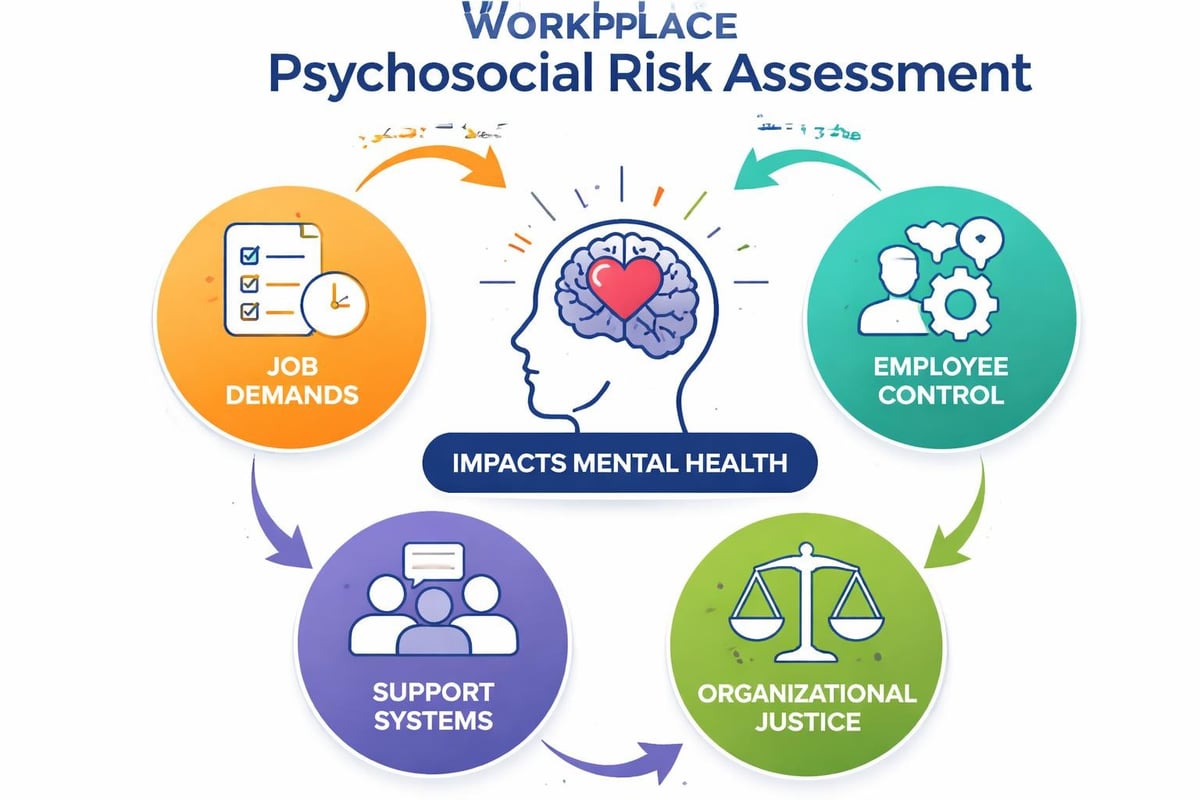
Effective psychosocial health strategies begin with comprehensive assessment. Workplace wellbeing assessments identify specific stressors, resource gaps, and protective factors within your organizational context.
Assessment dimensions to evaluate:
- Job demands: Workload intensity, emotional labor requirements, conflicting priorities, time pressures
- Job control: Autonomy levels, decision-making authority, skill utilization, schedule flexibility
- Support structures: Managerial support quality, peer relationships, access to resources
- Effort-reward balance: Recognition systems, career development opportunities, fair compensation
- Organizational justice: Procedural fairness, transparent decision-making, equitable treatment
- Change management: Communication during transitions, employee involvement, implementation pace
Australian organizations can access specialized workplace wellbeing assessments tailored to local regulatory frameworks and cultural contexts.
Manager Training as Core Infrastructure
Managers serve as critical mediators of psychosocial health. Their leadership behaviors, communication patterns, and response to employee distress directly influence team psychological safety and individual wellbeing outcomes.
Research indicates managers require specific competencies:
- Recognizing early warning signs of declining mental health without diagnosing
- Conducting supportive conversations that balance empathy with professional boundaries
- Making reasonable adjustments to work arrangements when employees face challenges
- Navigating return-to-work processes following mental health absences
- Creating team norms that normalize help-seeking and vulnerability
Workplace Mental Health Institute offers manager-specific programs addressing these competencies through practical, scenario-based learning rather than theoretical awareness training.
Psychosocial Health Across the Employee Lifecycle
Integrating psychosocial health considerations throughout the employee experience creates consistent support rather than reactive crisis intervention.
Recruitment and Onboarding
Psychosocial considerations at entry:
- Realistic job previews that accurately represent demands and stressors
- Cultural fit assessment evaluating values alignment and team dynamics
- Structured onboarding addressing both technical skills and social integration
- Early identification of support needs through confidential wellbeing check-ins
- Clear communication about mental health resources and organizational expectations
Performance Management and Development
Traditional performance systems often undermine psychosocial health through punitive approaches, subjective evaluations, or unrealistic expectations. Redesigning these systems supports wellbeing while maintaining accountability.
| Traditional Approach | Psychosocial Health Approach |
|---|---|
| Annual reviews with surprises | Ongoing feedback conversations |
| Deficit-focused criticism | Strength-based development planning |
| Individual competition emphasis | Collaborative goal-setting |
| Rigid standardized metrics | Contextual performance evaluation |
| Manager-driven process | Employee co-creation of objectives |
Transitions and Exits
Career transitions, restructures, and departures create psychosocial stress even under positive circumstances. Organizations prioritizing psychosocial health provide support during these vulnerable periods through transparent communication, transition assistance, and acknowledgment of emotional impact.
Building Organizational Cultures That Sustain Psychosocial Health
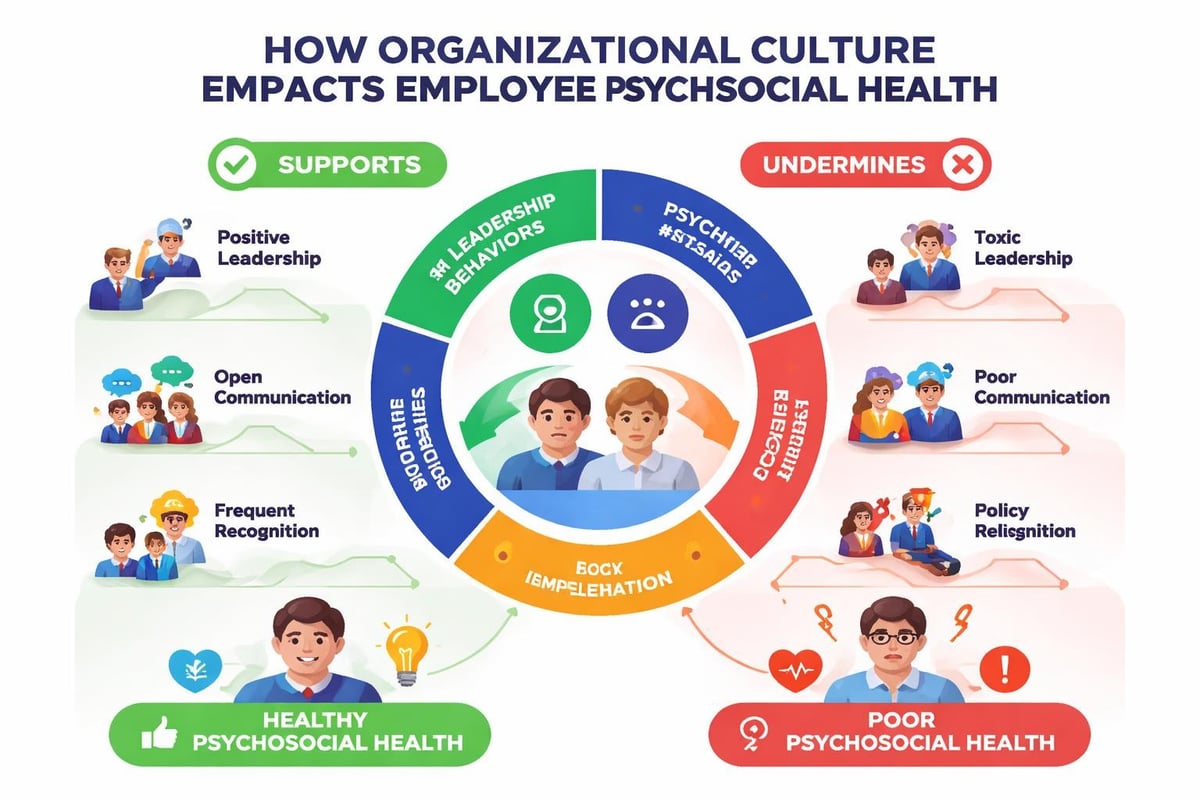
Cultural transformation represents the most challenging yet impactful lever for improving psychosocial health. Surface-level initiatives fail when underlying cultural norms contradict stated wellbeing priorities.
Psychological Safety as Foundation
Google's extensive research on team effectiveness identified psychological safety as the strongest predictor of high performance. Teams with strong psychological safety demonstrate:
- Higher rates of help-seeking when facing challenges
- More frequent acknowledgment of mistakes enabling rapid learning
- Increased diversity of perspectives shared during decision-making
- Greater innovation through willingness to propose unconventional ideas
- Lower burnout despite high performance standards
Leaders build psychological safety through:
- Modeling vulnerability by acknowledging their own limitations and mistakes
- Responding to concerns with curiosity rather than defensiveness
- Explicitly inviting dissenting opinions during planning processes
- Publicly celebrating employees who identify problems early
- Establishing clear norms separating person from performance feedback
Designing Work for Human Thriving
Job design fundamentally shapes psychosocial health outcomes. The relationship between work design and mental health demonstrates that roles offering autonomy, skill variety, task significance, and feedback opportunities promote wellbeing while repetitive, highly monitored work depletes psychological resources.
Evidence-based job design principles:
- Task variety: Rotating responsibilities to prevent monotony while building diverse competencies
- Autonomy: Granting decision-making authority over work methods and scheduling
- Feedback loops: Creating systems enabling employees to see impact of their contributions
- Social connection: Structuring collaborative work opportunities rather than isolated tasks
- Meaning: Connecting individual roles to organizational mission and community benefit
Measuring Psychosocial Health Outcomes
Sophisticated measurement approaches track leading indicators of psychosocial health rather than solely monitoring lagging indicators like absence rates or turnover after problems escalate.
Multi-Level Measurement Framework
Individual level metrics:
- Self-reported wellbeing scores using validated instruments
- Stress and burnout assessments
- Engagement survey results
- Utilization rates of mental health resources
- Presenteeism indicators
Team level metrics:
- Psychological safety assessments
- Team cohesion measurements
- Collaborative behavior frequency
- Peer support network density
- Conflict resolution effectiveness
Organizational level metrics:
- Absence patterns and duration
- Turnover rates and exit interview themes
- Workers compensation claims related to psychological injury
- Productivity and quality indicators
- Customer satisfaction correlating with employee wellbeing
For organizations seeking credible sources of health information to inform their measurement strategies, the National Academy of Medicine provides guidance on evaluating evidence quality and avoiding pseudoscientific approaches.
Addressing Psychosocial Health Challenges for Remote and Hybrid Teams
Distributed work arrangements introduce unique psychosocial considerations requiring adapted strategies. Remote employees face distinct challenges including social isolation, blurred work-life boundaries, reduced informal support access, and potential exclusion from decision-making processes.
Remote Work Psychosocial Strategies
Intentional connection design:
- Scheduled informal interaction opportunities beyond task-focused meetings
- Virtual peer support groups addressing shared challenges
- Recognition systems celebrating contributions across locations
- Equitable access to development opportunities regardless of physical presence
Boundary support mechanisms:
- Clear expectations about communication response times
- "Right to disconnect" policies preventing expectation creep
- Manager modeling of healthy boundaries through their own behavior
- Technology guidelines preventing surveillance-induced stress
Inclusion safeguards:
- Hybrid meeting protocols ensuring remote participants have equal voice
- Transparent decision-making documentation accessible to all team members
- Rotation of in-office requirements to distribute travel burden
- Career advancement processes eliminating proximity bias
Organizations can access specialized training resources addressing remote team mental health through evidence-based video content and structured learning programs.
Strategic Consultation and Long-Term Psychosocial Health Planning
Sustainable improvements in psychosocial health require strategic planning integrated with broader organizational objectives rather than isolated wellness programs. This approach positions mental health as business-critical infrastructure rather than discretionary benefit.
Strategic Planning Components
Needs analysis: Comprehensive assessment identifying specific psychosocial risks, protective factors, and gap areas within current systems and practices.
Stakeholder engagement: Involving employees, managers, senior leadership, and relevant external partners in designing interventions that address actual needs rather than assumed problems.
Phased implementation: Sequencing initiatives to build foundational elements before advancing to complex interventions, ensuring adequate resources and attention for each phase.
Capability building: Developing internal expertise through training programs rather than creating dependency on external consultants for ongoing psychosocial health management.
Continuous improvement: Establishing feedback mechanisms enabling regular refinement based on outcome data, employee input, and emerging evidence.
Prioritizing psychosocial health creates measurable benefits including reduced absenteeism, enhanced productivity, and stronger organizational resilience during periods of change or uncertainty. The evidence demonstrates that comprehensive approaches addressing individual, team, and organizational factors generate superior outcomes compared to fragmented wellness initiatives. Workplace Mental Health Institute partners with organizations to design and implement evidence-based psychosocial health strategies tailored to your specific context, workforce needs, and strategic objectives, building internal capability for sustained mental health excellence.

