
Organizations worldwide recognize that employee wellbeing directly influences productivity, engagement, and retention. A comprehensive mental health and wellbeing policy serves as the foundation for creating psychologically safe workplaces where employees can thrive. This framework establishes clear expectations, allocates resources appropriately, and demonstrates organizational commitment to supporting mental health across all levels. For leaders and human resources professionals, developing and implementing such policies represents both a strategic imperative and an ethical responsibility that shapes workplace culture for years to come.
Understanding the Foundation of Workplace Mental Health Policies
A mental health and wellbeing policy represents more than a compliance document. It functions as a strategic blueprint that guides organizational responses to psychological health concerns, establishes support mechanisms, and creates accountability structures for leadership and managers.
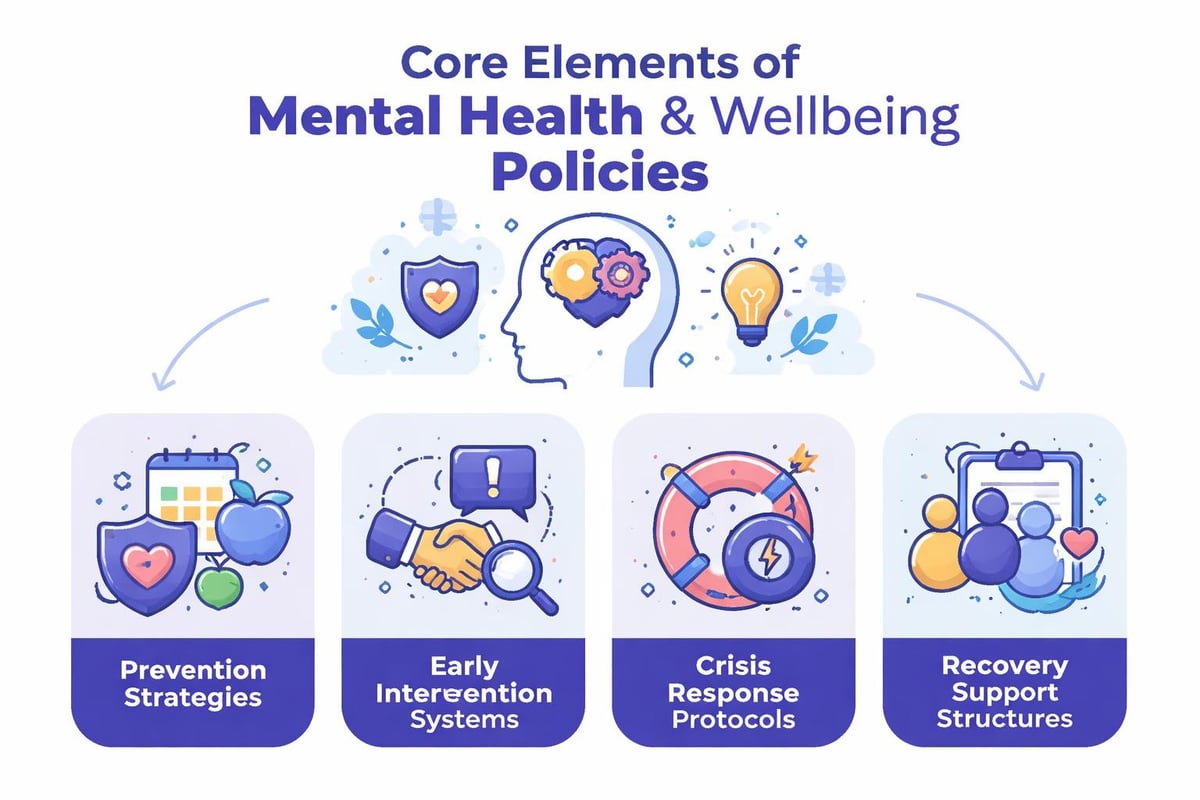
The policy defines how an organization approaches mental health challenges, from prevention and early intervention to crisis response and return-to-work protocols. Organizations like the Ethical Standards Commissioner have demonstrated that clear policy frameworks create safer working environments while supporting employees toward positive mental health outcomes.
Defining Core Policy Objectives
Effective policies articulate specific, measurable objectives that align with organizational values and strategic goals. These objectives typically include:
- Reducing stigma associated with mental health challenges
- Providing accessible support resources and interventions
- Training managers to recognize and respond to mental health concerns
- Establishing clear pathways for employees seeking assistance
- Creating psychologically safe environments that promote wellbeing
Organizations must balance aspirational goals with practical implementation strategies. The policy should acknowledge that mental health exists on a continuum, requiring different responses ranging from universal prevention measures to targeted interventions for employees experiencing significant distress.
Developing Policy Content and Structure
The structural components of a mental health and wellbeing policy determine its usability and effectiveness. Well-designed policies follow logical frameworks that guide readers from broad principles to specific procedures.
Essential Policy Components
| Component | Purpose | Key Elements |
|---|---|---|
| Vision Statement | Establishes organizational commitment | Values, principles, scope of application |
| Roles and Responsibilities | Defines accountability | Leadership duties, manager expectations, employee rights |
| Support Framework | Outlines available resources | Internal services, external providers, access procedures |
| Implementation Plan | Guides execution | Timelines, resource allocation, training requirements |
| Review Mechanisms | Ensures ongoing relevance | Evaluation metrics, feedback processes, update schedules |
The policy language should balance professional precision with accessibility. Technical terminology requires clear definition, and procedures need straightforward explanation that employees at all organizational levels can understand and apply.
Addressing Specific Workplace Scenarios
Workplace mental health policies are more useful when they provide clear guidance for situations managers and employees may realistically encounter. Rather than relying solely on broad principles, organizations can outline appropriate responses to common scenarios where mental health intersects with workplace responsibilities.
Organizations should consider addressing scenarios such as:
- Performance concerns that may be associated with mental health
- Extended absences and graduated return-to-work arrangements
- Workplace adjustments and accommodation requests
- Mental health crises requiring immediate action
- Confidentiality, privacy, and appropriate information-sharing
Each scenario should clarify roles and responsibilities, decision-making authority, consultation and referral pathways, and appropriate documentation. Managers can also benefit from practical decision-making frameworks or flowcharts that help them respond consistently when mental health concerns intersect with performance, attendance, workplace safety, or other operational requirements.
This approach helps translate organizational policy into practical guidance while ensuring managers understand both their responsibilities and the boundaries of their role.
Leadership Responsibilities and Organizational Culture
Executive commitment can determine whether a mental health and wellbeing policy becomes part of everyday workplace practice or remains a document with limited impact. Leadership responsibilities extend beyond endorsing a policy to actively demonstrating supportive behaviours, allocating appropriate resources, and ensuring that mental health remains part of broader organizational priorities.
Senior leaders influence workplace culture through their communication, decision-making, resource allocation, and responses to mental health concerns. Visible leadership can help establish expectations around psychological safety, respectful communication, inclusion, and help-seeking, while reinforcing that mental health is a shared organizational responsibility.
Effective leadership also involves ensuring that managers have the training, resources, and support needed to apply workplace mental health policies consistently. When leadership commitment is reflected in policies, workplace practices, and day-to-day behaviours, organizations are better positioned to turn mental health commitments into sustained action.
Manager Training and Capability Development
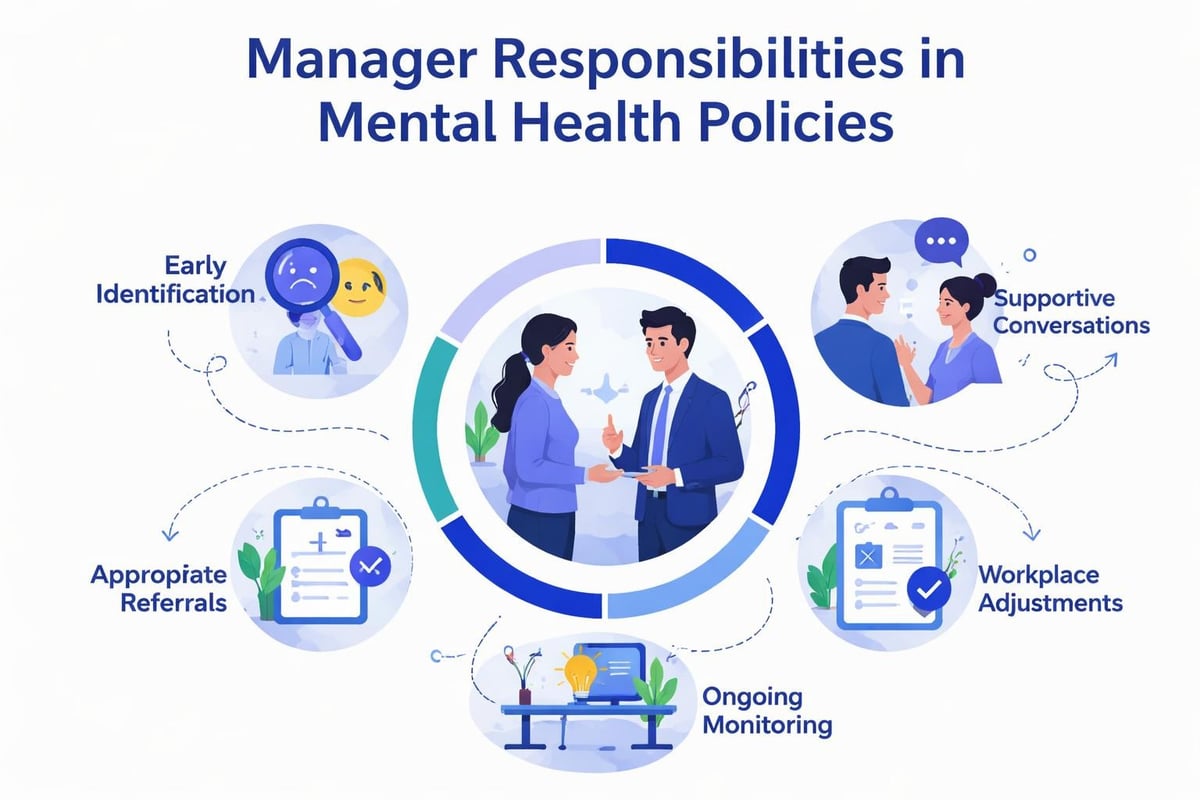
Frontline managers represent the critical implementation layer for any mental health and wellbeing policy. These individuals require specific capabilities:
- Recognition skills to identify early warning signs of deteriorating mental health
- Conversational competence to conduct supportive, non-judgmental discussions
- Procedural knowledge regarding referral pathways and available resources
- Boundary awareness distinguishing supportive management from clinical intervention
- Documentation practices that protect privacy while maintaining necessary records
Comprehensive training programs from providers like Workplace Mental Health Institute equip managers with practical skills that translate policy intent into daily practice. Training should extend beyond awareness-raising to develop specific behavioral competencies through scenario-based learning and practice opportunities.
Implementation Strategies and Change Management
Policy development represents only the beginning of organizational transformation. Implementation requires systematic change management approaches that address knowledge gaps, resistance patterns, and competing priorities.
Staged Implementation Approaches
Organizations rarely succeed with simultaneous, organization-wide policy implementation. Phased approaches allow for refinement based on early experience:
- Pilot phase in selected departments or locations
- Evaluation and refinement based on pilot feedback
- Scaled rollout with adjusted procedures and resources
- Continuous improvement incorporating ongoing learning
Communication strategies should precede, accompany, and follow each implementation phase. Employees need multiple exposures to policy content through varied channels before comprehension and retention occur.
Resource Allocation and Support Infrastructure
Mental health and wellbeing policies require dedicated resources for effective implementation. Organizations must consider:
- Internal counseling or wellbeing coordinator positions
- External employee assistance program partnerships
- Mental health first aid training budgets
- Workplace adjustment funds for accommodations
- Manager backfill during training participation
Budget constraints often challenge implementation, but international frameworks like the UN’s workplace mental health strategy demonstrate that resource allocation reflects genuine organizational commitment versus performative policy development.
Monitoring, Evaluation, and Continuous Improvement
Static policies quickly become obsolete as organizational contexts evolve and research expands understanding of effective interventions. Robust evaluation frameworks ensure policies remain relevant and effective over time.
Metrics and Key Performance Indicators
Effective evaluation balances quantitative metrics with qualitative insights:
| Metric Category | Examples | Data Sources |
|---|---|---|
| Utilization | EAP access rates, training participation | Service providers, learning management systems |
| Climate Indicators | Psychological safety scores, stigma measures | Employee surveys, focus groups |
| Health Outcomes | Absence patterns, presenteeism rates | HR systems, health insurance claims |
| Policy Awareness | Knowledge assessments, policy familiarity | Surveys, manager competency evaluations |
| Cultural Markers | Leadership messaging frequency, accommodation requests | Communication audits, HR case management |
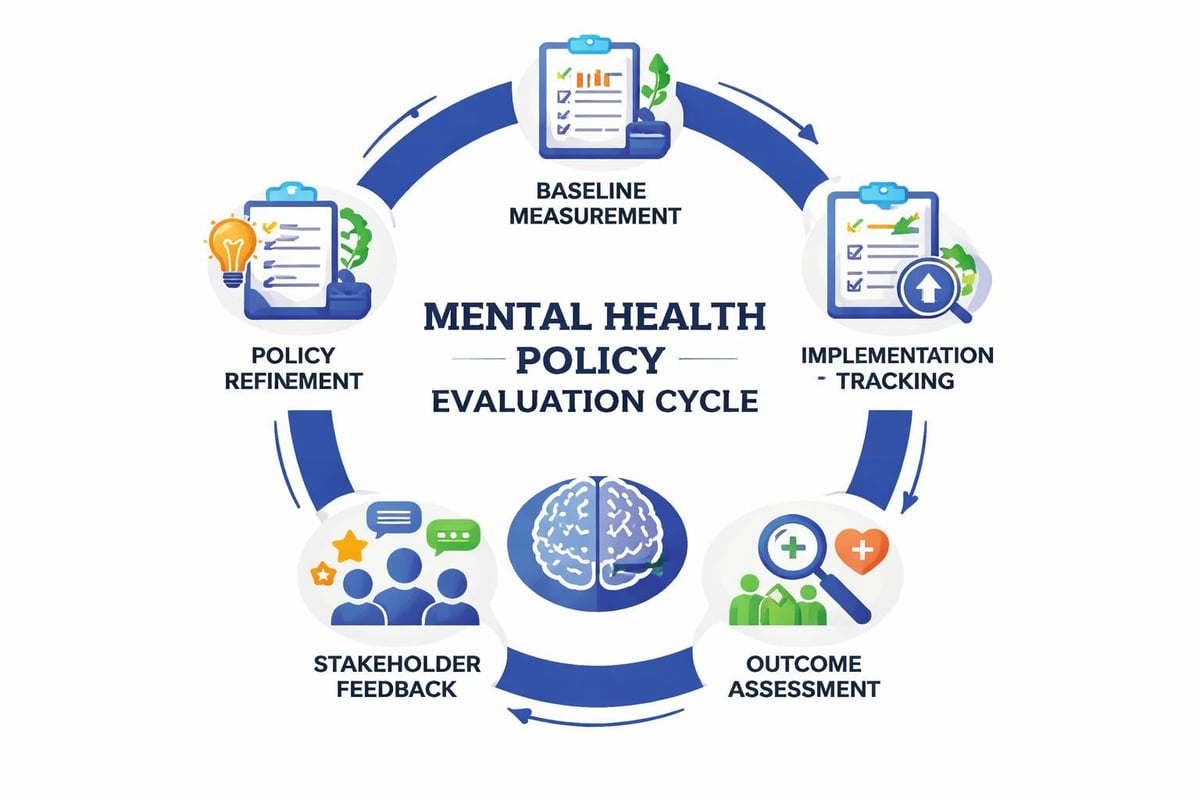
Organizations should establish baseline measurements before policy implementation, allowing for meaningful comparison as initiatives mature. Australian organizations working with specialized consultancies often implement comprehensive evaluation frameworks that track both leading and lagging indicators.
Stakeholder Feedback Mechanisms
Quantitative data alone provides incomplete understanding. Structured feedback processes capture employee and manager experiences:
- Focus groups exploring policy usability and perceived support quality
- Anonymous suggestion systems identifying implementation barriers
- Manager forums sharing challenges and effective practices
- Union or employee representative consultation ensuring diverse perspectives
- Exit interviews revealing whether mental health factors influenced departure decisions
This qualitative intelligence highlights gaps between policy intent and lived experience, guiding targeted refinements that enhance effectiveness.
Legal Frameworks and Compliance Considerations
Mental health and wellbeing policies operate within complex legal environments encompassing discrimination law, privacy regulations, workplace health and safety statutes, and employment standards. Organizations must ensure policy alignment with applicable legislation while recognizing that legal compliance represents a minimum threshold rather than an aspirational standard.
Privacy and Confidentiality Protections
Mental health information carries heightened sensitivity requiring robust confidentiality safeguards. Policies should explicitly address:
- Information collection limitations specifying what data organizations may request
- Storage and access controls restricting who can view sensitive health information
- Sharing protocols defining circumstances permitting disclosure
- Employee consent requirements ensuring informed agreement before information use
- Record retention and disposal establishing appropriate timelines and destruction methods
Managers frequently struggle with confidentiality boundaries, particularly when mental health concerns intersect with performance management or safety considerations. Clear guidance prevents well-intentioned managers from inadvertently violating privacy protections while ensuring necessary information sharing occurs when genuine safety concerns arise.
Accommodation and Adjustment Obligations
Most jurisdictions require employers to provide reasonable accommodations for mental health conditions. Policies should outline:
- Assessment processes for accommodation requests
- Decision-making criteria balancing employee needs with operational requirements
- Appeal mechanisms when initial requests receive denial
- Regular review schedules ensuring accommodations remain appropriate
- Documentation standards protecting both employee privacy and organizational defensibility
Clear workplace accommodation procedures can reduce misunderstandings and conflict while helping employees access appropriate support. Well-defined processes give employees and managers a consistent framework for discussing needs, considering suitable adjustments, documenting agreed arrangements, and reviewing them as circumstances change.
Integration with Broader Wellbeing Strategies
Mental health and wellbeing policies function most effectively when integrated within comprehensive organizational health strategies rather than operating as isolated initiatives. This integration ensures consistency across policies addressing physical health, psychosocial hazards, flexible work arrangements, and professional development.
Psychosocial Risk Management Alignment
Modern workplace health and safety frameworks increasingly recognize psychosocial hazards as legitimate risks requiring systematic management. Mental health policies should connect explicitly with:
- Workload management protocols preventing unsustainable demands
- Bullying and harassment prevention and response procedures
- Change management processes minimizing uncertainty and role ambiguity
- Recognition systems acknowledging contributions and supporting autonomy
- Work-life balance initiatives protecting recovery time and personal commitments
This integration prevents the compartmentalization that undermines policy effectiveness. When mental health exists as a discrete initiative disconnected from core operational practices, employees correctly perceive organizational commitment as superficial rather than genuine.
Cross-Policy Consistency
Employees quickly identify contradictions between mental health policy statements and other organizational documents. Common inconsistencies include:
- Performance management systems penalizing absence without acknowledging health-related leave
- Inflexible attendance policies conflicting with accommodation obligations
- Promotion criteria emphasizing constant availability despite wellbeing messaging
- Communication expectations extending beyond reasonable working hours
- Training requirements adding burden during already stressful periods
Regular policy audits identifying and resolving these contradictions strengthen credibility and effectiveness. Organizations might engage external reviewers who bring fresh perspectives unconstrained by institutional assumptions or historical practice patterns.
Specialized Considerations for Diverse Workforces
Generic mental health and wellbeing policies risk overlooking the distinct needs and experiences of diverse employee populations. Effective policies acknowledge how mental health intersects with various identity dimensions and employment circumstances.
Supporting Remote and Hybrid Workers
Distributed workforces face unique mental health challenges requiring specific policy provisions:
- Virtual check-in protocols maintaining manager-employee connection
- Technology boundaries preventing constant availability expectations
- Social connection initiatives countering isolation risks
- Home workspace guidance supporting ergonomic and psychological comfort
- Equitable access to support resources regardless of location
Organizations with significant remote populations should explicitly address these factors within their mental health and wellbeing policy rather than treating remote work as a temporary exception to office-based norms.
Cultural Competence and Inclusivity
Mental health understanding varies across cultural contexts, influencing help-seeking behaviors, symptom expression, and intervention preferences. Policies should:
- Acknowledge cultural diversity in mental health conceptualization and treatment
- Ensure support services reflect workforce demographic composition
- Provide multilingual resources where language diversity exists
- Train managers in culturally responsive support conversations
- Partner with community organizations serving specific cultural groups
These provisions signal genuine inclusivity while improving practical accessibility for employees who might otherwise face barriers to support utilization.
Building Sustainable Policy Ecosystems
Long-term policy success requires embedded systems that survive leadership transitions, budget pressures, and competing priorities. Organizations should establish governance structures ensuring ongoing attention and resource commitment.
Governance and Oversight Mechanisms
Dedicated committees or working groups maintain focus on mental health and wellbeing policy implementation:
- Executive sponsors providing senior leadership visibility
- Cross-functional representation ensuring diverse perspectives
- Employee voice inclusion through direct representation or consultation mechanisms
- Regular meeting cadences preventing drift and maintaining momentum
- Clear reporting lines to boards or executive teams establishing accountability
These structures transform policies from static documents into living frameworks that evolve with organizational needs and emerging evidence.
Training videos and resources available through platforms like the Workplace Mental Health Institute YouTube channel support ongoing capability development, ensuring policies remain understood and applied correctly as workforce composition changes and new managers assume responsibilities.
Documentation and Knowledge Management
Effective policies require supporting documentation enabling consistent application:
| Document Type | Purpose | Update Frequency |
|---|---|---|
| Manager guides | Practical implementation support | Annual or as policy changes |
| Employee factsheets | Accessible overview of rights and resources | Annual review |
| Scenario libraries | Guidance on complex situations | Ongoing addition of new scenarios |
| Training materials | Capability development resources | Annual refresh with emerging research |
| Process flowcharts | Visual guidance for common procedures | As processes evolve |
Organizations should establish clear ownership for document maintenance, preventing the gradual obsolescence that undermines policy credibility and usability.
Developing and implementing an effective mental health and wellbeing policy requires sustained commitment, cultural transformation, and practical resource allocation that extends well beyond document creation. Organizations that approach this work systematically create environments where employees feel genuinely supported while building operational resilience through healthier, more engaged workforces. Workplace Mental Health Institute provides comprehensive training and consultation services that help organizations translate policy frameworks into practical capabilities, equipping leaders and managers with the skills necessary to support employee mental health effectively while achieving measurable improvements in workplace performance and wellbeing outcomes.

