
Imagine a world where mental health activities are as common as daily exercise or a morning coffee. As life grows more complex, finding effective ways to care for our minds is essential. This article introduces 12 unique and evidence-backed mental health activities designed to support emotional wellbeing and resilience. You will discover practical approaches, from mindfulness and creative expression to building social connections, that fit seamlessly into everyday life. Ready to unlock new strategies for self-care? Let these ideas inspire you to nurture your mental health and take positive steps toward lasting wellness.
The Evolving Landscape of Mental Health Activities
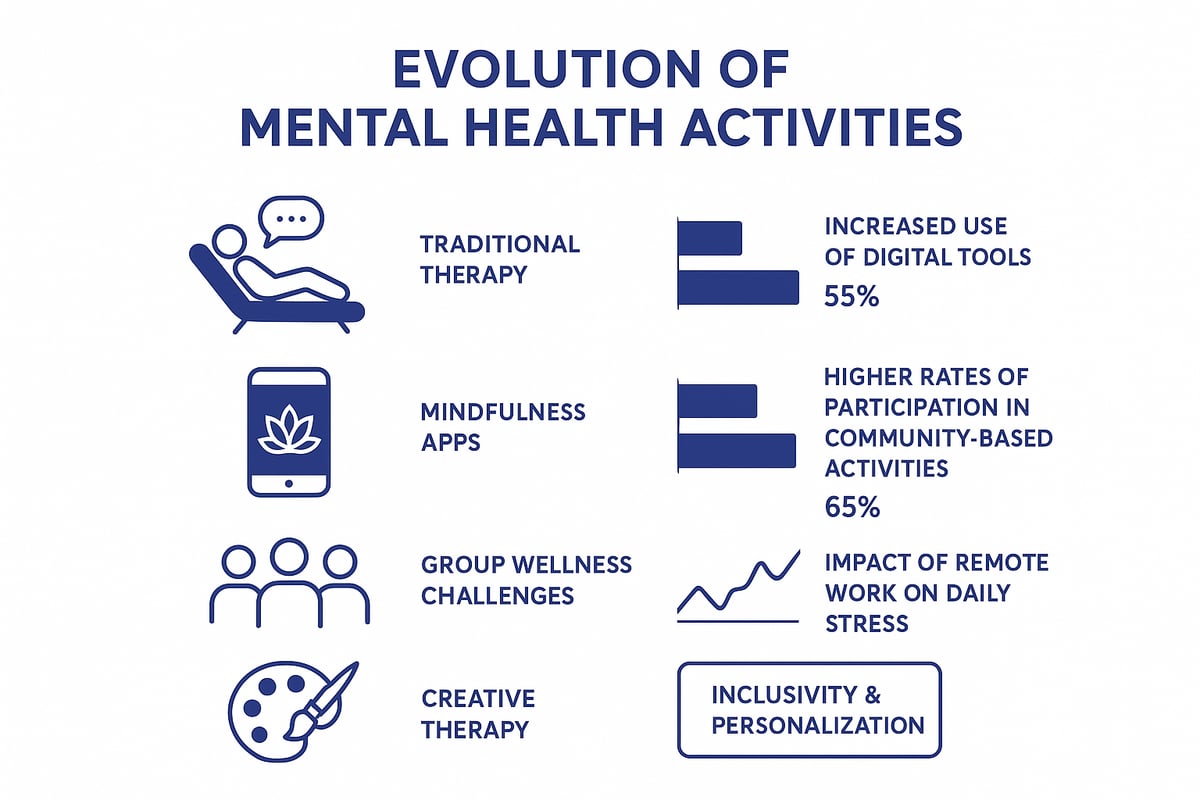
Mental health activities have undergone a remarkable transformation in recent years. No longer limited to traditional talk therapy, these practices now span a wide array of approaches that fit diverse lifestyles and needs. Individuals are seeking out proactive, enjoyable ways to support their emotional wellbeing and resilience.
The shift toward preventative and holistic strategies is evident. According to global health organizations, rates of anxiety, depression, and burnout continue to rise, driving demand for accessible interventions. More people now recognize the value of integrating mental health activities into their daily routines, rather than waiting for a crisis to occur.
Digital innovation plays a pivotal role in this evolution. Mindfulness apps, virtual therapy sessions, and online support groups have made mental health activities more convenient and customizable. Community-based initiatives, such as group wellness challenges and creative therapy workshops, are gaining popularity. Many workplaces are also adopting programs that promote stress management and social connection, helping employees thrive.
Remote work and increased reliance on technology have introduced new stressors, but they have also expanded opportunities for flexible mental health activities. For instance, people can now join virtual meditation classes or participate in digital art therapy from anywhere. Societal changes have encouraged open conversations about mental health, reducing stigma and making it easier to seek support.
Personalization and inclusivity are now central to effective mental health activities. Whether someone prefers solo journaling, group exercise, or creative expression, the options are more varied than ever. This flexibility ensures that individuals can find practices suited to their unique needs and circumstances. For additional approaches and expert guidance, visit Boost Mental Health.
Integrating mental health activities into everyday life builds lasting resilience. By making these practices a regular part of self-care, individuals not only manage stress more effectively but also enhance their overall quality of life. The evolving landscape encourages everyone to explore, adapt, and benefit from the rich variety of activities available today.
12 Refreshing Mental Health Activities to Try
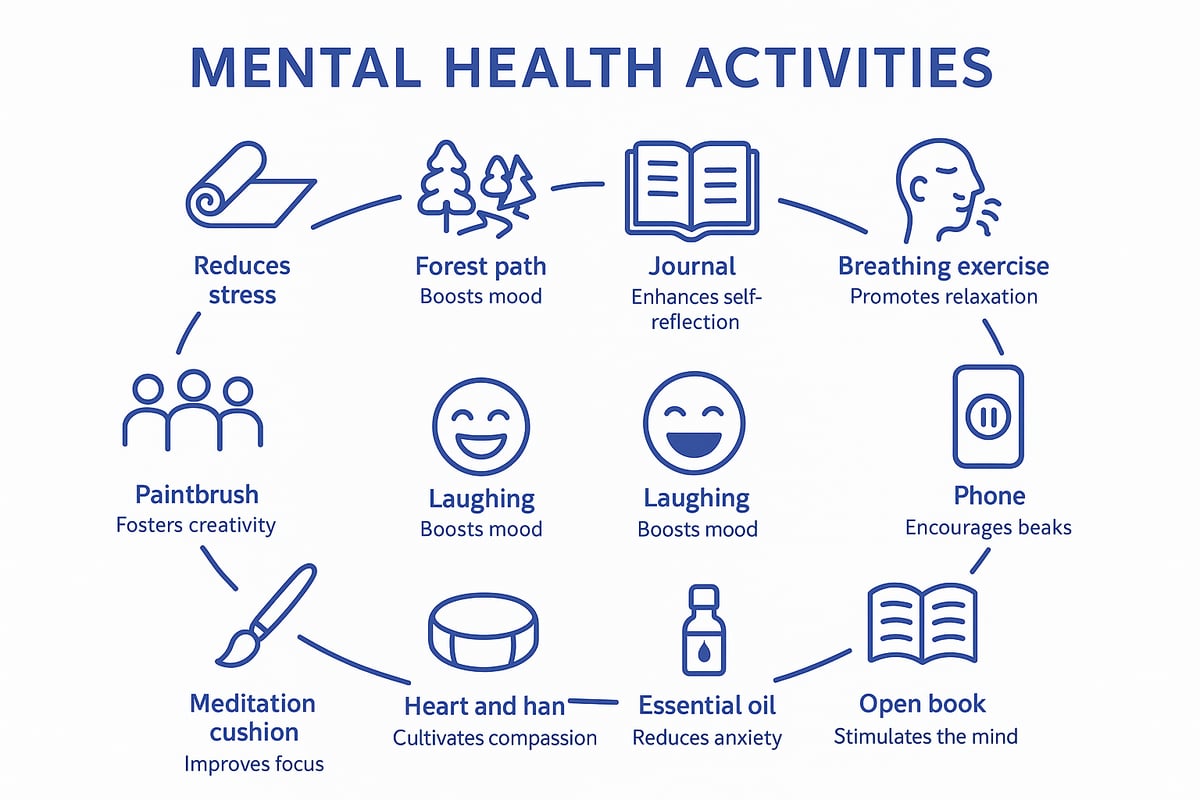
Discovering new mental health activities can be a game-changer for emotional wellbeing. Whether you want to manage stress, build resilience, or simply find more joy in your day, the following activities offer evidence-based ways to nurture your mind and body. Each suggestion is practical, adaptable, and designed to fit different lifestyles. Explore these options and see which ones resonate with your needs.
1. Practice Mindful Movement
Mindful movement is one of the most effective mental health activities for connecting the mind and body. Activities like yoga, tai chi, and gentle stretching help reduce anxiety and depression, according to recent studies. Focusing on breath and body awareness during movement can calm the nervous system and improve mood.
If you're new to these practices, start with short online videos or attend a beginner class in your community. Even five minutes of mindful stretching in the morning or evening can make a difference. Adaptive options exist for all fitness levels, so everyone can participate.
Consider using mindfulness apps or local resources to guide your routine. Combining mindfulness with exercise can amplify benefits, as shown in this mindfulness and exercise boost mental health report. Prioritizing mindful movement is a simple yet powerful way to include mental health activities in your daily schedule.
2. Nature Immersion and Outdoor Activities
Spending time outdoors is a well-researched way to support mental health activities. Being in nature can lift your mood, lower stress, and increase vitamin D. Activities like hiking, gardening, or simply sitting in a park offer restorative benefits.
Studies show that even brief exposure to green spaces can reduce symptoms of anxiety and depression. For those living in cities, try visiting local parks, joining a community garden, or participating in nature meetups. Urban dwellers can also benefit from balcony gardening or walking tree-lined streets.
Sunlight exposure is linked to increased serotonin, which helps regulate mood. If you prefer social experiences, group hikes or gardening projects can combine the benefits of nature and connection. Make nature immersion a regular part of your mental health activities for lasting resilience.
3. Creative Journaling and Expressive Writing
Journaling is a versatile mental health activity that helps process emotions and build self-awareness. Evidence suggests that expressive writing can decrease rumination and improve mood. There are many methods to choose from, including free writing, gratitude lists, mood tracking, poetry, and art journaling.
Try setting aside a few minutes each day to write about your thoughts or feelings. Prompts like "Three things I'm grateful for" or "Describe a moment of joy" can spark reflection. For those who prefer digital tools, journaling apps offer privacy and convenience.
Creative journaling encourages self-compassion and can foster a sense of accomplishment. Integrating this practice into your routine makes it easier to track progress and notice positive changes. As a mental health activity, journaling is both accessible and deeply personal.
4. Deep Breathing and Relaxation Techniques
Deep breathing is a foundational mental health activity that directly impacts the body's stress response. Techniques such as diaphragmatic breathing, box breathing, and alternate nostril breathing can quickly reduce anxiety and promote relaxation.
Research shows that controlled breathing lowers heart rate and cortisol levels. To try a basic technique, inhale slowly through your nose for four counts, hold for four, exhale for four, and pause for four. Repeat several times.
Integrate breathing exercises into your workday, especially during stressful moments. Many people find it helpful to set reminders or pair breathing with regular tasks. Focusing on breath is a simple mental health activity that can deliver immediate benefits.
5. Digital Detox and Mindful Tech Use
Digital overload can negatively impact mental health activities. Excessive screen time and social media use are linked to poor sleep, increased anxiety, and lower mood. Taking intentional breaks from technology can reset your mind and improve wellbeing.
Strategies include scheduling offline hours, designating no-phone zones, or practicing a digital Sabbath each week. Mindful tech use also means replacing mindless scrolling with purposeful activities, such as listening to a guided meditation or reading.
Research highlights improved sleep quality and reduced stress after digital detox periods. By making tech breaks a regular mental health activity, you can regain focus and enhance your emotional resilience.
6. Social Connection and Community Engagement
Building strong social connections is integral to mental health activities. Positive relationships provide emotional support, reduce feelings of loneliness, and boost happiness. Activities like joining clubs, volunteering, or participating in group fitness classes foster a sense of belonging.
Research consistently links social support to lower rates of depression and greater life satisfaction. For those with social anxiety or introverted tendencies, start small with regular check-ins or online communities. Virtual groups offer meaningful interaction for remote or isolated individuals.
If you're looking for more ways to strengthen your support network, explore resources on Social Mental Health Support. Prioritizing community engagement ensures your mental health activities are both enjoyable and sustainable.
7. Artistic Expression and Creative Play
Engaging in art, music, dance, or crafts is a therapeutic mental health activity. Creative expression provides a safe outlet for emotions and has been shown to reduce anxiety, depression, and trauma symptoms. Whether you prefer painting, adult coloring books, or playing an instrument, the process matters more than the outcome.
Try joining a community art class or exploring online workshops. Even simple activities like doodling or crafting can stimulate the brain and foster positive feelings. Studies confirm that arts and crafts improve mental health by encouraging mindfulness and self-expression.
Making time for creative play is a rewarding mental health activity that brings joy and relaxation into your life.
8. Laughter and Lighthearted Activities
Laughter is a powerful mental health activity with proven benefits. It triggers the release of endorphins, reduces stress hormones, and even supports immune function. Incorporating more humor into your day can lift your spirits and foster resilience.
Consider watching comedies, attending improv shows, or practicing laughter yoga. Sharing jokes with friends or recalling funny memories also boosts mood. Research shows that regular laughter improves both mental and physical health.
Schedule time for lighthearted activities to balance life's pressures. Making laughter a deliberate part of your mental health activities can transform how you handle stress.
9. Mindfulness Meditation and Grounding Practices
Mindfulness meditation is a cornerstone of modern mental health activities. Practicing mindfulness helps reduce symptoms of anxiety and depression, increases self-awareness, and improves emotional regulation. Simple grounding techniques, such as focusing on your senses or breathing, can be done anywhere.
Beginners can start with short, guided meditations or join local mindfulness groups. Apps and online resources make it easy to access a wide variety of practices. Overcoming initial resistance is common, but consistency leads to noticeable benefits.
Integrating mindfulness into daily routines makes it easier to manage stress and stay present. This mental health activity is adaptable and supported by extensive research.
10. Acts of Kindness and Volunteering
Helping others is a fulfilling mental health activity that enhances wellbeing. Acts of kindness, whether large or small, create a positive feedback loop between happiness and altruism. Research shows that volunteering is linked to reduced stress and a greater sense of purpose.
You can write thank-you notes, support a local cause, or participate in community service projects. For those with limited time, virtual volunteering or remote acts of kindness are excellent alternatives.
Making kindness a habit not only uplifts others but also strengthens your own mental health. Incorporate compassionate actions into your regular mental health activities for lasting reward.
11. Sensory Self-Care Rituals
Sensory self-care is a soothing mental health activity that uses calming inputs like aromatherapy, warm baths, or listening to music. Sensory activities can help regulate mood and promote relaxation by engaging your senses in positive ways.
Build a personalized self-care toolkit with your favorite scents, textures, and sounds. Mindful eating, hot or cold therapy, and gentle touch are other options. Setting boundaries to protect self-care time is essential for consistency.
These rituals are easy to adapt for any lifestyle and can be paired with other mental health activities. Prioritizing sensory self-care helps create a nurturing environment for emotional healing.
12. Learning and Trying Something New
Pursuing new experiences and skills is a stimulating mental health activity. Novelty and learning promote neuroplasticity, boost motivation, and combat boredom. Even small changes, like taking a class or picking up a new hobby, can have significant mental health benefits.
Look for low-cost options such as free online courses, local workshops, or community events. Exploring new places or trying different activities adds variety to your routine.
Integrating learning into your mental health activities keeps your mind engaged and resilient. Embrace curiosity as a path to ongoing personal growth.
Integrating Mental Health Activities into Daily Life
Integrating mental health activities into your daily routine is essential for lasting wellbeing. While trying a new activity can feel energizing at first, the real benefits come from consistency. Making these practices a natural part of your day supports emotional resilience and helps you navigate life’s challenges more effectively.
Building Sustainable Habits
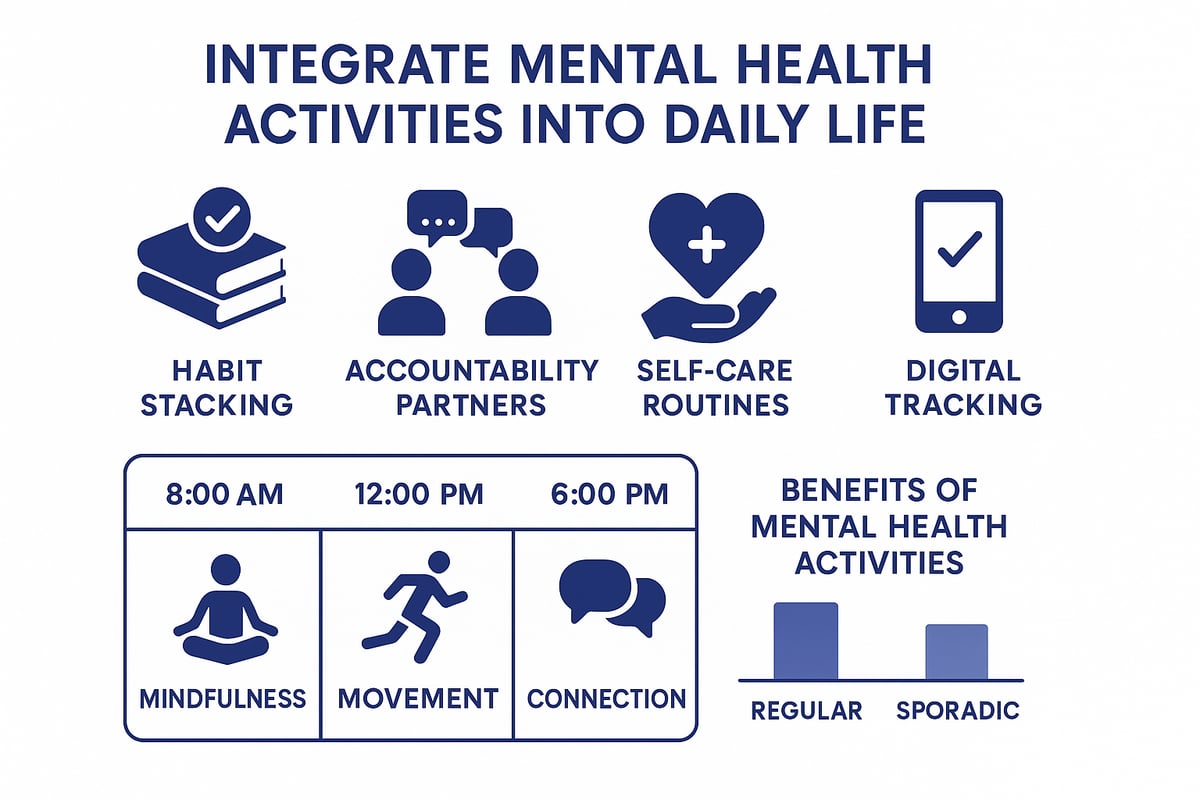
Start by identifying which mental health activities resonate most with you. Choose one or two to focus on initially. Set small, realistic goals, such as practicing mindful movement for ten minutes each morning or writing a gratitude list before bed. Use habit stacking by pairing new activities with established routines, like meditating after brushing your teeth.
Track your progress using a journal or a digital app. This helps you notice positive changes and stay motivated. Remember, regular self-care reduces burnout and increases resilience. For more strategies on preventing exhaustion, explore Preventing Workplace Burnout.
Accountability and Flexibility
Involving others can make it easier to stick with mental health activities. Invite a friend or family member to join you in a wellness challenge or set up regular check-ins. If you prefer a group setting, consider joining a class or an online community.
Stay flexible and compassionate with yourself. Life is unpredictable, and routines may need to shift. If you miss a day, simply start again. Consistency matters more than perfection. Professional support or group programs can offer added motivation and expert guidance. To build resilience and learn more evidence-based techniques, visit Stress Management and Resilience Training.
Tips for Seamless Integration
- Schedule mental health activities at the same time each day.
- Use reminders or alarms to prompt your new habits.
- Pair activities with daily tasks, like mindful breathing during your commute.
- Celebrate small wins to reinforce your progress.
By thoughtfully weaving mental health activities into your lifestyle, you can nurture emotional stability and enjoy a greater sense of wellbeing. Even small, consistent steps can lead to meaningful improvements in your mood, focus, and overall quality of life.
Overcoming Barriers and Finding Motivation
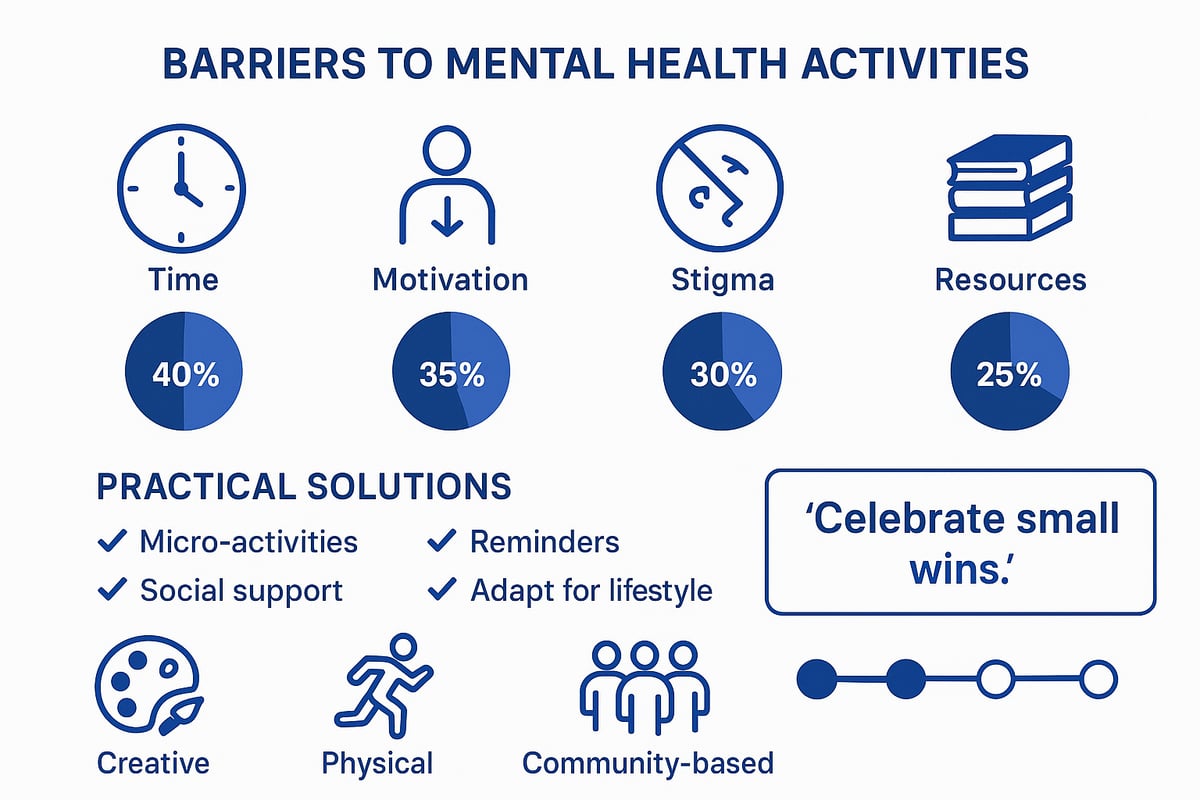
Facing obstacles on the path to regular mental health activities is completely normal. Many people encounter hurdles like lack of time, low motivation, stigma, or limited resources. Recognizing these challenges is the first step toward making positive changes.
Breaking down mental health activities into manageable steps can help. Consider these practical strategies:
- Try micro-activities that fit into your schedule, such as five minutes of deep breathing or a short nature walk.
- Use reminders, calendars, or habit-tracking apps to stay consistent.
- Schedule activities as you would any other important appointment.
- Seek out social support from friends, family, or online communities for encouragement and accountability.
Adaptability is key when weaving mental health activities into different lifestyles. For those with busy routines, stacking a new activity onto an existing habit, like mindful stretching after brushing your teeth, can build momentum. If physical activity feels daunting, research confirms that even small steps count. For instance, the Physical activity and mental health study highlights that any movement can positively influence wellbeing, regardless of intensity.
Creative outlets can also offer accessible options. Engaging in arts and crafts, as demonstrated in recent studies, provides therapeutic benefits and can be tailored to individual preferences. If you are seeking inspiration, the Arts and crafts improve mental health article explores how creative expression supports emotional health.
Motivation often grows from celebrating small wins. Keep a simple progress journal or reward yourself for showing up, even if the activity was brief. Remember, gradual progress is more sustainable than aiming for perfection. Self-compassion is vital—acknowledge setbacks without judgment and adjust your approach as needed.
If self-care feels overwhelming or ineffective, seeking professional support can be transformative. Many community organizations and digital tools are available to help you access mental health activities, regardless of your starting point. Ultimately, the journey is personal, and every step taken is meaningful.
As you explore these 12 refreshing mental health activities, remember that even small changes can make a big difference in your overall wellbeing. Whether you are looking to build resilience, foster positive habits, or support your team, integrating practical strategies into your daily routine is a powerful step forward. If you are curious about how evidence based approaches and supportive programs can transform your workplace or personal wellbeing journey, you can Find Out More about tailored mental health solutions and expert guidance designed to help you thrive.

