
Did you know that nearly 77% of professionals report experiencing burnout at work, leading to decreased productivity and rising costs for organizations? This alarming trend has made burnout a critical issue for leaders and HR professionals alike.
Today, more companies recognize that burnout prevention in the workplace is essential for both employee health and business success. Taking proactive steps not only boosts morale but also reduces turnover and drives better results for everyone.
This guide offers practical strategies, expert insights, and proven steps to help organizations tackle burnout head-on. You will learn how to understand burnout, identify risk factors, implement prevention tactics, empower leadership, build a supportive culture, and track progress effectively.
Understanding Burnout: Definition, Causes, and Impact
Burnout prevention in the workplace begins by understanding what burnout truly is, how it develops, and the ripple effects it creates for both individuals and organizations. Recognizing the signs and root causes is essential for building effective prevention strategies that foster healthier, more resilient teams.
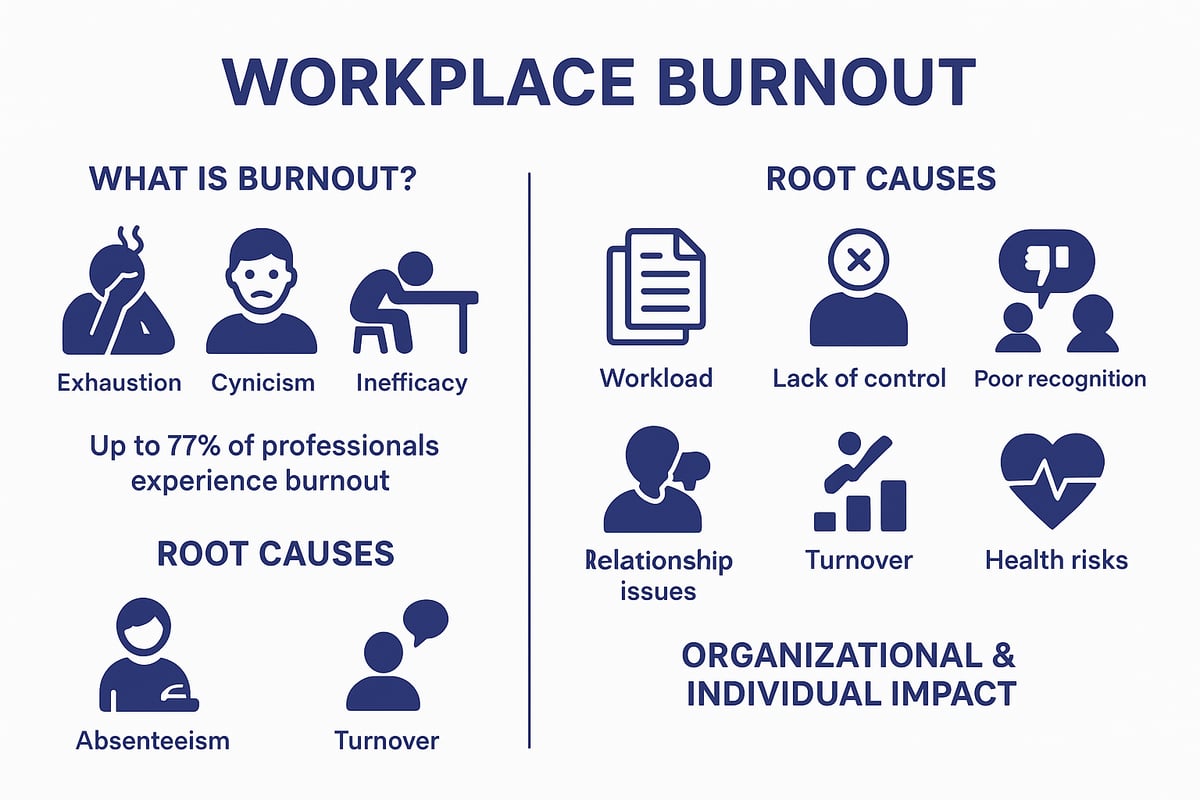
Defining Burnout in the Modern Workplace
The World Health Organization classifies burnout as an occupational phenomenon, not a medical condition. It is characterized by three main symptoms: overwhelming exhaustion, increased mental distance or cynicism toward one's job, and a sense of reduced professional efficacy.
Burnout is distinct from general stress or other mental health disorders. While stress often involves over-engagement and hyperactivity, burnout leads to withdrawal and emotional depletion. For example, a healthcare worker feeling emotionally numb after months of overtime or a tech professional losing motivation due to constant pressure are common scenarios.
Recognizing these differences is crucial for burnout prevention in the workplace, as tailored interventions depend on accurate identification.
Root Causes of Burnout
Burnout does not emerge overnight. It is typically the result of a combination of workplace factors that erode employee wellbeing over time. The following table summarizes the most common causes:
| Cause | Description |
|---|---|
| Work overload | Excessive demands and unrealistic expectations |
| Lack of control | Limited autonomy over tasks or schedules |
| Insufficient rewards | Inadequate recognition, compensation, or appreciation |
| Poor relationships | Conflict, lack of support, or toxic culture |
| Mismatch in values/skills | Disconnection between personal and organizational values or job fit |
| Role ambiguity/insecurity | Unclear responsibilities or fear of job loss |
Recent data reveals the scale of the problem: up to 77% of professionals have experienced burnout, and studies show job burnout rates now exceed 60% in some sectors, as highlighted in Job Burnout at 66% in 2025.
A lack of control, minimal recognition, and poor workplace relationships often combine to undermine motivation and engagement. When employees face conflicting demands or feel their contributions are undervalued, the risk of burnout escalates.
Burnout prevention in the workplace requires addressing these root causes through organizational change, rather than relying solely on individual resilience.
The Impact of Burnout on Organizations and Individuals
The consequences of burnout extend far beyond the individual. For organizations, burnout leads to increased absenteeism, presenteeism, and staff turnover. Productivity declines as employees struggle to maintain focus and motivation.
Financially, burnout-related absenteeism costs businesses billions each year. It also damages team morale and can tarnish a company's reputation, making it harder to attract and retain talent.
On a personal level, employees experiencing burnout face serious long-term health risks. These include depression, anxiety, sleep disturbances, and even cardiovascular issues. For instance, in the healthcare sector, burnout has been linked to higher rates of clinical errors and decreased patient safety.
Investing in burnout prevention in the workplace not only protects individual wellbeing but also strengthens organizational performance. By understanding these impacts, leaders can prioritize strategies that create a healthier, more sustainable work environment.
Identifying Burnout Risk Factors in Your Organization
Understanding burnout risk factors is a crucial step in burnout prevention in the workplace. By recognizing early indicators and underlying causes, organizations can intervene before burnout becomes widespread. Let’s explore how to identify these risks and create a healthier environment for everyone.
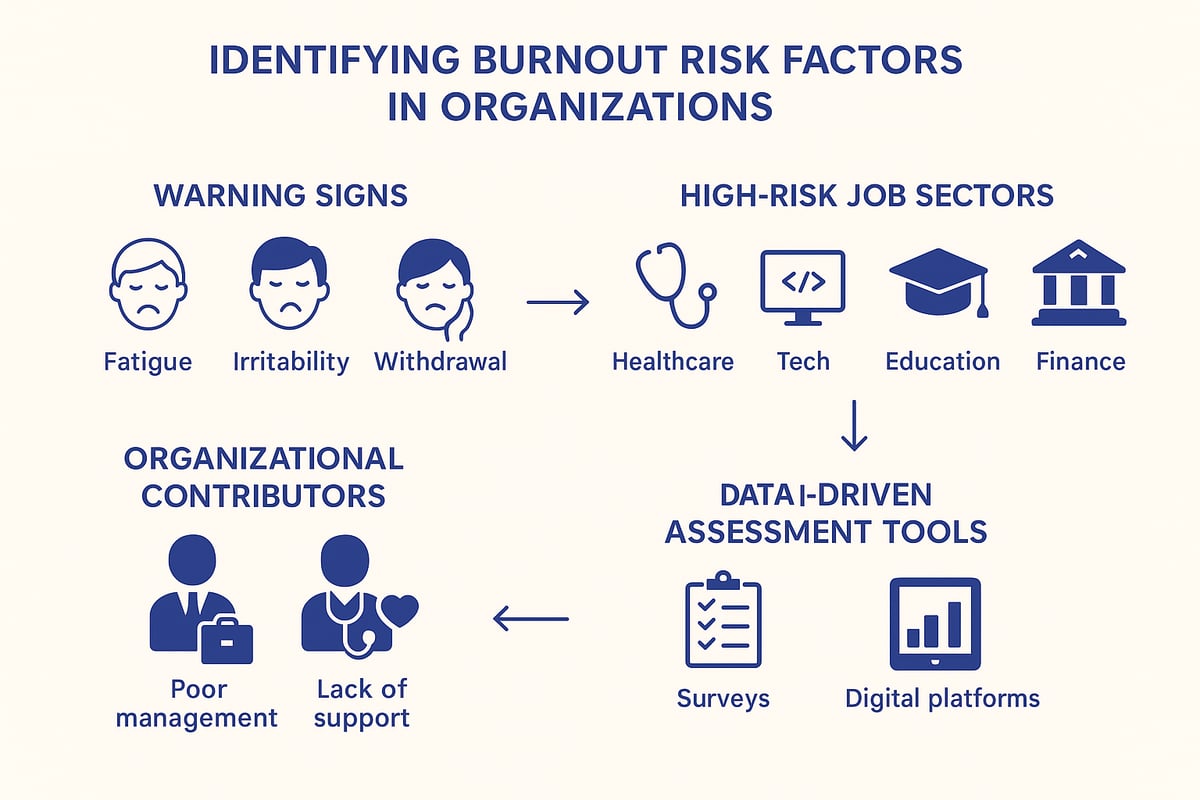
Recognizing Early Warning Signs
Spotting the first signs of burnout is essential for effective burnout prevention in the workplace. Employees may show behavioral changes such as irritability, withdrawal from colleagues, or declining performance. Physically, headaches, persistent fatigue, and trouble sleeping often emerge. Emotionally, detachment and a loss of motivation can signal trouble ahead.
Regular wellbeing assessments can help managers and HR teams catch these warning signs early. For practical steps and more warning signs, see Avoiding Burnout in the Workplace. Early intervention is key to protecting both individuals and teams.
High-Risk Roles and Work Environments
Certain sectors and positions are more prone to burnout, making targeted burnout prevention in the workplace critical. Healthcare, education, technology, and finance often demand long hours, emotional labor, and high responsibility. Employees in high-pressure roles or leadership positions may feel the strain most acutely.
Remote and hybrid work environments also present unique challenges. According to Gallup, 69% of remote workers report experiencing burnout symptoms. Recognizing which teams or roles are at higher risk allows organizations to allocate resources and support where they are needed most.
Organizational Factors Contributing to Burnout
The workplace environment itself can significantly influence burnout risk, highlighting the need for burnout prevention in the workplace. Toxic leadership, poor management practices, and lack of communication can all contribute. When employees do not feel heard or supported, stress levels rise and engagement drops.
Other key factors include inadequate resources, inequitable workloads, and a lack of fairness. If team members consistently take on more than their share or lack clarity in their roles, frustration and fatigue are inevitable. Addressing these organizational issues is fundamental for long-term wellbeing.
Utilizing Data and Feedback to Assess Burnout Risk
Data-driven approaches are vital for effective burnout prevention in the workplace. Regular employee surveys and pulse checks provide real-time insights into morale and stress levels. Monitoring absenteeism and turnover rates can reveal patterns that signal burnout is taking hold.
Exit interviews and feedback loops offer valuable qualitative information. Digital wellbeing platforms enable organizations to collect and analyze data efficiently, identifying trends before they escalate. By acting on this feedback, leaders can refine their strategies and foster a resilient workforce.
Step-by-Step Strategies for Burnout Prevention
Burnout prevention in the workplace requires a proactive, multi-pronged approach. Organizations must address both immediate triggers and systemic issues to protect employee wellbeing. The following step-by-step strategies are designed to build resilience, foster engagement, and create a supportive environment where burnout is less likely to take root.
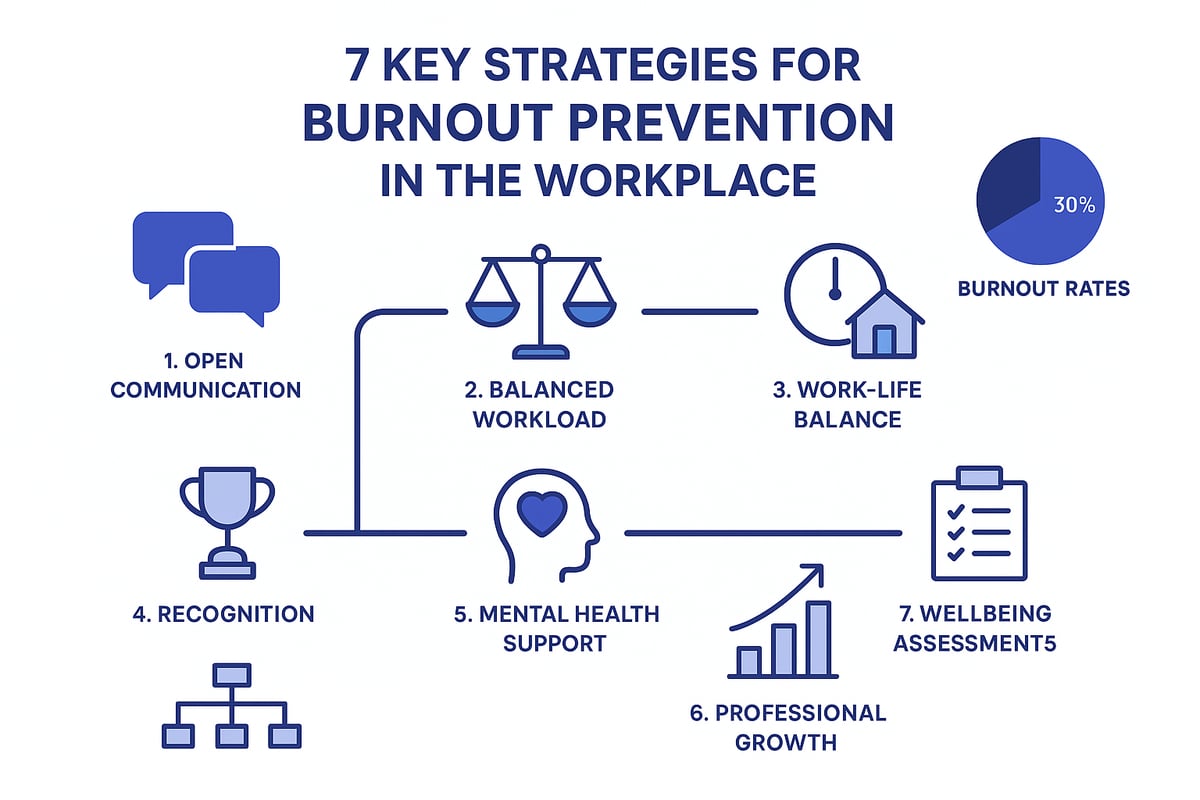
Step 1: Foster a Culture of Openness and Psychological Safety
A key foundation of burnout prevention in the workplace is creating an environment where employees feel safe to express concerns. Open conversations about mental health must be encouraged at every level. Managers should receive training to recognize early signs of burnout and respond with empathy.
For example, Google’s psychological safety model demonstrates that teams thrive when members feel comfortable sharing ideas and challenges. Leadership should set the tone by normalizing discussions around stress and mental health. For more in-depth strategies, see Preventing Workplace Burnout Strategies.
Regular check-ins, anonymous feedback channels, and visible support for mental health initiatives all contribute to a culture where burnout is less likely to develop.
Step 2: Optimize Workloads and Job Design
Effective burnout prevention in the workplace means ensuring workloads are manageable and roles are clearly defined. Organizations should implement flexible work policies that accommodate different needs and life stages. Regular reviews of job descriptions and responsibilities help prevent role creep and unrealistic expectations.
Avoiding chronic overtime is crucial. When employees are consistently working beyond their capacity, stress accumulates, increasing the risk of burnout. Setting realistic deadlines and allowing for input on project timelines can make a significant difference.
Consider job rotation or cross-training to reduce monotony and over-reliance on a single individual. These steps help maintain energy and engagement.
Step 3: Promote Work-Life Balance and Recovery
A healthy work-life balance is essential for burnout prevention in the workplace. Encourage employees to take their vacation and personal days without guilt. Instituting policies that discourage after-hours emailing or messaging allows staff to fully disconnect and recharge.
Providing access to rest and relaxation spaces, whether onsite or virtually, signals to employees that recovery is valued. Leaders can model this behavior by taking breaks and openly discussing their self-care routines.
Short, frequent breaks throughout the day have been shown to boost productivity and reduce stress. Make sure these practices are supported and not merely suggested.
Step 4: Enhance Recognition and Reward Systems
Recognition and reward are powerful tools for burnout prevention in the workplace. Celebrating achievements, both big and small, helps employees feel valued and motivated. Implementing meaningful incentives, such as professional development opportunities or flexible benefits, reinforces positive performance.
Data shows that 69 percent of employees are driven to work harder when they feel recognized. This can include public acknowledgment, personalized thank you notes, or team celebrations.
A transparent and fair reward system ensures everyone has equal access to recognition. Regularly review these systems to keep them relevant and inclusive.
Step 5: Provide Access to Mental Health Resources
Access to mental health support plays a central role in burnout prevention in the workplace. Employee Assistance Programs (EAPs) offer confidential counseling, crisis support, and referrals. Onsite or virtual counseling services make it easier for employees to seek help.
Offer regular mental health training and workshops to build awareness and reduce stigma. Ensure resources are visible and accessible to all staff, including remote workers.
Partnering with qualified mental health providers can enhance the quality and reach of your support offerings. Make information about these resources readily available in onboarding materials and employee handbooks.
Step 6: Support Professional Development and Autonomy
Supporting growth and autonomy is vital for burnout prevention in the workplace. Provide clear pathways for career advancement and upskilling. Empower employees to make decisions within their roles, fostering a sense of ownership and engagement.
LinkedIn’s learning and development programs are an example of how continuous learning can energize teams. Encourage participation in workshops, conferences, or online courses to broaden skills.
Giving employees control over how they achieve their goals increases motivation and reduces frustration. Regularly discuss career aspirations during performance reviews to align opportunities with individual strengths.
Step 7: Implement Regular Wellbeing Assessments
Ongoing assessment is the final pillar of effective burnout prevention in the workplace. Use regular surveys, pulse checks, and digital wellbeing platforms to monitor stress levels and satisfaction. These tools provide real-time insights into employee wellbeing.
Analyze data on absenteeism, turnover, and productivity to identify trends and address issues promptly. Adjust strategies based on feedback to ensure initiatives remain effective and relevant.
A commitment to continuous improvement signals to employees that their wellbeing is a priority, not a one-time initiative. This approach sustains engagement and builds organizational resilience.
The Critical Role of Leadership in Burnout Prevention
Leadership plays a pivotal role in burnout prevention in the workplace. The actions, attitudes, and priorities of leaders set the tone for organizational wellbeing. By focusing on effective leadership strategies, organizations can create an environment where employees feel valued, supported, and resilient.
Leadership Behaviors That Prevent Burnout
Effective leaders are the foundation of burnout prevention in the workplace. Their behaviors directly impact employee morale, engagement, and overall wellbeing. Leaders who prioritize open communication and model healthy work habits encourage staff to do the same.
Key leadership behaviors include:
- Modeling balanced workloads and encouraging breaks
- Demonstrating empathy and active listening
- Setting realistic, achievable expectations for teams
Research highlights that strong leadership reduces stress and burnout. For more guidance, see Leadership’s Role in Mental Health, which explores how leadership can shape a culture of psychological safety. By embodying these behaviors, leaders contribute significantly to burnout prevention in the workplace.
Training Managers and Leaders on Mental Health
Training is essential for managers to effectively support burnout prevention in the workplace. Leaders who receive mental health literacy training are better equipped to identify early warning signs and respond with empathy. Key training topics include stress management, resilience building, and trauma-informed leadership.
Organizations that invest in leadership development often see substantial reductions in burnout rates. For example, after implementing targeted training, some companies have reported improved employee engagement and decreased absenteeism. Equipping leaders with these skills ensures that burnout prevention in the workplace remains a top priority and is woven into daily management practices.
Workplace Mental Health Institute’s Role in Burnout Prevention
The Workplace Mental Health Institute (WMHI) delivers specialized programs that are vital for burnout prevention in the workplace. Their offerings include mental health training for both managers and employees, resilience workshops, and comprehensive wellbeing assessments.

A summary of WMHI’s impact:
| Service | Benefit | Measured Outcome |
|---|---|---|
| Mental health training | Improved manager response to burnout | Up to 79% reduction in depression rates |
| Wellbeing assessments | Real-time insights for early intervention | 33% decrease in absenteeism |
| Resilience programs | Enhanced team adaptability and morale | Flexible delivery options |
Services are tailored to industry needs and are available in-person, virtually, or online. WMHI’s evidence-based approach supports sustainable burnout prevention in the workplace.
Empowering Leaders to Build Resilient Teams
Empowering leaders is crucial for burnout prevention in the workplace. When leaders foster cohesion and trust, teams become more resilient to stress. Strategies include facilitating open dialogue, encouraging peer support, and promoting collaboration.
Examples like team-based resilience workshops show that when employees feel supported by leadership, their engagement and job satisfaction rise. Building trust within teams not only addresses current challenges but also prepares organizations for future demands, reinforcing burnout prevention in the workplace at every level.
Accountability and Continuous Improvement
Sustained burnout prevention in the workplace relies on leadership accountability. Organizations should set clear KPIs for wellbeing, such as reduced absenteeism, lower turnover, and increased engagement scores.
Best practices include:
- Incorporating wellbeing goals into regular performance reviews
- Gathering continuous feedback from staff
- Using data to inform leadership development
By reviewing progress and adjusting strategies, leaders ensure that burnout prevention in the workplace remains dynamic and effective. This commitment to ongoing improvement creates a culture where employee wellbeing is always prioritized.
Building a Supportive and Resilient Workplace Culture
Creating a culture that supports burnout prevention in the workplace requires thoughtful integration of wellbeing practices into every aspect of the organization. This section explores how organizational values, physical and digital workspaces, peer relationships, technology, and inclusion play a vital role in building resilience and protecting employee mental health.
Embedding Wellbeing into Organizational Values
For burnout prevention in the workplace to succeed, wellbeing must be embedded in core values and daily practices. When leaders align company mission statements with mental health priorities, employees feel valued and supported. Integrating mental health into HR policies and onboarding processes helps set clear expectations from day one.
Some organizations formalize this commitment through wellbeing charters, which outline shared responsibilities and resources for staff. These charters encourage open dialogue and accountability. For a deeper dive into fostering resilience, explore Building Workplace Resilience, which details proven strategies for cultivating supportive environments. Making wellbeing a visible priority signals to everyone that mental health matters.
Designing Workspaces for Wellbeing
The physical and digital environments where employees work can significantly influence burnout prevention in the workplace. Thoughtful workspace design supports comfort, focus, and relaxation. In offices, access to quiet zones, ergonomic furniture, and natural light helps reduce stress and fatigue.
Remote teams also benefit from digital wellbeing best practices, such as encouraging regular breaks and respecting boundaries. Providing resources for ergonomic home office setups makes a difference. Both physical and virtual spaces should be designed with flexibility in mind, allowing employees to choose where and how they work best. These efforts contribute to a more resilient and healthier workforce.
Encouraging Peer Support and Social Connection
Strong social ties are a protective factor for burnout prevention in the workplace. Peer support initiatives, such as employee resource groups, mentorship programs, and buddy systems, create a sense of belonging. These networks help employees navigate challenges, celebrate successes, and build trust across teams.
Regular check-ins and team-building activities foster open communication and collaboration. According to Harvard Business Review, social support can reduce burnout risk by 41 percent. For more ideas, see Preventing Employee Burnout Strategies, which highlights practical ways to strengthen workplace relationships. Investing in peer support not only improves morale but also enhances overall wellbeing.
Leveraging Technology for Burnout Prevention
Technology is an essential tool for effective burnout prevention in the workplace. Wellbeing apps and digital platforms provide employees with resources for self-care, mental health check-ins, and stress management. Automated reminders encourage regular breaks, hydration, and movement throughout the workday.
AI-driven analytics can detect early signs of burnout by analyzing engagement, workload, and feedback data. These insights allow organizations to intervene quickly and adjust strategies as needed. By integrating digital solutions into daily operations, companies can proactively address mental health challenges and support a resilient workforce.
Inclusive and Equitable Wellbeing Strategies
Inclusive practices are fundamental to burnout prevention in the workplace. Employees have diverse needs based on age, culture, ability, and background. Ensuring accessible mental health resources, such as multilingual support and culturally sensitive programs, helps everyone feel seen and supported.
Equitable workloads and fair access to wellbeing initiatives are also critical. Regularly reviewing policies and gathering feedback ensures that strategies remain relevant and effective for all groups. By prioritizing inclusion, organizations foster a culture where every employee can thrive, contributing to long-term resilience and reduced burnout risk.
Measuring Success: Tracking and Sustaining Burnout Prevention Efforts
Tracking the effectiveness of burnout prevention in the workplace ensures that your investment in employee wellbeing delivers real, measurable results. By monitoring specific indicators and continuously adapting strategies, organizations can sustain progress and foster a culture that values long-term health.
Key Metrics for Burnout Prevention
Measuring the impact of burnout prevention in the workplace starts with tracking key metrics. Common indicators include absenteeism rates, employee turnover, productivity levels, and engagement scores. Regularly reviewing these figures allows organizations to spot trends and intervene early.
For example, the Aflac WorkForces Report 2025 highlights a significant rise in workplace burnout, emphasizing the need for robust measurement. Monitoring utilization of mental health resources, such as Employee Assistance Programs, provides additional insight into program effectiveness.
A simple table can help visualize progress:
| Metric | Baseline | After Prevention Initiatives |
|---|---|---|
| Absenteeism Rate | 8% | 4% |
| Turnover Rate | 15% | 8% |
| Engagement Score | 62/100 | 78/100 |
| EAP Utilization | 10% | 23% |
This data-driven approach ensures burnout prevention in the workplace remains a strategic priority.
Continuous Feedback and Adaptation
Sustaining burnout prevention in the workplace requires a commitment to ongoing feedback and adaptation. Regular pulse surveys, focus groups, and open forums give employees a voice in shaping wellbeing initiatives.
Leaders should analyze feedback alongside quantitative data to identify gaps and refine programs. Iterative improvements, such as adjusting workload distribution or expanding mental health support, demonstrate responsiveness and build trust.
For example, a global tech firm saw notable reductions in stress after implementing quarterly feedback cycles and acting on employee suggestions. This agile approach ensures burnout prevention in the workplace evolves with changing needs and challenges.
Celebrating Wins and Sharing Success Stories
Recognizing progress is vital to maintaining momentum for burnout prevention in the workplace. Celebrate individual and team achievements related to wellbeing, such as increased participation in wellness programs or improved engagement scores.
Ways to highlight success include:
- Announcing milestones in company meetings or newsletters
- Sharing testimonials from employees who benefited from initiatives
- Showcasing department-level improvements in wellbeing metrics
Building a culture of appreciation reinforces positive behaviors and encourages ongoing participation. Sharing success stories organization-wide inspires others and underscores the value of burnout prevention in the workplace.
Preparing for Future Challenges
To future-proof burnout prevention in the workplace, organizations must anticipate new risks and evolving workforce trends. This involves regularly updating training, investing in digital wellbeing tools, and staying informed about industry best practices.
Emerging challenges, such as hybrid work complexities or changing employee expectations, require proactive solutions. Encourage ongoing professional development and maintain flexibility in wellbeing strategies to adapt quickly.
By preparing for the unknown, companies can ensure that burnout prevention in the workplace remains effective and resilient—regardless of what the future brings.
As we’ve explored throughout this guide, preventing burnout isn’t just about minimizing risk—it’s about building a workplace where everyone can thrive. By understanding the root causes, recognizing early warning signs, and empowering leaders with practical tools, you can create a resilient culture that supports both wellbeing and productivity. If you’re ready to take the next step and discover how tailored mental health programs and workplace assessments can make a measurable difference for your team, I encourage you to Find Out More. Let’s work together to ensure your workplace is prepared for a healthier, more sustainable future.

