
Organizations investing in employee mental health recognize that traditional benefits packages no longer suffice in addressing the complex psychological demands of modern work environments. Corporate mental health workshops have emerged as a strategic intervention, providing employees and leaders with evidence-based skills to manage stress, prevent burnout, and cultivate resilient workplace cultures. These structured training sessions move beyond awareness to deliver practical, psychologically informed approaches that organizations can implement immediately.
Understanding Corporate Mental Health Workshops
Corporate mental health workshops are structured educational sessions designed to enhance psychological literacy, develop coping skills, and create supportive workplace environments through evidence-based training. Unlike passive awareness campaigns, these workshops actively engage participants in skill-building exercises grounded in psychological research.
The distinction between awareness and capability matters significantly. Awareness initiatives inform employees that mental health matters. Capability-building workshops equip them with specific techniques to regulate emotions, manage cognitive load, and navigate workplace stressors effectively.
Core Components of Effective Programs
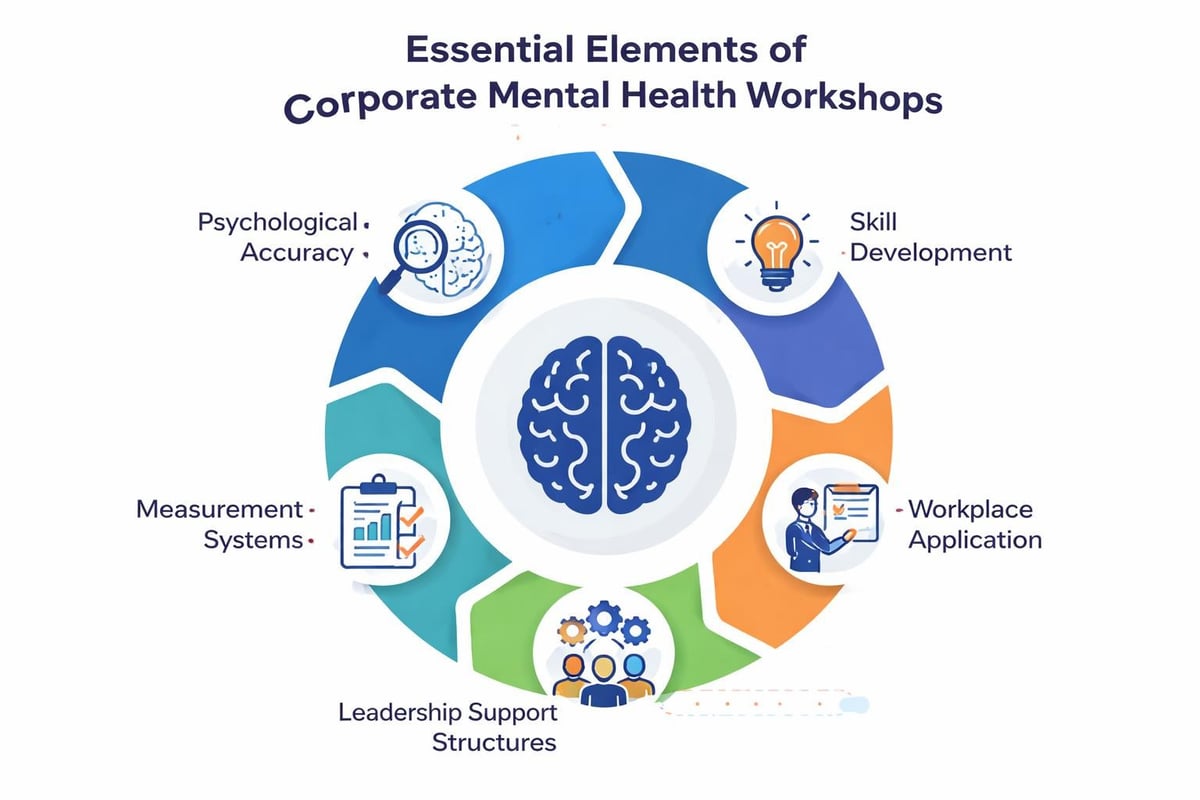
Well-designed corporate mental health workshops integrate several essential elements that differentiate impactful training from superficial content:
- Psychological accuracy: Content based on validated research, not pop psychology
- Skill transferability: Techniques participants can apply immediately in their roles
- Cultural relevance: Examples and scenarios reflecting actual workplace dynamics
- Measurement frameworks: Pre- and post-workshop assessments demonstrating change
- Managerial integration: Leadership training that supports employee application
Organizations often partner with specialized providers to ensure content meets professional standards. The Workplace Mental Health Institute offers programs specifically designed around these evidence-based principles, focusing on practical application rather than theoretical knowledge alone.
Strategic Benefits for Organizations
Implementing corporate mental health workshops generates measurable returns across multiple organizational dimensions. Research consistently demonstrates that structured mental health training reduces absenteeism, improves productivity, and enhances employee retention when implemented systematically.
Financial and Operational Outcomes
| Metric | Typical Improvement | Timeframe |
|---|---|---|
| Absenteeism reduction | 15-28% | 6-12 months |
| Productivity increase | 12-20% | 3-9 months |
| Turnover reduction | 20-35% | 12-18 months |
| Healthcare cost reduction | 18-25% | 18-24 months |
These improvements stem from employees developing specific capabilities rather than simply receiving information. When workers learn evidence-based techniques for managing cognitive demands, they experience fewer mental health episodes requiring absence or reduced capacity.
The psychological mechanisms underlying these outcomes relate to perceived control and self-efficacy. Workshops that build actual skills increase employees' confidence in managing workplace stressors, which research links directly to reduced burnout and improved performance.
Organizational Culture Transformation
Beyond individual outcomes, corporate mental health workshops influence workplace culture when implemented as part of comprehensive wellbeing strategies. Organizations that invest in mental wealth approaches recognize that psychological health functions as organizational capital rather than merely individual responsibility.
Cultural shifts manifest through several observable changes:
- Increased psychological safety in team communications
- Normalized help-seeking behaviors without stigma
- Manager confidence in addressing team member distress
- Proactive stress management rather than crisis response
- Integration of wellbeing considerations in workflow design
Programs from providers like TheMindClan emphasize workshop accessibility to ensure complex psychological concepts become practical organizational tools rather than abstract theories.
Essential Workshop Topics and Frameworks
Effective corporate mental health workshops cover specific domains that address the most prevalent workplace psychological challenges. Organizations should prioritize content based on workforce needs assessment rather than generic programming.
Resilience and Stress Management
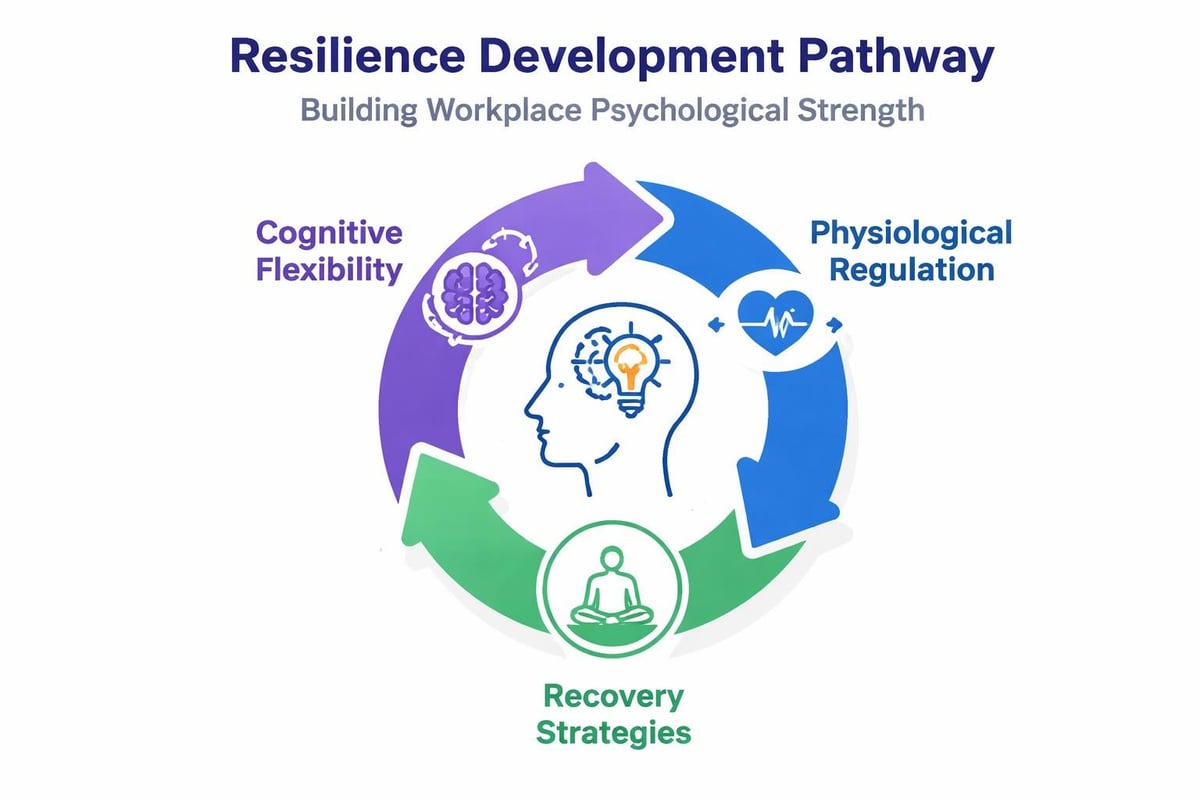
Resilience training forms the foundation of most corporate mental health workshops, teaching employees to maintain psychological equilibrium under pressure. Evidence-based resilience frameworks include:
Cognitive flexibility training helps employees reframe challenges and reduce catastrophic thinking patterns. This approach draws from cognitive behavioral principles without requiring clinical intervention.
Physiological regulation techniques provide concrete tools for managing stress responses. These include breathing exercises grounded in polyvagal theory, progressive muscle relaxation, and mindfulness practices with documented efficacy.
Recovery strategies address the often-overlooked importance of psychological detachment from work. Research demonstrates that quality recovery time predicts sustained performance better than working additional hours.
Organizations seeking comprehensive frameworks might explore evidence-based mental health training approaches that integrate multiple psychological models into cohesive programs.
Manager-Specific Mental Health Training
Leaders require distinct training that addresses their dual responsibility: managing their own psychological health while supporting team member wellbeing. Manager-focused corporate mental health workshops typically cover:
- Recognizing psychological distress indicators in team members
- Conducting supportive conversations without overstepping professional boundaries
- Adapting workload and expectations for employees experiencing mental health challenges
- Creating team environments that prevent rather than trigger distress
- Understanding legal and ethical obligations around workplace mental health
The Workplace Mental Health Institute specifically tailors manager training programs recognizing that leadership capabilities directly influence team psychological outcomes.
Trauma-Informed Workplace Practices
Increasingly, organizations recognize that many employees carry trauma histories that workplace stressors can activate. Trauma-informed corporate mental health workshops don't provide therapy but teach organizational practices that avoid re-traumatization.
Key principles include:
- Safety: Ensuring physical and psychological safety in workplace environments
- Trustworthiness: Maintaining transparency and consistent boundaries
- Peer support: Facilitating colleague connections and mutual assistance
- Collaboration: Involving employees in decisions affecting their work
- Empowerment: Recognizing strengths and building on existing capabilities
These principles apply across all organizational levels, from frontline communication to strategic planning. Wellness Grove’s approach to corporate workshops demonstrates how trauma-informed principles integrate with broader wellness initiatives.
Implementation Strategies for Maximum Impact
Even well-designed corporate mental health workshops fail when implementation lacks strategic planning. Organizations must consider timing, delivery format, participant selection, and post-workshop reinforcement.
Delivery Formats and Accessibility
| Format | Advantages | Considerations |
|---|---|---|
| In-person full-day | Deep engagement, skill practice, relationship building | Logistics complexity, higher cost, scheduling challenges |
| Half-day sessions | Easier scheduling, focused content, lower disruption | Less depth, minimal practice time |
| Virtual workshops | Geographic flexibility, lower cost, recorded content | Reduced engagement, technical barriers |
| Hybrid models | Flexibility with connection, accommodates preferences | Requires dual facilitation skills |
| Microlearning series | Spaced learning, better retention, ongoing engagement | Requires sustained participation commitment |
The optimal format depends on organizational culture, geographic distribution, and specific learning objectives. Dr. Spragg’s virtual wellness training illustrates how online delivery can maintain engagement when designed around adult learning principles.
Pre-Workshop Assessment and Customization
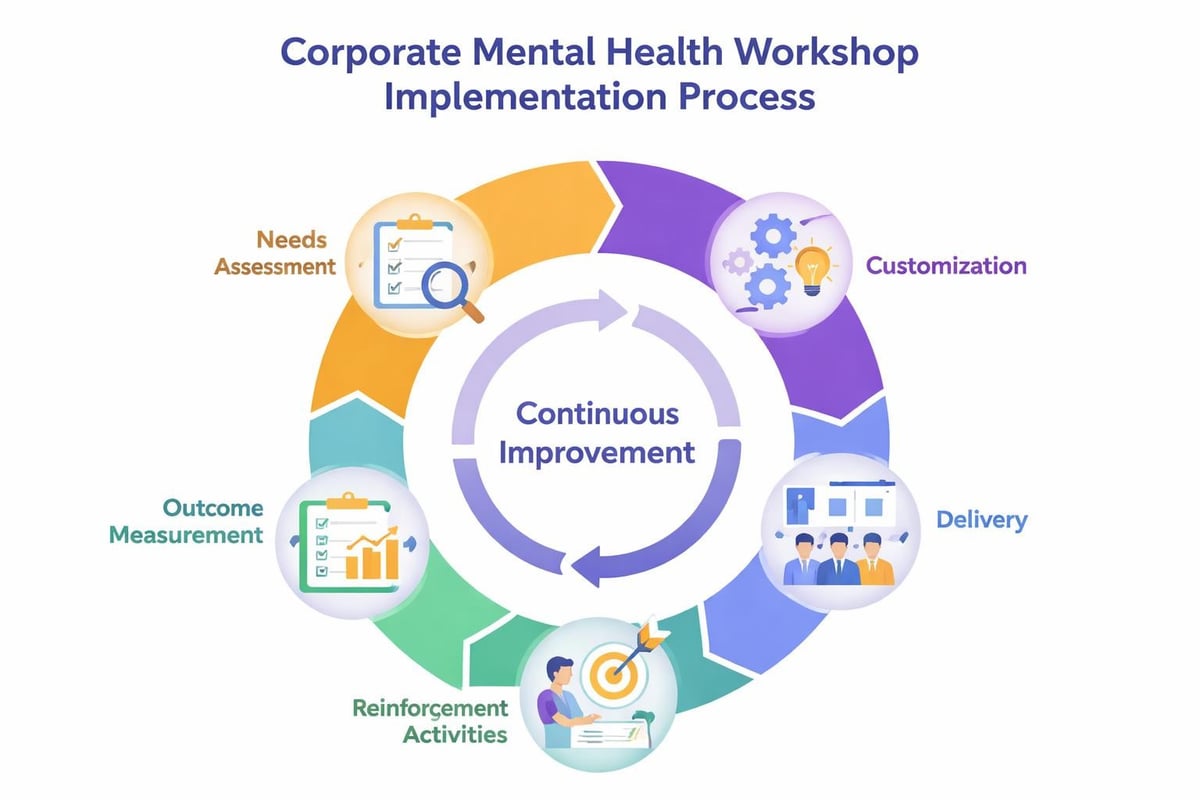
Generic corporate mental health workshops rarely address specific organizational challenges effectively. Comprehensive programs begin with needs assessment examining:
- Current mental health metrics (absence patterns, turnover data, engagement scores)
- Workforce demographic composition and potential unique stressors
- Existing wellbeing initiatives and their utilization rates
- Cultural factors influencing help-seeking and disclosure
- Leadership support and organizational commitment levels
This assessment data enables providers to customize content, examples, and skill-building exercises to reflect actual workplace scenarios participants encounter. Evidence-based workshop providers emphasize this tailoring as essential for meaningful outcomes.
Post-Workshop Reinforcement Systems
Research on training transfer consistently shows that most learning decays rapidly without reinforcement. Organizations maximize workshop investment through systematic follow-up:
- Manager check-ins: Structured conversations about skill application
- Peer learning groups: Small teams practicing techniques together
- Digital resources: Video demonstrations, written guides, mobile apps
- Refresher sessions: Quarterly or biannual skill review workshops
- Environmental modifications: Changes to workspaces, policies, or processes supporting new behaviors
The Workplace Mental Health Institute’s YouTube channel provides supplementary resources that reinforce workshop learning through accessible video content.
Measuring Workshop Effectiveness
Demonstrating return on investment requires measuring outcomes beyond participant satisfaction. Rigorous evaluation examines knowledge gain, behavioral change, and organizational metrics.
Multi-Level Evaluation Framework
Effective measurement follows Kirkpatrick's model adapted for mental health contexts:
Level 1 – Reaction: Participant satisfaction and perceived relevance
- Post-workshop surveys assessing content quality and applicability
- Real-time engagement metrics during sessions
Level 2 – Learning: Knowledge and skill acquisition
- Pre/post psychological literacy assessments
- Skill demonstration exercises during workshops
- Competency-based evaluation criteria
Level 3 – Behavior: Application in workplace settings
- Manager observations of skill usage
- Self-reported behavior change surveys at 30, 60, 90 days
- Peer feedback on observable changes
Level 4 – Results: Organizational impact
- Absence and turnover rate changes
- Productivity metrics and performance data
- Healthcare utilization patterns
- Employee engagement scores
Research on corporate workshop importance emphasizes that Level 4 outcomes justify continued investment but require sustained measurement over 12-24 months.
Key Performance Indicators
Organizations should track specific metrics aligned with workshop objectives:
- Psychological safety scores: Team-level assessments of safety expressing concerns
- Help-seeking rates: Utilization of EAP and mental health resources
- Manager confidence: Leadership self-efficacy in supporting team mental health
- Stigma reduction: Attitudes toward mental health disclosure and support
- Skill application frequency: Self-reported use of workshop techniques
Australian organizations can access specialized measurement frameworks through WMHI Australia designed for regional workplace contexts.
Selecting Workshop Providers
The corporate mental health workshop market includes diverse providers with varying qualifications, methodological rigor, and content quality. Organizations should evaluate potential partners systematically.
Provider Qualification Assessment
Critical credentials and capabilities include:
- Professional credentials: Clinical or organizational psychology qualifications
- Evidence-base: Programs grounded in peer-reviewed research, not proprietary models
- Workplace expertise: Understanding of organizational dynamics beyond clinical settings
- Cultural competence: Ability to adapt content for diverse workforces
- Measurement capability: Robust evaluation frameworks demonstrating outcomes
Harley Therapy’s workplace programs exemplify therapist-led approaches that maintain clinical rigor while addressing organizational contexts.
Content Red Flags
Organizations should avoid workshops featuring:
- Oversimplified mental health explanations lacking psychological accuracy
- Blame-focused content suggesting employees simply need better attitudes
- One-size-fits-all approaches ignoring workplace or demographic differences
- Proprietary frameworks without published research support
- Facilitators without relevant mental health or organizational qualifications
The distinction between genuine expertise and wellness marketing requires careful evaluation. Legitimate providers transparently discuss their methodological foundations and acknowledge complexity rather than promising simple solutions.
Integrating Workshops with Broader Wellbeing Strategy
Corporate mental health workshops function most effectively as components of comprehensive wellbeing strategies rather than standalone interventions. Integration with organizational systems amplifies impact.
Systemic Wellbeing Components
Policy alignment ensures workshop content reflects organizational reality. If workshops teach boundary-setting while policies reward constant availability, employees receive contradictory messages undermining training effectiveness.
Environmental design supports psychological health through workspace configuration, noise management, natural light access, and privacy availability. Physical environments either reinforce or contradict workshop messages about wellbeing priority.
Leadership modeling demonstrates genuine organizational commitment. When senior leaders visibly apply workshop techniques and discuss their own mental health maintenance, permission structures shift throughout the organization.
Resource accessibility means employees can easily access professional support when workshops reveal they need more than skill-building. Seamless referral pathways to Employee Assistance Programs or external providers complete the support ecosystem.
Neuroscience-based corporate programs illustrate how workshop content integrates with broader wellness infrastructure for sustained impact.
Multi-Year Implementation Roadmap
Sophisticated organizations approach corporate mental health workshops as ongoing capability development rather than single events:
Year 1: Foundation building with basic psychological literacy, stress management, and manager training
Year 2: Advanced skills including emotional regulation, conflict resolution, and resilience deepening
Year 3: Specialized content addressing emerging needs, refresher training, and peer facilitator development
Ongoing: Continuous improvement based on outcome data, new research integration, and workforce evolution
This longitudinal approach builds organizational capacity systematically, allowing cultural change to embed rather than depending on temporary enthusiasm.
Addressing Common Implementation Challenges
Organizations encounter predictable obstacles when implementing corporate mental health workshops. Anticipating these challenges enables proactive mitigation strategies.
Participation and Engagement Barriers
Stigma concerns prevent employees from attending mental health workshops despite voluntary participation. Stigma reduction requires:
- Normalizing language positioning workshops as professional development
- Leadership attendance demonstrating organizational endorsement
- Clear confidentiality protocols protecting participant privacy
- Integration with general wellness rather than isolation as "mental health" events
Scheduling conflicts compete with production demands. Successful organizations treat workshop time as mandatory professional development, not optional when work permits.
Skepticism about effectiveness stems from previous exposure to superficial wellness initiatives. Transparent outcome sharing from pilot groups builds credibility.
Cultural and Demographic Considerations
Workforce diversity requires culturally responsive corporate mental health workshops that acknowledge varying mental health conceptualizations, stigma levels, and help-seeking norms across cultural groups.
Effective providers adapt examples, discussion prompts, and skill applications for:
- Generational differences in mental health literacy and openness
- Cultural variations in individual versus collective wellbeing emphasis
- Industry-specific stressors and occupational mental health risks
- Socioeconomic factors influencing resource access and stress exposure
- Neurodiversity and disability inclusion in workshop design
Validate Consultants’ corporate offerings demonstrate attention to individual differences within organizational contexts.
Corporate mental health workshops represent strategic investments in organizational capacity when implemented as evidence-based, systematically reinforced, and culturally responsive programs integrated with broader wellbeing infrastructure. Organizations seeking to develop psychologically healthy workplaces benefit from partnering with specialized providers who prioritize measurement, customization, and psychological rigor over generic content delivery. Workplace Mental Health Institute offers comprehensive mental health training programs designed specifically for managers and employees, combining practical skill development with strategic consultation to create lasting organizational change.

