
Imagine being the first person someone turns to during a crisis. Would you feel prepared to help, or uncertain about what to say or do?
This guide is designed to give you the essential knowledge and practical skills you need for psychological first aid training. You will discover what psychological first aid is, why it is vital, and how to access proven training models.
Explore step-by-step processes, best practices for implementation, and real-world examples. Learn how organizations can use psychological first aid training to build resilient, supportive environments where everyone feels safe and valued.
Understanding Psychological First Aid: Foundations and Importance
Imagine facing a crisis and wanting to help but not knowing where to start. Psychological first aid training offers a practical, evidence-based approach that empowers people to provide immediate support when others need it most.
Defining Psychological First Aid
Psychological first aid training teaches an immediate, compassionate response to people in distress. Unlike clinical mental health interventions, PFA does not diagnose or treat mental disorders. Instead, it focuses on supporting individuals in the first moments or days after a crisis.
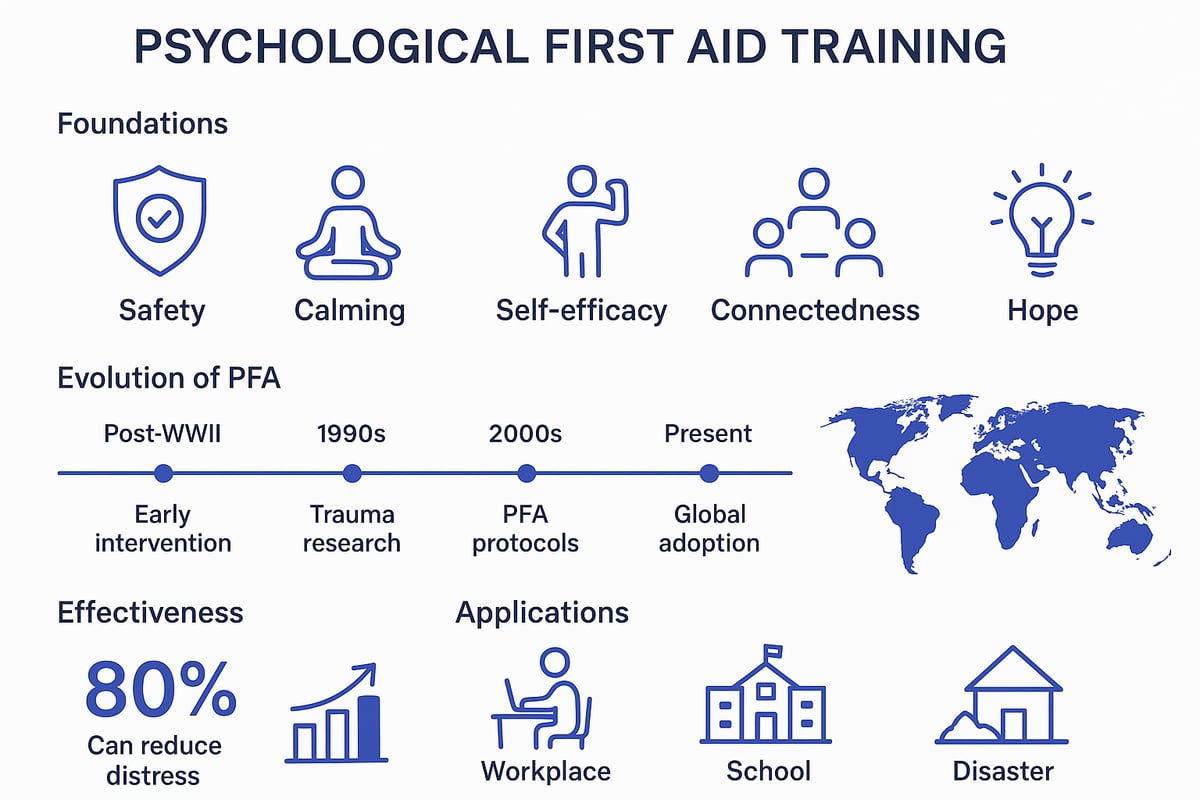
The core of psychological first aid training centers on five principles:
- Safety: Create a sense of physical and emotional security.
- Calming: Help individuals manage overwhelming emotions.
- Self-efficacy: Encourage confidence in coping abilities.
- Connectedness: Foster social support and community ties.
- Hope: Promote optimism for recovery.
This approach is designed to be accessible, making psychological first aid training suitable for both professionals and laypersons.
Historical Evolution and Global Context
Psychological first aid training has its roots in the aftermath of World War II, when the need for immediate psychosocial support for trauma survivors became clear. Over time, major global events have shaped and expanded the use of PFA.
For example, after 9/11 and during the COVID-19 pandemic, organizations worldwide adopted psychological first aid training to address surges in psychological distress. Internationally recognized frameworks, such as those from the World Health Organization and Johns Hopkins, now guide best practices in delivering PFA.
These standards ensure that psychological first aid training is adaptable and effective across different cultures and crisis scenarios.
Why PFA Training Matters
The increasing frequency of disasters, workplace incidents, and community crises has amplified the need for psychological first aid training. Research shows that people who complete PFA training report greater knowledge, confidence, and readiness to respond in emergencies.
Data highlights that psychological first aid training improves crisis outcomes, reducing the risk of long-term psychological harm. By equipping individuals with practical tools and strategies, PFA helps build resilience at both personal and community levels.
Organizations that invest in psychological first aid training foster safer, more supportive environments for everyone.
Who Needs PFA Training?
Psychological first aid training is valuable for a wide range of people, not just mental health professionals. Target audiences include:
- Healthcare workers and emergency responders
- Educators and school staff
- Managers and workplace leaders
- Community volunteers and peer supporters
During pandemic situations, frontline workers benefited greatly from psychological first aid training, enabling them to support colleagues and clients effectively. Both specialists and non-specialists can use PFA to make a meaningful difference in times of crisis.
Key Arguments and Insights
One of the greatest strengths of psychological first aid training is its "do no harm" philosophy. Unlike psychological debriefing, PFA avoids potentially retraumatizing interventions and instead prioritizes gentle, supportive care. Its adaptability means it can be tailored for diverse populations and settings, from schools to disaster zones.
PFA also plays a central role in broader mental health preparedness, helping communities build lasting resilience. For a deeper understanding of how PFA is applied and evaluated in different contexts, see this Scoping Review of PFA Training Applications.
Effective psychological first aid training is an essential part of any comprehensive crisis response strategy.
Core Models and Approaches to Psychological First Aid Training
Understanding the core models and approaches to psychological first aid training is essential for anyone seeking to respond effectively in times of crisis. By examining leading frameworks, comparing their features, and exploring methods for training delivery and customization, organizations and individuals can choose the most suitable pathway for building psychological resilience.
Overview of Leading PFA Models
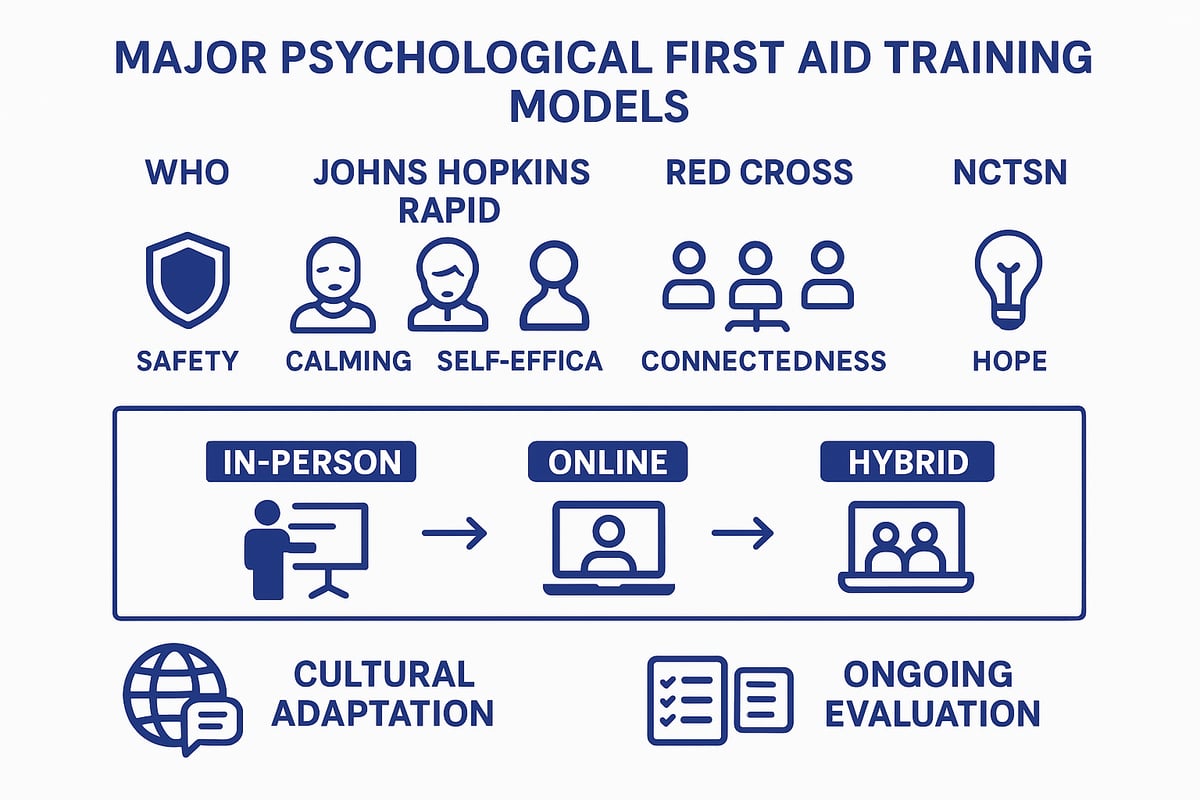
Several established models form the foundation of psychological first aid training worldwide. The World Health Organization (WHO) Psychological First Aid Guide is widely recognized for its structured approach, focusing on immediate support and practical assistance. The Johns Hopkins RAPID Model emphasizes five key steps: Recognize, Assess, Prioritize, Intervene, and Disposition, providing a stepwise process for crisis response.
Other notable frameworks include the Red Cross model, which integrates community-based strategies, and the National Child Traumatic Stress Network (NCTSN) approach, tailored for children and families. Each model shares a commitment to evidence-based principles and adaptability, making them central to effective psychological first aid training.
Comparing Models: Similarities and Differences
While the core aim of psychological first aid training remains consistent across models, there are distinct differences in structure and application. Most frameworks prioritize active listening, practical support, and the promotion of safety and hope. However, some models, such as NCTSN, include modules specifically designed for children or trauma-exposed populations.
The Johns Hopkins RAPID Model stands out for its explicit step-by-step methodology, while the Red Cross framework often emphasizes community engagement. Unique features, such as the inclusion of self-care modules for responders, further differentiate these models. The table below summarizes key similarities and differences:
| Model | Target Audience | Unique Features |
|---|---|---|
| WHO | General | Global applicability |
| RAPID | Responders | Stepwise process |
| Red Cross | Communities | Community focus |
| NCTSN | Children/Families | Child-specific modules |
Training Delivery Methods
Psychological first aid training is offered in various formats to suit different learning needs. In-person workshops provide immersive, hands-on experiences, while online modules offer flexibility and accessibility for remote or time-constrained learners. Hybrid programs blend both approaches, allowing participants to combine self-paced study with interactive sessions.
The shift to digital learning has accelerated since the pandemic, with organizations increasingly adopting online psychological first aid training. Choosing the right delivery method depends on participant needs, resource availability, and desired outcomes. For those seeking a structured overview, the Psychological First Aid Course Overview offers detailed insights into course content and formats.
Customization for Diverse Needs
Effective psychological first aid training must be adaptable to diverse cultural, linguistic, and occupational contexts. Trainers often modify materials to reflect local values, address language barriers, and meet sector-specific requirements. For example, programs designed for indigenous communities may incorporate traditional healing practices, while high-risk industries might focus on workplace-specific scenarios.
Case studies show that tailoring training increases engagement and relevance. Ongoing feedback and collaboration with target groups ensure that psychological first aid training remains inclusive and impactful across different environments.
Step-by-Step Guide to Psychological First Aid Training
Embarking on psychological first aid training is a transformative journey for individuals and organizations aiming to foster mental health resilience. This step-by-step guide breaks down the process, ensuring that both newcomers and experienced professionals gain actionable insights. By following these clear stages, you will build foundational competence, apply effective interventions, and sustain your skills for real-world impact.
Step 1: Preparing for Training
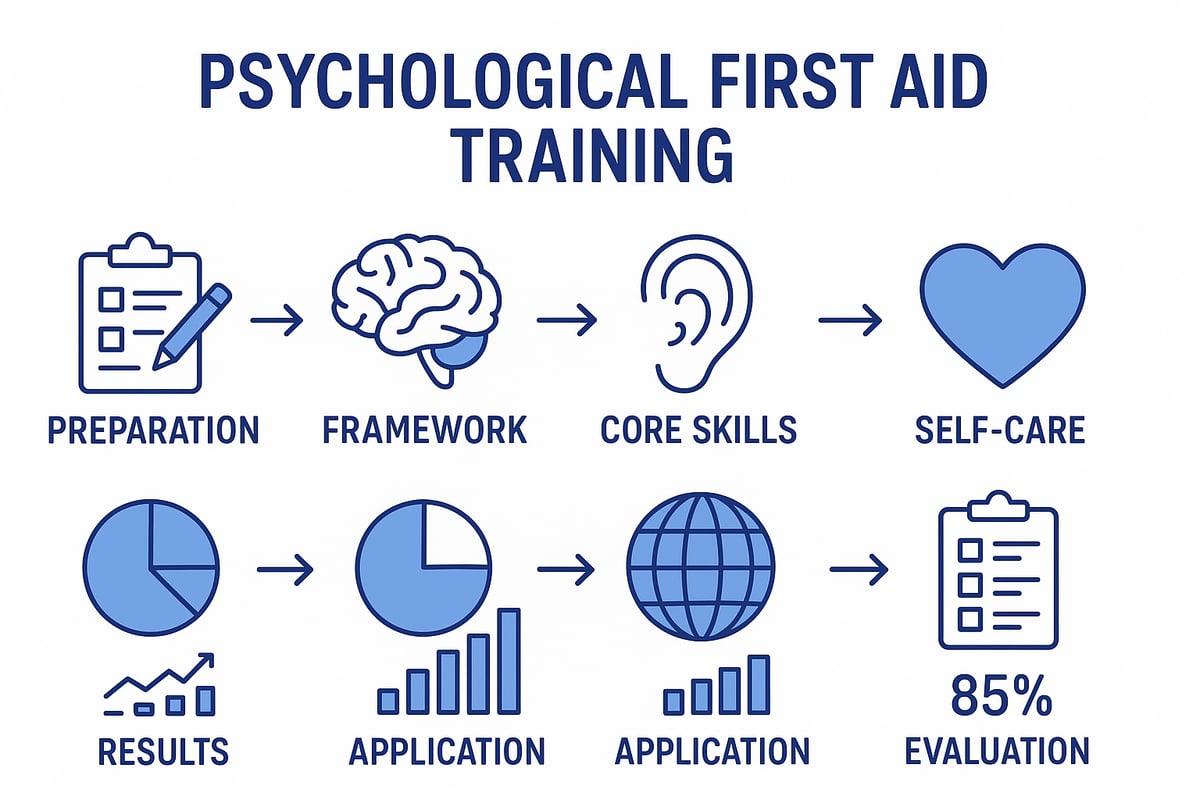
The first step in psychological first aid training is assessing readiness. Whether you are an individual or part of an organization, consider your current capacity to support others in crisis. Reflect on previous experiences, available resources, and the motivation behind seeking training.
Define clear goals for your psychological first aid training. Are you aiming to respond to workplace incidents, community crises, or personal emergencies? Identifying these objectives will help you select the most suitable training approach.
Next, choose a reputable training provider. Look for programs that are evidence-based, offer flexible delivery formats, and are recognized by established organizations. Consider in-person, online, or hybrid options based on your learning preferences and logistical constraints.
Step 2: Understanding the PFA Framework
A solid grasp of the psychological first aid training framework is essential for effective support. The five intervention principles—safety, calming, self-efficacy, connectedness, and hope—form the backbone of every PFA response.
Training often includes practical exercises such as role-playing and scenario-based learning. These activities immerse participants in simulated crises, allowing them to practice responses in a controlled environment. For example, a role-play might involve providing support to a distressed colleague after a workplace accident.
Instructors guide learners through each principle, highlighting how to establish safety, encourage calm, and foster hope. These exercises build confidence and prepare participants for real-life situations where swift, compassionate action is needed.
Step 3: Building Core PFA Skills
Developing core skills is central to psychological first aid training. Active listening, clear communication, and empathic engagement are foundational abilities. Training sessions teach participants to assess needs, prioritize support, and deliver practical assistance.
Structured, competency-based approaches ensure that skills are acquired progressively and reliably. For a deeper understanding of how these models enhance training effectiveness, see this Competency-Based PFA Training Model.
Practical modules focus on:
- Listening non-judgmentally to those in distress
- Providing accurate information and guidance
- Promoting immediate safety and reassurance
By mastering these skills, trainees can offer meaningful support during acute crises and lay the groundwork for long-term recovery.
Step 4: Addressing Self-Care and Resilience for Responders
Sustaining resilience is vital for anyone engaged in psychological first aid training. Responders may experience vicarious trauma or burnout if self-care is neglected. Training programs include dedicated modules on recognizing warning signs and integrating self-care strategies into daily practice.
Evidence shows that self-care instruction improves responder retention and overall wellbeing. Techniques such as mindfulness, debriefing with peers, and setting boundaries are emphasized. These practices not only protect the responder but also enhance the quality of care delivered to others.
Regular reflection and peer support groups further reinforce resilience, creating a supportive network that extends beyond the training itself.
Step 5: Applying PFA in Real-World Settings
Translating psychological first aid training into practice requires adaptability. Crises vary widely, from natural disasters to workplace incidents or public health emergencies. Training prepares participants to tailor their approach based on the context and the needs of those affected.
Cultural competence and ethical considerations are woven throughout the curriculum. For example, a case study might explore supporting employees after a traumatic event at work, highlighting the importance of sensitivity and confidentiality.
Trainees learn to adapt language, interventions, and support strategies to fit diverse populations, ensuring that PFA is accessible and effective in any setting.
Step 6: Evaluating Training Outcomes
Assessment is the cornerstone of effective psychological first aid training. Programs typically use pre- and post-training evaluations to measure knowledge retention, confidence, and skill application. These assessments provide valuable feedback for both participants and trainers.
Key metrics include:
- Increases in self-efficacy and readiness to respond
- Improved knowledge of PFA principles
- Real-world application rates following training
Data consistently show that participants report greater confidence and competence after completing psychological first aid training. Ongoing evaluation ensures that skills remain sharp and that training continues to meet evolving needs.
Key Arguments and Insights
Adopting a chronological, skills-based approach to psychological first aid training maximizes learning and retention. Each step builds on the previous one, ensuring that participants develop both theoretical understanding and practical capability.
Ongoing practice and refresher courses are essential for maintaining proficiency. Feedback mechanisms, such as supervision and peer review, help identify areas for improvement and sustain high standards.
Ultimately, psychological first aid training is not a one-off event but a continuous process. By investing in structured learning, self-care, and evaluation, individuals and organizations can create resilient, supportive environments ready to face any crisis.
Implementing Psychological First Aid Training in Organizations
Establishing a robust psychological first aid training program within an organization is a strategic investment in workforce wellbeing and crisis resilience. Effective implementation ensures that employees at all levels are prepared to respond confidently and compassionately when faced with psychological distress or emergencies.
Building a PFA-Ready Organization
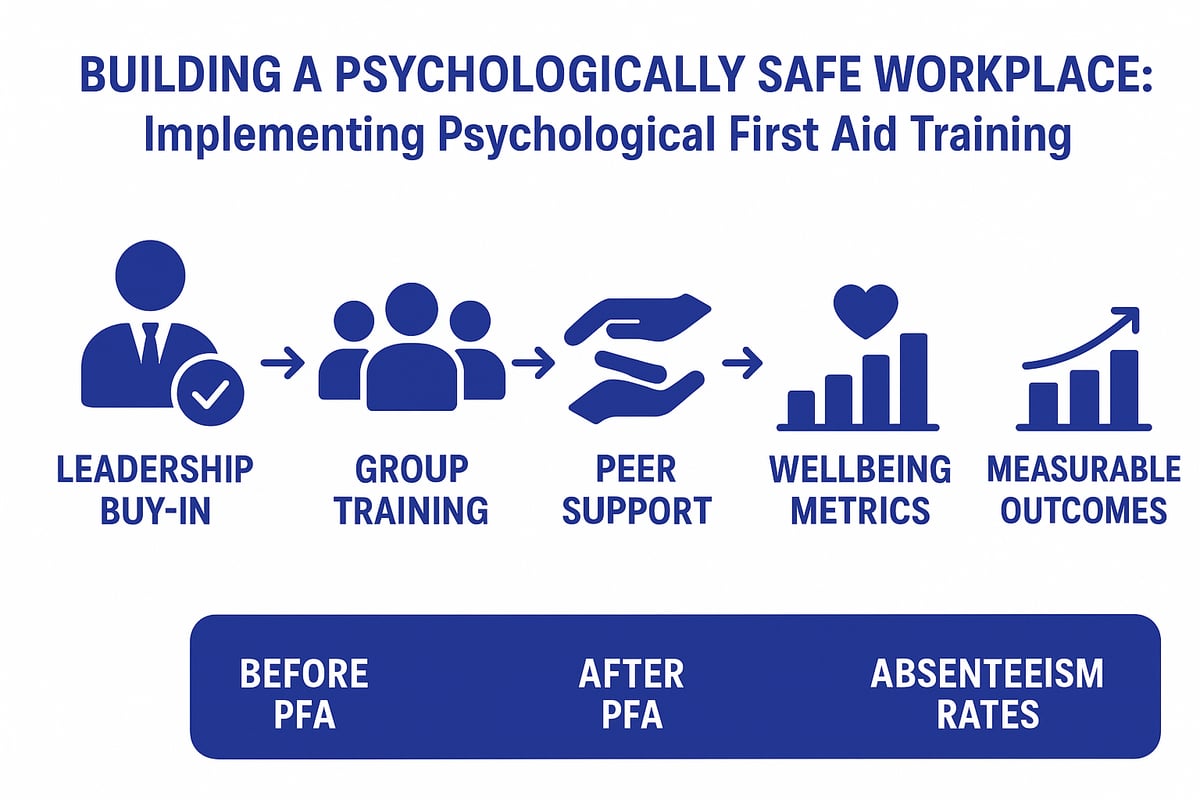
The first step toward a successful psychological first aid training initiative is gaining commitment from organizational leadership. Decision-makers must understand the value of integrating PFA into existing health, safety, or wellbeing frameworks. By aligning training with core organizational values and policies, psychological first aid training becomes a natural extension of overall risk management and employee care.
To guide this process, organizations can reference Workplace Wellbeing and PFA, which details best practices for embedding PFA into workplace wellbeing strategies. Clear crisis response protocols and policy development are essential for consistency and long-term impact.
Training Rollout Strategies
Strategic planning is crucial for effective psychological first aid training rollout. Leaders should consider the most suitable delivery methods, such as blended formats that combine in-person and online modules. Scheduling sessions for optimal participation, and balancing mandatory versus voluntary attendance, will help maximize engagement.
For example, healthcare and education sectors have seen success with phased rollouts, starting with high-risk teams and gradually expanding. This ensures that psychological first aid training reaches the most critical groups first and builds momentum across the organization.
Monitoring and Supporting Trainees
Ongoing support is vital to ensure psychological first aid training translates into lasting skills. Providing regular supervision, peer support, and access to communities of practice encourages continuous learning and confidence among trainees.
Organizations that offer structured follow-up sessions see higher retention and practical application of psychological first aid training concepts. Support networks also help individuals navigate challenging situations and maintain personal wellbeing while assisting others.
Measuring Organizational Impact
Assessing the effectiveness of psychological first aid training requires tracking key metrics. Organizations should monitor absenteeism, staff wellbeing, and crisis response outcomes before and after implementation. Business data has shown that organizations report up to a 33 percent reduction in absenteeism following psychological first aid training.
Regular evaluation not only demonstrates return on investment but also highlights areas for improvement. Transparent reporting fosters a culture of accountability and encourages ongoing participation in psychological first aid training initiatives.
Overcoming Barriers to Implementation
Despite the benefits, organizations may encounter resistance to psychological first aid training due to stigma, resource constraints, or lack of awareness. Addressing these barriers involves open communication, leadership modeling, and creative solutions like online modules for flexible access.
Encouraging leadership to visibly support psychological first aid training can help normalize mental health conversations and reduce stigma. By investing in accessible resources and fostering an inclusive environment, organizations can ensure the sustainability of their psychological first aid training programs.
Real-World Applications and Case Studies of Psychological First Aid
When it comes to building resilience, the real impact of psychological first aid training is seen in the field. Across disasters, workplaces, schools, and communities, PFA empowers individuals and organizations to respond effectively to crises. Below, we explore real-world examples and evidence-based outcomes.
PFA in Disaster and Emergency Response
Psychological first aid training is a cornerstone of disaster and emergency response worldwide. Whether after natural disasters, public health emergencies, or acts of violence, trained responders can offer immediate, compassionate support that mitigates acute stress reactions.
For example, following major hurricanes, teams equipped with psychological first aid training provided structured support to affected communities, resulting in reduced distress and faster recovery. Research confirms that PFA training’s impact on disaster preparedness includes higher responder confidence and improved readiness for crisis situations.
Key outcomes of PFA in disaster response:
- Improved emotional stabilization for survivors
- Enhanced coordination among responders
- Faster community recovery
PFA in the Workplace
In the workplace, psychological first aid training has become an integral part of employee wellbeing strategies. Organizations that integrate PFA into their crisis protocols see measurable improvements in morale, productivity, and psychological safety.
For instance, hospitals and healthcare systems have used psychological first aid training to support staff during pandemics, reducing burnout and absenteeism. Corporate environments report that after implementing PFA, employees feel more empowered to support colleagues and manage stress during incidents.
Benefits for organizations:
- Reduced long-term psychological harm
- Increased staff retention and engagement
- Stronger culture of care and resilience
PFA for Schools and Youth
Schools are turning to psychological first aid training to help educators and counselors address trauma among students. During lockdowns or after traumatic events, PFA-trained staff can provide immediate, age-appropriate support, helping young people process their experiences and regain a sense of safety.
Programs like Youth Mental First Aid Programs equip teachers and youth workers with tools to recognize distress and respond effectively. This proactive approach leads to better emotional outcomes for students and a more supportive school environment.
Key strategies in school-based PFA:
- Peer support networks for students
- Crisis response teams with PFA skills
- Ongoing training for educators
Community-Based PFA Initiatives
Community leaders and volunteers play a vital role in extending psychological first aid training to underserved or high-risk populations. Grassroots PFA initiatives have emerged in refugee camps, indigenous communities, and rural areas, where access to mental health services may be limited.
These programs leverage local knowledge and peer support to build trust and resilience. By training laypeople in psychological first aid training, communities become better equipped to support each other during times of crisis.
Notable features of community PFA:
- Cultural adaptation of training materials
- Inclusion of community leaders in delivery
- Focus on sustainability and empowerment
Lessons Learned and Best Practices
The real-world success of psychological first aid training highlights several key lessons. Context-specific adaptation is critical—what works in a hospital may need to be modified for a school or remote community. Ongoing evaluation and refresher courses ensure that skills remain sharp and effective.
Best practices include:
- Regular simulation exercises
- Integrating feedback from trainees and recipients
- Prioritizing accessibility and inclusivity
Ultimately, psychological first aid training is most effective when organizations and communities commit to continuous learning and adaptation, creating a foundation for resilience in the face of future challenges.
Resources, Certification, and Continuing Development in PFA
Accessing Accredited PFA Training
Access to accredited psychological first aid training is essential for anyone seeking to provide effective support during crises. Reputable providers include the World Health Organization, Red Cross, Johns Hopkins, and the National Child Traumatic Stress Network. Each organization offers structured programs with clear certification pathways, ensuring participants gain validated skills.
Certification often involves a combination of knowledge assessments and practical exercises. For those interested in workplace-focused programs, Mental First Aid Training Benefits outlines the value of structured mental health training aligned with psychological first aid training principles. Choosing programs with recognized accreditation ensures skills are both current and evidence-based.
Online and Blended Learning Opportunities
The landscape of psychological first aid training has evolved, with digital platforms making access more flexible than ever. Online courses allow learners to progress at their own pace, while blended learning combines virtual modules with live, instructor-led sessions.
Many providers now offer self-paced modules, interactive webinars, and scenario-based e-learning. This approach makes psychological first aid training accessible for individuals and organizations with varied schedules and locations. Learners benefit from engaging content, discussion forums, and downloadable resources, all designed to reinforce practical skills and knowledge.
Continuing Professional Development
Maintaining competency in psychological first aid training requires ongoing professional development. Refresher courses, advanced modules, and peer learning opportunities help responders stay updated on best practices and emerging research.
Organizations often encourage regular participation in workshops, seminars, and supervision sessions. Trainers and facilitators can further their expertise through specialized certifications or train-the-trainer programs. Ongoing development not only enhances personal growth but also strengthens the overall impact of psychological first aid training in diverse settings.
Additional Tools and Support Materials
A robust psychological first aid training journey is supported by a wide range of tools and materials. Comprehensive manuals, quick-reference toolkits, and mobile apps offer guidance in real-time situations. Peer support networks and professional associations provide valuable spaces for sharing experiences and advice.
For those seeking detailed guidance on disaster response and recovery, the PFA and Skills for Psychological Recovery resource from the National Child Traumatic Stress Network offers in-depth frameworks and practical tools. Access to these resources ensures ongoing confidence and effectiveness in delivering psychological first aid training.
As you’ve seen throughout this guide, investing in psychological first aid training is a powerful step toward creating a safer, more supportive workplace where everyone can thrive. Whether you’re a manager looking to support your team, or an organization aiming to build lasting resilience, the right training and resources make all the difference. The Workplace Mental Health Institute offers proven, flexible programs designed to help you implement effective PFA strategies and foster real, measurable improvements in wellbeing and performance. If you’re ready to take the next step toward a healthier workplace, Find Out More.

