
Organizations worldwide are shifting from reactive mental health interventions to proactive strategies that cultivate positive mental health at work. This evolution represents more than addressing problems as they arise-it involves creating environments where psychological wellbeing becomes embedded in organizational culture, leadership practices, and daily operations. Research demonstrates that workplaces prioritizing mental health experience measurable improvements in productivity, retention, and employee engagement while simultaneously reducing costs associated with absenteeism and presenteeism.
Understanding Positive Mental Health at Work
Positive mental health at work extends beyond the absence of mental illness. It encompasses psychological wellbeing, resilience, emotional regulation, and the capacity to manage workplace challenges effectively.
The World Health Organization’s framework on mental health at work emphasizes that mentally healthy workplaces actively promote psychological wellbeing while preventing harm. This dual approach recognizes that employees thrive when organizations address both risk factors and protective factors simultaneously.
Defining the Framework
Positive mental health incorporates several interconnected dimensions:
- Emotional wellbeing: experiencing positive emotions and life satisfaction
- Psychological functioning: maintaining autonomy, purpose, and self-acceptance
- Social wellbeing: building meaningful workplace relationships and contribution
- Resilience capacity: adapting to challenges and recovering from setbacks
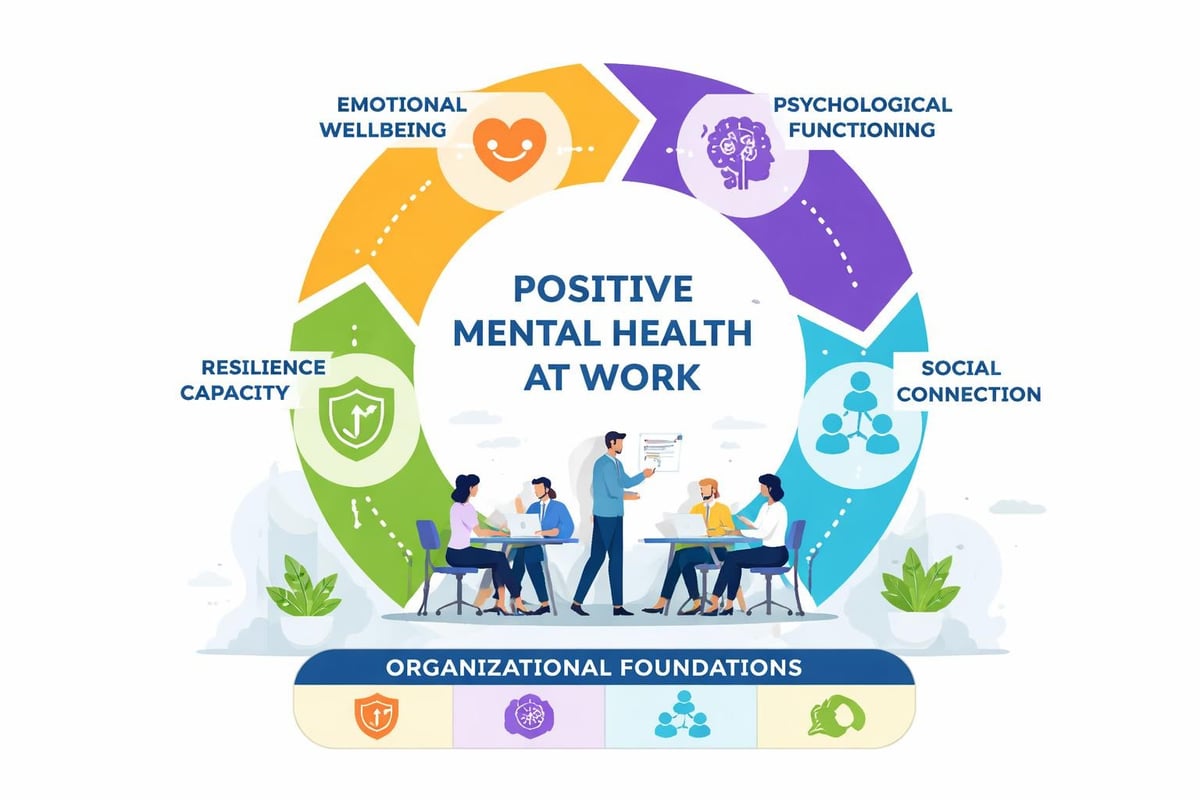 Organizations implementing comprehensive mental health strategies report significant improvements in team cohesion and performance. According to research published in public health journals, workplaces that prioritize positive mental health see evidence-based benefits through systematic organizational interventions that address work design, leadership capabilities, and cultural transformation.
The Business Case for Investment
Financial returns from mental health investments justify strategic prioritization. Organizations experience:
| Benefit Area | Measurable Impact |
|---|---|
| Productivity | 12-18% increase in output |
| Absenteeism | 27% reduction in sick days |
| Turnover | 33% decrease in voluntary departures |
| Engagement | 41% higher employee commitment |
Beyond metrics, positive mental health at work creates competitive advantages in talent acquisition and employer branding. Prospective employees increasingly evaluate organizational culture and wellbeing support when making career decisions.
Creating Psychologically Safe Work Environments
Psychological safety forms the foundation for positive mental health at work. Employees need environments where they can express concerns, take calculated risks, and contribute ideas without fear of negative consequences.
Leaders who complete assessments through resources like the psychologically safe manager survey gain insights into their team’s psychological climate and identify opportunities for improvement.
Manager Capabilities and Mental Health Literacy
Managers directly influence team mental health through daily interactions, decision-making, and support provision. Building manager capabilities requires:
- Mental health literacy training: Understanding common conditions, early warning signs, and appropriate responses
- Communication skills development: Learning to conduct supportive conversations and provide feedback constructively
- Boundary management: Balancing empathy with professional boundaries and organizational requirements
- Resource navigation: Knowing when and how to connect employees with professional support
The WHO guidelines on mental health at work recommend systematic manager training as a cornerstone intervention for improving workplace mental health outcomes. Organizations that invest in manager development see cascading benefits throughout their teams.
Building Organizational Resilience
Resilience represents the capacity to navigate adversity, adapt to change, and maintain functionality during challenging periods. Unlike individual-focused resilience programs, organizational resilience integrates systems thinking with personal skill development.
Effective approaches to building resilience at work address multiple levels:
- Individual skills: cognitive flexibility, emotional regulation, problem-solving
- Team dynamics: collective efficacy, supportive relationships, shared purpose
- Organizational systems: clear communication, resource availability, adaptive structures
- Leadership modeling: demonstrating resilience behaviors and normalizing help-seeking
Research examining positive mental health demonstrates that it moderates the relationship between workplace stress and psychological distress, providing protective effects during high-demand periods.
Implementing Evidence-Based Interventions
Translating research into practice requires structured implementation frameworks that align interventions with organizational context, culture, and strategic objectives.
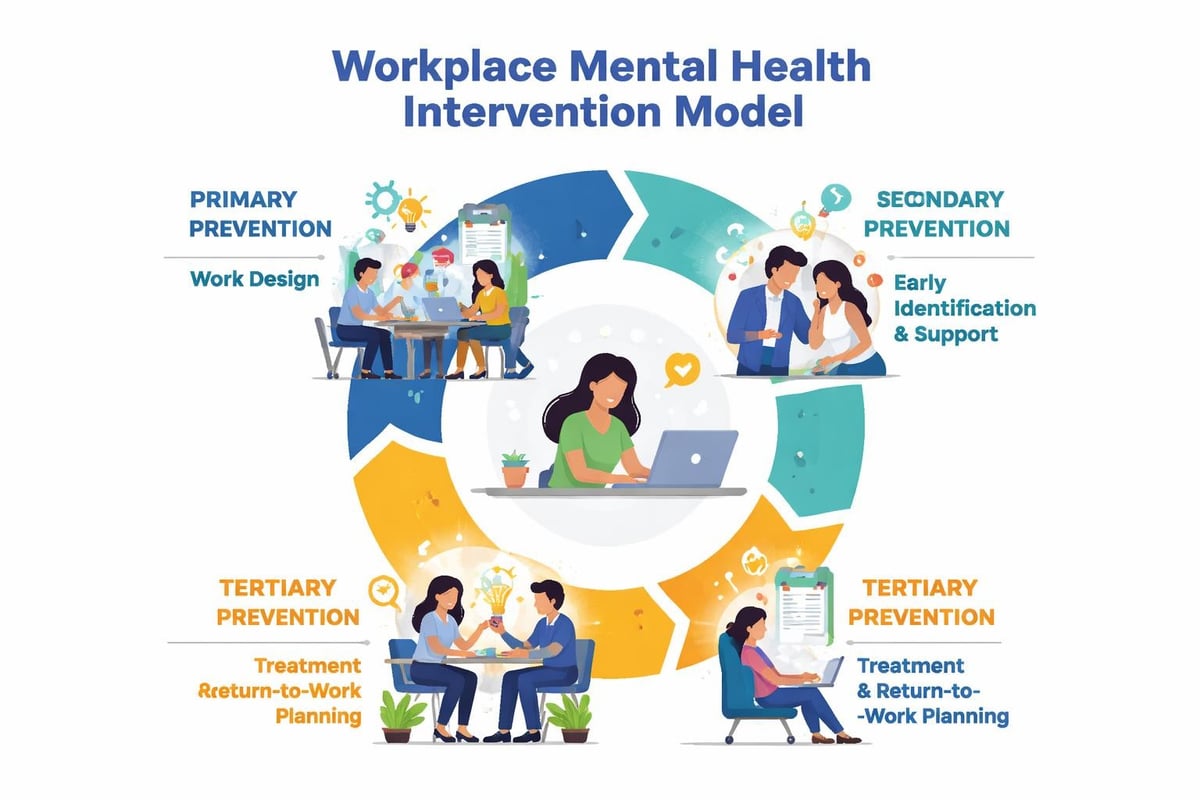
Primary Prevention Strategies
Primary prevention focuses on reducing risk factors and enhancing protective factors before problems emerge. Effective strategies include:
Work Design Optimization
- Ensuring reasonable workloads and adequate recovery time
- Providing autonomy and decision-making authority
- Creating opportunities for skill development and growth
- Establishing clear role expectations and boundaries
Cultural Enhancement
- Normalizing mental health conversations through leadership communication
- Celebrating diverse perspectives and inclusive practices
- Recognizing contributions and acknowledging effort
- Promoting work-life integration and flexibility
Secondary Prevention Approaches
Secondary prevention emphasizes early identification and timely intervention when employees experience emerging difficulties.
Training programs in mental health first aid equip employees and managers with skills to recognize mental health concerns, provide initial support, and facilitate appropriate professional help. These programs create networks of trained responders throughout organizations.
| Intervention Level | Focus Area | Key Activities |
|---|---|---|
| Primary | Prevention | Work design, culture building |
| Secondary | Early intervention | Training, screening, support |
| Tertiary | Treatment support | Accommodations, return planning |
The CDC emphasizes workplace mental health resources as essential components of comprehensive organizational wellbeing strategies that protect and promote employee mental health.
Tertiary Interventions and Crisis Response
Despite prevention efforts, some employees will experience mental health crises requiring immediate, skilled responses. Organizations need clear protocols for crisis situations, including suicide prevention skills training for managers and designated response teams.
Effective crisis response includes:
- Immediate safety assessment: evaluating risk and ensuring employee safety
- Professional connection: facilitating access to emergency services or employee assistance programs
- Ongoing support planning: coordinating return-to-work accommodations and follow-up
- Team communication: addressing team concerns while respecting privacy
Applying Positive Psychology Principles
Positive mental health at work draws heavily from positive psychology, which studies the conditions enabling individuals and organizations to flourish. Positive psychology in the workplace emphasizes strengths, meaningful work, and positive emotions rather than focusing exclusively on deficit reduction.
Strengths-Based Approaches
Identifying and utilizing employee strengths creates engagement, satisfaction, and performance improvements. Organizations implementing strengths-based management report:
- Higher employee engagement scores
- Improved team collaboration
- Increased innovation and creative problem-solving
- Enhanced job satisfaction and retention
Managers can facilitate strengths utilization through regular conversations about how employees can apply their talents to current projects and stretch assignments that develop existing capabilities.
Meaning and Purpose at Work
Employees experiencing their work as meaningful demonstrate better mental health outcomes and greater organizational commitment. Leaders cultivate meaning through:
- Connecting work to impact: illustrating how individual contributions support broader organizational mission
- Providing autonomy: allowing employees to shape how they accomplish objectives
- Encouraging growth: supporting skill development and career progression
- Building community: facilitating meaningful workplace relationships
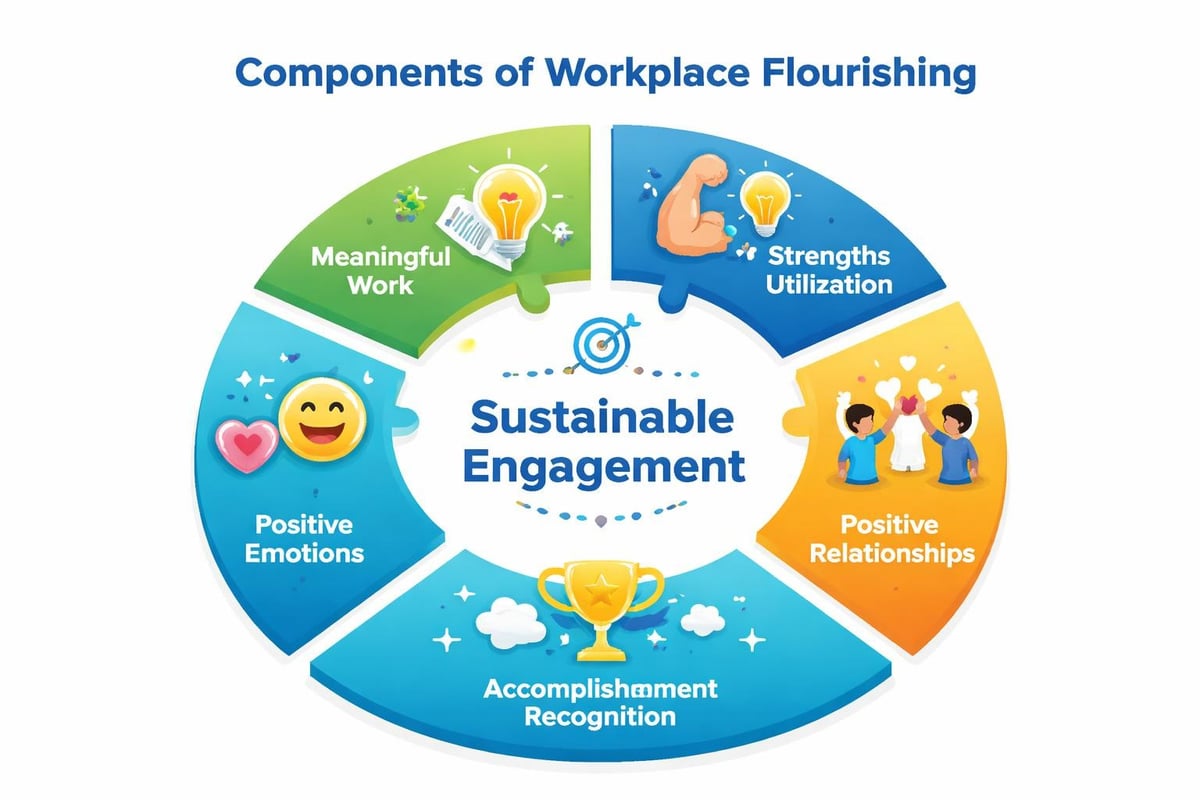 Positive organizational behavior research demonstrates that organizations systematically developing psychological capital-hope, efficacy, resilience, and optimism-experience measurable performance advantages and improved employee wellbeing.
Measuring and Monitoring Progress
Effective mental health strategies require ongoing measurement, evaluation, and refinement based on data-driven insights.
Key Performance Indicators
Organizations should track metrics across multiple domains:
Wellbeing Indicators
- Employee engagement scores
- Psychological safety assessments
- Stress and burnout measures
- Job satisfaction ratings
Organizational Outcomes
- Absenteeism rates and patterns
- Turnover metrics by department
- Workers’ compensation claims
- Productivity measurements
Program Utilization
- Employee assistance program engagement
- Training participation rates
- Manager consultation frequency
- Resource awareness levels
Creating Feedback Loops
Measurement becomes valuable only when organizations act on insights. Establishing regular review cycles ensures continuous improvement:
- Quarterly data review: analyzing trends and identifying emerging concerns
- Employee input sessions: gathering qualitative feedback on initiatives
- Manager debriefs: discussing implementation challenges and success stories
- Strategy refinement: adjusting approaches based on evidence and feedback
Transparency about measurement outcomes builds trust and demonstrates organizational commitment to mental health as a strategic priority rather than a performative exercise.
Addressing Barriers and Challenges
Despite growing awareness, organizations encounter obstacles when implementing comprehensive mental health strategies.
Common Implementation Challenges
Resource Constraints
Organizations often cite limited budgets or staff time as barriers. However, many high-impact interventions require primarily cultural shifts rather than significant financial investments. Prioritizing initiatives based on evidence and organizational readiness maximizes limited resources.
Stigma and Cultural Resistance
Some workplace cultures maintain outdated attitudes about mental health, viewing it as personal weakness or inappropriate for professional discussion. Addressing stigma requires persistent leadership communication, visible role modeling, and systemic policy changes that normalize mental health conversations.
Measurement Complexity
Mental health outcomes involve multifaceted, long-term indicators that resist simple quantification. Organizations should balance quantitative metrics with qualitative insights, recognizing that some benefits emerge gradually over extended periods.
Sustainability Strategies
Maintaining momentum requires embedding positive mental health at work into organizational DNA rather than treating it as a temporary initiative:
- Executive sponsorship: securing visible, ongoing leadership commitment
- Integration with business strategy: aligning mental health objectives with organizational goals
- Manager accountability: including mental health leadership in performance expectations
- Continuous learning: updating approaches based on emerging research and organizational experience
Tailoring Approaches to Organizational Context
No universal mental health strategy fits all organizations. Effective approaches consider industry characteristics, workforce demographics, organizational culture, and specific risk factors.
Industry-Specific Considerations
Different sectors face distinct mental health challenges:
| Industry | Primary Challenges | Tailored Approaches |
|---|---|---|
| Healthcare | Trauma exposure, moral injury | Trauma-informed supervision, peer support |
| Technology | Always-on culture, rapid change | Boundary-setting norms, change management |
| Manufacturing | Physical demands, shift work | Fatigue management, work-life integration |
| Education | Emotional labor, resource limits | Emotional regulation skills, realistic workload |
Workforce Demographics
Generational differences, cultural backgrounds, and work arrangements influence how employees experience and respond to mental health initiatives. Younger workers often expect explicit organizational mental health support, while some older employees may prefer private, individual resources.
Remote and hybrid work arrangements require adapted approaches to connection, communication, and culture-building that maintain psychological safety despite physical distance.
Developing Organizational Capabilities
Building sustainable positive mental health at work requires developing internal expertise and capabilities rather than relying exclusively on external consultants.
Training and Development Priorities
Organizations should invest in multi-level training that builds shared language and consistent approaches:
- Leadership programs: executive understanding of mental health as strategic priority
- Manager development: practical skills for supportive leadership and difficult conversations
- Employee awareness: mental health literacy, self-care strategies, and resource navigation
- Specialized roles: developing internal mental health champions or wellbeing coordinators
Knowledge Management and Transfer
Capturing and sharing organizational learning accelerates improvement and prevents knowledge loss during transitions. Effective knowledge management includes:
- Documentation: recording successful practices and lessons learned
- Communities of practice: facilitating peer learning among managers
- Onboarding integration: introducing mental health expectations and resources early
- Succession planning: ensuring continuity when key champions transition
Organizations that systematically develop capabilities create competitive advantages through enhanced adaptability, innovation, and employee commitment.
Positive mental health at work represents a strategic organizational priority that delivers measurable benefits while supporting human flourishing. Organizations committed to comprehensive, evidence-based approaches create environments where employees and businesses thrive together. Workplace Mental Health Institute provides specialized training and consultation that equips leaders and organizations with practical skills and frameworks to build psychologically healthy, high-performing workplaces through resilience programs, manager development, and strategic wellbeing planning.

