
Online learning has opened new doors for students everywhere, yet it brings hidden challenges for mental health. Many students now face increased stress, anxiety, and burnout as virtual classrooms replace traditional spaces.
Recent studies reveal a sharp rise in mental health concerns among online learners. Thriving in this environment requires more than academic effort; strong online classes mental health is essential for lasting success.
This guide delivers practical strategies and expert-backed techniques to help you manage stress, build healthy routines, and find support. Discover how to care for your wellbeing while excelling in online classes.
Understanding the Mental Health Challenges of Online Learning
Online classes mental health is a growing concern as more students engage in remote learning. While online education offers flexibility and access, it also brings unique mental health challenges that can impact both academic performance and overall wellbeing. Recognizing these challenges is the first step toward building resilience and thriving in a virtual classroom environment.
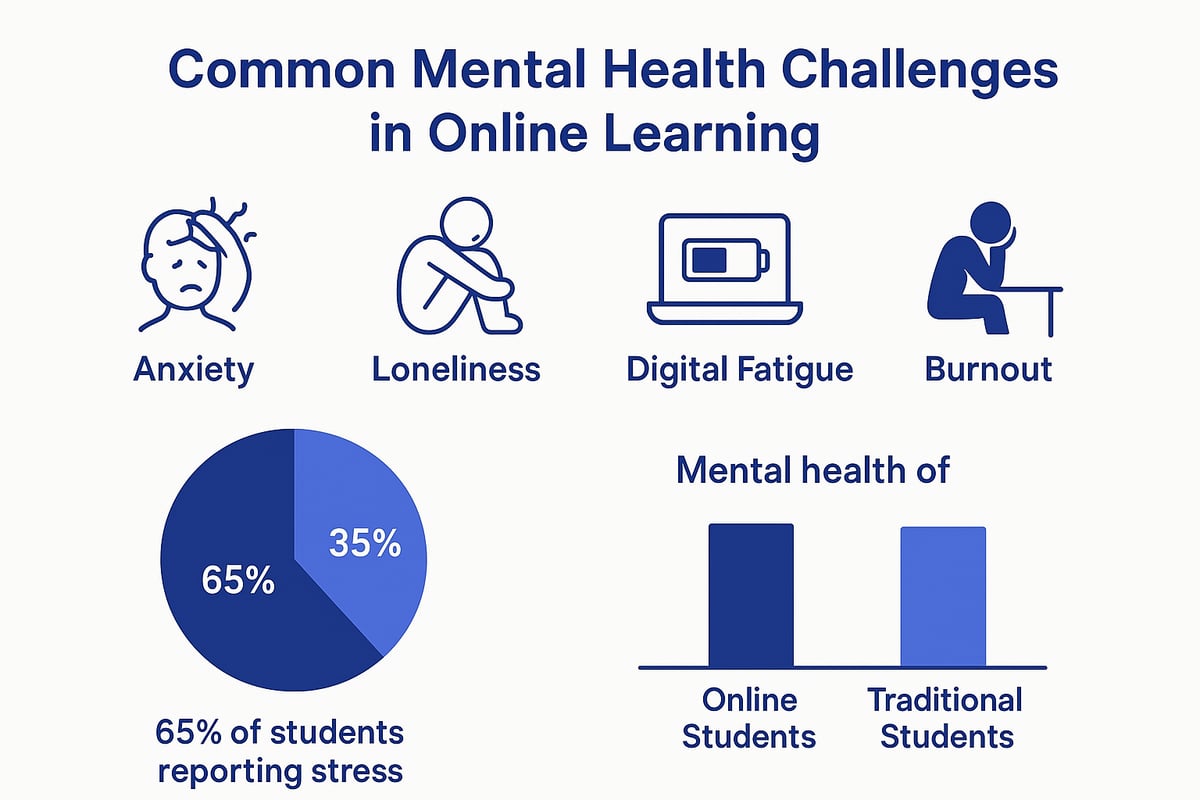
Common Mental Health Issues Faced by Online Students
Students in online learning environments are reporting higher rates of anxiety, depression, and loneliness. Compared to traditional classrooms, the lack of in-person interaction can make it difficult for students to build supportive relationships. This contributes to feelings of isolation and disconnect.
A recent Online Student Mental Health Survey 2024 found that 70% of online learners experienced increased stress levels. Digital fatigue is another growing issue, as long hours spent in front of a screen can drain motivation and focus.
Students often describe how online classes mental health struggles make it tough to stay engaged. Stories of missed deadlines, lack of motivation, and difficulty concentrating are common. The uncertainty and absence of a clear structure in online courses can further intensify stress and emotional exhaustion.
| Challenge | Online Students | In-Person Students |
|---|---|---|
| Anxiety/Stress | High | Moderate |
| Loneliness/Isolation | High | Low |
| Digital Fatigue | High | Low |
| Motivation Issues | High | Moderate |
Unique Stressors in the Online Learning Environment
The online classes mental health landscape is shaped by stressors not found in traditional classrooms. Constant screen time can lead to cognitive overload and physical discomfort, making it hard to focus for extended periods.
Managing your own schedule and keeping up with assignments without face-to-face reminders adds pressure. Many students have limited access to campus-based support services, leaving them to navigate challenges alone.
Without clear boundaries between home, study, and rest, it becomes difficult to fully disconnect. Technology issues, such as unreliable internet or software glitches, further contribute to frustration and anxiety. These factors combine to create a complex environment that tests students’ adaptability.
Students may also find that their online classes mental health is impacted by the blurred line between academic and personal life. The home environment can easily become a source of distraction, and the lack of physical separation makes it challenging to switch off from study mode.
Early Warning Signs and Red Flags
Recognizing the early signs of online classes mental health decline is crucial for timely intervention. Symptoms of burnout can include chronic fatigue, irritability, and a sense of detachment from coursework.
Behavioral changes such as withdrawal from online discussions, missed assignment deadlines, and decreased participation are important red flags. Students may also notice changes in sleep patterns or appetite.
Self-awareness is key. Regular self-check-ins and peer support can help catch these issues early. If students notice these warning signs in themselves or others, reaching out for support can prevent more serious mental health challenges from developing.
Building a Resilient Online Learning Routine
Building a resilient routine is essential for supporting online classes mental health. Without a clear structure, students can easily feel overwhelmed or disconnected. Establishing healthy habits not only boosts academic success but also strengthens resilience, helping learners adapt to challenges. According to experts, students who intentionally develop resilience strategies are more likely to thrive both mentally and academically. For more practical tips on building resilience for wellbeing, visit Building resilience for wellbeing.
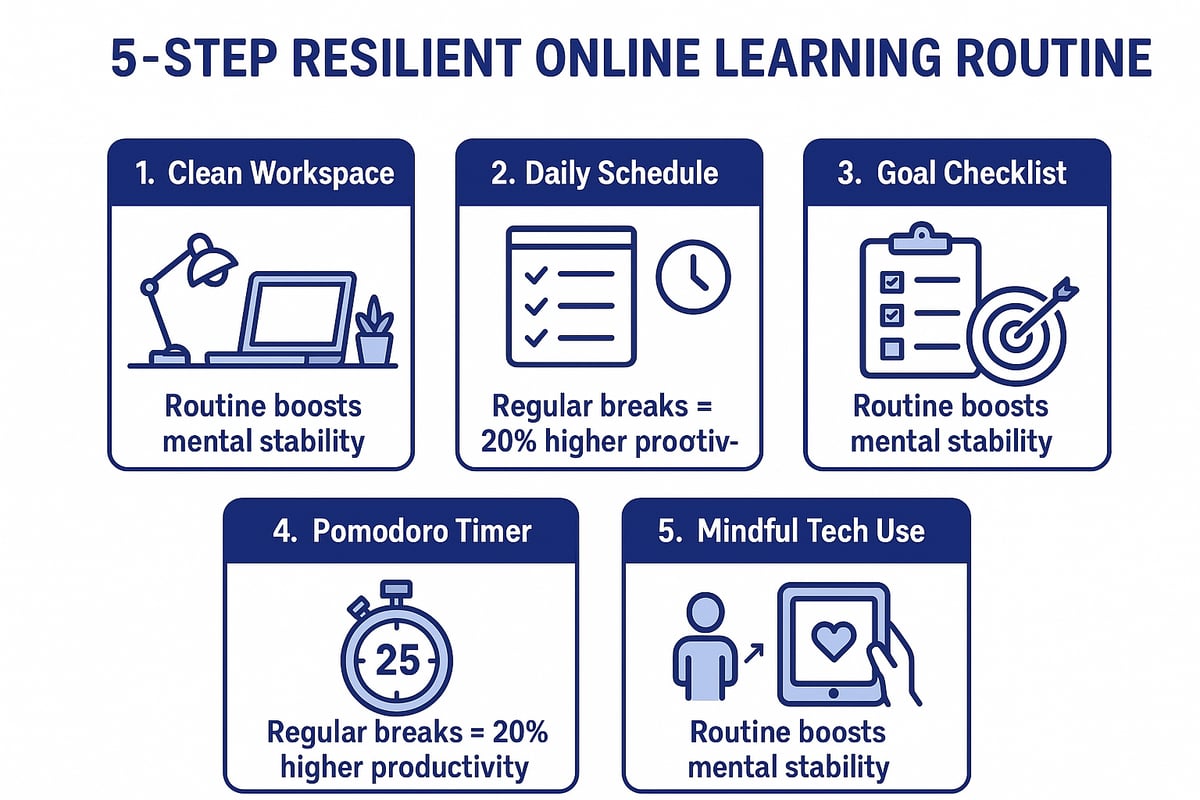
Step 1: Establishing a Structured Daily Schedule
A well-organized daily schedule is the foundation of online classes mental health. Consistent routines help stabilize mood, reduce uncertainty, and boost focus. Start by blocking out study times, breaks, meals, and relaxation periods.
Consider using a digital planner or calendar app to map out your day. Prioritize important tasks early, and review your goals each morning. Here is a sample daily plan for online learners:
| Time | Activity |
|---|---|
| 8:00-9:00 | Morning routine |
| 9:00-11:00 | Focused study |
| 11:00-11:20 | Break & movement |
| 11:20-1:00 | Coursework/Projects |
| 1:00-2:00 | Lunch & rest |
| 2:00-3:30 | Group discussion |
| 3:30-4:00 | Review & wrap-up |
Sticking to a routine supports motivation and makes it easier to maintain healthy boundaries.
Step 2: Creating a Dedicated Study Space
Your environment significantly impacts online classes mental health. A dedicated study area signals your brain it is time to focus, improving productivity and reducing stress.
Choose a quiet spot with good lighting and minimal distractions. Keep your desk organized and add personal touches like plants or inspirational quotes. Proper ergonomics are crucial—adjust your chair and screen to prevent physical discomfort.
Investing in a comfortable workspace can boost both your mood and academic performance. Even in small spaces, simple changes help create a sense of separation between study and relaxation.
Step 3: Setting Realistic Goals and Expectations
Setting realistic goals is vital for online classes mental health. Without clear targets, perfectionism and academic pressure can take over, leading to frustration or burnout.
Use the SMART framework: Specific, Measurable, Achievable, Relevant, and Time-bound. For example, aim to complete two chapters by Friday instead of "study more." Balance ambition with self-compassion, acknowledging progress even if things do not go perfectly.
Regularly review and adjust your goals to match your current workload and personal needs. This approach keeps you motivated and reduces unnecessary stress.
Step 4: Integrating Regular Breaks and Movement
Long periods of screen time can drain energy and affect online classes mental health. Integrate regular breaks throughout your day to recharge and maintain focus.
The Pomodoro Technique is a proven method: study for 25 minutes, then take a 5-minute break. Stand up, stretch, or take a short walk to refresh your mind. Research shows students who take regular breaks report up to 20% higher productivity.
Physical activity also helps manage stress. Even small movements between sessions can improve concentration and emotional balance.
Step 5: Using Digital Tools Mindfully
Technology is central to online classes mental health, but overuse can lead to digital fatigue. Be intentional with digital tools by limiting notifications, organizing apps, and scheduling tech-free periods.
Try focus apps that block distractions or relaxation apps for guided breathing. Mindful use of technology reduces overwhelm and supports a healthier study-life balance.
Remember, the goal is to use digital resources to support learning—not to let them control your attention. Stay aware of your digital habits and make adjustments as needed.
Self-Care Strategies for Online Students
Balancing academic demands with personal wellbeing is essential for online classes mental health. Self-care strategies empower students to maintain focus, build resilience, and prevent burnout. By prioritizing rest, nutrition, mindfulness, social connection, digital boundaries, and enjoyable activities, students can thrive both academically and emotionally.
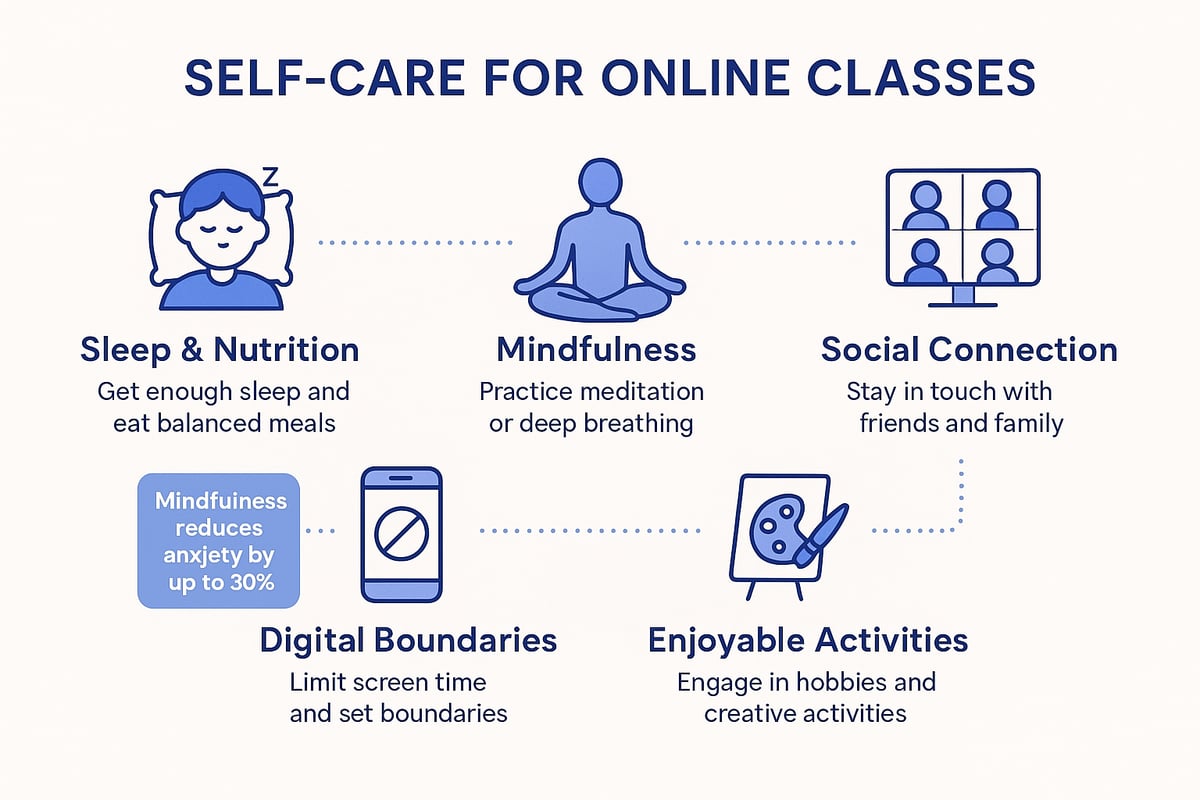
Prioritizing Sleep and Nutrition
Adequate sleep and balanced nutrition are the foundation of positive online classes mental health. Without proper rest, students experience reduced concentration, irritability, and lower academic performance.
Aim for 7 to 9 hours of sleep each night. Establish a consistent bedtime routine, avoid caffeine late in the day, and keep digital devices out of the bedroom. Quality sleep improves memory and emotional regulation, both vital for effective learning.
Nourishing the body also supports cognitive function. Include a variety of whole grains, fruits, vegetables, and lean proteins in daily meals. Hydration is equally important. Skipping meals or relying on processed snacks can negatively affect mood and energy, making it harder to manage the challenges of online classes mental health.
Practicing Mindfulness and Stress Management
Mindfulness techniques help students handle stress, improve focus, and support online classes mental health. Mindful breathing, guided meditation, and body scans are effective tools for calming the mind.
Set aside five minutes each day for deep breathing exercises or a short meditation. Even brief pauses can reduce anxiety by up to 30 percent in students, according to recent data. For guided practices, explore Mindfulness at work techniques, which offer practical exercises tailored to learners.
Incorporating mindfulness into daily routines helps students stay present, manage overwhelming thoughts, and develop emotional resilience. This foundation is essential for sustained success in online classes mental health.
Staying Socially Connected in a Virtual World
Isolation is a common challenge in online learning, but maintaining social connections is crucial for online classes mental health. Regular interaction with peers can prevent loneliness and foster motivation.
Join virtual study groups, discussion forums, or student clubs. These platforms offer opportunities to share ideas, collaborate on projects, and build accountability. Having an accountability partner or mentor can help students stay on track and feel supported.
Consider scheduling regular video calls or online meetups with classmates and friends. Social engagement boosts morale, reduces stress, and provides a sense of belonging, all of which are vital for online classes mental health.
Managing Screen Time and Digital Boundaries
Prolonged screen time can lead to digital fatigue, affecting both physical and mental wellbeing. Setting boundaries is key for maintaining online classes mental health.
Limit study sessions to manageable blocks, such as 45 minutes, followed by short breaks away from screens. Use blue light filters or glasses, especially in the evening, to reduce eye strain and protect sleep quality. Establish tech-free zones or times, like during meals or before bedtime, to encourage relaxation.
Track screen time with digital wellness apps and set clear guidelines for recreational use. By consciously managing technology, students can reduce stress and maintain focus, supporting their online classes mental health.
Seeking Enjoyable Offline Activities
Pursuing hobbies and creative outlets is a powerful way to support online classes mental health. Engaging in offline activities helps students recharge, express themselves, and maintain a healthy work-life balance.
Explore interests like drawing, music, cooking, or sports. These activities offer a break from academic pressures and screens. Schedule time each week for leisure, treating it as an essential part of your routine.
Offline enjoyment can also include nature walks, journaling, or volunteering. By prioritizing activities that bring joy, students foster resilience and maintain motivation, which are crucial for online classes mental health and long-term success.
Accessing Support and Professional Resources
Navigating online classes mental health challenges can feel overwhelming, but support is available at every stage. Understanding when to reach out and how to access professional resources is crucial for maintaining wellbeing and academic success. This section guides you through recognizing the need for help, exploring available support options, leveraging digital mental health tools, and maximizing resources from organizations like the Workplace Mental Health Institute.
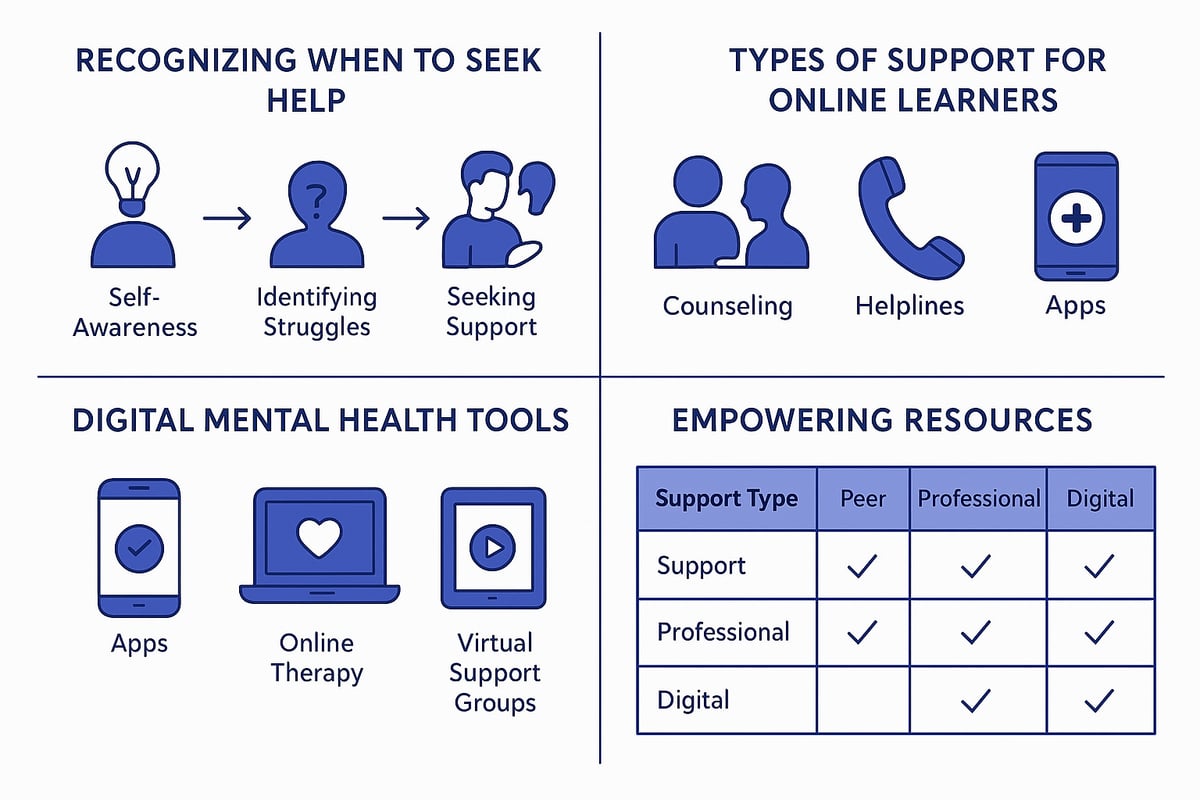
Knowing When to Seek Help
It is common for students in online classes mental health situations to wonder when self-care is not enough. Spotting the early signs that professional support is needed can prevent issues from escalating.
Watch for persistent sadness, loss of interest, extreme fatigue, or feelings of hopelessness. Behavioral changes like withdrawal from social activities, irritability, or frequent missed deadlines are also red flags. If you notice these symptoms in yourself or peers, it is important to take them seriously.
Self-awareness is key. Regular self-check-ins, journaling, or talking to a trusted friend can help identify when you are struggling. Remember, reaching out for help is a sign of strength, not weakness. Early intervention can make a significant difference in your online classes mental health journey.
Types of Support Available for Online Learners
Online students have access to a variety of support options tailored to their unique needs. Many schools offer virtual counseling sessions, while national helplines provide confidential assistance for those in crisis. Peer support groups and student forums can offer understanding and encouragement from others facing similar online classes mental health challenges.
Support types include:
- School or university counseling services
- National mental health helplines and chat lines
- Online therapy platforms with licensed professionals
- Peer support networks and student communities
For more insights on tailored support, explore Customized Care for Online Students, which details strategies specifically designed for the online learning environment. Utilizing these resources can help address concerns before they impact your wellbeing or academic performance.
How to Access and Make the Most of Digital Mental Health Tools
The digital landscape offers a wide range of tools to support online classes mental health. Evidence-based apps provide guided meditations, mood tracking, and stress management exercises. Many platforms host online courses focused on resilience, coping strategies, and emotional wellbeing.
To get started:
- Research mental health apps with strong user reviews and scientific backing
- Take advantage of free online courses and webinars on stress reduction
- Join digital communities for peer support and shared experiences
Set reminders to engage with these tools regularly, making them part of your daily routine. Consistency is key to seeing positive changes. Many students report that integrating digital resources into their schedules helps them stay proactive about their online classes mental health.
Workplace Mental Health Institute: Empowering Online Learners
The Workplace Mental Health Institute (WMHI) offers psychologist-led programs designed to help students and remote learners build resilience and achieve mental wealth. Their resources are practical, interactive, and tailored specifically for online classes mental health needs.
WMHI provides:
- Resilience-building workshops and wellbeing assessments
- Free articles, guides, and mental health checklists
- Access to digital learning modules and ongoing support
Participating in WMHI programs helps students gain valuable skills for managing stress and thriving academically and personally. By leveraging these expert-backed resources, you can create a supportive foundation for your online learning journey and safeguard your mental health.
Digital Wellbeing: Balancing Life and Learning Online
Balancing digital demands is essential for maintaining strong online classes mental health. The right digital wellbeing habits help students stay focused, energized, and resilient as they navigate remote learning. By addressing tech use, work-life boundaries, safety, and new tools, students can protect their wellbeing and boost academic performance.
Setting Healthy Tech Habits
Developing strong tech boundaries is vital for online classes mental health. Excessive notifications, constant connectivity, and a lack of digital downtime can quickly lead to burnout.
- Set specific times to check messages and emails.
- Use focus modes or app blockers during study sessions.
- Schedule regular digital detox periods, such as tech-free evenings.
- Adjust device settings to reduce blue light exposure.
For more practical guidance, explore these Digital Wellness Tips for Students to help manage screen time and stay balanced.
Regularly reflecting on digital habits empowers students to prevent overwhelm and maintain a healthy relationship with technology.
Maintaining Work-Life-Study Balance
Establishing boundaries between school, work, and personal time is crucial for online classes mental health. Without clear divisions, academic tasks can bleed into rest hours, increasing stress.
- Designate a specific study area at home.
- Use a planner to allocate time for classes, work, and breaks.
- Schedule regular downtime and stick to it.
- Communicate your schedule to family or roommates.
A well-structured routine creates a sense of control and helps students recharge. Prioritizing downtime supports both mental clarity and motivation.
Protecting Privacy and Online Safety
Safeguarding personal information is fundamental for online classes mental health. With increased online interaction, students face risks such as cyberbullying or data breaches.
- Use strong, unique passwords for all accounts.
- Be cautious when sharing personal details in forums or chats.
- Familiarize yourself with privacy settings on learning platforms.
- Report any suspicious messages or harassment.
Staying vigilant ensures a safe and respectful digital learning environment, letting students focus on growth rather than worry.
Adapting to Evolving Online Learning Tools
New technology can enhance online classes mental health when used mindfully. However, frequent platform changes or tool overload may cause stress.
- Evaluate which digital tools truly support learning and wellbeing.
- Limit the number of apps to ones that align with your needs.
- Stay informed about updates, but avoid feeling pressured to adopt every new feature.
- Consider research on Human-Computer Interactions and Mental Health Study to understand how tech use may impact emotional states.
Using technology intentionally helps students stay productive and resilient as online education evolves.
Creating a Personal Mental Health Action Plan for Online Success
A personal action plan empowers students to manage online classes mental health proactively. By following these structured steps, you can improve resilience, boost wellbeing, and thrive in virtual learning settings. Each step below is designed to help you take charge of your mental health journey.
Step 1: Self-Assessment and Reflection
Begin by checking in with yourself about online classes mental health. Use simple tools like mood trackers, stress scales, or daily journals to identify patterns in your thoughts and emotions. Regular self-reflection helps you pinpoint triggers such as isolation or workload pressure.
Here is a quick self-check-in template:
| Check-In Prompt | Your Answer |
|---|---|
| How am I feeling today? | |
| What stressed me out? | |
| Did I take breaks? | |
| Who can I talk to? |
If you notice persistent challenges, explore mental health issues in students for further insight. Early recognition is key to positive change.
Step 2: Setting Personalized Wellbeing Goals
Setting clear and realistic goals is essential for online classes mental health. Use the SMART framework: Specific, Measurable, Achievable, Relevant, and Time-bound. For example, aim to join one virtual study group per week or schedule daily screen breaks.
Break down larger goals into smaller actions. Celebrate small wins to stay motivated. Reflect on your strengths and identify areas for growth. Remember, goals should support both academic and emotional wellbeing.
Step 3: Building a Support Network
A strong support network is vital for sustaining online classes mental health. Map out people you can rely on, such as friends, family, mentors, or peer groups. Make a list:
- Trusted friends or classmates
- Family members who check in
- University counselors or advisors
- Online forums or support groups
Stay connected through group chats, regular video calls, or online meetups. Sharing challenges and successes helps reduce feelings of isolation.
Step 4: Monitoring Progress and Staying Accountable
Track your habits and mental health with weekly reviews. Use apps or planners to record sleep, exercise, mood, and study hours. Monitoring your progress in online classes mental health allows you to spot trends and make timely adjustments.
Try a weekly check-in template:
| Week | Self-Care Activities | Challenges | Successes | Next Steps |
|---|---|---|---|---|
| 1 | ||||
| 2 |
Share your progress with an accountability partner or mentor for extra encouragement.
Step 5: Preparing for Setbacks and Building Resilience
Setbacks are normal in any journey, including online classes mental health. Prepare by identifying common obstacles such as motivation dips, tech issues, or fatigue. Develop coping strategies like deep breathing, positive self-talk, or reaching out for help.
Learn to recognize signs of burnout and take action early. For more guidance, see preventing and managing burnout. Celebrate your progress, no matter how small, and practice self-compassion during challenging times.
Step 6: Leveraging Community and Institutional Resources
Take advantage of resources designed to support online classes mental health. Explore campus counseling, online therapy platforms, or national helplines. Join online forums or peer support groups for shared learning and encouragement.
Stay informed about mental health workshops, webinars, or digital wellbeing courses. Engaging with these resources expands your support network and strengthens your personal action plan.
As you take steps to prioritize your mental wellbeing while navigating online classes, remember you are not alone in facing these challenges. By integrating practical routines, fostering supportive connections, and using evidence-based strategies from trusted experts, you can build lasting resilience and truly thrive—both academically and personally. If you’re ready to explore more tailored resources, expert guidance, and proven tools to support your journey, I invite you to Find Out More. Together, we can create a healthier, more empowered approach to online learning and mental health success in 2026 and beyond.

