
Demand for mental health education is rising rapidly, with more people seeking knowledge and support than ever before. Accessible and flexible mental health courses online have become essential for both personal growth and advancing professional skills. In this article, we review the seven best mental health courses online to help you build the knowledge and tools needed for a healthier mind, whether for yourself or to support others. We will explore various course formats, highlight unique benefits, identify target audiences, and guide you in choosing the right program for your needs. Ready to take the next step? Discover which mental health courses online could transform your journey.
Why Take Mental Health Courses Online?
The world is experiencing a significant rise in mental health awareness. More people are seeking support, knowledge, and resources than ever before. As understanding grows, so does the need for accessible education. Mental health courses online are meeting this demand, offering flexible, expert-led learning for individuals and professionals alike.
Growing Importance of Mental Health Literacy
Mental health concerns affect millions worldwide, with recent data showing that one in five adults experiences a mental illness each year. This widespread impact highlights the urgent need for mental health literacy in all communities. As stigma decreases, more individuals are empowered to seek help and support.
Education is a crucial driver in this shift. By participating in mental health courses online, learners access reliable information and practical strategies to understand, manage, and support mental wellness. Online learning helps break down barriers, making quality education available to everyone, regardless of location or background.
Benefits of Online Learning for Mental Health Topics
Choosing mental health courses online offers several unique advantages for learners:
- Flexible, self-paced study fits around busy schedules.
- Accessible from any location, eliminating travel or geographic limits.
- Multiple learning formats, including videos, interactive modules, and discussion forums.
- Cost-effective options, with many free or low-cost courses.
- Privacy, allowing individuals to explore sensitive topics in a safe environment.
These benefits make mental health courses online a practical choice for anyone wishing to deepen their understanding or support others. For a comprehensive overview of available options, see the Mental health courses overview.
Who Should Enroll in Online Mental Health Courses?
Mental health courses online are designed to serve diverse audiences, making them valuable tools for:
- Individuals seeking personal growth or coping strategies
- Healthcare professionals and educators
- HR managers and workplace leaders
- Family members and caregivers
- Advocates, community leaders, and students
Whether for personal or professional reasons, mental health courses online provide knowledge and confidence to navigate complex challenges.
Key Skills and Takeaways from Online Courses
By completing mental health courses online, learners gain essential skills and insights, such as:
| Skill/Takeaway | Benefit |
|---|---|
| Mental health condition awareness | Better recognition and understanding |
| Self-care and resilience | Improved personal wellbeing |
| Communication techniques | More effective support and de-escalation |
| Trauma-informed approaches | Inclusive, sensitive care for all |
| Certification | Enhanced employability and credibility |
These practical takeaways ensure that mental health courses online not only build knowledge but also empower action in real-world situations.
7 Best Mental Health Courses Online
Searching for the best mental health courses online can feel overwhelming with so many options available. To make your decision easier, this list reviews seven outstanding courses, each offering unique strengths for learners at different stages. Whether you are a caregiver, a professional, or someone seeking personal growth, these courses provide flexible, accessible, and practical learning experiences. Below, you will find detailed overviews, including pricing, features, benefits, and ideal audiences for each course. Use this guide to discover which mental health courses online will best support your goals.
Caregiving Skills – Dementia Care (Alison)
Supporting someone with dementia can be challenging, but the right mental health courses online can provide practical tools and confidence. This course is designed to empower caregivers with essential skills for dementia care.
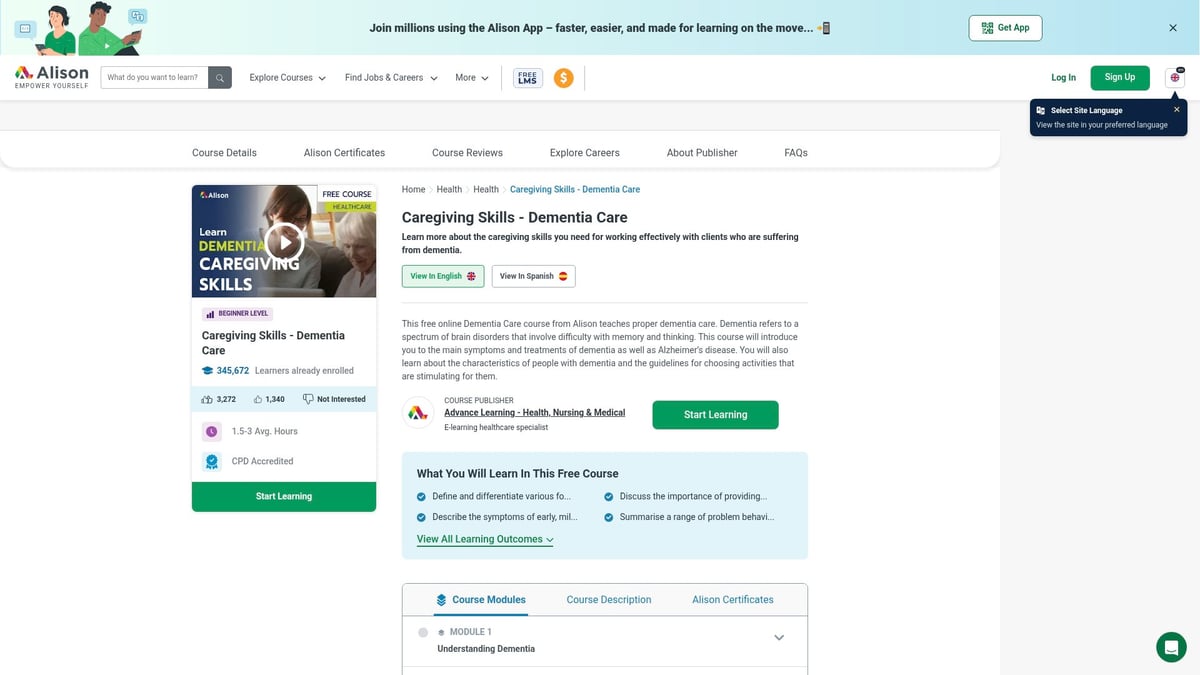
Key Details:
| Feature | Details |
|---|---|
| Pricing | Free (optional paid certificate) |
| Duration | 2–3 hours |
| Audience | Family caregivers, healthcare workers, nursing students |
| Accreditation | Yes |
Core Features:
- Overview of dementia types and progression.
- Step-by-step caregiving techniques for daily tasks.
- Communication strategies tailored for dementia patients.
- Guidance on creating a safe, supportive environment.
Key Benefits:
- Short, manageable format fits into busy schedules.
- Accredited certificate adds value for professional development.
- Beginner-friendly and accessible to learners worldwide.
Pros:
- Practical, actionable strategies.
- Free access with the option to upgrade.
- Recognized by employers and institutions.
Cons:
- Focused only on dementia care.
- Content is introductory, not advanced.
This is one of the most practical mental health courses online for families and professionals who want to build foundational caregiving skills quickly. It is ideal for those new to dementia support or seeking a refresher.
Introduction to Trauma-Informed Care (Alison)
Trauma has a profound impact on mental health, relationships, and learning. For those seeking trauma-sensitive approaches, this course stands out among mental health courses online. It introduces core trauma-informed care principles and practical strategies for everyday settings.
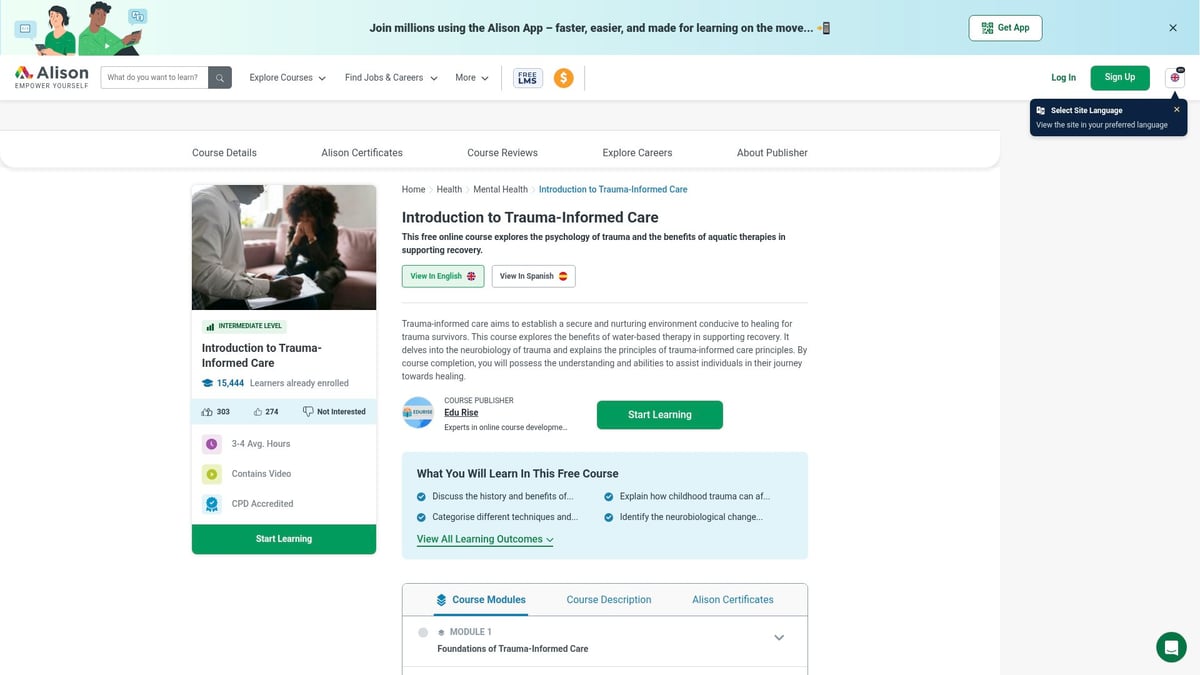
Key Details:
| Feature | Details |
|---|---|
| Pricing | Free (optional paid certificate) |
| Duration | 2–3 hours |
| Audience | Health professionals, educators, social workers, managers |
| Accreditation | Yes |
Core Features:
- Explains trauma and its effects on behavior and well-being.
- Outlines the six key trauma-informed principles.
- Offers actionable steps for creating safer, more inclusive environments.
- Case studies and real-world scenarios.
Key Benefits:
- Evidence-based and relevant across multiple sectors.
- Builds skills to recognize and respond to trauma.
- Recognized certification for career advancement.
Pros:
- Short, focused, and flexible.
- Practical insights for immediate application.
- Suitable for both individuals and teams.
Cons:
- Introductory level, not in-depth for specialists.
- May require follow-up courses for advanced topics.
For those interested in specialized learning, consider exploring online trauma-informed care training for a deeper dive into this vital subject. This course is a great entry point for anyone looking to make a positive difference through trauma-sensitive practices in mental health courses online.
Supporting Individuals with Intellectual Disabilities and Mental Illness (Alison)
Navigating dual diagnoses can be complex, and this course addresses a crucial gap in mental health courses online. It focuses on supporting individuals who face both intellectual disabilities and mental illness, providing practical guidance and ethical frameworks.
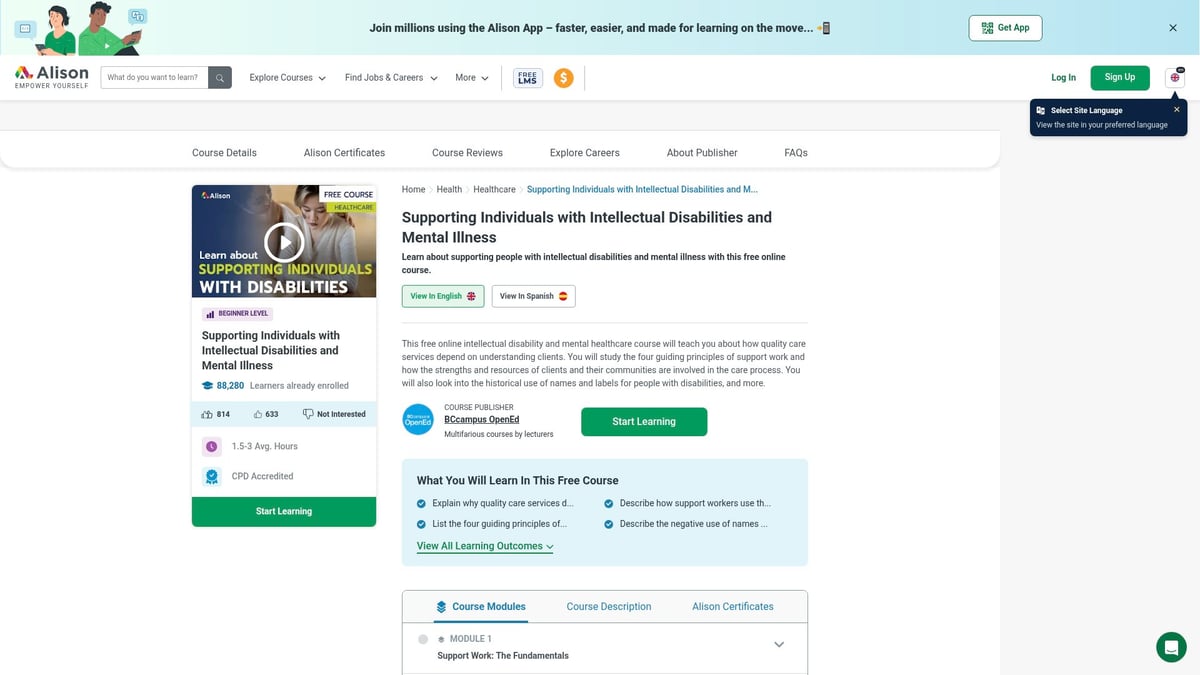
Key Details:
| Feature | Details |
|---|---|
| Pricing | Free (optional paid certificate) |
| Duration | 2–3 hours |
| Audience | Disability support workers, carers, educators |
| Accreditation | Yes |
Core Features:
- Dual diagnosis explained in accessible language.
- Strategies for effective support and communication.
- Ethical considerations and boundaries.
- Emphasis on dignity and respect in care.
Key Benefits:
- Fills an important niche in mental health education.
- Flexible, self-paced structure.
- Offers practical tools for real-world challenges.
Pros:
- Specialized content not widely found elsewhere.
- Supports both professionals and family members.
- Accredited certificate available.
Cons:
- Narrow focus may not appeal to general audiences.
- Best suited for those working with intellectual disabilities.
This course is a valuable addition to your learning if you want to deepen your understanding of complex mental health needs. It is one of the few mental health courses online tailored for dual diagnosis support.
Domestic Violence and Abuse Awareness (Alison)
Awareness and early intervention are crucial in addressing domestic violence. This course stands out among mental health courses online by equipping learners with the knowledge to recognize signs of abuse and respond effectively.
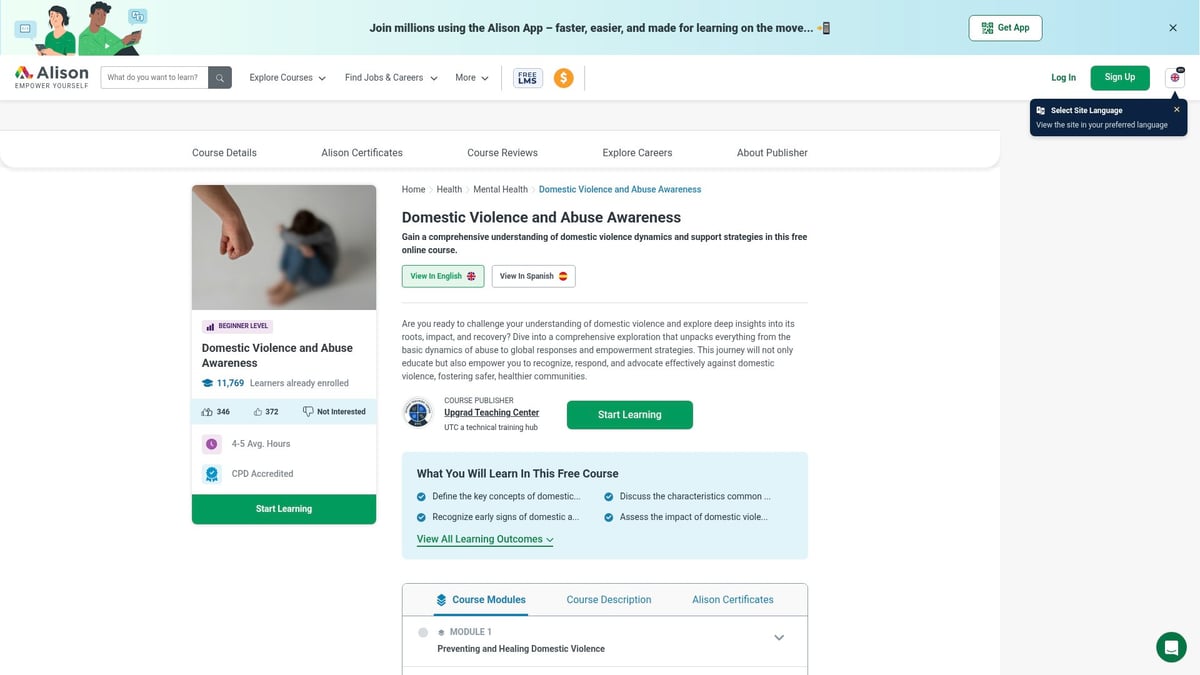
Key Details:
| Feature | Details |
|---|---|
| Pricing | Free (optional paid certificate) |
| Duration | 2–3 hours |
| Audience | Social workers, HR professionals, advocates, individuals |
| Accreditation | Yes |
Core Features:
- Identifies different forms of domestic violence and abuse.
- Spotlights warning signs and risk factors.
- Explores intervention and support strategies.
- Real-world case studies for practical learning.
Key Benefits:
- Promotes early detection and appropriate response.
- Accredited for professional use and development.
- Sensitive approach to difficult topics.
Pros:
- Free and easy to access worldwide.
- Actionable insights for personal and workplace settings.
- Evidence-based content.
Cons:
- Content may be emotionally challenging.
- Not a substitute for professional intervention training.
If you are looking to expand your understanding of domestic violence within mental health courses online, this course offers an accessible, impactful introduction.
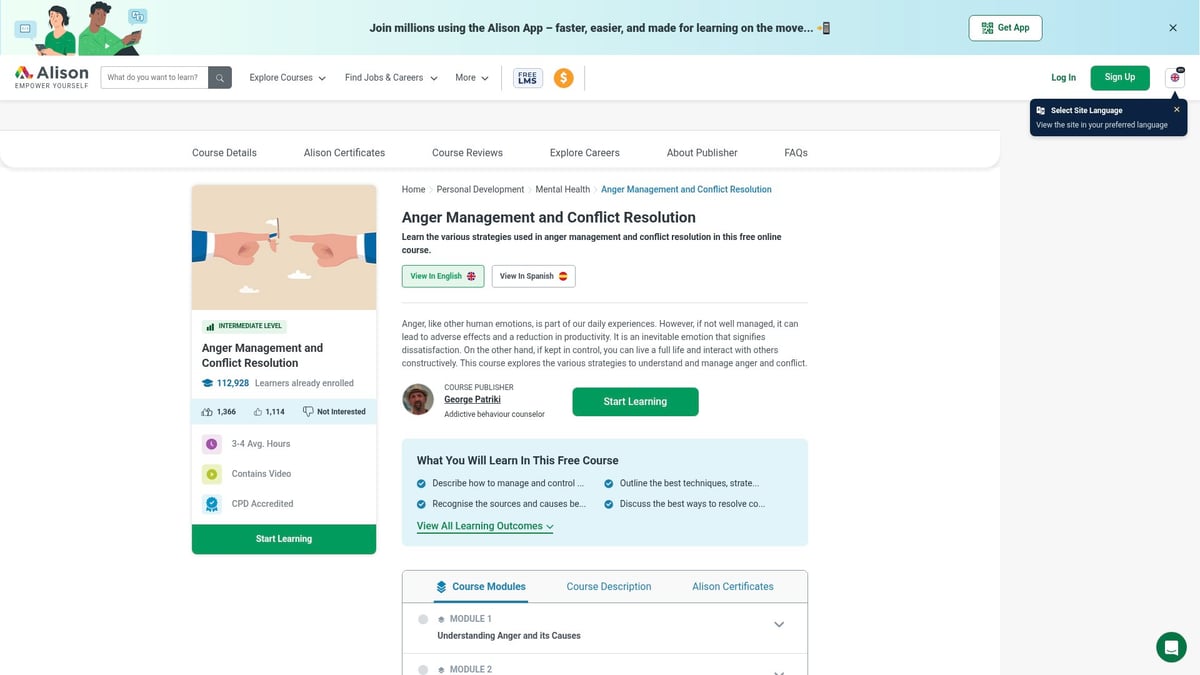
Anger Management and Conflict Resolution (Alison)
Emotional regulation is foundational for well-being, and this course provides practical tools for managing anger and resolving conflicts. It is a popular choice for those seeking mental health courses online that deliver immediate, actionable skills.
Key Details:
| Feature | Details |
|---|---|
| Pricing | Free (optional paid certificate) |
| Duration | 2–3 hours |
| Audience | Individuals, managers, teachers, counselors |
| Accreditation | Yes |
Core Features:
- Identifies anger triggers and warning signs.
- Teaches proven anger management techniques.
- Introduces frameworks for conflict resolution.
- Focus on de-escalation and communication.
Key Benefits:
- Useful for both personal growth and workplace harmony.
- Beginner-friendly with clear, concise modules.
- Certificate to enhance your CV.
Pros:
- Fast-track format for busy schedules.
- Practical exercises and scenarios.
- Accessible to all learners.
Cons:
- Does not cover underlying mental health disorders in depth.
- Limited to anger and conflict topics.
This is one of the most versatile mental health courses online, ideal for anyone aiming to improve emotional intelligence and conflict management skills.
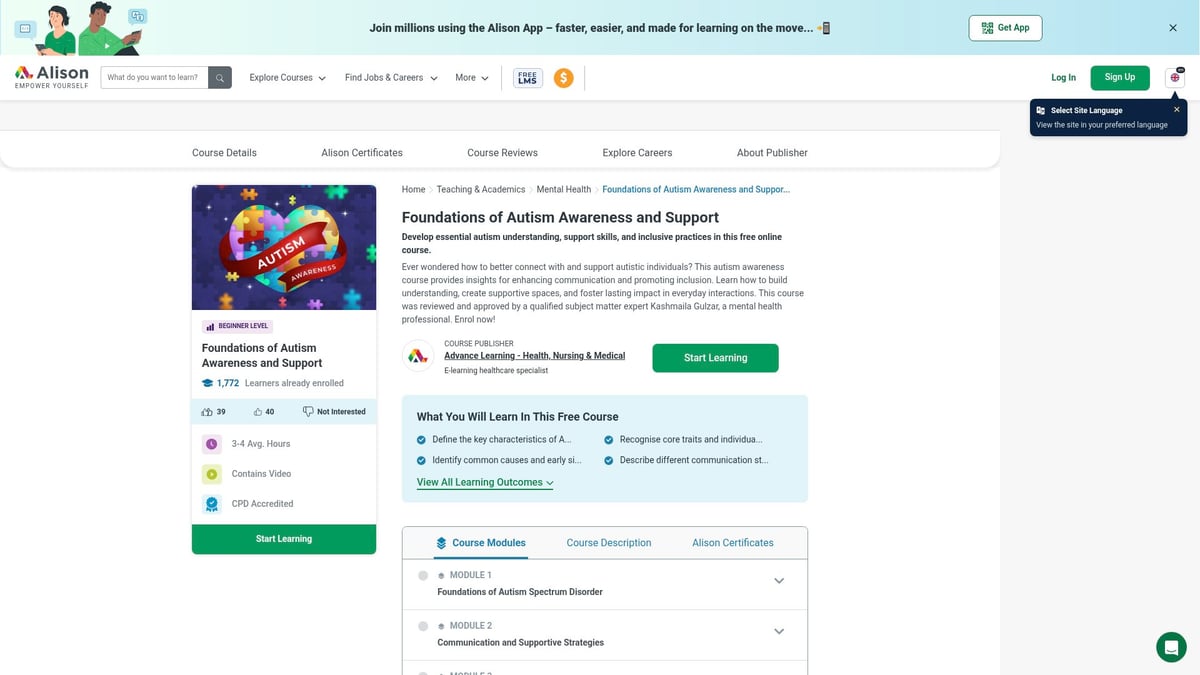
Foundations of Autism Awareness and Support (Alison)
Understanding autism is essential for creating inclusive communities. This course is a leading option among mental health courses online for those seeking to support individuals on the autism spectrum effectively.
Key Details:
| Feature | Details |
|---|---|
| Pricing | Free (optional paid certificate) |
| Duration | 2–3 hours |
| Audience | Educators, parents, support workers, community members |
| Accreditation | Yes |
Core Features:
- Explains autism spectrum disorder and its characteristics.
- Shares evidence-based support strategies.
- Promotes inclusive, strengths-based approaches.
- Discusses current research and best practices.
Key Benefits:
- Encourages empathy and understanding.
- Up-to-date content for real-world relevance.
- Accredited for professional development.
Pros:
- Focuses on practical, actionable support.
- Suitable for both professionals and families.
- Certificate available to showcase your learning.
Cons:
- Content is autism-specific.
- Professionals may need more advanced training.
If your goal is to promote inclusion and understanding, this course is a top choice among mental health courses online for autism awareness and support.
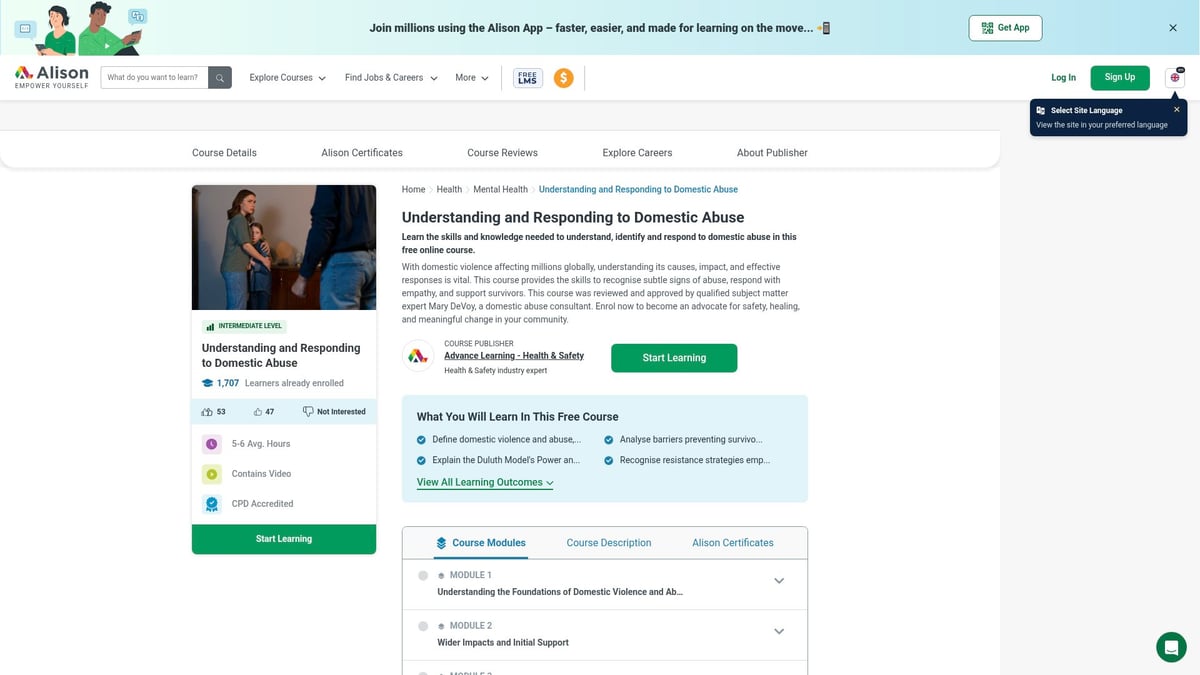
Understanding and Responding to Domestic Abuse (Alison)
For those looking for a comprehensive approach to domestic abuse, this course is among the most thorough mental health courses online. It goes beyond awareness to equip learners with intervention models and survivor support strategies.
Key Details:
| Feature | Details |
|---|---|
| Pricing | Free (optional paid certificate) |
| Duration | 2–3 hours |
| Audience | Counselors, advocates, law enforcement, healthcare providers |
| Accreditation | Yes |
Core Features:
- Examines various types of abuse and their dynamics.
- Explores evidence-based intervention models.
- Provides guidance for supporting survivors.
- Analyzes barriers to leaving abusive situations.
Key Benefits:
- Multidisciplinary perspective for a well-rounded understanding.
- Accredited, enhancing professional credibility.
- In-depth analysis not often found in short courses.
Pros:
- Suitable for professionals and advocates.
- Comprehensive, yet accessible.
- Certificate demonstrates commitment to learning.
Cons:
- May be confronting for some participants.
- Not a replacement for clinical training.
This course stands out among mental health courses online for its depth and actionable content, making it ideal for those wanting to make a tangible difference in their communities.
How to Choose the Right Mental Health Course for You
Selecting from the wide array of mental health courses online can feel overwhelming without a clear plan. To make a confident choice, consider your goals, the course format, time commitment, and budget. Use learner feedback to assess quality and fit.
Assessing Your Learning Goals
Start by clarifying what you hope to achieve with mental health courses online. Are you seeking personal growth, workplace skills, or a formal qualification? Define your focus areas, such as trauma, self-care, or crisis support. For those interested in foundational skills, consider options like mental health first aid training to build a strong knowledge base. Matching your aspirations to specific course objectives ensures your learning journey is both relevant and rewarding.
Evaluating Course Formats and Credentials
Different mental health courses online offer various formats, such as self-paced modules or instructor-led classes. Decide if you prefer flexible, on-demand content or structured schedules with peer interaction. Check for certificates or accreditation, especially if you want to enhance your professional profile. Look for reputable providers with experienced instructors and transparent course descriptions. These factors can influence both your learning experience and the value of your new skills in the job market.
Factoring in Time Commitment and Accessibility
Estimate how much time you can realistically dedicate to your studies. Many mental health courses online are designed for short, focused learning, while others may require several weeks. Consider mobile-friendly platforms if you plan to learn on the go. Ensure that the course provides support resources, such as discussion forums or helpdesks, to facilitate a smooth learning process. Accessibility features, like subtitles or downloadable materials, can also enhance your experience.
Budget and Cost Considerations
Affordability is a key factor for many learners exploring mental health courses online. Compare free courses with those offering paid certification. Some platforms provide scholarships or government-funded options, which can make professional training more accessible—see government funded mental health courses for more details. Weigh the long-term benefits of certification against your current financial situation to make an informed investment.
Reading Reviews and Learner Feedback
Before enrolling, read reviews and testimonials from previous participants in mental health courses online. Look for courses with high ratings and positive feedback regarding content, instructor support, and outcomes. Platforms that display transparent statistics or learner stories can provide valuable insights. Peer recommendations and real-world experiences help you gauge whether a course truly delivers on its promises.
What to Expect from Online Mental Health Courses
Enrolling in mental health courses online opens a pathway to personal and professional growth. These courses are designed to be accessible, flexible, and supportive, providing learners with the knowledge and skills to make meaningful change. Whether you are new to the subject or looking to advance your expertise, understanding what to expect will help you get the most out of your learning experience.
Course Content and Structure
Most mental health courses online offer a blend of theory and practice. Learners can expect modules covering foundational concepts, case studies, and hands-on exercises. Interactive elements such as quizzes, assignments, and discussion boards are common. These features help reinforce learning and provide opportunities to apply knowledge in realistic scenarios.
Many platforms utilize diverse formats, including video lectures, readings, and self-assessment tools. According to the Benefits of Online Mental Health Courses, this variety supports different learning styles and enhances engagement.
Certification and Continuing Education Credits
Completing mental health courses online often leads to digital badges or certificates. These credentials can boost your resume and demonstrate your commitment to ongoing education. Some courses even offer continuing education credits, which are valuable for professionals in fields such as healthcare, education, or HR.
Certificates are usually recognized by employers and professional bodies, making them a practical addition to your career portfolio. Always check the accreditation status of your chosen course to ensure it meets your goals.
Support and Community Engagement
A key feature of mental health courses online is the support available throughout your learning journey. Many courses offer access to instructor Q&A sessions, peer forums, and supplementary resources. This creates a sense of community and allows for valuable networking and collaboration.
Engaging with other learners helps build confidence and encourages the sharing of experiences. The online environment can also foster a supportive, inclusive atmosphere, as highlighted in Online Learning and Mental Health.
Measuring Progress and Outcomes
Progress in mental health courses online is typically tracked through self-assessment tools, quizzes, and feedback from instructors. Many courses provide pre- and post-course evaluations, enabling you to measure your growth and identify areas for further development.
Applying new knowledge in real-life situations is encouraged. This practical focus ensures that what you learn has a direct impact on your personal and professional life.
Staying Updated and Continuing Your Learning Journey
Mental health is a field that evolves rapidly. Online courses often provide recommendations for advanced topics or specializations so you can continue building your expertise. Staying engaged with new research, best practices, and emerging trends is essential for effective support and advocacy.
By choosing mental health courses online, you commit to lifelong learning and ongoing personal growth. This approach not only benefits you but also the communities and individuals you support.
As you explore these top online mental health courses, remember that investing in your wellbeing or supporting others can lead to lasting positive change at work and in life. Each course offers unique benefits—from practical resilience skills to trauma-informed care and inclusive practices—empowering you to make a real difference. Whether you're a manager, caregiver, or simply seeking personal growth, choosing the right program is an important step. If you're ready to deepen your understanding and discover how tailored mental health training can benefit you or your team, Find Out More.

