The mental health crisis is taking a heavy toll on workplaces, costing billions in lost productivity and driving up employee turnover. More than ever, organizations are realizing that ignoring mental wellness in the workplace can seriously affect their bottom line.
At the same time, employees are demanding greater support and understanding from their employers. They want workplaces where mental wellness in the workplace is seen as a priority, not an afterthought.
Leading companies are already transforming their cultures with effective mental wellness in the workplace strategies. These efforts are boosting performance, retention, and reputation across industries.
This article will guide you through seven essential strategies for fostering mental wellness in the workplace. With practical steps, real-world examples, and expert insights, you will discover how to help your organization thrive.
The Importance of Mental Wellness in the Modern Workplace
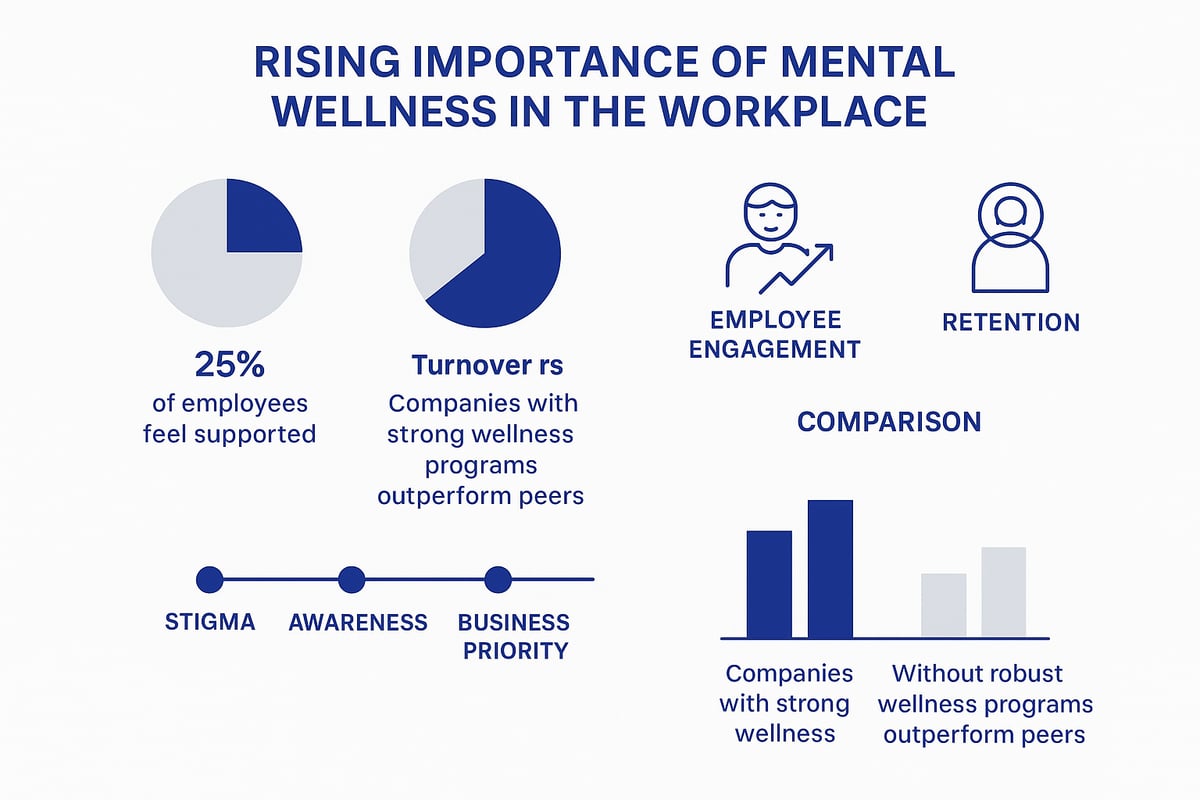
The conversation around mental wellness in the workplace has shifted dramatically in recent years. Poor mental health is no longer just a personal matter; it is a significant business issue affecting productivity, absenteeism, and turnover. Studies show that organizations lose billions each year due to unaddressed mental health concerns. In fact, only 25 percent of employees feel their employer genuinely cares about their wellbeing, highlighting a critical gap.
The Hidden Costs of Ignoring Mental Wellness
When mental wellness in the workplace is overlooked, organizations pay a high price. Productivity plummets as employees struggle with stress, anxiety, or burnout. Absenteeism and presenteeism increase, and turnover rates climb. These hidden costs damage both the bottom line and the morale of remaining staff. A lack of support can also lead to reputational risks, making it harder to attract and retain top talent.
How Mental Health Became a Business Priority
Mental wellness in the workplace was once a taboo subject, but today it is recognized as crucial for business success. The evolution is driven by greater awareness, changing societal attitudes, and the clear link between employee wellbeing and organizational performance. Employees now expect psychological safety, access to support, and open dialogue regarding mental health concerns.
The Business Impact of Mental Wellness in the Workplace
Organizations that prioritize mental wellness in the workplace see significant benefits. Enhanced engagement, higher retention, and stronger reputations are just the beginning. Research consistently shows that companies with comprehensive wellness programs outperform their peers. According to SHRM 2025 Insights: Workplace Mental Health, organizational commitment to mental health leads to measurable improvements in productivity and employee satisfaction.
The Role of Leadership and Culture
Leadership plays a vital role in shaping a culture that values mental wellness in the workplace. When leaders model openness, provide resources, and encourage supportive behaviors, employees feel safer discussing their challenges. This fosters trust, increases psychological safety, and drives cultural change throughout the organization. Leaders set the tone for how mental health is perceived and addressed at every level.
Overcoming Challenges and Learning from Leaders
Implementing mental wellness in the workplace is not without obstacles. Time, resources, and stigma can all present barriers. However, companies that invest in robust wellness programs consistently see positive outcomes. For example, organizations with integrated mental health strategies report reduced depression rates and improved overall performance. The key is to recognize challenges early and commit to ongoing improvement.
7 Essential Strategies for Mental Wellness in the Workplace
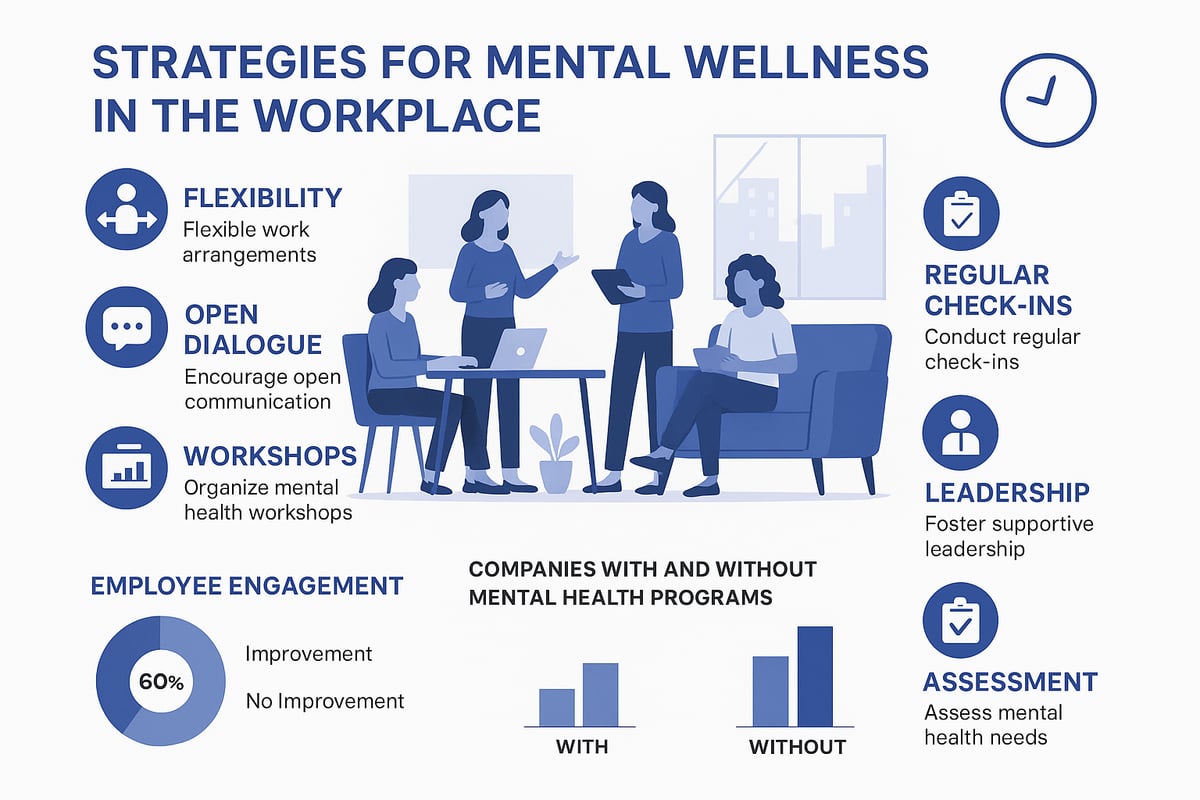
A proactive approach to mental wellness in the workplace is no longer optional. Organizations that prioritize employee mental health are seeing measurable improvements in productivity, engagement, and retention. The following seven strategies offer practical steps any business can implement to foster mental wellness in the workplace and create a thriving, resilient culture.
1. Promote Open Dialogue and Reduce Stigma
Normalizing conversations around mental wellness in the workplace is the first step toward a supportive environment. When employees feel safe to discuss mental health without fear of judgment, they are more likely to seek help and perform at their best.
Stigma remains a major barrier. Studies show that nearly half of employees are uncomfortable talking about mental wellness in the workplace, which often leads to absenteeism, presenteeism, and unaddressed issues. By creating space for honest dialogue, organizations can break down these barriers and improve overall morale.
Leadership plays a critical role. When managers and executives share their own experiences, it signals that mental wellness in the workplace is a priority. Initiatives such as mental health awareness campaigns, peer support groups, and regular check-ins can further encourage open communication.
Practical steps include developing clear communication guidelines, offering anonymous Q&A sessions, and ensuring visible support from senior leaders. Companies that provide regular mental health check-ins report increased trust and lower turnover, showing the direct link between dialogue and outcomes.
By embedding mental wellness in the workplace into everyday conversations, organizations can foster a culture of empathy and belonging. This approach helps reduce stigma, supports early intervention, and makes mental health part of the organizational DNA.
2. Offer Flexible Work Arrangements
Flexibility is a cornerstone of mental wellness in the workplace. Employees with access to remote, hybrid, or flexible schedules consistently report higher job satisfaction and reduced stress levels. This approach supports a diverse workforce, including parents, caregivers, and neurodiverse team members.
Offering flexible options such as compressed workweeks, results-oriented schedules, and adjustable hours allows individuals to manage their personal needs while maintaining productivity. Organizations with flexible work policies often see improvements in retention, engagement, and mental wellness in the workplace.
However, flexibility can introduce challenges, such as maintaining team cohesion and ensuring accountability. To address this, set clear expectations, establish regular virtual check-ins, and use collaborative tools to keep everyone connected.
Success stories abound. Many leading companies report that flexible policies have reduced burnout and absenteeism, while boosting morale. Practical frameworks should include clear policies, transparent communication, and ongoing evaluation to ensure that flexibility supports both business goals and mental wellness in the workplace.
Embracing flexibility demonstrates a genuine commitment to employee wellbeing. When organizations adapt to individual needs, they create a foundation for sustained mental wellness in the workplace and long-term success.
3. Provide Access to Comprehensive Mental Health Resources
Access to robust resources is essential for mental wellness in the workplace. Employee Assistance Programs (EAPs), counseling services, and digital wellness tools can help employees navigate stress, anxiety, and other challenges.
Organizations can go beyond basic offerings by reimbursing mindfulness, meditation, or therapy app subscriptions. Providing safe, accessible spaces for relaxation—either on-site or virtually—shows that mental wellness in the workplace is a tangible commitment.
Despite the availability of resources, only about a quarter of employees feel adequately supported. This gap highlights the need for ongoing needs assessments, resource directories, and proactive promotion to ensure everyone knows what is available.
Implementation steps include surveying employee needs, creating a comprehensive resource hub, and regularly reminding staff about mental wellness in the workplace programs. Companies investing in on-site or virtual therapy sessions see higher utilization rates and more positive feedback.
To measure effectiveness, track resource use and gather employee feedback. By making mental wellness in the workplace resources visible and accessible, organizations empower individuals to take charge of their mental health.
4. Train Leadership on Emotional Intelligence and Mental Health Awareness
Managers are at the front lines of mental wellness in the workplace. Training leaders to recognize signs of stress, burnout, and mental health conditions is vital for early intervention and ongoing support.
Emotional intelligence enables leaders to connect with employees, foster trust, and create a psychologically safe environment. Programs such as mental health first aid and trauma-informed leadership equip managers with practical skills for compassionate conversations and effective referrals.
Organizations that invest in leadership training often see reductions in psychological injury claims and improvements in team culture. A strong example is the use of interactive mental health training, where participant satisfaction rates reach as high as 96 percent.
Ongoing development is crucial. Refresher courses, mentorship opportunities, and support networks ensure that mental wellness in the workplace remains a leadership priority. For organizations seeking comprehensive training, Workplace mental health courses and training offer actionable resources tailored to diverse needs.
By prioritizing leadership development, companies ensure that mental wellness in the workplace is championed from the top down, driving lasting change.
5. Conduct Regular Check-Ins and Employee Wellbeing Assessments
Frequent check-ins and wellbeing assessments are pillars of mental wellness in the workplace. Routine one-on-one conversations allow managers to identify stressors, provide support, and build trust with their teams.
Anonymous surveys and pulse assessments help organizations measure program effectiveness and tailor resources to real-time needs. Many companies use digital tools and feedback apps to streamline this process and ensure confidentiality.
Acting on feedback is essential. When employees see their input leads to meaningful changes, trust deepens and engagement grows. Companies that regularly adjust initiatives based on assessment data are more successful in fostering mental wellness in the workplace.
Best practices include maintaining a consistent cadence for check-ins, transparently communicating results, and following up on action items. For those seeking robust tools, Employee wellbeing assessment tools offer guidance for effective implementation.
Integrating regular assessments into organizational routines ensures that mental wellness in the workplace is continuously monitored and supported.
6. Emphasize Work-Life Balance and Encourage Mental Health Days
Work-life balance is fundamental to mental wellness in the workplace. The risks of chronic overwork and blurred boundaries are well documented, leading to increased stress, burnout, and disengagement.
Encouraging employees to take breaks, use vacation time, and utilize mental health days signals respect for personal wellbeing. Policies that protect time off and discourage after-hours work reinforce the importance of mental wellness in the workplace.
Some organizations implement protected “no meeting” days or enforced downtime, creating space for rest and recharge. Despite these efforts, only about 40 percent of employees feel their time off is truly respected, highlighting the need for ongoing attention.
Leaders must set the example by prioritizing their own work-life balance and supporting team members in doing the same. Strategies such as workload management and time-off tracking can help sustain mental wellness in the workplace and reduce turnover.
By valuing balance, organizations build resilience, boost morale, and ensure that mental wellness in the workplace remains a core priority.
7. Offer Workshops, Seminars, and Ongoing Mental Health Education
Continuous education is key to sustaining mental wellness in the workplace. Workshops, seminars, and peer-led sessions equip employees with practical coping skills and resilience strategies.
Popular topics include stress management, mindfulness, and building positive workplace relationships. Interactive formats encourage participation and make learning more impactful. Companies that offer regular mental wellness seminars report higher morale and stronger team cohesion.
Incentivizing participation and integrating education into onboarding help embed mental wellness in the workplace from day one. Measuring impact with pre- and post-session surveys ensures that programs are effective and responsive to employee needs.
A culture of continuous learning signals that mental wellness in the workplace is not a one-time effort but an ongoing commitment. By investing in education, organizations empower employees to thrive personally and professionally.
Integrating Mental Wellness Strategies: A Holistic Approach
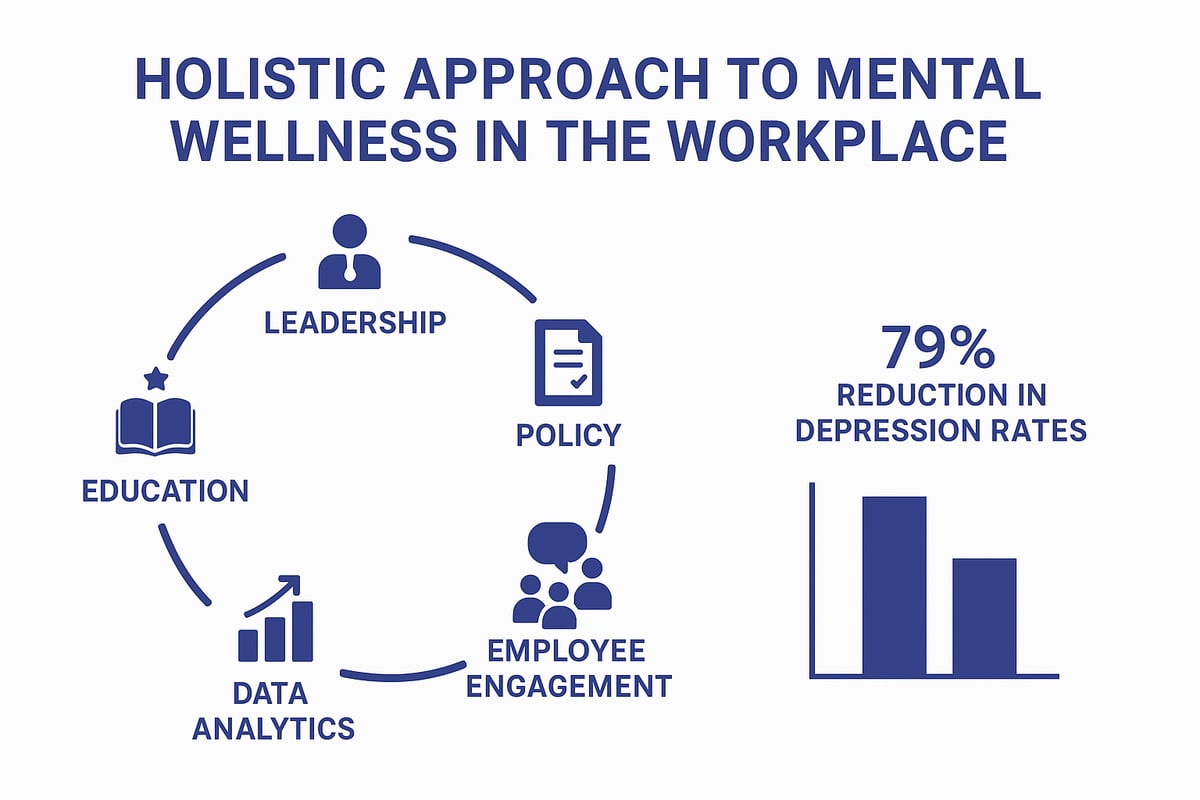
A piecemeal approach to mental wellness in the workplace often leads to gaps in support, inconsistent experiences, and limited long-term impact. For true transformation, organizations need a coordinated strategy that embeds mental wellness in the workplace across every level and function. This shift requires moving beyond isolated programs and considering how policies, leadership, and employee initiatives work together.
Aligning leadership commitment, HR policies, and employee-led programs is essential. Cross-functional teams that include managers, HR professionals, and employee advocates can help maintain momentum and ensure mental wellness in the workplace remains a priority. These groups can regularly review progress, identify new challenges, and adapt initiatives as the workforce evolves.
Key Components of a Holistic Mental Wellness Strategy
| Element | Description | Example Action |
|---|---|---|
| Leadership Alignment | Leaders model and prioritize mental wellness | Regular executive communications |
| Policy Integration | Policies support flexibility and inclusivity | Flexible work arrangements |
| Employee Engagement | Employees co-create and give feedback on initiatives | Anonymous wellbeing surveys |
| Data-Driven Improvement | Use analytics to measure impact and refine approaches | Track program utilization rates |
| Continuous Education | Ongoing training and resources for all staff | Mental health workshops and seminars |
Technology and data analytics play a crucial role in strengthening mental wellness in the workplace. Digital tools can help organizations monitor engagement, identify stressors, and personalize support for remote, hybrid, or on-site teams. Adapting strategies for varying work environments ensures that no employee is left behind.
Organizations that integrate their efforts consistently report better outcomes. For example, some have achieved up to a 79% reduction in depression rates by aligning leadership, policy, and employee support. To start, conduct an organizational assessment, secure stakeholder buy-in, pilot targeted programs, and scale what works. For more practical guidance, explore these wellbeing in the workplace strategies.
A holistic approach not only boosts mental wellness in the workplace but also enhances engagement, retention, and overall performance. By building a culture of openness, adapting to employee needs, and fostering continuous improvement, organizations can create lasting change and set a new standard for mental wellness in the workplace.
After exploring these seven essential strategies for workplace mental wellness, you can see how practical changes—like open dialogue, flexible schedules, and ongoing education—truly elevate both team wellbeing and business performance. If you’re ready to take the next step and discover how tailored programs and expert guidance can transform your organization’s culture, I invite you to dive deeper into the comprehensive solutions available. Let’s work together to build a resilient, thriving workplace where everyone feels supported.
Find Out More