
In 2026, mental health videos have become a primary tool for education, support, and stigma reduction across workplaces and daily life. These videos now reach millions, shaping how individuals and organizations approach mental health challenges, improve wellbeing, and foster open conversations.
Leaders and HR professionals are recognizing the unique power of video to engage, educate, and inspire action on mental health topics. The rapid shift toward video-based learning means it is crucial for organizations to understand how to select, create, and implement effective video resources.
This guide offers expert insights on the latest trends, best practices, and strategic integration of mental health videos. Explore how to leverage this dynamic medium to drive positive change and create a mentally healthier workplace.
The Rise of Mental Health Videos in 2026
Mental health videos have rapidly transformed how organizations, employees, and communities approach wellbeing. Over the past decade, these videos evolved from simple awareness tools to dynamic, interactive resources. Today, mental health videos are central to workplace education, support, and stigma reduction, offering accessible, engaging content for diverse audiences.
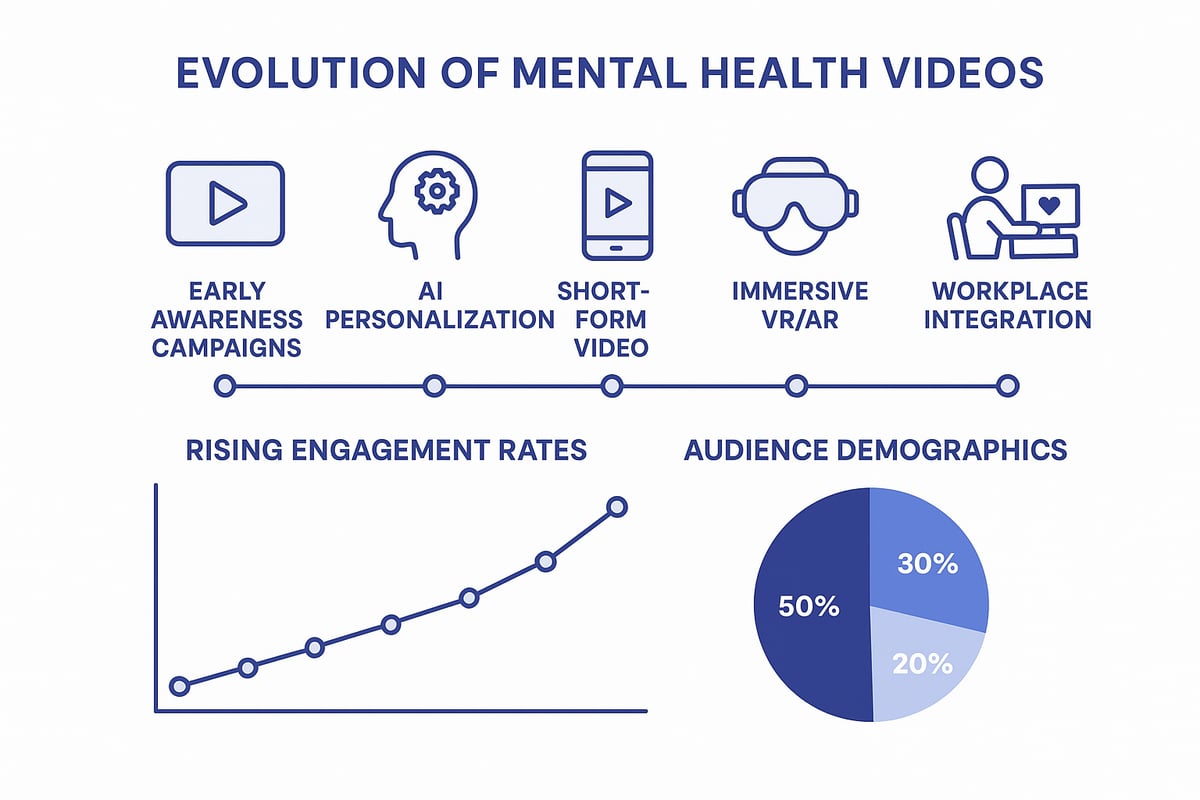
Evolution of Mental Health Video Content
The journey of mental health videos began with basic public awareness campaigns. Over time, platforms like TikTok, YouTube Shorts, and Instagram Reels fueled a shift toward short-form, algorithm-driven content. These platforms prioritize engaging, bite-sized videos that fit seamlessly into busy lives.
A 70-study meta-analysis found that youth now engage most with brief, highly visual formats. This trend has helped mental health videos reach wider audiences and break down stigma. Social media’s influence is undeniable, as explored in social media and mental health solutions for workplaces, which highlights both opportunities and risks for organizational leaders.
Interactive elements, such as polls and embedded resources, have further increased viewer participation. As a result, mental health videos are now a primary medium for education and support.
Key Trends and Technologies
Several key trends define the 2026 landscape for mental health videos. AI-driven personalization enables content curation tailored to individual needs, increasing relevance and effectiveness. Virtual reality and augmented reality bring immersive experiences for mental health training and therapy, making learning more engaging.
Accessibility has improved with closed captions, multilingual subtitles, and mobile optimization, ensuring mental health videos reach all users. Integration with telehealth and workplace wellness platforms streamlines support for employees. The surge in video-based mental health app downloads reflects growing demand for these resources.
Organizations now rely on data analytics to refine video strategies, ensuring ongoing alignment with workforce needs and wellbeing goals.
Impact on Different Audiences
Mental health videos impact different groups in unique ways. Among youth, short-form video consumption is extremely high, offering both engagement and risks such as compulsive use. For adults, there is a growing preference for on-demand, expert-led mental health videos that fit their schedules.
Workplaces are increasingly adopting training and resilience videos to enhance employee wellbeing. Many organizations report improved engagement and knowledge retention when using video-based training compared to traditional methods.
By tailoring mental health videos to specific audiences, organizations can maximize impact and ensure content is both relatable and effective in promoting positive behavioral change.
Benefits and Challenges of Video-Based Mental Health Content
Mental health videos offer several benefits:
- Scalability: Reach large audiences efficiently.
- Relatability: Visual storytelling makes content personal.
- Visual learning: Supports varied learning styles.
- Stigma reduction: Normalizes mental health conversations.
However, challenges remain:
- Quality control: Ensuring evidence-based, accurate content.
- Misinformation: Risk of non-expert advice spreading quickly.
- Screen fatigue: Excessive video use can cause digital stress.
- Digital stress: Overexposure linked to mood and cognitive issues.
Frequent use of mental health videos, especially among youth, is associated with poorer mood and cognition. High standards and professional oversight are essential to ensure positive outcomes.
Regulatory and Ethical Considerations
The rise of mental health videos brings evolving regulatory and ethical standards. Accuracy is critical, with guidelines emerging to ensure content validity. Data privacy and informed consent are now standard requirements, protecting viewer information and autonomy.
User safety is prioritized through transparent sourcing and clear disclaimers. Professional oversight, often involving psychologists and lived-experience advisors, ensures mental health videos meet ethical benchmarks.
Organizations must stay updated on these requirements to maintain trust and deliver responsible, effective video-based mental health support.
How Mental Health Videos Influence Wellbeing and Behavior
Mental health videos are now a central part of how individuals learn, reflect, and seek support for psychological wellbeing. These resources influence thoughts, feelings, and behaviors in powerful ways, from shaping perceptions to encouraging healthier habits. Understanding both the positive and negative impacts of mental health videos is essential for leaders and HR professionals aiming to use them responsibly and effectively.
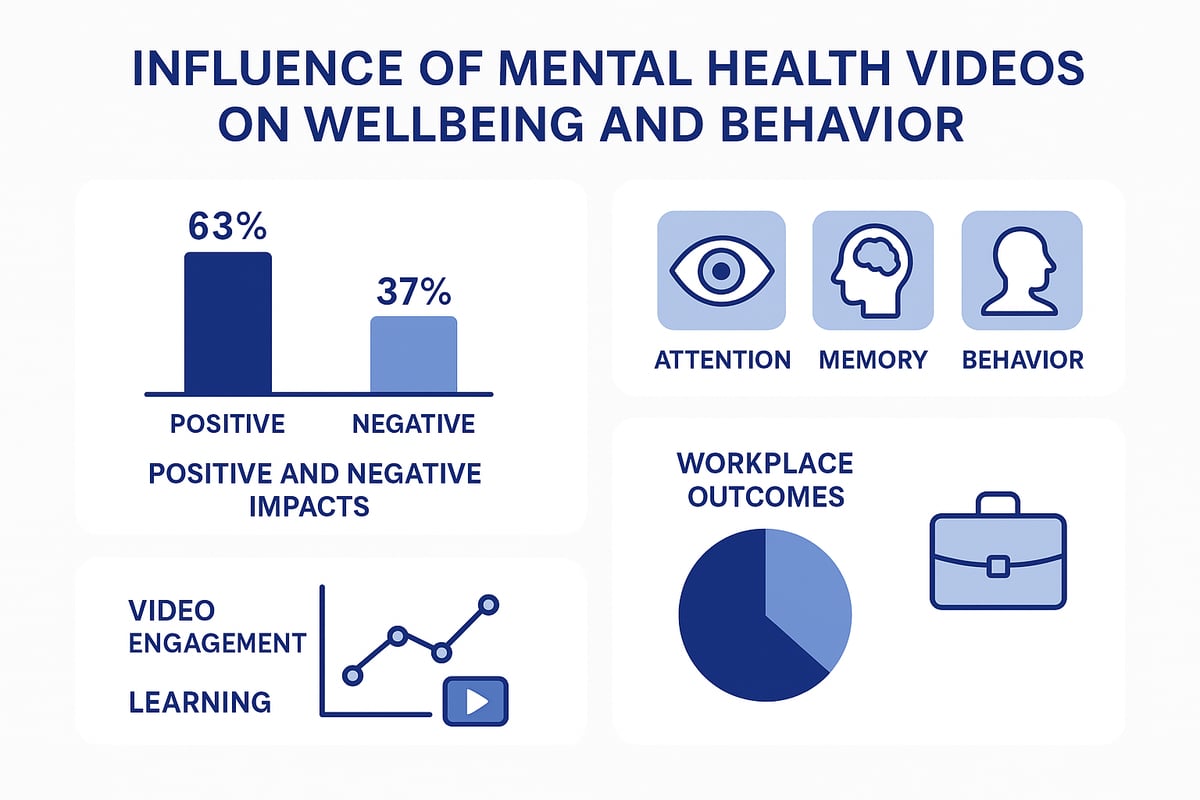
Cognitive and Emotional Impacts of Short-Form Videos
Short-form mental health videos, especially those on platforms like TikTok and Instagram, have transformed how people engage with health information. These videos capture attention quickly, but their rapid pace and emotional content can have complex effects on viewers.
Research shows that frequent exposure to emotionally charged and rapidly changing mental health videos is linked to higher rates of depression, anxiety, and loneliness. The "infinite scroll" design, which encourages continuous viewing, can undermine impulse control and attention span. A recent study on the impact of short-form videos on young minds found that excessive consumption is associated with reduced sleep, poorer executive functioning, and increased psychological distress in adolescents.
For adults, the same patterns can emerge. Compulsive use of mental health videos may lead to distraction, mood fluctuations, and difficulty focusing on work tasks. Leaders should recognize these risks when recommending or integrating mental health videos into employee wellness strategies.
The Science Behind Engagement and Learning
Mental health videos are effective because they harness the brain's natural preference for visual information and storytelling. When viewers watch a well-crafted video, they tend to remember key messages and strategies more easily than if they read the same content.
The combination of visual cues, narrative structure, and emotion triggers the brain's reward pathways, releasing dopamine and making learning more enjoyable. Studies show that mental health videos outperform static resources for promoting behavior change and skill development, especially when the content is relatable and actionable.
Risks: Misinformation, Overexposure, and Digital Stress
While mental health videos have clear benefits, they also carry significant risks:
- Misinformation from unverified creators can spread rapidly.
- Viral myths may overshadow evidence-based advice.
- Excessive screen time can displace sleep, physical activity, and real-world connection.
- Digital fatigue and stress may increase when viewers binge content without breaks.
These challenges highlight the importance of critical evaluation and professional oversight in selecting and sharing mental health videos.
Positive Use Cases and Success Stories
Organizations are leveraging mental health videos to drive real change. For example, video-based resilience training has led to measurable reductions in absenteeism and psychological injury claims. Peer-led campaigns using mental health videos have improved help-seeking behaviors and reduced stigma among employees.
A table summarizing outcomes from video-based interventions:
| Use Case | Outcome |
|---|---|
| Resilience training | 30% drop in stress-related absences |
| Peer video campaigns | 2x increase in help-seeking rates |
| Video-based recovery support | Faster return-to-work after challenges |
These success stories demonstrate that, when used thoughtfully, mental health videos can boost engagement, foster empathy, and support recovery in both individuals and teams.
Guidelines for Safe and Effective Video Consumption
To maximize benefits and minimize risks, organizations should follow these best practices:
- Limit daily viewing of mental health videos to avoid digital fatigue.
- Choose content from expert-approved, evidence-based libraries.
- Encourage viewers to take breaks and reflect on what they learn.
- Promote critical thinking and media literacy in the workplace.
- Regularly review and update video resources in partnership with professionals.
By following these guidelines, leaders can ensure mental health videos remain a positive force for wellbeing and behavioral change.
Choosing and Creating Effective Mental Health Videos
Selecting and producing effective mental health videos is essential for organizations committed to fostering psychological wellbeing. Leaders and HR professionals need clear criteria to identify content that is not only engaging but also evidence-based and inclusive. This section provides a structured approach to evaluate, create, and refine mental health videos that resonate with diverse audiences and drive real change.
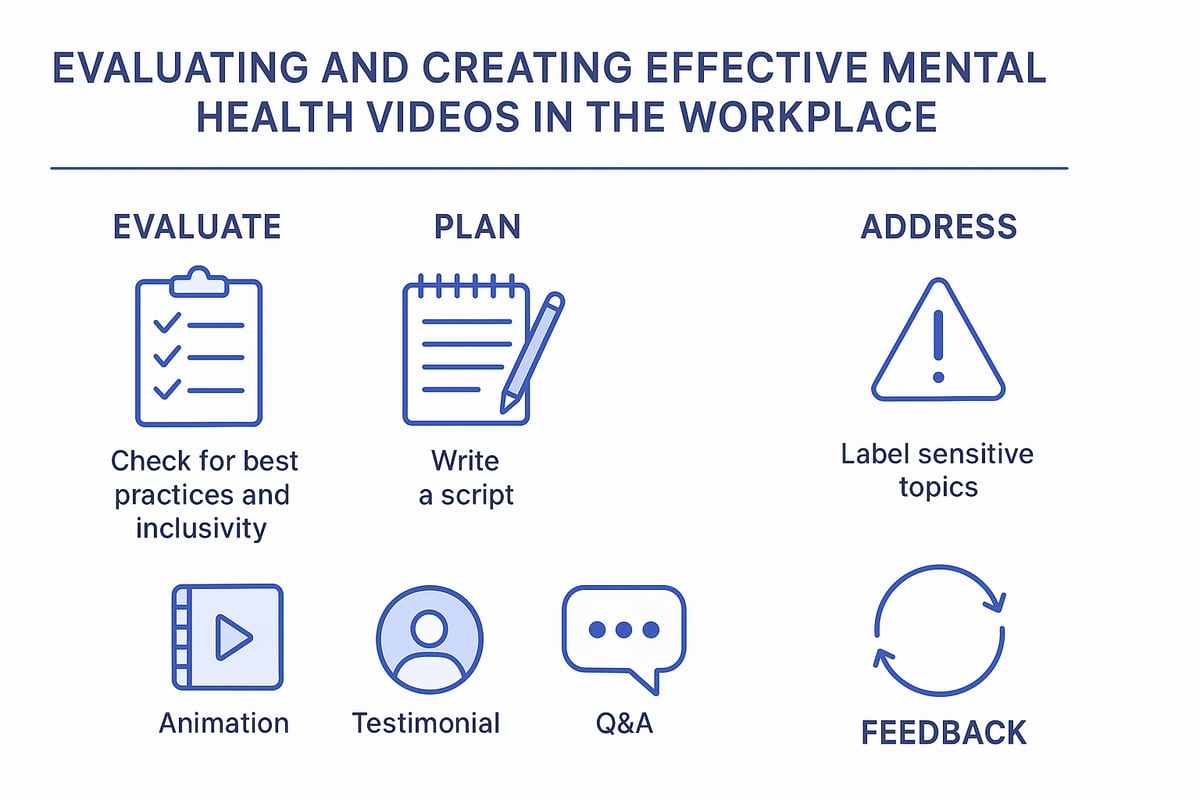
Criteria for Evaluating Mental Health Videos
When assessing mental health videos, organizations should start with a robust checklist. Key criteria include verified expert credentials, up-to-date clinical evidence, and clear, actionable takeaways. Videos must use inclusive language and offer accessibility features such as captions, sign language, and translations.
A sample evaluation table for HR professionals:
| Criteria | Description |
|---|---|
| Evidence-based | Backed by current research and clinical guidelines |
| Expert credentials | Produced or reviewed by qualified mental health experts |
| Practical strategies | Viewers gain clear, actionable steps |
| Inclusive representation | Reflects diverse backgrounds and experiences |
| Accessibility | Closed captions, multiple languages, easy navigation |
Selecting mental health videos using this framework ensures content is both trustworthy and impactful.
Best Practices for Video Production
Producing effective mental health videos requires thoughtful planning and attention to detail. Scriptwriting should prioritize clarity, empathy, and audience engagement. Visual elements, such as pacing, graphics, and relatable storytelling, help break down complex topics and maintain viewer interest.
Incorporate accessibility by adding closed captions, sign language, and multiple language options. Use high-contrast visuals and readable fonts for inclusivity. Collaborate with mental health professionals to ensure accuracy.
By following these best practices, organizations create mental health videos that are visually engaging and accessible, supporting a wide range of learning preferences.
Addressing Sensitive Topics Responsibly
Handling sensitive subjects in mental health videos demands a trauma-informed approach. Scripts must be reviewed for potential triggers, and content advisories or trigger warnings should be included when appropriate. Always provide links to support resources and crisis helplines.
For topics like suicide prevention or crisis de-escalation, reference evidence-based frameworks. For example, organizations can utilize De-escalation in mental health video strategies to ensure safe and effective communication.
This careful approach ensures mental health videos support viewers' wellbeing and foster a culture of psychological safety.
Leveraging Different Video Formats
Mental health videos come in a variety of formats, each serving different learning needs. Explainer videos simplify complex concepts, while testimonials provide authentic, relatable experiences. Animated scenarios illustrate workplace challenges, and live expert Q&As allow for real-time interaction.
Microlearning modules work well for busy professionals, offering brief, focused lessons. In-depth training series are ideal for comprehensive skill development. Match the video format to your audience's learning objectives and preferences to maximize engagement and retention.
Choosing the right formats ensures mental health videos are both relevant and effective for diverse teams.
Incorporating Feedback and Continuous Improvement
Continuous improvement is vital for maintaining the effectiveness of mental health videos. Collect viewer feedback through surveys, polls, or in-platform analytics to gauge engagement and learning outcomes. Review completion rates, viewer comments, and knowledge assessments regularly.
Iterative production cycles, where content is updated based on feedback and new research, help keep videos current. Collaborate with mental health professionals and individuals with lived experience for ongoing relevance and credibility.
By prioritizing feedback and regular updates, organizations ensure their mental health videos remain impactful and aligned with evolving workplace needs.
Integrating Mental Health Videos in the Workplace
Mental health videos have rapidly become a cornerstone of modern workplace wellbeing strategies. Organizations now rely on these resources to educate, support, and empower employees while reducing stigma and improving engagement. By integrating mental health videos into daily operations, leaders and HR professionals can foster a healthier, more resilient workforce and respond proactively to evolving employee needs.
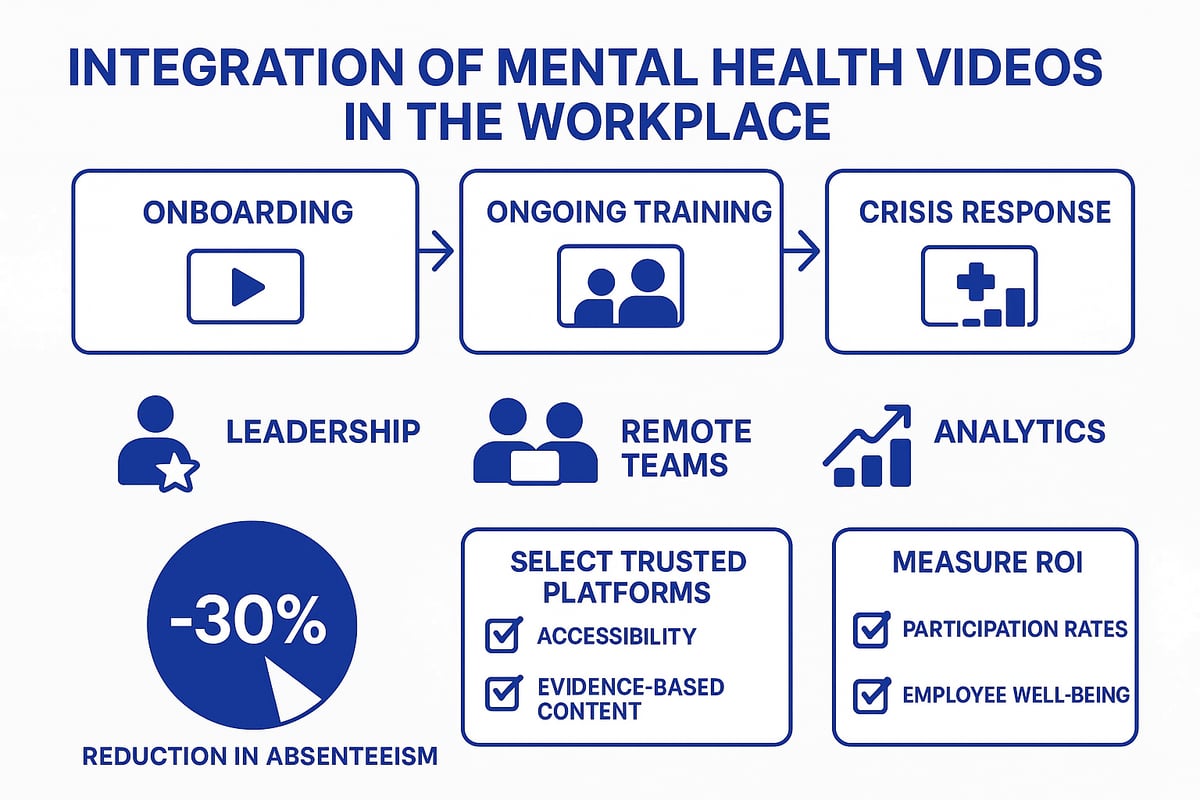
Strategic Use Cases for Organizations
Organizations are leveraging mental health videos across multiple touchpoints to maximize impact. Key use cases include:
- Employee onboarding programs introducing mental health resources
- Ongoing training modules focused on resilience, stress management, and psychological safety
- Crisis response protocols, offering immediate support and guidance
- Supporting hybrid and remote teams with accessible, on-demand content
A recent survey found that companies integrating mental health videos into training saw a 33% drop in absenteeism, highlighting both the practical and financial benefits. Embedding these resources into everyday workflows ensures they are available when employees need them most.
Building a Video-First Mental Health Culture
A video-first approach to mental health creates a shared language and normalizes help-seeking behaviors. Leaders play a vital role by modeling engagement with mental health videos and encouraging open conversation. Many organizations now schedule a monthly “mental health moment” video series, providing teams with timely, relevant content that sparks discussion.
Embedding mental health videos into regular communications, such as team meetings or newsletters, keeps wellbeing top-of-mind. This consistent visibility signals organizational commitment and helps break down barriers to support.
Selecting Trusted Providers and Platforms
Choosing trustworthy sources for mental health videos is essential. Partnering with psychologist-led organizations ensures content is evidence-based, relatable, and safe for diverse audiences. Evaluate platforms for privacy, security, and seamless integration with existing HR systems.
For curated, expert-approved content, explore the Workplace Mental Health Institute’s YouTube channel, which features a wide range of practical, research-backed videos suitable for workplace settings. Prioritize providers offering closed captions, language options, and mobile optimization to maximize accessibility.
Training Managers and Champions to Maximize Impact
Managers and workplace champions are key to unlocking the full potential of mental health videos. Equip leaders with facilitation skills, discussion guides, and best practices for sharing video content effectively. Encourage peer-to-peer learning and support through collaborative viewing sessions or discussion groups.
Many organizations invest in specialized mental health courses for managers, which incorporate video-based training modules tailored to leadership needs. These courses build confidence in addressing sensitive topics and foster a culture of psychological safety.
Measuring Outcomes and ROI
Measuring the effectiveness of mental health videos requires a data-driven approach. Track key metrics such as:
- Engagement and completion rates
- Changes in employee wellbeing scores
- Reductions in absenteeism and psychological injury claims
- Increases in productivity and satisfaction
Case studies consistently show that mental health videos lead to improved workplace outcomes when used strategically. Use feedback and analytics to refine content, ensure relevance, and expand offerings over time. This continuous improvement cycle maximizes both impact and return on investment.
The Future of Mental Health Videos: Trends and Predictions for 2026 and Beyond
As mental health videos evolve, organizations are entering a new era of digital support, learning, and engagement. The coming years will see rapid advancement in technology, inclusivity, and regulation, fundamentally changing how leaders and HR professionals leverage mental health videos for employee wellbeing.
AI and Personalization in Mental Health Video Delivery
AI is transforming mental health videos by enabling adaptive learning and tailored recommendations. Smart algorithms now analyze user interactions, feedback, and preferences to deliver video content that meets individual needs and learning styles. This personalization increases engagement, promotes skill retention, and ensures that viewers receive timely, relevant support. However, ethical considerations around privacy and bias in algorithmic curation are becoming more prominent. Leaders must work with trusted providers to ensure transparency and data protection, balancing the benefits of AI with responsible oversight. As this technology matures, expect mental health videos to become more interactive, responsive, and effective for diverse audiences.
Immersive Technologies: VR, AR, and Interactive Video
Virtual reality and augmented reality are setting a new standard for mental health videos, making psychoeducation and skills practice more engaging. VR simulations, for instance, allow employees to experience stress management scenarios or exposure therapy in controlled, realistic environments. AR overlays can provide real-time coping strategies during daily tasks. Early pilots show that immersive experiences lead to higher retention and emotional impact compared to traditional formats. Interactive elements, such as quizzes and scenario-based choices, further enhance learning. Organizations that integrate VR and AR into their wellbeing strategies position themselves at the forefront of digital mental health innovation.
Global Accessibility and Inclusivity
Ensuring that mental health videos reach all employees requires a focus on accessibility and cultural adaptation. Leading platforms are expanding language options, offering closed captions, and optimizing content for mobile and low-bandwidth environments. This approach bridges gaps for global teams and those with disabilities or limited internet access. Inclusive representation in video content also fosters a sense of belonging and trust among diverse audiences. By addressing the digital divide and prioritizing accessibility, organizations can maximize the positive impact of mental health videos on workforce wellbeing worldwide.
Regulatory Evolution and Quality Assurance
As mental health videos become more widespread, regulatory standards are tightening to ensure content is accurate, safe, and evidence-based. Anticipated policy changes will require organizations to use professionally accredited content and maintain transparent sourcing. Data privacy laws and informed consent protocols are being strengthened, particularly for sensitive topics. Professional bodies are stepping up to accredit video-based mental health resources, providing clear guidelines for quality assurance. Leaders should stay informed about evolving regulations to safeguard users and uphold organizational reputation. Adhering to these standards will be critical for maintaining trust and effectiveness in mental health video delivery.
The Role of Peer and Lived-Experience Content
Peer-led and lived-experience mental health videos are gaining momentum, offering authentic perspectives that resonate deeply with viewers. These stories help reduce stigma, foster empathy, and encourage help-seeking behavior. However, the rise of user-generated content also brings risks, such as the spread of misinformation and unmoderated advice. Emerging research highlights that excessive short-form video use can negatively impact attention and emotional wellbeing, as seen in recent studies like Short-form video use linked to cognitive decline. To balance benefits and risks, organizations should combine peer content with expert moderation and evidence-based frameworks.
Opportunities for Organizations and Leaders
Forward-thinking organizations have a unique opportunity to lead the next wave of innovation in mental health videos. By investing in ongoing training, strategic content partnerships, and digital literacy, leaders can foster a resilient, informed workforce. Prioritizing collaboration with accredited providers and leveraging resources like Stress management and resiliency training ensures content remains effective and safe. Embracing emerging technologies and inclusive practices positions organizations for long-term success. As mental health videos continue to shape workplace culture, those who adapt proactively will deliver measurable value for employee wellbeing and organizational performance.
As we’ve explored throughout this guide, mental health videos are transforming how organizations support wellbeing, educate teams, and foster resilience in 2026. Whether you’re a manager seeking practical tools or an HR leader aiming to build a healthier workplace, understanding the latest trends and best practices can make a real difference. If you want to dive deeper into expert-led resources, evidence-based strategies, and actionable steps for implementing mental health video content, I encourage you to Find Out More. Let’s take the next step together in creating a safer, more supportive work environment.

