
Australia's mental health policy landscape has evolved substantially over the past three decades, creating both opportunities and obligations for organizations committed to workforce wellbeing. Understanding mental health policy Australia requires navigating federal legislation, state-based regulations, workplace health and safety requirements, and emerging best practice frameworks. For business leaders and HR professionals, this knowledge translates directly into compliance obligations, risk management strategies, and opportunities to create genuinely supportive work environments that improve both employee outcomes and organizational performance.
The Foundation of Mental Health Policy Australia
Mental health policy in Australia operates through a multi-tiered governance structure involving federal, state, and territory governments. The Australian Parliament provides comprehensive oversight of mental health services, including funding allocation and policy direction.
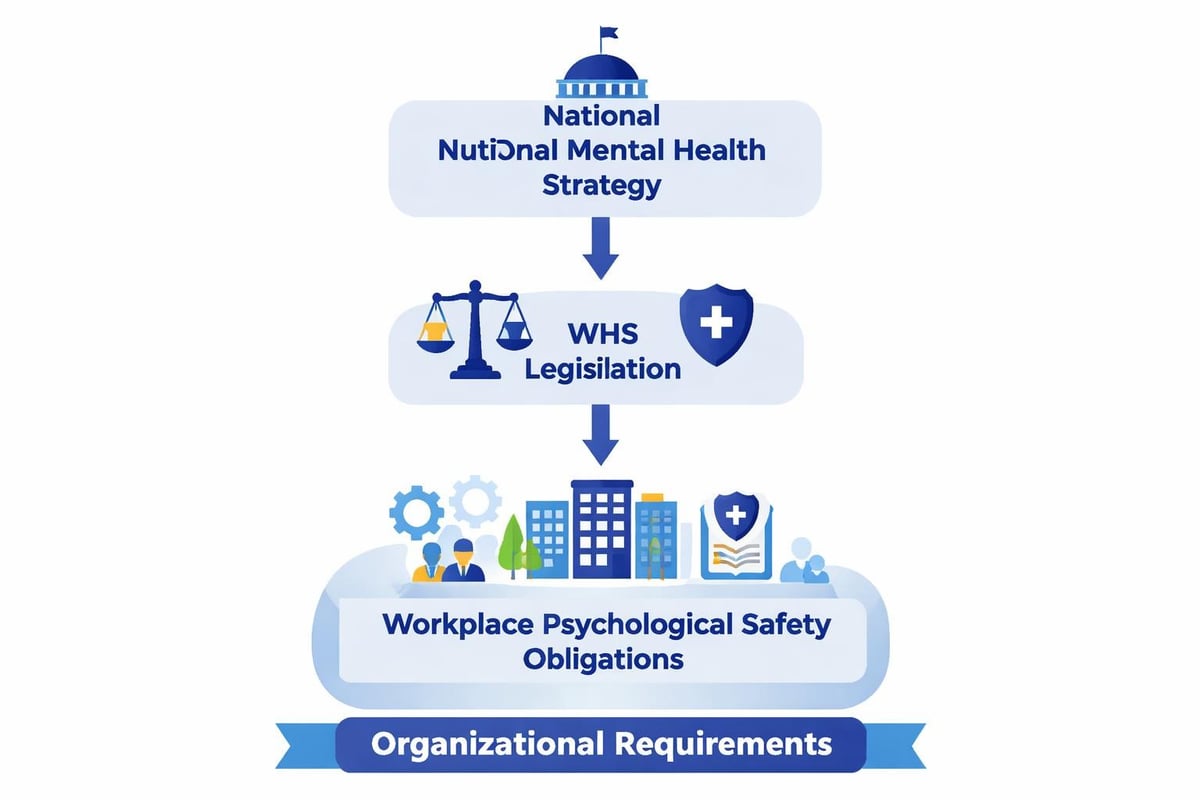
The National Mental Health Strategy, established in 1992, represents Australia's first coordinated approach to mental health reform. This framework introduced several key principles:
- Mainstreaming mental health services within general healthcare
- Reducing reliance on institutional care
- Promoting community-based treatment and support
- Recognizing mental health as a workplace consideration
Current Policy Framework
The Fifth National Mental Health and Suicide Prevention Plan guides current mental health policy Australia initiatives through 2027. This plan emphasizes integrated regional planning, suicide prevention, and improved coordination between physical and mental health services.
For workplace applications, several policy streams directly impact organizational responsibilities. Work Health and Safety legislation across all states and territories explicitly includes psychological health as a workplace hazard requiring management. The model WHS laws require organizations to eliminate or minimize risks to psychological health to the extent reasonably practicable.
Workplace Mental Health Policy Requirements
Organizations operating in Australia must navigate specific legal obligations regarding employee mental health. These requirements extend beyond general duty of care provisions to include proactive risk management and support systems.
Primary Legal Obligations:
- Identify psychosocial hazards in the workplace
- Assess risks associated with these hazards
- Implement control measures to eliminate or minimize risks
- Review and maintain risk controls regularly
- Provide appropriate training and information to workers
The Fair Work Act 2009 also intersects with mental health policy through provisions related to reasonable adjustments, discrimination protection, and general protections against adverse action. Employers must consider mental health conditions when evaluating requests for workplace modifications or flexible working arrangements.
Psychosocial Hazards Under WHS Legislation
Recent regulatory developments have sharpened focus on specific psychosocial risk factors. Safe Work Australia identifies 14 key psychosocial hazards that organizations must actively manage:
| Hazard Category | Workplace Examples | Management Approach |
|---|---|---|
| Job demands | Excessive workload, conflicting demands | Workload monitoring, resource allocation |
| Low job control | Limited decision-making authority | Role clarity, autonomy frameworks |
| Poor support | Inadequate supervisor assistance | Leadership training, peer support systems |
| Low recognition | Lack of acknowledgment for contributions | Recognition programs, feedback systems |
| Poor workplace relationships | Conflict, bullying, harassment | Conflict resolution, behavioral standards |
| Remote/isolated work | Limited social contact | Communication protocols, check-in systems |
Understanding these hazards within the context of mental health policy Australia helps organizations move beyond compliance to create genuinely protective workplace cultures. The Workplace Mental Health Institute provides specialized assessments that identify these risks within Australian organizational contexts.
Policy Translation: From National Framework to Workplace Practice
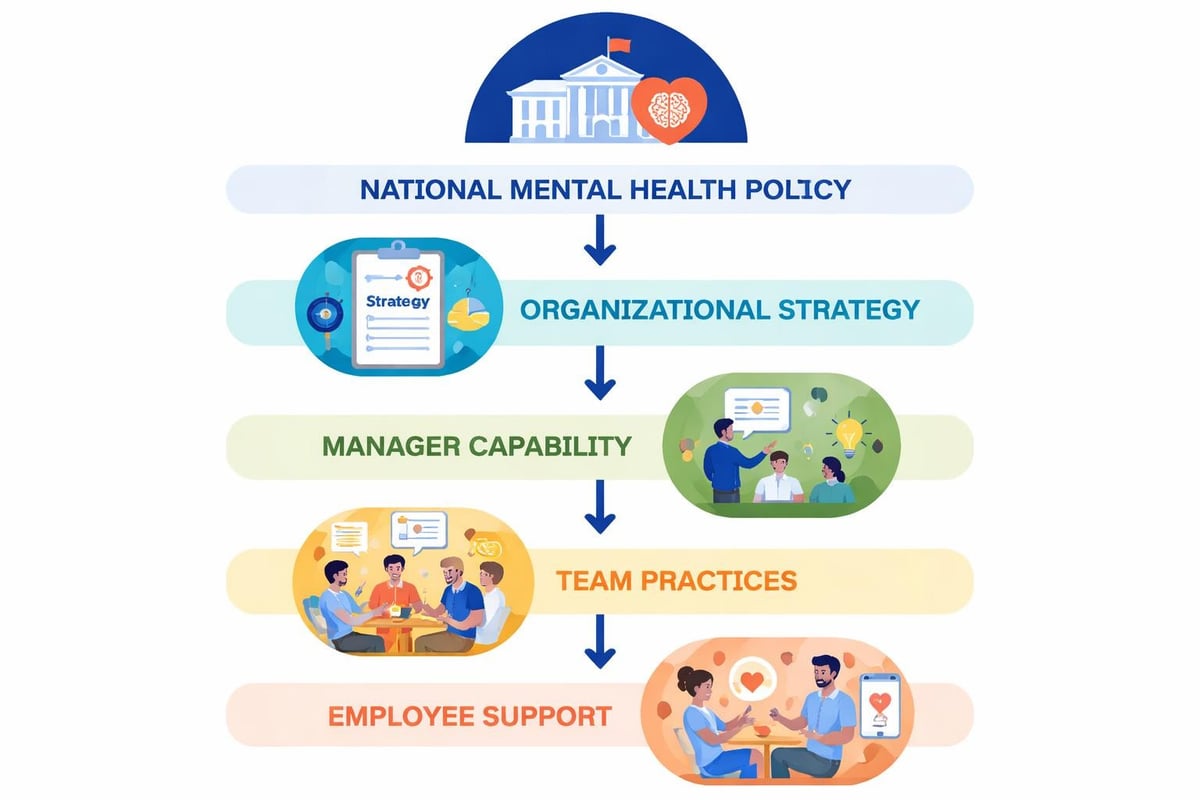
The gap between national mental health policy and workplace implementation represents a critical challenge for Australian organizations. While mental health policy Australia establishes broad direction and minimum standards, translating these into effective workplace practices requires strategic interpretation and contextualization.
Strategic Policy Implementation Components
Effective workplace mental health policies incorporate several essential elements that align with national frameworks while addressing specific organizational contexts:
Prevention-focused approaches emphasize reducing psychosocial hazards before they impact employees. This includes workload management systems, clear role definitions, and proactive conflict resolution mechanisms.
Early intervention protocols establish clear pathways for employees experiencing early signs of mental health concerns. These systems connect employees with appropriate support before conditions escalate.
Support and accommodation frameworks outline how organizations will support employees experiencing mental health conditions, including return-to-work planning and reasonable adjustments.
Leadership capability development ensures managers possess the skills to recognize mental health concerns, respond appropriately, and create psychologically safe team environments.
Organizations developing these capabilities often partner with specialized providers. Training programs available through WMHI Online equip managers with practical skills aligned with both policy requirements and evidence-based practice.
Evidence Base Informing Mental Health Policy Australia
The evolution of mental health policy Australia reflects growing evidence regarding prevalence, economic impact, and intervention effectiveness. Research examining Australian mental health distributions demonstrates both the scale of mental health challenges and variations across population subgroups, informing targeted policy responses.
Workplace Mental Health Statistics
Current data reveals the workplace dimensions of mental health challenges:
- Approximately 45% of Australian adults experience mental health conditions during their lifetime
- One in five Australian workers experiences mental health symptoms in any given year
- Mental health conditions account for approximately 13% of total disease burden in Australia
- Workplace factors contribute to or exacerbate mental health conditions in significant proportions of cases
These statistics drive policy emphasis on workplace prevention and early intervention. The economic case for workplace mental health investment strengthens policy imperatives, with research indicating returns between $2.30 and $4.20 for every dollar invested in effective workplace mental health programs.
Policy Influence on Service Systems
Mental health policy Australia shapes service availability, accessibility, and integration. Historical analysis of policy implications for public psychiatric services demonstrates how policy directions fundamentally reshape service delivery models.
For workplace applications, policy developments have expanded Employee Assistance Program (EAP) utilization, increased focus on organizational-level interventions, and promoted supervisor capability as a mental health protective factor.
Sector-Specific Policy Considerations
Mental health policy Australia recognizes that different sectors face unique challenges requiring tailored approaches. Healthcare workers, emergency services personnel, construction workers, and other high-risk occupations require specialized policy attention.
The intersection between general mental health policy and specific health conditions adds complexity. For example, mental health policy context for cancer care illustrates how policy must address mental health needs arising from serious physical illness, with implications for workplace support during employee health challenges.
High-Risk Industry Applications
Emergency services and first responders face elevated exposure to traumatic incidents requiring specialized trauma-informed approaches. Policy frameworks for these sectors emphasize:
- Mandatory psychological screening and monitoring
- Peer support program requirements
- Specialized EAP services with trauma expertise
- Presumptive mental health injury provisions in some jurisdictions
Healthcare sector workers experience unique stressors including moral distress, compassion fatigue, and exposure to suffering. Sector-specific policies address workload management, debriefing protocols, and organizational support systems.
High-pressure corporate environments face challenges related to excessive demands, long hours, and competitive cultures. Policy applications emphasize psychosocial risk assessment, workload monitoring, and leadership accountability for team wellbeing.
Implementation Strategies for Workplace Leaders
Translating mental health policy Australia into effective workplace practice requires systematic implementation approaches. Leaders must balance compliance obligations with genuine culture change and meaningful employee support.
Building Policy-Aligned Mental Health Capabilities
Assessment and diagnosis form the foundation of effective implementation. Organizations should:
- Conduct comprehensive psychosocial risk assessments aligned with WHS obligations
- Evaluate current mental health policies, procedures, and support systems
- Identify gaps between policy requirements and current practice
- Benchmark against industry standards and best practice frameworks
- Establish baseline metrics for monitoring improvement
Strategic planning translates assessment findings into actionable roadmaps. Effective mental health strategies integrate with broader business objectives, leadership development plans, and risk management frameworks rather than existing as standalone initiatives.
Capability development represents perhaps the most critical implementation element. Mental health training for managers transforms policy requirements into practical leadership behaviors that create psychologically safe environments.
| Implementation Phase | Key Activities | Timeline | Success Indicators |
|---|---|---|---|
| Foundation | Risk assessment, gap analysis, stakeholder engagement | 1-2 months | Comprehensive baseline data, leadership commitment |
| Design | Policy development, procedure creation, resource allocation | 2-3 months | Documented frameworks, approved budgets |
| Build | Training delivery, system implementation, communication rollout | 3-6 months | Trained managers, accessible resources |
| Embed | Ongoing monitoring, continuous improvement, culture reinforcement | Ongoing | Sustained behavior change, improved outcomes |
Measuring Policy Effectiveness
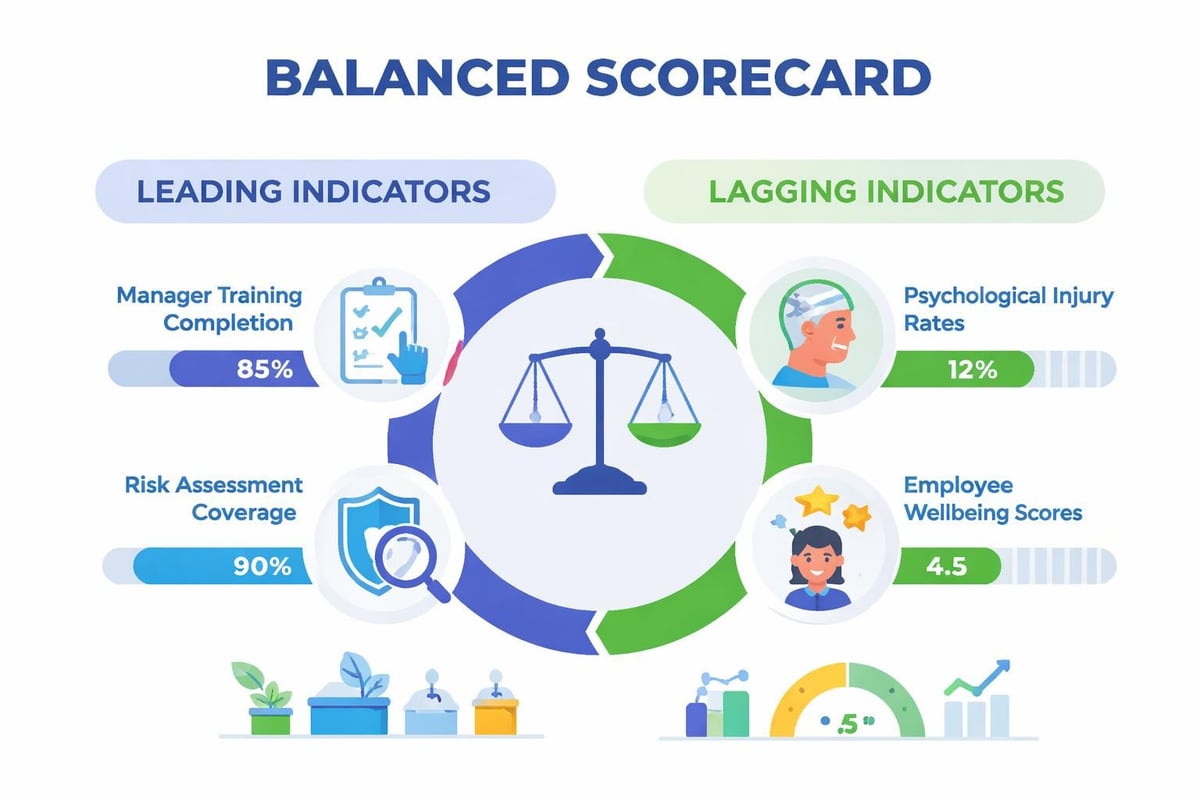
Mental health policy Australia emphasizes accountability and continuous improvement, requiring organizations to measure the effectiveness of workplace mental health initiatives. Robust evaluation frameworks track both leading indicators (policy compliance, training completion, support service availability) and lagging indicators (psychological injury claims, absenteeism rates, employee wellbeing survey results).
Advocacy and Future Policy Directions
Mental Health Australia’s policy and advocacy work demonstrates ongoing efforts to strengthen mental health policy through system reform and practical solutions. Current advocacy priorities include improved service integration, increased funding for community-based programs, and enhanced workplace mental health protections.
Emerging policy directions likely to impact workplace mental health include:
- Strengthened psychosocial hazard regulations with clearer compliance standards
- Enhanced psychological injury compensation frameworks
- Increased emphasis on organizational factors versus individual resilience
- Integration of mental health considerations into broader ESG and governance frameworks
- Expanded reporting requirements for psychological health metrics
Proactive organizations position themselves ahead of regulatory developments by implementing comprehensive mental health strategies that exceed minimum compliance standards. This approach reduces regulatory risk while creating competitive advantages through enhanced employer reputation and improved talent attraction and retention.
Trauma-Informed Policy Approaches
Contemporary mental health policy Australia increasingly recognizes trauma prevalence and its workplace implications. Trauma-informed organizational approaches represent best practice evolution beyond traditional mental health frameworks.
These approaches emphasize:
- Understanding trauma's widespread impact on employees
- Recognizing signs and symptoms of trauma responses
- Integrating trauma knowledge into policies and procedures
- Actively resisting re-traumatization in workplace practices
- Emphasizing safety, trustworthiness, and empowerment
Organizations implementing trauma-informed approaches report improved employee engagement, reduced conflict, and enhanced support for employees experiencing various mental health challenges.
Integration with Broader Wellbeing Strategies
Mental health policy Australia exists within broader health promotion and disease prevention frameworks. Effective workplace implementation integrates mental health with physical health initiatives, work-life balance programs, and organizational development strategies.
Holistic wellbeing approaches recognize interconnections between:
- Physical health and mental wellbeing
- Social connection and psychological safety
- Financial security and stress management
- Career development and sense of purpose
- Organizational culture and individual resilience
This integrated perspective moves beyond siloed mental health programs to comprehensive wellbeing strategies addressing root causes of psychological distress while building genuine organizational health.
Manager Role in Policy Implementation
Frontline managers represent the critical implementation layer for mental health policy Australia in workplace contexts. Regardless of policy quality, employee experiences depend substantially on immediate supervisor capability, awareness, and commitment.
Manager responsibilities within policy frameworks include:
- Recognizing early signs of mental health concerns in team members
- Initiating supportive conversations without diagnosis or therapeutic intervention
- Connecting employees with appropriate support resources
- Making reasonable adjustments to support employees managing mental health conditions
- Managing psychosocial hazards within their span of control
- Modeling healthy boundaries and wellbeing practices
Developing these capabilities requires sustained investment in manager education, ongoing coaching support, and organizational systems that enable rather than hinder supportive management practices. Video resources from the Workplace Mental Health Institute YouTube channel provide accessible guidance for managers navigating these responsibilities.
Understanding and implementing mental health policy Australia requirements positions organizations to meet compliance obligations while creating genuinely supportive environments that enhance both employee wellbeing and business performance. The Workplace Mental Health Institute specializes in translating policy frameworks into practical workplace strategies through evidence-based training, comprehensive assessments, and strategic consultation, equipping Australian organizations with the capabilities needed to excel in mental health leadership.

